
Disclosure: As an Amazon Associate, we earn from qualifying purchases. If you click a link on this page and make a purchase, we may receive a small commission at no extra cost to you.
A compact pump can save a ride, but only if it fits your valve, reaches the pressure you need, and does not become a burden to carry. The Panaride H-2 Bike Pump is a lightweight manual pump designed for Presta and Schrader valves, with a listed maximum pressure of 120 PSI. It works best as a portable top-up tool for bikes, stroller tires, and sports equipment. This review explains its verified specifications, practical strengths, package uncertainties, and the situations where a larger pump makes more sense.
Quick Verdict
Rating: 8/10, recommended with caveats
Best For: Riders who want a compact manual pump for routine tire top-ups and emergency backup.
Bottom Line: The Panaride H-2 combines dual-valve compatibility, a 120 PSI ceiling, and a low listed weight of about 150 grams. Its small foot pedestal and lack of a clearly listed built-in gauge make it less convenient for repeated workshop inflation or precise pressure setting.
Panaride H-2 Key Specifications
| Specification | Detail |
|---|---|
| Brand | panaride |
| Model | H-2 |
| Product type | Portable manual bike pump with foot pedestal |
| Maximum pressure | 120 PSI |
| Valve compatibility | Presta and Schrader |
| Operation | Manual, no battery or charging required |
| Listed weight | About 150 g or 0.33 lb |
| Listed dimensions | About 34.54 x 7.11 x 7.11 cm |
| Color | Black |
| Body material | Metal construction; retailer listings vary between aluminum and alloy steel |
| Included items | Pump, storage bag, and adapters; some listings also mention a mount |
| Listed warranty | 5 years |
| Best use | Routine bike-tire top-ups, roadside backup, stroller tires, and compatible sports inflatables |
Panaride Bike Pump
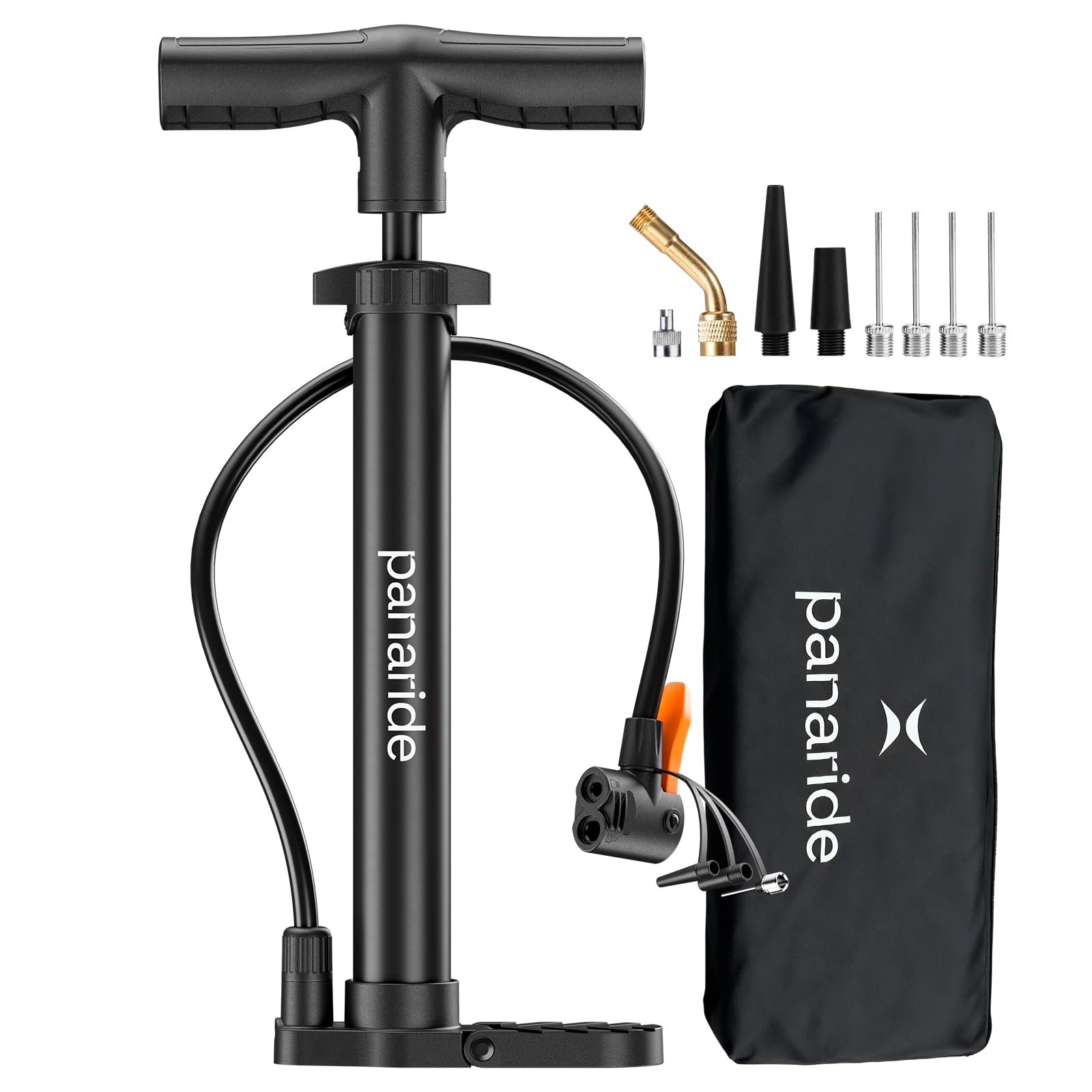
Compact manual pump with Presta and Schrader compatibility, a listed 120 PSI maximum, a foot pedestal, and adapters for supported inflatables.
View Product on Amazon →Before You Buy: The reviewed listing does not clearly identify a built-in pressure gauge. Use a separate gauge when exact pressure matters, confirm the current package contents, and follow the PSI limit printed on your tire or equipment rather than treating 120 PSI as a target.
What Is the Panaride H-2 Bike Pump?
The Panaride H-2 is a portable manual inflator that sits between a basic hand pump and a full-size workshop floor pump. Its foot pedestal gives you a steadier pumping position than a tiny pocket pump, while its roughly 150-gram listed weight keeps it practical for a backpack, vehicle kit, or gear bag.
The dual-valve head is designed for both Presta and Schrader valves. That covers the valve types found on most road, hybrid, mountain, and recreational bikes. The included adapters also extend its usefulness to compatible stroller tires and sports equipment, although you should confirm the adapter and package details on the live listing before ordering.
The 120 PSI maximum gives the pump enough stated pressure for many road-bike, hybrid, and mountain-bike applications. Maximum capability does not mean every tire should be inflated that high. Your tire sidewall, wheel maker, tube, and riding setup determine the safe operating range.
Who Should Buy It?
Best For
- Road, hybrid, and mountain-bike riders who use Presta or Schrader valves
- People who want a manual backup pump that does not need charging
- Families who need one compact inflator for bikes, stroller tires, and compatible sports gear
Skip If
- You need a wide, stable base for frequent garage or workshop inflation
- You require a clearly integrated gauge for precise pressure setting
- You regularly inflate large, high-volume tires from nearly flat
[Products Worth Considering]

The Vibrelli Air Master mini bike pump locks securely to both Presta and Schrader valves, so you can inflate tires without changing adapters. It delivers high-pressure inflation up to 120 PSI for road bikes, MTB, BMX, and kids’ bikes, while staying compact and lightweight for easy carry. A frame mounting bracket with a Velcro strap helps keep the pump firmly in place with no rattles.
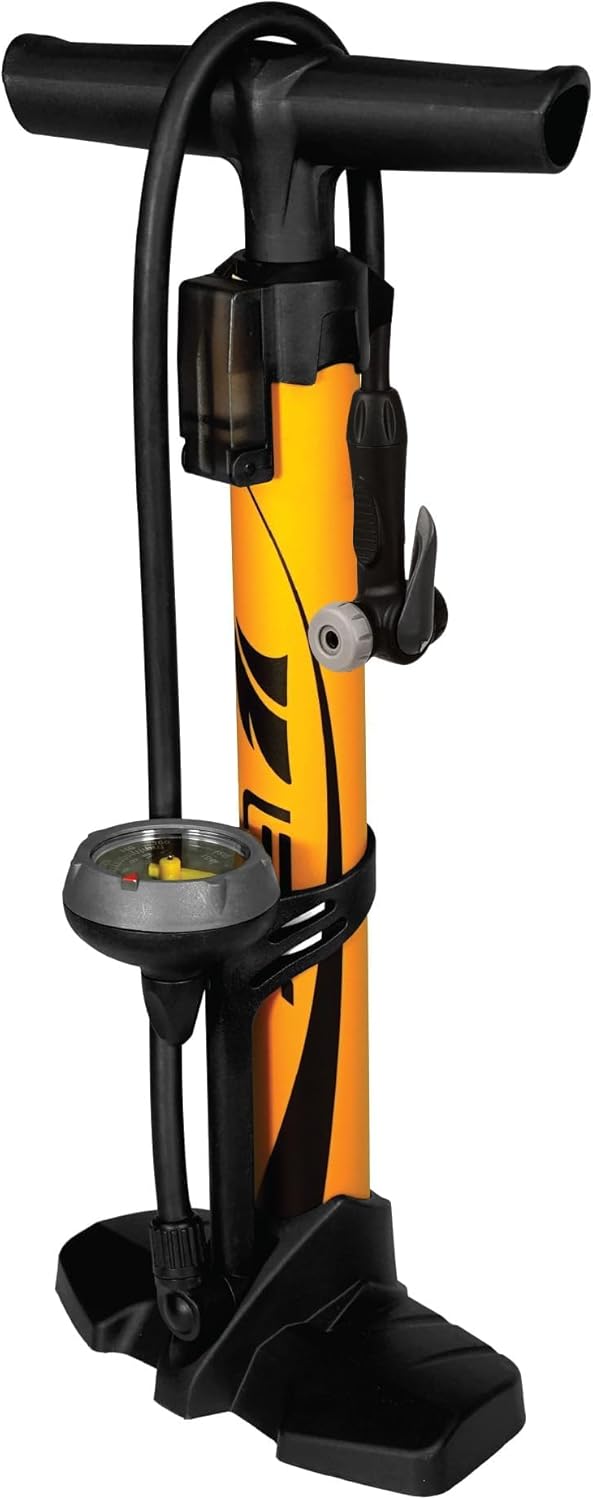
This durable BV floor pump delivers up to 160 PSI for confident inflation of bikes and other high-pressure uses. Its twin valve head lets you quickly switch between Presta and Schrader valves by reversing the components, with no compromise. The ergonomic handle makes pumping comfortable, and the compact size is easy to carry for rides and home storage.

The TOOLITIN floor bike pump delivers high pressure performance with an easy-to-read gauge so you can dial in the right tire pressure for safer rides. It is compatible with both Presta and Schrader valves and features a stable, durable design for efficient pumping. Suitable for road, MTB, and hybrid tires as well as inflating sports balls and other inflatables, it also includes ball and bladder needles and convenient accessory storage.
Design and Build Quality
The compact body and folding-style foot support are the main design advantages. You can place a foot on the pedestal and use more of your upper body than you would with a standard pocket pump. This helps during routine top-ups, although the narrow footprint will not feel as planted as a full-size floor pump.
Retailer descriptions agree that the pump uses metal construction, but they do not agree on the exact material. Some call it aluminum, while others list alloy steel. The practical takeaway is that you should treat the current Amazon listing as the final source for the exact material and package configuration.
The listed five-year warranty is a positive sign for buyers who want more protection than a disposable emergency pump usually offers. Warranty coverage can depend on the seller, country, and purchase record, so keep your order details and review the current terms after purchase.
Valve Compatibility and 120 PSI Performance
Presta and Schrader support is the strongest reason to consider this pump. Presta valves are common on road and many performance bikes, while Schrader valves are common on mountain bikes, comfort bikes, kids’ bikes, and stroller wheels. One head that handles both types reduces the chance of carrying the wrong pump.
The 120 PSI rating gives you useful pressure headroom, especially for narrower road tires. In real use, a compact barrel usually requires more strokes and effort as pressure rises. The pump is therefore better suited to restoring rideable pressure or performing regular top-ups than repeatedly taking multiple tires from empty to high pressure.
The listing does not clearly show an integrated gauge. That means you may need to stop and check pressure with a separate tool. Riders who set tire pressure closely for comfort, grip, or rolling performance may prefer a pump with an inline or digital gauge.
Portability and Storage
At about 150 grams and roughly 34.5 cm long according to retailer specifications, the H-2 is light but not jersey-pocket small. It fits better in a backpack, pannier, vehicle organizer, or larger saddle setup. The storage bag helps keep adapters together and prevents the pump from rubbing directly against other gear.
The source article notes that the carrying-case zipper may be a weak point. Avoid forcing the pump and adapters into an overfilled bag. Store small accessories in a separate pouch if they put pressure on the zipper or can scratch the pump body.
Pro Tip: Before a long ride, test the pump on the exact valve and tire you plan to use. Confirm that the head seals, the adapter stays with your repair kit, and your separate gauge is easy to reach.
How It Performs in Real Use
For Routine Tire Top-Ups
This is the pump’s best use. The foot pedestal provides more leverage than a basic hand-only mini pump, and the 120 PSI ceiling gives you enough stated range for common bike pressures. A few regular strokes can restore pressure lost through normal seepage without setting up a full-size pump.
For Roadside and Emergency Backup
The manual design works without a battery, cable, or charging schedule. That makes it useful for a trunk kit or longer ride where electronic inflators may run out of power. Its compact base requires a reasonably flat surface, and you should keep dirt away from the valve connection.
For Mountain Bikes, Strollers, and Sports Gear
Schrader compatibility and included adapters broaden the use beyond road bikes. Mountain-bike tires and stroller wheels often use lower pressures, but larger air volume can still require many strokes. Sports balls need the correct needle adapter, and you should stop at the equipment maker’s recommended pressure.
For Repeated High-Volume Inflation
The H-2 is not the most comfortable choice for servicing several large tires in one session. A full-size floor pump offers a wider base, longer barrel, and better leverage. Choose the Panaride for portability and backup use, not as a direct replacement for a workshop pump if you maintain several bikes.
How to Use It Correctly
- Check the recommended pressure. Read the tire sidewall and follow the bike, stroller, or equipment maker’s limits.
- Identify the valve. Presta valves are narrow and usually have a small tip nut. Schrader valves are wider and resemble automotive tire valves.
- Prepare the valve. Remove the cap. On a Presta valve, loosen the small tip nut and press it briefly to confirm that it moves.
- Attach the pump head firmly. Push or secure it according to the current product instructions so air does not leak around the connection.
- Stabilize the pedestal. Use a flat surface and keep your foot clear of the hose and wheel spokes.
- Pump with controlled strokes. Keep the barrel aligned and avoid pulling sideways on the valve stem.
- Check pressure separately. Use a reliable gauge when you need an exact reading.
- Remove the head straight. Re-tighten a Presta tip nut, replace the cap, and store the adapters together.
Compatibility and Safety
Confirm that your tire uses a supported Presta or Schrader valve before relying on the pump during a ride. Adapters should fit securely and should not be forced onto an incompatible valve. A poor seal wastes effort and can bend a delicate valve stem.
Never inflate a tire or sports item to the pump’s 120 PSI maximum unless the equipment itself is rated for that pressure. Stop if the tire bead lifts, the sidewall bulges, the valve moves excessively, or the pump connection becomes unstable. For damaged tires, wheels, stroller components, or valves, repair the fault before adding pressure.
Keep children away from loose adapters and ball needles. When inflating stroller tires, park the stroller, apply its brake, remove the child, and follow the stroller manufacturer’s tire-pressure instructions.
What Buyers Mention
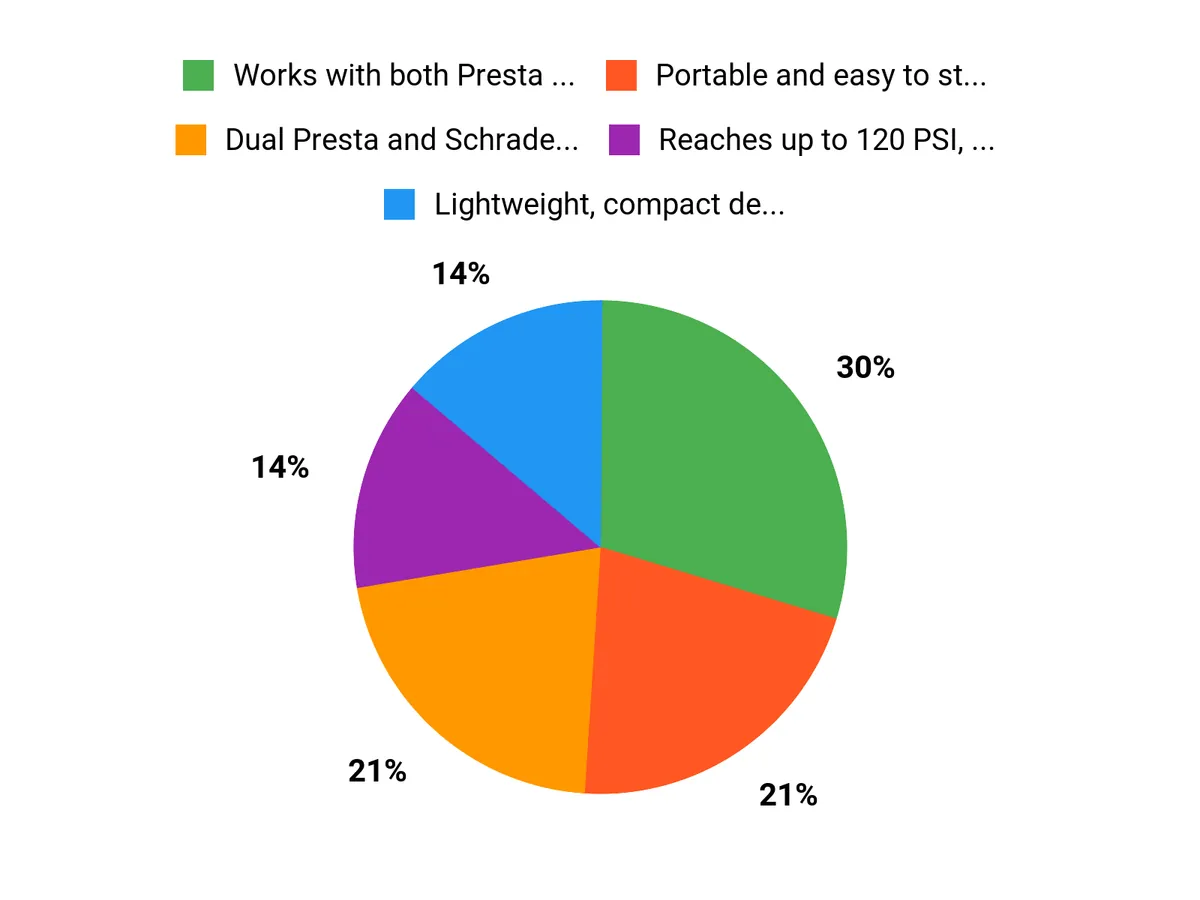
Buyer feedback summarized in the original review centers on the convenience of dual-valve support, the compact shape, and the included accessories. The same feedback also points to two practical compromises: the small base can feel awkward during extended pumping, and the storage-case zipper may need gentle handling.
Overall Sentiment: Positive, with portability and versatility receiving the most praise.

Pros and Cons
Pros
- Works with both Presta and Schrader valves
- Listed 120 PSI maximum suits many common bike-tire applications
- About 150 grams, making it easier to carry than a full-size floor pump
- Foot pedestal provides better leverage than a basic hand-only mini pump
- Includes adapters and a storage bag, with a listed five-year warranty
Cons
- Small pedestal is less stable than a full-size floor-pump base
- No clearly listed built-in gauge for precise pressure checks
- Material and package descriptions vary across retailer listings
Is It Worth the Price?
The Panaride H-2 makes the most sense as a budget-friendly, multipurpose manual pump for everyday top-ups and emergency use. You get two-valve compatibility, useful pressure capacity, low weight, and several accessories without the charging needs of an electric inflator.
Its value drops if you need workshop stability or exact pressure readings from the pump itself. A larger floor pump with a wide base and integrated gauge is a better long-term tool for frequent home maintenance. The Panaride is worth considering when portability and broad compatibility matter more than maximum pumping comfort.
[Products Worth Considering]

Tiakia’s mini high-pressure frame pump delivers up to 260 PSI for faster, more efficient inflations with an optimized intake volume. It features a double-head valve design compatible with Schrader and Presta, plus a conversion for Donlop, making it versatile for bikes and many inflatables. The lightweight anodized aluminum build includes a mounting bracket for convenient carry, while the flexible high-pressure hose and IPX4 waterproof body support outdoor use.

Get back on the road fast with this bike frame bag repair kit, featuring a 120 PSI mini pump, a 16 in 1 multi-function tool, and a glueless tire patch kit. The compact triangle bag provides 2L storage for essentials like phone, keys, and tools, while the included rasp and tire levers make quick flat repairs possible. Designed for commuting and trail riding, it supports both Presta and Schrader valves for versatile emergency inflation.

Airmoto’s portable cordless tire inflator lets you quickly and accurately inflate car, truck, SUV, motorcycle, and bicycle tires up to 120 PSI. Set your target pressure with easy controls, and the auto shut-off stops inflation once the desired reading is reached. It features a bright LED light, a digital LCD gauge with multiple unit options, and includes adapters plus an air hose for common valve types.
How It Compares to Alternatives
The Topeak Road Morph G is a stronger fit for riders who want an inline gauge, a flexible hose, and a higher 160 PSI capacity. It is also heavier at a listed 220 grams. The Lezyne Micro Floor Drive HP offers a machined-aluminum build, Presta and Schrader support, 160 PSI capability, and gauge-equipped versions for riders who want more precise control.
The Panaride H-2 remains the simpler option. It is lighter than those feature-rich travel pumps and covers the core jobs most casual riders need, but it gives up the clearly integrated gauge and more refined high-pressure hardware.
[Products Worth Considering]

A portable bicycle repair bag built for on-the-go maintenance, pairing a scalable mini tire pump with a multi-tool, crank and bone wrenches, tire levers, and self-adhesive glueless patches. The included patch set helps you quickly seal punctures using the integrated prep/rasp step, while the waterproof nylon bag keeps tools organized and easy to access. Ideal for road, mountain, and home bike emergencies, repairs, and routine adjustments.

This 4-pack kit converts Presta bike valves to standard Schrader valves so you can inflate with any regular pump or air compressor. The solid brass adapters include an O-ring for a tight, leak-proof seal and provide a simple screw-on setup. Compatible with road bikes, mountain bikes, e-bikes, and e-scooters, it’s designed for convenient, everyday carry readiness.

This PXZBLG bike repair kit helps you tackle common tire and on-the-ride issues with a compact, ride-ready tool collection. It includes a mini tire pump supporting both Presta and Schrader valves, a 16-in-1 bike multitool, tire levers, glueless patches with a plastic box, plus 4mm and 5mm Allen wrenches. A convenient bike bag stores everything so you can mount it on your road bike or mountain bike for lightweight, portable preparedness.
Why Riders Choose It
You may choose the H-2 because it handles the two most common bicycle valve types, needs no battery, and weighs far less than a typical workshop pump. The foot pedestal improves leverage while the bag and adapters make it useful for family gear beyond a single bike.
Frequently Asked Questions
Does the Panaride H-2 work with Presta and Schrader valves?
Yes. The reviewed model is listed for both Presta and Schrader valves, covering most road, hybrid, mountain, comfort, and kids’ bikes. Test the connection before a long ride so you know how the head locks onto your valve.
Can it inflate a road-bike tire to 120 PSI?
The pump has a listed maximum of 120 PSI. Reaching high pressure with a compact manual pump may require more effort and strokes, and you should never exceed the pressure range approved for your tire, rim, and tube.
Does the pump have a built-in pressure gauge?
The reviewed listing does not clearly identify an integrated gauge. Carry a separate tire gauge if exact pressure affects your comfort, grip, or tire setup.
Is it suitable for mountain-bike tires?
Yes, when the tire uses a compatible valve. Large-volume mountain-bike tires may take more strokes than narrow road tires, so the pump works best for top-ups and emergency inflation rather than repeated shop service.
Can it inflate stroller tires and sports balls?
The listing describes use with stroller tires and compatible sports inflatables, and adapters are included. Confirm that the supplied adapter matches your equipment and follow the maker’s stated pressure limit.
What comes in the package?
Retailer listings commonly identify the pump, storage bag, and adapters, while some also mention a mount. Package descriptions can change, so check the live Amazon listing before purchase.
Who should choose a full-size floor pump instead?
Choose a full-size model if you inflate several bikes often, want a wide stable base, or need a large easy-to-read gauge. The H-2 is better as a portable top-up and backup tool.
The Bottom Line
The Panaride H-2 is a practical choice for riders who want a light manual pump with Presta and Schrader compatibility, a 120 PSI ceiling, and enough accessories for several common inflation jobs. Buy it for portability and emergency readiness, but choose a larger gauge-equipped floor pump if you frequently service multiple bikes or need precise pressure control.
Ready to Buy?
Check the latest product details, package contents, and warranty terms before you decide.
