
How to Pump a Bike Tire: Quick Guide for Every Valve Type
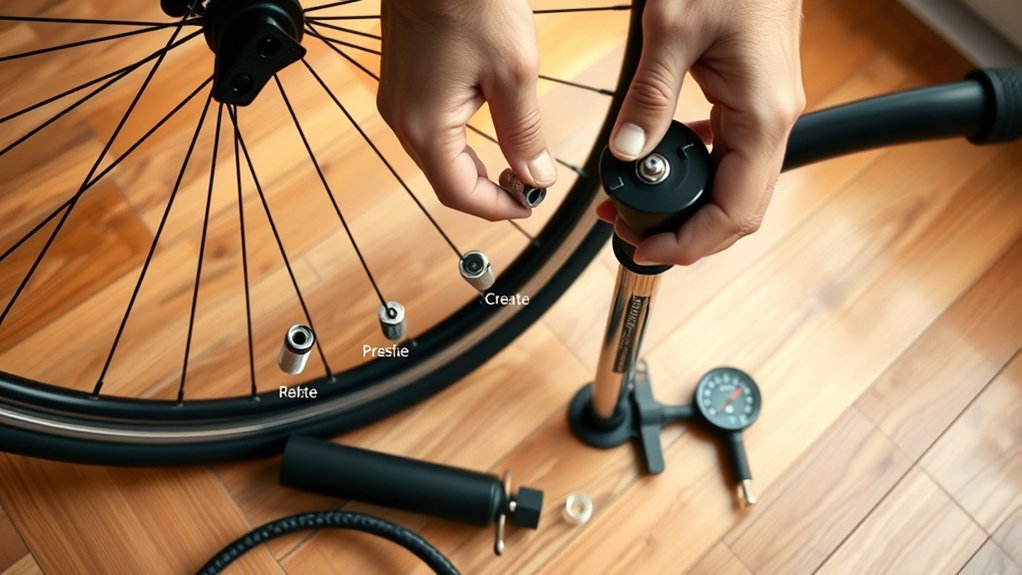
To pump a bike tire, first identify the valve, use a pump head that matches it, and inflate only to a pressure allowed by both the tire and rim. Presta valves must be opened before pumping; Schrader valves do not; and Woods/Dunlop valves usually work with a compatible Presta-style pump head. With the right pump and a gauge, the job normally takes only a few minutes.
Last updated: August 18, 2026 — valve procedures, pump options, pressure safety, troubleshooting, links, and schema reviewed.
Affiliate disclosure: This article may display affiliate product links. If you buy through them, TubeTyre may earn a commission at no extra cost to you.
Quick Answer
To pump a bike tire, remove the valve cap, match the pump head to the valve, open the valve if it is Presta, lock the pump head in place, and inflate to a pressure that stays within both the tire and rim limits. Remove the pump straight off, close a Presta valve if needed, and replace the cap.
Key Takeaways
- Identify the valve first: Presta is narrow with a small top nut, Schrader looks like a car tire valve, and Woods/Dunlop has a wider base with a narrower upper section.
- Use a floor pump with a gauge for home inflation, and carry a mini pump, electric pump, or CO2 inflator that matches your valve for roadside use.
- Inflate within both the tire and rim pressure limits; do not treat the sidewall maximum as the best riding pressure.
- If air leaks or the tire does not inflate, reseat the pump head, confirm the valve is open, and make sure the pump is set for the correct valve type.
At a Glance
| Time Required | 2–5 minutes per tire |
| Difficulty | Easy beginner maintenance |
| Tools Needed | Bike pump with a gauge, correct pump head or adapter, optional separate pressure gauge |
| Cost | Free if you already own a pump; adapters are usually inexpensive |
What Type of Bike Valve Do You Have?
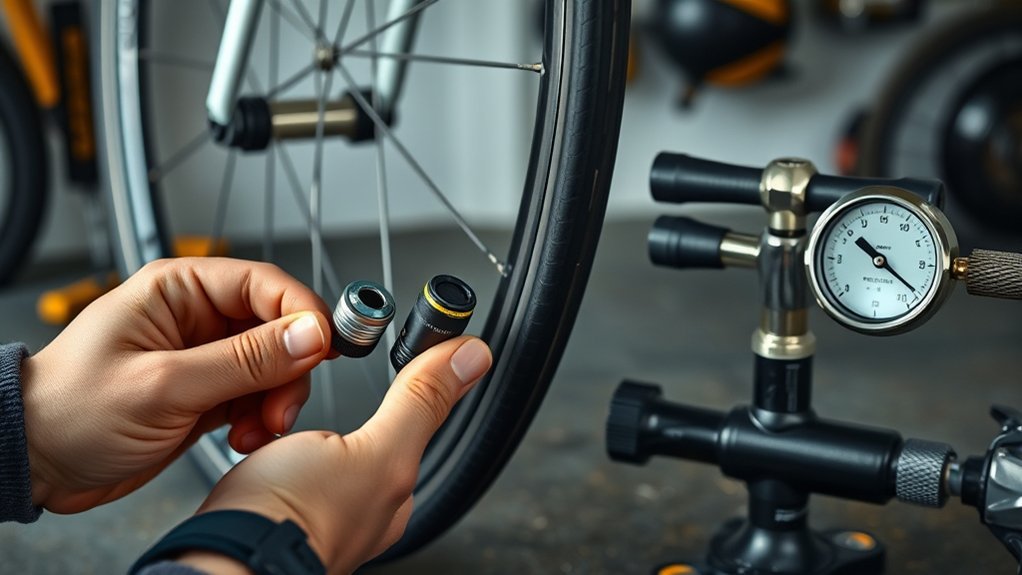
Before you attach a pump, identify the valve. The wrong pump head can leak air, bend a delicate valve stem, or make inflation feel impossible.
| Presta | Slim metal valve with a small threaded nut at the top. Common on road, gravel, performance, and many tubeless bikes. |
| Schrader | Wider valve that looks like a car tire valve. Common on many hybrid, commuter, cruiser, kids’, and mountain bikes. |
| Woods / Dunlop | Uncommon on many modern U.S. bikes but still widely used in some markets. It has a wider base and narrower upper section and can usually be inflated with a compatible Presta-style pump head. |
For a deeper technical reference on the three valve types, see Sheldon Brown’s guide to bicycle inner tubes and valves. Schwalbe also provides a current bicycle valve reference.
Note: A Presta tube can be used in a rim drilled for Schrader or Woods, though a reducer or grommet can support the narrower valve stem. A Schrader tube will not fit a Presta-sized valve hole as-is. Some rims can be safely enlarged, but this is a rim-specific modification; follow the rim or wheel manufacturer’s guidance rather than drilling by assumption. See Park Tool’s tire, wheel, and tube fit guidance.
How Do You Choose the Right Bike Pump?
Choose the pump based on where you will use it, how much air your tires need, and what valve your bike has. A floor pump is the easiest option at home because it has a stable base, moves more air per stroke, and usually includes a pressure gauge. A mini or frame pump is slower but easy to carry. A compact electric pump can reduce manual effort, while a CO2 inflator is extremely fast but depends on single-use cartridges.
Many modern pumps use a dual-head, swappable-head, or auto-adjusting head that works with both Presta and Schrader valves. If your pump does not match your valve, use the correct adapter instead of forcing the head onto the valve. REI’s bike pump guide recommends matching the pump’s pressure capacity and valve compatibility to the bike and distinguishes floor, frame, mini, and CO2 options: How to Choose Bike Pumps.
[Products Worth Considering]

Convert Presta bicycle valves to accept standard Schrader pump nozzles for fast, hassle-free inflation. This kit includes durable brass adapters with leak-resistant connections, plus sports inflation needles and protective valve caps for convenient use on bikes and ball sports equipment.

Tiakia’s mini high-pressure frame pump delivers up to 260 PSI for faster, more efficient inflations with an optimized intake volume. It features a double-head valve design compatible with Schrader and Presta, plus a conversion for Donlop, making it versatile for bikes and many inflatables. The lightweight anodized aluminum build includes a mounting bracket for convenient carry, while the flexible high-pressure hose and IPX4 waterproof body support outdoor use.

This 4-pack kit converts Presta bike valves to standard Schrader valves so you can inflate with any regular pump or air compressor. The solid brass adapters include an O-ring for a tight, leak-proof seal and provide a simple screw-on setup. Compatible with road bikes, mountain bikes, e-bikes, and e-scooters, it’s designed for convenient, everyday carry readiness.
Pump Types for Use
- Floor pump: Best for routine inflation at home. Look for a clear gauge and a head that fits the valves you use.
- Mini pump: Best for emergency carry. It takes more strokes, but it does not run out like CO2.
- Frame pump: Similar to a mini pump but mounts to the bike frame and may move more air per stroke.
- Portable electric pump: Useful when you want compact powered inflation. Check its valve compatibility, maximum pressure, battery capacity, and whether it can handle your tire volume.
- CO2 inflator: Best for very fast roadside inflation after a flat. Carry a backup cartridge or pump if you rely on it.
- Tubeless booster or reservoir: Designed to release a large burst of air for seating some tubeless tire beads. It is not normally required just to top up an already-seated tire.
Valve Compatibility Matters
Valve compatibility is the first thing to check. A Schrader-only pump head will not seal properly on Presta unless you add a Presta-to-Schrader adapter. A Presta-only pump head will not fit a Schrader valve. If you ride more than one bike, a dual-compatible pump is usually the simplest choice.
Gauge and Portability
A built-in pressure gauge helps you avoid guessing, but gauges can vary in accuracy. For the most consistent setup, use the same pump or a reliable separate tire-pressure gauge each time. Also check that the pump can reach the pressure your tire requires. Keep a portable pump, electric pump, or CO2 backup with your repair kit so one flat tire does not automatically end the ride.
How to Pump a Bike Tire With Presta
A Presta valve is narrow and has a small threaded nut at the top. It must be opened before air can enter.
- Remove the dust cap. Set it somewhere safe.
- Unscrew the small top nut counterclockwise. Do not remove it completely; just loosen it until it stops.
- Tap the valve tip once. A tiny puff of air confirms the valve is open and not stuck.
- Attach the pump head straight. Press it on squarely so you do not bend the valve stem.
- Lock the pump head. Flip or twist the lever according to your pump design.
- Inflate to your target pressure. Stay within both the tire and rim limits.
- Remove the pump quickly and straight. A short hiss is normal and can come from air trapped in the pump head or hose.
- Tighten the small top nut clockwise. Finger-tight is enough; do not over-tighten it.
- Replace the dust cap. The cap helps keep dirt away from the valve.
Pro Tip: If your Presta valve will not take air, loosen the top nut and press the tip briefly before attaching the pump. If the pump gauge immediately climbs but the tire stays soft, disconnect the pump and confirm that the valve is actually open and that the pump head is engaging the correct valve port.
Using a Presta Valve Adapter
A Presta-to-Schrader adapter lets you use a Schrader pump or some gas-station inflators. Open the Presta valve first, screw the adapter onto the valve, attach the Schrader pump head, and inflate carefully while watching pressure. Then remove the pump, unscrew the adapter, close the Presta valve, and replace the cap.
How to Pump a Bike Tire With Schrader
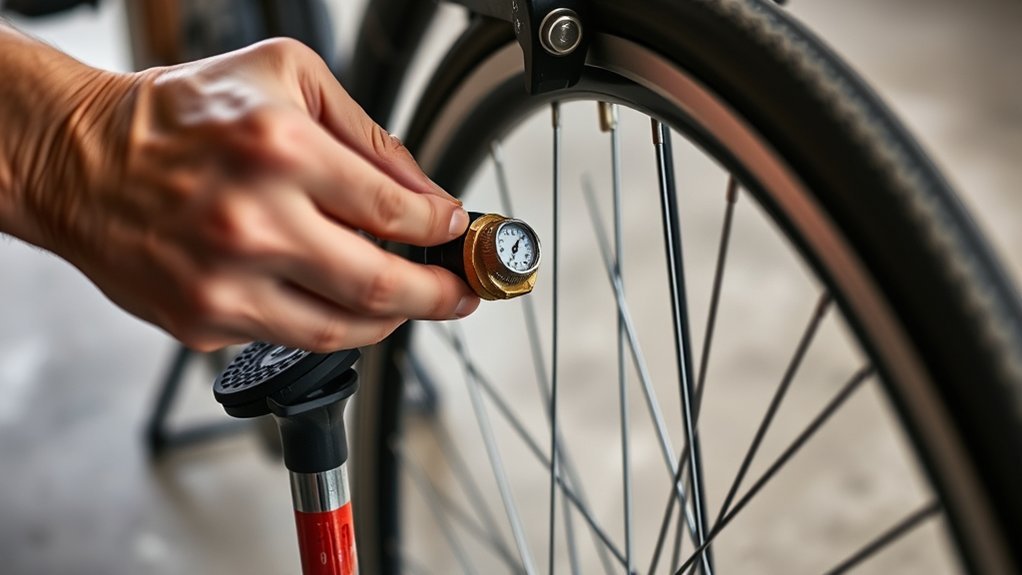
A Schrader valve is the same basic style used on car tires. It has a spring-loaded pin inside, so you do not need to unscrew a top nut before pumping.
- Remove the valve cap.
- Press the pump head firmly onto the valve. Push straight down so the pump head seals around the valve.
- Lock the pump head. Flip the lever or tighten the chuck, depending on the pump.
- Pump steadily. Watch the gauge and stop at your target pressure.
- Unlock and remove the pump head quickly. Pull straight off to reduce unnecessary air loss.
- Replace the valve cap.
Warning: Be careful with gas-station compressors. They can push air very quickly, and bicycle tires contain far less air volume than car tires. Add air in short bursts, watch the gauge closely, and never exceed the tire or rim limit.
How to Pump a Bike Tire With Woods or Dunlop
Woods, also called Dunlop, is uncommon on many modern U.S. bikes but remains widely used in some markets. Remove the cap, attach a compatible Presta-style pump head or the correct adapter, inflate within the tire and rim limits, then remove the pump and replace the cap.
Pressure measurement can work differently with traditional Dunlop valves. Schwalbe notes that traditional versions do not allow inflation pressure to be checked in the usual way. If your gauge behaves inconsistently, do not keep adding air blindly. Confirm the valve and pump compatibility and stay within the tire and rim limits. If the valve leaks after inflation, check that the valve insert is seated correctly.
How Much Air Should Bike Tires Get?
The right pressure is not one fixed number. Start with the limits specified for the tire and rim, then choose a working pressure based on rider and bike weight, tire width, tube or tubeless setup, terrain, and ride feel. Trek’s guidance likewise tells riders to monitor tire pressure and stay within the tire’s listed range: How to Pump Bike Tires to the Right Pressure.
Use these category differences as general guidance rather than fixed PSI targets:
- Road bikes: Wider modern tires often use less pressure than older narrow high-pressure setups.
- Gravel bikes: Pressure is normally reduced compared with narrow road tires to improve grip and comfort on rough surfaces.
- Mountain bikes: Wider MTB tires can run lower pressures, particularly when tubeless, but too little pressure can cause squirm or rim strikes.
- Hybrid and commuter bikes: Pressure varies widely with tire width, rider weight, luggage, and road conditions.
For a detailed starting point by rider weight, tire width, and bike type, see TubeTyre’s bike tire pressure guide by rider weight. You can also use a manufacturer calculator. SRAM/Zipp’s pressure guidance considers tire attributes, system weight, riding discipline, and conditions: Know Your Tire Pressure. Schwalbe explains how pressure affects load support, puncture resistance, wear, and rolling behavior: Schwalbe Tire Pressure FAQ.
Warning: Never exceed the lower maximum pressure specified by the tire or rim/wheel manufacturer. This matters especially with tubeless and hookless systems. For hookless road-bike systems, Schwalbe notes that the ETRTO maximum is 5 bar, about 72.5 PSI, or less if the rim or wheel manufacturer specifies a lower limit. See Schwalbe’s hookless road-bike requirements.
What Bike Tire Pumping Mistakes Should You Avoid?
- Using the wrong pump head: If the head does not fit easily, stop and check the valve type.
- Forgetting to open a Presta valve: Air will not enter correctly if the top nut is still closed.
- Bending the Presta stem: Keep the pump head straight and avoid yanking it sideways.
- Inflating to the sidewall maximum every time: The maximum is a limit, not automatically the best riding pressure.
- Ignoring rim pressure limits: The rim can be the limiting component, especially with modern tubeless and hookless wheels.
- Relying only on the squeeze test: A tire can feel firm by hand and still be far from the intended pressure.
- Continuing when the gauge rises but the tire stays soft: Stop and check whether the valve is open and the pump head is actually passing air into the tire.
- Pulling the pump sideways: Unlock the head and remove it straight to reduce stress on the valve stem.
Troubleshooting Bike Tire Inflation Problems
| Problem | Likely Cause | Fix |
| Air leaks at the pump head | Poor seal or wrong pump setting | Remove the head, reseat it straight, and confirm Presta/Schrader mode. |
| No air goes in | Closed Presta valve, wrong pump port, or stuck valve core | Open the Presta nut, press the valve tip once, and confirm that the pump is using the correct valve connection. |
| Gauge rises quickly but tire stays soft | Air is pressurizing the pump hose/head instead of entering the tire | Disconnect the pump, reopen the Presta valve if applicable, and reseat the correct pump head. |
| Valve leaks after pumping | Loose removable valve core or damaged tube/valve | Tighten a removable core gently with the correct tool, or replace the damaged tube or valve component. |
| Tubeless valve clogs | Dried sealant in the valve core | Remove and clean or replace the valve core, then reinflate within the tire and rim limits. |
[Products Worth Considering]
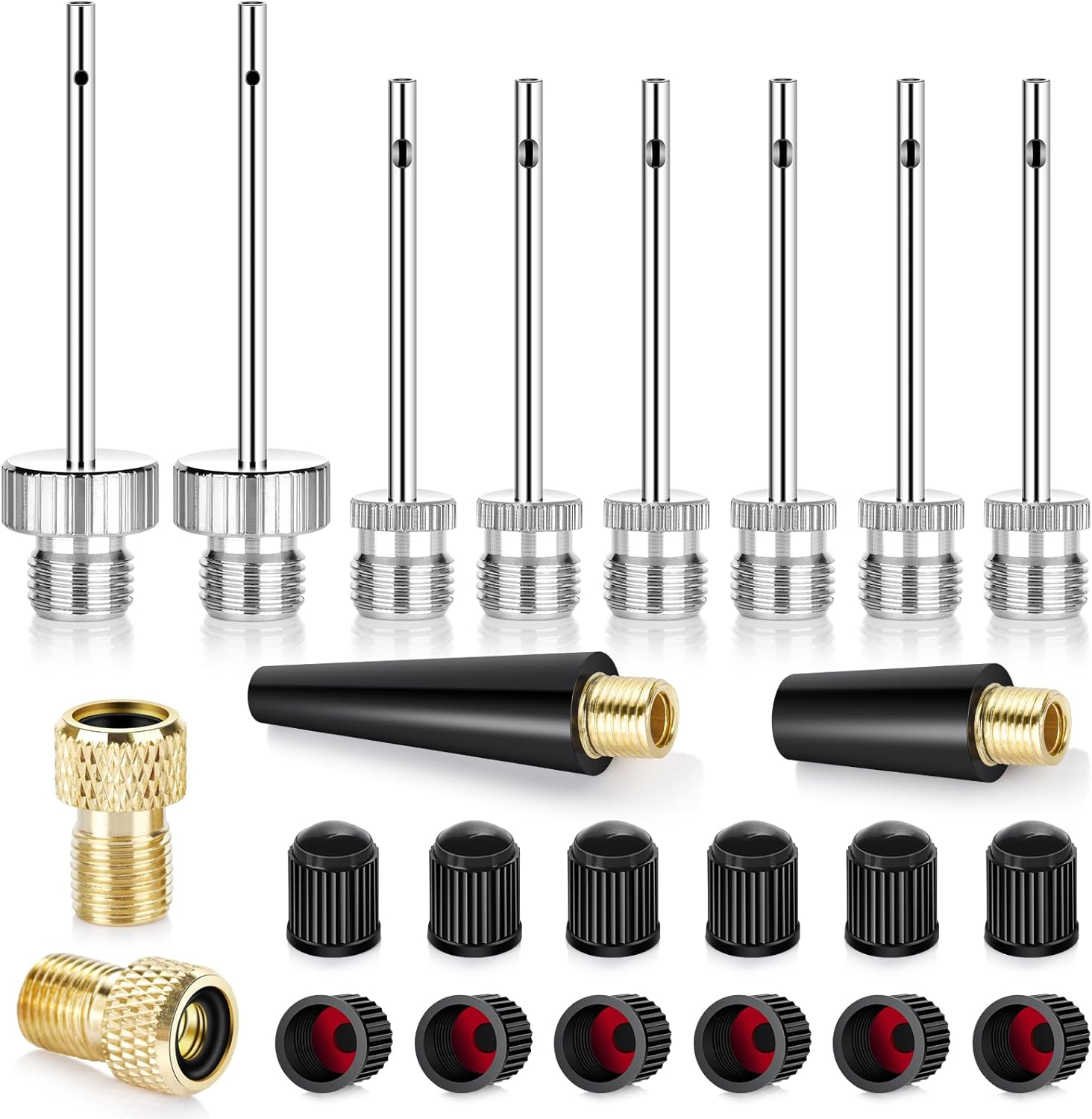
This ball pump needles kit includes brass ball needles for inflating footballs, soccer balls, basketballs, and volleyballs, plus conical nozzles for air mattresses, exercise balls, balloons, and swim rings. It also offers Presta to Schrader valve adapters for easy use with compatible bikes and rideables. The set includes sealed valve caps and a storage case, helping keep your equipment organized and ready to inflate quickly.

A small, handy tool designed to remove and install Schrader and Presta valve cores

Valve Core Removal Tool: Quickly and easily remove cores. Suitable for Tightening or removing valve cores on bicycles, cars, luggage and any other pneumatic tires.
CO2 vs. Mini vs. Floor vs. Electric Pumps
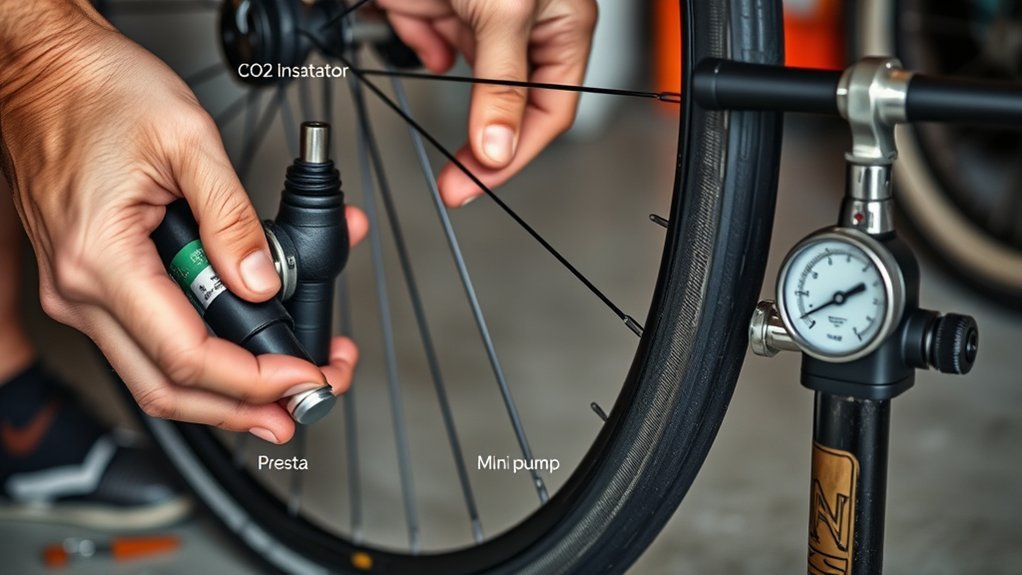
Each inflation method has a different job. A floor pump is best before rides because it is stable, efficient, and easy to read. A mini pump is slower but reusable. A portable electric pump reduces manual work but depends on battery capacity. A CO2 inflator is extremely fast and compact, but once the cartridge is empty, it is done.
- Use a floor pump for regular pressure checks and routine inflation at home.
- Use a mini or frame pump when you want a reusable emergency option that does not depend on batteries or cartridges.
- Use a portable electric pump when powered inflation and compact size matter, provided it supports your valve, pressure, and tire volume.
- Use CO2 when speed matters, such as after repairing a flat during a ride.
- Carry a backup plan if you rely on CO2 or a battery-powered pump, especially on long or remote rides.
For the cartridge-specific procedure, see TubeTyre’s CO2 inflator guide.
What If a Tubeless Tire Will Not Seat?
If a tubeless tire is already seated and simply needs more pressure, a compatible floor, mini, or electric pump can normally top it up. Initial bead seating is different: some tire-and-rim combinations need a fast burst of high-volume air to push the bead into place before air escapes. A tubeless reservoir, booster, or suitable controlled compressor can provide that burst. Schwalbe’s tubeless guidance stresses observing the maximum pressure of the tire, rim, and inflation equipment: Schwalbe Tubeless FAQ.
Warning: More pressure is not the solution to every tubeless seating problem. If the bead is uneven, the valve is blocked, or air escapes faster than the pump can supply it, stop and inspect the setup rather than exceeding the tire or rim limit.
Frequently Asked Questions
How do you pump up bike tyres with different valves?
Match the pump head to the valve. For Presta, remove the cap, loosen the small top nut, attach the pump, inflate, then tighten the nut. For Schrader, remove the cap, attach the pump directly, and inflate. For Woods/Dunlop, use a compatible Presta-style pump head or adapter and inflate within the tire and rim limits.
Why won’t my bike tire take air from the pump?
First check the valve and pump connection. A Presta valve may still be closed, the pump may be using the wrong Presta/Schrader port, the pump head may not be seated far enough, or the valve core may be stuck or clogged. If the gauge rises quickly while the tire stays soft, disconnect the pump and recheck the valve and pump-head setup.
How do I inflate a bike tire with a Presta valve?
Remove the dust cap, loosen the small top nut counterclockwise, press the tip once to confirm the valve is open, attach a Presta-compatible pump head, and inflate to your target pressure without exceeding the tire or rim limit. Remove the pump straight off, tighten the top nut clockwise, and replace the cap.
How do I fill a bike tire with a Presta valve adapter?
Open the Presta valve first, screw the adapter onto the valve, then attach a Schrader pump head. Inflate while watching the gauge. When finished, remove the pump, unscrew the adapter, close the Presta valve, and replace the cap.
What PSI should I put in my bike tires?
There is no single correct PSI for every bike. Start with the tire and rim manufacturer limits, then choose a working pressure based on tire width, total rider-and-bike weight, terrain, and whether the tire uses a tube or tubeless setup. Never exceed the lower maximum specified for the tire or rim.
How often should I check bike tire pressure?
Check pressure before important rides, after a flat repair, and whenever the bike has been sitting for a while. Narrow high-pressure tires usually need checking more often than wider lower-pressure tires. Use a gauge instead of relying only on the squeeze test.
Can I use a car tire pump on a bike tire?
Yes, if the pump fits the valve or you use the correct adapter. Schrader bike valves accept the same basic connection used for car tires, while Presta normally needs a compatible pump head or Presta-to-Schrader adapter. Add air carefully and watch the gauge because powered compressors can inflate a small bicycle tire quickly.
Conclusion
Pumping a bike tire comes down to four checks: identify the valve, use a compatible pump head, watch the gauge, and respect both the tire and rim pressure limits. Open a Presta valve before pumping, connect Schrader directly, and use the correct head or adapter for Woods/Dunlop. When you finish, confirm the pressure on the gauge and make sure the tire is holding air. For rides away from home, carry a compatible mini pump, electric pump, or CO2 backup.
Sources
- Trek Bikes: How to Pump Bike Tires to the Right Pressure — Presta and Schrader inflation steps, pump-head attachment, and tire pressure guidance.
- REI: How to Choose Bike Pumps — floor pumps, portable pumps, CO2 inflators, valve compatibility, and pressure capacity.
- Sheldon Brown: About Bicycle Inner Tubes — Presta, Schrader, Woods/Dunlop valves, valve-hole sizes, adapters, and rim compatibility.
- Schwalbe: Bike Tire Valves — current Dunlop/Woods valve information and traditional pressure-measurement limitations.
- Park Tool: Tire, Wheel and Inner Tube Fit Standards — Presta and Schrader valve-hole compatibility.
- Schwalbe: Tire Pressure FAQ — tire-pressure effects and safe pressure selection.
- Schwalbe: Tubeless Racing Bike Requirements — hookless road-system pressure limits.
- SRAM/Zipp: Know Your Tire Pressure — pressure selection based on tire, wheel, system weight, discipline, and conditions.
- Schwalbe: Tubeless FAQ — tubeless inflation, booster use, and pressure-limit precautions.

Related Articles
Are Premium Tires Worth the Extra Money?
Worth the extra money? Premium tires promise more grip, comfort, and longevity—but the real tradeoff may surprise you.
Read More
What Are OE Tires? Original Equipment Explained
Discover what OE tires really mean and why choosing the right replacement could change everything for your car’s ride, handling, and safety.
Read More
305 Tire Size Explained: How Big Is It?
I explain how big a 305 tire really is—and why the exact fit can surprise you.
Read More