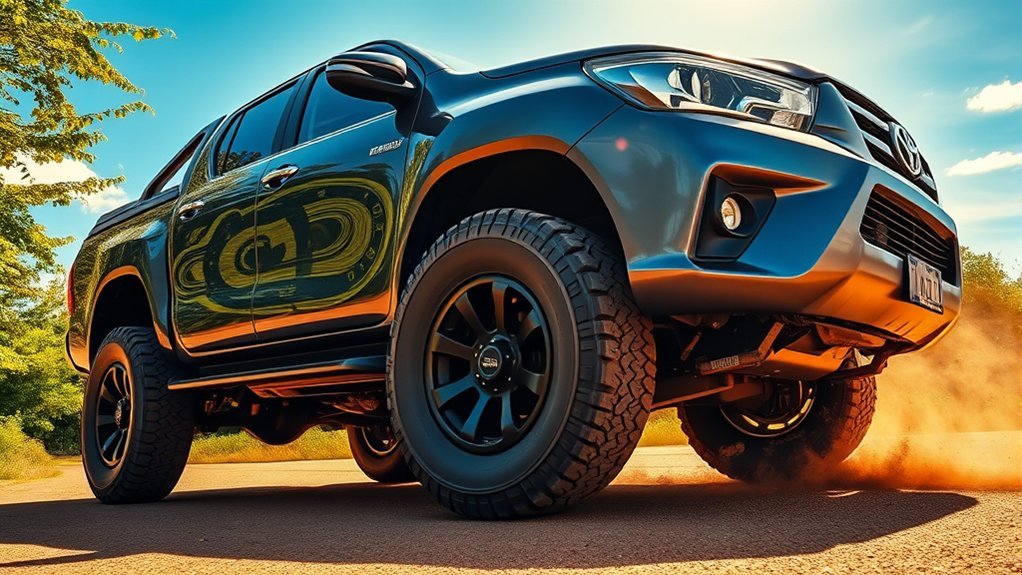
Summer tires can make a Toyota Hilux feel sharper, quieter, and more controlled on warm paved roads, especially if most of your driving is highway, city, or light touring. The key is matching the tire to your climate, your Hilux trim, and the way you use the truck. A Hilux that tows, carries heavy loads, or spends time on gravel needs different tire priorities than one used mainly on dry and wet pavement.
Quick Answer
Summer tires are worth using on a Toyota Hilux in warm climates if you mainly drive on paved roads and want better steering response, dry grip, and warm-weather wet control. Avoid them in freezing temperatures, snow, ice, or heavy off-road use, and always choose the correct size and load rating for your Hilux.
Key Takeaways
- Summer tires are designed for warm-weather grip, braking, and steering precision on paved roads.
- They are not suitable for snow, ice, or below-freezing temperatures.
- For a Hilux, load index, tire size, and pressure matter as much as tread pattern.
- All-terrain tires are usually better if your Hilux regularly sees gravel, mud, job sites, or off-road tracks.
- Check pressure monthly, rotate on schedule, and inspect tread depth to keep summer tires safe.
Are Summer Tires a Good Fit for a Toyota Hilux?
Summer tires are a good fit for a Toyota Hilux when the truck is used mostly on paved roads in consistently warm weather. They suit drivers who want more confident cornering, shorter-feeling brake response, and better steering feedback than a general all-season or heavy all-terrain tire can provide.
They are not the best choice for every Hilux owner. A pickup is often used for towing, carrying tools, driving on loose surfaces, or traveling in remote areas. If that describes your use, tire strength, puncture resistance, and all-terrain traction may matter more than sporty on-road grip.
- Best for: warm climates, paved roads, city driving, highway driving, and drivers who prioritize on-road handling.
- Not ideal for: snow, ice, freezing temperatures, mud, rocky tracks, construction sites, and frequent heavy towing on rough roads.
- Check before buying: tire size, load index, speed rating, pressure recommendation, and whether the tire is approved for SUV/light-truck use.
Understanding Summer Tires: What Makes Them Different?
Summer tires use rubber compounds and tread designs intended for warm pavement. Compared with many all-season or all-terrain tires, they often have larger tread blocks, fewer deep voids, and a contact patch that emphasizes dry and wet-road grip rather than snow or mud traction.
The National Highway Traffic Safety Administration describes summer tires as warm-weather tires that are not designed for temperatures below freezing or for snow and ice. That distinction matters because a tire that feels excellent on a warm road can lose flexibility and traction when the temperature drops too far.
Warning: Do not use summer tires on a Hilux in snow, ice, or below-freezing temperatures. If your region regularly drops near freezing, use winter tires, all-weather tires, or an appropriate all-season/all-terrain tire instead.
The common 7°C / 45°F rule is best treated as a conservative switching guideline, not a guarantee. If temperatures are consistently near that range, especially overnight or in wet conditions, start planning the switch away from summer tires before you are caught by an early cold snap.
How Summer Tires Boost Performance in Your Hilux
When fitted correctly, summer tires can make a Hilux feel more settled and responsive on-road. The biggest improvement is usually steering feel. A road-focused summer tire tends to squirm less than a deep-lug all-terrain tire, so the truck can respond more cleanly to steering inputs.
Enhanced Grip and Handling
On warm dry pavement, summer tires can provide more predictable grip during cornering, lane changes, and braking. This can be especially noticeable on a Hilux because pickups often have taller sidewalls and a higher center of gravity than passenger cars.
- Sharper steering response on paved roads
- More stable cornering in warm conditions
- Less tread-block movement than many aggressive all-terrain tires
- Better road feel for drivers who use their Hilux as a daily vehicle
Wet and Dry Performance Balance
Modern summer tires are usually designed with grooves that move water away from the contact patch. That can help in warm rain, but it does not make them flood-proof. Deep standing water, worn tread, and excessive speed can still cause hydroplaning.
For a road-driven Hilux in a warm climate, the real benefit of summer tires is not just grip. It is the combination of grip, steering precision, and braking confidence on paved roads.
Braking and Highway Stability
Summer tires can also improve confidence during highway driving because their tread and sidewall design often feels more stable at speed than a chunky off-road tire. The result is usually less tread noise, more direct steering, and a firmer feel during braking.
However, results vary by tire model. A premium all-season or highway-terrain tire can outperform a cheap summer tire, so compare actual specifications, independent reviews, and the tire maker’s intended-use category before buying.
When Should You Use Summer Tires?
Use summer tires when temperatures are consistently warm and your Hilux will be driven mainly on dry or wet paved roads. In many seasonal climates, that means late spring through early fall. In consistently warm regions, they may work for most of the year as long as snow, ice, and freezing temperatures are not part of normal driving.
Pro Tip: If your Hilux uses one set of wheels for summer and another for winter or all-terrain tires, label each tire position before storage. That makes seasonal rotation easier and helps you track wear patterns.
Summer tires make the most sense for Hilux owners who drive mostly on asphalt, do not need snow traction, and want a smoother, more responsive road feel than an all-terrain tire provides.
When Summer Tires Are the Wrong Choice
Skip summer tires if your Hilux regularly faces rough work, loose surfaces, or cold weather. A summer tire is not built to dig through mud, claw over rocks, or handle icy rural roads.
- Choose winter tires if you drive in snow, ice, or freezing temperatures.
- Choose all-terrain tires if you regularly drive on gravel, dirt, job sites, farms, forest roads, or rocky tracks.
- Choose highway-terrain or all-season tires if you want year-round convenience in mild climates and do not need maximum summer grip.
- Choose LT-rated or reinforced options when your Hilux regularly carries heavy loads, if the size and specification require it.
Comparing Summer Tires to All-Season, All-Terrain, and Winter Tires
Each tire type solves a different problem. The best tire for a Toyota Hilux depends on climate, surface, load, and how much on-road performance you want.
| Summer Tires | Best for warm paved roads, sharp steering, and strong dry/wet-road grip. Poor choice for snow, ice, freezing temperatures, mud, and rough off-road use. |
| All-Season Tires | Balanced for mild conditions and convenience. Usually less precise than summer tires in heat and less capable than winter tires in snow. |
| All-Terrain Tires | Best for mixed road and off-road use. Better for gravel, dirt, and job sites, but often noisier and less sharp on pavement than summer tires. |
| Winter Tires | Designed for cold weather, snow, and ice. They should not be treated as performance tires for hot pavement because warm use can increase wear. |
If your Hilux is a daily driver in a warm city, summer tires can be a smart upgrade. If it is a work truck, towing vehicle, farm vehicle, or weekend off-roader, an all-terrain or highway-terrain tire may be the better long-term choice.
[Products Worth Considering]

These aluminum alloy tire valve stem caps with an O-ring seal help protect valve stems from corrosion while adding a clean, stylish look to your vehicle. The universal fit works across cars, trucks, motorcycles, bicycles, and more, making them an easy upgrade for everyday driving and off-road use. Installation is quick, and the included four-pack keeps all your tires dressed and protected.

Milton S-921 pencil tire pressure gauge helps you maintain optimal tire pressure for passenger cars with accurate readings in PSI and kPa. It features a built-in deflator valve for convenient pressure adjustments, plus a single chuck head and nylon indicator bar for easy use on the go. Built from durable plated brass and designed for reliable performance, it’s a practical road trip and cold-weather maintenance tool.
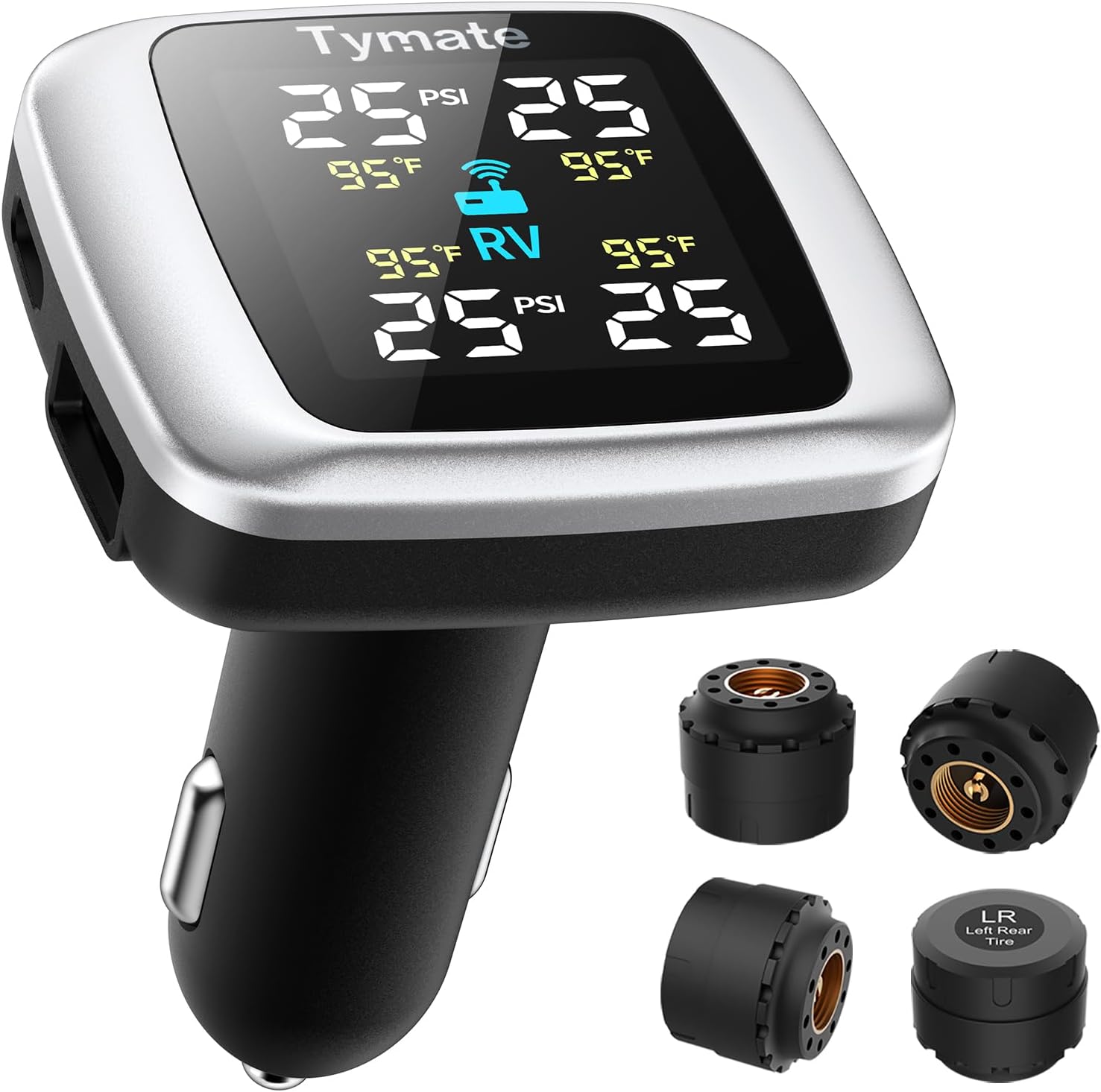
Tymate TM7 is a wireless tire pressure monitoring system that delivers real-time pressure and temperature readings for safer driving. It includes four external sensors, a bright color LCD display with adjustable backlight, and six alarm modes for high/low pressure, fast leakage, high temperature, and sensor signal or battery issues. The system covers a wide 0–144 PSI range and plugs into your vehicle’s cigarette lighter socket for quick DIY setup.
How to Choose Summer Tires for Your Hilux
Do not buy summer tires by brand name alone. A Hilux is heavier and more versatile than a passenger car, so correct fitment matters.
[Products Worth Considering]

Measure tire tread depth quickly and accurately with this LUMITECO dial gauge that reads in 1/32" increments up to 14/32". The color-coded green/yellow/red zones make it easy to judge tire wear and know when replacement is needed. A rugged, compact design with a protective pouch helps keep the gauge ready for use on cars, trucks, motorcycles, and more.

Vigorder rubber cement glue delivers superior adhesion and cures quickly within about 30 seconds for seamless rubber bonding. Once cured, it helps provide a strong, durable, waterproof seal that holds up to vehicle weight, pressure, and heat. Suitable for cars, motorcycles, trucks, bicycles, and off-road tires, it’s designed for emergency patch and maintenance repairs.

The Continental Grand Prix 5000 is an allround road bike tire engineered for faster rolling, improved ride comfort, and enhanced puncture protection. It features a Vectran Breaker cut-protection layer, Lazer Grip micro-profile tread for confident cornering control, and Active Comfort Technology to damp vibration for smoother rides. BlackChili compound optimizes grip and speed for everyday performance and long-lasting confidence.
1. Check the Correct Tire Size
Use your owner’s manual or the Tire and Loading Information Label on the vehicle to confirm the correct tire size. NHTSA recommends using the vehicle manufacturer’s tire size guidance rather than guessing from online listings alone.
2. Match the Load Index and Load Range
The load index tells you how much weight each tire can carry. This is especially important on a Hilux because the truck may carry passengers, tools, cargo, or trailer tongue weight. Never downgrade to a lower load index than your vehicle requires.
Note: If your Hilux regularly carries heavy loads or tows, ask the tire retailer to confirm the correct load index, load range, and inflation pressure for your exact model, wheel size, and use case.
3. Consider Speed Rating and Heat Resistance
Speed rating and temperature resistance matter for long highway drives in hot climates. In markets where Uniform Tire Quality Grading applies, UTQG ratings can help compare treadwear, traction, and temperature resistance, but they should not be your only buying factor.
4. Think About Towing and Payload
A soft, sporty summer tire may feel excellent when the truck is empty, but towing and payload can change how the tire behaves. If your Hilux tows a trailer, carries equipment, or travels long distances in heat, prioritize load capacity, heat resistance, and stability over maximum cornering grip.
5. Be Honest About Road Surface
If your Hilux sees gravel every week, a road-biased summer tire may wear faster or be more vulnerable to cuts than an all-terrain tire. If your driving is almost entirely asphalt, the summer tire becomes a stronger option.
How to Care for Your Summer Tires to Maximize Longevity
Good maintenance matters more on a pickup because load, tire pressure, and alignment changes can quickly create uneven wear. Follow your Hilux owner’s manual first, then use these general tire-care practices.
- Check pressure monthly: NHTSA recommends checking all tires, including the spare, at least once a month when the tires are cold.
- Use the vehicle pressure label: Inflate to the pressure listed by Toyota for your Hilux, not the maximum pressure printed on the tire sidewall.
- Rotate on schedule: Follow the owner’s manual. If the manufacturer recommends rotation, a common interval is 5,000–8,000 miles / 8,000–13,000 km, or sooner if uneven wear appears.
- Watch tread depth: Tires should be replaced when they reach the legal/safety minimum, and wet-weather performance can decline before the tire looks completely worn out.
- Store off-season tires properly: Keep them clean, dry, cool, and away from direct sunlight, petroleum products, and electric motors.
- Check tire age: The last four digits of the DOT Tire Identification Number show the week and year the tire was made.
- Inspect after impacts: Check for bulges, cuts, cracks, vibration, or sidewall damage after potholes, rocks, or curb strikes.
Underinflation, overloading, and poor alignment can shorten tire life, reduce fuel efficiency, and increase heat buildup. If your Hilux pulls to one side, vibrates, or wears one shoulder faster than the other, have the alignment and balance checked.
Why Summer Tires Are Worth the Investment for Enthusiasts
For drivers who value handling, summer tires can make a Hilux feel more precise and enjoyable on warm roads. The improvement is most noticeable if you are replacing a noisy or aggressive all-terrain tire with a road-focused summer or performance SUV tire.
The tradeoff is versatility. Summer tires may wear faster than touring all-season tires, and they give up cold-weather and off-road capability. That makes them a strong choice for the right Hilux driver, not a universal upgrade for every Hilux.
Where to Find the Best Summer Tires for Your Hilux
Start with the size and load specification on your Hilux, then compare tires from reputable manufacturers and verified retailers. Look for tires intended for SUVs, light trucks, or heavier vehicles when your fitment requires it.
- Confirm exact tire size from the placard or owner’s manual.
- Match or exceed the required load index.
- Choose a tread pattern that fits your real driving surface.
- Compare UTQG ratings where available and applicable.
- Read recent reviews from drivers using the same tire on pickups or SUVs.
- Use a certified installer for mounting, balancing, and pressure setup.
Professional installation helps protect the wheels, reduce vibration, and ensure the tires are balanced correctly from day one.
[Products Worth Considering]

Accurately measure tire tread depth with a calibrated gauge marked from 0 to 1 inch in 1/32 inch increments. The color-coded bar helps you quickly identify tread condition ranges, supporting safe driving for trucks, motorcycles, automobiles, and passenger vehicles.

Protect tire valves from water, dust, and sand to help prevent leaks and support safe driving. These universal stem caps install quickly by hand and feature durable aluminum alloy construction with an inner sealing ring for better air retention. Compatible with cars, SUVs, trucks, motorcycles, and bicycles for everyday convenience.

Monitor tire tread wear with a smart, color-coded depth gauge that shows clear condition ranges at a glance. The bar is range marked for fast, easy readings, helping you maintain safer traction and performance. Each gauge is portable with a pocket clip, and the set includes 20 units for daily use and sharing.
Frequently Asked Questions
What are the disadvantages of summer tires?
Summer tires are poor choices for snow, ice, freezing temperatures, mud, and rough off-road use. They may also wear faster than touring all-season tires, especially if the truck is overloaded, misaligned, or driven on coarse roads.
What tyres should I put on my Hilux?
For warm paved-road driving, summer tires can work well. For mixed weather, all-season or all-weather tires may be easier to live with. For gravel, dirt, farms, job sites, or trails, all-terrain tires are usually the better Hilux choice. For snow and ice, use winter tires.
Can I use summer tires on a Hilux in the rain?
Yes, summer tires can perform well in warm rain when they have enough tread depth and the road is not flooded. They are not a substitute for safe speed, proper pressure, and good tread condition. Deep standing water can still cause hydroplaning.
Are summer tires good for towing with a Toyota Hilux?
They can be suitable for towing on warm paved roads only if the tire size, load index, pressure, and speed rating meet your Hilux and trailer requirements. If you tow on rough roads or carry heavy loads often, a reinforced highway-terrain or all-terrain tire may be more appropriate.
Can I use summer tires off-road?
Light gravel roads may be manageable, but summer tires are not designed for mud, rocks, ruts, or sharp surfaces. If your Hilux regularly leaves pavement, an all-terrain tire is usually safer and more durable.
How long do summer tires last on a Hilux?
Lifespan depends on tire model, driving style, load, alignment, road surface, pressure, and rotation habits. A Hilux used mostly on smooth highways will usually be easier on tires than one carrying heavy loads on rough roads.
Conclusion
Summer tires can significantly improve a Toyota Hilux on warm paved roads by sharpening steering response, improving dry grip, and giving the truck a more confident road feel. They are worth it if your climate is warm and your driving is mostly on-road. They are not the right choice for snow, ice, freezing temperatures, heavy off-road use, or demanding work-truck conditions. For the best result, choose the correct size and load rating, follow the pressure label, and maintain the tires carefully.
Sources
- NHTSA TireWise — tire types, correct tire size, pressure, tread depth, rotation, and safety guidance
- NHTSA Tire Buyers’ FAQ — tire type selection, tire label guidance, UTQG overview, and tire age basics
- NHTSA Consumer Guide to Uniform Tire Quality Grading — treadwear, traction, and temperature grade guidance
- NHTSA New Tire Purchase Guide — tire pressure, rotation, tread inspection, tire age, and recall reminders
- Goodyear Summer Tires — examples of manufacturer summer tire categories and fitment filtering