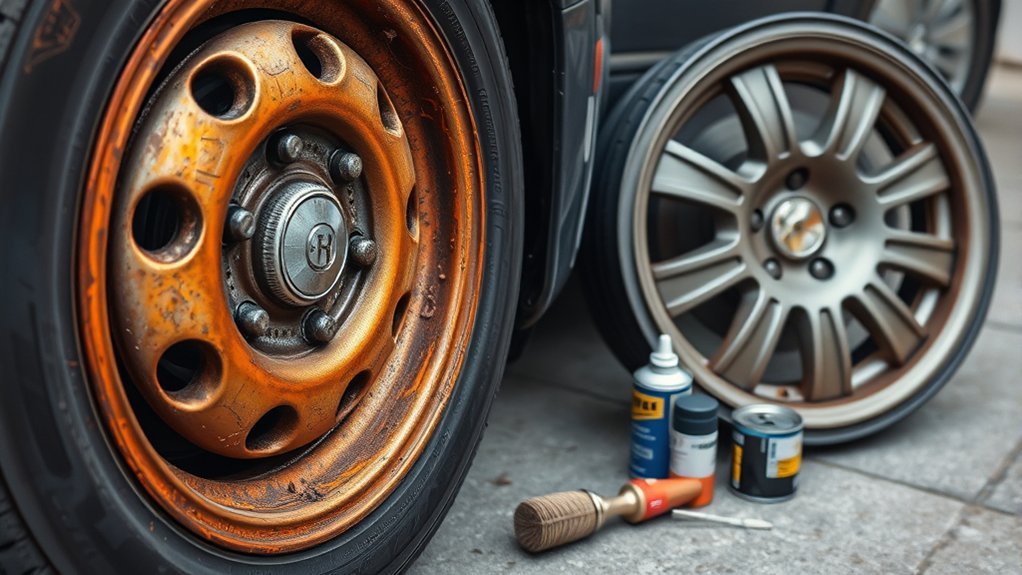
Rust or rust-colored buildup on tire rims can come from several different problems, including exposed steel, iron-rich brake dust, road salt, moisture, or corrosion beneath a damaged wheel finish. The safest way to clean it depends on whether your wheel is steel, painted or clear-coated alloy, polished aluminum, chrome-plated, or another specialty finish. Start gently, use products approved for that finish, and treat deep pitting, cracks, deformation, or recurring air loss as reasons for professional inspection.
Quick Answer
To remove light rust or rust-colored contamination from tire rims, let the wheels cool, rinse away loose grit, use a cleaner approved for the wheel finish, agitate gently with a soft brush or microfiber cloth, rinse thoroughly, and dry. Deep pitting, cracks, deformation, or corrosion around sealing and mounting areas needs professional inspection.
Key Takeaways
- Steel wheels can develop true reddish-brown iron rust where the protective coating has failed.
- Aluminum-alloy wheels do not form conventional iron rust, but they can oxidize, pit, discolor, or corrode beneath damaged finishes.
- Iron-rich brake-wear particles can also create orange or brown deposits that look like wheel rust.
- Clean wheels only when they are cool and use a cleaner, brush, polish, and protectant that are compatible with the specific finish.
- Road salt and moisture accelerate corrosion, so winter cleaning and prompt treatment of chips or finish damage are especially important.
- Deep pitting, cracks, deformation, damaged lug or mounting areas, or recurring tire-pressure loss should be evaluated professionally.
At a Glance
| Time Required | One cleaning session for light surface contamination; stubborn corrosion may require repeated treatment or professional refinishing. |
| Difficulty | Easy for surface dirt, brake dust, and light contamination; advanced pitting or structural damage is not a basic DIY repair. |
| Tools Needed | Water, bucket, wheel-finish-safe cleaner, soft wheel brush or microfiber cloth, clean drying towel, and an optional compatible wheel protectant. |
| Cost | Low if you already own suitable cleaning supplies; professional refinishing or wheel replacement varies with the wheel and extent of damage. |
Why Tire Rims Look Rusty
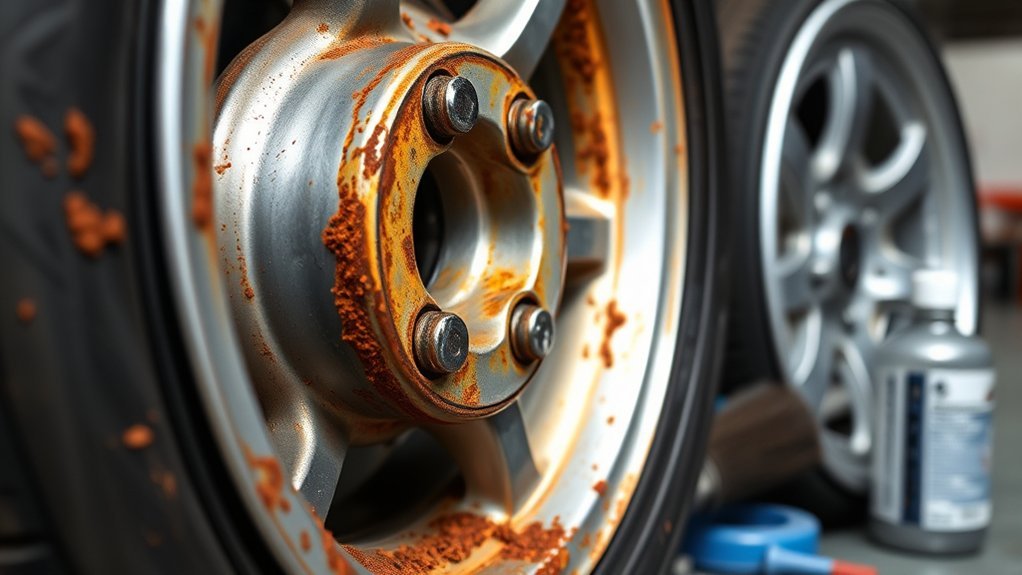
A rim can look rusty for several reasons, and identifying the cause before you start cleaning helps prevent damage to the wheel finish.
Steel-Wheel Rust
Steel contains iron, so a steel wheel can develop true reddish-brown rust when water and oxygen reach exposed metal. Scratches, chipped paint, curb damage, road salt, and neglected grime can all expose the steel beneath the protective coating.
Corrosion on Aluminum-Alloy Wheels
Aluminum does not develop conventional iron rust. Instead, it oxidizes and can suffer other forms of corrosion, particularly where the protective coating has been scratched, chipped, or otherwise compromised. The result may look white, gray, chalky, stained, blistered, or pitted rather than reddish brown.
Alcoa’s wheel-care guidance likewise distinguishes aluminum oxidation from rust and recommends identifying the wheel finish before selecting cleaning or polishing products.
Brake Dust and Iron Fallout
Brake wear can deposit metal-rich particles on wheel surfaces. A published review of brake-wear particles from the European Commission’s Joint Research Centre documents iron-containing particles associated with braking, including material produced by cast-iron brake discs.
When iron-rich particles remain on a wet wheel, they can oxidize and create orange or brown specks. On an alloy wheel, that rusty color may therefore be contamination sitting on the finish rather than the aluminum itself turning into iron rust.
Why Road Salt Makes the Problem Worse
Winter road salt creates a more corrosive environment when it mixes with moisture. Penn State’s College of Engineering explains that increasing salinity speeds corrosion reactions and identifies vehicle corrosion as one disadvantage of road-salt use.
Rust-colored spots do not automatically mean the wheel itself is rusting. On alloy wheels, first determine whether you are seeing iron fallout, damaged clear coat, oxidation, or deeper corrosion.
How to Clean Rust Off Rims
The safest cleaning method starts with the least aggressive option. Do not immediately reach for sandpaper, steel wool, household acid, or a strong wheel acid because those methods can permanently damage some finishes.
[Products Worth Considering]

This 7-piece car wheel brush kit delivers gentle, scratch-free cleaning with extra-soft, metal-free brush heads designed to lift brake dust, dirt, and grime. The brushes bend up to 360 degrees for hard-to-reach wheel areas, while the included tire shine applicator pad helps apply tire dressing evenly with less build-up. An organizer bag is included for convenient storage, making it ideal for regular wheel and tire detailing.
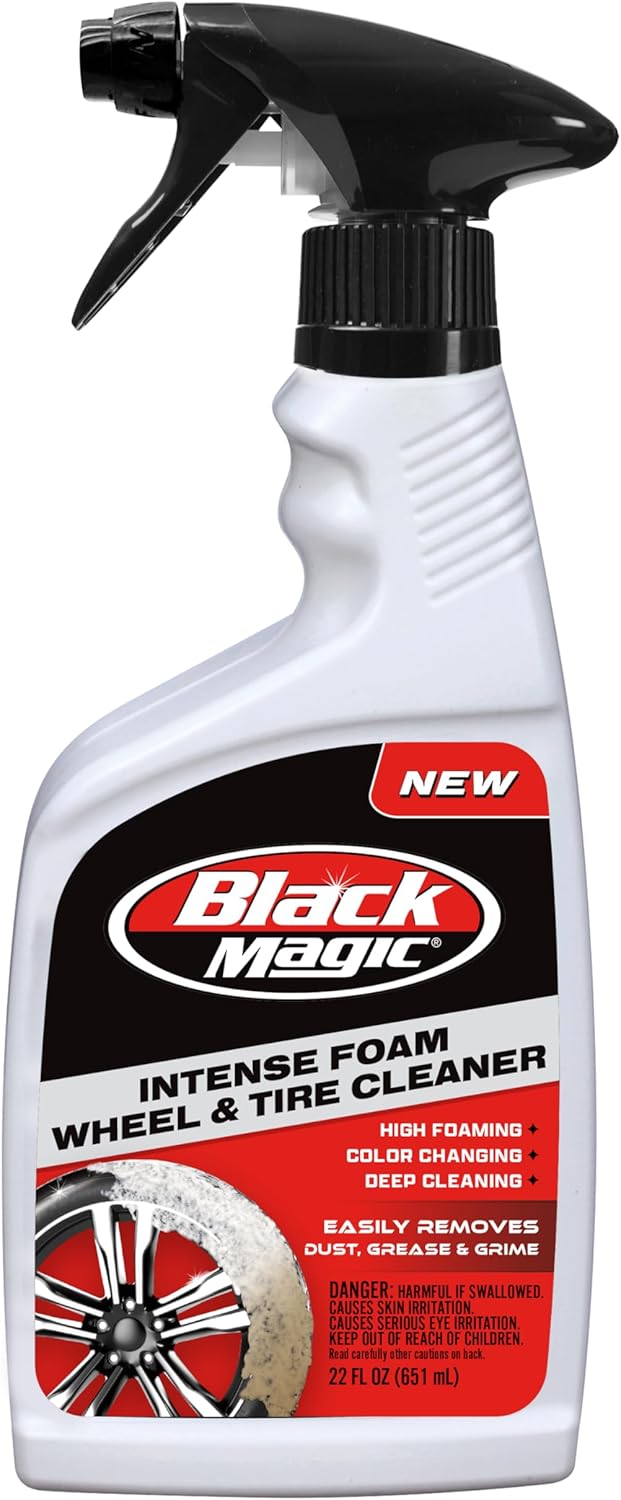
Black Magic Intense Foam Wheel & Tire Cleaner uses a high-foaming action to lift away dirt, grime, and brake dust without scrubbing. The color-changing formula helps show contaminants being dissolved as foam turns from white to brown. Safe for all wheel types and even wheel wells, it leaves a like-new, slick finish with a fresh cherry scent.

This metal-free wheel and tire cleaning brush uses dense, fluffy synthetic wool to safely clean rims, spokes, fenders, and engine areas without worrying about damaging surfaces. Its flexible, comfortable design helps you reach detailed areas while maintaining durability, and the extra absorbent fibers work well with wheel spray cleaners for faster cleanup. Reusable and washable performance helps prevent grime and build-up for cleaner vehicles and easier maintenance at home.
1. Identify the Wheel Material and Finish
Before applying a chemical, determine whether the wheel is painted steel, clear-coated alloy, bare or polished aluminum, anodized, powder-coated, chrome-plated, or another specialty finish. Check the vehicle or wheel manufacturer’s care instructions when possible.
This matters because a product that is acceptable on one finish may discolor, etch, dull, or strip another. Current Alcoa guidance, for example, specifically advises confirming the finish type before choosing cleaning or polishing products.
2. Let the Wheels Cool
Clean wheels when they are cool to the touch. Applying chemicals to a hot wheel can cause cleaner or water to dry too quickly and may leave spotting or uneven staining. Alcoa also recommends cleaning its wheels only after they have cooled.
Warning: Do not mix wheel cleaners, acids, rust removers, bleach, or other chemicals. Follow the product label, use any recommended gloves or eye protection, work in a ventilated area, and keep chemicals from drying on the wheel or tire.
3. Rinse Away Loose Dirt
Rinse the rim thoroughly with clean water before scrubbing. This removes sand, grit, loose brake dust, and road debris that could scratch the finish when you use a brush or cloth.
4. Apply a Wheel-Finish-Safe Cleaner
Use a mild cleaner or wheel cleaner specifically approved for your wheel material and finish. For sensitive aluminum finishes, choose a product designed for that purpose rather than assuming every “wheel cleaner” is universal.
Let the cleaner work only for the time stated on its label. There is no single correct dwell time for every formula. Never allow the product to dry on the surface.
5. Agitate Gently
Use a soft wheel brush, detailing brush, sponge, or microfiber cloth to work on the stained areas. Apply enough pressure to lift contamination without grinding grit into the finish.
If orange specks remain on a coated alloy wheel after ordinary washing, a wheel-safe iron-removal product may be more appropriate than sanding because the discoloration may be oxidized brake-wear contamination rather than corrosion of the aluminum substrate.
6. Rinse Thoroughly
Flush away loosened grime and all cleaner residue with clean water. Pay attention to spoke corners, lug recesses, valve areas, and other places where chemicals can collect.
7. Dry the Wheel Completely
Dry the rim with a clean microfiber towel or other soft cloth. Drying reduces water spotting and prevents moisture from lingering in crevices.
8. Protect the Finish if Appropriate
Apply a wheel sealant, wax, or polish only if the product is approved for that particular finish. Polished bare aluminum may benefit from a suitable aluminum polish, while painted, clear-coated, anodized, or specially treated wheels may require a different product or no polish at all.
Pro Tip: Start with the mildest method that can solve the problem. If a stain disappears with a wheel-safe cleaner or iron remover, there is no reason to sand through a protective coating.
Cleaning Rust From Steel vs. Alloy Rims
[Products Worth Considering]

This 3-piece wheel and tire brush set makes it easy to clean light, medium, and heavy dirt from wheels, rims, tires, and exterior surfaces. It includes both soft and stiff bristle options for gentle scrubbing and tough grime removal, helping lift brake dust and road buildup. The long-handle design supports comfortable cleaning across cars, trucks, SUVs, RVs, motorcycles, and more, with simple care instructions to restore brush shape.

This professional wheel and rim cleaning brush set lifts brake dust, grime, and dirt with soft, scratch-free microfiber and synthetic wool fibers. The rim brush bends up to 360 degrees for easy access to hard-to-reach areas around spokes, lips, and faces. Ideal for thorough cleaning of car, truck, motorcycle, bicycle, RV, and more wheel and tire surfaces.

Turtle Wax Hybrid Solutions Hyper Foam Wheel and Tire Cleaner uses an advanced high-foaming formula that clings to wheels and tires to dissolve tough road grime, embedded brake dust, and light iron deposits. It helps restore black tires while prepping surfaces for tire shine or protective coatings. The pH-balanced cleaner is safe for all wheel finishes and includes corrosion-repellent polymers that reduce future contaminant build-up.
Light Surface Rust on a Steel Wheel
If a painted steel wheel has a small area where paint has failed and bare steel has begun to rust, first wash and dry the wheel. A rust-removal product suitable for steel can then be used according to its instructions.
Minor exposed-steel corrosion may eventually require surface preparation, primer, and a compatible wheel coating to protect the bare metal again. Avoid grinding or sanding tire bead seats, lug seats, mounting faces, or other safety-critical surfaces unless the vehicle or wheel manufacturer provides a specific approved procedure.
Rust-Like Spots on a Coated Alloy Wheel
Do not assume that orange dots on an alloy wheel require sanding. They may be iron contamination from brake wear. Begin with a wheel-finish-safe cleaner and, if appropriate for the finish, an iron-removing wheel product.
If the clear coat is bubbling, peeling, or lifting and corrosion is visible underneath it, cleaning may improve the appearance but will not repair the failed coating. Professional refinishing may be needed.
Polished or Bare Aluminum
Bare or polished aluminum can oxidize and lose its shine. Use a cleaner and polish specifically intended for uncoated aluminum. Do not apply a strong acidic or alkaline cleaner simply because the wheel is metal.
Chrome, Plated, Anodized, or Specialty Finishes
Follow the wheel manufacturer’s instructions closely. Abrasives and aggressive chemicals can permanently change the appearance of plated, anodized, powder-coated, or specialty-treated wheels.
How to Prevent Rust on Wheel Rims
Regular cleaning is one of the simplest ways to limit brake-dust buildup, road grime, and salt deposits. Use a mild, wheel-compatible cleaner and rinse thoroughly.
Dry each wheel after washing rather than allowing water to sit in recesses. If the finish allows it, apply a compatible wheel sealant or wax to make contamination easier to remove and provide an additional barrier between the finish and the environment.
Inspect wheels for chipped paint, peeling clear coat, bubbling, curb damage, exposed metal, pitting, or unusual discoloration. Treat finish damage early because exposed material is more vulnerable to moisture and salt.
During winter, rinse wheels more frequently after driving on salted roads. Road salt is especially important because chloride-rich moisture promotes corrosion. Penn State notes that increased salinity accelerates corrosion reactions.
- Wash brake dust and road salt away before thick deposits build up.
- Use cleaners and protectants approved for your wheel finish.
- Repair chipped coatings before exposed steel or alloy deteriorates further.
- Check tire pressure regularly so a developing sealing problem is noticed early.
- Inspect the inner rim as well as the visible outer face when the wheel is serviced.
[Products Worth Considering]

This 3-piece wheel brush set makes it easy to clean wheels and tires with soft, scratch-free brushes designed for lifting brake dust and grime. The flexible rim brush bends up to 360 degrees to reach hard-to-access areas for a thorough clean, while the comfortable grip helps control during detailing. A dedicated detailing brush supports gentle cleaning for sensitive surfaces, including interior use.

This oesee 8-piece wheel care kit helps you clean, scrub, and dry wheels safely with purpose-built brushes and towels. The scratch-free microfiber wheel brush lifts brake dust and grime, while the stiff pro-grip tire brush removes tire browning and embedded dirt. A twist loop microfiber drying towel and an applicator help achieve a streak-free finish and cleaner, more even product application.

Suds Lab WB Premium Detailing Wheel Brush delivers a scratch-free clean using ultra-soft microfiber bristles that lift brake dust, dirt, and grime without swirling. The ergonomic non-slip handle helps you deep-clean rims, wheels, and tires with reduced hand fatigue while reaching tight contours. It’s reusable and machine washable for long-term detailing, and works across cars, trucks, SUVs, and motorcycles plus multi-purpose cleaning tasks.
Why Brake Dust Makes Rims Look Rusty
Brake dust is produced as the brake pad and disc wear during braking. Its exact composition varies with the brake system, but research has identified iron and other metals in brake-wear particles.
Some of those particles settle on nearby wheel surfaces. If iron-containing material remains there in the presence of moisture and oxygen, it can oxidize and produce reddish-brown specks.
This distinction is especially important on aluminum-alloy wheels. An orange spot on an alloy wheel can be oxidized iron contamination sitting on top of the coating rather than “rusting aluminum.”
Regular washing reduces the amount of brake residue that remains on the finish. For stubborn bonded contamination, use an iron-removing product only when its manufacturer says it is safe for your wheel’s coating.
Note: Brake dust is not identical from one vehicle to another. Pad formulation, rotor material, braking conditions, temperature, and driving style all influence the particles produced.
When Rim Corrosion Needs Repair
Surface staining and a structurally damaged wheel are not the same problem. Light contamination may clean away completely, while deep corrosion represents actual material or coating deterioration.
Have the wheel professionally inspected if you notice:
- deep or widespread pitting;
- cracks or visible fractures;
- bending or deformation;
- severe flaking or large areas of failed coating;
- corrosion around lug holes, mounting faces, valve openings, or the tire bead area;
- a wheel that repeatedly loses tire pressure without an obvious tread puncture;
- vibration or other symptoms that begin after wheel damage.
Alcoa’s corrosion guidance notes that advanced corrosion can progress to pitting, cracks, holes, and damage to wheel-end components. Cleaning can remove contamination, but it cannot replace metal already lost to severe corrosion.
A qualified tire or wheel professional can inspect the bead seat, valve area, inner barrel, mounting face, lug areas, and overall wheel condition and determine whether refinishing, specialized repair, or replacement is appropriate.
Frequently Asked Questions
Is Rust on Tire Rims Bad?
It depends on the severity and location. Light surface rust on exposed steel or rust-colored brake-dust contamination may be mainly cosmetic. Deep pitting, cracks, deformation, corrosion around mounting or tire-sealing surfaces, or recurring air loss can be more serious and should be inspected professionally.
Can You Stop Rust Once It Starts?
Light steel surface rust can often be removed and the exposed metal protected again if the damage has not become deep. However, cleaning cannot replace metal already lost to heavy corrosion. Correct the source of moisture or coating damage and restore protection with products appropriate for the wheel.
Will WD-40 Remove Rust From Rims?
Some WD-40 products can help with rust, but “WD-40” is not one universal treatment. The company’s Multi-Use Product can help penetrate light corrosion, while WD-40 Specialist Rust Remover Soak is a dedicated rust-removing product. Before using either on a wheel, confirm that it is suitable for the wheel material, coating, nearby tire, and application method. Do not assume a product designed for bare metal is appropriate for every finished wheel.
How Do You Make a Rusty Tire Rim Look Good Again?
First identify the wheel material and whether the discoloration is true steel rust, alloy corrosion, or iron contamination. Wash the wheel when cool, use a compatible cleaner, gently agitate, rinse, and dry. Light exposed-steel rust may need refinishing, while damaged alloy coatings may require professional refinishing rather than aggressive sanding.
Why Does an Alloy Wheel Look Rusty if Aluminum Does Not Rust?
Orange or brown spots on an alloy wheel can come from iron-containing brake-wear particles that have oxidized on the surface. The aluminum itself can also oxidize or corrode, but that typically produces different discoloration, pitting, coating failure, or whitish corrosion products rather than conventional iron rust.
Can Rim Corrosion Cause a Tire to Lose Air?
Corrosion or damage in areas involved in sealing, such as the bead seat or valve area, can contribute to air-loss problems. If one tire repeatedly loses pressure, have the complete tire-and-wheel assembly inspected rather than simply adding air or repeatedly cleaning the visible wheel face.
Conclusion
A rusty-looking tire rim is not always suffering from the same problem. Steel can develop true rust, aluminum can oxidize and corrode, and iron-rich brake dust can leave rust-colored deposits on otherwise sound alloy wheels. Start by identifying the wheel material and finish, clean it gently when cool, and use products designed for that surface. Regular washing, thorough drying, winter salt removal, and finish-compatible protection can slow recurrence. If you find deep pitting, cracks, deformation, damage around the tire seal or mounting areas, or unexplained pressure loss, stop treating the problem as cosmetic and have the wheel inspected.
Sources
- Alcoa Wheels — How to Maintain That Alcoa Wheels Shine — wheel-finish identification, mild pH-neutral cleaning, cool-wheel cleaning, drying, polishing limits, and abrasive/chemical cautions.
- Penn State College of Engineering — Impacts of Road Salt — road salt composition and its role in accelerating corrosion.
- European Commission Joint Research Centre — Brake Wear Particle Emissions: A Review — brake-wear particle sources and composition.
- Alcoa Wheels — Causes and Effects of Wheel-End Corrosion — moisture, salt, pitting, cracking, and advanced corrosion concerns.
- WD-40 — Removing Rust — distinction between light-rust applications and dedicated WD-40 Specialist Rust Remover products.