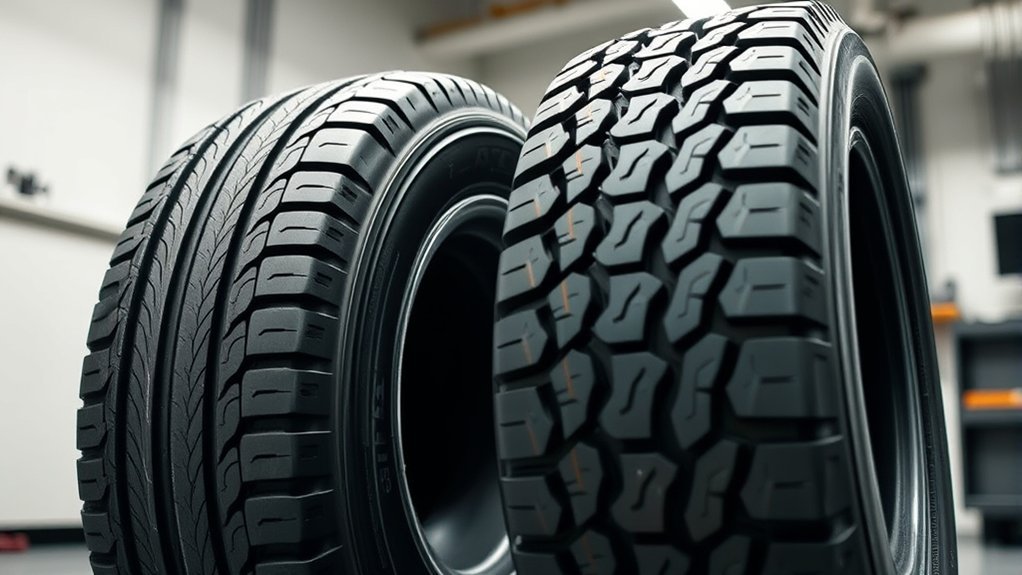
SL and C1 tires describe different load-range categories, but the letters alone do not tell you exactly how much weight a tire can carry. SL means Standard Load, while C1 is commonly used in U.S. tire catalogs for a Load Range C, 6-ply-rated tire associated with a higher maximum load-carrying pressure. Your vehicle, tire size, load index, and inflation requirements ultimately determine which choice is correct.
Quick Answer
SL tires usually suit vehicles designed for Standard Load passenger tires and can provide a lighter, more compliant setup. C1 generally identifies a 6-ply-rated Load Range C tire with greater inflation capability. However, C1 is not automatically safer or able to carry more weight; always compare the specific tire’s load index and approved inflation requirements.
Key Takeaways
- SL means Standard Load and is commonly used on passenger-car, crossover, and light-SUV applications.
- C1 commonly refers to a 6-ply-rated Load Range C tire in U.S. tire catalogs, often with a 50-PSI maximum load-carrying pressure specification.
- Load range does not directly tell you how many pounds a tire can carry; compare the tire’s load index or manufacturer load table.
- Do not inflate a C1 tire to 50 PSI simply because it can accept that pressure. Use the vehicle placard and approved load-and-inflation guidance.
- Choose a tire that meets the vehicle manufacturer’s size, load-capacity, speed-rating, and inflation requirements before considering comfort, weight, or off-road durability.
What Do SL and C1 Mean?
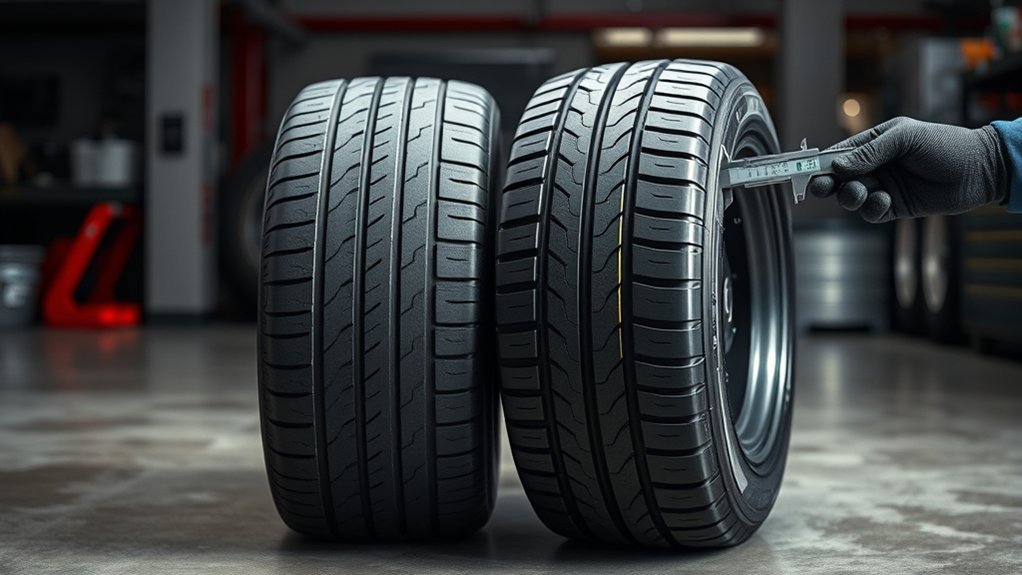
SL stands for Standard Load. It identifies a passenger-type load category intended to carry its rated load under the inflation conditions established for that tire size and standard. Toyo’s sidewall guidance lists SL as Standard Load, while its specifications show that the exact pressure and load numbers still vary by tire and size.
C1 needs a little more explanation. In many U.S. tire-retailer databases, C1 distinguishes one version of Load Range C. Load Range C is traditionally described as 6-ply-rated. The “ply rating” describes a strength/load-range category; it does not necessarily mean that six physical carcass plies are inside the tire.
That distinction matters because load range and load index are different specifications. Bridgestone describes load range as the classification that replaced the older ply-rating terminology, while the load index is the number indicating the maximum weight an individual tire can carry under specified conditions.
You should therefore avoid reading “C1” as simply meaning “commercial tire” or “more load capacity.” Depending on size and construction, an SL tire can have a load index that meets or exceeds the needs of a particular vehicle. The actual numbers on the tire and manufacturer specification sheet are what matter.
Note: The term “C1” can also mean something completely different in European tire-label regulations, where C1 refers to the passenger-car tire class. When shopping in the U.S., confirm that “C1” in the listing actually refers to the tire’s load-range specification.
SL vs C1 Tires at a Glance
| Feature | SL | C1 / Load Range C |
| Meaning | Standard Load | Common U.S. catalog designation for a Load Range C category |
| Traditional ply rating | Passenger Standard Load category | 6-ply-rated |
| Typical catalog pressure distinction | Standard-load reference pressure varies by standard and tire | C1 is commonly associated with a 50-PSI maximum load-carrying pressure category |
| Actual load capacity | Check load index/specification | Check load index/specification |
| Likely ride character | Often lighter and more compliant when comparing otherwise similar tires | May feel firmer because of construction and required operating pressure |
| Best choice | When it meets the vehicle’s required load, size, speed rating, and intended use | When the specific C-range tire meets the vehicle’s requirements and its construction benefits your use |
Load Range vs Load Index: The Difference That Matters
The most important correction when comparing SL and C1 tires is that load range is not the same as load capacity.
The load index is the numerical code in a tire’s service description. For example, in a marking such as 265/70R17 115T, “115” is the load index. Michelin states that replacement tires should meet or exceed the load rating specified by the vehicle manufacturer. You can review Michelin’s load-rating guidance for the distinction.
The load range describes the tire’s load-and-inflation category and construction strength classification. A C-range tire may permit greater inflation pressure than an SL tire of a similar application, but that does not let you assume it carries more pounds without checking its load index or manufacturer’s load table.
This is why two tires of the same nominal diameter can have different load indexes even when one is SL and the other is C. Always compare the full specification rather than choosing by load-range letter alone.
SL vs C1 Tires: Load Capacity Differences
When you compare load capacity, do not assume a C1 tire automatically carries more than an SL tire. The specific tire’s load index, size, inflation pressure, and service conditions determine its rated capacity.
C1/Load Range C tires commonly have greater pressure capability than Standard Load passenger tires. That can make Load Range C useful in applications where an LT-style tire needs more inflation pressure to support the required load.
However, a higher permitted pressure does not automatically create more vehicle payload. Your vehicle’s GVWR, GAWR, payload rating, and tow rating remain vehicle limits. Installing a tire with a stronger load range cannot raise those ratings.
The safest approach is to select a tire that meets or exceeds the original equipment load requirement. Toyo likewise advises using replacement tires that meet or exceed the load-carrying capacity of the original equipment tires in its sidewall and load-index guidance.
Warning: Never choose tire pressure from the load-range label alone. A tire marked for a high maximum pressure should not automatically be inflated to that number. Use the vehicle manufacturer’s cold-pressure recommendation for approved OE fitments and proper load-and-inflation data when changing tire type or size.
[Products Worth Considering]

ETENWOLF’s tire pressure gauge helps you quickly and accurately check tire PSI across cars, trucks, motorcycles, bikes, and more. It’s manually calibrated to ANSI B40.1 Grade A for reliable readings, includes a large glow dial for easy nighttime viewing, and features a 360-degree swivel chuck for use at any valve angle. The gauge also works consistently in extreme hot or cold weather.

Keep your tires properly inflated with this analog VONDIOR tire pressure gauge, designed for fast, easy readings without batteries. The swiveling, two-axis hose and large glow dial help you measure at any tire angle with instant visibility. Built with a protective rubber shield, it supports durable, low-maintenance use for cars and trucks.

These M14x1.5 closed-end chrome lug nuts are a one-piece replacement designed for secure fitment on compatible GM, Ford, and select Chrysler/Dodge models. Featuring a 60-degree conical seat and anti-rust chrome plating, they help resist corrosion and maintain a bright look for everyday driving. Built for long-term durability, they include OEM-style part references and are backed by 12 months of support.
SL vs C1 Tire Ride Comfort
Ride comfort is another practical difference, but it depends on more than the load-range letters.
If you compare otherwise similar tires, an SL tire may feel softer and more compliant because passenger-oriented construction can allow more casing compliance. That can reduce the sharpness you feel over pavement joints and potholes.
A C-range tire may use a stronger casing and may require higher pressure to carry the same vehicle load, particularly when an LT-metric tire replaces a P-metric tire. Those differences can make the ride feel firmer.
Still, you should not assume every C1 tire rides harshly or every SL tire rides softly. Tread design, sidewall construction, tire size, wheel diameter, vehicle suspension, actual operating pressure, and tire model all affect ride quality.
If comfort is your priority, compare the exact SL and C1 tire models that meet your vehicle’s requirements rather than choosing solely from the load-range label.
SL vs C1 Tires for Towing and Off-Road Use
For towing and off-road use, a C-range tire can make sense when its load rating and construction are appropriate for the vehicle. The stronger load-range category can be useful on trucks and SUVs that regularly operate under higher loads or encounter demanding surfaces.
But towing does not automatically require C1 tires. If the vehicle manufacturer specifies an SL tire with sufficient load capacity, that tire may already support the vehicle’s rated operation. Your loaded axle weights must remain within the vehicle and tire limits regardless of the load-range letters on the sidewall.
Off-road durability also depends heavily on the specific tire. A tire designed with reinforced sidewalls, cut-resistant compounds, and an all-terrain or mud-terrain tread may resist trail damage better, but Load Range C alone is not a puncture-resistance rating.
A higher tire load range does not increase your vehicle’s factory payload, axle, or towing limits.
SL tires can still work for light towing or occasional unpaved-road use when they meet the vehicle’s load requirements and the specific tire is designed for those conditions.
Pro Tip: Before buying a heavier-duty replacement tire, write down your original tire size, load index, speed rating, and recommended cold pressure from the driver’s-door placard. Compare all four specifications with the replacement tire instead of comparing only “SL” and “C1.”
[Products Worth Considering]
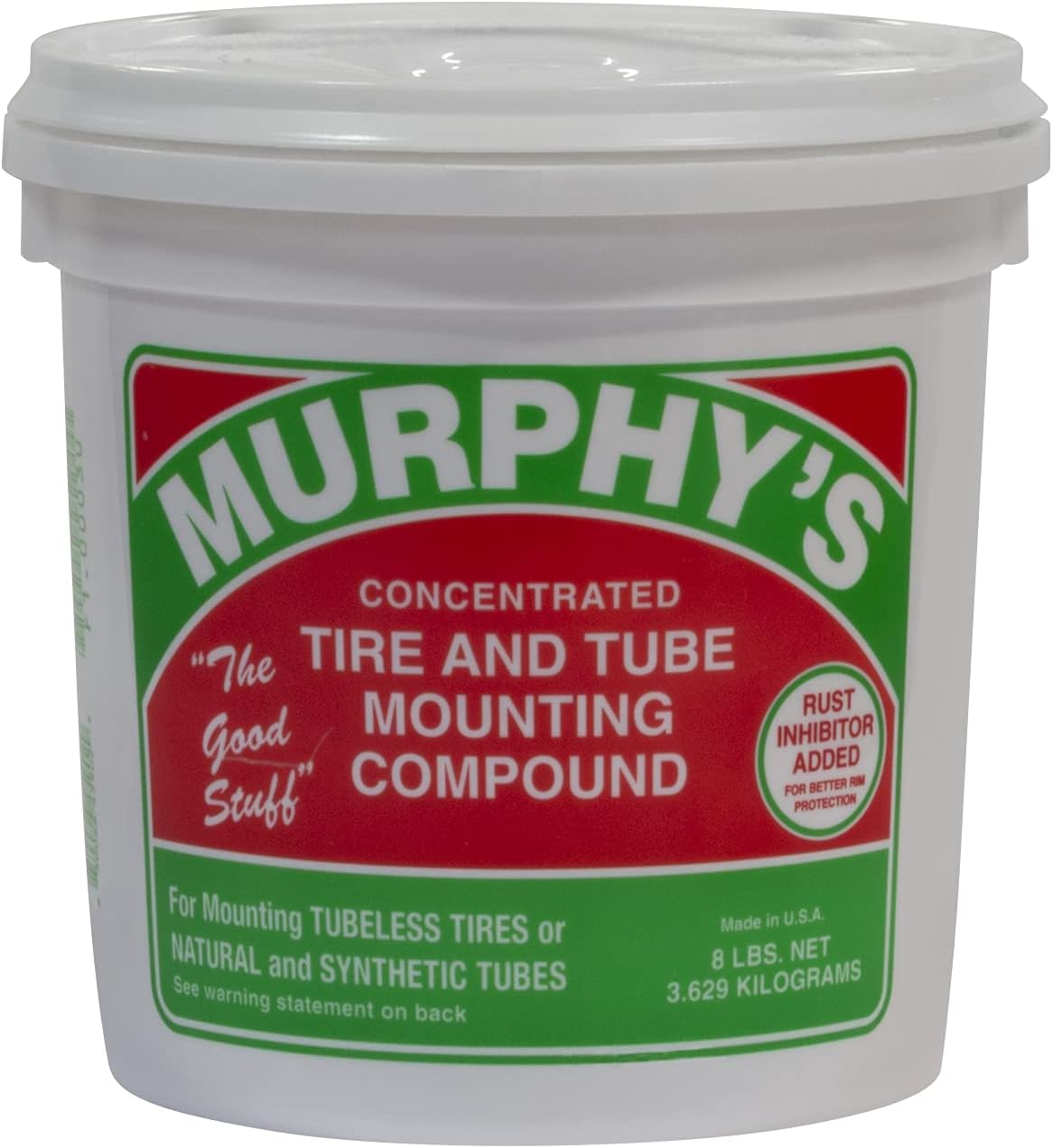
A concentrated tire and tube mounting compound designed to help simplify mounting rubber tires and tubes on passenger, semi truck, construction, and OTR applications. Its ultra-thick formula packs beads effectively and includes rust inhibitors to help protect against corrosion during use.

This tire inflator with pressure gauge delivers long-lasting performance with a durable rubber-protected gauge and sturdy build. The longer hose and 360 swivel air chuck help you seal the valve securely and keep your hands free while measuring, inflating, or deflating. It’s battery-free for reliable use and provides ±2 PSI accuracy in the mid-range for most typical tires, with universal compatibility for 1/4 NPT compressor outputs.

The SAFELIFE dial tire tread depth gauge measures tread depth in 1/32 inch increments with clear, easy-to-read 2-inch dial face. Color zones using a traffic light system help you quickly judge whether tread is low, marginal, or ample for safer driving. Built with a durable zinc cast body and a metal detect probe for precise, comfortable use across cars, motorcycles, trucks, and buses.
How Tire Weight Affects MPG and Ride
Tire weight can affect unsprung and rotating mass, but weight alone does not tell you how much fuel economy or ride quality will change.
A heavier tire can require more energy to accelerate and can change how quickly the wheel-and-tire assembly responds to bumps. At the same time, rolling resistance, tread compound, tread depth, inflation pressure, aerodynamics, vehicle weight, and driving conditions also affect fuel consumption.
For that reason, there is no reliable universal rule that switching from C1 to SL will gain a specific number of miles per gallon.
NHTSA estimates that a 10% reduction in tire rolling resistance can improve vehicle fuel economy by roughly 1–2%, showing why rolling resistance matters more than assuming a fixed MPG change from tire weight alone.
Unsprung Weight Matters
When tire and wheel weight increases, you add unsprung mass—mass that moves with the wheel rather than being supported entirely by the suspension.
Extra unsprung mass can influence suspension response over rough pavement and may slightly change acceleration and braking feel. The size of that difference varies by vehicle, wheel, tire construction, and suspension design.
That means you should compare the published weight of the exact tires you are considering. There is no universal “SL versus C1” weight difference that applies to every tire size or model.
Lighter Tires and MPG
A lighter tire can reduce rotating mass, but lighter does not automatically mean lower rolling resistance.
NHTSA explains that low-rolling-resistance tires reduce energy loss as the tire rolls. It estimates that a 10% reduction in rolling resistance can produce about a 1–2% improvement in vehicle fuel economy. You can read the agency’s current TireWise guidance.
Therefore, if fuel economy matters, compare the actual tire model’s efficiency characteristics rather than assuming that an SL tire will always use less fuel than a C1 tire.
Correct inflation also matters. The U.S. Department of Energy advises drivers to use the vehicle’s recommended tire pressure rather than the maximum pressure printed on the tire.
Ride Comfort Tradeoffs
SL tires are often selected for passenger-oriented applications where comfort is important, while Load Range C tires may use a stronger construction suited to different load and service requirements.
That can produce a noticeable ride difference when two versions of the same tire are available. However, pressure, wheel size, sidewall height, tread design, and suspension tuning can be just as important.
Do not lower pressure simply to make a C1 tire ride like an SL tire. If you have changed from a P-metric/SL tire to an LT or C-range tire, use an approved load-and-inflation table or qualified tire professional to determine the pressure needed to preserve the required load capacity.
- Lower tire mass may improve suspension response.
- Load range can influence casing stiffness.
- Rolling resistance matters more than weight alone for predicting fuel economy.
- Correct inflation must be based on vehicle and tire load requirements, not comfort alone.
When SL Tires Make More Sense
SL tires make sense when they meet your vehicle manufacturer’s required size, load index, speed rating, and operating conditions and you do not need the construction characteristics of an LT/Load Range C alternative.
For many passenger vehicles, crossovers, and lighter SUVs, Standard Load tires provide the capacity the vehicle was designed to use while keeping tire weight and casing stiffness appropriate for everyday road driving.
They can also provide a comfortable ride, but do not assume that the SL designation itself guarantees better fuel economy, lower noise, or superior wet or winter traction. Those characteristics depend on the individual tire model.
Winter grip is especially important to judge separately. A tire’s winter capability comes from its tread pattern, rubber compound, siping, and winter-performance certification—not simply from whether its load range is SL or C.
Choose SL when:
- Your vehicle is approved for the tire size and load rating.
- You do not need an LT-style construction for your use.
- You prioritize passenger-road manners and the SL version meets every vehicle requirement.
- You want to avoid unnecessary tire weight or stiffness from a heavier-duty alternative.
When C1 Tires Are the Better Pick
C1/Load Range C tires can be the better choice when your vehicle and use call for that tire type and the specific tire meets all required ratings.
Load Range C is traditionally described as 6-ply-rated, and many C1 catalog listings use a higher maximum load-carrying pressure than Standard Load tires. That can be useful for certain pickups, SUVs, vans, and off-road applications.
You may consider C1 when you regularly:
- Carry cargo while remaining within the vehicle’s payload and axle ratings.
- Tow within the manufacturer’s rated limits.
- Drive on rough roads where the specific C-range tire offers stronger construction.
- Need an LT-style tire that meets the vehicle’s required load capacity.
Do not choose C1 simply because the number sounds stronger. A tire with more pressure capability may add weight or firmness without giving you a useful benefit if the vehicle does not need it.
Likewise, moving from SL to C1 does not increase your vehicle’s legal or engineered cargo and towing limits. It only changes the tire specification.
[Products Worth Considering]

Upgrade your wheels with MIKKUPPA closed-end lug nuts designed for reliable fit and corrosion resistance. The one-piece, cold-forged and heat-treated steel construction helps resist rust and stripping, while the integrated finish delivers a durable black appearance. Built to OEM standards with a conical 60-degree seat, these nuts provide a secure solution for compatible Ford, Honda, Jeep, and Chevrolet models.
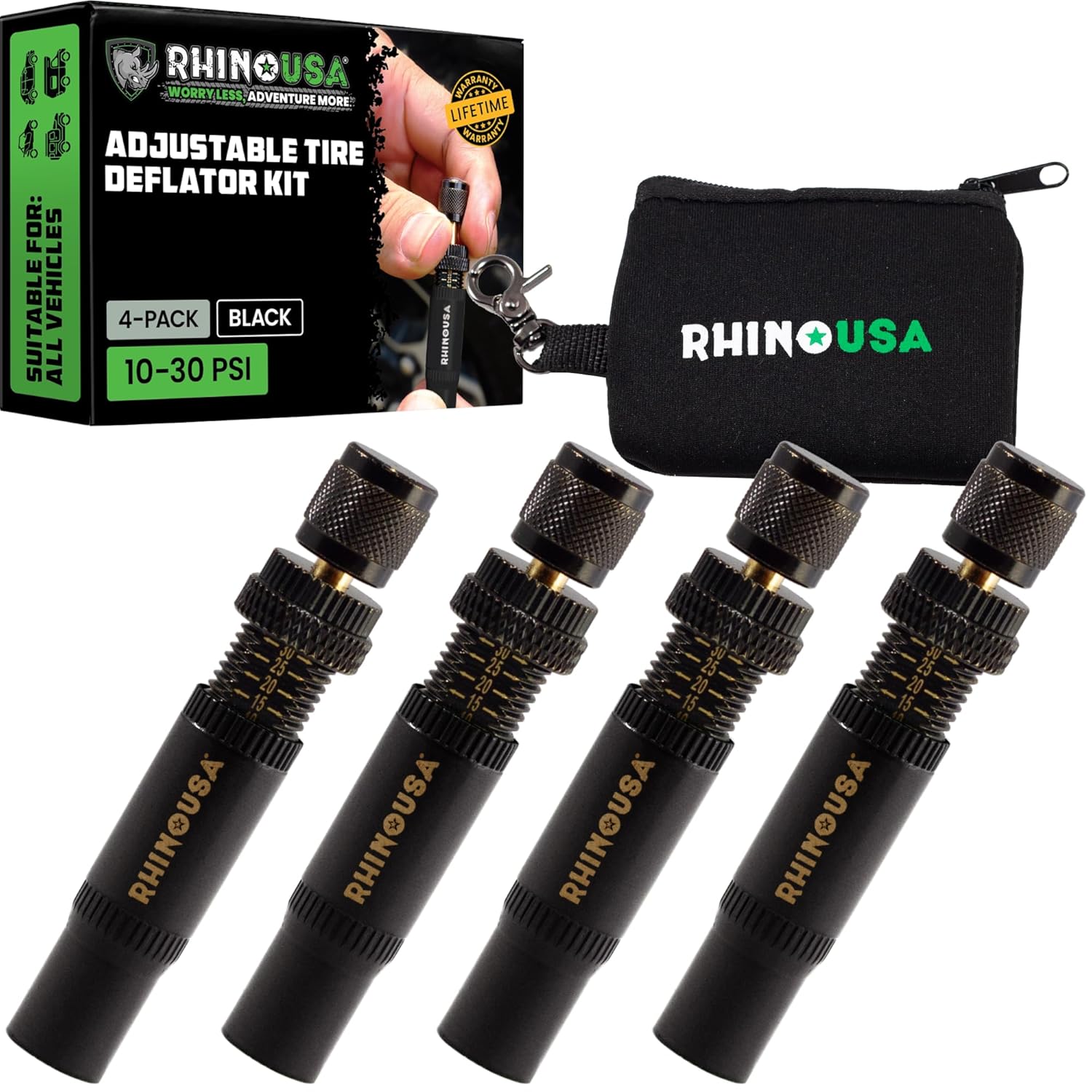
Use the Rhino USA adjustable tire deflators to air down all four tires at once by screwing one deflator onto each valve stem, letting you step away while the tires reach your preset pressure. Each deflator independently adjusts across a 10–30 PSI range with laser-etched indicators for quick setup and verification, making it ideal for beach, sand, and rocky off-road trails.

Measure tire tread depth quickly and accurately with this LUMITECO dial gauge that reads in 1/32" increments up to 14/32". The color-coded green/yellow/red zones make it easy to judge tire wear and know when replacement is needed. A rugged, compact design with a protective pouch helps keep the gauge ready for use on cars, trucks, motorcycles, and more.
Can You Replace SL Tires With C1 Tires?
Sometimes, but the two should not be treated as automatically interchangeable.
The replacement must have an appropriate size, load capacity, speed rating, wheel compatibility, and inflation requirement. Michelin recommends that replacement tires meet or exceed the vehicle manufacturer’s specified load rating.
The pressure question becomes especially important if you move between passenger-type and LT-type tires. Toyo warns in its tire safety guidance that LT tires may require substantially higher pressure to carry an equivalent load compared with P-metric tires.
If you change tire type or size, do not simply copy the old pressure and do not automatically use the new tire’s maximum sidewall pressure. Use manufacturer load-and-inflation data for the conversion.
What Pressure Should You Use With SL or C1 Tires?
For original-equipment tire sizes, start with the vehicle manufacturer’s recommended cold inflation pressure, normally shown on the driver’s-door placard or in the owner’s manual.
Michelin specifically explains that the MAX LOAD and MAX PRESS figures molded into a tire sidewall are tire limits, not the recommended operating pressure for the vehicle. See Michelin’s tire-marking guide.
If you install a different tire type or optional size, use a recognized load-and-inflation table or tire manufacturer’s fitment guidance to maintain the load capacity required by the vehicle.
This distinction is why statements such as “SL equals 35 PSI” or “C1 should run at 50 PSI” can be misleading. Those numbers may describe standardized load-pressure categories, but they do not tell you the correct cold pressure for every vehicle.
Frequently Asked Questions
Is Load Range SL the Same as C?
No. SL means Standard Load, while C is a different load-range category traditionally described as 6-ply-rated. The two classifications have different load-and-inflation characteristics, but you still need the tire’s load index and specification to know its actual weight capacity.
Are C1 Tires Better Than SL?
Not automatically. C1 may be useful when you need a Load Range C tire’s construction and inflation capability, but SL may be the better match for a vehicle designed around Standard Load passenger tires. The best tire is the one that meets the vehicle’s size, load, speed, pressure, and service requirements.
What Are Load Range C Tires Good For?
Load Range C tires are commonly used in light-truck, SUV, all-terrain, and other applications where their load-and-inflation characteristics are appropriate. Whether they are suitable for your vehicle depends on the exact tire size, load index, pressure requirements, and manufacturer fitment guidance.
Is Load Range SL Good?
Yes. An SL tire is completely appropriate when it meets the vehicle manufacturer’s load, size, speed-rating, and inflation requirements. A higher load range is not automatically an upgrade and may add weight or firmness you do not need.
Can I Put C1 Tires on a Vehicle That Came With SL Tires?
Possibly, but only if the replacement size, load capacity, speed rating, wheel fitment, and inflation requirements are suitable for the vehicle. Switching from a passenger-type SL tire to an LT/C-range tire may require a different inflation pressure to support the same load.
Should C1 Tires Always Be Inflated to 50 PSI?
No. A 50-PSI figure associated with a C1 load-range specification is not automatically your vehicle’s recommended operating pressure. Use the vehicle placard for approved original-equipment fitments or a manufacturer load-and-inflation table when changing tire type or size.
Conclusion
If you’re choosing between SL and C1 tires, do not assume that the higher load range is automatically the better tire. Load range, load index, and vehicle load limits are different things. Choose an SL tire when it meets your vehicle’s requirements and suits your everyday use. Choose C1 when the specific Load Range C tire’s construction and inflation characteristics better match your vehicle and driving conditions.
Most importantly, check the full tire specification and the vehicle placard rather than choosing from SL, C1, 35 PSI, or 50 PSI alone. The correct tire is the one that safely supports the required load at the correct pressure without exceeding the vehicle’s own ratings.
Sources
- NHTSA TireWise — tire safety, inflation, load considerations, and rolling resistance.
- Michelin — Tire Load Rating and Speed Rating — load-index meaning and replacement load requirements.
- Michelin — Tire Markings Explained — sidewall maximum pressure versus vehicle-recommended pressure.
- Toyo Tires — Load and Inflation Tables — replacement-tire load and inflation guidance.
- Toyo Tires — Reading a Tire Sidewall — SL terminology, load index, and replacement capacity.
- Toyo Tires — Tire Safety Information — P-metric versus LT-metric replacement and inflation considerations.