
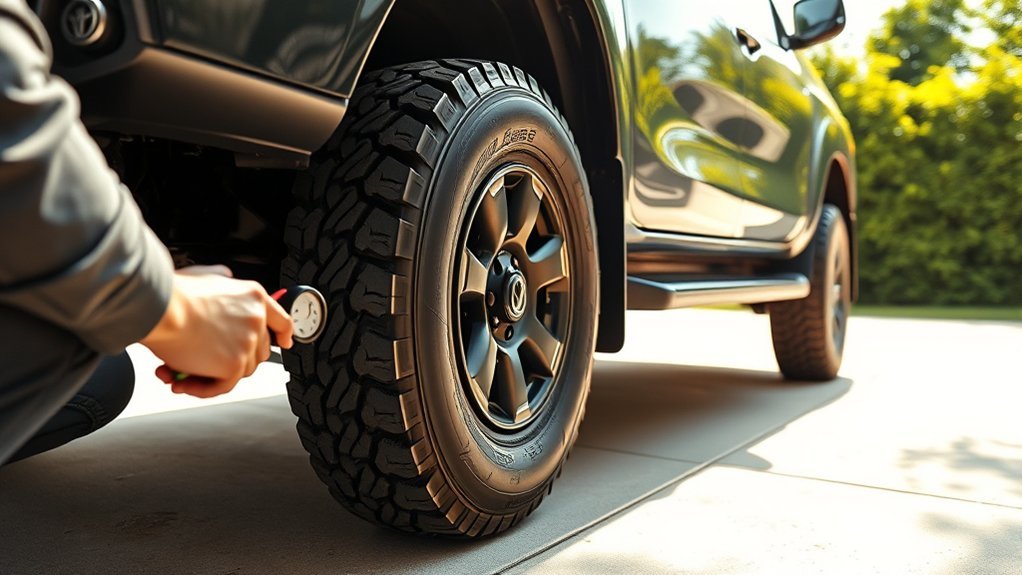
Maintaining the right tire pressure on your Toyota Hilux starts with one rule: use the cold PSI or kPa printed on your truck’s tire placard or listed in the owner’s manual. Hilux pressure can vary by model year, market, cab style, tire size, axle load, towing setup, and aftermarket tires, so treat online PSI numbers as examples unless they match your own placard.
Quick Answer
For a Toyota Hilux, the correct tire pressure is the cold pressure shown on the driver-side tire placard or in the owner’s manual. Many Hilux models use different front and rear pressures, and loaded driving may require a separate setting. Check monthly with a gauge, including the spare.
Key Takeaways
- Use the Hilux tire placard or owner’s manual first, not a generic PSI range or the maximum pressure on the tire sidewall.
- Check pressure when tires are cold, ideally before driving or after the truck has been parked for at least three hours.
- Adjust for payload, towing, roof racks, and off-road use only within Toyota’s guidance and the tire’s load rating.
- A TPMS warning is helpful, but it does not replace monthly checks with an accurate tire pressure gauge.
At a Glance
| Time Required | 5 to 10 minutes |
| Difficulty | Easy |
| Tools Needed | Digital tire pressure gauge, air compressor or service-station inflator, valve caps |
| Cost | Free if you already have a gauge; usually $10 to $25 for a basic digital gauge |
Understanding the Importance of Tire Pressure
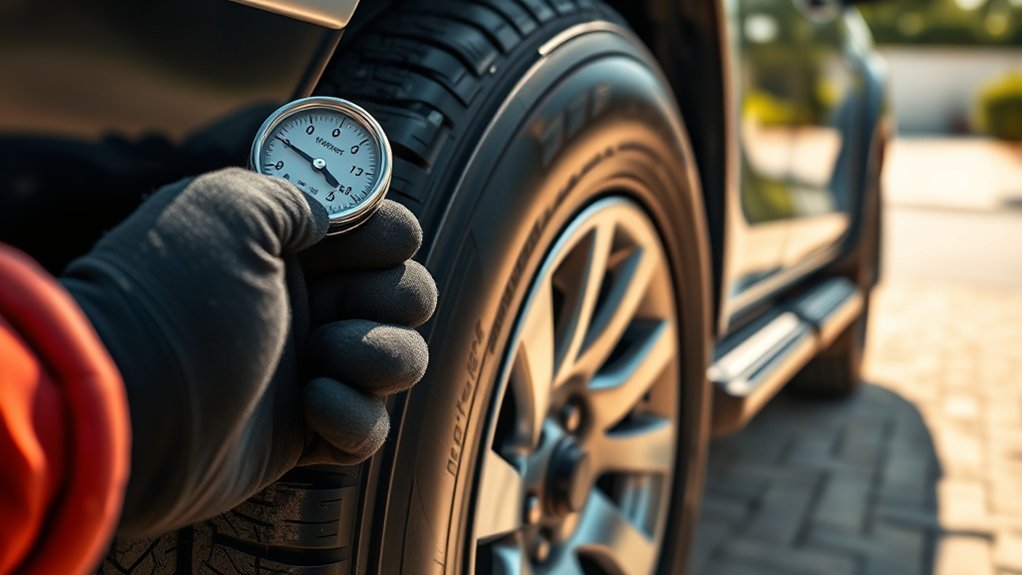
Tire pressure affects how your Toyota Hilux steers, brakes, carries weight, uses fuel, and wears its tires. Underinflated tires flex more, build heat, wear the outer tread faster, and can increase the chance of tire failure. Overinflated tires can reduce ride comfort, shrink the contact patch, and wear the center of the tread faster.
The safest pressure is the cold tire pressure set by Toyota for your exact truck. According to NHTSA tire-safety guidance, the proper pressure is found on the Tire and Loading Information Label or in the owner’s manual. The U.S. Department of Energy and EPA fuel economy site also warns drivers not to use the maximum pressure printed on the tire sidewall as the vehicle’s recommended pressure.
Warning: Never inflate your Hilux tires to the sidewall maximum just because that number is printed on the tire. That number is a tire limit, not the recommended Toyota Hilux tire pressure for your vehicle, load, and tire size.
Find the Correct Toyota Hilux Tire Pressure
Before adding or removing air, open the driver’s door and look for the tire placard on the door edge, doorjamb, or B-pillar. Depending on your market, the label may show pressure in PSI, kPa, or bar. It may also list separate pressures for front tires, rear tires, normal load, full load, towing, or specific tire sizes.
If the placard is missing, damaged, or hard to read, check your printed owner’s manual or the official Toyota owner’s manual portal for your country, such as Toyota UK owner’s manuals or Toyota Europe owner’s manuals. For a used Hilux with aftermarket wheels or non-original tires, also confirm the load rating with a qualified tire shop.
Note: Some Hilux placards may show a front/rear split, such as a lower front pressure and a higher rear pressure. That does not mean every Hilux should use the same numbers. Match your own placard, tire size, and load condition.
| Where to Look | What It Tells You |
| Driver-side tire placard | Toyota’s recommended cold pressure for the original tire size and load condition. |
| Owner’s manual | Extra notes for towing, full payload, spare tire, TPMS reset, and tire replacement. |
| Tire sidewall | Tire size, load index, speed rating, and maximum tire limit. It is not the recommended Hilux pressure. |
| Tire shop load table | Helpful when using non-original tires, changed tire sizes, or heavy-duty replacements. |
How to Check Your Toyota Hilux Tire Pressure
To check your Toyota Hilux tire pressure accurately, use a reliable gauge and check the tires when they are cold. NHTSA defines cold tires as tires on a vehicle that has not been driven for at least three hours. If you check after a long drive, heat can raise the reading and make the tire look more inflated than it will be the next morning.
- Park the Hilux on level ground and let the tires cool.
- Find the correct cold pressure on the tire placard or in the owner’s manual.
- Remove the valve cap from one tire.
- Press the gauge firmly onto the valve stem until the hiss stops.
- Read the PSI, kPa, or bar number.
- Add air if the reading is low, or release a small amount if it is high.
- Recheck the tire after adjusting it.
- Repeat for all four tires and the spare if your Hilux carries one.
- Reinstall every valve cap to help keep dirt and moisture out of the valve stem.
[Products Worth Considering]

The ETENWOLF T600 digital tire pressure gauge delivers precise, manually calibrated readings to ANSI B40.7 Grade 2A standards with ±0.5% PSI accuracy. Its 360° rotating nozzle and display hold make it easy to check pressures from any angle, while a bleed button helps dial tires to the perfect level. With a 0–250 PSI range and support for PSI, BAR, and KPA, it’s a convenient tool for maintaining tire performance across many vehicles and seasons.
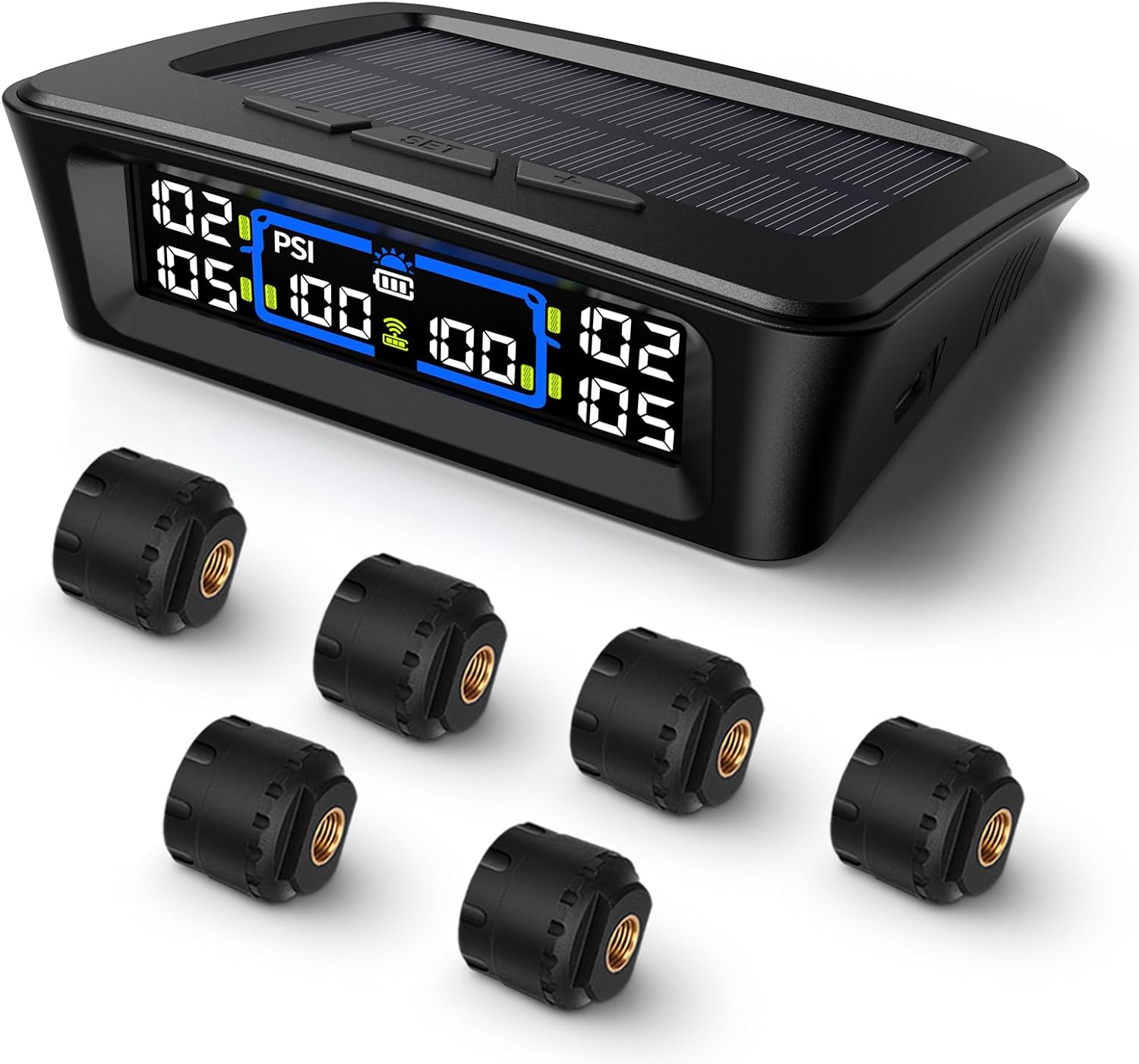
The Tymate TM12 RV TPMS delivers real-time tire pressure and temperature monitoring with a stable 433Hz display for safer long-distance driving. It supports simultaneous monitoring across vehicle and trailer zones, includes six alarm modes for pressure, temperature, leakage, battery, and signal loss, and features easy DIY installation with auto calibration. Power is supplied via USB-C charging or solar recharging, with a wide 0–144 PSI range and up to 50 ft signal coverage for RVs and towable trailers.

This tire inflator with pressure gauge delivers long-lasting performance with a durable rubber-protected gauge and sturdy build. The longer hose and 360 swivel air chuck help you seal the valve securely and keep your hands free while measuring, inflating, or deflating. It’s battery-free for reliable use and provides ±2 PSI accuracy in the mid-range for most typical tires, with universal compatibility for 1/4 NPT compressor outputs.
Best Time to Check
The best time to check Hilux tire pressure is in the morning before the truck has been driven. If that is not practical, check after the vehicle has been parked long enough for the tires to cool. Check pressure at least once a month, before long highway trips, before towing, after major temperature changes, and before driving with a heavy payload.
Tools for Accurate Measurement
A digital tire pressure gauge is easy to read and usually more consistent than a worn pencil-style gauge. Keep one in the glove box or tool kit, especially if you use your Hilux for work, towing, camping, or off-road driving. A portable compressor is also useful because you can set pressure at home while the tires are still cold.
Pro Tip: If your gauge reads in PSI but your placard uses kPa, use the placard’s exact unit when possible. As a rough conversion, 1 PSI equals about 6.9 kPa, but the owner’s manual or placard should be your final reference.
Recommended Tire Pressure for Varying Loads
The correct pressure for your Hilux can change when you add tools, passengers, a canopy, roof rack, trailer tongue weight, or a full payload. Some placards show separate normal-load and full-load pressures. If your label gives a loaded setting, use that number before towing or carrying heavy cargo.
Do not guess by adding a fixed amount of air for every load. A small increase may be suitable for some setups, but the right answer depends on axle weight, tire size, load index, and Toyota’s guidance. If you carry close to the payload limit or use non-original tires, ask a Toyota dealer or tire professional to confirm the correct cold pressure.
| Driving Condition | Best Pressure Rule |
| Daily unloaded driving | Use the normal cold pressure on your Hilux tire placard. |
| Heavy payload or tools | Use the loaded pressure listed by Toyota, and stay within payload and tire load limits. |
| Towing | Use Toyota’s towing/load guidance and check both truck and trailer tires before the trip. |
| Aftermarket tires or wheels | Confirm load rating and inflation needs with a tire professional. |
| Off-road sand, mud, or rocks | Only air down if you understand the terrain, speed limits, and tire risks. Reinflate before returning to pavement. |
Warning: If you air down for off-road traction, drive slowly and reinflate before highway speeds. Low pressure on pavement can overheat the tire, damage the sidewall, and make the Hilux harder to control.
[Products Worth Considering]

ETENWOLF T300 is a calibrated digital tire pressure gauge for accurate readings from 3 to 200 PSI across light and heavy-duty vehicles. It includes thermal compensation for reliable performance in extreme cold or heat, with an auto shut-off to extend battery life and an LED for easier reading. The sturdy design supports rugged everyday use, making it ideal for pickups, RVs, and industrial applications.

Keep your tires properly inflated with this analog VONDIOR tire pressure gauge, designed for fast, easy readings without batteries. The swiveling, two-axis hose and large glow dial help you measure at any tire angle with instant visibility. Built with a protective rubber shield, it supports durable, low-maintenance use for cars and trucks.
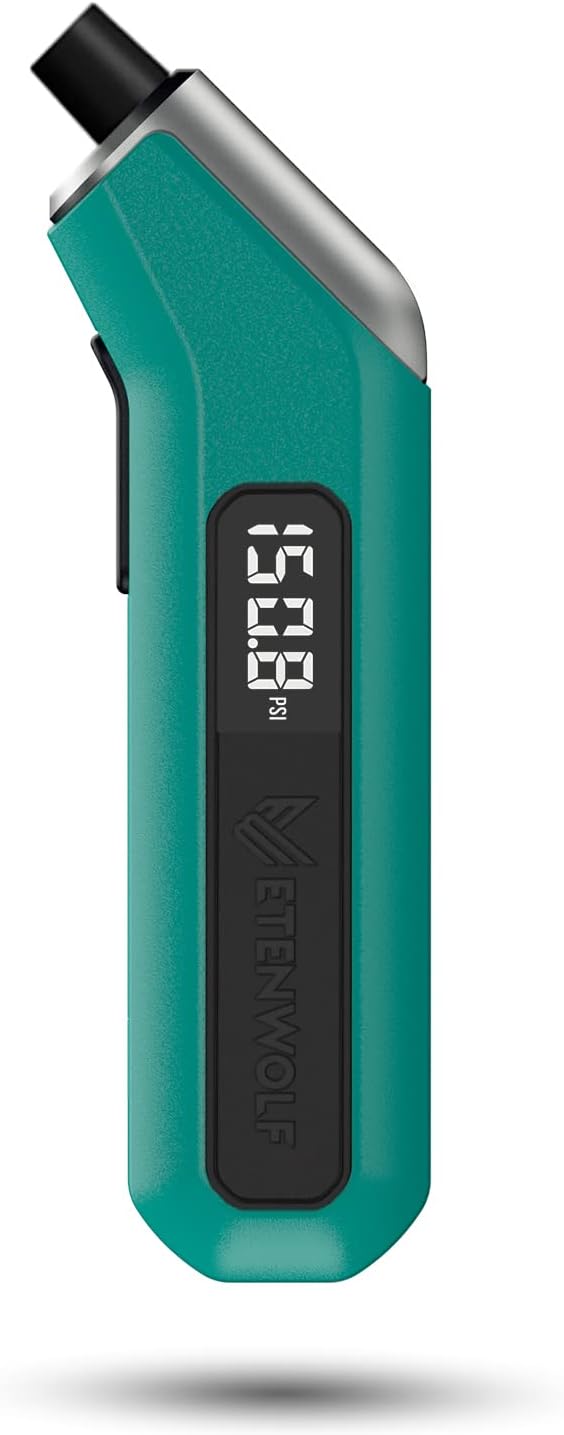
ETENWOLF T300 is a calibrated digital tire pressure gauge designed for reliable readings across low and high pressure ranges. It includes thermal compensation for stable performance in extreme cold or heat, an LED light for visibility, and an auto shut-off to help preserve battery life. Ideal for pickups, RVs, and heavy-duty vehicles, it delivers accurate PSI measurements with sturdy durability.
Identifying and Fixing Common Tire Pressure Problems
Common tire pressure problems include slow leaks, seasonal pressure loss, incorrect loaded pressure, damaged valve stems, punctures, and TPMS warnings. Treat any repeated pressure loss as a sign that the tire needs inspection, even if it still looks normal from the outside.
[Products Worth Considering]

AstroAI’s calibrated digital tire pressure gauge delivers precise readings across a 0–150 PSI range, with high clarity from a backlit LCD. Built for everyday road use, it features one-button operation, an anti-slip ergonomic grip, and support for multiple pressure units plus auto shutoff. Powered by AAA batteries, it’s an all-weather essential for checking tire health and TPMS warnings.

AstroAI’s digital tire pressure gauge inflates and measures with high accuracy, reading within 1% and supporting four pressure units from 3 to 250 PSI. The heavy-duty brass air chuck locks securely on valve stems, while the 19.7-inch stainless braided hose and 360° rotatable dial improve comfort and control for faster single-hand operation. Battery-saver behavior and an integrated flashlight add convenience and safety for everyday roadside and garage use.
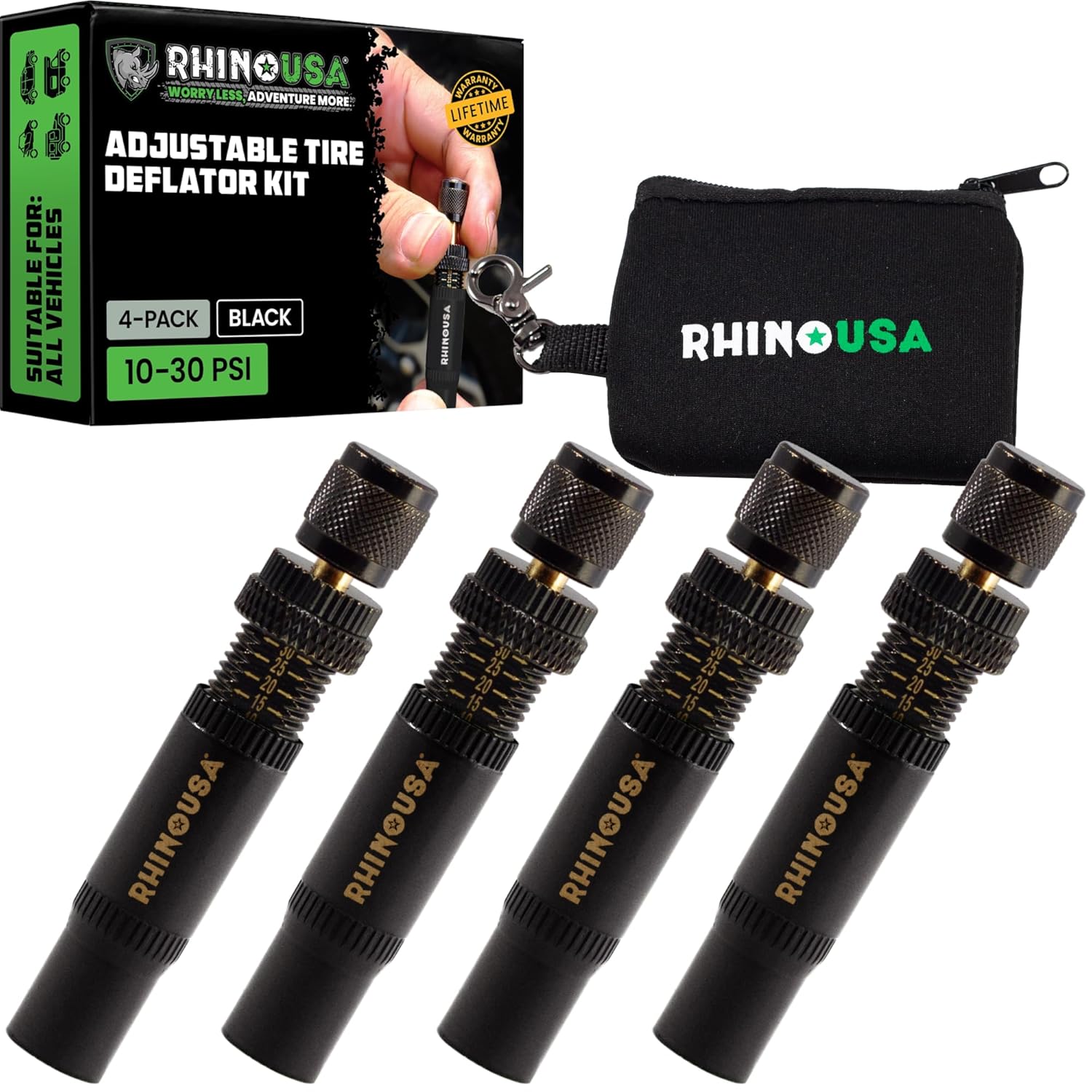
Use the Rhino USA adjustable tire deflators to air down all four tires at once by screwing one deflator onto each valve stem, letting you step away while the tires reach your preset pressure. Each deflator independently adjusts across a 10–30 PSI range with laser-etched indicators for quick setup and verification, making it ideal for beach, sand, and rocky off-road trails.
Common Pressure Issues
- One tire keeps dropping: Check for a nail, screw, cracked valve stem, rim leak, or bead leak.
- Both rear tires look low when loaded: Check the loaded-pressure line on the placard and confirm you are not over payload.
- Center tread wears faster: The tire may be overinflated for your use, or the tire may not match the load correctly.
- Outer shoulders wear faster: The tire may be underinflated, overloaded, or affected by alignment or suspension wear.
- Steering feels vague: Check front tire pressure, tread condition, alignment, and load balance.
Seasonal Pressure Adjustments
Cold weather can lower tire pressure, while hot weather and driving can raise it. Do not bleed air from a warm tire just because the reading is higher after driving. Instead, check again when the tire is cold and adjust to the placard pressure.
For seasonal changes, the best habit is simple: check cold pressure more often when the weather swings sharply. If the TPMS light appears on a cold morning and then turns off after driving, check the tires anyway. The pressure may be close to the warning threshold.
TPMS Troubleshooting Steps
Your Hilux may use a tire pressure monitoring system, depending on market, model year, and trim. TPMS can warn you when a tire is significantly underinflated, but NHTSA notes that TPMS is not a substitute for regular tire maintenance with a gauge.
- If the TPMS light comes on, stop when safe and check all tires with a gauge.
- Inflate each tire to the correct cold pressure shown on the placard.
- Inspect for punctures, sidewall damage, or a valve leak if one tire is much lower than the others.
- Drive for a short distance if your Hilux requires movement for the system to update.
- If the warning flashes for about a minute and then stays on, the TPMS may have a malfunction and should be inspected.
- After tire rotation, sensor replacement, or wheel changes, follow the owner’s manual reset or ID registration procedure.
Maintain Tire Pressure Year-Round With These Tips
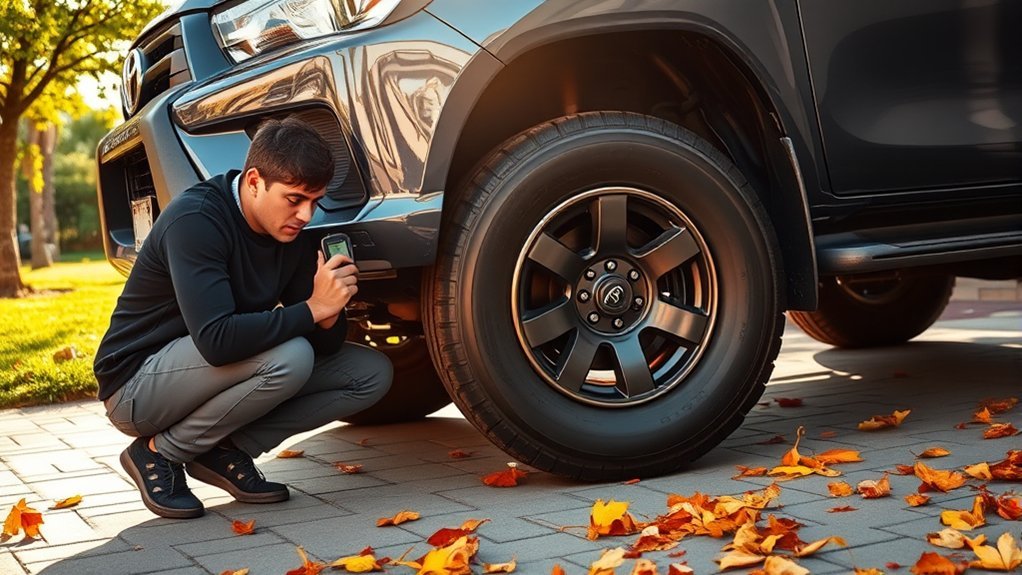
Maintaining the correct tire pressure on your Toyota Hilux is not a one-time job. Tires can lose air naturally over time, and pressure changes with temperature, load, and use. Build tire pressure checks into your monthly maintenance routine so the truck stays stable, efficient, and safe.
- Check all tires at least once a month.
- Check before towing, camping, hauling tools, or driving long distances.
- Check the spare tire if your Hilux carries one.
- Keep a digital gauge in the truck.
- Replace missing valve caps.
- Look for uneven wear, cracks, bulges, cuts, and embedded objects.
- Rotate tires according to the owner’s manual or service schedule.
- Have alignment checked if the Hilux pulls, vibrates, or wears tires unevenly.
Properly inflated tires can improve fuel economy, last longer, and reduce the risk of heat-related tire damage.
How to Check Your Tire Pressure Using the Toyota App or Vehicle Display
Some Toyota models and markets offer connected-service features through the Toyota or MyToyota app, but available data varies by country, trim, subscription, and model year. Toyota’s European newsroom says new Hilux owners can access remote and connected services through the MyToyota app, including items such as location, fuel level, EV charging status, and journey history. That does not mean every Hilux app screen will show live tire pressure for all four tires.
If your Hilux has tire pressure readouts in the instrument cluster, infotainment system, or app, use them as a helpful reminder. Still confirm pressure with a physical gauge when adjusting air, when the TPMS warning appears, before towing, and before long trips.
Note: App data can be delayed or unavailable if connected services are inactive, the vehicle is out of coverage, the subscription has expired, or your Hilux trim does not support that feature.
Frequently Asked Questions
What is the correct PSI for a Toyota Hilux?
The correct Toyota Hilux tire pressure is the cold pressure printed on your driver-side tire placard or listed in the owner’s manual. Some Hilux models use different front and rear pressures, and some list separate pressures for normal load and full load.
Is 40 PSI too high for a 4WD Hilux?
Forty PSI may be too high, correct, or too low depending on your tire placard, load, tire size, and whether the reading is cold or hot. Do not judge 40 PSI by itself. Compare the cold reading with Toyota’s recommended pressure for your exact Hilux and load condition.
Is 40 PSI good tire pressure for a Toyota?
It depends on the Toyota model, tire size, and load. For a Hilux, 40 PSI should only be used if it matches the placard, owner’s manual, or correct loaded-pressure guidance for your setup. Using the wrong pressure can affect grip, braking, comfort, and tire wear.
Should I use the PSI printed on the tire sidewall?
No. The tire sidewall usually shows the tire’s maximum inflation limit, not Toyota’s recommended Hilux pressure. Use the vehicle tire placard or owner’s manual for normal driving and load-specific pressure.
Do I need to check the spare tire?
Yes. If your Hilux carries a spare, check it during your monthly pressure routine. A spare that looks fine can still be underinflated when you need it.
Can the Toyota app replace a tire pressure gauge?
No. App and vehicle-display readings can help, but availability and accuracy depend on the vehicle and connected services. Use a gauge when adding air, checking a warning, towing, carrying heavy loads, or preparing for a long trip.
Conclusion
The right Toyota Hilux tire pressure is not one universal PSI number. It is the cold pressure Toyota lists for your exact truck, tire size, and load condition. Check the placard first, measure with a gauge, adjust before heavy loads or long trips, and treat TPMS or app data as helpful backup rather than a replacement for manual checks. A few minutes each month can improve safety, tire life, and fuel economy.
Sources
- NHTSA TireWise tire safety guidance — supports cold tire checks, placard pressure, TPMS limits, tread checks, and tire safety practices.
- FuelEconomy.gov: Keeping Your Vehicle in Shape — supports fuel economy effects of proper tire inflation and the warning not to use tire sidewall maximum pressure as the vehicle recommendation.
- Toyota Europe Newsroom: All-new Hilux announcement — supports current Hilux market and connected-services context.
- Toyota UK owner’s manuals — official Toyota manual access for model-specific guidance.
- Toyota Europe owner’s manuals — official Toyota manual access for European vehicles.


1 thought on “Maintaining the Right Tire Pressure on Your Toyota Hilux”