
Nitrogen vs. Air in Toyota Camry Tires: Is the Upgrade Worth It?
For your Toyota Camry, nitrogen tire inflation is optional, not required. It may help your tires lose pressure a little more slowly and can reduce moisture inside the tire, but it will not replace normal tire care. Regular air is already mostly nitrogen, costs less, and works well when you check your tire pressure on schedule.
Quick Answer
Nitrogen can be worth it for a Toyota Camry if you already get it free, drive long distances, or want slightly slower pressure loss. For most daily drivers, regular air is the smarter choice because it is easy to find, often free, and safe when kept at the door-jamb pressure.
Key Takeaways
- Nitrogen may slow pressure loss, but the real-world benefit for a daily-driven Camry is usually modest.
- Regular air is about 78% nitrogen, so it is already a good tire-inflation gas for normal driving.
- Correct pressure matters more than the gas type. Check the driver-door placard, not the tire sidewall maximum.
- Mixing nitrogen and air will not damage your Camry tires, but it reduces the purity of the nitrogen fill.
- You still need monthly cold-pressure checks, even with nitrogen or a working TPMS light.
Nitrogen Vs Air For Camry Tires
When you compare nitrogen vs air for Camry tires, the most important point is simple: your Camry needs the correct cold tire pressure more than it needs a special gas. NHTSA recommends checking all tires at least once a month when they are cold and using the pressure listed on the Tire and Loading Information Label or in the owner’s manual.
Nitrogen is a drier, more purified fill than standard compressed air. It contains less oxygen and less moisture, so it can reduce internal moisture and may slow pressure loss through the tire over time. That can be helpful if you drive often, park outside, or deal with big seasonal temperature changes.
Regular air is still the practical choice for most Camry owners. According to NASA, air is about 78% nitrogen and 21% oxygen, with small amounts of other gases. That means normal compressed air is already mostly nitrogen. The difference is not large enough to skip routine checks.
| Factor | Nitrogen | Regular Air | Camry Takeaway |
|---|---|---|---|
| Pressure loss | May be slower | Normal gradual loss | Check monthly either way |
| Moisture | Very low when properly supplied | Depends on compressor quality | Dry air or nitrogen is better than wet shop air |
| Cost | Often costs extra | Often free or low cost | Air usually wins for daily use |
| Convenience | Limited refill locations | Easy to find | Do not drive low just to preserve nitrogen purity |
[Products Worth Considering]
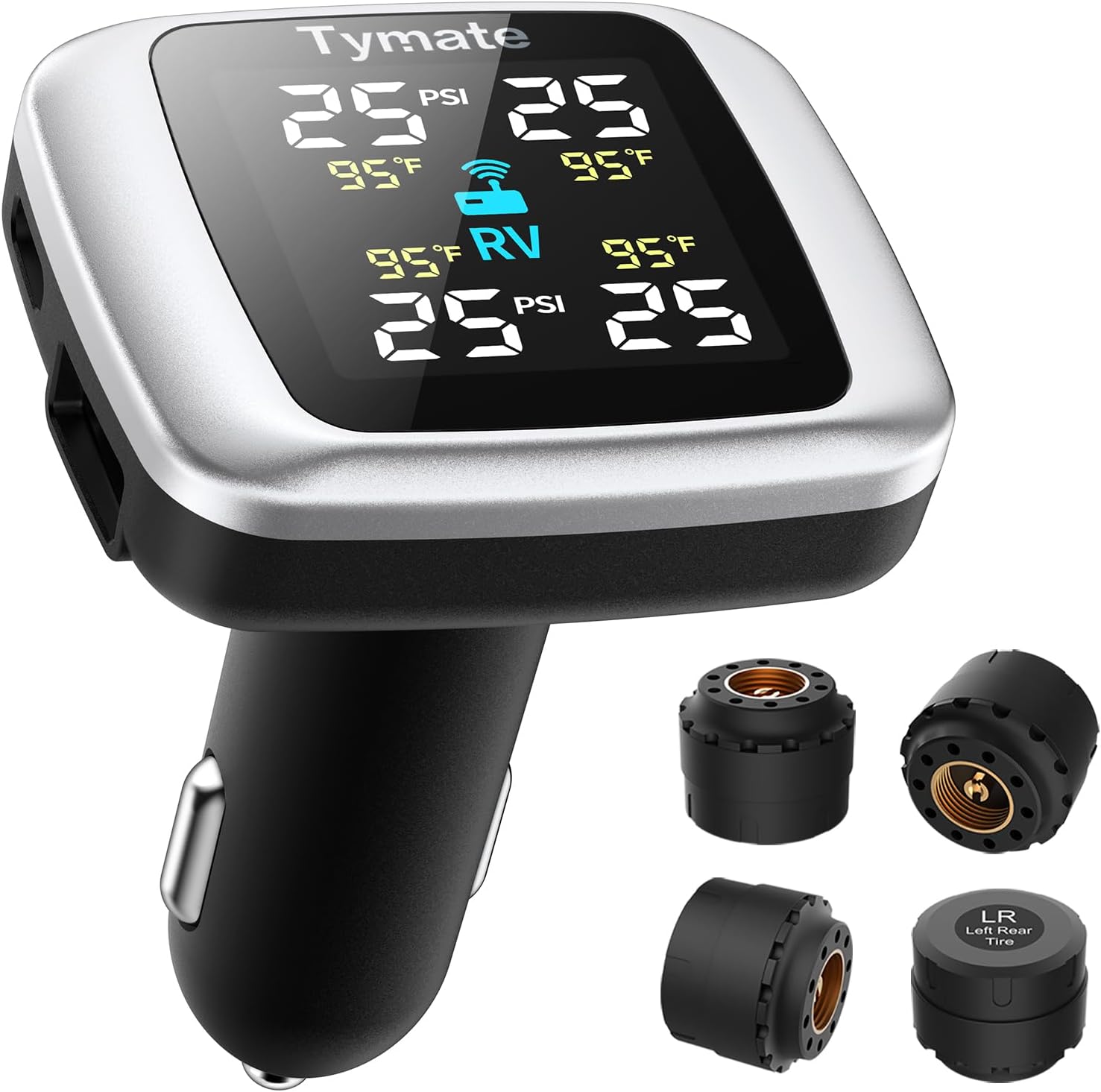
Tymate TM7 is a wireless tire pressure monitoring system that delivers real-time pressure and temperature readings for safer driving. It includes four external sensors, a bright color LCD display with adjustable backlight, and six alarm modes for high/low pressure, fast leakage, high temperature, and sensor signal or battery issues. The system covers a wide 0–144 PSI range and plugs into your vehicle’s cigarette lighter socket for quick DIY setup.

Keep your tires properly inflated with this analog VONDIOR tire pressure gauge, designed for fast, easy readings without batteries. The swiveling, two-axis hose and large glow dial help you measure at any tire angle with instant visibility. Built with a protective rubber shield, it supports durable, low-maintenance use for cars and trucks.

Measure tire tread depth quickly and accurately with this LUMITECO dial gauge that reads in 1/32" increments up to 14/32". The color-coded green/yellow/red zones make it easy to judge tire wear and know when replacement is needed. A rugged, compact design with a protective pouch helps keep the gauge ready for use on cars, trucks, motorcycles, and more.
How Nitrogen Affects Tire Pressure
Nitrogen can affect tire pressure in two main ways. First, a high-purity nitrogen fill may seep through tire materials more slowly than a fill that contains more oxygen and moisture. Second, nitrogen from a proper tire service machine is dry, so it reduces moisture inside the tire and wheel.
That does not mean nitrogen stops pressure changes. Tire pressure still rises and falls with temperature. Your Camry tires can still read lower on a cold morning and higher after highway driving. The right way to measure pressure is when the tires are cold, which means the car has not been driven for at least three hours or has only been driven a very short distance.
Note: Nitrogen helps most when it keeps the tire closer to the correct pressure between checks. It does not make an underinflated tire safe, and it does not fix a leak, puncture, bad valve stem, cracked wheel, or damaged tire bead.
Proper tire pressure matters more than nitrogen purity. FuelEconomy.gov says properly inflated tires are safer, last longer, and can improve gas mileage.
What Nitrogen Can And Cannot Do
Nitrogen can help reduce moisture inside the tire and may slow normal pressure loss. This can support more consistent inflation, which is good for tread wear, steering feel, braking, and fuel economy. But those benefits come from keeping the tire at the correct pressure, not from nitrogen alone.
Nitrogen cannot stop pressure loss from tire damage. It also cannot prevent a tire-pressure warning if the tire is low. If your Camry’s TPMS light comes on, check the pressure with a gauge as soon as it is safe. NHTSA explains that TPMS is helpful, but it is not a substitute for regular monthly tire maintenance.
Warning: Do not inflate your Camry tires to the maximum pressure printed on the tire sidewall. Use the Toyota Tire and Loading Information Label on the driver-side door area or the correct owner’s manual specification.
When Nitrogen Makes Sense For Camry Drivers
Nitrogen makes the most sense when it is easy to get, reasonably priced, or included with a tire purchase. It can also make sense if you want a drier fill, drive long highway trips, keep the car parked for longer periods, or live where temperatures swing sharply between seasons.
It may also be useful if your tires were installed at a shop that already uses nitrogen. In that case, keeping the same fill is simple. You still need to check the pressure every month and before long trips, but nitrogen may reduce how often you need small top-ups.
- Worth considering: free nitrogen refills, frequent highway driving, long parking periods, seasonal pressure swings, or a shop that includes nitrogen with new tires.
- Not worth chasing: short city trips, easy access to free air, or paying high refill fees for a small pressure-retention benefit.
- Best priority: maintain the placard pressure, rotate tires on schedule, and inspect tread and sidewalls regularly.
When Regular Air Is The Better Choice
Regular air is better for most Camry owners because it is easy to find and works well. If your tire is low, adding air right away is safer than waiting to find a nitrogen station. A low tire can hurt handling, fuel economy, tread life, and safety.
Air is also the better choice if you do your own maintenance at home or use gas-station pumps. You can keep a quality tire-pressure gauge in your glove box and check all four tires monthly. If your Camry has a spare tire, check that too, because spares can lose pressure while sitting unused.
Pro Tip: If a nitrogen-filled tire is low and only regular air is available, add air. Mixing nitrogen and air will not hurt the tire. Correct pressure is safer than keeping a purer nitrogen fill while driving underinflated.
Nitrogen Vs Air: Cost And Convenience
Cost and convenience are usually the deciding factors. Nitrogen often costs extra unless it is included with new tires or a service plan. Regular air is easier to find, and many drivers can top up tires at home or at a nearby station.
Convenience matters because tire pressure should not be delayed. If your Camry is down several psi, the best move is to add the correct amount of air or nitrogen as soon as possible. You can always have the tire purged and refilled with nitrogen later if you care about nitrogen purity.
- Nitrogen may reduce small pressure drops, but it does not remove the need for monthly checks.
- Regular air is easier to access, which makes routine maintenance simpler.
- Mixed air and nitrogen is safe, but it reduces the nitrogen percentage inside the tire.
- Correct pressure saves more money than choosing nitrogen while ignoring inflation checks.
[Products Worth Considering]

Milton S-921 pencil tire pressure gauge helps you maintain optimal tire pressure for passenger cars with accurate readings in PSI and kPa. It features a built-in deflator valve for convenient pressure adjustments, plus a single chuck head and nylon indicator bar for easy use on the go. Built from durable plated brass and designed for reliable performance, it’s a practical road trip and cold-weather maintenance tool.

This tire inflator with pressure gauge delivers long-lasting performance with a durable rubber-protected gauge and sturdy build. The longer hose and 360 swivel air chuck help you seal the valve securely and keep your hands free while measuring, inflating, or deflating. It’s battery-free for reliable use and provides ±2 PSI accuracy in the mid-range for most typical tires, with universal compatibility for 1/4 NPT compressor outputs.

ETENWOLF’s tire pressure gauge helps you quickly and accurately check tire PSI across cars, trucks, motorcycles, bikes, and more. It’s manually calibrated to ANSI B40.1 Grade A for reliable readings, includes a large glow dial for easy nighttime viewing, and features a 360-degree swivel chuck for use at any valve angle. The gauge also works consistently in extreme hot or cold weather.
How To Check Camry Tire Pressure Correctly
Use the same process whether your Camry tires are filled with nitrogen or regular air. This keeps the comparison fair and protects the tires from uneven wear.
- Park long enough for cold tires. Check before driving or after the car has been parked for at least three hours.
- Find the correct pressure. Look at the Tire and Loading Information Label on the driver-side door area. You can also use the official Toyota manuals and warranties page to find model-specific guidance.
- Use a reliable gauge. Remove the valve cap, press the gauge squarely on the valve stem, and read the pressure.
- Add or release pressure. Bring each tire to the listed cold PSI. If the tires are warm, recheck later when they are cold.
- Check all tires. Include the spare if your Camry has one.
- Watch for repeat pressure loss. If the same tire keeps dropping, inspect it for a puncture, valve leak, bead leak, or wheel damage.
NHTSA also recommends tire rotation based on the owner’s manual. If your vehicle manufacturer recommends a rotation interval, many vehicles fall around 5,000 to 8,000 miles. For a Camry, follow your model-year Toyota maintenance guide, tire size, and driving conditions.
Should You Fill Camry Tires With Nitrogen?
You can fill your Camry tires with nitrogen, but you do not need to. Nitrogen is a reasonable upgrade when it is free, included, or easy to maintain. It may reduce moisture and slow pressure loss enough to help your tires stay closer to the target pressure between checks.
For most drivers, properly maintained regular air is the better value. It is convenient, safe, and already mostly nitrogen. Your Camry’s tire performance depends more on correct PSI, tread depth, alignment, rotation, and tire condition than on whether the fill gas is nitrogen or standard air.
| Your Situation | Best Choice | Why |
|---|---|---|
| Nitrogen is free with tire service | Use nitrogen | Small benefit with little downside |
| You pay extra every time | Use regular air | The daily-driving gain is usually modest |
| A tire is low and no nitrogen is nearby | Add regular air | Correct pressure is the safety priority |
| You want lowest-hassle maintenance | Use regular air | It is easier to find and top up |
Frequently Asked Questions
How do I check Camry tire pressure accurately?
Check your Camry tires when they are cold. Use a quality pressure gauge at the valve stem, compare the reading with the driver-door placard, then add or release pressure as needed. Check all tires monthly and before long trips.
What tire pressure is recommended for a Toyota Camry?
Use the Tire and Loading Information Label on your Camry’s driver-side door area. Many Camry models fall in the low-to-mid 30 psi range when cold, but the placard is the correct source because pressure can vary by model year, trim, tire size, and load rating.
How often should Camry tires be rotated?
Follow your Toyota maintenance guide. NHTSA advises checking the owner’s manual for tire rotation timing and pattern. If the manufacturer recommends rotation, many vehicles use an interval around 5,000 to 8,000 miles, or sooner if uneven wear appears.
Does tire temperature affect pressure readings in a Camry?
Yes. Tire pressure changes with temperature and driving heat. Warm tires usually read higher, while cold weather can make pressure read lower. Check pressure when the tires are cold for the most accurate reading.
Can mixed nitrogen and air damage Camry tires?
No. Mixing nitrogen and regular air will not damage your Camry tires. It only lowers the nitrogen percentage inside the tire. If a tire is low, add the available gas and bring it to the correct cold pressure.
Does nitrogen improve Camry fuel economy?
Nitrogen may help fuel economy only by helping the tires stay closer to the correct pressure. It does not add power or change your Camry’s engine efficiency. Properly inflated tires are the real fuel-saving factor.
Will nitrogen stop the TPMS light from coming on?
No. Nitrogen will not prevent a TPMS warning if pressure drops below the system threshold. If the light comes on, check tire pressure with a gauge and inspect for leaks or damage.
Should I purge all air before switching to nitrogen?
A full purge gives a higher nitrogen percentage, but it is not necessary for normal Camry driving. If a tire shop includes the service, fine. If it costs a lot, regular air with monthly checks is usually a better value.
Conclusion
So, should you fill your Camry tires with nitrogen? You can, but most drivers do not need to pay extra for it. Nitrogen may slow pressure loss and reduce internal moisture, but the benefit is usually small for everyday driving. Regular air is easy to find, already mostly nitrogen, and safe when your tires are kept at the correct cold pressure.
The best choice is the one that helps you maintain your tires consistently. Check your Camry’s tire pressure monthly, use the driver-door placard, rotate tires according to the Toyota maintenance guide, and inspect for wear or damage. Do that, and your Camry will perform well with either nitrogen or regular air.
Sources
- NHTSA TireWise — tire pressure checks, placard pressure, TPMS limits, tire rotation, and tire safety guidance.
- FuelEconomy.gov — fuel economy and tire-life benefits of proper tire inflation.
- NASA Air Properties Definitions — air composition, including nitrogen and oxygen content.
- Toyota Manuals and Warranties — official source for model-specific Toyota owner’s manual information.
- Toyota Tire Center — Toyota tire safety and service context.
[Products Worth Considering]

Malco tire mounting and demounting lubricant is a ready-to-use tire lube formulated to reduce friction during tire installation for passenger cars, light trucks, farm tires, and heavy-duty equipment. It provides rust-inhibiting protection to help reduce corrosion on rims and wheels, and helps support proper tire bead seating during inflation to reduce air leakage. The silicone-free, soap-free formula is whitewall safe to help prevent discoloration on whitewall tires and sensitive sidewall markings.

These aluminum alloy tire valve stem caps with an O-ring seal help protect valve stems from corrosion while adding a clean, stylish look to your vehicle. The universal fit works across cars, trucks, motorcycles, bicycles, and more, making them an easy upgrade for everyday driving and off-road use. Installation is quick, and the included four-pack keeps all your tires dressed and protected.

The SAFELIFE dial tire tread depth gauge measures tread depth in 1/32 inch increments with clear, easy-to-read 2-inch dial face. Color zones using a traffic light system help you quickly judge whether tread is low, marginal, or ample for safer driving. Built with a durable zinc cast body and a metal detect probe for precise, comfortable use across cars, motorcycles, trucks, and buses.

Related Articles

Toyota Camry All-Season Tires Explained: What They Can and Can’t Do
In exploring Toyota Camry all-season tires, discover their benefits and limitations—are they really the right choice for your driving needs?
Read More
Toyota Camry Tire Traction in Ice and Snow: A Practical Winter Driving Guide
Learn essential tips for maximizing tire traction on ice and snow in your Toyota Camry, ensuring your winter driving is safe and confident. Discover more now!
Read More
Do Toyota Camry Tires Need Snow Chains? When They Help and When They Don’t
How do snow chains enhance your Toyota Camry's winter driving safety, and when should you avoid using them? Discover the essential details inside!
Read More