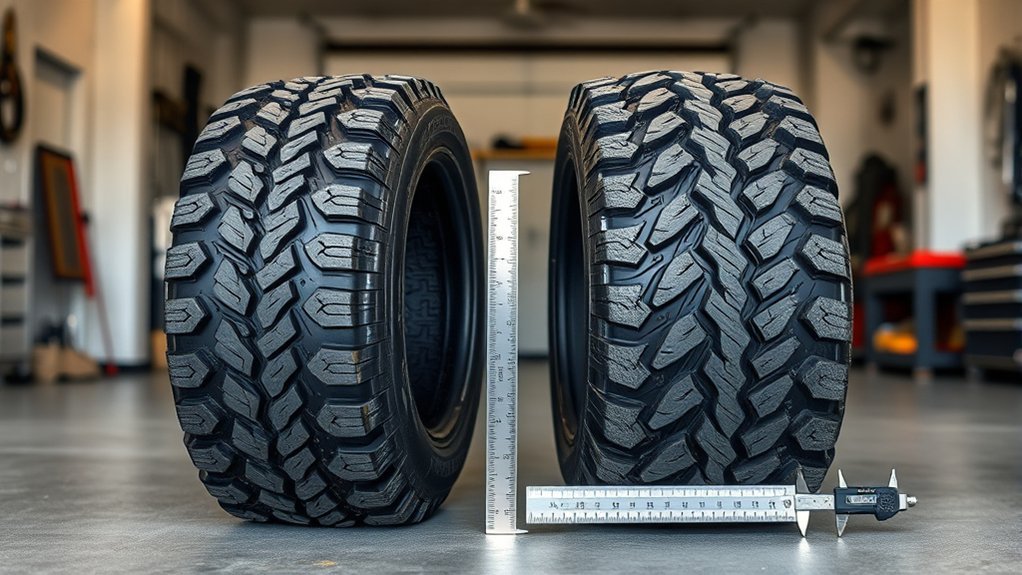
No, a 275 tire is not automatically the same as a 33-inch tire. The number 275 usually means the tire is 275 millimeters wide, while 33 inches refers to the tire’s overall diameter. Some 275 sizes, such as 275/70R18, calculate very close to 33 inches, but other 275 sizes are shorter or taller. To compare them correctly, you need the full tire size code.
Quick Answer
A 275 tire is not the same thing as a 33-inch tire. A 275 tire is about 10.83 inches wide, while a 33-inch tire is about 33 inches tall. A 275/70R18 calculates to about 33.16 inches, so it is one common 275 size that sits close to a 33-inch tire.
Key Takeaways
- A 275 tire measures about 275 millimeters wide, or 10.83 inches.
- A 33-inch tire refers to overall tire diameter, not width.
- 275/70R18 calculates to about 33.16 inches tall, so it is close to a 33-inch tire.
- 275/70R17 is only about 32.16 inches tall, so it is not a true 33-inch match.
- Always check clearance, rim width, load rating, speed rating, and manufacturer specs before changing sizes.
At a Glance
| Time Required | 5 to 10 minutes |
| Difficulty | Easy if you know the full tire size |
| Tools Needed | Tire size code, calculator, owner’s manual, and clearance check |
| Cost | Free for the size check; tire and installation costs vary |
Is a 275 Tire the Same as a 33-Inch Tire?
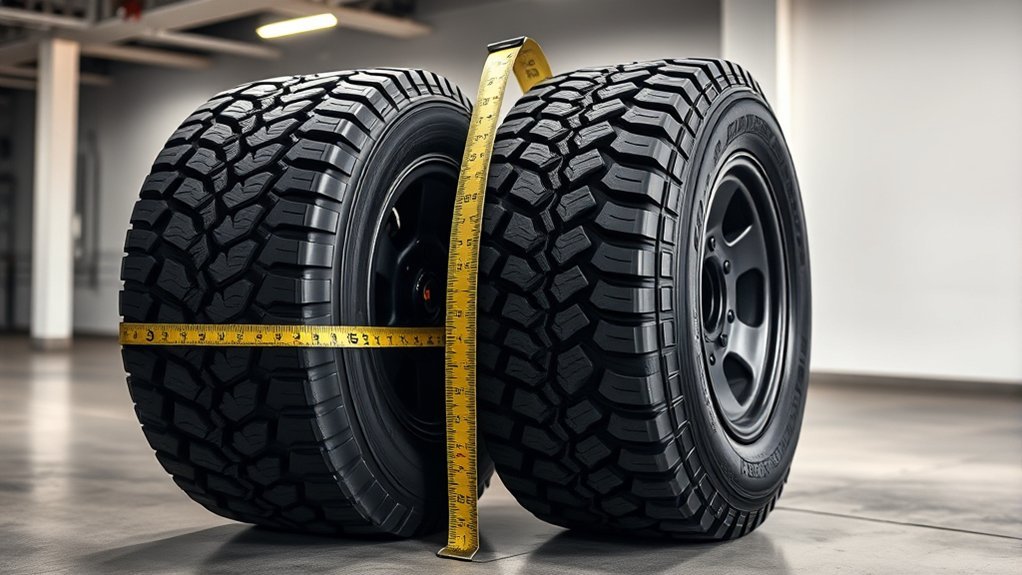
No, a 275 tire is not automatically the same as a 33-inch tire. You are comparing two different measurements. The 275 number usually describes section width in millimeters. The 33-inch number describes overall tire diameter.
That means a 275 tire converts to about 10.83 inches wide, but width alone does not tell you tire height. You also need the aspect ratio and wheel diameter. For example, 275/70R18 calculates to about 33.16 inches tall, while 275/70R17 calculates to about 32.16 inches tall.
Before you buy, check the full size, your wheel specs, and your vehicle’s clearance. The NHTSA TireWise guidance recommends using the owner’s manual or Tire and Loading Information Label to confirm the correct tire size for your vehicle.
How 275 Tire Sizes Are Measured
When you see a tire size such as 275/70R18, each part has a different job. The first number gives the section width in millimeters. The second number gives the aspect ratio. The letter shows construction type, and the last number gives wheel diameter in inches.
275 Tire Width Basics
A 275 tire is about 275 millimeters wide from sidewall to sidewall when measured under standard conditions. Since one inch equals exactly 25.4 millimeters, you can convert 275 mm like this:
- 275 ÷ 25.4 = 10.83 inches
- This tells you approximate section width, not tire height.
- Actual mounted width can vary by tire model and rim width.
That width matters because it affects fender clearance, suspension clearance, wheel compatibility, and steering feel. A wider tire may also need a different wheel offset or more room near the upper control arm.
Metric Size Measurement Breakdown
A full metric tire size includes more than width. Here is how to read a common size such as 275/70R18:
- 275: section width in millimeters.
- 70: aspect ratio, meaning the sidewall height is 70% of the tire width.
- R: radial construction.
- 18: wheel diameter in inches.
The aspect ratio is the key difference between a short 275 tire and a tall 275 tire. A 275/55R20, 275/60R20, 275/65R20, and 275/70R18 all share the same nominal width, but they do not have the same overall diameter.
What a 33-Inch Tire Really Means
A 33-inch tire usually refers to a tire with an overall diameter near 33 inches. It does not mean the tire is 33 inches wide. Many off-road and all-terrain tires use inch-based flotation sizing, such as 33×12.50R15. In that format, 33 is the nominal diameter, 12.50 is the nominal section width, and 15 is the wheel diameter.
| Label | Primary Meaning | What It Affects |
|---|---|---|
| 33-inch tire | Overall diameter | Ground clearance, gearing, speedometer reading |
| 275 tire | Section width | Wheel fitment, fender clearance, steering clearance |
| Aspect ratio | Sidewall height as a percentage of width | Total tire diameter and ride feel |
So, a 275 tire can be close to a 33-inch tire only when the aspect ratio and wheel diameter make the full tire tall enough.
Why 275/70R18 Is Close to 33 Inches
The size 275/70R18 is commonly treated as a near-33-inch tire because its calculated diameter is about 33.16 inches. That is close enough that many drivers group it with 33-inch tire options, but it is still not the same label as a true flotation size like 33×12.50R15.
Here is the basic math:
- Section width: 275 mm
- Sidewall height: 275 × 0.70 = 192.5 mm
- Sidewall height in inches: 192.5 ÷ 25.4 = 7.58 inches
- Overall diameter: 18 + 7.58 + 7.58 = 33.16 inches
Note: Calculated diameter is not always the same as the tire maker’s published diameter. Tread depth, casing shape, rim width, and tire model can create small differences. Always check the manufacturer’s spec sheet before buying.
How to Convert a 275 Tire to Inches
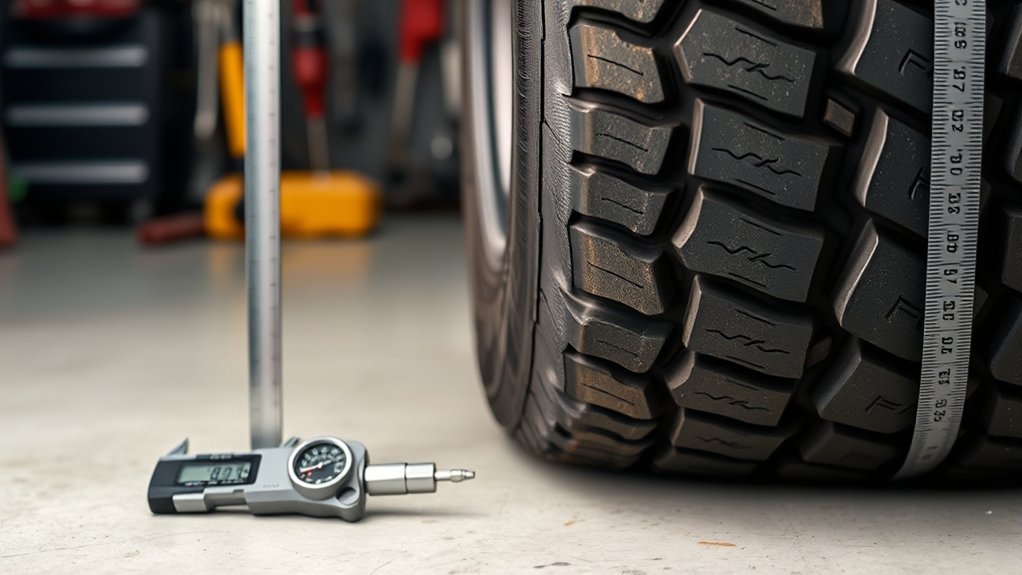
To convert a 275 tire to inches, start with the width. Divide 275 by 25.4. That gives you about 10.83 inches. To find the full tire diameter, you must also calculate sidewall height and add the wheel diameter.
Metric to Inch Basics
Use this simple width conversion:
- 275 mm ÷ 25.4 = 10.83 inches
- That number is the section width.
- It does not tell you whether the tire is 33 inches tall.
A 275 tire can be shorter than 33 inches, nearly 33 inches, or taller than 33 inches. The final answer depends on the complete size code.
275 Tire Diameter Estimate
Use this formula for a metric tire’s calculated diameter:
Overall diameter = wheel diameter + 2 × (section width × aspect ratio ÷ 100 ÷ 25.4)
For example, a 275/60R20 calculates like this:
- Sidewall height: 275 × 0.60 = 165 mm
- Sidewall height in inches: 165 ÷ 25.4 = 6.50 inches
- Overall diameter: 20 + 6.50 + 6.50 = 32.99 inches
That makes 275/60R20 effectively close to 33 inches by calculation, even though it is not labeled as a 33-inch tire.
Why Tire Diameter Affects Fitment
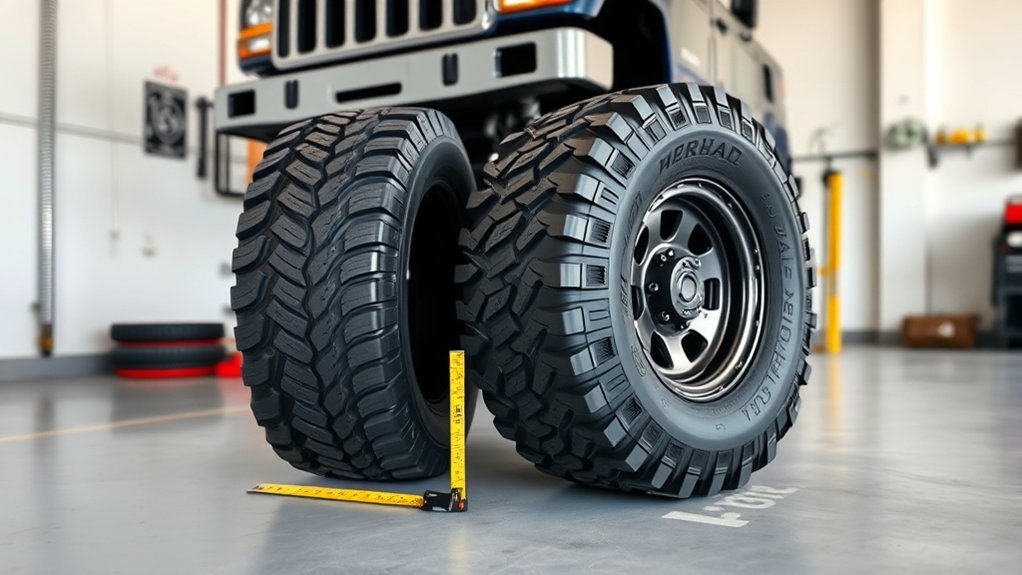
Tire diameter affects fitment because it changes the tire’s total height. A taller tire can improve ground clearance, but it can also rub the fender liner, bumper, mud flap, body mount, suspension parts, or upper control arm.
- Larger diameter can change gearing and acceleration feel.
- Diameter changes can affect speedometer and odometer accuracy.
- More height can create rubbing during turns, braking, or suspension compression.
- Wider sizes can create clearance issues even when the diameter fits.
Warning: Do not choose a tire by diameter alone. A tire must also match your wheel width, load index, speed rating, clearance, and vehicle manufacturer requirements. When in doubt, confirm the size with a qualified tire dealer.
Check 275 Tire Fitment and Clearance
Before mounting a 275 tire, check more than the number on the sidewall. You need enough room at full steering lock, through suspension travel, and under load. This matters even more on trucks and SUVs that carry cargo, tow, or go off-road.
Use this checklist before changing sizes:
- Owner’s manual or door placard: Confirm the original tire size and recommended alternatives.
- Load index: Make sure the new tire can support your vehicle’s weight and use case.
- Speed rating: Match or exceed the rating required for your vehicle unless a tire professional confirms otherwise.
- Wheel width: Confirm the tire is approved for your rim width.
- Offset and backspacing: Check whether the tire moves closer to suspension parts or fenders.
- Clearance: Test full lock, compression, reverse turns, and loaded conditions.
- TPMS and pressure: Use the vehicle’s recommended cold pressure unless a qualified professional specifies a different setup.
The Discount Tire size calculator can help compare overall diameter, circumference, section width, and estimated speedometer change. Still, calculator results are math-based, so manufacturer specs should be your final check.
[Products Worth Considering]

The SAFELIFE dial tire tread depth gauge measures tread depth in 1/32 inch increments with clear, easy-to-read 2-inch dial face. Color zones using a traffic light system help you quickly judge whether tread is low, marginal, or ample for safer driving. Built with a durable zinc cast body and a metal detect probe for precise, comfortable use across cars, motorcycles, trucks, and buses.

Measure tire tread depth quickly and accurately with this LUMITECO dial gauge that reads in 1/32" increments up to 14/32". The color-coded green/yellow/red zones make it easy to judge tire wear and know when replacement is needed. A rugged, compact design with a protective pouch helps keep the gauge ready for use on cars, trucks, motorcycles, and more.

This manual duck head tire changer kit makes tire installation and removal simpler by letting you embed the duck head into the tire with applied pressure. The integrated design and durable steel construction help reduce friction and improve efficiency and safety during use. Suitable for 16–21 inch wheels, it’s convenient for cars, trucks, SUVs, and ATV tires, with 24-hour after-sales support.
How Wheel Size Changes Tire Diameter
Wheel size changes tire diameter only when the sidewall does not adjust enough to keep the total height similar. A larger wheel often uses a lower-profile tire. A smaller wheel often allows more sidewall. That is why a 275 tire on a 17-inch wheel can be much shorter than a 275 tire on an 18-inch or 20-inch wheel.
Compare these two sizes:
- 275/70R17: about 32.16 inches tall.
- 275/70R18: about 33.16 inches tall.
The width and aspect ratio are the same, but the 18-inch wheel adds one inch to the total calculated diameter. That makes the full size code essential.
Tire Sizes Close to 33 Inches
If you want a tire close to 33 inches, compare the full size instead of focusing only on 275. The table below uses calculated dimensions, so actual specs may vary by tire model.
| Tire Size | Calculated Diameter | Calculated Width | How Close to 33? |
|---|---|---|---|
| 275/70R18 | 33.16 in | 10.83 in | Very close |
| 275/75R17 | 33.24 in | 10.83 in | Very close |
| 275/60R20 | 32.99 in | 10.83 in | Very close |
| 285/70R17 | 32.71 in | 11.22 in | Close, slightly short |
| 285/75R16 | 32.83 in | 11.22 in | Close, slightly short |
| 295/70R17 | 33.26 in | 11.61 in | Close, slightly tall |
| 33×12.50R15 | 33.00 in nominal | 12.50 in nominal | True 33-inch label |
[Products Worth Considering]

Upgrade your 2024-2026 Tesla Model 3 Highland with REEVAA all-weather mud flaps designed for seamless fit along the original body lines. The set of four delivers strong splash protection against mud, gravel, and road debris while using OEM-grade durable materials. Installation is non-destructive with original hole positions and snap-in clips, and the aerodynamic design helps minimize impact on efficiency.

This 3-piece wheel and tire brush set makes it easy to clean light, medium, and heavy dirt from wheels, rims, tires, and exterior surfaces. It includes both soft and stiff bristle options for gentle scrubbing and tough grime removal, helping lift brake dust and road buildup. The long-handle design supports comfortable cleaning across cars, trucks, SUVs, RVs, motorcycles, and more, with simple care instructions to restore brush shape.

This metal-free wheel and tire cleaning brush uses dense, fluffy synthetic wool to safely clean rims, spokes, fenders, and engine areas without worrying about damaging surfaces. Its flexible, comfortable design helps you reach detailed areas while maintaining durability, and the extra absorbent fibers work well with wheel spray cleaners for faster cleanup. Reusable and washable performance helps prevent grime and build-up for cleaner vehicles and easier maintenance at home.
Closest 33-Inch Sizes
The closest common choices depend on your wheel diameter. For 18-inch wheels, 275/70R18 is one of the most common near-33 sizes. For 17-inch wheels, 275/75R17 and 295/70R17 are closer to 33 inches than 275/70R17. For 20-inch wheels, 275/60R20 calculates almost exactly to 33 inches.
Size Match Factors
The best match is not always the size closest to 33 inches on paper. You also need to compare width, wheel offset, fender clearance, suspension clearance, load rating, and tire type. A 295/70R17 may be close in height, but it is also wider than a 275 tire. That extra width may create rubbing even when the diameter looks acceptable.
Pro Tip: Compare your current tire to the new tire by diameter, width, circumference, and revolutions per mile. A small diameter change may still affect your speedometer, gearing, and shift feel.
Use a Tire Size Calculator Before Buying
Before buying new tires, use a tire size calculator to compare your current size with the new size. This helps you estimate the change in diameter, circumference, sidewall height, and speedometer reading. It also helps you see whether a 275 tire is actually close to a 33-inch tire.
Here is what to check:
- Diameter difference: A larger tire travels farther with each rotation.
- Speedometer effect: If the new tire is taller, your actual speed may be higher than the speedometer shows.
- Clearance: Check fenders, liners, suspension, bumper edges, and mud flaps.
- Load and speed needs: Make sure the new tire meets your vehicle’s requirements.
- Manufacturer specs: Confirm the published diameter, approved rim width, and load rating for the exact tire model.
As a quick rule, divide the new tire diameter by the old tire diameter to estimate the speedometer change. For example, if your old tire is 31.6 inches and your new tire is 33.2 inches, the new tire is about 5% taller. When your speedometer shows 60 mph, your actual speed may be around 63 mph before recalibration.
[Products Worth Considering]

This wheel brush kit delivers pro-level cleaning at home, lifting dirt, grime, and brake dust to help restore wheel appearance. It includes multiple brush styles and applicator pads for tackling different wheel surfaces, with gentle, metal-free bristles designed to reduce scratching risk. The flat and double-ended brushes are built for comfort and reach, making wheel care easier for cars, trucks, and RVs.

These M14x1.5 closed-end chrome lug nuts are a one-piece replacement designed for secure fitment on compatible GM, Ford, and select Chrysler/Dodge models. Featuring a 60-degree conical seat and anti-rust chrome plating, they help resist corrosion and maintain a bright look for everyday driving. Built for long-term durability, they include OEM-style part references and are backed by 12 months of support.

Monitor tire tread wear with a smart, color-coded depth gauge that shows clear condition ranges at a glance. The bar is range marked for fast, easy readings, helping you maintain safer traction and performance. Each gauge is portable with a pocket clip, and the set includes 20 units for daily use and sharing.
Frequently Asked Questions
What size tire is equal to 275?
A 275 tire is about 275 millimeters wide, or 10.83 inches. That only tells you the section width. To find the full size, you need the aspect ratio and wheel diameter, such as 275/70R18 or 275/60R20.
What tire size is equal to a 33?
No single metric size equals every 33-inch tire. Common close options include 275/70R18 at about 33.16 inches, 275/75R17 at about 33.24 inches, 275/60R20 at about 32.99 inches, and 285/70R17 at about 32.71 inches. A 33×12.50R15 is a true nominal 33-inch flotation size.
Is a 275/70 tire a 33?
It depends on the wheel diameter. A 275/70R18 calculates to about 33.16 inches, so it is close to a 33-inch tire. A 275/70R17 calculates to about 32.16 inches, so it is shorter than a 33-inch tire.
Is a 275/60R20 a 33-inch tire?
A 275/60R20 calculates to about 32.99 inches tall, so it is effectively very close to 33 inches. It is still a metric tire size, not a true inch-labeled 33-inch flotation size.
Is 285/70R17 bigger than 275/70R18?
No. A 285/70R17 calculates to about 32.71 inches tall, while a 275/70R18 calculates to about 33.16 inches tall. The 285/70R17 is wider, but the 275/70R18 is taller by calculation.
Can I replace my stock tires with 33-inch tires?
Maybe, but you need to check your vehicle first. A 33-inch tire may require different wheels, trimming, lift, or alignment changes. It must also meet the proper load index, speed rating, and clearance requirements for your vehicle.
Conclusion
A 275 tire is not automatically the same as a 33-inch tire. The 275 number tells you width, while 33 inches tells you overall diameter. A size like 275/70R18 calculates to about 33.16 inches, so it is close. A size like 275/70R17 is only about 32.16 inches tall.
Before you buy, compare the full tire code, not just one number. Check diameter, width, load rating, speed rating, rim width, clearance, and manufacturer specs. That extra step helps you avoid rubbing, speedometer error, poor fitment, and unsafe tire choices.
Sources
- NHTSA TireWise — supports tire safety, owner’s manual, Tire and Loading Information Label, and correct-size guidance.
- NIST SI Units: Length — supports the exact inch-to-millimeter conversion used in tire calculations.
- Discount Tire Tire Size Calculator — supports comparing diameter, circumference, section width, speedometer change, and the need to verify manufacturer specs.