
Truck tire warranties can save you money, but only when you understand what the warranty actually covers before a problem happens. Most truck and light truck tire warranties focus on defects, treadwear adjustments, or extra protection programs, not every flat tire or every case of uneven wear. Your best protection is simple: keep the receipt, register the tires, follow the maintenance schedule, and document rotations, pressure checks, alignments, and mileage.
Quick Answer
Truck tire warranties usually cover defects in workmanship or materials and, on eligible tires, premature treadwear under stated mileage limits. Road hazard coverage is not automatic unless the manufacturer program or retailer plan includes it. Claims often require proof of purchase, mileage, tire rotation records, proper inflation, and inspection by an authorized dealer.
Key Takeaways
- A workmanship and materials warranty covers qualifying defects, not damage caused by potholes, overloading, underinflation, racing, or misuse.
- A treadwear warranty is usually an adjustment program, not a promise that every driver will reach the listed mileage.
- Road hazard protection may be included in some manufacturer programs or sold separately by a tire retailer.
- Keep your receipt, DOT Tire Identification Number, odometer mileage, rotation records, pressure records, and inspection notes.
- Do not throw away a failed tire before the seller or manufacturer has a chance to inspect it.
At a Glance
| Time Required | 10 to 20 minutes to review coverage; longer if the tire needs dealer inspection |
| Difficulty | Easy if you have receipts and service records; harder if records are missing |
| Tools Needed | Warranty booklet, purchase receipt, odometer reading, tire photos, pressure gauge, rotation records, DOT/TIN |
| Cost | Warranty review is free; approved claims may still include mounting, balancing, taxes, disposal, or prorated replacement costs |
What Are the Different Types of Truck Tire Warranties?
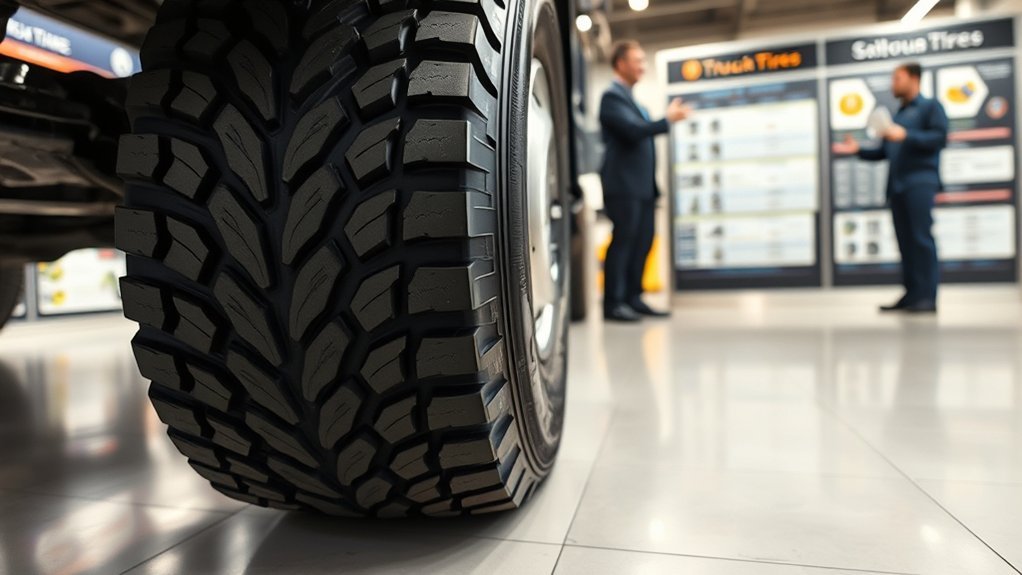
Truck tire warranties are not all the same. A light truck tire used on a pickup or SUV may have different coverage from a commercial truck tire, trailer tire, or off-road tire. Always read the warranty booklet for your exact tire brand, model, size, and use case.
Most truck tire warranty programs fit into these main categories:
- Workmanship and materials warranty: This covers qualifying defects caused by how the tire was made or the materials used. For example, Michelin says its passenger and light truck replacement tires are covered for defects in workmanship and materials for the life of the original usable tread or six years from the purchase date, whichever comes first. Michelin warranty information
- Treadwear or mileage warranty: This gives eligible buyers an adjustment if the tire wears out evenly before the listed mileage, as long as the tire was maintained correctly. Mileage coverage varies by tire line. Some Continental replacement passenger and light truck tires, for example, list mileage coverage on select products up to 80,000 miles. Continental Total Confidence Plan
- Road hazard coverage: This applies to damage from road debris, potholes, nails, glass, or similar hazards only if your manufacturer program or retailer plan includes it. Some brands include limited road hazard coverage under specific conditions, while many retailers sell it separately.
- Uniformity or ride warranty: Some tire brands include a short adjustment window for early vibration, ride disturbance, or out-of-round issues. These claims usually happen soon after installation and require dealer inspection.
- Satisfaction trial: Some brands let you exchange eligible tires within a short trial period if you are not satisfied. Michelin and Goodyear both list satisfaction programs for eligible tires, but conditions apply. Goodyear tire warranty programs
- Roadside assistance: Some programs include flat tire change or towing support, but this is usually separate from paying to repair or replace the damaged tire.
Note: A manufacturer warranty and a retailer road-hazard plan are different documents. You may have both, one, or neither. Check your purchase paperwork before assuming pothole or nail damage is covered.
[Products Worth Considering]

ETENWOLF T300 is a calibrated digital tire pressure gauge for accurate readings from 3 to 200 PSI across light and heavy-duty vehicles. It includes thermal compensation for reliable performance in extreme cold or heat, with an auto shut-off to extend battery life and an LED for easier reading. The sturdy design supports rugged everyday use, making it ideal for pickups, RVs, and industrial applications.

Accurately measure tire tread depth with a calibrated gauge marked from 0 to 1 inch in 1/32 inch increments. The color-coded bar helps you quickly identify tread condition ranges, supporting safe driving for trucks, motorcycles, automobiles, and passenger vehicles.

The 22800 wheel stud installer makes replacing wheel studs quick and secure, saving time and effort during tire service. It uses a ratchet or impact wrench to pull new studs firmly into place, helping when existing studs are too long. Compatible with most automotive wheels and light-duty truck wheel studs, it’s designed for easy, tool-assisted installation.
What Coverage Do Truck Tire Warranties Include?
Truck tire warranty coverage depends on the tire, brand, and purchase channel. In general, coverage may include a free replacement period, a prorated replacement period, a treadwear adjustment, or a road-hazard benefit if your plan includes one.
| Coverage Type | What It Usually Means | What to Check |
|---|---|---|
| Defects | Manufacturing or material problems under normal service | Time limit, usable tread limit, inspection process, excluded uses |
| Treadwear | Adjustment if the tire wears evenly before its mileage warranty | Rotation interval, tread depth requirement, proof of alignment, mileage records |
| Road hazard | Damage from nails, glass, potholes, or road debris if the plan includes it | Registration, first-year limits, repairability, treadwear limit, retailer rules |
| Ride or uniformity | Early vibration or ride concerns after installation | Short mileage or time window, balance records, dealer diagnosis |
| Satisfaction trial | Exchange option if you are not satisfied with eligible tires | Days allowed, original receipt, full set requirement, excluded tire lines |
Even when a claim is approved, you may still pay for mounting, balancing, valve stems, taxes, disposal fees, or the remaining prorated cost of a replacement tire. Warranty booklets often spell out those charges, so check the small print before you expect a free tire.
Good tire maintenance helps your warranty claim and your safety. NHTSA recommends monthly cold pressure checks, regular tread checks, and rotation when your vehicle manufacturer recommends it.
[Products Worth Considering]

Wykodra tire plugs provide quick vulcanizing repairs for tubeless tires, helping you seal punctures and get back on the road. The industrial-strength rubber creates a long-lasting, leak-resistant bond and is designed for emergency fixes without removing the tire. Choose between two standard plug sizes with color-matched options for small to larger damage across many vehicles and off-road uses.

The SAFELIFE dial tire tread depth gauge measures tread depth in 1/32 inch increments with clear, easy-to-read 2-inch dial face. Color zones using a traffic light system help you quickly judge whether tread is low, marginal, or ample for safer driving. Built with a durable zinc cast body and a metal detect probe for precise, comfortable use across cars, motorcycles, trucks, and buses.

The Big Rig Defense Tire Thumper is a truck tire pressure checker that lets you quickly check multiple tires by giving them a firm whack. Listen for a reassuring thump and feel the stick bounce when a tire is fully inflated, helping you get back on the road safely. It features a comfortable, glove-friendly handle and a secure wrist strap for confident use on busy routes.
Key Exclusions You Should Be Aware Of?
Warranty exclusions matter because many denied claims come from maintenance, usage, or damage issues instead of the tire itself. The visible problem is not the only factor. A tread separation, sidewall crack, or rapid wear pattern may be handled differently depending on the cause.
| Exclusion Type | What It Looks Like | Why It Can Hurt a Claim |
|---|---|---|
| Improper inflation | Edge wear, heat damage, casing damage, repeated low-pressure use | The tire may have failed from service conditions, not a defect |
| No rotation records | Uneven front-to-rear wear or missing service history | Treadwear claims often require proof that the tires were rotated as required |
| Overloading or wrong tire size | Load damage, heat buildup, sidewall stress, wrong load rating | Using a tire outside its load or vehicle requirements can void coverage |
| Road impact | Bubble, cut, puncture, torn sidewall, bent wheel, pothole impact mark | Standard defect warranties usually do not cover impact damage unless road hazard coverage applies |
| Racing, off-road, commercial, trailer, or farm use | Use outside the warranty’s allowed vehicle category | Many passenger and light truck warranties exclude special-use vehicles or severe service |
| Poor alignment, worn suspension, or imbalance | Feathering, cupping, one-sided wear, vibration, irregular wear patches | The tire may have worn early because of the vehicle, not because of the tire |
Warning: Do not keep driving on a tire with a bulge, exposed cords, deep sidewall cut, repeated air loss, or severe vibration. A warranty claim is not worth risking a blowout or loss of control.
[Products Worth Considering]

The Milton S-693 straight foot dual head air chuck is designed for accurate tire pressure checks and quick, secure valve-core engagement with lock-on threads on both ends. With a 1/4" FNPT connection and a maximum 150 PSI rating, it’s built for use on inner duals and common vehicle tires, including trucks and RVs.

Vigorder rubber cement glue delivers superior adhesion and cures quickly within about 30 seconds for seamless rubber bonding. Once cured, it helps provide a strong, durable, waterproof seal that holds up to vehicle weight, pressure, and heat. Suitable for cars, motorcycles, trucks, bicycles, and off-road tires, it’s designed for emergency patch and maintenance repairs.

Monitor tire tread wear with a smart, color-coded depth gauge that shows clear condition ranges at a glance. The bar is range marked for fast, easy readings, helping you maintain safer traction and performance. Each gauge is portable with a pocket clip, and the set includes 20 units for daily use and sharing.
Tips to Maximize Your Truck Tire Warranty Benefits

You maximize your truck tire warranty by acting like you may need to prove the tire was used correctly. That does not mean complicated paperwork. It means keeping basic records from the day the tires are installed.
- Register the tires: Registering helps the manufacturer contact you about recalls. The U.S. Tire Manufacturers Association says registration uses the DOT Tire Identification Number, which appears on the tire sidewall and begins with DOT.
- Save the original receipt: Keep a digital and paper copy showing purchase date, tire brand, tire model, tire size, quantity, seller, and vehicle information.
- Write down starting mileage: Record your odometer reading when the tires are installed. Treadwear claims usually depend on mileage.
- Check cold tire pressure monthly: NHTSA recommends checking all tires, including the spare, at least once a month when tires are cold. Use the pressure on the vehicle door placard or owner’s manual, not the maximum pressure molded on the tire sidewall. NHTSA TireWise
- Rotate on schedule: NHTSA says to check your owner’s manual for the right rotation pattern and interval, and notes that many vehicles use 5,000 to 8,000 miles when rotation is recommended.
- Check tread depth: NHTSA says tires are not safe and should be replaced when tread is worn to 2/32 inch.
- Fix alignment or suspension problems early: Uneven wear can weaken a treadwear claim, especially when it points to a vehicle problem.
- Use the right load rating: Truck tires must match the vehicle, load, towing needs, and tire placard. Overloading can cause heat and casing damage.
- Keep the damaged tire: If you plan to file a claim, keep the tire until the seller, dealer, or manufacturer tells you the inspection is complete.
Pro Tip: Create one folder on your phone called “Tire Warranty.” Add photos of the receipt, DOT/TIN, odometer, rotation invoices, alignment printouts, tread depth readings, and tire damage. That folder can save time when you file a claim.
How to Effectively File a Tire Warranty Claim
Filing a tire warranty claim is easier when you follow the warranty process instead of guessing. Start with the seller who installed the tires, unless the warranty booklet tells you to contact the manufacturer directly.
- Stop using the tire if it looks unsafe. Install the spare, call roadside assistance, or tow the vehicle if the tire has a bulge, exposed cords, severe air loss, or major sidewall damage.
- Gather your documents. You need the purchase receipt, warranty booklet, odometer mileage, tire rotation records, pressure and alignment records, and any road-hazard plan paperwork.
- Record the tire details. Photograph the brand, model, size, load rating, DOT/TIN, tread, sidewall, damaged area, and vehicle odometer.
- Contact the retailer or authorized dealer. Ask whether the claim should go through the store, the tire manufacturer, or a separate road-hazard administrator.
- Let the tire be inspected. The dealer may check tread depth, wear pattern, repair history, impact marks, sidewall condition, and maintenance records.
- Ask how the adjustment is calculated. A warranty may offer free replacement only during a short first period. After that, the credit is often prorated.
- Keep copies of everything. Save the claim form, inspection notes, photos, invoices, and any email or case number.
- Follow up politely. If you do not hear back, contact the retailer or manufacturer with your case number and inspection date.
If the claim is denied, ask for the reason in writing. A denial note can help you understand whether the issue was missing records, road impact, underinflation, alignment wear, improper repair, or a tire that was outside the covered time or tread depth limit.
How Treadwear Warranty Proration Works
A treadwear warranty is often misunderstood. It does not mean every truck will reach the listed mileage. Driving style, rotation history, tire pressure, towing, payload, alignment, climate, and road surface all affect tread life.
When a treadwear claim is approved, the manufacturer or retailer may calculate a credit based on the unused portion of the warranty mileage or remaining usable tread. For example, a tire that wore evenly too early may receive a partial credit toward a comparable replacement tire. The warranty document controls the exact formula.
Expect these limits on many treadwear claims:
- The tires must be worn evenly across the tread.
- You may need proof of rotations at the required mileage interval.
- The tires may need to be on the vehicle for inspection.
- All tires in the set may need to be evaluated together.
- Coverage may end after a set number of years, even if you have not reached the mileage limit.
- Commercial, off-road, racing, trailer, or overloaded use may be excluded.
What Records Should You Keep?
Warranty records do not need to be fancy. They need to be clear enough to show when you bought the tires, how far you drove, and how you maintained them.
| Record | Why It Matters |
|---|---|
| Original receipt | Proves purchase date, seller, tire model, and eligibility |
| Installation mileage | Shows how many miles the tire actually ran |
| Rotation invoices | Supports treadwear claims and proves maintenance |
| Alignment and balance records | Helps explain or rule out irregular wear and vibration |
| Pressure checks | Shows you did not knowingly run the tire underinflated |
| DOT/TIN photos | Identifies the tire for warranty, registration, and recall checks |
Truck Tire Warranty Mistakes That Cause Denied Claims
Most warranty problems come from missing proof or using the tire outside the warranty rules. Avoid these common mistakes:
- Throwing away the tire too soon: The manufacturer or dealer may need to inspect it.
- Waiting too long: Some claim windows are short, especially for ride disturbance, uniformity, satisfaction trials, and road hazard programs.
- Skipping rotations: Treadwear coverage often depends on documented rotations.
- Ignoring uneven wear: Alignment or suspension problems can make a treadwear claim harder to prove.
- Using the wrong tire for the job: A passenger-rated tire on a heavy towing setup can create load and heat problems.
- Assuming all damage is covered: Nail punctures, pothole damage, and sidewall cuts usually need road hazard coverage, not just a standard defect warranty.
- Repairing the tire incorrectly: Improper plugs, sidewall repairs, or repairs outside accepted repair areas can affect coverage and safety.
Frequently Asked Questions
What are common tire warranty exclusions?
Common exclusions include underinflation, overloading, racing, off-road use, improper installation, road impact, vandalism, collision damage, irregular wear from alignment or suspension problems, and missing maintenance records. A visible issue like tread separation or sidewall cracking is not automatically excluded. The cause determines whether it may qualify as a defect claim.
Does a treadwear warranty mean my truck tires will last that many miles?
No. A treadwear warranty is usually an adjustment program if eligible tires wear out early under normal use and documented maintenance. It does not guarantee the same mileage for every driver, truck, route, load, or towing setup.
Are potholes, nails, and road debris covered?
Only if you have road hazard coverage that applies to that damage. Standard workmanship and materials warranties usually focus on defects, not punctures, cuts, pothole impacts, or curb damage. Check whether your protection came from the tire manufacturer, the tire retailer, or a separate plan administrator.
Do I need rotation records for a truck tire warranty claim?
For treadwear claims, yes, you should expect to show rotation records. Keep invoices or a maintenance log with dates, mileage, tire positions, and shop information. Missing records can make an early-wear claim easier to deny.
Can I file a warranty claim after throwing away the damaged tire?
You may have trouble filing the claim because the dealer or manufacturer often needs to inspect the tire. Keep the tire until the claim is inspected and closed, unless the warranty administrator tells you otherwise in writing.
Are light truck tires and commercial truck tires covered the same way?
Not always. Passenger and light truck replacement tires often have different warranty terms from commercial truck, trailer, farm, fleet, or off-road tires. Use the warranty document for your exact tire model and application.
Conclusion
Understanding your truck tire warranty helps you protect your tires, your budget, and your safety. The main rule is simple: match the tire to your truck, maintain it correctly, and keep proof. Workmanship and materials coverage, treadwear warranties, road hazard protection, satisfaction trials, and roadside assistance all have different rules. Read the warranty booklet, save your records, inspect your tires often, and act quickly if you notice damage, vibration, air loss, or uneven wear.
Sources
- NHTSA TireWise — tire pressure, tread depth, rotation, tire aging, and safety guidance
- Michelin Warranty Information — passenger and light truck limited warranty, treadwear warranty, satisfaction guarantee, and roadside assistance terms
- Goodyear Tire Warranty Info — tire warranty categories, tread life warranty, limited warranty, and satisfaction guarantee programs
- Goodyear Highway Auto & Light Truck Tire Replacement Limited Warranty — light truck replacement warranty overview and prorated replacement language
- Continental Total Confidence Plan — limited warranty, mileage warranty, road hazard coverage, roadside assistance, and stated coverage limits
- U.S. Tire Manufacturers Association Tire Registration — DOT Tire Identification Number and tire registration guidance