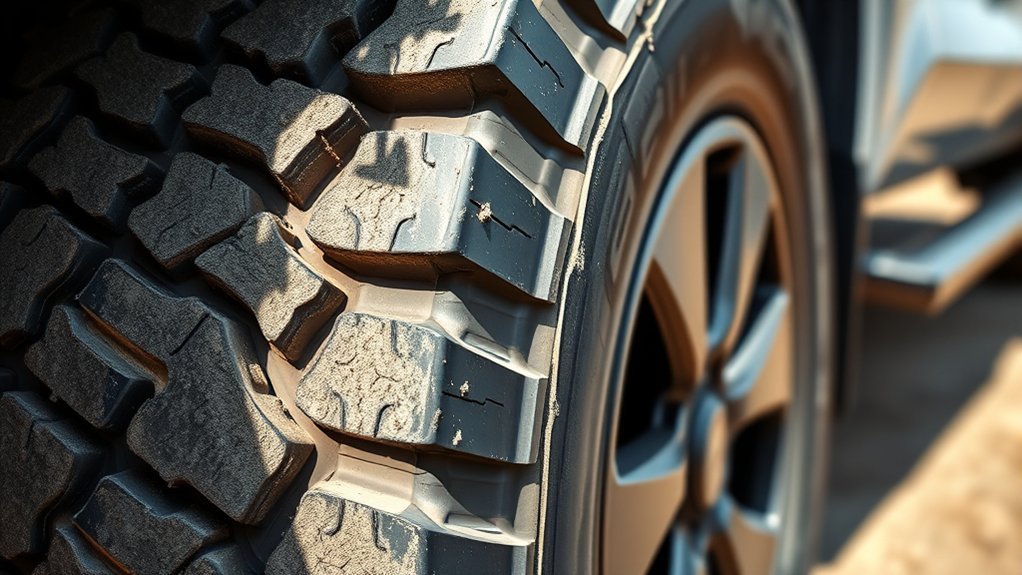
Your Toyota Tundra tire life depends on tire type, load, driving style, road surface, alignment, and maintenance. Most owners should think in ranges, not one fixed mileage number. Factory tires and aggressive all-terrains may wear sooner, while premium highway or all-terrain replacements can last much longer with steady tire care.
Quick Answer
Toyota Tundra tires commonly last about 30,000 to 60,000+ miles. Factory tires, aggressive all-terrains, towing, rough roads, and poor alignment can shorten that range. Highway-terrain or premium replacement tires can last longer when you rotate them on schedule, keep cold pressure at the door-placard spec, and replace them at unsafe tread depth.
Key Takeaways
- Use the tire pressure listed on your Tundra’s driver-door Tire and Loading Information Label, not a generic 35 PSI rule.
- Rotate tires at the interval in your owner’s manual or maintenance guide; Toyota’s current Tundra guide uses 5,000 miles or six months as the scheduled maintenance baseline.
- Check tread, sidewalls, and pressure monthly, and inspect again before towing, hauling, off-roading, or long highway trips.
- Replace tires when tread reaches 2/32 inch, when wear bars are flush, or sooner if you see bulges, cords, cracking, or repeated air loss.
- Mileage warranties are useful for comparison, but they are not a guarantee that every Tundra will reach that mileage.
At a Glance
| Time Required | 10 minutes for a monthly check; 30 to 60 minutes for a DIY rotation if you have the right tools |
| Difficulty | Easy for pressure and tread checks; moderate for rotation |
| Tools Needed | Tire pressure gauge, tread depth gauge or penny, flashlight, and a torque wrench if rotating tires yourself |
| Cost | Low if you already own basic tools; shop rotation, balancing, and alignment cost extra |
How Long Do Toyota Tundra Tires Last?
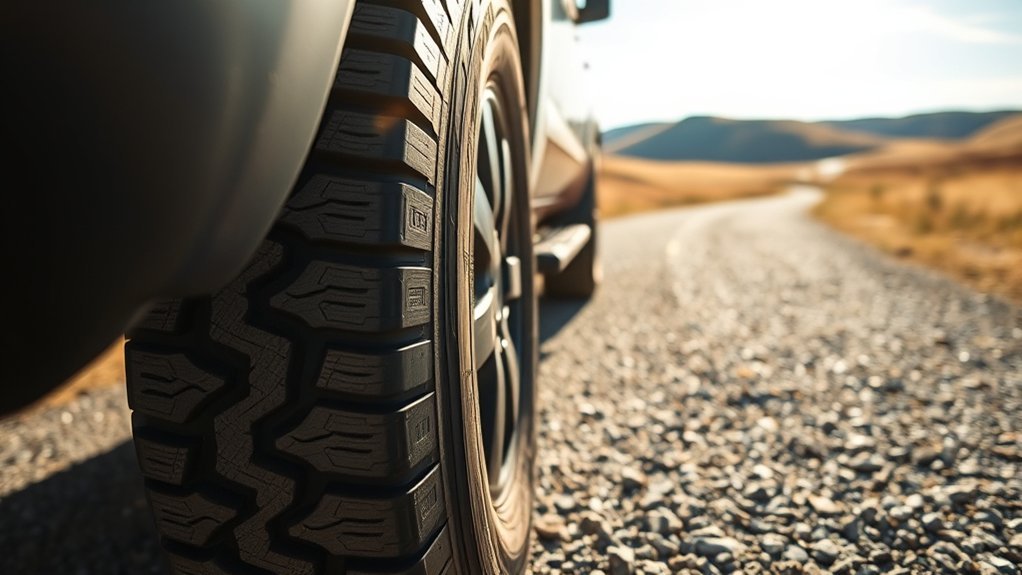
You can often expect Tundra tires to land somewhere between 30,000 and 60,000+ miles, but the exact number depends on the tire and how you use the truck. A Tundra that mostly sees steady highway driving on highway-terrain tires will usually be easier on tread than a truck that tows, hauls, runs oversized tires, or spends weekends on gravel and trails.
Official mileage warranties show why a single answer can mislead you. The Michelin LTX A/T2 carries a 60,000-mile limited treadwear warranty in the U.S., the Goodyear Wrangler All-Terrain Adventure With Kevlar is listed with a 60,000-mile warranty, and the BFGoodrich All-Terrain T/A KO2 is listed with a 50,000-mile warranty. Those numbers help you compare tires, but your final tread life still depends on pressure, rotation, alignment, load, and driving conditions.
Note: Tire warranties are not the same as a promise that your tires will reach that mileage. They usually depend on proper maintenance, correct fitment, regular rotations, and even wear across the set.
Why Your Tundra Tires May Wear Faster
Tundra tires wear faster when heat, weight, friction, and uneven contact increase. The truck’s weight and power already ask more from the tires than a smaller SUV would, so small maintenance problems can show up quickly in the tread.
Driving Style and Braking
Hard launches, sharp cornering, late braking, and repeated stop-and-go driving scrub rubber from the tread. You do not need to drive slowly everywhere, but smooth throttle and braking help the tread wear evenly. This matters even more with all-terrain tires, because large tread blocks can cup or feather when shocks, alignment, or rotation habits are poor.
Towing, Hauling, and Payload
Towing and hauling add heat and load. Extra weight can increase shoulder wear, especially if pressure is low for the load or the rear axle carries most of the weight. Always stay within the tire load rating, wheel rating, axle rating, and the truck’s payload and towing limits.
Warning: Do not use the maximum PSI printed on the tire sidewall as your normal target. Use the vehicle’s recommended cold tire pressure from the Tire and Loading Information Label or owner’s manual unless a qualified tire professional gives a load-specific recommendation.
Road Surface and Off-Road Use
Rough pavement, potholes, gravel, washboard roads, rocks, and mud can shorten tire life. Off-road driving can also damage sidewalls or knock alignment out of spec. Toyota’s current Tundra maintenance guide says certain off-road conditions call for additional inspections after driving through deep sand, mud, or water, so check the tires and underbody after rough trips.
Alignment, Suspension, and Balancing
Uneven wear often points to alignment, balancing, steering, or suspension issues. A Tundra that pulls to one side, shakes at highway speed, or shows feathered tread edges needs inspection. Replacing tires without fixing the cause can make the new set wear out early too.
Tundra Tire Maintenance Practices to Extend Life
Good tire care is simple, but it has to be consistent. The biggest wins are checking pressure cold, rotating on schedule, watching tread depth, and fixing uneven wear early.
| Maintenance Task | Best Frequency | Why It Matters |
|---|---|---|
| Check cold tire pressure | Monthly and before long trips | Helps prevent shoulder wear, center wear, heat buildup, and poor fuel economy |
| Rotate tires | Follow the owner’s manual or maintenance guide | Equalizes wear between front and rear positions |
| Measure tread depth | Monthly or any time traction feels worse | Shows when wet grip and replacement timing need attention |
| Inspect sidewalls and tread | Before towing, hauling, off-roading, or road trips | Catches cracks, punctures, bulges, cuts, and exposed cords early |
| Check alignment and balance | When you see uneven wear, vibration, pulling, or after a hard impact | Prevents a correctable problem from ruining a good set of tires |
[Products Worth Considering]

The SAFELIFE dial tire tread depth gauge measures tread depth in 1/32 inch increments with clear, easy-to-read 2-inch dial face. Color zones using a traffic light system help you quickly judge whether tread is low, marginal, or ample for safer driving. Built with a durable zinc cast body and a metal detect probe for precise, comfortable use across cars, motorcycles, trucks, and buses.

Measure tire tread depth quickly and accurately with this LUMITECO dial gauge that reads in 1/32" increments up to 14/32". The color-coded green/yellow/red zones make it easy to judge tire wear and know when replacement is needed. A rugged, compact design with a protective pouch helps keep the gauge ready for use on cars, trucks, motorcycles, and more.

Monitor tire tread wear with a smart, color-coded depth gauge that shows clear condition ranges at a glance. The bar is range marked for fast, easy readings, helping you maintain safer traction and performance. Each gauge is portable with a pocket clip, and the set includes 20 units for daily use and sharing.
Check the Correct Tire Pressure
The right PSI is the cold inflation pressure shown on your Tundra’s Tire and Loading Information Label or in the owner’s manual. The National Highway Traffic Safety Administration tells drivers to use the tire information placard or certification label for the recommended cold pressure. That is safer than guessing, copying another owner’s setup, or using the tire sidewall maximum.
Pro Tip: Check pressure before you drive or after the truck has been parked long enough for the tires to cool. Warm tires read higher, which can trick you into underinflating them.
Rotate on Schedule
The 2025 Toyota Tundra Warranty & Maintenance Guide recommends scheduled maintenance every 5,000 miles or six months, whichever comes first, and says tires should be rotated according to the owner’s manual. Use your exact model year’s manual for the rotation pattern, especially if you have directional tires, different tire sizes, aftermarket wheels, or a full-size spare in the rotation.
Watch for Uneven Wear Patterns
Center wear often points to overinflation. Edge wear often points to underinflation, overloading, hard cornering, or alignment issues. Cupping can come from worn shocks, balance problems, or skipped rotations. If one tire looks different from the others, fix the cause before replacing the set.
Signs You Need to Replace Your Tundra Tires
Even well-maintained tires eventually need replacement. Start with tread depth, but do not stop there. A tire can be unsafe because of damage, age, repeated pressure loss, or internal problems even if the tread still looks decent.
- Tread is at 2/32 inch: NHTSA says tires are not safe and should be replaced when tread reaches 2/32 inch.
- Wear bars are flush with the tread: Built-in treadwear indicators show when the tread has reached the replacement point.
- You see bulges, cords, deep cuts, or sidewall cracking: These signs need immediate inspection and often replacement.
- The truck vibrates, pulls, or gets louder: This may signal tire damage, imbalance, uneven wear, or alignment problems.
- The tire is aging out: NHTSA notes that some vehicle and tire manufacturers recommend replacing tires at six to 10 years old, regardless of remaining tread.
- Wet-road grip has dropped: If braking or cornering feels worse in rain, measure tread and inspect the tire before waiting for the legal minimum.
Tread depth matters, but tire safety also depends on pressure, load, age, damage, and even wear across the full set.
Top Aftermarket Tire Recommendations for Your Tundra
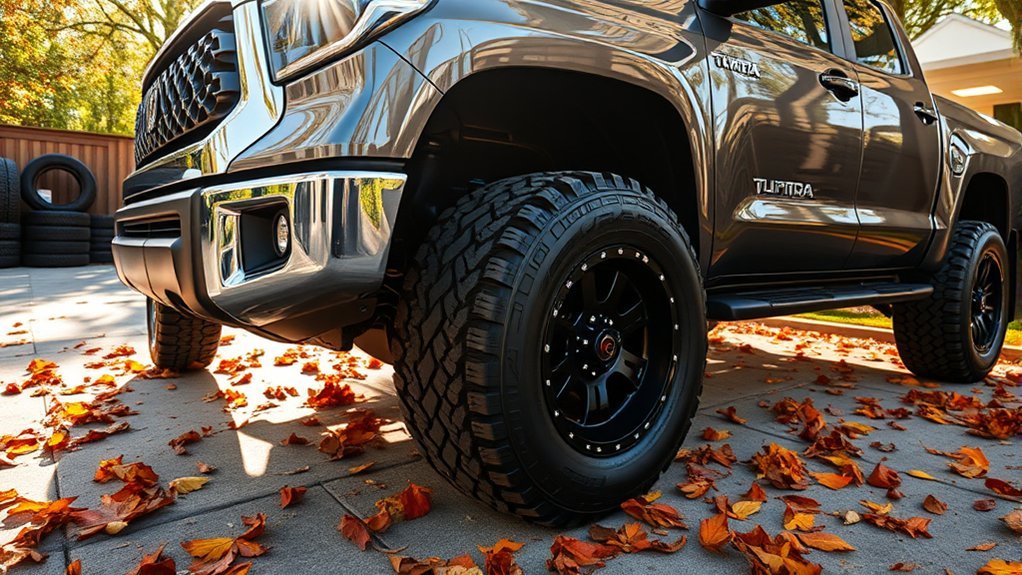
The best Tundra tire depends on how you drive. A quiet highway tire makes sense for commuting and road trips. A stronger all-terrain tire makes more sense if you tow, travel on gravel, camp, or drive in snow and dirt. Use these options as starting points, then confirm the exact size, load index, speed rating, and fitment for your truck.
- Michelin LTX A/T2: A good fit if you want an all-terrain tire with a strong official 60,000-mile limited treadwear warranty and a focus on long life in tough driving conditions.
- Goodyear Wrangler All-Terrain Adventure With Kevlar: A balanced all-terrain option with an official 60,000-mile warranty in many sizes and a design aimed at mixed on-road and off-road use.
- BFGoodrich All-Terrain T/A KO2: A tougher off-road-oriented option with an official 50,000-mile warranty, severe snow rating, and strong trail reputation.
- Highway-terrain truck tires: A better match if your Tundra mostly sees pavement, commuting, and towing on maintained roads.
- LT-rated tires: Worth considering for heavier towing or hauling, but they can ride firmer. Match the tire to your wheel, load needs, and Toyota fitment guidance.
[Products Worth Considering]

These universal tire valve stem caps help protect valve cores from dust, debris, and moisture while helping maintain stable tire pressure. The corrosion-resistant metal construction and sealed design provide reliable protection in road grime, mud, and winter conditions. Twist-on installation makes them quick to fit on cars, SUVs, trucks, and motorcycles.

Accurately measure tire tread depth with a calibrated gauge marked from 0 to 1 inch in 1/32 inch increments. The color-coded bar helps you quickly identify tread condition ranges, supporting safe driving for trucks, motorcycles, automobiles, and passenger vehicles.

Keep your tires properly inflated with this analog VONDIOR tire pressure gauge, designed for fast, easy readings without batteries. The swiveling, two-axis hose and large glow dial help you measure at any tire angle with instant visibility. Built with a protective rubber shield, it supports durable, low-maintenance use for cars and trucks.
Choosing the Right Tires for Your Tundra
Start with the size and load information on the door label and owner’s manual. Your replacement tire should meet the required size, load rating, and speed rating unless a qualified tire shop confirms a safe alternative. Do not choose a tire only because another Tundra owner liked it.
[Products Worth Considering]

AstroAI’s heavy-duty digital tire pressure gauge delivers quick, accurate readings with 0.1 increments and a secure valve-stem seal. It features a green backlit LCD and built-in flashlight for easy use in low light, plus an ergonomic non-slip stainless-steel design. The wide 0–230 PSI range works across common vehicle tires, with unit selection and an auto shut-off to save battery.

The 22800 wheel stud installer makes replacing wheel studs quick and secure, saving time and effort during tire service. It uses a ratchet or impact wrench to pull new studs firmly into place, helping when existing studs are too long. Compatible with most automotive wheels and light-duty truck wheel studs, it’s designed for easy, tool-assisted installation.

ETENWOLF T300 is a calibrated digital tire pressure gauge for accurate readings from 3 to 200 PSI across light and heavy-duty vehicles. It includes thermal compensation for reliable performance in extreme cold or heat, with an auto shut-off to extend battery life and an LED for easier reading. The sturdy design supports rugged everyday use, making it ideal for pickups, RVs, and industrial applications.
P-Metric vs. LT-Rated Tires
Many Tundras use P-metric or light-truck-style sizes depending on trim, wheel package, and use case. LT-rated tires can carry heavy loads better when matched correctly, but they can also weigh more, ride stiffer, and affect fuel economy. For a daily driver, the best tire is the one that matches your real use, not the most aggressive tire available.
All-Season, All-Terrain, and Winter Needs
All-season and highway-terrain tires usually ride quieter and can last longer on pavement. All-terrain tires add traction on gravel, dirt, and light trails but may create more road noise and faster tread wear. If you drive in real winter conditions, look for tires that match your climate and consider a dedicated winter tire where temperatures and snow justify it.
Oversized and 35-Inch Tires
Many owners like the look and clearance of larger tires, but 35-inch setups are not a simple tire-life upgrade. They can require wheel offset changes, trimming, lift height, speedometer correction, and careful load-rating checks. They may also add weight and rolling resistance, which can affect braking, acceleration, fuel economy, and wear.
How to Judge Real-World Tundra Tire Stories
Owner forums and social media can help you spot patterns, but they are not controlled tire tests. One owner may get 70,000 miles from a tire because they drive mostly highway miles, rotate on time, and keep alignment perfect. Another owner may wear out the same model much earlier because they tow, drive gravel roads, run low pressure, or skip rotations.
When you compare owner reports, look for the details that actually matter: tire size, load rating, model year, driving mix, towing weight, rotation interval, pressure habits, alignment history, and whether the truck uses stock or modified suspension. Those details tell you more than mileage alone.
Frequently Asked Questions
How long do tires last on a Toyota Tundra?
Many Toyota Tundra tires last about 30,000 to 60,000+ miles, depending on the tire model, road conditions, load, alignment, pressure, and rotation habits. Premium tires with long mileage warranties can last longer when the truck is maintained well.
Is 40,000 miles a lot on Tundra tires?
Forty thousand miles is reasonable for many truck tires, especially all-terrain tires or tires used for towing and mixed roads. It may be low for a premium highway tire with gentle driving, but good for a truck that hauls, tows, or sees rough roads.
Should Toyota Tundra tires be inflated to 35 PSI?
Do not use 35 PSI as a blanket rule. Use the recommended cold tire pressure on your Tundra’s driver-door Tire and Loading Information Label or in your owner’s manual. The correct pressure can vary by model year, tire size, trim, and load setup.
How often should I rotate Toyota Tundra tires?
Follow your exact owner’s manual and maintenance guide. Toyota’s current Tundra maintenance guide uses 5,000 miles or six months as the scheduled maintenance baseline and says tires should be rotated according to the owner’s manual.
When should I replace Tundra tires if the tread still looks okay?
Replace or professionally inspect them if you see cracking, bulges, cords, repeated air loss, vibration, sidewall cuts, or age concerns. NHTSA notes that some vehicle and tire manufacturers recommend replacement at six to 10 years old, regardless of treadwear.
Do 35-inch tires last longer on a Tundra?
Not automatically. Larger tires can improve clearance and appearance, but they may add weight, change gearing feel, rub without the right setup, and affect fuel economy or wear. Choose them for the terrain and fitment you need, not as a tread-life shortcut.
Conclusion
Toyota Tundra tires can last a long time, but only when the tire matches the truck and your maintenance routine stays consistent. Use the correct cold pressure, rotate on schedule, watch tread depth, and fix alignment or balance problems early.
If you tow, haul, drive off-road, or run larger tires, inspect more often and choose a tire built for that job. The safest answer is not one mileage number. It is a tire that fits your Tundra, supports your load, wears evenly, and gets replaced before tread, age, or damage becomes a risk.
Sources
- NHTSA TireWise — supports cold pressure, tread depth, monthly checks, tire age, and tire replacement guidance.
- 2025 Toyota Tundra Warranty & Maintenance Guide — supports Toyota’s scheduled maintenance baseline and tire rotation guidance.
- Michelin LTX A/T2 — supports the 60,000-mile limited treadwear warranty reference.
- Goodyear Wrangler All-Terrain Adventure With Kevlar — supports the 60,000-mile warranty reference.
- BFGoodrich All-Terrain T/A KO2 — supports the 50,000-mile warranty reference.
- USTMA Tire Facts — supports the point that tire service life varies and regular professional inspection matters.