
A sidewall puncture on a truck tire is not the same as a nail in the tread. On a pickup, SUV, van, or light-truck tire, sidewall damage usually means the tire must come out of service because the sidewall flexes with every rotation and helps protect the tire’s load-bearing casing. A standard plug, patch, or sealant cannot safely restore that structure.
Quick Answer
You cannot safely repair a sidewall puncture on a pickup, SUV, van, or light-truck tire. Industry repair guidance limits proper puncture repairs to the tread area, not the shoulder or sidewall. If the sidewall is cut, punctured, bulging, or losing air, replace the tire after a professional inspection.
Key Takeaways
- Sidewall punctures are not safe candidates for standard tire repair on passenger and light-truck tires.
- A repairable puncture must be in the tread area, not the shoulder, belt edge, or sidewall.
- A proper tread repair requires tire removal, internal inspection, a rubber stem or plug to fill the injury, and an inside patch.
- Sealants and emergency inflators are temporary mobility aids, not permanent sidewall repairs.
- Sidewall bulges, exposed cords, deep cuts, repeated air loss, or cracks need professional inspection and usually tire replacement.
At a Glance
| Time Required | 5 to 10 minutes for a visual check; longer if you need roadside help or tire replacement. |
| Difficulty | Easy inspection, but repair or replacement decisions should be handled by a trained tire technician. |
| Tools Needed | Tire pressure gauge, flashlight, owner’s manual, and a spare tire or roadside assistance if the tire is losing air. |
| Cost | Inspection cost varies by shop; replacement cost depends on tire size, load rating, mounting, balancing, and disposal fees. |
Note: This guide focuses on passenger, pickup, SUV, van, and light-truck tires. Heavy commercial truck casings can follow different manufacturer and commercial tire service policies, so a commercial truck tire specialist must inspect those tires. Do not treat any sidewall plug as a safe road repair.
Can a Truck Tire Sidewall Puncture Be Repaired?
For normal road use, no. The U.S. Tire Manufacturers Association says puncture repair should be considered only when damage is limited to the tread area and the puncture is no greater than 1/4 inch, or 6 mm. It also says the tire must be removed from the wheel and inspected from the inside before repair.
The Tire Industry Association gives the same practical warning: punctures or damage in the shoulder or sidewall are not repairable. That is why a sidewall puncture should be treated as a replacement issue, not a patch job.
| Damage Location | Can It Be Repaired? | What to Do |
|---|---|---|
| Center tread area | Sometimes, if the puncture is 1/4 inch / 6 mm or smaller and the tire passes internal inspection. | Have a trained technician remove the tire, inspect it, fill the injury, and apply an inside patch. |
| Shoulder or belt edge | No, standard repair guidance does not allow repairs in this area. | Take the tire out of service and replace it if the technician confirms shoulder damage. |
| Sidewall | No, not for normal passenger or light-truck road service. | Do not plug, patch, or keep driving on it. Use a spare or call roadside assistance. |
The Risks of Driving on a Damaged Tire
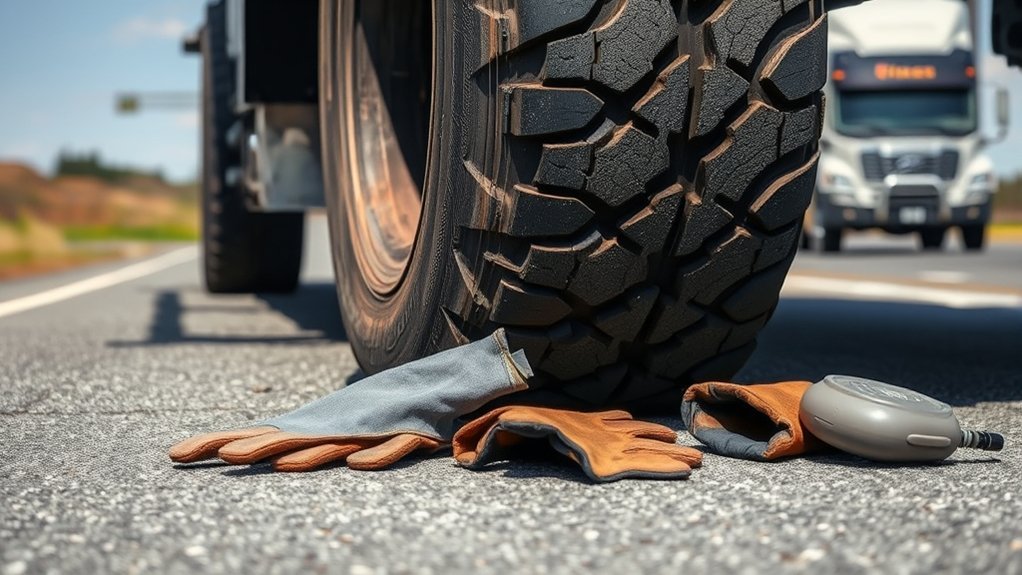
Driving with sidewall damage increases the chance of rapid air loss, heat buildup, casing damage, or sudden tire failure. Unlike a small nail hole in the center tread, sidewall damage affects an area that bends every time the tire rolls.
That flexing is the reason sidewall repairs fail. A patch may appear to hold air while the truck is parked, but road heat, load, speed, and sidewall movement can break the seal and expose hidden cord damage.
Warning: Do not keep driving on a tire with a punctured, bulging, or leaking sidewall. Reduce speed only long enough to reach a safe stopping place, then install a spare or call roadside assistance.
What to Do Immediately After Sidewall Damage
If you notice sidewall damage while driving, treat it like a safety stop. Do not wait to see whether the tire “holds air,” especially if you are towing, hauling cargo, or driving at highway speed.
- Pull over safely: Move away from traffic, turn on hazard lights, and avoid sudden steering or braking.
- Do a visual check: Look for a puncture, cut, bulge, exposed cords, sidewall cracking, or fresh air loss.
- Check pressure only if safe: Use a gauge when the truck is parked in a safe location. Do not crouch near traffic.
- Use the spare if needed: Follow your owner’s manual for jack points, spare tire limits, and speed restrictions.
- Get professional inspection: A shop should remove the tire from the wheel if repairability is even in question.
Note: Emergency tire sealants and mobility kits may help you reach service after some tread punctures, but they do not make a sidewall puncture safe for continued driving. A damaged tire still needs professional inspection.
[Products Worth Considering]

Wykodra tire plugs provide quick vulcanizing repairs for tubeless tires, helping you seal punctures and get back on the road. The industrial-strength rubber creates a long-lasting, leak-resistant bond and is designed for emergency fixes without removing the tire. Choose between two standard plug sizes with color-matched options for small to larger damage across many vehicles and off-road uses.

Mosconly tire repair glue and nail kit delivers an elastic, waterproof bond for quick sidewall puncture repairs. The adhesive cures securely to help prevent peeling, flaking, and tearing, while the included nails support a strong, seamless repair. Designed for easy roadside use, it works on car, motorcycle, bike, and other tire types, with full curing within 24 hours.

The SAFELIFE dial tire tread depth gauge measures tread depth in 1/32 inch increments with clear, easy-to-read 2-inch dial face. Color zones using a traffic light system help you quickly judge whether tread is low, marginal, or ample for safer driving. Built with a durable zinc cast body and a metal detect probe for precise, comfortable use across cars, motorcycles, trucks, and buses.
Understanding Tire Structural Integrity and Why It Matters
A tire is not just rubber. It is a layered structure made of belts, body plies, innerliner material, beads, and rubber compounds that work together under air pressure. The sidewall protects part of this casing while flexing as the tire carries load and absorbs road movement.
- Load Transfer: The tire’s air pressure and casing support the vehicle, passengers, cargo, and trailer tongue weight.
- Flex Control: The sidewall bends repeatedly while keeping the casing stable and the tire seated on the wheel.
- Impact Protection: The sidewall helps absorb road shocks from potholes, curbs, stones, and road edges.
Once the sidewall is cut, punctured, or bulging, the damage may reach the internal cords. Those cords cannot be restored with an outside plug or a simple patch. That is why industry repair procedures limit standard puncture repairs to the tread area, not the sidewall.
Why Plugs, Patches, and Sealants Are Not Safe Sidewall Fixes
A proper tread repair is not just a sticky patch. The tire must be removed from the wheel, inspected inside, filled through the injury, and sealed at the innerliner. The USTMA specifically says a plug alone is an unacceptable repair.
Sidewall damage fails that test because the area keeps flexing. A plug can loosen, a patch can peel, and sealant can hide damage without restoring the tire’s structure. Even if the tire holds air for a short time, it may fail later under heat, speed, or load.
A sidewall puncture is dangerous because it affects the tire’s flexible casing area, not just the rubber surface. If the sidewall is damaged, treat the tire as unsafe until a trained technician confirms otherwise.
Can Any Sidewall Damage Be Repaired?
Most true sidewall damage on passenger and light-truck tires cannot be repaired. That includes punctures, deep cuts, exposed cords, sidewall bubbles, and any damage that causes air loss.
Some shallow cosmetic scuffs may not require replacement if they do not expose cords, create a bulge, or leak air. Still, you should have a tire technician inspect the damage, especially after a curb strike or pothole impact.
Heavy commercial truck tires are a separate category. Some commercial casings may be evaluated under manufacturer-specific and commercial service rules, but that does not make a sidewall plug safe. A commercial truck tire specialist must inspect those tires off the vehicle and decide whether the casing can stay in service.
How to Safely Replace a Damaged Tire
When a sidewall puncture is confirmed, replacement is the safe path. The goal is not just to hold air; it is to restore load capacity, handling balance, traction, and heat resistance.
| Step | Action |
|---|---|
| Inspect | Confirm the sidewall damage and check the other tires for cracks, bulges, uneven wear, or impact marks. |
| Match Specs | Match the tire size, load index, load range, speed rating, and vehicle manufacturer recommendations on the door label or owner’s manual. |
| Check Axle Balance | Replace tires in pairs on the same axle when needed for balanced tread depth, braking, and handling. |
| Consider AWD or 4WD Rules | Check the owner’s manual because some all-wheel-drive and four-wheel-drive vehicles need closely matched tread depth across all tires. |
| Professional Install | Use a trained tire technician for mounting, valve service, balancing, torque checks, and pressure setup. |
| Dispose Properly | Recycle the damaged tire through a tire shop, municipal program, or approved tire recycling facility. |
[Products Worth Considering]

Vigorder rubber cement glue delivers superior adhesion and cures quickly within about 30 seconds for seamless rubber bonding. Once cured, it helps provide a strong, durable, waterproof seal that holds up to vehicle weight, pressure, and heat. Suitable for cars, motorcycles, trucks, bicycles, and off-road tires, it’s designed for emergency patch and maintenance repairs.
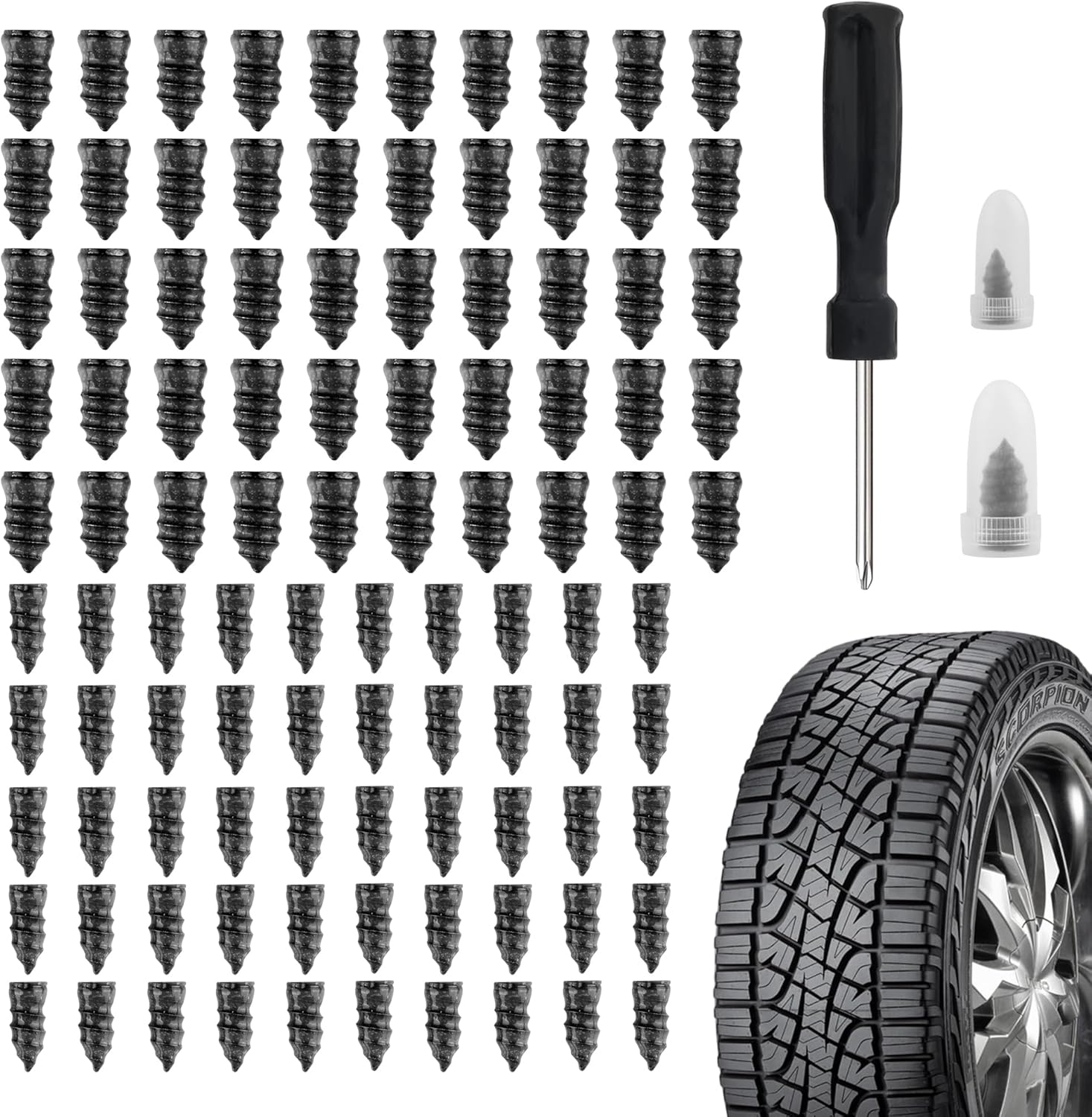
Salior’s tire plug kit provides a fast, reliable self-service fix for punctured or leaking tires without the need for flaring tools. Choose the correct plug size, then screw the nail into the puncture using the included screwdriver for an enhanced seal. The set is durable and convenient for on-the-go maintenance across multiple vehicle types.
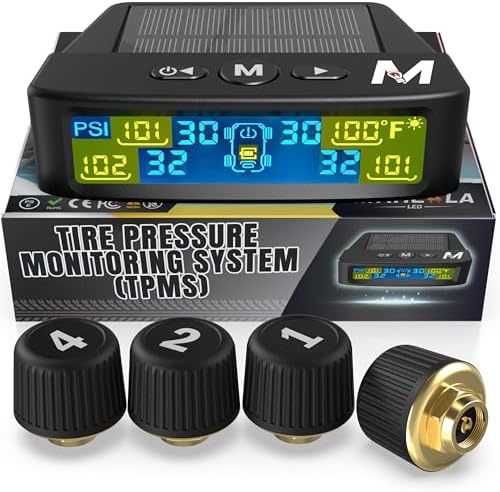
Marcala’s TPMS set of four sensors helps you monitor tire pressure and temperature in real time while driving, with updates every second. The bright color LCD uses auto-dimming for easy viewing, powered by dual solar and USB charging, and offers six alarm modes. Built for trailers, RVs, campers, trucks, and towing setups, the sensors support monitoring 1-4 wheels up to 98 PSI with IP67 waterproof protection.
Signs You Need a Professional Inspection

Some tire damage is easy to miss, especially after a pothole hit, curb scrape, or short drive on low pressure. Watch for these warning signs before you tow, haul, or return to highway speed:
- Bulges or bubbles: These often mean the internal casing has separated or weakened.
- Visible cracks: Cracks can signal aging, weathering, underinflation damage, or rubber breakdown.
- Exposed cords: If you can see fabric or steel reinforcement, the tire should not stay in service.
- Slow air loss: Repeated pressure loss may point to hidden puncture, bead, valve, wheel, or internal tire damage.
- Deep cuts or gouges: Any cut that reaches below the surface rubber needs professional inspection.
Pro Tip: Check tire pressure at least monthly when the tires are cold, as NHTSA TireWise recommends. Check more often if you tow, haul heavy loads, drive gravel roads, or recently hit a curb or pothole.
[Products Worth Considering]

AUTOWN’s 68-piece tire repair kit helps you fix punctures and plug flats quickly and effectively. It includes a T-handle and spiral probe tool for easy insertion, while the steel patch and plug materials are designed for strong adhesion and long-lasting airtight performance. The compact case makes it convenient for roadside repairs across a wide range of vehicles.

Measure tire tread depth quickly and accurately with this LUMITECO dial gauge that reads in 1/32" increments up to 14/32". The color-coded green/yellow/red zones make it easy to judge tire wear and know when replacement is needed. A rugged, compact design with a protective pouch helps keep the gauge ready for use on cars, trucks, motorcycles, and more.

Accurately measure tire tread depth with a calibrated gauge marked from 0 to 1 inch in 1/32 inch increments. The color-coded bar helps you quickly identify tread condition ranges, supporting safe driving for trucks, motorcycles, automobiles, and passenger vehicles.
Best Practices for Tire Maintenance
Preventing sidewall damage starts with correct pressure, careful driving, and regular inspections. Tires can suddenly lose pressure after pothole impacts or curb contact, so do not rely only on the tire pressure monitoring light.
- Maintain the cold tire pressure listed on the driver-side door label or in the owner’s manual, not the maximum pressure molded on the tire sidewall.
- Inspect sidewalls and tread monthly for cuts, cracks, bubbles, nails, stones, and uneven wear.
- Rotate tires every 5,000 to 8,000 miles if your vehicle manufacturer recommends that interval, or sooner if uneven wear appears.
- Avoid curbs, potholes, sharp rocks, overloaded hauling, and underinflated driving because these raise sidewall stress.
- Replace tires that show exposed cords, sidewall bulges, severe cracking, repeated air loss, or tread worn to 2/32 inch.
Frequently Asked Questions
Why can’t sidewall punctures be repaired?
Sidewall punctures cannot be safely repaired on normal passenger and light-truck tires because the sidewall flexes constantly and protects the casing. Industry repair guidance limits proper puncture repairs to the tread area, where the tire can be removed, inspected, filled, and patched from the inside.
Is it safe to drive short distances on a damaged sidewall?
No, not if the sidewall is punctured, bulging, leaking, or showing exposed cords. Drive only as far as needed to reach a safe stopping place. Then install a spare, use roadside assistance, or have the vehicle towed.
Can I use a tire plug on a truck tire sidewall?
No. A plug inserted from the outside is not a proper repair for any sidewall puncture. Even in the tread area, a plug by itself is not considered a complete repair because the tire must be removed and inspected from the inside.
What sidewall damage means the tire must be replaced?
Replace the tire if the sidewall has a puncture, bulge, bubble, exposed cords, deep cut, repeated air loss, or cracking that reaches below the surface rubber. A technician should inspect borderline damage before you drive on it again.
Can a commercial truck tire sidewall ever be repaired?
Commercial truck tires can follow different manufacturer and casing repair policies, especially in professional fleet and retread service. That does not mean a roadside sidewall plug is safe. A commercial tire specialist must inspect the casing and decide whether it can legally and safely remain in service.
Do I need to replace one tire, two tires, or all four?
It depends on tread depth, axle position, vehicle drivetrain, tire size, and manufacturer guidance. Many trucks handle best with matched tires on the same axle. Some AWD and 4WD vehicles need closely matched tread depth across all tires, so check the owner’s manual or ask the tire shop before replacing only one.
Sources
- U.S. Tire Manufacturers Association — Tire Repair Basics — repairable puncture location, 1/4 inch / 6 mm limit, demounting, internal inspection, and patch-plus-plug guidance.
- Tire Industry Association — Tire Repair — sidewall and shoulder damage repair limitations, proper repair process, and plug-only repair warning.
- National Highway Traffic Safety Administration — TireWise — tire pressure, tread, rotation, size, and maintenance guidance.
- Michelin — Can My Tire Be Repaired? — manufacturer guidance on tread-only repair, sidewall damage, and tire removal for inspection.
- Goodyear Product Service Bulletin — Proper Puncture Repair Procedures — USTMA-based repair procedures, sealant limitations, commercial-service caveats, and improper repair warnings.