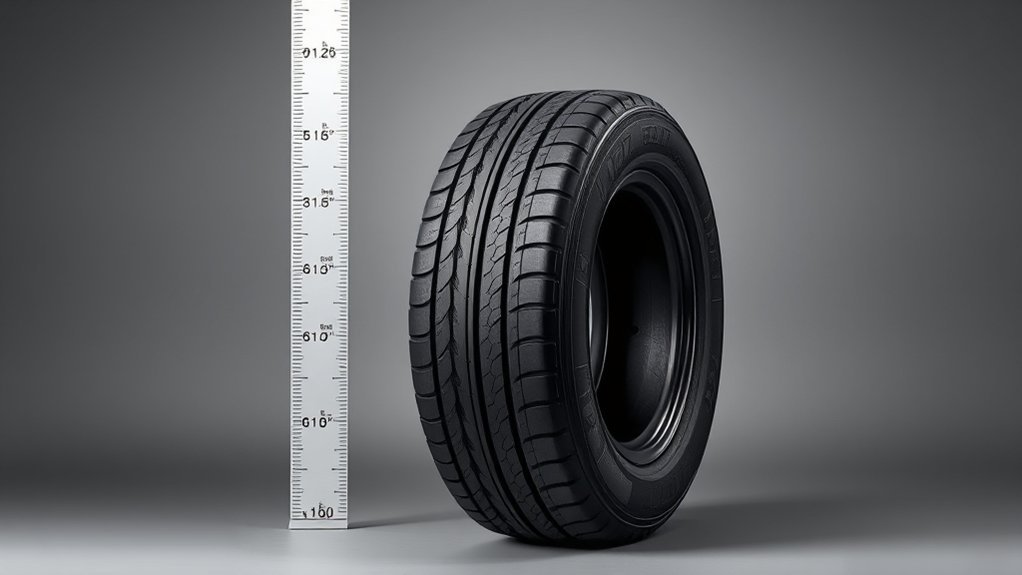
A 205/75R15 tire is about 27.1 inches tall, about 8.1 inches wide, and built for a 15-inch wheel. Its sidewall height is about 6.1 inches because the 75 aspect ratio means the sidewall equals 75% of the 205 mm section width. These are nominal dimensions, so always confirm the exact tire maker’s specs before you buy.
Quick Answer
A 205/75R15 tire is roughly 27.1 inches in overall diameter, 8.1 inches wide, and has a 6.1-inch sidewall. The “205” is the nominal width in millimeters, “75” is the aspect ratio, “R” means radial, and “15” means it fits a 15-inch wheel.
Key Takeaways
- A 205/75R15 tire has a calculated diameter of about 27.1 inches, or 688.5 mm.
- The section width is 205 mm, which equals about 8.1 inches.
- The sidewall height is about 153.8 mm, or about 6.1 inches.
- The 15 means the tire must be mounted on a 15-inch wheel, not a 14-inch or 16-inch wheel.
- Load rating, speed rating, rim-width approval, and tire type must match your vehicle or trailer requirements.
What Is a 205/75R15 Tire?
A 205/75R15 tire is a radial tire size that tells you the tire’s width, sidewall profile, construction type, and wheel diameter. You can read the size code this way:
- 205 means the nominal section width is 205 millimeters.
- 75 means the sidewall height is 75% of the tire’s width.
- R means radial construction.
- 15 means the tire fits a 15-inch wheel diameter.
This size appears on some older cars, vans, small SUVs, light-duty trucks, and trailers, depending on the tire prefix and load rating. A P205/75R15, 205/75R15, and ST205/75R15 may look similar in size, but they are not automatically interchangeable. Passenger, light-truck, and trailer tires can use different load standards, inflation pressures, sidewall designs, and intended applications.
Warning: Do not choose a tire only because the size numbers match. Check the vehicle placard, owner’s manual, load index, speed rating, tire type, wheel width, and clearance before installation.
205/75R15 Tire Size in Inches and Millimeters
The calculated 205/75R15 tire diameter is about 27.1 inches, or 688.5 mm. The width is 205 mm, or about 8.1 inches. The sidewall height is about 153.8 mm, or about 6.1 inches.
You can calculate the size like this:
- Sidewall height: 205 mm × 0.75 = 153.75 mm
- Rim diameter: 15 inches × 25.4 = 381 mm
- Overall diameter: 153.75 mm + 381 mm + 153.75 mm = 688.5 mm
- Overall diameter in inches: 688.5 ÷ 25.4 = 27.1 inches
| Measurement | Approximate Value |
| Overall diameter | 27.1 in / 688.5 mm |
| Section width | 8.1 in / 205 mm |
| Sidewall height | 6.1 in / 153.8 mm |
| Wheel diameter | 15 in / 381 mm |
| Circumference | About 85.2 in |
| Revolutions per mile | About 744 revs/mile |
These numbers are useful for comparing tire sizes, but they are still nominal. Real mounted diameter can vary slightly by brand, tread design, inflation pressure, load, and measuring rim width.
205/75R15 Tire Width, Sidewall, and Rim Size
A 205/75R15 tire has a nominal width of 205 mm and a calculated sidewall height of about 153.8 mm. That taller 75-series sidewall gives the tire more sidewall flex than a lower-profile size, which can help ride comfort but may feel less sharp in steering response.
The 15-inch rim size is fixed. A 205/75R15 tire will not fit a 14-inch or 16-inch wheel, even if the tire’s outer diameter looks close to another size. The bead seat diameter must match the wheel diameter exactly.
Note: Rim-width approval is not universal across every 205/75R15 tire. Check the tire manufacturer’s spec sheet or Tire and Rim Association data for the exact approved rim-width range.
Will a 205/75R15 Tire Fit Your Vehicle?
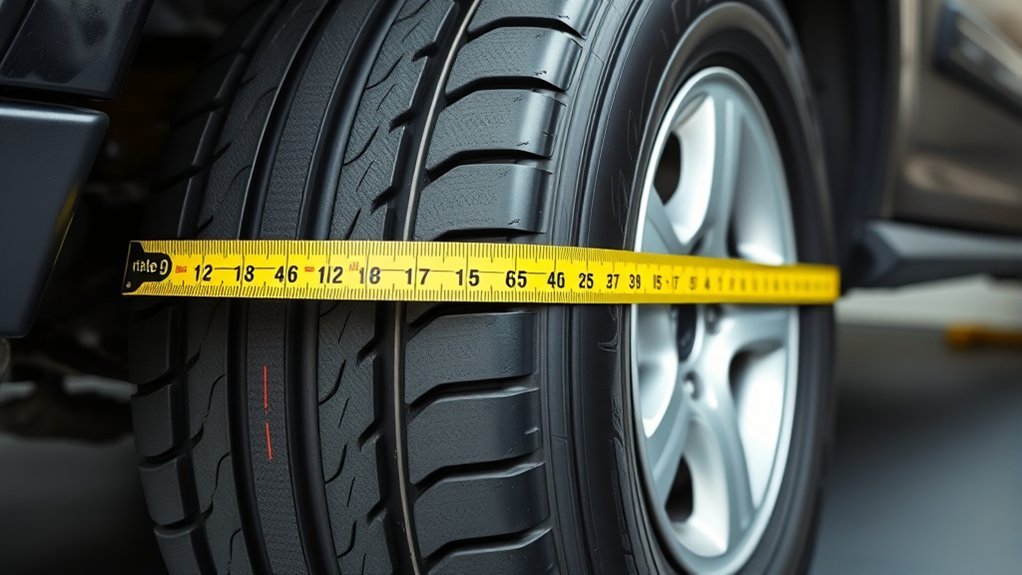
A 205/75R15 tire may fit your vehicle only if it matches the wheel diameter, load requirement, speed rating, and available clearance. Start with the tire size listed on your driver-side Tire and Loading Information Label or in your owner’s manual. NHTSA recommends buying replacement tires in the original size or another size recommended by the vehicle manufacturer.
Use this fitment checklist before buying:
- Confirm the wheel diameter: The wheel must be 15 inches.
- Check the vehicle placard: Match the original size or an approved alternate size.
- Match load capacity: Use a tire with a load index or load range that meets or exceeds your requirement.
- Match speed rating: Do not downgrade speed rating unless the vehicle manufacturer or tire professional confirms it is acceptable.
- Verify rim width: Use the tire maker’s approved rim-width range for that exact model.
- Measure clearance: Check fenders, suspension parts, brake components, and steering lock clearance.
- Check all four corners: A tire may clear on one side but rub on the other because of alignment, offset, or suspension wear.
- Confirm spare compatibility: A much different spare diameter can affect drivability and drivetrain stress.
Pro Tip: If you are changing from another tire size, compare overall diameter first. A large diameter change can affect speedometer reading, braking feel, gearing, and clearance.
[Products Worth Considering]
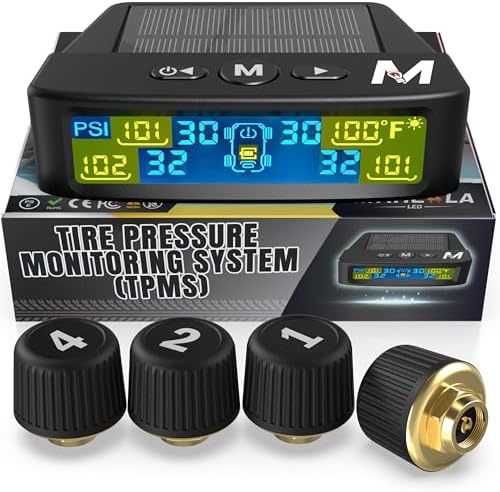
Marcala’s TPMS set of four sensors helps you monitor tire pressure and temperature in real time while driving, with updates every second. The bright color LCD uses auto-dimming for easy viewing, powered by dual solar and USB charging, and offers six alarm modes. Built for trailers, RVs, campers, trucks, and towing setups, the sensors support monitoring 1-4 wheels up to 98 PSI with IP67 waterproof protection.

Monitor tire tread wear with a smart, color-coded depth gauge that shows clear condition ranges at a glance. The bar is range marked for fast, easy readings, helping you maintain safer traction and performance. Each gauge is portable with a pocket clip, and the set includes 20 units for daily use and sharing.

Measure tire tread depth quickly and accurately with this LUMITECO dial gauge that reads in 1/32" increments up to 14/32". The color-coded green/yellow/red zones make it easy to judge tire wear and know when replacement is needed. A rugged, compact design with a protective pouch helps keep the gauge ready for use on cars, trucks, motorcycles, and more.
How 205/75R15 Compares With Similar Tire Sizes
A 205/75R15 sits between several common nearby sizes. Some alternatives look close on paper, but even a half-inch change in diameter or width can matter on a tight wheel well.
[Products Worth Considering]

The SAFELIFE dial tire tread depth gauge measures tread depth in 1/32 inch increments with clear, easy-to-read 2-inch dial face. Color zones using a traffic light system help you quickly judge whether tread is low, marginal, or ample for safer driving. Built with a durable zinc cast body and a metal detect probe for precise, comfortable use across cars, motorcycles, trucks, and buses.

Secure your trailer or RV tires with a scissor-style wheel chock stabilizer that applies opposing force to help prevent wheel shift. It fits tight wheel gaps from 3.5 inches up to 12 inches and works for travel trailers, campers, fifth wheels, toy haulers, and heavy-duty trucks. The surface uses new electrophoretic technology to help prevent rust for reliable travel use.
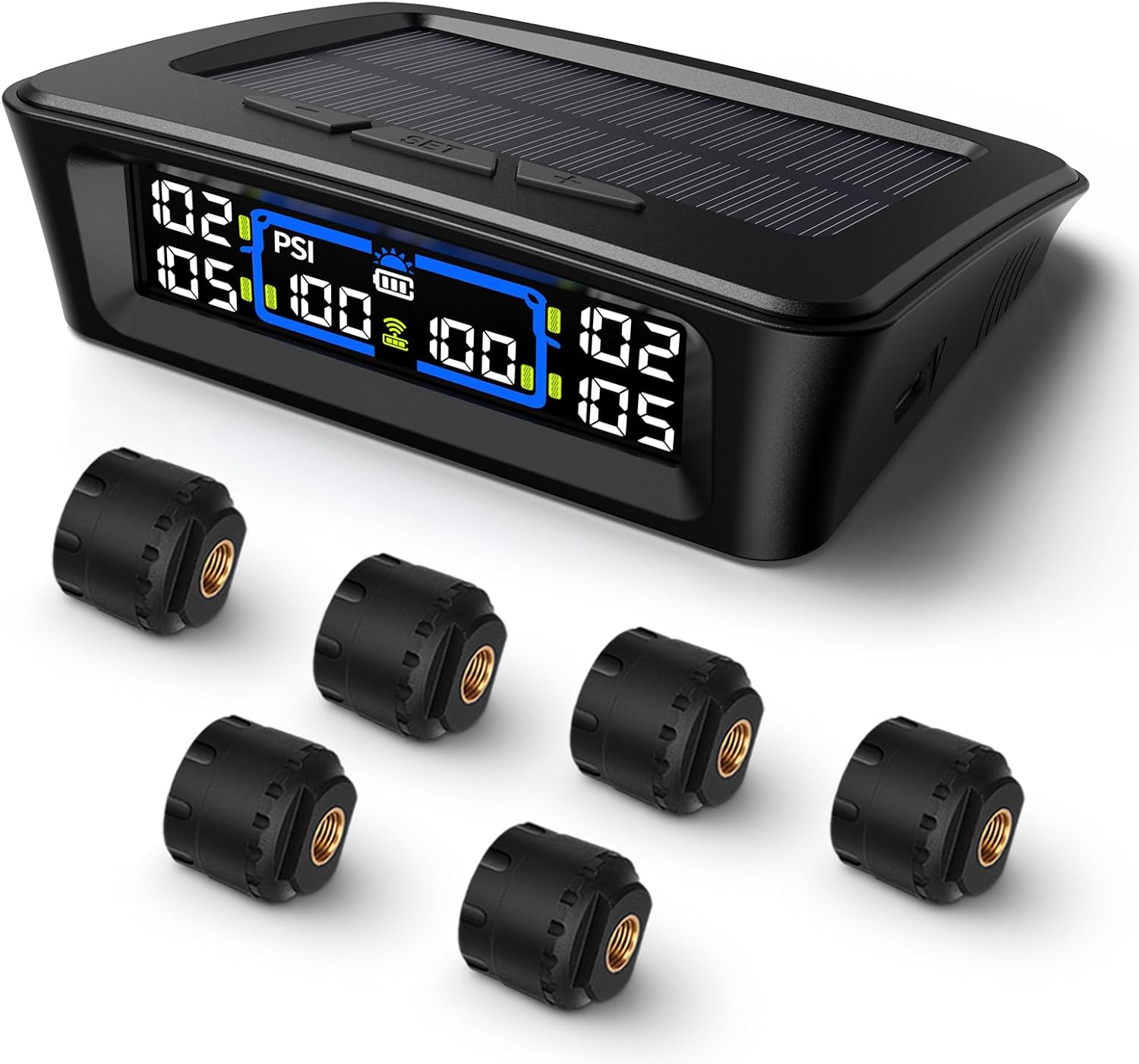
The Tymate TM12 RV TPMS delivers real-time tire pressure and temperature monitoring with a stable 433Hz display for safer long-distance driving. It supports simultaneous monitoring across vehicle and trailer zones, includes six alarm modes for pressure, temperature, leakage, battery, and signal loss, and features easy DIY installation with auto calibration. Power is supplied via USB-C charging or solar recharging, with a wide 0–144 PSI range and up to 50 ft signal coverage for RVs and towable trailers.
Size Comparison Chart
Use this chart to compare the calculated dimensions of nearby tire sizes. Actual mounted measurements can vary by tire model.
| Tire Size | Diameter | Width | Difference vs. 205/75R15 |
| 195/75R15 | About 26.5 in | About 7.7 in | About 0.6 in shorter and 0.4 in narrower |
| 205/70R15 | About 26.3 in | About 8.1 in | About 0.8 in shorter |
| 205/75R15 | About 27.1 in | About 8.1 in | Baseline |
| 215/75R15 | About 27.7 in | About 8.5 in | About 0.6 in taller and 0.4 in wider |
| 225/75R15 | About 28.3 in | About 8.9 in | About 1.2 in taller and 0.8 in wider |
Clearance And Fitment
Clearance depends on more than tire diameter. Width, wheel offset, suspension height, fender shape, brake clearance, and steering angle all matter. A 205/75R15 may clear easily on one vehicle and rub on another.
Check clearance in three positions:
- Straight ahead: Look for vertical fender and suspension clearance.
- Full left lock: Check the inner liner, control arms, and sway bar area.
- Full right lock: Repeat the same checks on the other side.
If you tow, haul cargo, or drive over uneven ground, leave extra room for suspension compression. A tire that clears while parked can still rub when the vehicle is loaded.
Diameter Difference Impact
Tire diameter affects speedometer reading, gearing, braking feel, and engine RPM. A taller tire travels farther per rotation, so the speedometer may read lower than your real speed. A shorter tire does the opposite.
A 225/75R15 is about 4.4% taller than a 205/75R15 by calculated diameter, so it is not a small change for every vehicle.
For daily driving, keep replacement diameter close to the original tire size unless your vehicle manufacturer, tire dealer, or installer confirms the alternate size is safe. If your vehicle uses ABS, stability control, all-wheel drive, or four-wheel drive, diameter changes can matter even more.
What to Check Before Buying 205/75R15 Tires
Before you buy 205/75R15 tires, compare the tire against your vehicle’s real requirements, not just the size printed in a listing. Michelin’s tire-marking guide explains that tire sidewalls include size, construction, load rating, and speed rating information. All of those details matter when replacing tires.
- Original size: Match the vehicle placard or owner’s manual unless you have an approved alternate size.
- Load index or load range: Choose a tire that can carry the vehicle and cargo safely when properly inflated.
- Speed rating: Match or exceed the original requirement unless a qualified tire professional confirms otherwise.
- Tire type: Do not swap passenger, LT, and ST tires without confirming the correct application.
- Inflation pressure: Use the pressure listed by the vehicle manufacturer, not the maximum pressure printed on the tire sidewall.
- Rim width: Confirm your wheel width falls within the tire maker’s approved range.
- Age and condition: Check the DOT date code, cracks, bulges, tread depth, and uneven wear.
- All-tire matching: Keep size, type, and wear level consistent across axles when your drivetrain requires it.
For safety, NHTSA advises checking tire pressure when tires are cold and using the Tire and Loading Information Label or owner’s manual for the correct pressure. Tire maintenance also includes checking tread, rotation guidance, alignment, and visible damage.
[Products Worth Considering]

Accurately measure tire tread depth with a calibrated gauge marked from 0 to 1 inch in 1/32 inch increments. The color-coded bar helps you quickly identify tread condition ranges, supporting safe driving for trucks, motorcycles, automobiles, and passenger vehicles.

ETENWOLF’s tire pressure gauge helps you quickly and accurately check tire PSI across cars, trucks, motorcycles, bikes, and more. It’s manually calibrated to ANSI B40.1 Grade A for reliable readings, includes a large glow dial for easy nighttime viewing, and features a 360-degree swivel chuck for use at any valve angle. The gauge also works consistently in extreme hot or cold weather.

Secure a full-size spare on your trailer with this powder-coated steel spare tire mount bracket. It fits most 4-, 5-, and 6-lug wheel bolt patterns and mounts to trailer tongues up to 4 in wide and 5 in tall. Built for reliable carry with a max 150 lb load rating and includes zinc-plated hardware for straightforward installation.
Frequently Asked Questions
Is a 205/75R14 the same height as a 205/75R15?
No. A 205/75R14 is about 26.1 inches tall, while a 205/75R15 is about 27.1 inches tall. The width and aspect ratio are the same, but the 15-inch wheel adds 1 inch to the overall tire diameter.
What is the height difference between a 205/75R15 and a 225/75R15?
A 225/75R15 is about 1.2 inches taller than a 205/75R15. The 205/75R15 is about 27.1 inches tall, while the 225/75R15 is about 28.3 inches tall. The 225 size is also about 0.8 inch wider.
How much taller is a 75 tire than a 70 tire?
It depends on the tire width. On a 205 mm tire, moving from a 70 aspect ratio to a 75 aspect ratio adds about 0.8 inch to the total diameter. That happens because the sidewall grows on both the top and bottom of the tire.
What is the difference between a 225/75R15 and a 205/75R15?
A 225/75R15 is wider and taller. It is about 8.9 inches wide and 28.3 inches tall, while a 205/75R15 is about 8.1 inches wide and 27.1 inches tall. That larger diameter can affect clearance, speedometer reading, and gearing.
Can I use a 205/75R15 tire on a trailer?
Use a trailer tire only if the tire is marked and rated for trailer service, such as ST205/75R15, and if its load range matches your trailer’s requirements. Do not assume a passenger 205/75R15 tire is suitable for trailer use.
What rim width does a 205/75R15 tire need?
The approved rim-width range depends on the exact tire model and tire type. Check the manufacturer’s spec sheet or Tire and Rim Association data before mounting. Do not rely on a generic rim-width rule for every 205/75R15 tire.
Conclusion
A 205/75R15 tire gives you a practical 15-inch fitment with a calculated diameter of about 27.1 inches, a width of about 8.1 inches, and a sidewall height of about 6.1 inches. Those dimensions help you compare tire sizes, estimate clearance, and understand speedometer effects.
Before you buy, confirm the exact tire type, load rating, speed rating, rim-width approval, and vehicle placard requirements. The size code gives you the starting point, but safe fitment comes from matching the complete tire specification to your vehicle or trailer.
Sources
- Michelin Tire Markings Explained — supports tire-code meanings, width, aspect ratio, radial construction, wheel diameter, load rating, and speed rating.
- NHTSA Tire Safety Ratings and Awareness — supports replacement-size guidance, vehicle placard checks, tire pressure guidance, tread checks, and tire safety basics.
- The Tire and Rim Association — supports using recognized tire/rim/load tables or manufacturer data for exact fitment and rim-width information.