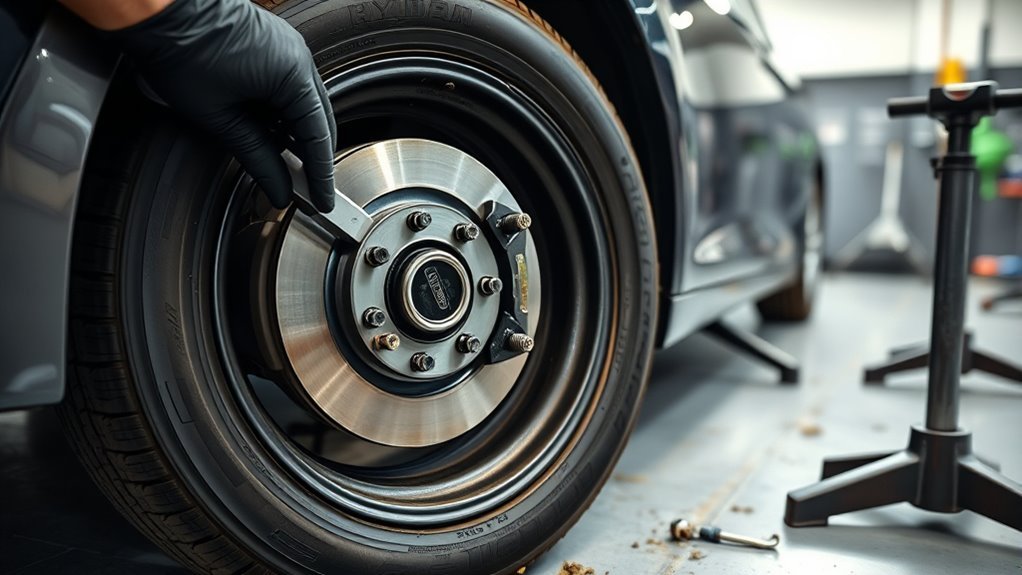
If you are seeing inside tire wear on your Hyundai Sonata, the most likely causes are wheel alignment problems, worn steering or suspension parts, incorrect tire pressure, or delayed tire rotations. The inner shoulder of the tire should not wear much faster than the center or outer shoulder. When it does, treat it as an early warning sign, not just a cosmetic issue.
Quick Answer
Inside tire wear on a Hyundai Sonata usually points to negative camber, incorrect toe, worn suspension or steering parts, or missed tire rotations. Check cold tire pressure from the driver-side door placard, inspect tread across the full width, and schedule a four-wheel alignment if the inner edge is wearing faster.
Key Takeaways
- Inner-edge tire wear is most often an alignment, camber, toe, steering, or suspension problem.
- Use the tire pressure shown on your Sonata’s driver-side center pillar label, not the pressure printed on the tire sidewall.
- Current Hyundai Sonata maintenance guidance lists tire rotation at 8,000 miles, 13,000 km, or 12 months, unless your owner’s manual or tire warranty says otherwise.
- Do not keep driving on tires with exposed cord, fabric, bulges, rapid air loss, or severe vibration.
At a Glance
| Time Required | 10–20 minutes for a basic tire check; 45–90 minutes for a professional alignment inspection. |
| Difficulty | Easy for visual inspection and pressure checks; professional service recommended for alignment and suspension repairs. |
| Tools Needed | Tire pressure gauge, tread-depth gauge or penny, flashlight, owner’s manual, and a professional alignment rack for final diagnosis. |
| Cost | DIY checks are usually low-cost. Alignment, tire replacement, or suspension repair costs vary by shop, tire size, and parts needed. |
What Causes Inner Tire Wear on a Hyundai Sonata?
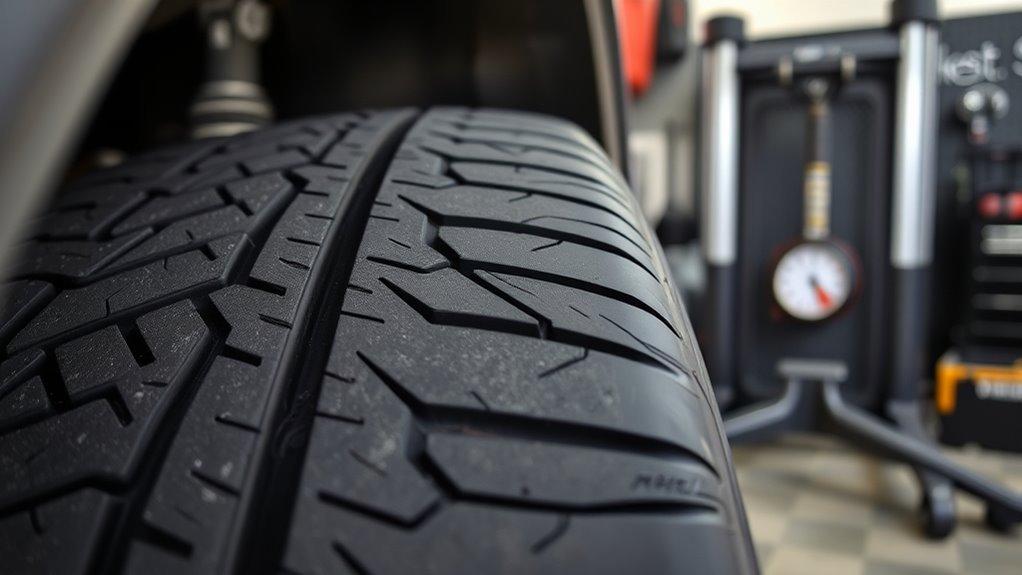
The main causes of inner tire wear on a Hyundai Sonata are excessive negative camber, incorrect toe settings, worn suspension or steering components, damaged wheels, and tires that have not been rotated on schedule. In simple terms, the tire is no longer rolling flat on the road, so the inner shoulder does more work than the rest of the tread.
Negative camber means the top of the wheel leans inward. A small amount of camber can be normal, but too much can overload the inside edge. Incorrect toe can be just as damaging because the tire scrubs across the pavement instead of rolling cleanly. Worn ball joints, tie-rod ends, control-arm bushings, struts, shocks, or suspension mounting points can make those angles drift out of specification.
Warning: If you can see fabric, steel cord, bulges, deep cracks, or a separated tread area, stop using that tire and have it replaced or inspected immediately. A tire with structural damage can fail suddenly.
Tire pressure also matters, but pressure problems create different wear patterns. Underinflation often wears both shoulders. Overinflation commonly wears the center more quickly and makes the ride harsher. When only the inner edge is wearing fast, alignment and suspension should be checked first.
Aftermarket wheels, wrong wheel offset, mismatched tire sizes, or damaged rims can also affect how the tire contacts the road. These are less common on a stock Sonata, but they are worth checking if the wear began after new wheels, tires, or suspension work.
Spotting Cupped Tires and Uneven Wear
Cupped tires have small dips, scallops, or waves around the tread. You may feel a vibration, hear a rhythmic humming sound, or notice that the tread feels high-low-high-low when you run your hand gently across it. Cupping often points to worn struts, shocks, out-of-balance wheels, weak suspension components, or alignment problems.
Use this quick guide to read the tread pattern before you visit a shop:
| Wear Pattern | Likely Cause | Best Next Step |
| Inside edge only | Negative camber, toe-out, worn suspension, or steering looseness | Request a four-wheel alignment and suspension inspection. |
| Both shoulders | Low tire pressure or heavy cornering | Check cold pressure and inspect for leaks. |
| Center tread | Overinflation or tire/load mismatch | Set pressure to the driver-side placard specification. |
| Cupping or scalloping | Worn struts, shocks, wheel imbalance, or loose suspension | Inspect suspension and balance the tire/wheel assembly. |
| Feathered edges | Toe misalignment | Schedule alignment and ask for the before-and-after printout. |
What to Check First on Your Sonata
Before replacing tires, do a quick inspection so you know whether the problem is simple maintenance or a mechanical issue.
- Look across the full tread width. Compare the inner shoulder, center, and outer shoulder on all four tires.
- Measure tread depth. Use a tread-depth gauge if possible. Measure inner, center, and outer grooves separately.
- Check cold tire pressure. Hyundai says cold tires are tires that have not been driven for at least 3 hours or have been driven less than 1 mile. Use the pressure on the driver-side center pillar label.
- Look for damage. Check for nails, cuts, bubbles, exposed cord, sidewall cracks, and bent wheel lips.
- Notice driving symptoms. Pulling, steering-wheel vibration, wandering, clunks, or humming can point to alignment, balance, bearing, or suspension problems.
- Review maintenance records. If rotations, pressure checks, or alignments were missed, the tire may already have a wear pattern that cannot be reversed.
Note: Rotating tires can slow future uneven wear, but it cannot restore rubber that is already gone. If the inner shoulder is bald or unsafe, the tire needs replacement and the root cause still needs repair.
How Alignment Issues Cause Tire Damage
Wheel alignment controls the angle and direction of each tire. The two most important angles for inner-edge wear are camber and toe.
- Camber: If the top of the tire leans too far inward, the inner shoulder carries too much load.
- Toe: If the tires point slightly inward or outward beyond specification, they scrub across the road and wear quickly.
- Thrust angle: If the rear wheels are not tracking straight, the car may dog-track or require steering correction.
Potholes, curb hits, rough roads, worn bushings, and suspension repairs can all change alignment. Ask for a four-wheel alignment, not just a quick front-end adjustment, because the Sonata’s rear alignment can also affect tire wear and vehicle tracking.
Pro Tip: Ask the shop for a before-and-after alignment printout. If camber or toe cannot be brought into specification, the vehicle may have worn, bent, or damaged parts that need repair before new tires are installed.
How Suspension Issues Contribute to Tire Wear
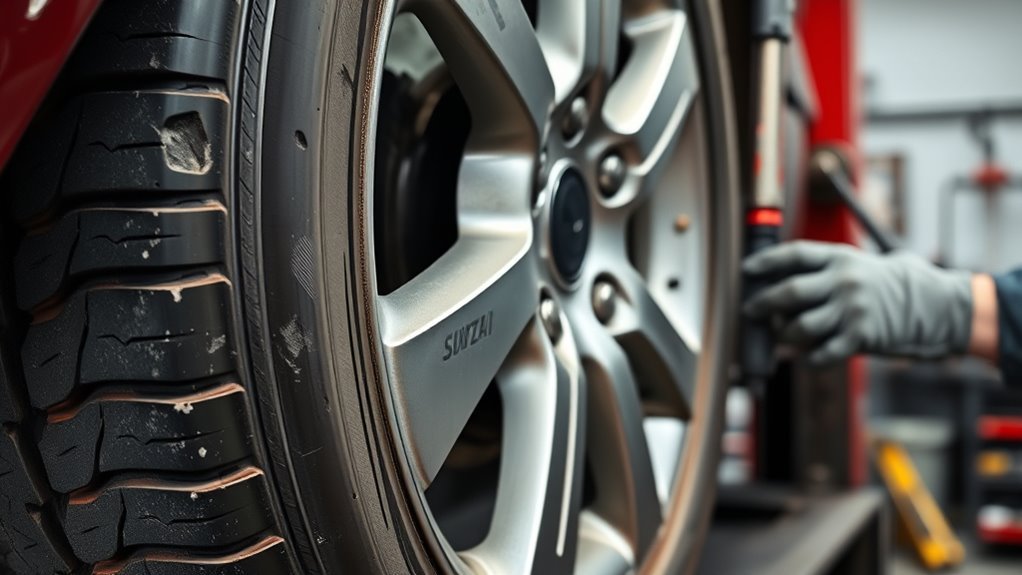
Suspension parts keep the tire planted and pointed in the right direction. When those parts wear out, the tire can bounce, tilt, or move in ways it was not designed to move. That can create inner-edge wear, cupping, vibration, or a noisy ride.
Common Suspension Problems
Common Sonata-related suspension and steering items to inspect include:
- Struts and shocks: Weak damping can let the tire hop and cup the tread.
- Control-arm bushings: Worn bushings can allow camber and toe to shift while driving.
- Ball joints: Loose joints can change wheel angle and create unstable handling.
- Tie-rod ends: Worn steering links can cause toe changes and feathered wear.
- Wheel bearings: A bad bearing may create humming, looseness, or wheel movement that contributes to abnormal wear.
- Damaged wheels: A bent rim can cause vibration, air loss, and uneven road contact.
Impact on Tire Alignment
Alignment is only useful if the suspension can hold the adjustment. If a bushing, tie rod, ball joint, strut, or bearing is worn, the alignment may look acceptable on the rack but change under braking, cornering, or road load. That is why a good tire shop should inspect suspension parts before aligning a Sonata with severe inner tire wear.
How Tire Pressure Affects Hyundai Sonata Tire Longevity
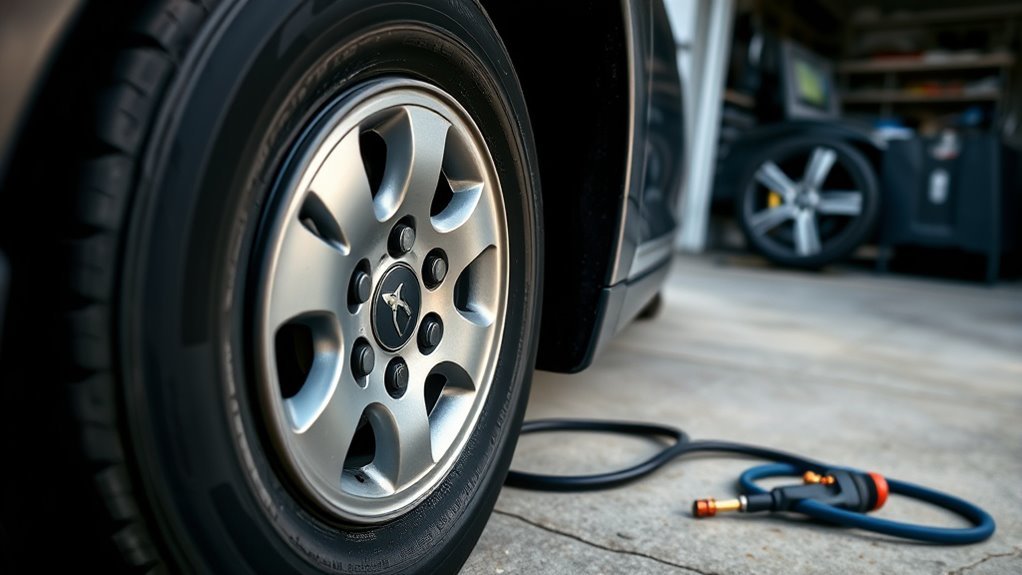
Correct tire pressure helps the tread sit evenly on the road. Hyundai states that the tire label on the driver-side center pillar gives the recommended tire pressures for your vehicle, and pressure should be checked when the tires are cold. Do not use the maximum pressure printed on the tire sidewall as your normal setting.
For best results, check Sonata tire pressure before driving, after the car has been parked for at least 3 hours, and adjust to the driver-side center pillar tire label.
Low pressure can build heat, reduce fuel economy, and wear the shoulders. Too much pressure can reduce ride comfort and wear the center of the tread. Pressure alone is not usually the main reason only the inside edge is worn, but pressure should always be corrected before alignment results are judged.
How Driving Habits Impact Tire Life
Driving style can make an existing tire-wear problem worse. Hard acceleration, hard braking, fast cornering, curb strikes, pothole impacts, and overloading the vehicle all add stress to the tread and suspension.
To help your Sonata tires last longer:
- Slow down for potholes and broken pavement when safe to do so.
- Avoid clipping curbs while parking.
- Brake and accelerate smoothly.
- Do not exceed the load limit shown on the tire and loading label.
- Recheck pressure when temperatures change sharply.
Essential Tire Maintenance Practices
Good tire maintenance will not fix a bent part or a bad alignment, but it can prevent small problems from becoming expensive tire replacements.
[Products Worth Considering]

Monitor tire tread wear with a smart, color-coded depth gauge that shows clear condition ranges at a glance. The bar is range marked for fast, easy readings, helping you maintain safer traction and performance. Each gauge is portable with a pocket clip, and the set includes 20 units for daily use and sharing.

The Ziopetru adjustable magnetic wheel alignment tool helps you check and restore camber and caster positioning after removing and reinstalling undercarriage components. With a clear leveling/bubble measurement system and an easy zeroing adjustment knob, it supports precise horizontal angle checking. The strong magnetic base mounts to metal surfaces for convenient use at home on cars, motorcycles, trucks, vans, and SUVs.

Measure tire tread depth quickly and accurately with this LUMITECO dial gauge that reads in 1/32" increments up to 14/32". The color-coded green/yellow/red zones make it easy to judge tire wear and know when replacement is needed. A rugged, compact design with a protective pouch helps keep the gauge ready for use on cars, trucks, motorcycles, and more.
Rotate Tires on the Correct Schedule
Current Hyundai Sonata maintenance guidance lists tire rotation every 8,000 miles, 13,000 km, or 12 months, including tread-wear inspection and tire-pressure check. Some older manuals, tire warranties, or service plans may use a different interval, so follow the schedule for your exact model year and tires.
Check Pressure the Right Way
Use a quality tire pressure gauge and check all four tires when cold. If one tire repeatedly loses pressure, inspect for punctures, valve-stem leaks, bead leaks, or wheel damage.
Measure Tread and Know When to Replace
Measure tread depth at the inner shoulder, center, and outer shoulder. If the inner edge is much lower than the rest of the tire, do not assume rotation will solve it. Replace tires that are below legal tread depth, have exposed cord, show fabric, have bulges, or are damaged.
Solutions for Addressing Inner Tire Wear
The right fix depends on how severe the wear is and what caused it. Use this order: inspect the tire, correct pressure, check suspension and steering, align the vehicle, then replace or rotate tires as appropriate.
[Products Worth Considering]

Keep your tires properly inflated with this analog VONDIOR tire pressure gauge, designed for fast, easy readings without batteries. The swiveling, two-axis hose and large glow dial help you measure at any tire angle with instant visibility. Built with a protective rubber shield, it supports durable, low-maintenance use for cars and trucks.

Steelman white tire marking crayons provide high-contrast, semi-permanent marks for repairing and inspecting tires and equipment. They write on wet or dry, smooth or coarse surfaces including rubber, metal, glass, and wood, making them ideal for puncture location and damage outlining. The lead- and zinc-free crayons resist weather and fading yet wipe away when you no longer need the marks.

This universal wheel alignment tool helps you accurately restore tire tilt angles after tire or suspension repairs using an adjustable camber gauge. It features a powerful magnetic base that firmly attaches to brake rotors for stationary, slip-free readings, improving consistency during measurement. Built from durable PC plastic, it resists wear and corrosion and is compact enough for car, truck, RV, and motorcycle alignment tasks.
Proper Wheel Alignment
Schedule a four-wheel alignment if the inner edge is wearing faster, the steering wheel is off-center, the vehicle pulls, or the wear appeared after a pothole, curb hit, tire replacement, or suspension repair. A shop should measure camber, caster, toe, and rear alignment angles.
If the alignment shop says camber or toe cannot be adjusted into specification, ask what part is preventing the adjustment. The answer may be a worn bushing, bent control arm, damaged strut, weak spring, or previous impact damage.
Tire Rotation Schedule
Regular tire rotation spreads wear across all four positions. For many current Sonata maintenance schedules, the interval is 8,000 miles, 13,000 km, or 12 months. Rotate sooner if irregular wear develops and your tire shop confirms the tires are still safe to rotate.
However, do not rotate a dangerous tire to another position. If the inside edge is bald, corded, or damaged, replace it and fix the cause before the new tire is ruined.
Suspension Component Inspection
A complete inspection should include ball joints, tie-rod ends, control-arm bushings, struts, shocks, wheel bearings, wheels, and suspension mounting points. The technician should also check for uneven ride height, bent parts, or loose hardware.
Wheel Bearing and Wheel Damage Checks
A bad wheel bearing is not the most common cause of inner-edge tire wear, but it can contribute if it allows looseness or changes how the wheel tracks. Listen for a growling or humming sound that changes with speed or cornering. Also inspect for bent rims, missing wheel weights, and vibration that could point to wheel damage or imbalance.
When to Consult Professionals for Tire Issues
Consult a tire or suspension professional promptly if you notice severe inner-edge wear, cupping, steering pull, vibration, clunking, humming, rapid air loss, or a tire-pressure warning that returns after inflation.
You should also get a professional inspection after hitting a deep pothole or curb, after replacing suspension parts, or before installing new tires on a car that already has uneven wear. Replacing tires without fixing alignment or suspension problems can destroy the new set quickly.
Warning: If the car pulls strongly, vibrates severely, or the tire has visible cord or a sidewall bulge, avoid highway driving and have the vehicle inspected before continuing normal use.
[Products Worth Considering]

The SAFELIFE dial tire tread depth gauge measures tread depth in 1/32 inch increments with clear, easy-to-read 2-inch dial face. Color zones using a traffic light system help you quickly judge whether tread is low, marginal, or ample for safer driving. Built with a durable zinc cast body and a metal detect probe for precise, comfortable use across cars, motorcycles, trucks, and buses.

The Milton S-693 straight foot dual head air chuck is designed for accurate tire pressure checks and quick, secure valve-core engagement with lock-on threads on both ends. With a 1/4" FNPT connection and a maximum 150 PSI rating, it’s built for use on inner duals and common vehicle tires, including trucks and RVs.

Accurately measure tire tread depth with a calibrated gauge marked from 0 to 1 inch in 1/32 inch increments. The color-coded bar helps you quickly identify tread condition ranges, supporting safe driving for trucks, motorcycles, automobiles, and passenger vehicles.
Long-Term Care for Your Hyundai Sonata Tires
Long-term tire care is simple, but it needs to be consistent. Check pressure monthly, inspect tread during fuel stops or washes, rotate tires on schedule, and correct alignment after impacts or unusual wear.
Keep records of tire rotations, alignments, pressure checks, and suspension repairs. Those records help diagnose repeat wear problems and may also matter for tire warranty claims. If you change wheel size, tire size, or suspension height, have the alignment checked again because those changes can affect tire contact and wear.
Frequently Asked Questions
Why are my Hyundai Sonata tires wearing on the inside edge?
Inside-edge wear usually means the tire is not sitting flat on the road. Common causes include excessive negative camber, incorrect toe, worn suspension bushings, loose steering parts, damaged wheels, or missed tire rotations.
Can bad struts cause inner tire wear?
Yes. Bad struts or shocks can let the tire bounce instead of staying planted. That can cause cupping, uneven tread wear, vibration, and poor handling. They can also contribute to alignment changes when other suspension parts are worn.
Can a bad wheel bearing cause inner tire wear?
A bad wheel bearing can contribute to abnormal tire wear if it allows looseness or wheel movement, but it is not usually the first suspect. Inner-edge wear more often points to camber, toe, suspension, or steering problems. A humming or growling sound that changes with speed is a reason to inspect the bearing.
Is it safe to drive with inside tire wear?
Mild uneven wear may be safe for a short time, but severe inner-edge wear is risky. Do not keep driving on a tire with exposed cord, visible fabric, bulges, deep cracks, rapid air loss, or severe vibration. Have the tire inspected and replace it if needed.
How often should I rotate Hyundai Sonata tires?
Current Hyundai Sonata maintenance guidance lists tire rotation every 8,000 miles, 13,000 km, or 12 months. Follow the schedule for your exact model year, tire warranty, and driving conditions. Rotate sooner if irregular wear appears and the tires are still safe.
What tire pressure should I use for a Hyundai Sonata?
Use the recommended cold tire pressure printed on the tire and loading label on the driver-side center pillar. Check pressure before driving, after the car has been parked for at least 3 hours, or after driving less than 1 mile.
Conclusion
Inside tire wear on a Hyundai Sonata is usually a sign that the tire is being dragged, tilted, bounced, or overloaded in a way it should not be. Start with a cold tire-pressure check and a tread inspection, then have the alignment, suspension, steering, wheels, and bearings checked if the inner shoulder is wearing faster than the rest of the tread. Fixing the root cause before installing new tires is the best way to protect safety, handling, and tire life.
Sources
- Hyundai Owner’s Manual — Tire specification and pressure label — supports using the driver-side center pillar tire label for recommended pressures.
- Hyundai Owner’s Manual — Recommended Cold Tire Inflation Pressures — supports checking tire pressure cold and maintaining recommended pressure.
- Hyundai Owner’s Manual — Normal Maintenance Schedule — supports Sonata tire rotation at 8,000 miles, 13,000 km, or 12 months.
- NHTSA TireWise — supports tire safety, pressure checks, tread checks, and rotation awareness.
- U.S. Tire Manufacturers Association Tire Care and Safety Guide — supports misalignment, worn suspension, imbalance, wheel damage, and driving habits as abnormal tread-wear causes.
- AAA Guide to Tire Safety — supports consumer tire inspection and recognizing irregular tire wear.