Reading the numbers on a Hyundai Sonata tire is easier once you know what each part controls. A code like 215/65R15 tells you the tire width, sidewall height, construction type, and wheel diameter. It does not, by itself, prove the tire is correct for every Sonata, so always compare it with the driver-door tire placard and your owner’s manual before buying replacements.
Quick Answer
On 215/65R15, 215 is tire width in millimeters, 65 means the sidewall is 65% of that width, R means radial construction, and 15 means the tire fits a 15-inch wheel. For a Sonata, confirm the exact size, load index, and speed rating on the driver-side placard.
Key Takeaways
- 215/65R15 is a tire-size code: width, aspect ratio, radial construction, and wheel diameter.
- The final number must match the wheel: a 15-inch tire mounts only on a 15-inch rim.
- Load index and speed rating matter: replacements should meet or exceed the rating specified for your Sonata.
- Your placard wins: Sonata tire sizes vary by model year, trim, and market, so check the driver-side door label before purchasing.
At a Glance
| Time Required | 2–5 minutes to read the sidewall and compare it with the placard |
| Difficulty | Easy |
| Tools Needed | Your tire sidewall, driver-side door placard, owner’s manual, and a tire-pressure gauge |
| Cost | Free to check; tire replacement cost depends on size, brand, rating, and installation |
How to Read 215/65R15 at a Glance
Think of 215/65R15 as a short technical label. It tells you the tire’s physical size and construction, but it does not include every safety detail. After the size code, most passenger tires also show a load index and speed rating, such as 95H. Those two characters help confirm whether the tire can safely carry the vehicle’s weight and match the vehicle’s speed-rating requirement.
| Code part | Meaning | What to check on your Sonata |
|---|---|---|
| 215 | Approximate section width in millimeters | Must match an approved size for your year and trim |
| 65 | Aspect ratio; sidewall height is 65% of the width | Affects ride comfort, steering feel, and overall diameter |
| R | Radial construction | Modern Sonata replacements should use the construction specified on the placard/manual |
| 15 | Wheel/rim diameter in inches | Must match the wheel exactly |
For example, a 215/65R15 tire is about 215 mm wide. Its sidewall is 65% of 215 mm, or about 140 mm. Because it is marked R15, it is a radial tire made for a 15-inch wheel.
Warning: Do not buy tires based only on the size printed on an old tire. If a previous owner installed the wrong size, copying it repeats the mistake. Check the tire and loading label on the driver-side door pillar and confirm the size, load index, speed rating, and pressure.
Tire Type and Width: P, LT, and Metric Sizes Explained
Some tire sizes begin with a letter. A P before the size, as in P215/65R15, means the tire is a passenger-car tire. LT means light truck, which is normally not the correct choice for a Hyundai Sonata unless a qualified tire professional and the vehicle documentation confirm it. A tire with no prefix may still be a metric passenger-car tire.
The first number after any prefix is the tire’s approximate width from sidewall to sidewall, measured in millimeters.
The width affects contact patch, steering feel, road noise, and clearance. Wider tires may look sportier and can add grip in the right setup, but they can also rub the fender liner, reduce wet/snow performance, or change ride comfort. Use the size approved for your Sonata before considering any width change.
- P-metric: common passenger-car sizing, such as P215/65R15.
- Metric with no prefix: also common on modern passenger vehicles.
- LT: designed for light trucks and heavier load use; usually inappropriate for a Sonata.
Aspect Ratio: What the “65” Means for Sidewall Height
The aspect ratio is the two-digit number after the slash. In 215/65R15, the 65 means the sidewall height is 65% of the tire width. A higher aspect ratio usually gives a taller sidewall, which can cushion bumps better. A lower aspect ratio usually gives a shorter sidewall, which can sharpen steering response but may make the ride firmer.
For the 215/65R15 example, the sidewall calculation is simple:
- Start with the tire width: 215 mm.
- Multiply by the aspect ratio: 215 × 0.65 = 139.75 mm.
- That gives an approximate sidewall height of 140 mm.
Sidewall height also affects overall tire diameter. If the overall diameter changes too much from the original equipment size, the speedometer, odometer, ground clearance, ABS, traction control, and stability control may not behave as intended.
Construction and Rim Diameter: Why “R” and “15” Matter
The R in 215/65R15 means radial construction, which is the standard construction for modern passenger-car tires. Older or specialty tire formats may use other construction markings, but a Sonata replacement should follow the construction type shown on the tire placard, current tire, and owner’s manual.
The final number is the wheel diameter. In 215/65R15, the tire is designed for a 15-inch wheel. This number is not flexible: a 15-inch tire will not safely mount on a 16-, 17-, 18-, or 19-inch wheel.
Note: Many Sonata model years and trims use different wheel diameters. Some use smaller wheels, while newer or sportier trims may use larger wheels. The correct answer is the size listed for your exact car, not a general Sonata size found online.
Load Index and Speed Rating: Weight Capacity and Top Speed
After the tire size, you may see a service description such as 95H. The number is the load index, and the letter is the speed rating. These are just as important as the size because they tell you whether the tire meets the vehicle’s load and performance requirements.
Load Index Explained
The load index is a code for how much weight one tire can carry at the proper inflation pressure. For example, load index 95 corresponds to 1,521 lb / 690 kg per tire in standard load-index charts. When replacing Sonata tires, choose a tire with a load index that meets or exceeds the original requirement.
Do not mix different load indexes on the same axle unless a tire professional confirms it is safe and appropriate. Uneven ratings can affect handling, balance, and emergency behavior.
Speed Rating Limits
The speed rating letter shows the tire’s tested speed capability under controlled conditions. Common examples include H for up to 130 mph and V for up to 149 mph. This does not mean you should drive at those speeds; it means the tire is built to a performance rating that supports the vehicle’s design when properly installed, inflated, and maintained.
When replacing tires, match or exceed the original speed rating unless your owner’s manual or tire professional gives different guidance for a specific winter tire or approved alternate setup.
Where to Find the Correct Hyundai Sonata Tire Size
The fastest way to confirm the correct tire size is to open the driver’s door and look for the tire and loading information label on the driver-side door edge or center pillar. Hyundai owner guidance explains that the tire label on the driver-side center pillar gives the recommended tire pressures for the vehicle, and NHTSA advises using the tire label or owner’s manual to select replacement tire size.
Pro Tip: Take a photo of your Sonata’s tire placard before shopping. It usually lists the original tire size, cold tire pressure, seating/load information, and sometimes separate information for front, rear, and spare tires.
Use this order when checking tire fitment:
- Driver-side tire placard: best quick reference for your exact vehicle.
- Owner’s manual: confirms approved sizes, pressures, spare-tire information, and warnings.
- Current tire sidewall: useful only if the tires already on the car are correct.
- Qualified tire shop: helpful for alternate sizes, winter setups, or wheel changes.
How Changing Tire Size Affects Speedometer, Clearance, and Safety
If you change your Sonata’s tire size, you change more than appearance. Different width, sidewall height, or overall diameter can affect speedometer accuracy, ride height, steering response, wheel-well clearance, and driver-assistance systems.
| Change | Possible effect | Why it matters |
|---|---|---|
| Larger overall diameter | Speedometer may read lower than actual speed | Can affect speed awareness and system calibration |
| Smaller overall diameter | Speedometer may read higher than actual speed | Can alter mileage readings and gearing feel |
| Wider tire | More grip in some conditions, but possible rubbing | Clearance changes during turns, bumps, and full suspension compression |
| Lower sidewall | Sharper response but harsher ride | More risk of wheel damage from potholes |
Plus-sizing can work when the wheel and tire package is engineered to keep the overall diameter close to the original setup. Large changes in overall diameter can affect the speedometer and systems such as ABS, traction control, and stability control, so avoid guessing.
Choosing Replacement Tires for a Hyundai Sonata: OEM, Upsizing, or Hybrid-Friendly
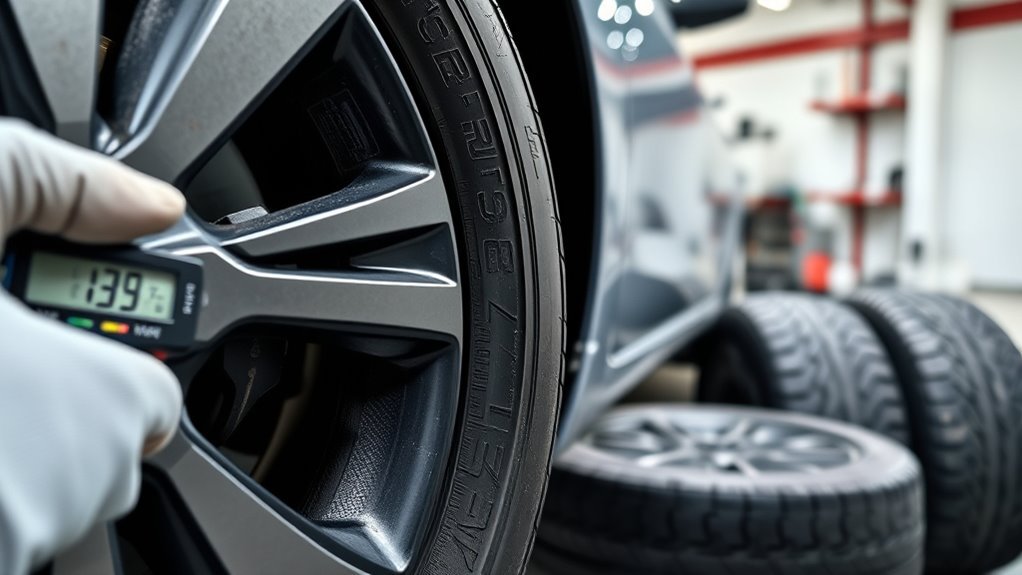
For most drivers, the safest and easiest choice is an OEM-size replacement tire that matches the placard size, load index, speed rating, and recommended cold pressure. This keeps the car closest to the handling, braking, ride comfort, fuel economy, and system calibration Hyundai intended.
- OEM replacement: best for predictable ride, fitment, speedometer accuracy, and low guesswork.
- Upsized wheels or tires: possible only after checking overall diameter, offset, width, load rating, speed rating, TPMS compatibility, and clearance.
- Hybrid-friendly tires: useful for Sonata Hybrid owners who want low rolling resistance, quiet ride, and proper load capacity. Do not assume an “EV-ready” label is required; match the vehicle’s actual specifications first.
- Winter tires: useful in cold, snowy, or icy climates; follow the manual’s approved size and pressure guidance.
[Products Worth Considering]

Replace your worn or missing TPMS sensors with pre-programmed, direct-fit sensors for compatible Ford, Lincoln, and select Mazda models. Each sensor comes ready to activate with a scan tool, helping restore accurate tire pressure monitoring and trouble-free installation. Built with a long-life CR2032 battery and tested before factory release, this set provides dependable performance with a one-year warranty.

Measure tire tread depth quickly and accurately with this LUMITECO dial gauge that reads in 1/32" increments up to 14/32". The color-coded green/yellow/red zones make it easy to judge tire wear and know when replacement is needed. A rugged, compact design with a protective pouch helps keep the gauge ready for use on cars, trucks, motorcycles, and more.

The SAFELIFE dial tire tread depth gauge measures tread depth in 1/32 inch increments with clear, easy-to-read 2-inch dial face. Color zones using a traffic light system help you quickly judge whether tread is low, marginal, or ample for safer driving. Built with a durable zinc cast body and a metal detect probe for precise, comfortable use across cars, motorcycles, trucks, and buses.
Seasonal Markings: M+S, All-Season, and Winter Tires
Tire markings can also tell you about intended seasonal use. M+S or M/S means the tire has mud-and-snow capability, but it does not automatically make the tire a true winter tire. For severe winter use, look for the three-peak mountain snowflake symbol, which identifies tires tested for snow traction.
If you drive your Sonata in snow, ice, or frequent temperatures near freezing, winter tires can improve traction compared with many all-season tires. Install winter tires in a complete set of four whenever possible so the car has balanced grip at all corners.
[Products Worth Considering]

Keep your tires properly inflated with this analog VONDIOR tire pressure gauge, designed for fast, easy readings without batteries. The swiveling, two-axis hose and large glow dial help you measure at any tire angle with instant visibility. Built with a protective rubber shield, it supports durable, low-maintenance use for cars and trucks.

Monitor tire tread wear with a smart, color-coded depth gauge that shows clear condition ranges at a glance. The bar is range marked for fast, easy readings, helping you maintain safer traction and performance. Each gauge is portable with a pocket clip, and the set includes 20 units for daily use and sharing.

The 22800 wheel stud installer makes replacing wheel studs quick and secure, saving time and effort during tire service. It uses a ratchet or impact wrench to pull new studs firmly into place, helping when existing studs are too long. Compatible with most automotive wheels and light-duty truck wheel studs, it’s designed for easy, tool-assisted installation.
DOT Code, Tire Age, Pressure, and Tread Depth
The tire-size code is not the only marking worth checking. The sidewall also includes a DOT/TIN code. The final four digits show the week and year the tire was manufactured. For example, 2924 means the tire was made in the 29th week of 2024.
Also check these basics before buying or installing tires:
- Cold tire pressure: check pressure when the tires are cold, before driving far, and use the pressure on the placard rather than the maximum pressure printed on the tire.
- Tread depth: tires are generally considered worn out at 2/32 inch, but wet and winter traction can decline before that.
- Sidewall damage: replace tires with bulges, exposed cords, cracks, or punctures in the sidewall.
- Uneven wear: may point to alignment, inflation, suspension, or rotation problems.
- Rotation: follow the owner’s manual interval and pattern, especially if all four tires are the same size.
Pre-Buy Checklist: Confirm Size, Load, Speed Rating, and Fit Before Installation
Before buying Hyundai Sonata tires, run through this checklist. It prevents the most common fitment and safety mistakes.
| Item checked | Action required |
|---|---|
| Tire size | Match the driver-door placard or approved manual size |
| Wheel diameter | Confirm the final number in the tire size matches the rim diameter exactly |
| Load index | Choose a tire that meets or exceeds the original requirement |
| Speed rating | Match or exceed the original rating unless an approved winter setup says otherwise |
| Clearance | Check fender, suspension, brake, and steering clearance before changing size |
| Pressure | Inflate to the recommended cold pressure on the placard |
Buy only when all items line up. If one item does not match, pause and verify before installation.
[Products Worth Considering]

This professional wheel and rim brush kit makes it easy to lift brake dust, grime, and dirt from wheels and tires without scratching finishes. The brushes feature soft, metal-free wool heads and a flexible 360-degree rim brush design for reaching hard-to-clean areas. Includes multiple brush types plus accessories for thorough car, motorcycle, and general vehicle detailing.

The Topeak SmartGauge D2 delivers precise digital tire pressure readings for bikes, motorcycles, and sports equipment up to 250 psi (17 bar). Its rotating SmartHead works with both Presta and Schrader valves, so you can check pressure quickly without adapters. The LCD display makes it easy to read results in psi, bar, or kg/cm² with an included CR2032 battery for immediate use.

Accurately measure tire tread depth with a calibrated gauge marked from 0 to 1 inch in 1/32 inch increments. The color-coded bar helps you quickly identify tread condition ranges, supporting safe driving for trucks, motorcycles, automobiles, and passenger vehicles.
Frequently Asked Questions
How do you interpret tire size numbers?
Read the code from left to right. In 215/65R15, 215 is the width in millimeters, 65 is the sidewall height as a percentage of the width, R means radial construction, and 15 is the wheel diameter in inches. A load index and speed rating may follow the size code.
Is 215/65R15 the correct tire size for every Hyundai Sonata?
No. Sonata tire sizes vary by model year, trim, wheel package, and market. Use 215/65R15 only if it matches your vehicle’s tire placard, owner’s manual, or an approved fitment from a qualified tire professional.
Can I use a different tire size on my Sonata?
Sometimes, but it must be checked carefully. The alternate size should preserve overall diameter, load capacity, speed rating, wheel clearance, brake clearance, and TPMS compatibility. Do not guess based on appearance alone.
What does the load index mean on a Sonata tire?
The load index is a numeric code for how much weight one tire can support at the correct inflation pressure. Replacement tires should meet or exceed the load index required by your Sonata’s original tire specification.
Where is the tire placard on a Hyundai Sonata?
Look on the driver-side door edge or center pillar. The placard lists the recommended cold tire pressure and helps confirm the correct tire information for your vehicle.
Conclusion
Tire numbers are a compact safety and fitment code. On 215/65R15, 215 is width, 65 is sidewall ratio, R is radial construction, and 15 is wheel diameter. For a Hyundai Sonata, the most important step is not memorizing the code; it is matching the code, load index, speed rating, and pressure to the driver-door placard and owner’s manual. That keeps the tire choice aligned with the car’s handling, clearance, braking, and safety systems.
Sources
- NHTSA TireWise: Tire Safety Ratings and Awareness — supports tire placard, tire safety, maintenance, and rating guidance.
- NHTSA Tire Safety Brochure — supports tire pressure, tread depth, replacement-size, and tire-care guidance.
- Tire Industry Association: Reading a Tire Sidewall — supports width, aspect ratio, radial construction, rim diameter, load index, speed symbol, DOT/TIN, and winter marking explanations.
- Hyundai Owner’s Manual: Tire Specification and Pressure Label — supports the driver-side center-pillar tire label guidance.
- Hyundai Owner’s Manual: Recommended Cold Tire Inflation Pressures — supports cold-pressure checking and under/over-inflation warnings.
- Tire Rack: Plus Size Wheels and Tires — supports plus-sizing, overall diameter, speedometer, ABS, traction control, and clearance guidance.