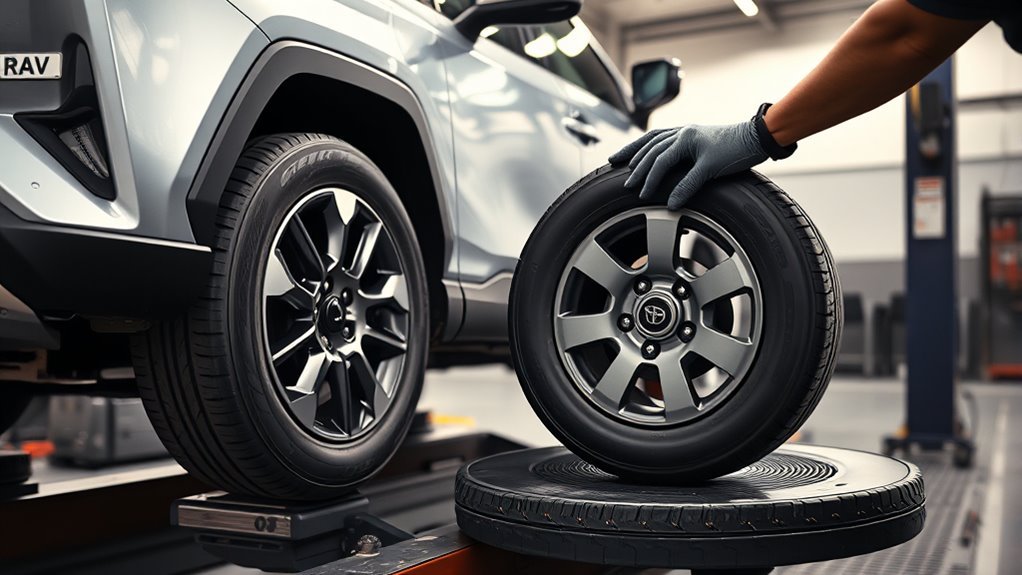
Tire balancing helps your 2014 Toyota RAV4 ride smoothly by correcting uneven weight in the tire-and-wheel assembly. When the balance is off, you may feel shaking through the steering wheel, seat, or floor, especially at highway speeds. Left alone, that vibration can contribute to uneven tire wear, extra strain on suspension parts, and a less comfortable drive.
Quick Answer
Yes, tire balancing matters for a 2014 Toyota RAV4. Toyota recommends balancing tires when they are replaced and as needed afterward, especially if you feel steering vibration at higher speeds. It is also smart to have balance checked during tire rotations or after a pothole, curb hit, flat repair, or unusual tire wear.
Key Takeaways
- Balance new tires at installation and rebalance when vibration, uneven wear, or road-impact symptoms appear.
- A shaking steering wheel at highway speed is the classic sign of a tire or wheel balance problem, but damaged tires, bent wheels, and worn suspension parts can feel similar.
- Balancing is different from alignment: balancing corrects weight around the rotating tire and wheel; alignment corrects wheel angles.
- Check tire pressure and tread regularly because balance, pressure, rotation, and alignment all work together to protect ride quality and tire life.
At a Glance
| Time Required | Usually about 30–60 minutes for a shop visit, depending on wait time and whether the technician finds tire, wheel, or suspension issues. |
| Difficulty | Professional service recommended because accurate balancing requires a tire balancer and properly installed wheel weights. |
| Tools Needed | Wheel balancer, wheel weights, torque wrench, tire-pressure gauge, and tire/wheel inspection tools. |
| Cost | Varies by shop and region; it may be charged per wheel or bundled with new tire installation. |
Why Tire Balancing Matters for Your 2014 Toyota RAV4
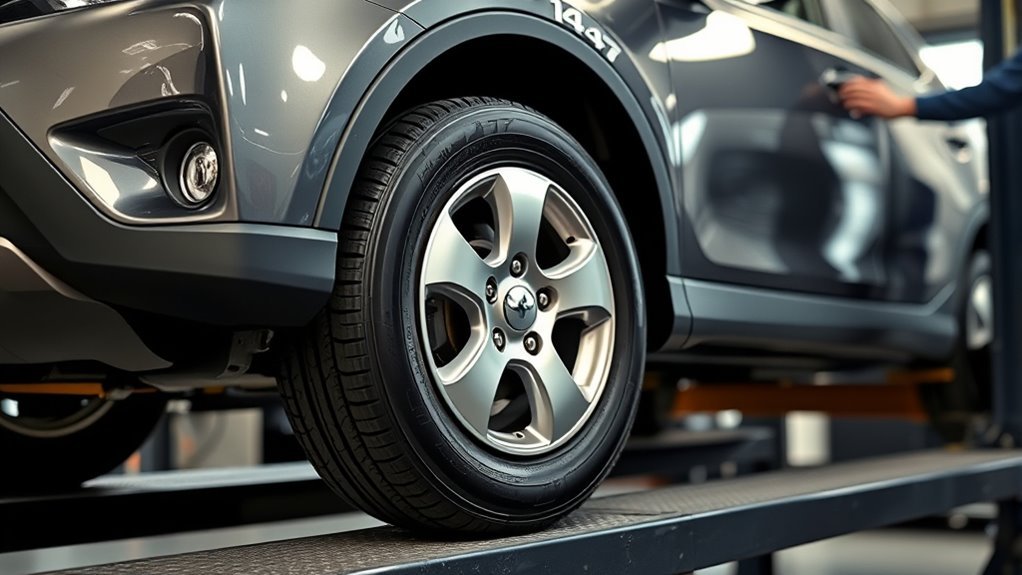
Wheel balancing corrects uneven weight around the tire and wheel so the assembly spins smoothly. A technician does this by mounting the wheel on a balancing machine, measuring the heavy spots, and adding small weights to the rim.
For your RAV4, the main benefit is simple: less vibration. That smoother rotation can also help the tires wear more evenly and reduce unnecessary stress on steering and suspension components. Toyota states that tires should be balanced when they are replaced and as needed afterward, especially when steering vibration appears at higher speeds. You can confirm the maintenance information for your specific vehicle through the official 2014 Toyota RAV4 manuals and warranty page.
Balancing also works best when the rest of your tire care is handled. Keep the tires inflated to the pressure shown on the driver-side door placard or owner’s manual, rotate them on schedule, and inspect them for damage. The National Highway Traffic Safety Administration notes that tire maintenance is a key part of safe driving because tires are the only contact point between your vehicle and the road.
Note: Tire balancing will not fix every vibration. Bent wheels, damaged tires, worn suspension parts, brake issues, and wheel-alignment problems can cause similar symptoms.
Signs Your RAV4 Needs Tire Balancing
The most common sign is vibration that becomes more noticeable as speed increases. Use this table to separate likely balance symptoms from problems that may need a broader inspection.
| Sign | What You May Notice | What It May Mean |
|---|---|---|
| Steering wheel vibration | Shaking at highway speeds, often felt through the wheel. | Classic tire/wheel imbalance symptom. |
| Seat or floor vibration | A shake felt more in the cabin than the steering wheel. | Possible rear-wheel imbalance or tire/wheel issue. |
| Uneven or cupped tread wear | Patchy tread wear, scalloping, or rough tire noise. | May involve imbalance, worn suspension, incorrect pressure, or alignment. |
| Thumping or wobbling | A rhythmic thump, wobble, or shake that feels worse at certain speeds. | Could be imbalance, tire damage, a separated tire, or a bent wheel. |
| Vehicle pulling to one side | RAV4 drifts left or right on a flat road. | More likely alignment, tire pressure, tire defect, or brake drag than balance alone. |
Warning: Do not keep driving normally if the RAV4 suddenly shakes hard, thumps, pulls sharply, or feels unstable. Slow down safely and have the tires, wheels, and suspension inspected before highway driving.
What Happens When Your Tires Are Unbalanced?
When a tire-and-wheel assembly is out of balance, the heavy spot creates a repeated hop or wobble as the wheel spins. At low speeds, you may not notice it. At higher speeds, the vibration can become strong enough to shake the steering wheel, floor, or seat.
That vibration can make your RAV4 less comfortable and may contribute to uneven tread wear over time. It can also add stress to shocks, struts, wheel bearings, steering components, and other parts that are already absorbing road forces. Tire makers such as Michelin and Continental describe wheel balancing as a preventive step against vibration, uneven wear, and premature component stress.
Fuel economy can also suffer indirectly if tire problems increase rolling resistance or cause irregular wear. Balancing is not a magic fuel-saver, but it is part of the tire-maintenance routine that helps the vehicle roll as designed.
[Products Worth Considering]

Accurately measure tire tread depth with a calibrated gauge marked from 0 to 1 inch in 1/32 inch increments. The color-coded bar helps you quickly identify tread condition ranges, supporting safe driving for trucks, motorcycles, automobiles, and passenger vehicles.

Measure tire tread depth quickly and accurately with this LUMITECO dial gauge that reads in 1/32" increments up to 14/32". The color-coded green/yellow/red zones make it easy to judge tire wear and know when replacement is needed. A rugged, compact design with a protective pouch helps keep the gauge ready for use on cars, trucks, motorcycles, and more.

Monitor tire tread wear with a smart, color-coded depth gauge that shows clear condition ranges at a glance. The bar is range marked for fast, easy readings, helping you maintain safer traction and performance. Each gauge is portable with a pocket clip, and the set includes 20 units for daily use and sharing.
Tire Balancing vs. Wheel Alignment
Tire balancing and wheel alignment are often confused because both can affect ride quality and tire wear. They fix different problems.
- Tire balancing corrects uneven weight around the tire-and-wheel assembly. It is most closely linked with speed-related vibration.
- Wheel alignment corrects the angle of the wheels so they point and contact the road correctly. It is more closely linked with pulling, off-center steering, and edge wear.
If your RAV4 vibrates at highway speed, start with a tire and wheel inspection and balance check. If it pulls to one side, wears the inner or outer shoulders, or the steering wheel sits crooked when driving straight, ask for an alignment inspection too.
[Products Worth Considering]

Keep your tires properly inflated with this analog VONDIOR tire pressure gauge, designed for fast, easy readings without batteries. The swiveling, two-axis hose and large glow dial help you measure at any tire angle with instant visibility. Built with a protective rubber shield, it supports durable, low-maintenance use for cars and trucks.

The Trivd Frol 1/2" air impact wrench delivers high performance torque up to 1500 ft-lbs with a twin hammer impact mechanism for strong, balanced blows. It features an ergonomic grip, compact lightweight design, and quick-stop control with 3 forward speeds up to 8000 RPM plus a reverse speed. Built for demanding automotive repair and tire shop work, the rear exhaust helps keep debris away from the surface.

The SAFELIFE dial tire tread depth gauge measures tread depth in 1/32 inch increments with clear, easy-to-read 2-inch dial face. Color zones using a traffic light system help you quickly judge whether tread is low, marginal, or ample for safer driving. Built with a durable zinc cast body and a metal detect probe for precise, comfortable use across cars, motorcycles, trucks, and buses.
How Proper Tire Balancing Increases Safety and Comfort in Your RAV4
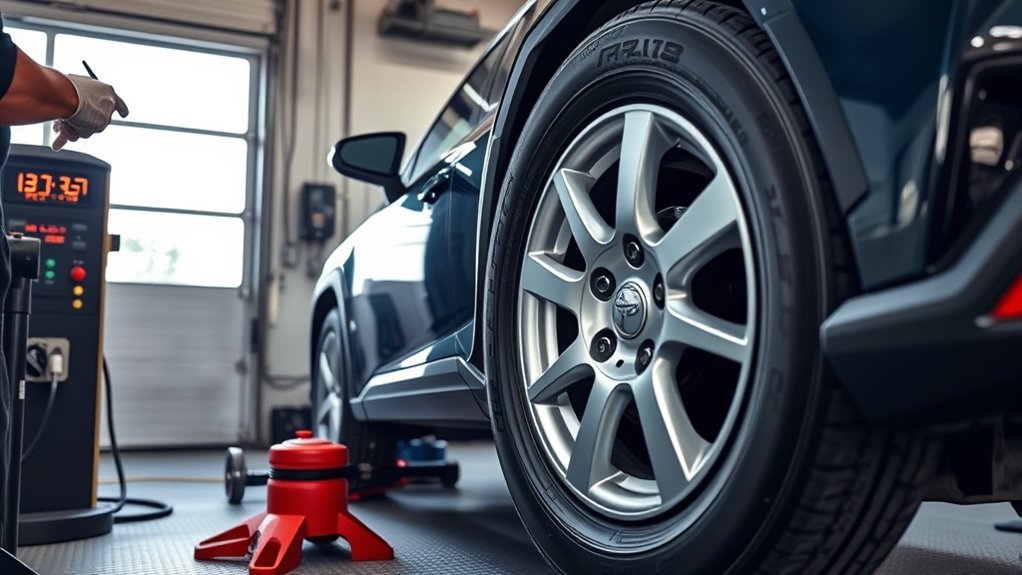
Properly balanced tires help your RAV4 feel more stable because the wheels rotate without the repeated shake caused by heavy spots. That makes steering feel calmer, especially on highways.
- Smoother ride: Less vibration through the steering wheel, seat, and floor.
- More even tread wear: Balanced rotation helps the tread contact the road more consistently.
- Reduced component stress: Less shaking means less extra vibration passing into steering and suspension parts.
- Better inspection habits: A balance visit gives the technician a chance to spot tire damage, bent wheels, missing wheel weights, and uneven wear patterns.
For safety, pair balancing with monthly tire checks. NHTSA recommends checking tire pressure, treadwear, and tire damage regularly, and it says new tires should be balanced when installed. Use the cold tire pressure listed by Toyota on the vehicle placard or in the owner’s manual, not the maximum pressure printed on the tire sidewall.
When Is the Best Time to Balance Your RAV4’s Tires for Optimal Performance?
The best time to balance your RAV4’s tires is whenever the tire-and-wheel assembly has been changed, disturbed, or starts showing symptoms. Toyota’s guidance is straightforward: balance tires when they are replaced and as needed afterward. A Toyota dealer or qualified tire shop can confirm whether balancing is required.
Use this timing checklist:
- After installing new tires: New tires should be balanced before the vehicle leaves the shop.
- During tire rotations: Toyota recommends regular tire rotation, and its maintenance guidance says balance can be checked during that appointment.
- After a flat repair or tire remount: If the tire comes off the wheel, rebalance it before regular driving.
- After hitting a pothole or curb: Have the tire, wheel, and suspension checked, especially if vibration starts afterward.
- When vibration appears: Steering wheel shake at higher speeds is a strong reason to schedule a balance inspection.
- When uneven wear appears: Ask the shop to inspect balance, alignment, tire pressure history, and suspension condition.
Pro Tip: Keep a simple tire-service record with date, mileage, rotation, balance, pressure check, and any repair notes. It helps spot repeat vibration problems and may support tire warranty claims.
What Can You Expect When Balancing Your Tires?
A proper balancing service is quick, but it should be more than just spinning the wheel and adding weights. The technician should inspect the tire and wheel before balancing so a hidden problem is not masked by new weights.
- Initial inspection: The shop checks for uneven wear, tire damage, bent wheels, missing weights, and obvious suspension concerns.
- Pressure check: Tire pressure is adjusted to the correct cold specification when possible.
- Machine balancing: The wheel and tire are mounted on a balancer that identifies where weight is needed.
- Wheel weights installed: Small clip-on or adhesive weights are added to correct the imbalance.
- Recheck: The assembly is spun again to confirm the correction.
- Test drive if needed: If the original complaint was vibration, a short test drive can confirm whether the symptom is gone.
Some shops may recommend road-force balancing if a normal balance does not cure the shake. Road-force balancing can help identify tire stiffness variation, wheel runout, or mounting issues that a standard spin balance may not fully resolve.
Benefits of Regular Tire Balancing
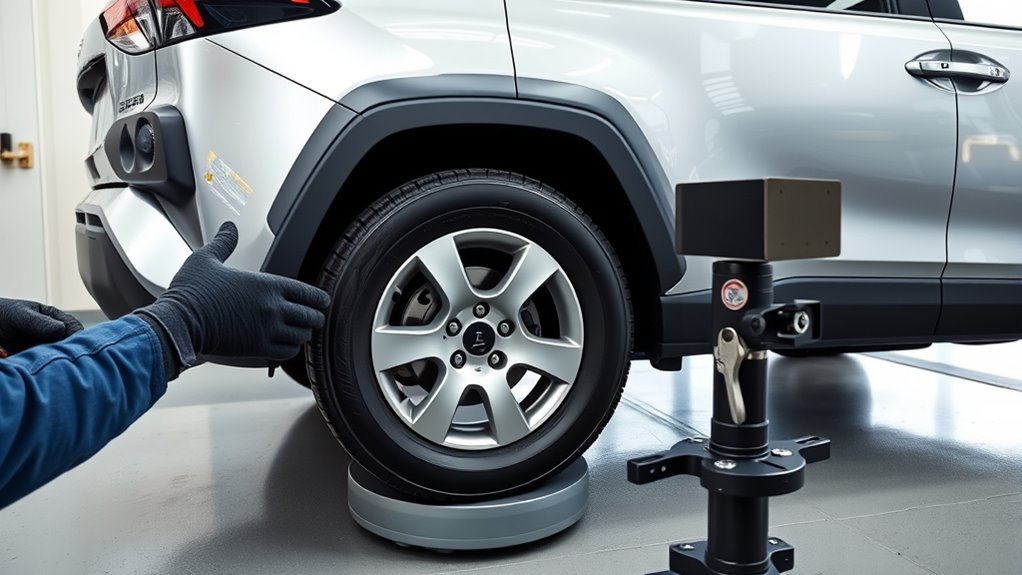
Regular tire balancing is not about following a random calendar date. It is about keeping the tire-and-wheel assemblies smooth whenever they are installed, rotated, repaired, or showing symptoms.
Enhanced Ride Comfort
A balanced wheel turns smoothly, which reduces the shake you feel through the cabin. On a RAV4 used for commuting, highway trips, or family driving, that can make the vehicle feel quieter and more controlled.
Extended Tire Lifespan
Balanced tires can help prevent irregular wear caused by vibration. That does not guarantee a specific number of extra miles, because tire life also depends on inflation pressure, rotation, alignment, road conditions, driving habits, tire quality, and suspension condition.
| Maintenance Habit | Why It Helps |
|---|---|
| Balance when tires are replaced | Starts the new tire set with smooth rotation. |
| Rotate on schedule | Helps equalize wear between front and rear tires. |
| Check cold tire pressure monthly | Protects handling, tire durability, and fuel economy. |
| Inspect tread and sidewalls | Catches cuts, bulges, uneven wear, and road-hazard damage early. |
Improved Vehicle Handling
Balancing helps the tires rotate without shaking, which supports better steering feel. For the best handling, combine balancing with correct tire pressure, good tread depth, proper alignment, and healthy suspension parts.
How to Choose the Right Service Provider for Tire Balancing
Choose a shop that treats vibration as a diagnostic issue, not just a quick add-on service. A good provider should inspect the tire and wheel, ask when the vibration happens, and explain what they found.
Look for these service qualities:
- Modern balancing equipment: Computerized spin balancing is standard; road-force balancing is helpful for stubborn vibration.
- Tire and wheel inspection: The technician should check for bent wheels, damaged tires, missing weights, and uneven tread wear.
- Correct torque procedure: Lug nuts should be tightened with proper torque, not just hammered on with an impact wrench.
- TPMS awareness: Your RAV4 has a tire-pressure monitoring system, so the shop should handle sensors and valve stems carefully.
- Clear explanation: Ask whether the issue was normal imbalance, wheel damage, tire damage, alignment wear, or something else.
[Products Worth Considering]

Upgrade your wheels with MIKKUPPA M12x1.5 mag seat lug nuts built for secure, corrosion-resistant performance. These closed-end chrome lug nuts are a direct replacement for select Toyota models, including Camry, Corolla, RAV4, Sienna, Avalon, Highlander, Matrix, Venza, and Prius. Triple-chromium plating and cold-forged, heat-treated steel help deliver strength for daily driving and replacement needs.

Milton S-921 pencil tire pressure gauge helps you maintain optimal tire pressure for passenger cars with accurate readings in PSI and kPa. It features a built-in deflator valve for convenient pressure adjustments, plus a single chuck head and nylon indicator bar for easy use on the go. Built from durable plated brass and designed for reliable performance, it’s a practical road trip and cold-weather maintenance tool.
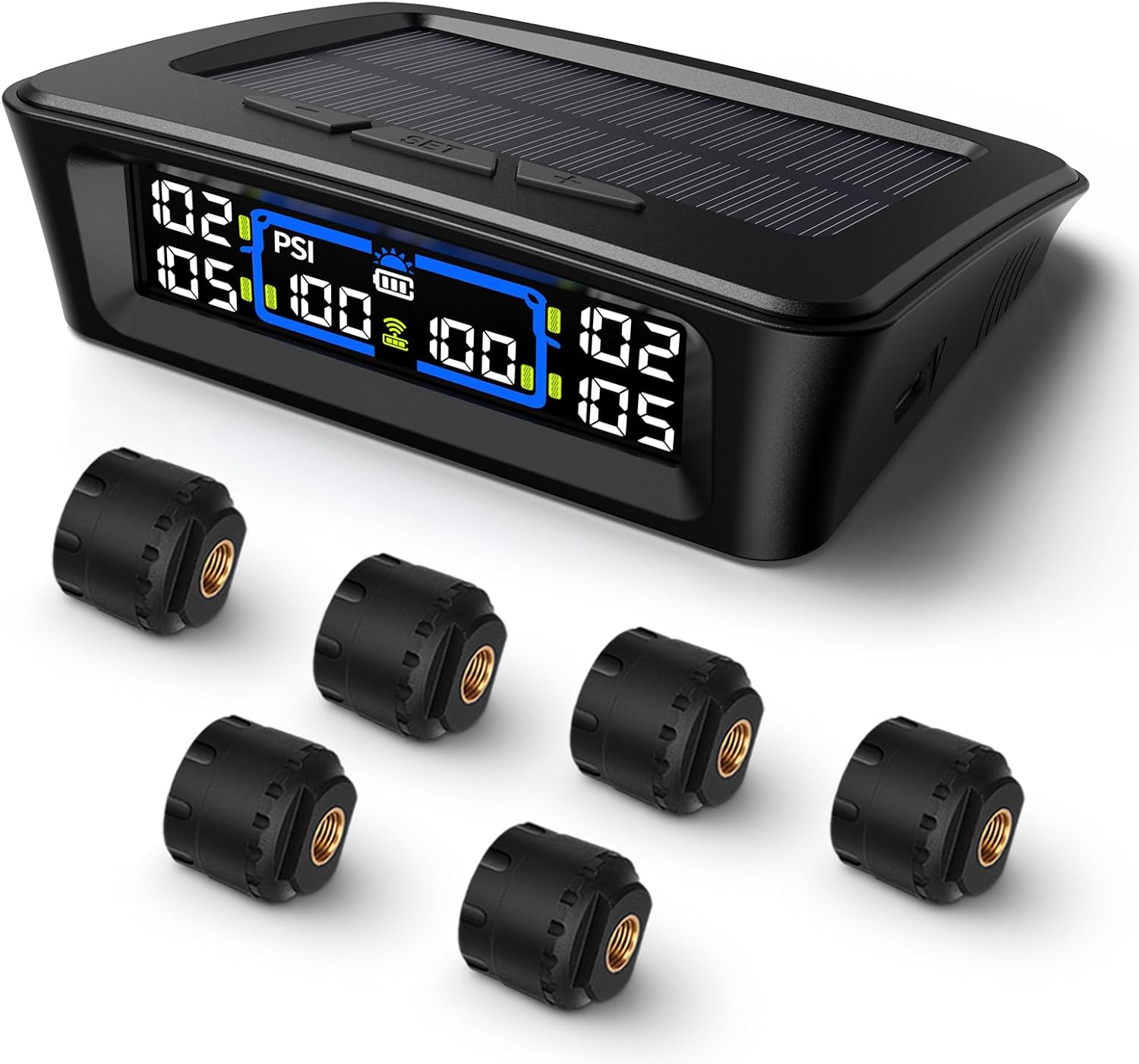
The Tymate TM12 RV TPMS delivers real-time tire pressure and temperature monitoring with a stable 433Hz display for safer long-distance driving. It supports simultaneous monitoring across vehicle and trailer zones, includes six alarm modes for pressure, temperature, leakage, battery, and signal loss, and features easy DIY installation with auto calibration. Power is supplied via USB-C charging or solar recharging, with a wide 0–144 PSI range and up to 50 ft signal coverage for RVs and towable trailers.
Frequently Asked Questions
Is tire balancing really necessary for a 2014 Toyota RAV4?
Yes. Toyota recommends balancing tires when they are replaced and as needed afterward. Balancing reduces speed-related vibration and can help prevent irregular tread wear and unnecessary stress on steering and suspension parts.
How long does tire balancing take?
The balancing work itself is usually quick, but a normal shop visit often takes about 30–60 minutes depending on wait time, tire condition, and whether the technician finds a bent wheel, damaged tire, or alignment-related wear.
How often should I balance my RAV4 tires?
Balance them when new tires are installed, after a tire is repaired or remounted, and whenever vibration or uneven wear appears. It is also smart to ask for a balance check during tire rotations, especially if you drive on rough roads.
Can unbalanced tires damage my RAV4?
They can contribute to uneven tire wear, ride vibration, and extra stress on steering and suspension components. If the vibration is strong or sudden, have the tires and wheels inspected promptly because tire damage or a bent wheel may also be involved.
Do I need balancing or alignment if my RAV4 pulls to one side?
Pulling to one side is more often related to alignment, tire pressure, tire wear, tire defects, or brake drag. Balancing is more strongly linked with vibration at speed. If you have both pulling and vibration, ask the shop to inspect balance, alignment, pressure, tires, wheels, and suspension.
Conclusion
Tire balancing is a small service that can make a big difference in how your 2014 Toyota RAV4 feels on the road. Balance new tires at installation, check balance during rotations, and schedule an inspection whenever vibration, uneven wear, or road-impact symptoms appear. For the best results, treat balancing as part of a complete tire-care routine that also includes correct pressure, regular rotation, tread inspection, and alignment checks when needed.
Sources
- Toyota Support — When does Toyota recommend tire balancing? — supports balancing new tires and balancing as needed for steering vibration.
- Toyota Owners — 2014 RAV4 manuals and warranties — supports using the official manual and warranty guide for vehicle-specific maintenance information.
- Toyota — Basic car maintenance tips and services checklist — supports tire rotation timing and checking tire balance during rotation service.
- NHTSA TireWise — Tire safety ratings and awareness — supports tire safety, maintenance, and consumer tire-care guidance.
- NHTSA — Tire Safety Month guidance — supports monthly pressure/tread checks, rotation, balancing, and balancing new tires at installation.
- Michelin — Wheel alignment and wheel balancing explained — supports the difference between balancing and alignment and the effect of imbalance on vibration and wear.