
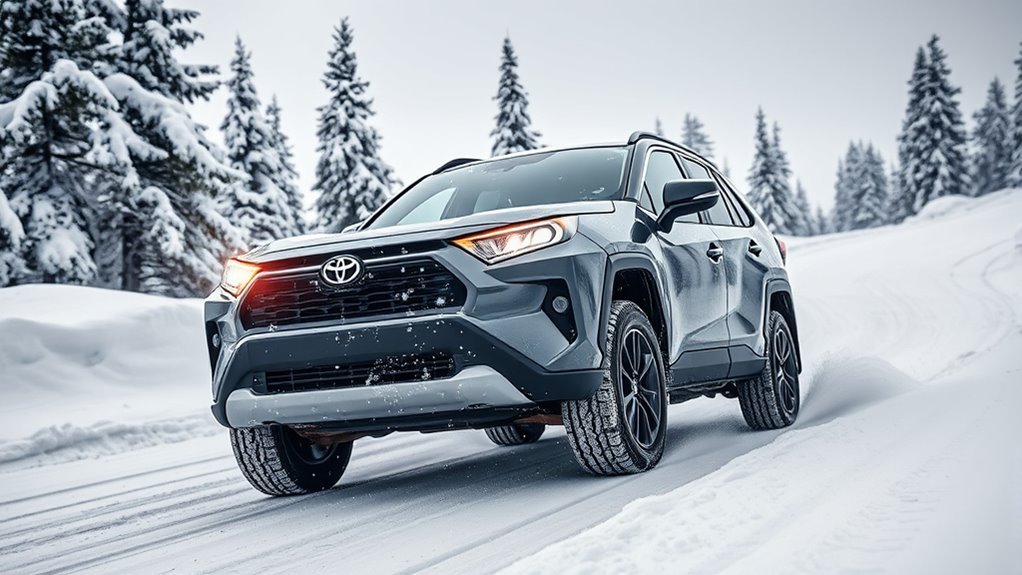
Winter tires can make your Toyota RAV4 safer and easier to control when roads are cold, snowy, slushy, or icy. The biggest benefit is not just “more grip” when you start moving; it is better braking, cornering, and steering response when the pavement is slick. Even with AWD, your RAV4 still depends on four small tire contact patches to stop and turn.
Quick Answer
Yes. Winter tires enhance RAV4 safety in snowy conditions by staying flexible in cold weather and using tread blocks, grooves, and sipes that bite into snow and clear slush. AWD helps your RAV4 get moving, but winter tires are what improve grip for braking, turning, and control.
Key Takeaways
- Winter tires are most useful when temperatures stay near or below 45°F / 7°C, especially on snow, ice, and slush.
- AWD helps with acceleration, but it does not replace the braking and cornering grip of winter tires.
- Choose four matching tires in the correct RAV4 size, load rating, and speed rating listed on your door placard or owner’s manual.
- Look for the three-peak mountain snowflake symbol for tires tested for severe snow service.
- Check pressure, tread depth, and wear regularly because winter traction drops as tires age or wear down.
Why Choose Winter Tires for Your RAV4?

Choose winter tires for your RAV4 if you regularly drive through snow, hard-packed snow, freezing rain, mountain passes, icy intersections, or long stretches of below-freezing weather. Winter tires use rubber compounds that remain more flexible in low temperatures, helping the tread conform to the road surface instead of hardening like many summer and all-season tires.
Transport Canada advises drivers to look for the peaked mountain snowflake symbol and notes that all-season and summer tires begin to lose elasticity below 7°C / 45°F. That matters because a flexible tire can maintain better contact with cold pavement, snow, and ice.
Your RAV4’s AWD system can help distribute power when traction is limited, but the tires still determine how much grip is available. Better tires help your RAV4 steer, brake, and corner more predictably when conditions change quickly.
Warning: Winter tires improve traction, but they do not make ice safe at normal speeds. Slow down, increase following distance, and avoid sudden steering, braking, or acceleration on slick roads.
What Makes Winter Tires Safer Than All-Season Tires?
Winter tires are safer than standard all-season tires in snow and ice because they are built for cold-weather grip. The main differences are the rubber compound, tread depth, siping, and snow-clearing channels.
| Feature | Winter Tires | All-Season Tires |
|---|---|---|
| Cold-weather rubber | Stays more flexible in freezing weather | Can harden as temperatures drop |
| Tread pattern | Deeper grooves and more biting edges | Balanced for year-round use |
| Snow and slush clearing | Designed to move snow, slush, and water away | Less aggressive snow evacuation |
| Best use | Cold regions, snow, ice, mountains, winter commuting | Mild climates with occasional light snow |
[Products Worth Considering]

Milton S-921 pencil tire pressure gauge helps you maintain optimal tire pressure for passenger cars with accurate readings in PSI and kPa. It features a built-in deflator valve for convenient pressure adjustments, plus a single chuck head and nylon indicator bar for easy use on the go. Built from durable plated brass and designed for reliable performance, it’s a practical road trip and cold-weather maintenance tool.

The SAFELIFE dial tire tread depth gauge measures tread depth in 1/32 inch increments with clear, easy-to-read 2-inch dial face. Color zones using a traffic light system help you quickly judge whether tread is low, marginal, or ample for safer driving. Built with a durable zinc cast body and a metal detect probe for precise, comfortable use across cars, motorcycles, trucks, and buses.

Measure tire tread depth quickly and accurately with this LUMITECO dial gauge that reads in 1/32" increments up to 14/32". The color-coded green/yellow/red zones make it easy to judge tire wear and know when replacement is needed. A rugged, compact design with a protective pouch helps keep the gauge ready for use on cars, trucks, motorcycles, and more.
Improved Traction on Snow
Winter tires use more biting edges and deeper channels to grip loose snow, packed snow, and slush. This helps your RAV4 accelerate more smoothly and maintain control when changing lanes, climbing hills, or pulling away from icy intersections.
The three-peak mountain snowflake symbol, often shortened to 3PMSF, is the marking to look for. Tires with this symbol meet specific snow-traction performance requirements for severe snow service. It is a stronger winter-performance indicator than a simple M+S marking.
Shorter Stopping Distances
Independent tire testing has shown that winter tires can stop significantly shorter than all-season tires on snow and ice, but the exact difference depends on the tire model, speed, temperature, surface, tread depth, and vehicle. For example, Tire Rack’s snow testing found a 30-foot stopping-distance difference in a panic stop from 30 mph on packed snow.
The most important winter tire benefit is often not getting started faster; it is stopping and steering with more control when the road is slick.
That difference can matter in real traffic. A shorter stop can be the difference between stopping behind another vehicle and sliding into it. Still, winter tires are not a substitute for slower speeds and longer following distances.
How Winter Tires Improve Traction in Snow and Ice
Winter tires improve traction by combining compound flexibility with a tread pattern that works like thousands of small gripping edges. On snow, the tread can pack and release snow in a controlled way. On slush, grooves help push water and slush away. On ice, siping and softer compounds help create more usable contact with the surface.
Enhanced Grip Mechanics
The tread blocks on winter tires are usually cut with many small slits called sipes. These sipes open slightly as the tire rolls, creating biting edges that grip snow and ice. Wider grooves help channel slush away from the contact patch, reducing the chance that the tire rides on a layer of water or slush.
| Feature | Winter Tires | All-Season Tires |
|---|---|---|
| Rubber flexibility | High in cold weather | Moderate to low in cold weather |
| Tread depth | Typically deeper | Typically shallower |
| Biting edges | Many sipes and grooves | Fewer winter-focused edges |
| Slush control | Stronger evacuation channels | More limited in deep slush |
| Cornering stability | Better on snow and ice | Less predictable in severe winter weather |
Specialized Tread Design
A winter tire’s tread pattern is built to manage snow, ice, slush, and cold rain. Deep grooves help clear slush, while zigzag sipes create more edges that can grab snow and ice. This design helps your RAV4 feel less vague when turning or braking on winter roads.
Winter tread also helps with snow-on-snow traction. Snow can grip snow better than smooth rubber can grip packed snow, so winter tire tread is designed to hold and release snow in a controlled way as the tire rotates.
How Tread Patterns Enhance Winter Tire Performance
Tread pattern matters because winter roads are rarely just one surface. A single commute can include dry cold pavement, wet pavement, slush, loose snow, packed snow, and ice. Winter tires are designed to handle those transitions more predictably than standard all-season tires.
Look for these tread features when choosing RAV4 winter tires:
- Deep circumferential grooves: help move slush and water away from the tire.
- Dense siping: creates small biting edges for snow and ice.
- Open shoulder blocks: help with snow evacuation and cornering grip.
- Directional or V-shaped tread: can improve slush control on some tire models.
- 3PMSF marking: confirms the tire meets severe snow-service traction requirements.
Pro Tip: If your winters include frequent ice, steep hills, or unplowed roads, choose a dedicated winter tire such as a studless ice-and-snow tire. If you only see occasional light snow, a quality 3PMSF all-weather tire may be a reasonable compromise.
Debunking Myths: AWD vs. Winter Tires for Safe Driving
A common RAV4 myth is that AWD replaces the need for winter tires. It does not. AWD can help send power to wheels with more available traction, which helps you get moving from a stop. But AWD does not shorten stopping distance by itself, and it does not create extra grip when the tires are sliding across ice.
Think of AWD as a launch-and-traction-management feature. Think of winter tires as the grip source. For braking, turning, and emergency maneuvers, tire traction matters more than how many wheels are powered.
Toyota’s RAV4 winter driving guidance recommends fitting four snow tires or using tire chains on the front tires where appropriate. Toyota also says all tires should be the same size and brand, and that chains may not be allowed on certain tire sizes, such as 235/55R19 on the 2024 RAV4. Always check your specific owner’s manual before buying chains.
Note: On a RAV4 Hybrid or RAV4 Prime, the AWD system layout is different from some gas AWD models, but the tire rule is the same: all four tires need the right winter grip, size, condition, and pressure.
[Products Worth Considering]

Monitor tire tread wear with a smart, color-coded depth gauge that shows clear condition ranges at a glance. The bar is range marked for fast, easy readings, helping you maintain safer traction and performance. Each gauge is portable with a pocket clip, and the set includes 20 units for daily use and sharing.

Measure tyre tread depth precisely with a digital gauge that reads in both MM and inches, helping you monitor safe driving conditions. The large LCD screen is easy to operate, and the compact tool fits for cars, trucks, and motorcycles. It provides high accuracy with a 0-25.4mm range and includes a 1-year warranty for added peace of mind.

Accurately measure tire tread depth with a calibrated gauge marked from 0 to 1 inch in 1/32 inch increments. The color-coded bar helps you quickly identify tread condition ranges, supporting safe driving for trucks, motorcycles, automobiles, and passenger vehicles.
RAV4 Owners’ Winter Tire Experiences
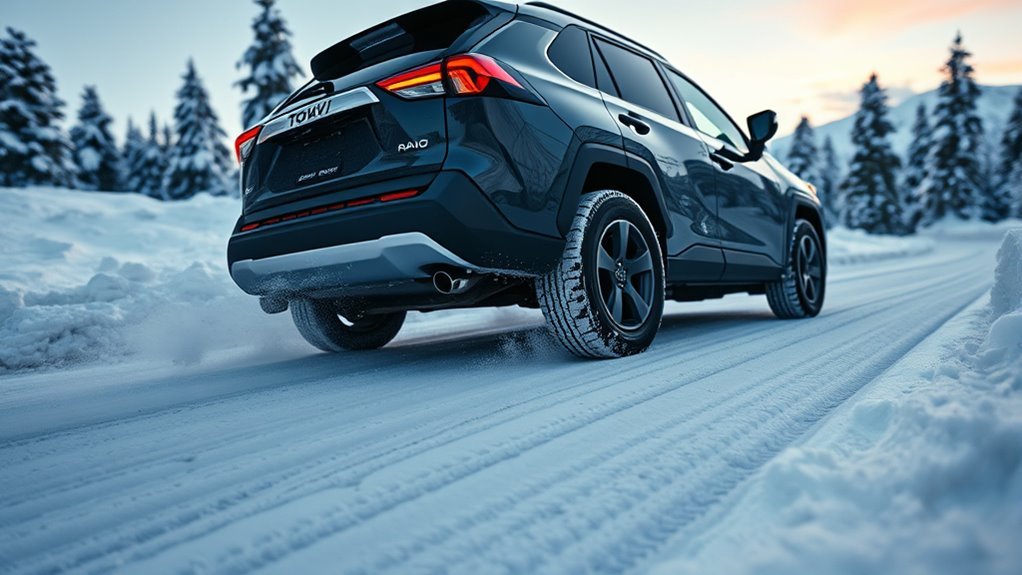
Many RAV4 owners notice the biggest winter tire improvement during braking, hill starts, cornering, and lane changes. The vehicle may feel calmer when roads are packed with snow, and the steering can feel more predictable when crossing slushy ruts.
Owners who drive through mountain passes, lake-effect snow, rural roads, or steep neighborhoods usually benefit most from dedicated winter tires. Drivers in milder climates may prefer 3PMSF all-weather tires because they can stay on the vehicle year-round, but they are still a compromise compared with dedicated winter tires in severe ice and snow.
Popular dedicated winter options for compact SUVs include tires such as the Michelin X-Ice Snow and Nokian Hakkapeliitta R5 SUV. All-weather options such as the Michelin CrossClimate2 can be useful for drivers who want year-round convenience and certified snow capability, but they are not the same as a dedicated winter tire.
Essential Tips for Choosing Winter Tires
Choosing the right winter tires for your RAV4 is not just about picking a well-known brand. You need the correct size, type, rating, and seasonal setup for your driving conditions.
| What to Check | Why It Matters |
|---|---|
| Tire size | Must match your RAV4’s door placard or approved alternate size |
| Load and speed rating | Helps ensure the tire is suitable for your vehicle weight and driving use |
| 3PMSF symbol | Shows the tire meets severe snow-service traction requirements |
| Four matching tires | Protects handling balance and AWD system behavior |
| Tire pressure | Cold weather lowers pressure, which can reduce grip and wear tires unevenly |
[Products Worth Considering]

This tire inflator with pressure gauge delivers long-lasting performance with a durable rubber-protected gauge and sturdy build. The longer hose and 360 swivel air chuck help you seal the valve securely and keep your hands free while measuring, inflating, or deflating. It’s battery-free for reliable use and provides ±2 PSI accuracy in the mid-range for most typical tires, with universal compatibility for 1/4 NPT compressor outputs.

The Continental Grand Prix 5000 is an allround road bike tire engineered for faster rolling, improved ride comfort, and enhanced puncture protection. It features a Vectran Breaker cut-protection layer, Lazer Grip micro-profile tread for confident cornering control, and Active Comfort Technology to damp vibration for smoother rides. BlackChili compound optimizes grip and speed for everyday performance and long-lasting confidence.

Upgrade your Toyota’s wheels with durable aluminum alloy valve stem caps that help protect valve cores from corrosion and direct exposure to road grime, clay, water, and snow. Rubber rings improve sealing to help prevent air leakage and maintain stable tire pressure for safer driving. These caps are easy to install or remove without tools and add a unique, stylish look to your car.
Winter vs. All-Weather vs. All-Season Tires
These tire labels can be confusing, so choose based on your actual winter conditions:
- Dedicated winter tires: best for frequent snow, ice, freezing temperatures, steep roads, and mountain driving.
- All-weather tires: often carry the 3PMSF symbol and can handle light to moderate winter conditions while staying on year-round.
- Standard all-season tires: convenient for mild weather but usually weaker in heavy snow, ice, and prolonged cold.
When to Install Winter Tires
Install winter tires when daily temperatures consistently approach 45°F / 7°C or when snow and ice become likely. Do not wait for the first storm if you rely on your RAV4 for commuting. Tire shops often get busy right after the first forecast of snow.
Remove winter tires when temperatures are consistently warm again. Driving winter tires all summer can wear them faster and reduce warm-weather handling precision.
RAV4 Winter Tire Maintenance Checklist
- Check pressure monthly: tire pressure drops as temperatures fall.
- Inspect tread depth: the legal minimum may be 2/32 inch, but winter traction can fade before that point.
- Rotate on schedule: rotation helps even out wear across all four tires.
- Look for cracks or bulges: cold weather can expose weak or aging rubber.
- Store off-season tires properly: keep them clean, dry, cool, and away from direct sunlight.
- Use four matching tires: avoid mixing winter and all-season tires on a RAV4.
Frequently Asked Questions
Are Toyota RAV4s good in snow and ice?
Yes, a Toyota RAV4 can be good in snow, especially with AWD and the right tires. However, tires are the key factor for braking and cornering. A RAV4 on winter tires will usually feel more controlled in snow and ice than a RAV4 on standard all-season tires.
Do I need winter tires if my RAV4 has AWD?
You may still need winter tires if you drive in frequent snow, ice, or freezing temperatures. AWD helps your RAV4 move forward, but winter tires improve the grip needed to stop, turn, and stay stable on slippery roads.
Can I use two winter tires on a RAV4?
No. Use four matching winter tires. Installing only two winter tires can upset handling balance, especially during braking or cornering. Toyota also recommends using snow tires of the same size and brand.
Are all-weather tires enough for a RAV4 in winter?
All-weather tires with the 3PMSF symbol can work well for mild to moderate winter driving. For regular ice, deep snow, mountain roads, or long cold seasons, dedicated winter tires are the safer choice.
Can I put tire chains on a Toyota RAV4?
Sometimes, but it depends on your model year and tire size. Toyota’s RAV4 guidance says chains go on the front tires when allowed, and some tire sizes cannot use chains. Always check your owner’s manual before buying or installing chains.
Conclusion
Winter tires enhance your RAV4’s safety in snowy conditions by improving the grip your vehicle needs for braking, turning, and staying stable. AWD is helpful, but it cannot replace proper tire traction. For the best winter setup, choose four matching 3PMSF-rated tires in the correct RAV4 size, keep them properly inflated, and drive more slowly when roads are slick.
If your winters are mild, a quality 3PMSF all-weather tire may be enough. If you face regular snow, ice, freezing rain, steep roads, or mountain travel, dedicated winter tires are the better safety investment.
Sources
- NHTSA Winter Driving Tips — winter road safety, crash context, and vehicle preparation.
- Transport Canada: Using Winter Tires — 7°C guidance and three-peak mountain snowflake explanation.
- Toyota 2024 RAV4 Winter Driving Tips — snow tires, chain placement, matching tires, and chain restrictions.
- Tire Rack: All-Season vs. Winter Tire Test — snow braking and handling comparison.
- USTMA TISB 37 Severe Snow Conditions Definition — severe snow-service tire designation background.
- NHTSA TireWise — tire safety, ratings, tread, and maintenance guidance.
