
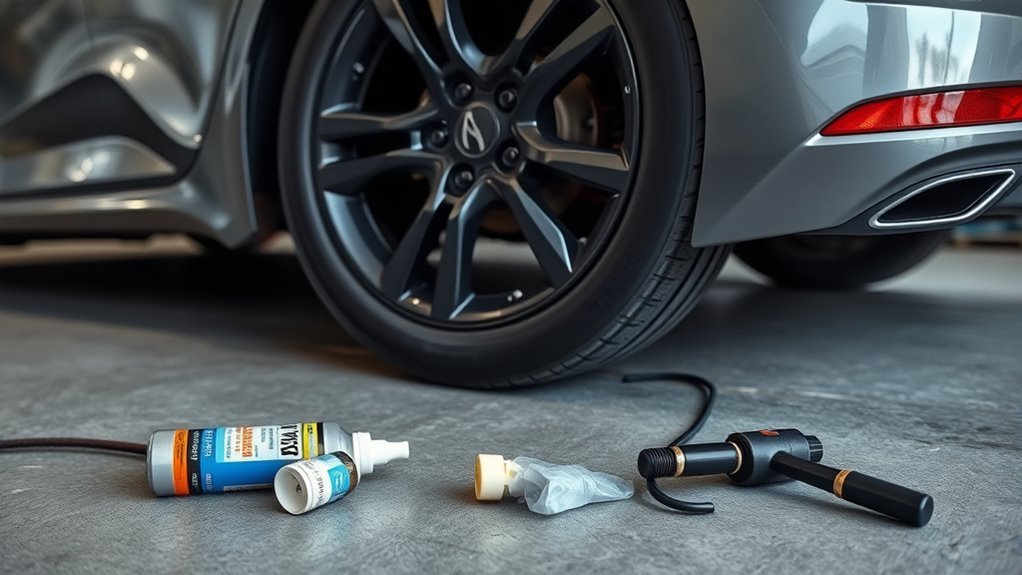
The Hyundai Sonata tire repair kit, also called the Tire Mobility Kit, is meant to help you get mobile after a small tread-area puncture. It is not a full tire repair, and it should not be used for sidewall damage, tire-wall punctures, damaged wheels, severe flat-tire damage, or punctures that are too large for the sealant to hold.
Quick Answer
The Hyundai Sonata tire repair kit is only a temporary aid for small punctures in the tread area. Do not use it for sidewall or tire-wall damage, a damaged wheel, more than one flat tire, severe damage from driving flat, or damage larger than about 0.16 in. (4 mm).
Key Takeaways
- Use the Hyundai Sonata Tire Mobility Kit only for small punctures in the tire tread, such as many nail or screw punctures.
- Do not use the kit on sidewall, shoulder, or tire-wall damage; these areas are not safe for sealant repair.
- Hyundai warns that the kit may not work for tire damage larger than about 0.16 in. (4 mm).
- Do not drive if the tire pressure is below 29 psi (200 kPa) after using the kit.
- Treat the kit as temporary. Have the tire inspected, repaired, or replaced as soon as possible.
At a Glance
| Time Required | About 10–20 minutes to assess the tire, apply sealant, drive to distribute it, and recheck pressure. |
| Difficulty | Easy for a small tread puncture; unsafe for sidewall damage, large punctures, damaged wheels, or traffic-heavy roadside conditions. |
| Tools Needed | Hyundai Tire Mobility Kit, sealant bottle, compressor, tire pressure gauge, flashlight, gloves, and a phone for roadside assistance. |
| Cost | Usually $0 if your kit is stocked and the sealant is not expired; professional repair or replacement cost varies by tire and shop. |
When to Use the Hyundai Sonata Tire Repair Kit
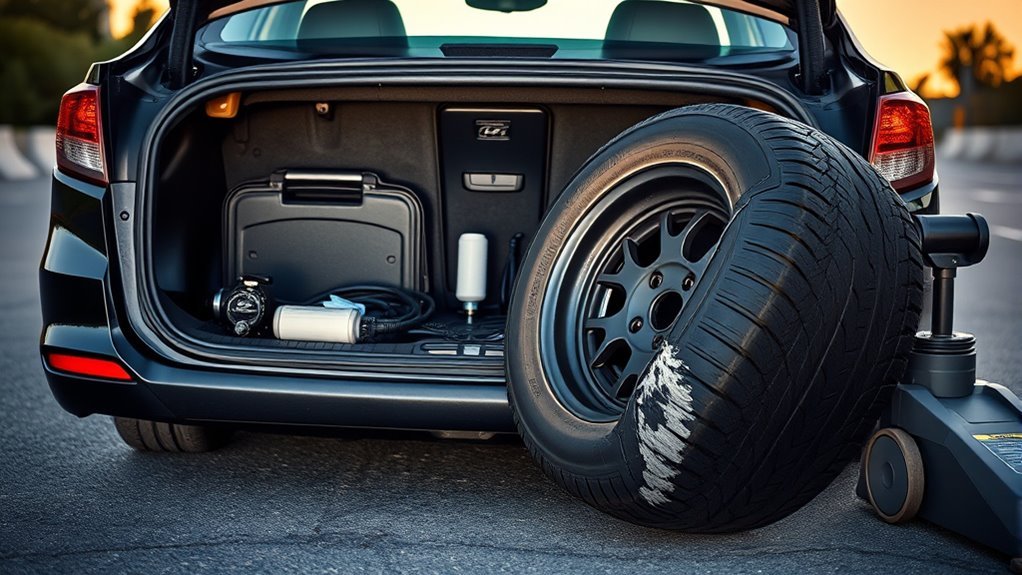
Use the Hyundai Sonata tire repair kit only when the puncture appears to be in the tread area and the tire can still be inflated enough to hold pressure. This kit is designed for small punctures caused by objects like nails or screws, not for torn rubber, tire-wall damage, or a crushed sidewall.
Hyundai’s official Tire Mobility Kit guidance says only punctured areas in the tread region can be sealed with the kit, and the kit may not be effective for tire damage larger than about 0.16 in. (4 mm). Before using it, park away from traffic, set the parking brake, and check the tire and wheel for obvious damage.
Pro Tip: If the puncturing object is still in the tread, do not pull it out on the roadside. Hyundai’s kit instructions advise leaving nails or screws in place so the sealant has a better chance of working temporarily.
After attaching the sealant and compressor, follow the sequence in your owner’s manual. Hyundai’s online manual says to run the compressor for about 5–7 minutes, avoid running it more than 10 minutes, then recheck and correct the pressure after driving a short distance to distribute the sealant.
Common Scenarios Where the Kit Isn’t Enough
The kit is not enough when the tire damage affects the tire’s structure, the puncture is outside the tread, the tire will not hold air, or the sealant is expired. In those cases, the safer move is to stop driving and arrange roadside assistance, towing, professional tire repair, or tire replacement.
Warning: Do not try to use the kit while parked in an unsafe lane, on a narrow shoulder, or near fast traffic. Move to a safe location if possible, turn on hazard lights, and call roadside assistance if you cannot work away from traffic.
[Products Worth Considering]

TireJect Off-Road Tire Sealant Kit provides 5-in-1 sealing to help fix tread punctures up to 3/8", sidewall punctures up to 3/8", bead leaks, slow leaks, and minor dry rot on low-speed tires. It permanently seals with liquid rubber, recycled tire particles, and Aramid fibers, making it ideal for flats caused by thorns, nails, and screws. The included dispensing cap attaches to the valve stem for a no-mess installation, along with a metal valve core remover tool and valve stem cap. This kit is for off-road use only.

This tire repair screw plug kit includes 60 pieces in two sizes to help you fix punctures quickly on the road. Choose the right screw by puncture size, then drive it in with a screwdriver for an effective seal without needing a flaring tool. The coated screws help prevent leaks and are designed for convenient emergency use across cars, trucks, ATVs, motorcycles, and bicycles.

This AUTOWN flat tire repair kit is designed for quick, reliable puncture repairs using a plug kit and spiral probe tool to simplify installation. Built for durability and safe handling, it offers strong adhesion and flexibility to help maintain tire air tightness. With a portable storage case and a multi-vehicle approach, it’s suitable for cars, motorcycles, ATVs, tractors, lawn mowers, RVs, jeeps, and trucks.
Sidewall, Shoulder, or Tire-Wall Damage
Sidewall damage is one of the clearest signs that the Hyundai Sonata tire repair kit is not the right solution. The sidewall flexes constantly and carries load in a different way than the tread. Sealant cannot restore the tire’s internal structure, and Hyundai warns not to use the Tire Mobility Kit for punctures in the tire walls.
The same caution applies to the shoulder area, where the tread curves toward the sidewall. Tire-industry repair guidance limits proper puncture repairs to the repairable tread area. Damage that reaches the shoulder or sidewall should be treated as non-repairable and handled with tire replacement.
Large Puncture Limitations
The original article’s “¼ inch” rule needs a distinction. For the Hyundai Tire Mobility Kit, the practical sealant limit is stricter: Hyundai says the kit may not work for damage larger than about 0.16 in. (4 mm). A separate industry repair rule says professional repairs should not be made on tread punctures larger than ¼ in. (6 mm).
That means a puncture can be too large for the Hyundai kit even if it might still need a technician’s inspection to decide whether a professional repair is possible. Do not assume the sealant will work just because a hole looks smaller than ¼ inch.
Multiple Punctures, Old Repairs, or Severe Damage
The kit also is not enough if there are multiple close punctures, two or more flat tires, damage near an old repair, or a tire that has been driven while flat. Hyundai notes that the kit is for one flat tire, and industry guidance says repairs cannot overlap. If the tire was driven with little or no air, the inside may be damaged even when the outside looks manageable.
- Two flat tires: Do not use the kit; the provided sealant is for one tire.
- Damaged wheel or rim: Do not use the kit because the tire may not seal safely.
- Bulge, cut, split, or exposed cords: Treat the tire as unsafe and replace it.
- Expired sealant: Do not use old sealant; Hyundai warns expired sealant can increase the risk of tire failure.
Sealant Limitations for Sidewall Damage
Tire sealant is a temporary mobility aid, not a structural repair. It can help close a small tread puncture long enough to reach service, but it cannot rebuild damaged sidewall cords, fix a torn shoulder, repair a bent rim, or make a tire safe after internal heat damage from driving flat.
[Products Worth Considering]
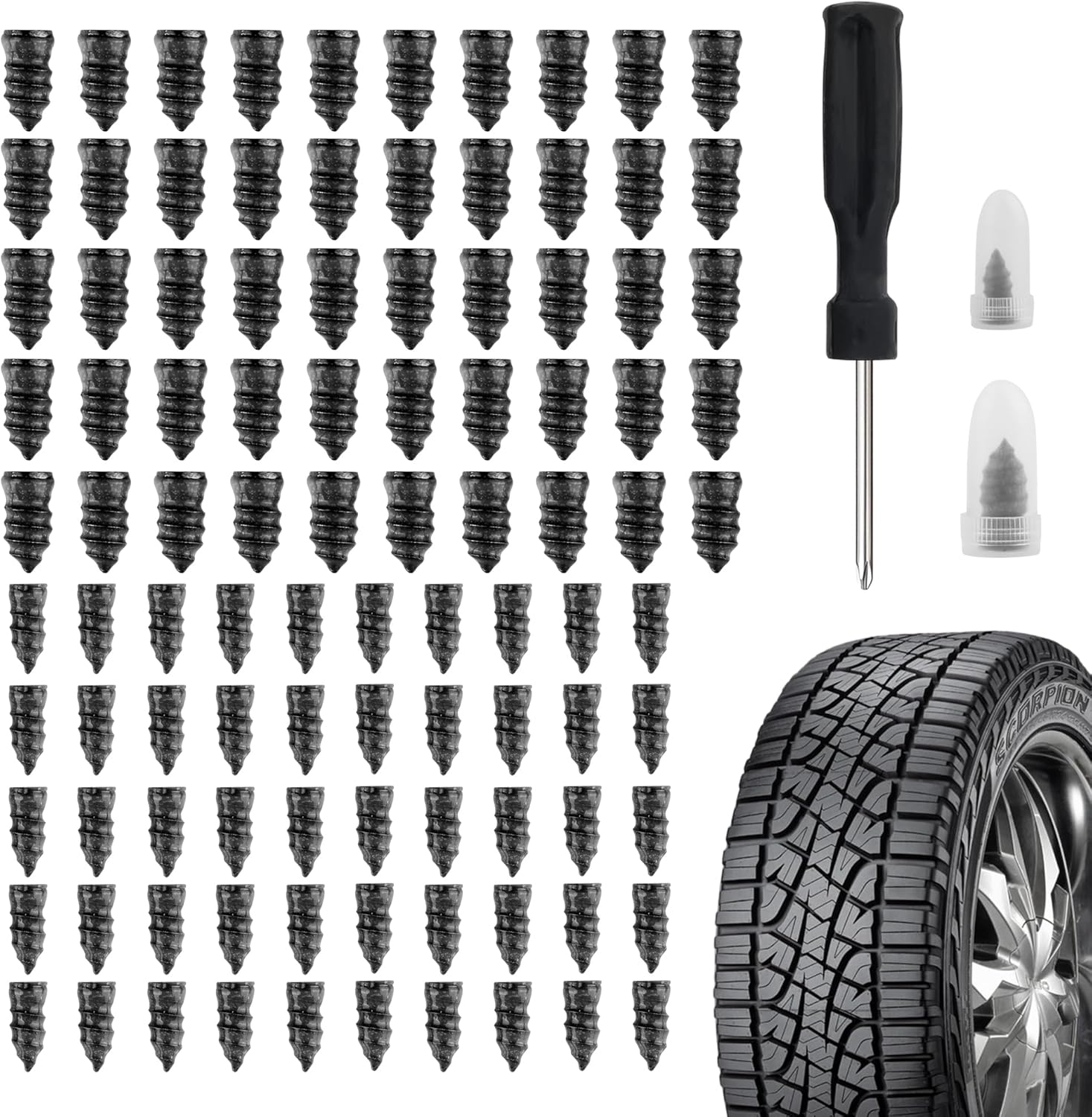
Salior’s tire plug kit provides a fast, reliable self-service fix for punctured or leaking tires without the need for flaring tools. Choose the correct plug size, then screw the nail into the puncture using the included screwdriver for an enhanced seal. The set is durable and convenient for on-the-go maintenance across multiple vehicle types.
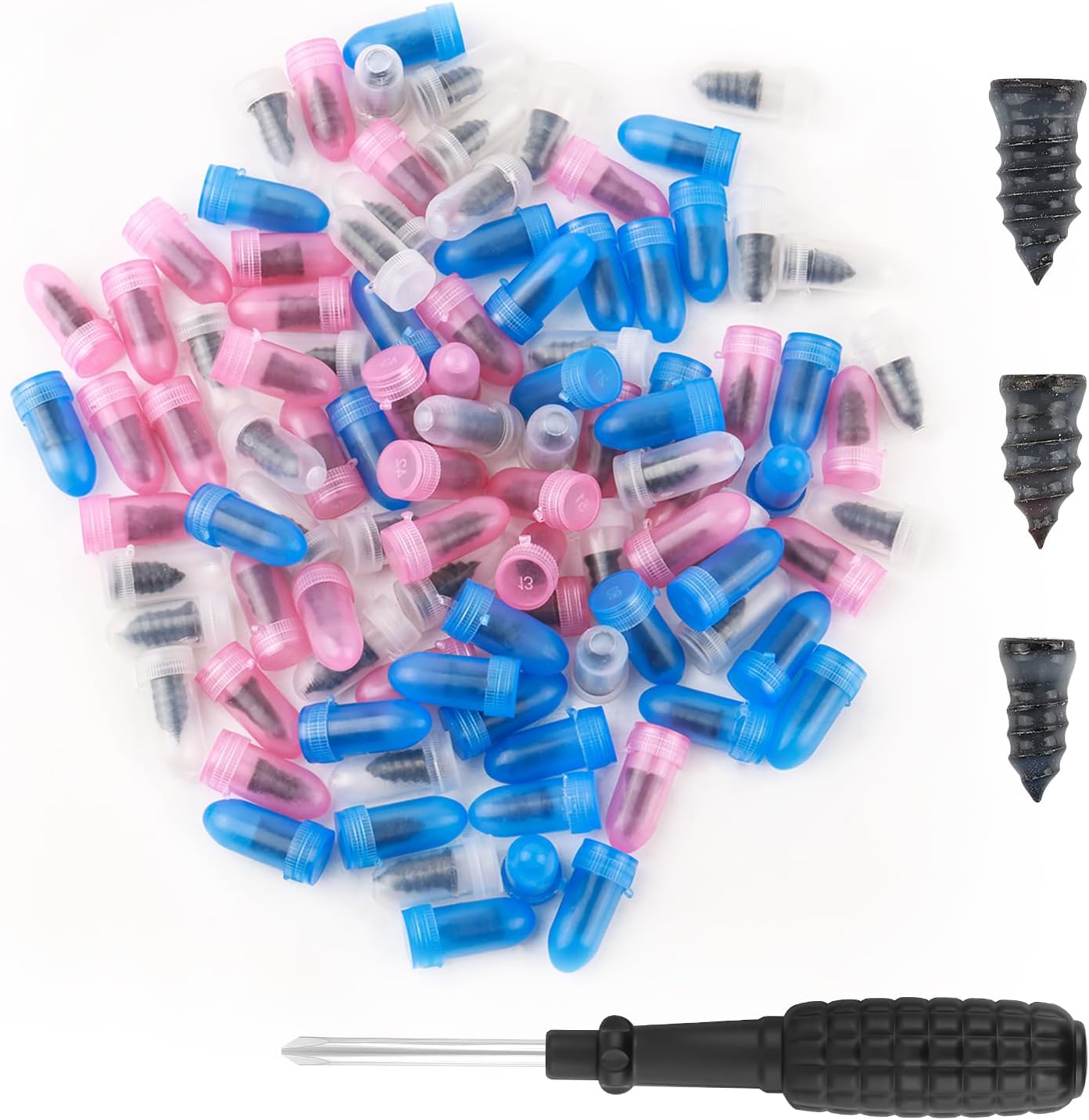
This 100-piece tire repair screw plug kit provides a fast, self-service solution for punctures on the road. Choose the correct plug size, insert it into the break, and screw it in to help seal the puncture and temporarily restore tire pressure. Thickened threads and rubber-wrapped plugs improve bite and sealing while remaining compact and easy to carry.

LiQuiTube Premium Heavy Duty Tire Sealant provides permanent flat tire protection to help maintain proper air pressure while sealing punctures and leaks. It seals bead, rim, and porosity weathering leaks and helps prevent flats in heavy ply industrial tires. Designed for versatile use on trailers and off-road equipment, it can be installed in tubeless tires and also inside tubes.
Risks of Sidewall Punctures
Sidewall punctures are risky because the sidewall bends with every wheel rotation. A sealant plug in that area can fail suddenly, and the tire can lose air again after inflation. Hyundai specifically warns that tire-wall punctures can result in an accident due to tire failure.
- Do not inflate and continue driving if the sidewall is torn, bulging, or visibly cut.
- Do not rely on sealant for tire-wall punctures, shoulder damage, or bead leaks.
- Do not continue if pressure drops after using the kit.
- Call for towing when the tire cannot be made roadworthy.
Temporary vs. Permanent Solutions
A Hyundai Tire Mobility Kit can help you reach a safer place or a service shop, but it should not be treated as a permanent tire repair. A proper professional tire repair requires removing the tire from the wheel, inspecting the inside for hidden damage, filling the puncture path, and sealing the inner liner with a proper repair unit.
| Issue Type | Kit Effectiveness | Recommended Action |
|---|---|---|
| Small tread puncture | May work temporarily | Use kit, recheck pressure, visit a tire shop |
| Sidewall or tire-wall damage | Not safe to use | Replace the tire or tow the vehicle |
| Damage larger than about 0.16 in. / 4 mm | May not seal | Call for service or professional inspection |
| Damaged wheel or tire bead leak | Unreliable | Tow to a repair facility |
| Plug-only roadside repair | Emergency-only | Get a proper internal inspection and repair |
The Dangers of Repairing Large Punctures
A large puncture is dangerous because the tire may lose pressure again after inflation. Even if sealant slows the leak, it may not seal the full injury path or protect the tire’s internal belts and liner. That is why Hyundai sets a small-damage limit for the kit and why tire-industry guidance limits proper repairs to tread-area punctures that meet size and location rules.
Do not keep driving on a tire that repeatedly drops pressure after sealant use. Pull over safely, turn on hazard lights, and call for towing or roadside service. Continuing to drive on a poorly sealed tire can damage the tire, wheel, suspension, and steering parts.
A tire repair kit buys time; it does not turn a damaged tire into a fully repaired tire.
What Happens If You Drive on a Flat Tire?
Driving on a flat tire can turn a repairable puncture into a tire replacement. When a tire has little or no air, the sidewall can be crushed between the road and the wheel. Heat builds quickly, the inner liner can be damaged, and the wheel rim may bend or scrape.
You may also lose steering control because the flat tire cannot support the car normally. If the Sonata pulls hard to one side, vibrates, makes grinding noises, or feels unstable, slow down carefully and stop in the safest available location. Do not drive farther just to test whether the tire will hold.
Why Regular Tire Checks Matter
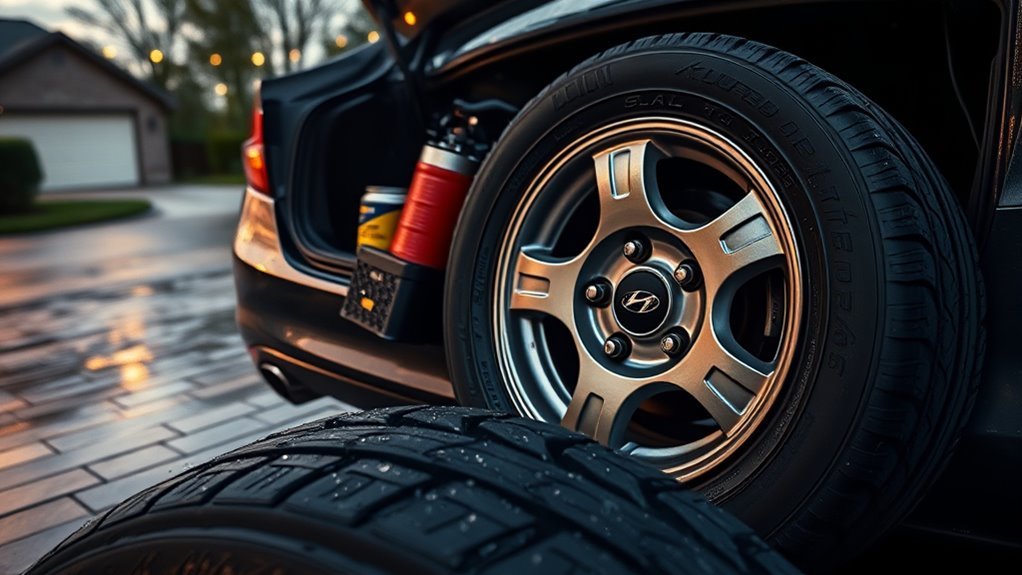
Regular tire checks help prevent roadside emergencies and make it easier to spot damage before it becomes dangerous. The National Highway Traffic Safety Administration recommends checking tire pressure at least once a month when tires are cold, including the spare if your vehicle has one.
- Check pressure monthly: Use the pressure listed on the driver-side door placard or in the owner’s manual, not the maximum pressure printed on the tire.
- Inspect tread and sidewalls: Look for cracks, bulges, cuts, embedded objects, uneven wear, or exposed cords.
- Check before long trips: Heat, heavy loads, and highway speeds make low tire pressure more dangerous.
- Know your emergency equipment: Confirm whether your Sonata has a Tire Mobility Kit, spare tire, jack, wheel lock key, or roadside assistance coverage.
- Check sealant expiration: Replace expired sealant before you need it in an emergency.
Note: A TPMS warning is helpful, but it is not a substitute for monthly tire-pressure checks. Some systems warn only after a tire is already significantly underinflated.
What to Do If the Repair Kit Fails
If the Hyundai Sonata tire repair kit fails, do not keep adding sealant and driving. A failed kit usually means the puncture is too large, the damage is outside the tread, the wheel is damaged, the tire has internal damage, or the sealant cannot hold pressure.
- Stop in a safe place. Turn on hazard lights and move away from traffic if possible.
- Check the pressure. If the tire is below 29 psi (200 kPa), Hyundai says not to drive because sudden tire failure can occur.
- Look for disqualifying damage. Do not use the kit for sidewall damage, tire-wall punctures, damaged wheels, severe cuts, bulges, or two flat tires.
- Call roadside assistance or towing. This is the safest choice when the tire will not hold air.
- Tell the shop sealant was used. Sealant may need to be cleaned from the wheel and tire pressure sensor during inspection or replacement.
- Ask for a proper repair assessment. A safe repair requires demounting the tire and inspecting the inside, not just plugging it from the outside.
If you keep a plug kit in the trunk, treat it as emergency-only. A plug-only roadside repair is not a proper permanent repair. Use it only to reach safety when appropriate, then have a trained tire technician inspect and repair or replace the tire.
[Products Worth Considering]

This tire repair kit provides fast emergency puncture repair without removing the tire from the rim, helping you get back on the road quickly. Its screw plug system is designed for punctures in both tread and sidewall and includes a complete patch plug tool set with essential accessories. A portable storage bag makes it easy to carry for cars, trucks, SUVs, motorcycles, and heavy-duty applications.

AUTOWN’s 68-piece tire repair kit helps you fix punctures and plug flats quickly and effectively. It includes a T-handle and spiral probe tool for easy insertion, while the steel patch and plug materials are designed for strong adhesion and long-lasting airtight performance. The compact case makes it convenient for roadside repairs across a wide range of vehicles.

This self-service tire repair nail kit includes 60 pieces (30 small + 30 large) to help seal punctures quickly without needing an auto shop visit. The nails are designed to fit different hole sizes and provide a tight connection with sealing glue to help prevent air and water intrusion. Suitable for cars, motorcycles, trucks, and other vehicles, it’s an easy, efficient way to patch roadside tire damage.
Frequently Asked Questions
What is the limit for tire puncture repair?
For the Hyundai Sonata Tire Mobility Kit, Hyundai says the kit may not be effective for damage larger than about 0.16 in. (4 mm). For a professional tire repair, industry guidance generally limits repairs to punctures no larger than ¼ in. (6 mm), located in the repairable tread area, after the tire is removed from the wheel and inspected inside.
Is a tire mobility kit a permanent fix?
No. A tire mobility kit is a temporary fix that can help you reach a safer location or a tire shop. Hyundai recommends having the tire inspected, repaired, or replaced as soon as possible after using the kit.
What tire damage cannot be repaired?
Sidewall damage, shoulder damage, tire-wall punctures, exposed cords, bulges, severe cuts, overlapping punctures, and damage from driving flat are generally not repairable. A professional tire technician should inspect the tire before deciding whether repair is safe.
Can I drive after using the Hyundai Sonata tire repair kit?
Only drive if the tire can be inflated safely and holds pressure. Hyundai says not to drive if the pressure is below 29 psi (200 kPa). After applying sealant, drive about 4–6 miles (7–10 km) to distribute it, stay under 50 mph (80 km/h), then stop safely and recheck pressure.
Can the kit fix two flat tires?
No. Hyundai notes that the Tire Mobility Kit sealant is meant for one flat tire. If two or more tires are flat, call roadside assistance or towing instead of trying to split the sealant between tires.
Conclusion
The Hyundai Sonata tire repair kit is useful for a narrow job: a small puncture in the tread area that can hold air long enough to reach service. It is not enough for sidewall damage, tire-wall punctures, damaged wheels, large punctures, multiple flats, expired sealant, or a tire damaged from being driven flat.
Use the kit carefully, respect Hyundai’s pressure and speed limits, and treat the result as temporary. If the tire will not hold at least 29 psi, the damage is outside the tread, or the car feels unstable, stop driving and call for help. Your safest repair is the one confirmed by a trained tire technician after the tire is removed and inspected.
Sources
- Hyundai Owner’s Manual — Using the Tire Mobility Kit when a tire is flat — backs up the 29 psi minimum, 4–6 mile sealant distribution drive, 50 mph limit, compressor guidance, and 0.16 in. / 4 mm limit.
- Hyundai Owner’s Manual — Notes on the safe use of the Tire Mobility Kit — backs up tread-region-only use, expired sealant warnings, and sealant exposure precautions.
- Hyundai Owner’s Manual — If you have a flat tire with Tire Mobility Kit — backs up that the kit is temporary, not for tire-wall punctures, and for one flat tire only.
- Tire Industry Association — Tire Repair — backs up professional repair requirements, sidewall/shoulder limitations, and why sealants are not long-term repairs.
- U.S. Tire Manufacturers Association — Tire Repair Basics — backs up tread-area repair limits, ¼ in. / 6 mm professional repair guidance, and the need for internal inspection.
- NHTSA TireWise — Tire Safety Ratings and Awareness — backs up monthly cold tire-pressure checks, tire maintenance safety, and tire-related crash context.

