
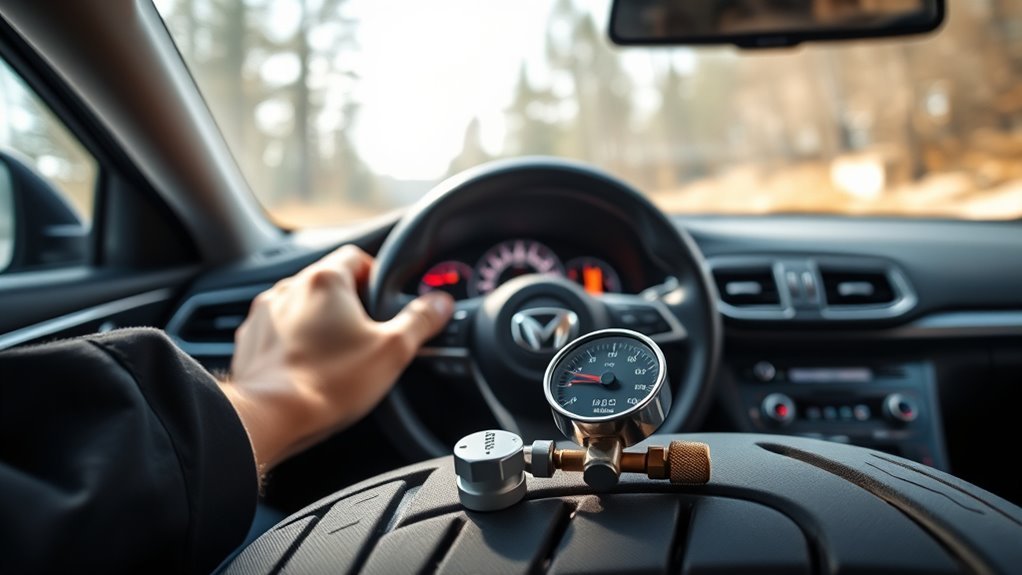
Check and inflate all tires (and spare) to the manufacturer’s recommended PSI using a cold gauge, then try a reset. If your car has a TPMS reset button, hold it until the light blinks, then drive 10–20 minutes at 20+ mph to let the system relearn. For cars with infotainment, go to Settings → Vehicle → TPMS calibration. If the light stays on, inspect for leaks, check the sensor battery, or get a diagnostic scan. Read on for brand-specific steps and troubleshooting tips.
Quick Answer: How to Reset the Tire Pressure/TPMS Light

First, inflate all tires to the recommended PSI printed on the driver’s door jamb or in the owner’s manual. Then find the TPMS reset button (usually under the steering wheel or in the glove box), press and hold it until the light blinks three times, and release. Drive for 10–15 minutes at 20+ mph to let the system recalibrate.
If the light stays on after that, you likely have a faulty sensor, a dead sensor battery, or a slow leak that needs attention. A diagnostic scan at a shop can pinpoint the problem quickly.
Check and Inflate Tires to the Correct PSI
Find the recommended PSI on the sticker inside the driver’s door jamb or in your owner’s manual. Always check pressures when the tires are cold for an accurate reading.
Use a reliable gauge to check all four tires and the spare. Write down the values, then inflate with an air compressor to the specified PSI.
Check tire pressure monthly and before long trips. Temperature swings affect pressure and can trigger the TPMS light. If a tire keeps losing air, inspect it for punctures or damage and repair or replace as needed.
| Tire | Action |
|---|---|
| Front Left | Measure/Inflate |
| Front Right | Measure/Inflate |
| Rear Left | Measure/Inflate |
| Rear Right | Measure/Inflate |
[Products Worth Considering]

Masoll Gen 2 external TPMS sensors are a DIY replacement set of 4 for select GM vehicles made after 2006, helping you shut off the TPMS warning light quickly. Simply screw the sensors onto the tire valves and sync to your car ECU using the included EL-50448 relearn tool. Dual-frequency 315/433 MHz design provides OEM-level performance with accurate readings and replaceable batteries for about two years.

This TPMS sensor training and relearn reset tool is customized for Ford, Lincoln, and Mercury vehicles to help activate tire pressure programming after sensor replacement or tire rotation. It can activate individual tire pressure sensors with one-button operation, helping prevent TPMS warning light illumination. It is not a sensor programming tool and cannot program replacement sensors—use it to trigger/activate sensors only.
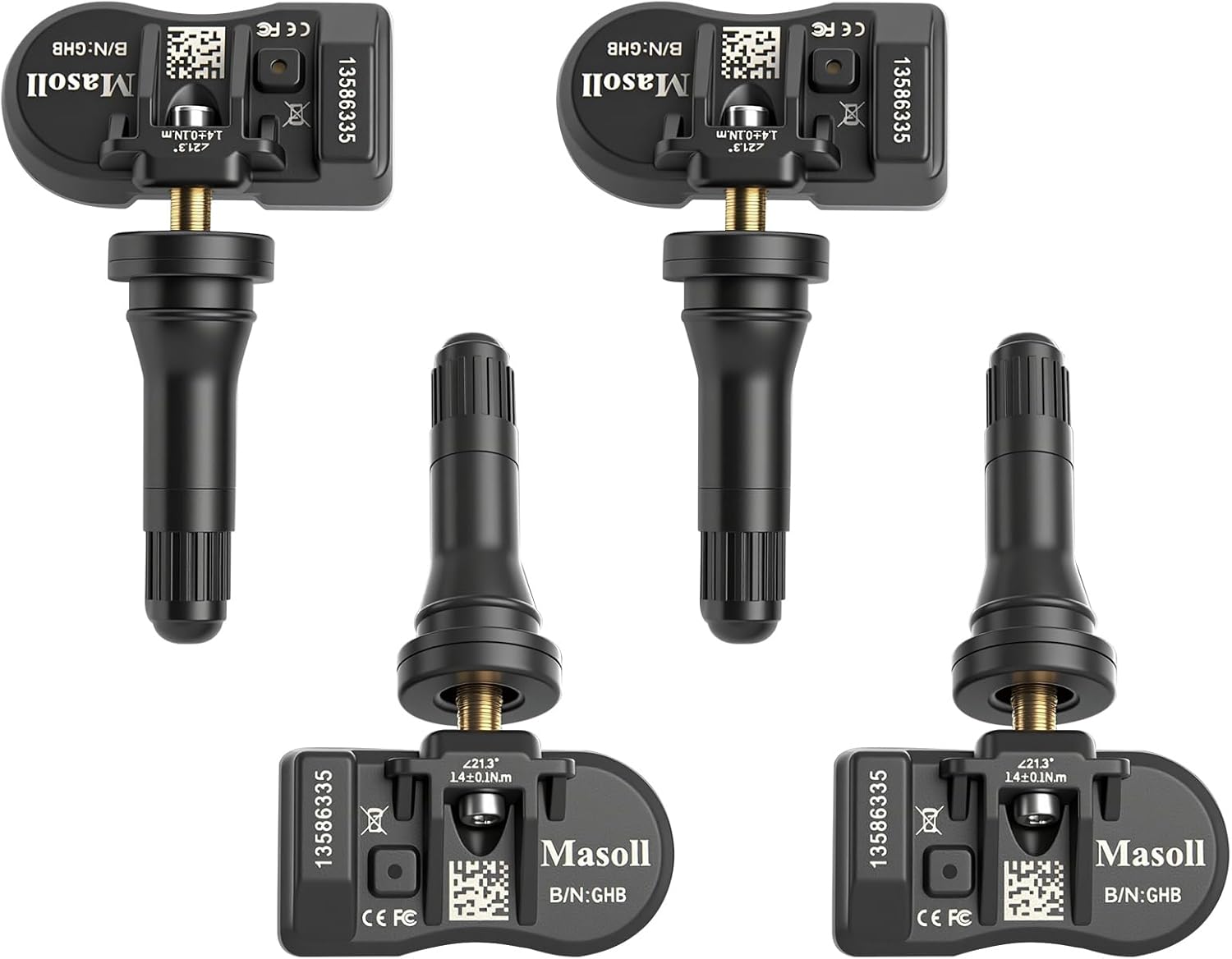
Masoll TPMS sensors are designed for most GM vehicles after 2006, helping you clear tire pressure warnings with OEM-level 315/433MHz compatibility. The 4-pack includes pre-programmed sensors, but re-learning is required after installation using a GM TPMS relearn tool or scan tool. Built with a dual-antenna design and a long-life CR2050 battery, these sensors deliver reliable performance in extreme temperatures with corrosion-resistant valve construction.
Universal Reset Methods (Button, Touchscreen, Drive)
If the TPMS light stays on after you correct tire pressures, try one of these three common reset methods:
- Button Reset: Find the TPMS reset button (under the steering wheel or in the glove box). Hold it until the light blinks three times, then release. This is the standard method on many older vehicles.
- Touchscreen Calibration: On vehicles with infotainment systems, open Settings → Vehicle → TPMS calibration and follow the on-screen steps to trigger a relearn.
- Driving Method: Inflate tires to the correct cold pressures, then drive for 10–15 minutes at 20 mph or faster. Many systems recalibrate automatically during this process.
- Verification: After any reset, recheck cold tire pressures and confirm the light is off. Consult the owner’s manual for model-specific steps and recommended PSI.
[Products Worth Considering]

Autel MX TPMS sensors combine 315MHz and 433MHz in a single easy-to-install press-in design for faster tire service. They support wireless programming with strong signal performance, and the sensors are clone-able for streamlined replacement. Built for reliability and tested to SAE standards, each sensor includes a series number for quality control.

The VEHLIVE SU-50448 II TPMS relearn tool provides a fast activation reset to restore accurate tire pressure monitoring after sensor replacement or tire rotation. It supports 315 MHz and 433 MHz GM series sensors and helps clear dashboard pressure warnings. With simple two-button operation and horn-confirmed relearning order, you can reprogram sensors conveniently at home.

Replace your worn or missing TPMS sensors with pre-programmed, direct-fit sensors for compatible Ford, Lincoln, and select Mazda models. Each sensor comes ready to activate with a scan tool, helping restore accurate tire pressure monitoring and trouble-free installation. Built with a long-life CR2032 battery and tested before factory release, this set provides dependable performance with a one-year warranty.
Ford: How to Reset the Tire Pressure/TPMS Light

If your Ford’s TPMS light stays on after correcting tire pressures, start by finding the TPMS reset button, usually located under the steering wheel or in the glove box. Turn the ignition to On without starting the engine, then press and hold the button until the light flashes three times. Release and let go.
Make sure all tires match the recommended PSI before you start. Incorrect pressure will prevent the system from recalibrating properly. After releasing the button, drive for 10–15 minutes at 20+ mph to finish the sensor relearn.
Check PSI regularly, inspect sensors during tire service, and replace weak batteries or damaged valve stems before they cause problems. If the light comes back on, that usually points to a sensor failure or a wiring fault. A shop with a diagnostic scanner can identify the issue quickly.
Honda: How to Reset the Tire Pressure/TPMS Light
Start by setting all tires (including the spare, on applicable models) to the manufacturer’s recommended pressure, typically 32–36 PSI for most Honda vehicles. Then follow the steps below based on your model.
- For touchscreen Hondas: turn the ignition to ON, go to Settings > Vehicle, and tap TPMS Calibration.
- For non-touchscreen Hondas: find the TPMS button under the dash, press and hold it until the light blinks twice, then start the car.
- Drive for 10–20 minutes at moderate speed so the system can relearn the current pressures.
- If the light stays on, have the sensors and wiring inspected. You may need a sensor replacement, either OEM or aftermarket.
If the Light Stays On: Diagnose Sensors, Leaks, and Cold-Weather Drops
If the TPMS light stays on after you’ve corrected pressure, the problem is usually one of three things: a slow leak, a bad sensor, or a temperature-related pressure drop.
Check each tire for embedded punctures or slow leaks that bleed air gradually over a few days. Inspect the valve stems and run a soapy-water test to spot any escaping air. Also keep in mind that temperature drops lower pressure by about 1 PSI for every 10°F, so cold weather alone can trigger the light. Recheck pressures on a cold morning before assuming a sensor has failed.
[Products Worth Considering]

Replace worn or malfunctioning GM TPMS sensors with this 433MHz pre-programmed sensor set designed for compatibility with many Chevrolet, Buick, GMC, and Cadillac models. It includes guidance for proper OBDII relearning/pairing after installation and supports reliable long-term operation with a high-performance CR2032 battery. Quality tested for durability and performance to help restore accurate tire pressure monitoring.
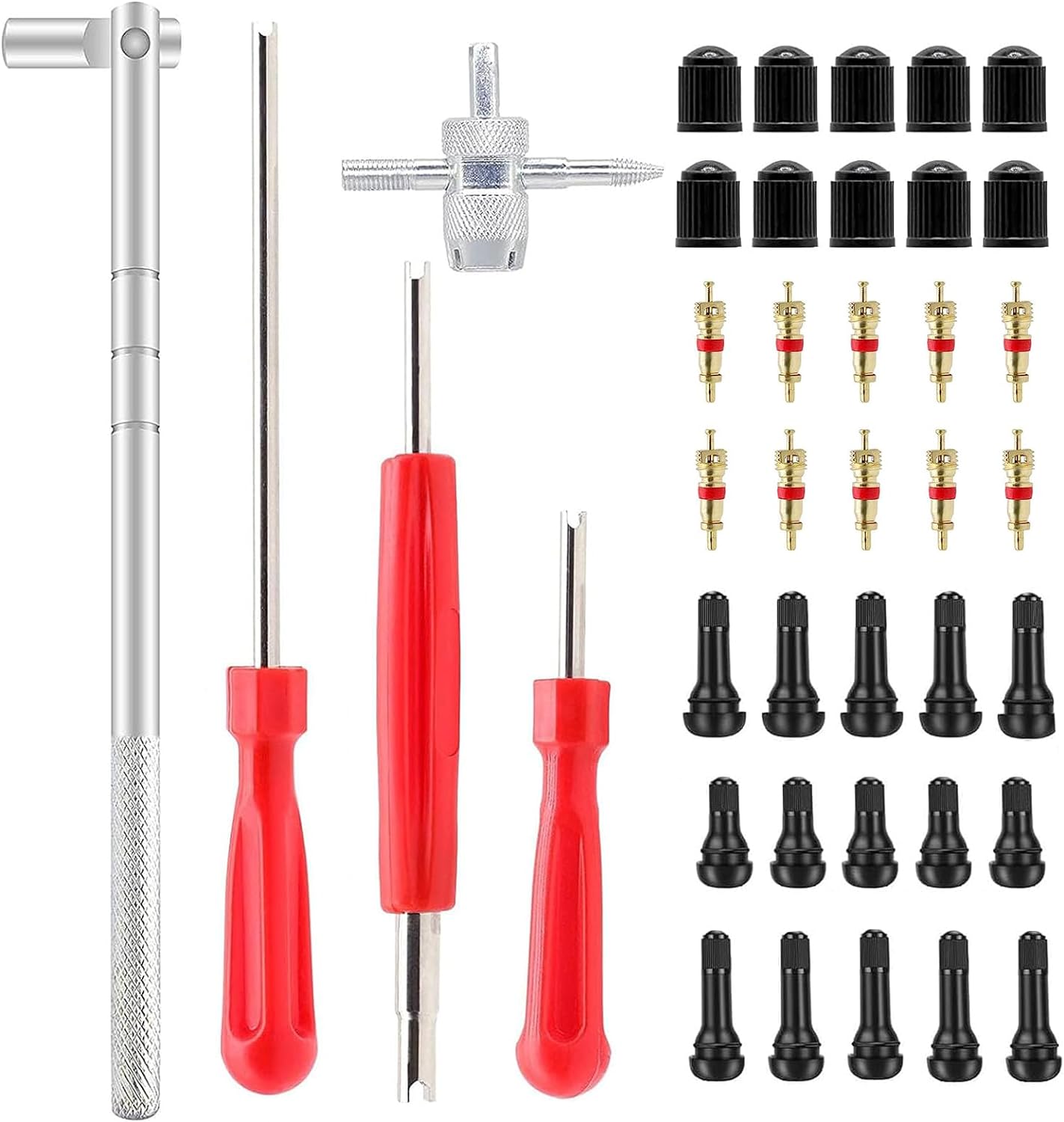
This ZHSMS valve stem puller and installer tool set makes it easy to remove and install tire valve stems without damaging wheels or valves. It uses a leverage design to save effort and includes valve stem tools plus removable valve core functionality for quick tire repairs. Compatible with tubeless tires for passenger cars, motorcycles, ATVs, off-road vehicles, and trucks.

This TPMS relearn tool helps you quickly activate, match, and reset GM tire pressure sensors to keep the vehicle monitoring system working properly. It clears tire pressure alarms and dashboard warning lights after sensor replacement or tire rotation, and supports learning for common 315/433 MHz TPMS sensors. Designed for simple one-button operation, it can help you avoid unnecessary trips to repair shops.
Check For Slow Leaks
Visually inspect each tire for cuts, punctures, or sidewall damage. Then apply soapy water to the valve cores, tread, and bead area and watch for steady bubbling.
- Measure pressure on all tires with a gauge. Compare to the manufacturer’s PSI and record any deviations.
- Apply soapy water to valve stems, around the rim, and any suspected puncture spots. Bubbles indicate a leak.
- Recheck pressures after the car sits overnight and again after driving. Note how much PSI is lost over time.
- If the loss tracks with temperature drops (about 1 PSI per 10°F), it may not be a leak at all. If unexplained pressure loss continues, get a professional diagnostic.
Inspect TPMS Sensors
Start by confirming each tire’s pressure with a reliable gauge and check for any visible damage. Rule out temperature-related drops before assuming a sensor is at fault.
If pressures are correct and the light is still on, examine the valve stems and rim seals for leaks. Apply soapy water to find slow punctures.
Next, use a TPMS diagnostic tool to check each sensor’s ID, battery status, and signal strength. Log what you find. If a sensor shows a dead battery or no signal, you’ll need to decide between OEM and aftermarket replacement. Have a technician program and balance the new unit to avoid false alerts down the road.
When to Get Professional Help and What to Expect
If the TPMS light stays on after you’ve checked and adjusted pressures, get a professional diagnostic. A light that won’t clear usually means a faulty sensor or a system-level problem. Shops use dedicated TPMS tools to read sensor IDs, identify dead batteries, and handle recalibration after tire rotations.
Here’s what a typical service visit covers:
-
- A diagnostic scan to read TPMS codes and sensor IDs.
- A physical inspection of valves, sensors, and tire condition.
- A sensor battery test, plus replacement or resealing if needed.
- Relearn and recalibration of the TPMS system, followed by a test drive.
You’ll receive a report and a cost estimate before any work begins. Regular professional inspections help prevent repeat warnings and keep the system working reliably.
Frequently Asked Questions
Is Resetting TPMS the Same for All Cars?
No. The procedure varies by make and model. Some vehicles use a reset button, others use a dashboard menu, and some require a short drive to recalibrate automatically. If the standard steps don’t work, check your owner’s manual or have a technician run a diagnostic scan.
Can I Reprogram TPMS Sensors Myself?
On some vehicles, yes. DIY programming is possible with the right tool, but sensor compatibility varies widely. Check your owner’s manual first. If the self-programming steps fail, a shop with professional TPMS equipment can handle it quickly.
Conclusion
The TPMS light is straightforward to handle in most cases. Correct the tire pressures, use your car’s reset button or touchscreen, or take a short drive to let the system recalibrate. If the light stays on, look for a slow leak, a dead sensor battery, or a cold-weather pressure drop. Address those first before spending money on parts. And if nothing clears it, a professional diagnostic will point you to the exact cause so you can fix it right the first time.

