Patching a tire on your Honda Accord can help you handle a small tread puncture, but only when the damage is truly repairable. A tire plug kit can get you moving after a nail or screw puncture, but it should not be treated as a full professional repair unless the tire is later removed, inspected inside and outside, and repaired with a proper patch-and-plug method.
Quick Answer
You can patch a Honda Accord tire only if the puncture is in the tread area, no larger than 1/4 inch, and the tire has no sidewall, shoulder, bulge, cord, or run-flat damage. A roadside plug is temporary; a shop should inspect the tire and install a patch-and-plug repair.
Key Takeaways
- Repair only small punctures in the tread area. Do not repair sidewall or shoulder damage.
- A plug kit is useful for emergencies, but the safest repair is an internal patch-and-plug after the tire is removed and inspected.
- Inflate the tire to the cold pressure listed on your Accord’s driver-side door placard or owner’s manual, not the max PSI on the tire sidewall.
- If your Accord uses a factory tire repair kit, check your VIN for open recalls before using it.
At a Glance
| Time Required | 20 to 45 minutes for a temporary roadside plug; longer if the wheel is removed for inspection |
| Difficulty | Moderate; safe only for small tread punctures |
| Tools Needed | Tire repair kit, plug insertion tool, reamer, rubber cement if required by the kit, pliers, tire pressure gauge, portable inflator, soapy water, gloves, flashlight, jack, lug wrench, and wheel chocks |
| Cost | DIY kits are usually inexpensive; shop pricing varies, and some tire shops inspect or repair repairable punctures for free |
Warning: Do not patch or plug a tire with sidewall damage, shoulder damage, a bulge, exposed cords, a puncture larger than 1/4 inch, or signs it was driven flat. Replace the tire or have it inspected by a tire professional.
Is DIY Tire Repair Safe for Your Honda Accord?
DIY tire repair is safe only in a narrow set of cases. The puncture must be in the main tread area, small enough to repair, and free from hidden structural damage. If you are dealing with a nail in the center tread and the tire still holds some air, a temporary plug may help you reach a tire shop. If the tire has a sidewall cut, a bulge, exposed cords, or a fast leak, do not drive on it.
Regular tire inspections can help you find slow leaks early, before the tire overheats or wears unevenly. Poor tire maintenance can lead to flats, blowouts, or tread separation, so pressure and tread checks matter even when your Accord’s Tire Pressure Monitoring System has not warned you yet. Use essential tools like a tire plug kit, portable air pump, and pressure gauge, but treat the plug as a temporary fix until the tire can be inspected from the inside.
NHTSA reported 511 deaths in tire-related crashes in 2024, which is why a tire repair should always start with a safety decision, not just a plug kit.
Before You Patch: Check If the Tire Is Repairable
Before you patch a Honda Accord tire, inspect the damage carefully. A repairable puncture is usually a small nail or screw hole in the tread. Damage outside that area can weaken the tire’s structure and cause sudden air loss.
| Usually Repairable | Single puncture in the center tread, no larger than 1/4 inch, with no visible internal or sidewall damage |
| Not Safe to Repair | Sidewall cut, shoulder puncture, bulge, exposed cords, large puncture, repeated repairs, severe impact damage, or tire driven flat |
| Needs Professional Inspection | Any repair where you cannot inspect the inside of the tire, any unknown leak, or any tire that lost most of its air while driving |
Also check tread depth before you repair the tire. If the tread is worn down to 2/32 inch, the tire should be replaced instead of patched. You can check this with the built-in treadwear indicators or the penny test.
Must-Have Tools for Patching Your Tire
To patch your tire safely, you need more than a plug strip. A tire repair kit should include plugs, a reamer, an insertion tool, and rubber cement if the kit calls for it. You also need a jack, lug wrench, tire pressure gauge, portable inflator, and soapy water to confirm the repair is not leaking. Wear safety gloves and eye protection because tire tools, steel belts, and road debris can cut your hands.
[Products Worth Considering]
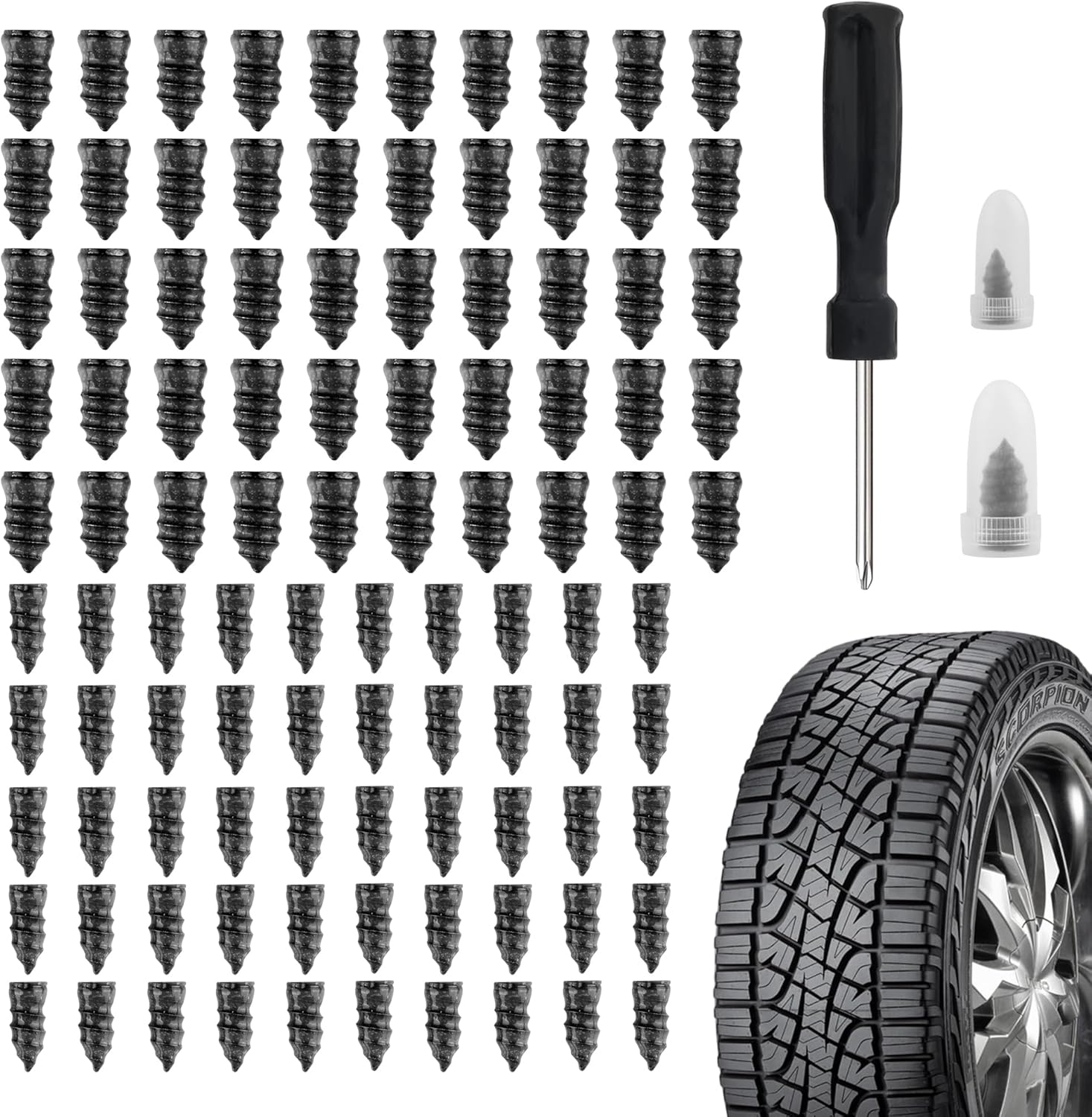
Salior’s tire plug kit provides a fast, reliable self-service fix for punctured or leaking tires without the need for flaring tools. Choose the correct plug size, then screw the nail into the puncture using the included screwdriver for an enhanced seal. The set is durable and convenient for on-the-go maintenance across multiple vehicle types.
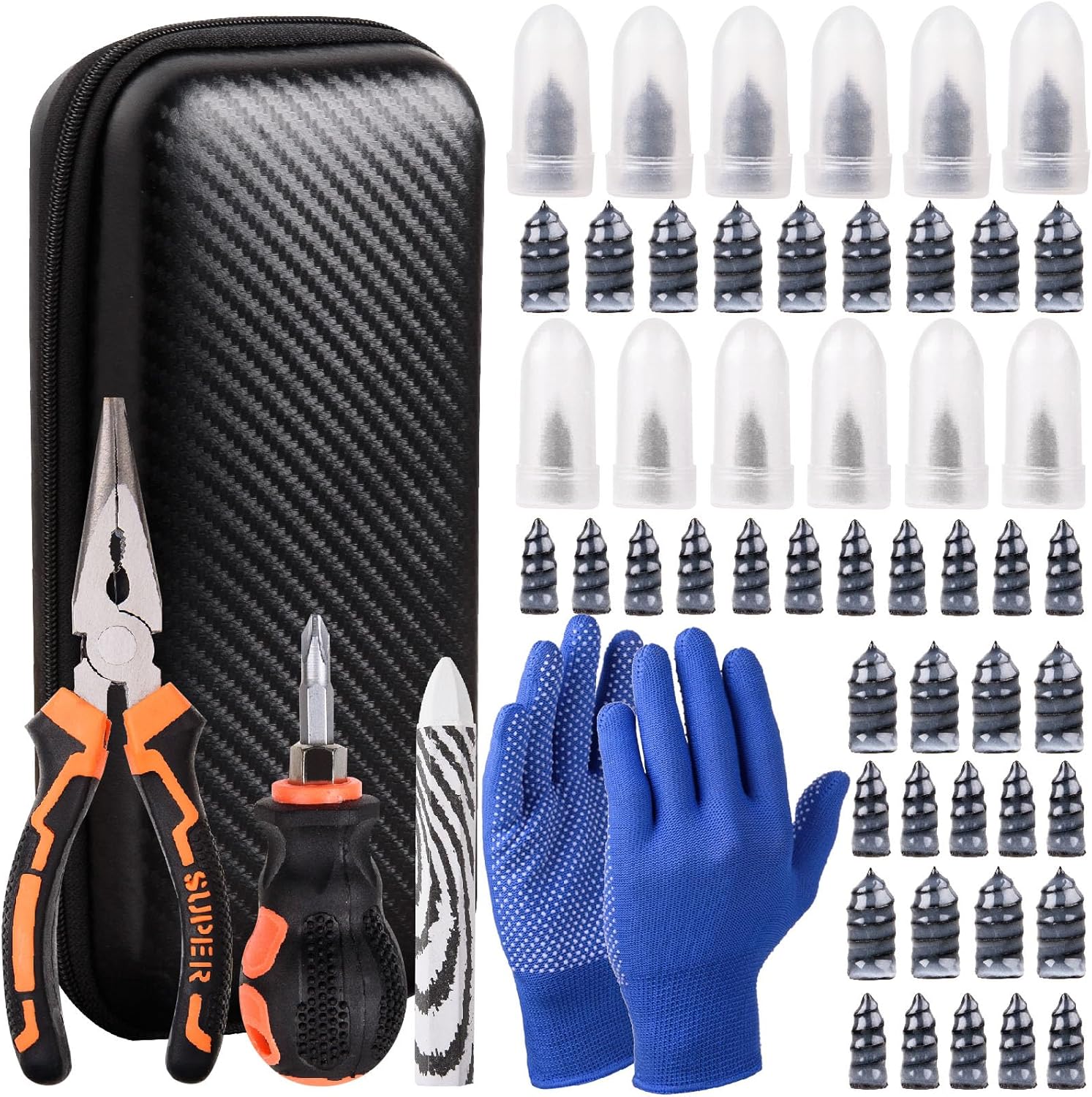
This tire sidewall puncture repair kit fixes flats fast without removing the tire, helping you get back on the road in minutes. It includes self-tapping repair nails, essential tools, gloves, and a portable storage bag for convenient roadside use. Designed for tubeless tires, it helps create a tight, leak-resistant seal for cars, motorcycles, trucks, SUVs, and ATVs.

This self-service tire repair nail kit includes 60 pieces (30 small + 30 large) to help seal punctures quickly without needing an auto shop visit. The nails are designed to fit different hole sizes and provide a tight connection with sealing glue to help prevent air and water intrusion. Suitable for cars, motorcycles, trucks, and other vehicles, it’s an easy, efficient way to patch roadside tire damage.
Essential Repair Tools
Start with a tire repair kit designed for tubeless passenger-car tires. It should include a plug insertion tool, reamer, repair plugs, and instructions for using rubber cement if required. Keep pliers nearby so you can remove the nail or screw after you mark the puncture location. A portable inflator lets you bring the tire back to the recommended cold pressure listed on your Accord’s door placard or in the owner’s manual.
You will also need a tire pressure gauge. Do not rely only on the TPMS warning light because the system usually warns you after the pressure is already significantly low. A gauge gives you the actual PSI so you can confirm the repair and avoid underinflation.
Safety Equipment Needed
Set up your Accord safely before you work. Park on a flat, stable surface, turn on the hazard lights, set the parking brake, and place wheel chocks on the opposite wheels. If you are near traffic, do not attempt a roadside repair on the traffic side of the vehicle. Call roadside assistance or move to a safer location first.
- Safety gloves: Protect your hands from sharp belts, tools, and road debris.
- Eye protection: Helps protect you from debris and pressurized air or sealant spray.
- Flashlight: Makes it easier to find the puncture and inspect the sidewall.
- Jack and lug wrench: Let you remove the wheel only when the vehicle is parked on level, solid ground.
- Wheel chocks: Help keep the car from rolling while you work.
Pro Tip: Mark the puncture with chalk or tape before pulling out the nail or screw. Once the object is removed, the hole can be harder to find.
Step-by-Step Guide to Repairing Your Tire
To repair your Honda Accord tire, start by gathering your tools and inspecting the tire for damage. Then follow a careful process so the plug seats firmly and the tire holds pressure. After the repair, track tire pressure for the next few days because a slow leak can return even when the repair looks sealed at first.
Essential Tools Required
For a small tread puncture, gather these tools before you begin:
- Tire repair kit with plugs, reamer, insertion tool, and rubber cement if required
- Pliers for removing the nail, screw, or debris
- Jack, lug wrench, and wheel chocks if you need to remove the wheel
- Portable inflator or air compressor
- Tire pressure gauge
- Soapy water in a spray bottle for leak testing
- Gloves, eye protection, and flashlight
Repairing Procedure Steps
- Inspect the tire first. Confirm the puncture is in the tread, no larger than 1/4 inch, and not near the shoulder or sidewall.
- Check for unsafe signs. Do not repair the tire if you see a bulge, crack, exposed cord, large cut, or damage from driving flat.
- Mark the puncture. Use chalk, tape, or a marker so you do not lose the hole after removing the object.
- Remove the object. Pull the nail or screw straight out with pliers.
- Clean and ream the puncture. Push the reamer into the hole and work it in and out as directed by your kit. This cleans and sizes the hole for the plug.
- Load the plug. Thread the plug through the insertion tool. Apply rubber cement only if your kit instructions require it.
- Insert the plug. Push the plug into the puncture until it is seated firmly, then pull the tool out quickly so the plug remains in the tire.
- Trim excess plug material. Cut the extra plug nearly flush with the tread surface.
- Inflate the tire. Use the cold tire pressure listed on the driver-side door placard or owner’s manual.
- Check for leaks. Spray soapy water over the repair. Bubbles mean air is escaping and the repair is not safe.
- Drive cautiously. Keep speed low at first and have the tire inspected professionally as soon as practical.
Note: If your Accord has a factory sealant-and-inflator kit instead of a spare tire, follow the Honda kit instructions. Sealant is usually meant to help you reach service, not to replace a permanent tire repair.
Plug vs. Patch vs. Patch-and-Plug Repair
A tire plug fills the puncture path from the outside. It is fast and useful during an emergency, but it does not let you inspect the inside of the tire for liner damage, belt separation, or run-flat damage. An internal patch seals the inner liner, but by itself it may not fully fill the puncture channel. A patch-and-plug repair does both: it fills the injury path and seals the inner liner after the tire is removed from the wheel.
For the safest long-term result, have a tire shop remove the tire, inspect it inside and outside, install a patch-and-plug repair if the damage is repairable, rebalance the wheel, and test for leaks. If the shop finds internal damage, replacing the tire is safer than trying to save it.
[Products Worth Considering]

This 60-piece tire repair nail kit provides a fast, do-it-yourself way to seal punctures on tubeless car, motorcycle, and SUV tires without removing the tire. Simply align, twist clockwise, and finish in seconds for a reliable sealing effect that helps prevent water intrusion. The kit includes tire glue and durable rubber-and-steel repair nails for strong adhesion and long-lasting repairs.

The AUTOWN tire repair kit is designed to quickly fix punctures and plug flats with professional-quality steel components. It includes a T-handle and spiral probe tool for easy tire access, plus a compact storage case for convenient carry. Suitable for many vehicles including cars, motorcycles, ATVs, RVs, trailers, and trucks, it helps restore airtight performance for reliable roadside repairs.

Vigorder rubber cement glue delivers superior adhesion and cures quickly within about 30 seconds for seamless rubber bonding. Once cured, it helps provide a strong, durable, waterproof seal that holds up to vehicle weight, pressure, and heat. Suitable for cars, motorcycles, trucks, bicycles, and off-road tires, it’s designed for emergency patch and maintenance repairs.
Mistakes to Avoid When Repairing Tires
When repairing a tire, it is important to avoid common mistakes that can put you at risk. Many DIY repairs fail because the tire was never safe to repair in the first place.
- Ignoring puncture size: Do not attempt repairs on punctures larger than 1/4 inch.
- Repairing sidewall damage: Sidewall and shoulder damage can compromise tire strength and should not be plugged or patched.
- Skipping the cleaning step: If you do not clean and size the hole with the reamer, the plug may not seat correctly.
- Using too much rubber cement: Follow the kit instructions. More adhesive does not automatically make a safer repair.
- Driving normally right away: A plug can fail. Check for leaks and drive cautiously until the tire is professionally inspected.
- Repairing a tire that was driven flat: Internal sidewall damage may not be visible from outside.
Repeated repairs can weaken the tire structure, especially if repairs overlap or sit too close together. If you are unsure whether the tire is safe, get a professional assessment before driving at normal speed.
Recognizing Tire Damage That Needs Expert Attention
Some tire damage should stop the repair immediately. Look closely at the tread, shoulder, and sidewall before you insert a plug. If you see cuts, gashes, bulges, exposed cords, or multiple punctures close together, the tire needs professional inspection or replacement.
Also check for signs of uneven wear. Cupping, feathering, or one-sided wear can point to suspension, balance, or alignment issues. Being aware of signs of tire cupping can help you catch problems before a small leak turns into a larger safety issue.
- Bulges: Usually mean internal structural damage.
- Exposed cords or wires: The tire should be replaced.
- Cracks in the sidewall: Age, weathering, or impact damage may be present.
- Rapid pressure loss: The leak may be too large or the tire may have internal damage.
- TPMS light after repair: Recheck pressure with a gauge and inspect for leaks.
How Can You Spot Damage That Needs Professional Help?
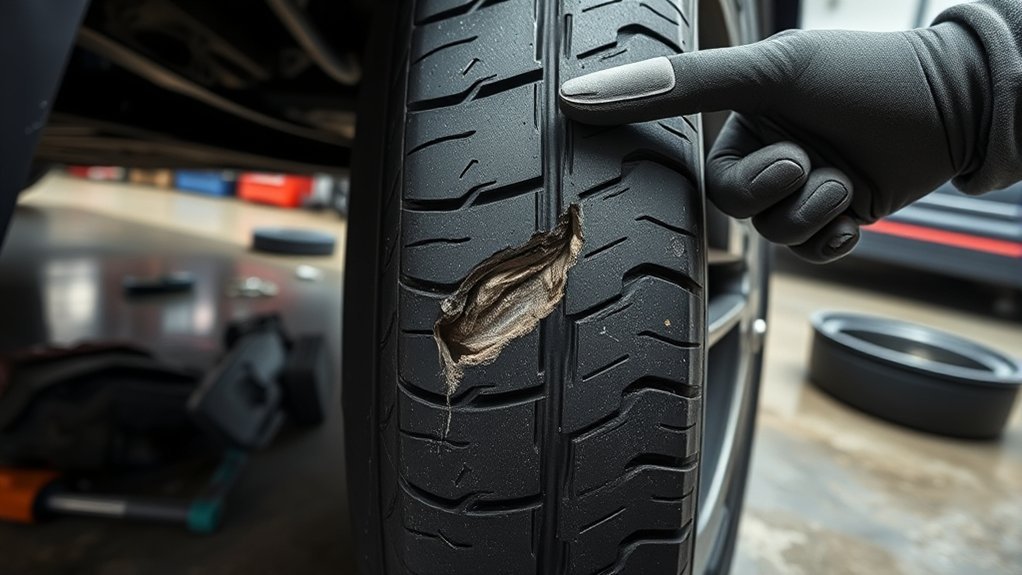
You can spot tire damage that needs professional help by looking for shape changes, deep cuts, and pressure loss that returns after inflation. A tire that looks swollen, wavy, split, or worn down should not be patched at home. A visible sidewall bulge is especially serious because it can signal internal separation and possible failure.
If the tire was driven while flat, even for a short distance, have it inspected from the inside. The outer tread may look repairable, but the inner liner and sidewall can be damaged by heat and flexing. If you are not sure, replace the tire with the spare or use roadside assistance instead of guessing.
After Patching: What to Do Next
After a temporary plug repair, inflate the tire to the correct cold PSI and check it again after the tire cools. The correct pressure is on the Tire and Loading Information Label on the driver-side door edge or doorjamb, or in your owner’s manual. Do not use the maximum pressure printed on the tire sidewall as your target pressure.
Spray soapy water over the plug, valve stem, and bead area. If bubbles appear, the tire is leaking and should not be driven except to move the car to a safer location. If the repair holds, drive slowly at first and recheck pressure after a short trip. Schedule a professional inspection because a shop can remove the tire, inspect the inside, and confirm whether a permanent repair is safe.
Honda Accord Factory Tire Repair Kit vs. Plug Kit
A Honda factory tire repair kit is not always the same as a plug kit. Many factory kits use sealant and an inflator. They are designed to help with certain small tread leaks long enough to reach service. They may not work on large punctures, sidewall damage, or tires that have come off the bead.
Before using a factory kit on a late-model Accord, check your VIN through the NHTSA recall lookup. Recalls can involve vehicles, tires, or equipment, and newly announced recalls may take time to appear for every VIN. If your kit is affected by a recall or you are unsure how to connect it safely, contact a Honda dealer or roadside assistance.
[Products Worth Considering]

AUTOWN’s 68-piece tire repair kit helps you fix punctures and plug flats quickly and effectively. It includes a T-handle and spiral probe tool for easy insertion, while the steel patch and plug materials are designed for strong adhesion and long-lasting airtight performance. The compact case makes it convenient for roadside repairs across a wide range of vehicles.

Get back on the road fast with this compact tire plug repair kit for tubeless tires. It includes self-vulcanizing rubber plugs, T-handle rasp and insert tools, and a storage box that fits in your glove compartment for easy access. Also included are a 4-way valve steam tool set with valve cores and caps for added roadside convenience.

This chemical vulcanizing cement cures rubber at room temperature, creating a strong bond for reliable tire patch and plug repairs. The fast-drying formula helps reduce vulcanization time, while the built-in brush makes application quick and even. Suitable for car, motorcycle, and bicycle tires, it supports repairs for tubeless tires, outer tires, and inner tubes.
Frequently Asked Questions
How do you patch a tire with a tire repair kit?
First confirm the puncture is small and in the tread area. Mark the hole, remove the object, clean the puncture with the reamer, insert the plug as directed by the kit, trim the excess, inflate the tire to the correct cold PSI, and check for leaks with soapy water. Then have the tire inspected for a permanent patch-and-plug repair.
What is a Honda tire repair kit?
A Honda tire repair kit is usually a factory emergency kit with sealant and an inflator. It is meant to help with certain small tread leaks so you can reach service. It is not a fix for sidewall damage, large punctures, blowouts, exposed cords, or tires that were driven flat.
Is it better to plug or patch a nail in a tire?
For a long-term repair, a professional patch-and-plug is better than an outside plug alone. The tire is removed from the wheel, inspected inside and outside, the injury channel is filled, and the inner liner is patched. A roadside plug is helpful in an emergency, but it should be checked by a tire shop.
How much does it usually cost to patch a car tire?
The cost depends on your area, the shop, and whether the tire needs to be removed, patched, rebalanced, or replaced. Some tire shops offer free inspections or free flat repairs when the puncture is repairable. Ask the shop whether the price includes internal inspection, patch-and-plug repair, balancing, and leak testing.
Can you patch a Honda Accord tire without removing it?
You can install a temporary plug from the outside without removing the tire, but you cannot inspect the inner liner that way. For a safer long-term repair, the tire should be removed from the wheel and checked inside before a patch-and-plug repair is installed.
Where do I find the correct Honda Accord tire pressure?
Look at the Tire and Loading Information Label on the driver-side door edge or doorjamb, or check your owner’s manual. Use that cold tire pressure, not the maximum PSI molded on the tire sidewall.
Conclusion
Patching your Honda Accord’s tire is manageable when the damage is a small puncture in the tread and the tire shows no signs of structural damage. Use a plug kit only as a temporary roadside solution, inflate the tire to the correct cold PSI, and check carefully for leaks. For the safest result, have a tire professional remove the tire, inspect it inside and outside, and install a proper patch-and-plug repair if the tire is repairable. If you see sidewall damage, a bulge, exposed cords, or a puncture larger than 1/4 inch, replace the tire instead of repairing it.
Sources
- NHTSA TireWise — tire pressure, tread depth, TPMS, tire maintenance, and tire-related crash safety data
- NHTSA Recalls — VIN recall checks for vehicles, tires, and equipment
- Discount Tire Tire Repair Guide — repairable tire damage, 1/4-inch puncture limit, shoulder/sidewall exclusions, and patch-and-plug repair process