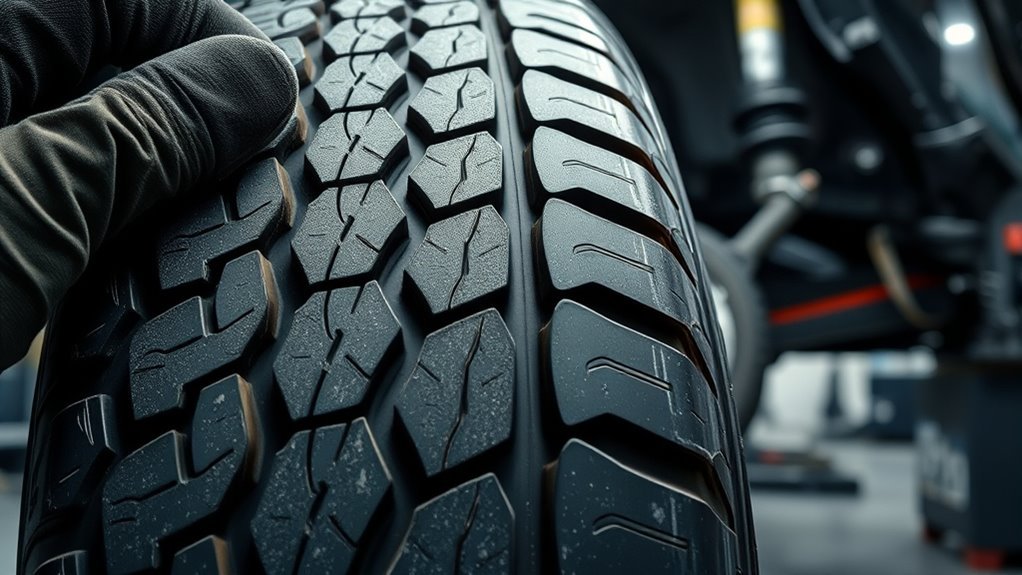
Cupped tires can turn a smooth drive into a noisy, shaky ride fast. Tire cupping, also called scalloping, creates scooped tread patches that reduce grip and point to a deeper tire, alignment, balance, or suspension problem. This guide explains what cupped tires look like, why they happen, what to do next, and how to keep the same wear from coming back.
Quick Answer
Tire cupping means the tread has uneven, scooped patches around the tire. Common causes include poor wheel alignment, worn shocks or struts, wheel imbalance, and incorrect tire pressure. Slow down, avoid highway speeds when the ride feels unsafe, and have a technician inspect the tires, wheels, and suspension.
Key Takeaways
- Check for scooped tread patches, rhythmic road noise, vibration, and pulling.
- Inspect alignment, wheel balance, tire pressure, and suspension parts when cupping appears.
- Do not ignore cupped tires because they can reduce traction and worsen handling.
- Rotate tires every 5,000 to 8,000 miles and check tire pressure monthly.
- Replace severely cupped tires if the tread damage causes noise, vibration, or poor grip.
What Tire Cupping Looks Like and Why It Matters
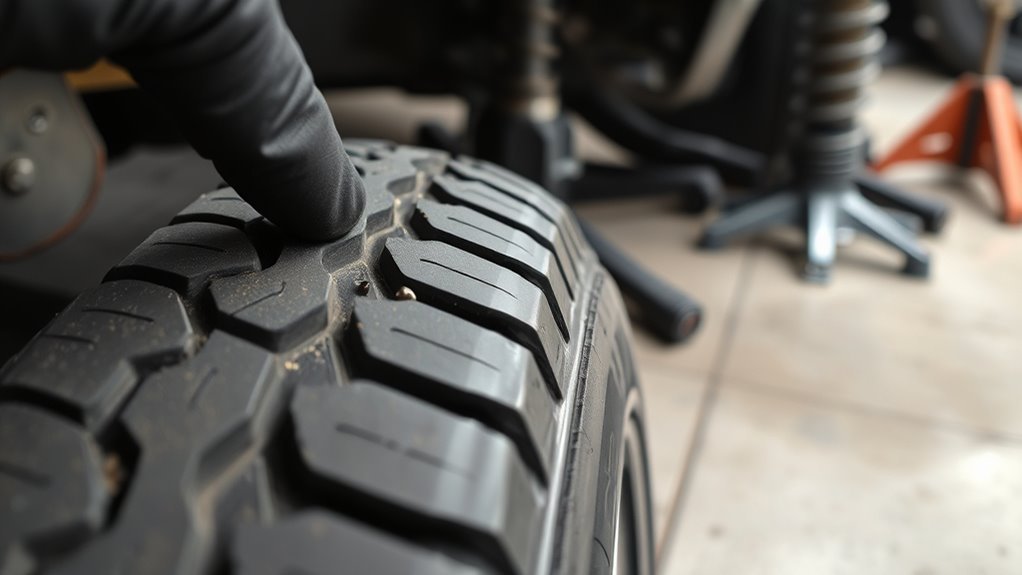
Tire cupping, or scalloping, creates scooped-out tread sections around the tire. These patches often look like small dips, divots, or scallops across the tread surface. You may also hear a loud rumble at speed.
Cupping matters because the tire no longer touches the road in a smooth, even way. That uneven contact can reduce traction, increase vibration, and make the vehicle pull or feel unstable. Treat new road noise or uneven tread as a cue to inspect the tires soon.
Early action protects tire life and helps you avoid unsafe handling. If you catch cupping before it gets severe, you may fix the cause before you need new tires.
Warning: If vibration, pulling, or road noise gets worse at highway speed, slow down and schedule an inspection before taking a long drive.
Mechanical Causes of Tire Cupping: Alignment, Suspension, Balance
You’ll most often see cupping when the tire bounces, scrubs, or meets the road at the wrong angle. Poor wheel alignment, worn suspension parts, and tire or wheel imbalance can all create this pattern. Incorrect tire pressure can make the wear worse.
Fix the cause before you replace the tire. A new tire can cup again if the suspension, balance, pressure, or alignment problem remains.
Wheel Alignment Issues
When wheels fall out of alignment, camber, caster, or toe angles change how the tire meets the road. Potholes, curb strikes, worn parts, and rough roads can all affect alignment. The tire then scrubs across the road instead of rolling evenly.
Watch for uneven shoulder wear, steering pull, or a crooked steering wheel. These signs can point to alignment problems that lead to cupping or other tread damage.
| Issue | Effect |
|---|---|
| Camber error | Inner or outer tire wear |
| Toe misalignment | Feathered or scalloped tread edges |
| Unbalanced tire | Vibration-related tread wear |
| Low or high pressure | Faster uneven wear |
| Worn mounts | Irregular tire contact |
Schedule alignment checks when you notice pulling, uneven tread, or steering changes. You should also check alignment after suspension repairs or a hard curb impact.
Worn Suspension Components
Worn shocks, struts, bushings, and mounts can’t keep the wheel planted firmly on the road. The tire can bounce and lose steady contact, which creates the high-and-low wear pattern known as cupping.
Look for leaking shocks, collapsed struts, loose mounts, bent control arms, or excess bouncing after you hit a bump. Replace failing parts promptly. Then schedule an alignment check so the repaired suspension holds the tires at the right angles.
Tire And Wheel Imbalance
An unbalanced tire and wheel assembly places uneven force on the tread as it spins. That force can cause vibration and wear some tread sections faster than others.
Balance the wheels when you install tires, rotate tires, or notice vibration at speed. Pair balancing with regular tire rotation every 5,000 to 8,000 miles. These habits help spread wear across all four tires.
Signs of Cupped Tires: Visual, Sound, and Handling Symptoms
Check for scooped-out tread patches that repeat around the tire. Listen for rhythmic road noise, humming, thumping, or rumbling that changes with speed. Also note steering-wheel vibration, seat vibration, or a vehicle that drifts during straight-line driving.
One symptom alone may not prove tire cupping. Several symptoms together make cupping more likely and justify a closer inspection.
Visual Tread Patterns
Visual checks give you the fastest clue. Look for dips, divots, or scalloped sections around the tread. The pattern may appear on one shoulder, both shoulders, or across the tread face.
- Inspect each tire at eye level for scalloped grooves.
- Run your hand across the tread to feel high and low bands.
- Compare inner, center, and outer shoulder wear patterns.
- Photograph repeatable divots so you can track changes.
Use caution when you run your hand over the tread. Sharp debris, exposed belt material, or damaged rubber can cut your skin.
Noise And Vibration
Cupped tires often make a rhythmic rumble, hum, or thump. The sound can grow louder as speed rises. Some drivers mistake this noise for a bad wheel bearing because both problems can sound similar.
You may also feel vibration through the steering wheel, floor, or seat. Pulling to one side or constant steering corrections can point to uneven tire contact or alignment trouble. A technician can separate tire cupping from wheel bearing, brake, and suspension faults.
How to Confirm Tire Cupping at Home
You can do a basic check before you visit a shop. Park on level ground, set the parking brake, and inspect the tires in good light. Do not crawl under a vehicle supported only by a jack.
- Look for repeating dips or scallops around the tread.
- Feel for high and low tread spots with a flat hand.
- Check tire pressure against the vehicle placard, not the tire sidewall maximum.
- Compare wear patterns on the front and rear tires.
- Write down any noise, vibration, or pulling symptoms.
This check does not replace a professional diagnosis. It helps you describe the problem clearly when you call a repair shop.
Immediate Steps If You Find Cupped Tires (Safety, Short-Term Fixes, Cost Expectations)
If you spot cupped tires, slow down and avoid high speeds until a technician can inspect them. Cupping can increase vibration and reduce stable road contact. You’ll want the shop to find the root cause, not just the tread pattern.
Spot cupped tires? Slow down, schedule an inspection, and avoid aggressive driving until you know the cause.
- Rotate the tires only if a technician says the tread remains safe.
- Balance the wheels to reduce vibration from weight imbalance.
- Correct tire pressure to the vehicle maker’s listed specification.
- Avoid heavy loads and hard cornering until the vehicle gets inspected.
Repair costs depend on the cause and your vehicle. Basic balancing and alignment often cost less than suspension repair, but prices vary by location and shop. Severely cupped tires may need replacement if the tread damage affects ride, grip, or noise.
[Products Worth Considering]

Monitor tire tread wear with a smart, color-coded depth gauge that shows clear condition ranges at a glance. The bar is range marked for fast, easy readings, helping you maintain safer traction and performance. Each gauge is portable with a pocket clip, and the set includes 20 units for daily use and sharing.

The Ziopetru adjustable magnetic wheel alignment tool helps you check and restore camber and caster positioning after removing and reinstalling undercarriage components. With a clear leveling/bubble measurement system and an easy zeroing adjustment knob, it supports precise horizontal angle checking. The strong magnetic base mounts to metal surfaces for convenient use at home on cars, motorcycles, trucks, vans, and SUVs.

Replace or upgrade your zero-turn lawn mower tires with a universal fit flat-free tire and wheel assembly in a convenient 2-pack. Smooth tread front-caster style helps turning with reduced turf damage, while flat-free design eliminates the maintenance and downtime of air-filled flats. The included adapter kit supports 5/8-inch axles and hub lengths from 3.4 to 5 inches for compatibility across most ZTR mowers.
How Mechanics Fix Tire Cupping: Alignment, Balancing, Shocks, and Replacement
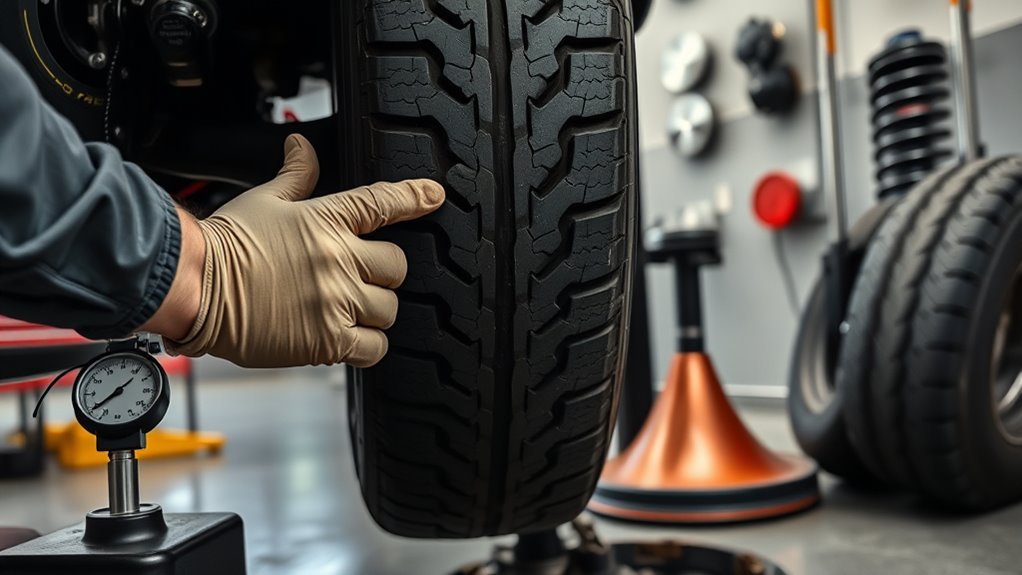
A technician will usually start with tire, wheel, and suspension checks. They may measure tread depth, inspect wear patterns, check tire pressure, balance the wheels, and test suspension movement. They may also perform a wheel alignment to correct camber, caster, and toe.
If worn shocks, struts, bushings, or mounts caused the cupping, the shop should replace those parts before final alignment. If the tire has deep scallops, the noise and vibration may remain even after repairs. In that case, replacement may give you the safest and smoothest result.
Ask the shop to road-test the vehicle after repairs. The test can confirm whether vibration, pulling, and noise have improved.
[Products Worth Considering]

Measure tire tread depth quickly and accurately with this LUMITECO dial gauge that reads in 1/32" increments up to 14/32". The color-coded green/yellow/red zones make it easy to judge tire wear and know when replacement is needed. A rugged, compact design with a protective pouch helps keep the gauge ready for use on cars, trucks, motorcycles, and more.

This universal wheel alignment tool helps you accurately restore tire tilt angles after tire or suspension repairs using an adjustable camber gauge. It features a powerful magnetic base that firmly attaches to brake rotors for stationary, slip-free readings, improving consistency during measurement. Built from durable PC plastic, it resists wear and corrosion and is compact enough for car, truck, RV, and motorcycle alignment tasks.

Steelman white tire marking crayons provide high-contrast, semi-permanent marks for repairing and inspecting tires and equipment. They write on wet or dry, smooth or coarse surfaces including rubber, metal, glass, and wood, making them ideal for puncture location and damage outlining. The lead- and zinc-free crayons resist weather and fading yet wipe away when you no longer need the marks.
Can You Keep Driving on Cupped Tires?
You may be able to drive a short distance on mildly cupped tires if the vehicle still handles normally. Avoid high speeds, heavy loads, and long trips until a technician checks the tires. Do not keep driving if the vehicle shakes hard, pulls sharply, or feels unstable.
Cupped tires rarely improve on their own. Even if you fix the cause, the worn tread pattern may stay noisy. A shop can tell you whether rotation, balancing, or replacement makes the most sense.
Preventing Tire Cupping: Maintenance Schedule and Tire-Care Checklist
After you fix alignment, balance, and worn suspension parts, follow a steady tire-care routine. Small checks can prevent uneven wear from becoming a costly repair. Keep a simple log for pressure checks, rotations, alignments, and suspension work.
After alignment and suspension repair, follow a strict tire-care routine: rotate, check pressure monthly, inspect suspension, and log each service.
- Rotate tires every 5,000 to 8,000 miles and record the date.
- Check tire pressure monthly and adjust it to manufacturer specs.
- Inspect suspension parts during routine service visits.
- Schedule wheel alignment when tread wear, pulling, or steering changes appear.
Pro tip: Check pressure when tires are cold because driving heats the air inside and changes the reading.
Consistent care helps your tires wear evenly and last longer. It also helps you spot suspension and alignment issues before they affect safety.
[Products Worth Considering]

Accurately measure tire tread depth with a calibrated gauge marked from 0 to 1 inch in 1/32 inch increments. The color-coded bar helps you quickly identify tread condition ranges, supporting safe driving for trucks, motorcycles, automobiles, and passenger vehicles.

These pre-assembled 15x6.00-6 front tire and wheel assemblies are designed for quick replacement on riding lawn mowers and lawn tractors. Built with natural rubber pneumatic tires and turf-friendly tread for solid traction and improved shock absorption. A thickened welded rim and 3/4" sintered iron bushing help provide stable, heavy-duty support for everyday mowing use.

This professional wheel and rim cleaning brush set lifts brake dust, grime, and dirt with soft, scratch-free microfiber and synthetic wool fibers. The rim brush bends up to 360 degrees for easy access to hard-to-reach areas around spokes, lips, and faces. Ideal for thorough cleaning of car, truck, motorcycle, bicycle, RV, and more wheel and tire surfaces.
Frequently Asked Questions
What Causes Cupping or Scalloping Wear of Tires?
Misalignment, worn suspension parts, unbalanced wheels, poor tire pressure, missed rotations, and tire damage can cause cupping. You should inspect and fix the cause before you replace the tire.
Does Cupping Cause Uneven Tire Wear?
Yes, cupping is a form of uneven tire wear. It creates a scalloped tread pattern that can cause noise, vibration, and reduced road contact.
Is It Safe to Drive on Scalloped Tires?
Scalloped tires can reduce comfort, grip, and handling. If vibration, pulling, or noise feels severe, avoid high-speed driving and get a professional inspection.
Can Scalloped Tires Be Fixed?
You can often fix the cause of scalloped tires by repairing suspension issues, correcting alignment, balancing wheels, and maintaining proper pressure. Severely cupped tires may still need replacement because the tread damage may not smooth out.
Will an Alignment Fix Cupped Tires?
An alignment can fix one cause of cupping, but it won’t erase tread damage that already exists. You may still need balancing, suspension repair, rotation, or tire replacement.
Conclusion
Cupped tires warn you that the tire is not meeting the road evenly. Inspect the tread, listen for rhythmic noise, and take vibration or pulling seriously. Schedule alignment, balancing, tire-pressure, and suspension checks before the damage spreads. With steady rotations and monthly pressure checks, you can protect tire life and keep your vehicle safer on the road.