Maintaining TPMS sensors during tire changes starts before the old tire comes off the wheel. You want the shop to scan each sensor, inspect the valve stem, protect the sensor during dismounting, set the tires to the correct cold pressure, and complete the correct reset or relearn procedure for your vehicle. A careful process helps prevent broken sensors, air leaks, false warnings, and repeat trips after a tire service.
Last Updated: July 7, 2026
Quick Answer
To protect TPMS sensors during a tire change, ask the technician to scan the sensors first, inspect the valve stems, use TPMS-safe tools, replace worn service parts when needed, inflate tires to the door-jamb pressure, and perform the vehicle-specific reset or relearn before you leave.
Key Takeaways
- Direct TPMS uses sensors at the wheels, while indirect TPMS estimates pressure through wheel-speed and vehicle data.
- A tire shop should scan direct TPMS sensors before dismounting the tire and after installation.
- Valve-stem corrosion, damaged seals, weak batteries, and skipped relearn steps often cause TPMS problems after tire service.
- Always set tire pressure to the vehicle placard or owner’s manual, not the maximum pressure on the tire sidewall.
- A TPMS warning light does not replace monthly pressure checks with an accurate tire gauge.
At a Glance
| Time Required | 5–10 minutes for a driver check; longer if the shop must replace or relearn sensors |
| Difficulty | Easy for inspection questions; professional service recommended for sensor removal, programming, or replacement |
| Tools Needed | Tire pressure gauge, vehicle placard or owner’s manual, TPMS scan tool, valve service kit, and torque tools for the technician |
| Cost | Inspection is usually part of tire service; replacement cost varies by vehicle, sensor type, and shop labor |
Understanding TPMS: What You Need to Know

A Tire Pressure Monitoring System, or TPMS, warns you when tire pressure drops far enough to create a safety concern. The National Highway Traffic Safety Administration explains that newer vehicles use either direct sensors in the tires or indirect monitoring through wheel-speed and other vehicle sensors.
In the United States, passenger cars, light trucks, and vans from model year 2008 and newer are required to have TPMS. The federal standard says TPMS must warn drivers of significant underinflation, but it does not make the system a replacement for regular tire maintenance. You still need to check tire pressure monthly with a gauge and use the pressure listed on the driver’s door-jamb placard or in the owner’s manual.
Note: TPMS usually warns only after pressure has dropped significantly. A tire can be low enough to hurt fuel economy, tire life, or handling before the light turns on.
Direct vs. Indirect TPMS
Direct TPMS uses a pressure sensor at each monitored wheel. These sensors often attach to the valve stem inside the wheel and send pressure data to the vehicle. During tire changes, direct sensors need careful handling because the bead breaker, tire iron, or mounting head can damage the sensor if the technician works too close to the valve area.
Indirect TPMS does not use a pressure sensor inside each wheel. It estimates pressure changes by comparing wheel-speed and other vehicle data. These systems usually need a reset after tire inflation, rotation, or replacement so the vehicle can learn the current tire setup as the new baseline.
How to Inspect TPMS Sensors Before Tire Service
Before tire service begins, ask the shop to confirm which TPMS type your vehicle uses. If your vehicle has direct TPMS, the technician should scan all sensors before removing the tires. This quick check can show whether each sensor is transmitting, whether the battery status looks weak, and whether the vehicle already had a TPMS fault before service.
Next, inspect the valve stem area. Look for cracked rubber, corrosion, a missing valve cap, a loose nut, or signs of slow leakage around the stem. If the valve cap is stuck, the technician should avoid forcing it because the stem can snap, especially on older metal valve stems.
Finally, check the tire pressure when the tires are cold whenever possible. The correct pressure is the vehicle manufacturer’s recommended cold tire pressure, not the maximum pressure molded into the tire sidewall. Bridgestone notes that tires are considered cold after the vehicle has been parked for at least three hours or driven less than one mile at moderate speed.
Pro Tip: Keep your own tire pressure gauge in the glove box. Service-station hose gauges can be worn, damaged, or inaccurate, especially in harsh weather.
[Products Worth Considering]

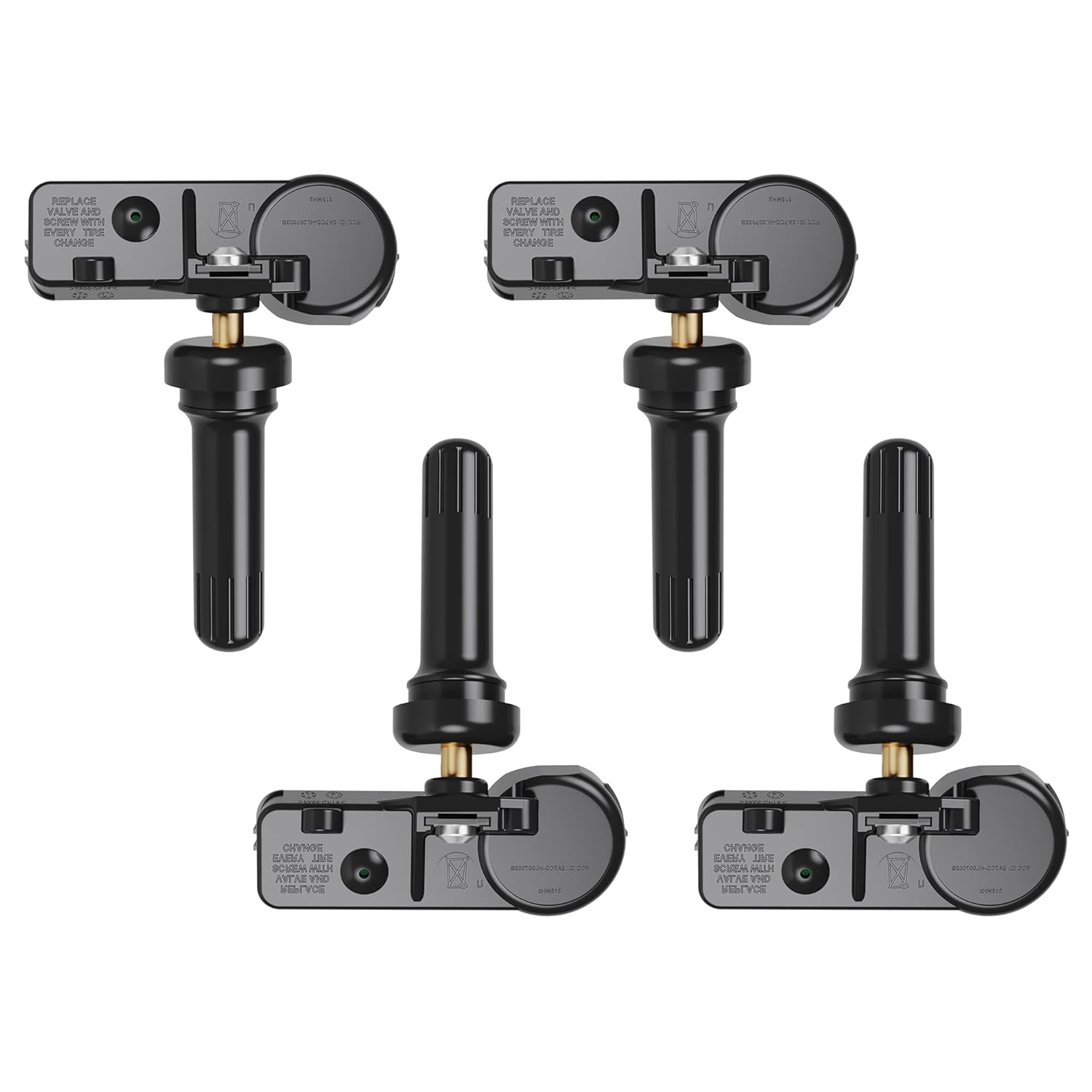
Replace your worn or missing TPMS sensors with pre-programmed, direct-fit sensors for compatible Ford, Lincoln, and select Mazda models. Each sensor comes ready to activate with a scan tool, helping restore accurate tire pressure monitoring and trouble-free installation. Built with a long-life CR2032 battery and tested before factory release, this set provides dependable performance with a one-year warranty.

The VEHLIVE SU-50448 II TPMS relearn tool provides a fast activation reset to restore accurate tire pressure monitoring after sensor replacement or tire rotation. It supports 315 MHz and 433 MHz GM series sensors and helps clear dashboard pressure warnings. With simple two-button operation and horn-confirmed relearning order, you can reprogram sensors conveniently at home.

Replace worn or malfunctioning GM TPMS sensors with this 433MHz pre-programmed sensor set designed for compatibility with many Chevrolet, Buick, GMC, and Cadillac models. It includes guidance for proper OBDII relearning/pairing after installation and supports reliable long-term operation with a high-performance CR2032 battery. Quality tested for durability and performance to help restore accurate tire pressure monitoring.
What Common TPMS Issues Should You Watch For During Tire Changes?
The most common TPMS problems after tire changes come from damaged sensors, valve-stem leaks, skipped relearn procedures, or old sensor batteries. A direct TPMS sensor sits close to the tire bead, so poor tool placement can crack the sensor body, break the stem, or damage the seal.
Corrosion is another common issue. Metal caps, moisture, road salt, and incompatible valve cores can seize parts together. If a technician forces a stuck cap or core, the stem may break and require a new sensor or valve assembly.
Watch for warning lights after the service. A steady TPMS light usually means one or more tires are significantly underinflated. A light that flashes for about 60 to 90 seconds and then stays on often points to a TPMS malfunction, such as a sensor communication or programming problem.
Warning: Do not ignore a TPMS warning after new tires are installed. Stop and check the tires as soon as it is safe, especially if the vehicle pulls, vibrates, or feels unstable.
[Products Worth Considering]

This TPMS relearn tool helps you quickly activate, match, and reset GM tire pressure sensors to keep the vehicle monitoring system working properly. It clears tire pressure alarms and dashboard warning lights after sensor replacement or tire rotation, and supports learning for common 315/433 MHz TPMS sensors. Designed for simple one-button operation, it can help you avoid unnecessary trips to repair shops.
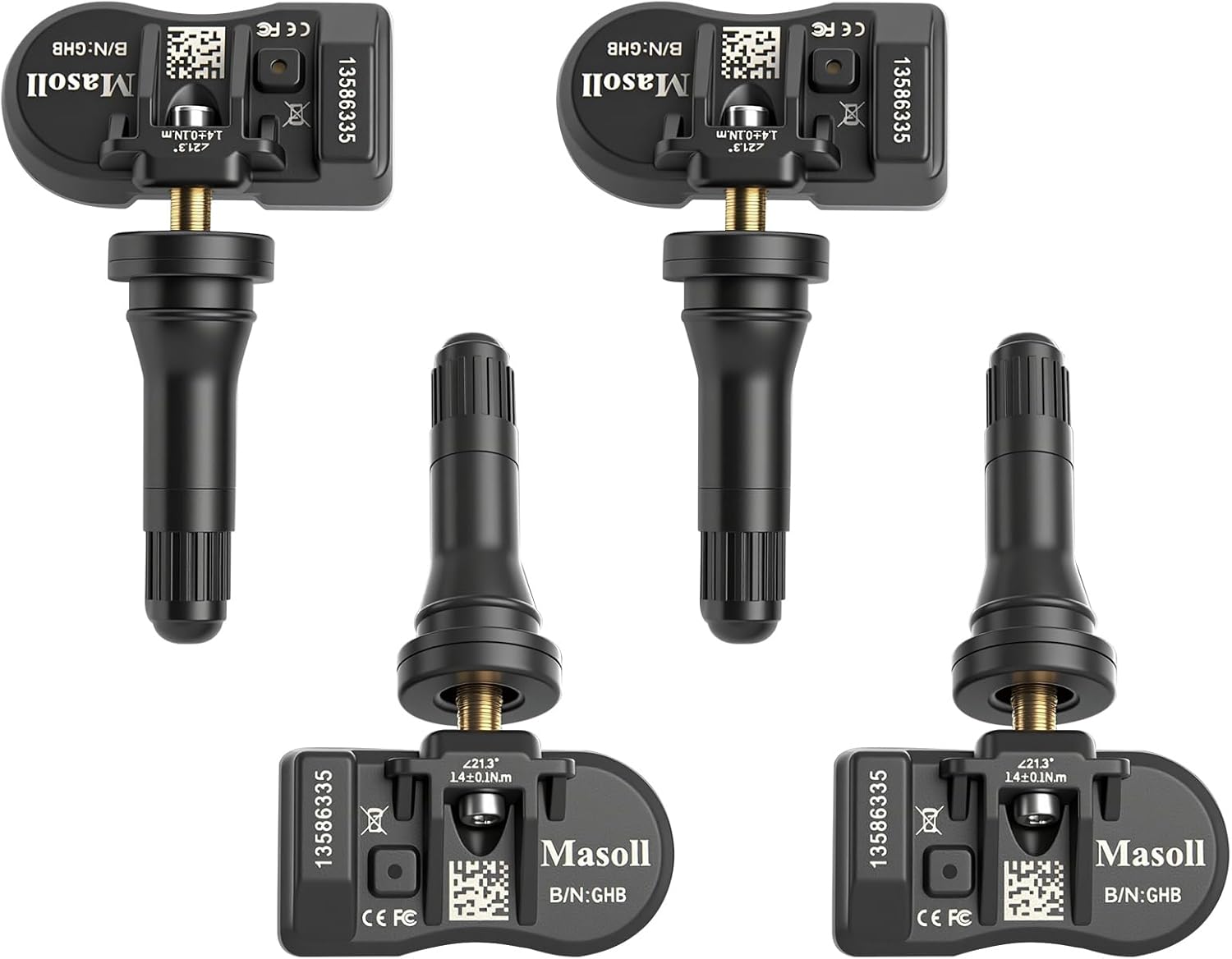
Masoll TPMS sensors are designed for most GM vehicles after 2006, helping you clear tire pressure warnings with OEM-level 315/433MHz compatibility. The 4-pack includes pre-programmed sensors, but re-learning is required after installation using a GM TPMS relearn tool or scan tool. Built with a dual-antenna design and a long-life CR2050 battery, these sensors deliver reliable performance in extreme temperatures with corrosion-resistant valve construction.
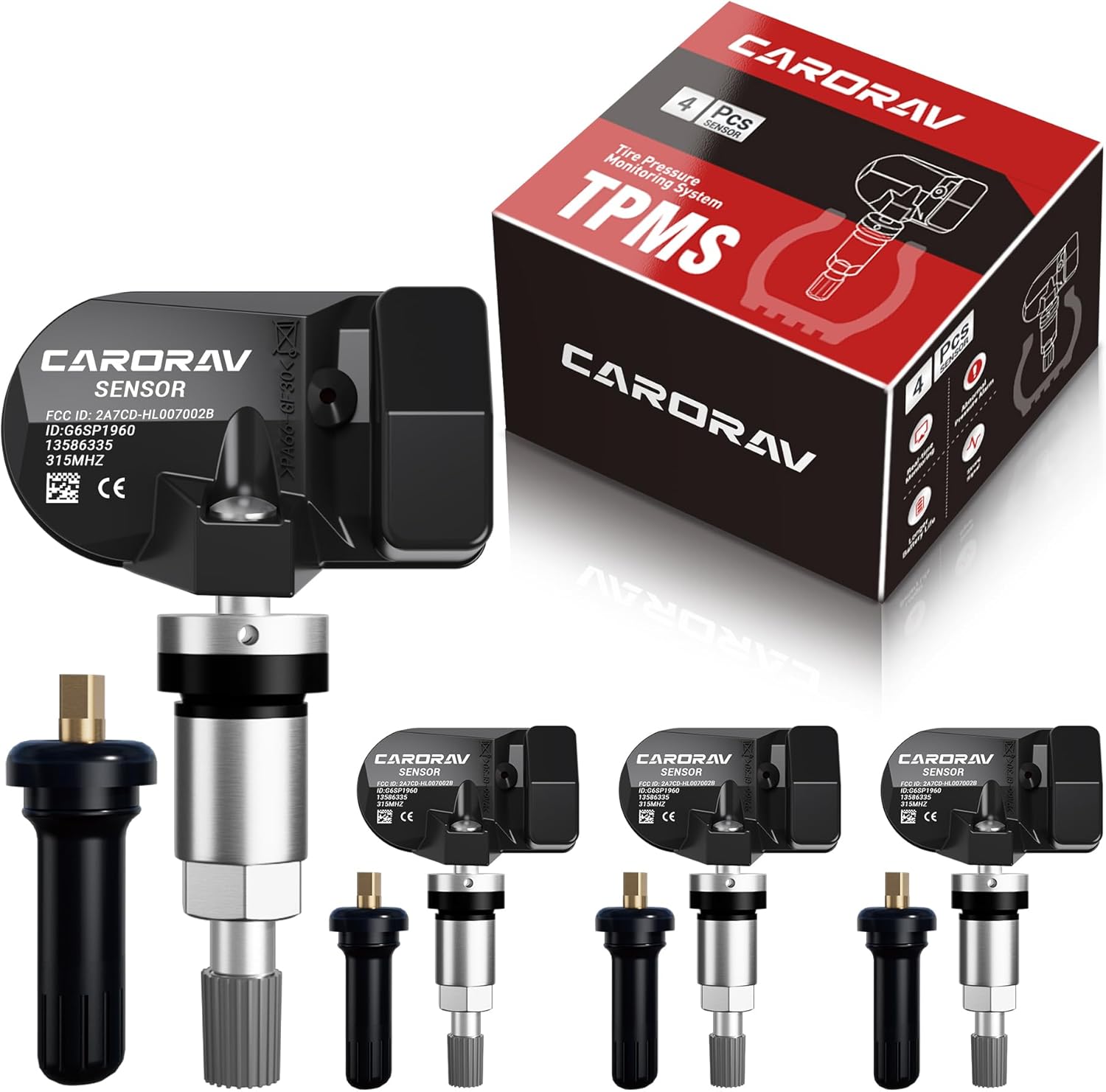
Replace worn or missing TPMS sensors with CARORAV pre-programmed GM-compatible sensors for a smoother installation experience. These 315MHz replacement sensors help monitor tire pressure in real time with long battery life, and they are designed to withstand harsh temperatures. Manual or OBDII relearn may be required to reset the system for proper recognition.
Best Practices for Handling TPMS Sensors

Good TPMS care depends on careful handling, proper service parts, and the correct relearn process. You do not need to remove sensors for every tire change, but the shop should protect them during dismounting and mounting.
[Products Worth Considering]

Masoll Gen 2 external TPMS sensors are a DIY replacement set of 4 for select GM vehicles made after 2006, helping you shut off the TPMS warning light quickly. Simply screw the sensors onto the tire valves and sync to your car ECU using the included EL-50448 relearn tool. Dual-frequency 315/433 MHz design provides OEM-level performance with accurate readings and replaceable batteries for about two years.

Marsflex brand TPMS replacement sensors help restore tire pressure monitoring for compatible Toyota, Lexus, Scion, and Pontiac models. Each sensor is pre-programmed for the vehicle application and includes a long-life battery for up to 8 years of normal use. Designed to replace common OE numbers and requires relearning using a TPMS scan tool after installation.

Replace worn or missing TPMS sensors with a pre-programmed 4-pack designed for compatible GM vehicles. These 315MHz sensors provide real-time tire pressure monitoring and alert you if pressure is too high, too low, or if a rapid air leak occurs. Most installations are ready with minimal relearn effort after mounting, helping improve safety and driving confidence.
Proper Sensor Handling Techniques
For direct TPMS, the technician should identify the sensor location before breaking the tire bead. The bead breaker and mounting head should be positioned so they do not strike the sensor. Once the tire is off, the technician should inspect the sensor body, stem, grommet, nut, valve core, and cap.
The sensor should not be pulled, twisted, or used as a handle. If the sensor must be removed, the technician should use the correct TPMS tool and torque specs for your vehicle or sensor brand. Over-tightening can crush seals, while under-tightening can cause air leaks.
TPMS Service Kit and Valve Stem Checks
Many direct TPMS sensors use service parts such as a valve core, cap, seal, grommet, washer, or retaining nut. These small parts wear, corrode, or deform over time. If the tire is already off the wheel, it is smart to ask whether the sensor needs a new service kit.
Use plastic valve caps unless your vehicle or sensor maker specifies otherwise. Avoid random metal caps on TPMS stems because corrosion can make them difficult to remove later. Also avoid mixing unapproved brass valve cores with aluminum TPMS stems, as incompatible metals can corrode together.
Regular Calibration and Relearn Procedures
TPMS reset steps vary by vehicle. Some systems relearn automatically after you drive. Some require a dashboard menu reset. Others need a TPMS scan tool to register sensor IDs or confirm wheel positions. Always follow the owner’s manual or the repair database for your specific vehicle.
The federal TPMS standard also recognizes that vehicles may use manual reset procedures according to manufacturer instructions. That is why a generic “drive around until it clears” approach does not work for every vehicle.
Timely Sensor Replacement Tips
Replace a TPMS sensor when testing shows it has failed, the battery is weak, the stem is damaged, or corrosion makes the assembly unsafe to reuse. Many direct TPMS batteries are sealed inside the sensor, so a dead battery usually means replacing the sensor rather than replacing only the battery.
If your vehicle is older and still has its original sensors, ask the shop to test them before new tires are mounted. Replacing weak sensors while the tires are already off can prevent a second labor charge later.
How Tire Technicians Can Avoid TPMS Damage
Tire technicians can avoid most TPMS damage by using a consistent process. The goal is to confirm sensor condition before service, protect the sensor during tire removal, and verify the system before the customer leaves.
- Scan first: Record each direct sensor’s ID, pressure, temperature if available, and battery status if the tool reports it.
- Mark the valve position: Know where the sensor sits before using the bead breaker.
- Use proper tools: Use TPMS-safe service tools and avoid prying against the sensor body.
- Replace service parts when needed: Install the correct seal, valve core, cap, nut, or grommet for the sensor design.
- Inflate to the placard: Set cold tire pressure to the vehicle’s label or owner’s manual.
- Relearn correctly: Follow the vehicle-specific reset, relearn, or programming procedure.
- Verify before release: Confirm no steady or flashing TPMS light remains after the service procedure.
The best TPMS repair is the one you prevent before the tire comes off the wheel.
How to Identify When Your TPMS Needs Maintenance
Your TPMS needs attention when the warning light stays on, flashes at startup, returns after inflation, or gives readings that do not match a reliable tire gauge. You should also suspect a problem after tire replacement, wheel replacement, tire rotation, flat repair, or seasonal tire change.
Warning Light Indicators
A steady TPMS warning light usually means at least one tire is significantly underinflated. Pull over when safe, inspect the tires, and check pressure with a gauge. Inflate the tire to the recommended cold pressure as soon as possible.
A flashing TPMS light that later stays on usually means the system has a malfunction. This may happen when a sensor is damaged, not programmed, not compatible with the vehicle, or not transmitting properly. If the light returns after proper inflation and reset, have the system scanned.
Tire Pressure Fluctuations
Temperature changes can affect tire pressure, especially overnight or during seasonal weather swings. NHTSA notes that the TPMS light may come on during cold mornings and turn off after the tires warm, but you should still inspect the tires and check pressure. A warning that comes and goes can mean the pressure is hovering near the alert threshold.
Compare TPMS readings with a quality gauge when the tires are cold. If one tire keeps losing pressure, look for a puncture, bead leak, valve-stem leak, cracked wheel, or damaged sensor seal.
Sensor Battery Life
Direct TPMS sensors use small batteries, and battery life varies by sensor design, driving conditions, climate, and vehicle use. Warning signs can include missing readings, intermittent readings, failed scan-tool communication, or a TPMS malfunction light.
- Have older sensors scanned during tire replacement.
- Replace sensors that fail testing or show weak battery status.
- Replace damaged or corroded valve hardware before it causes a leak.
- Keep a record of sensor replacement dates for future tire service.
Why You Should Check Your TPMS Sensor Batteries
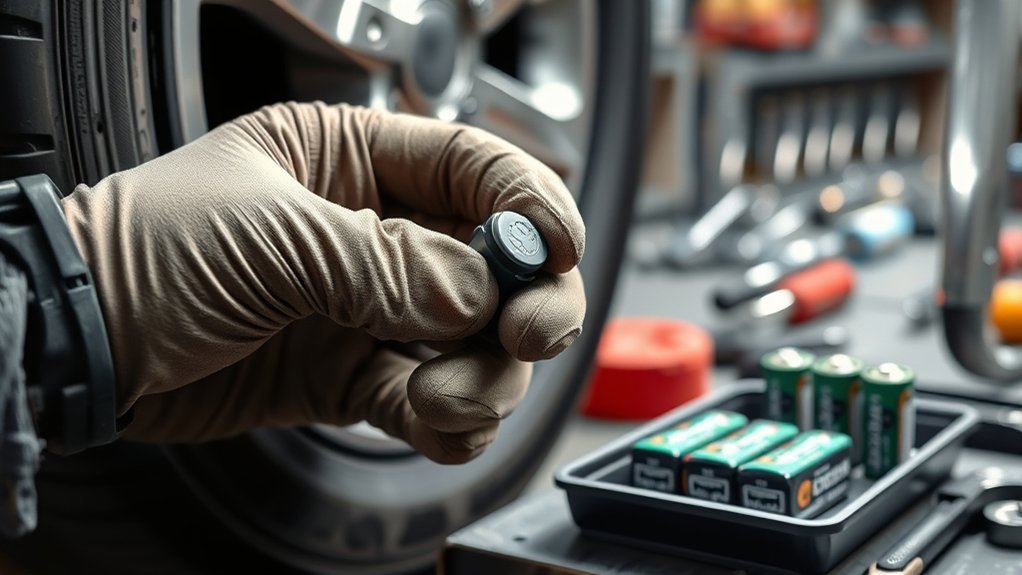
Checking TPMS sensor battery status during tire changes helps you avoid repeat service. If a sensor is already weak, it may fail shortly after new tires are installed. Since many direct TPMS batteries are sealed, the usual repair is replacing the sensor assembly.
| Sensor Condition | What to Do |
|---|---|
| Scans normally and holds pressure | Keep using it and recheck during future tire service |
| Weak or aging battery status | Consider replacing while the tire is already off |
| No scan-tool response | Diagnose the sensor, tool setup, vehicle compatibility, and receiver system |
| Corroded or leaking valve stem | Replace the required valve parts or sensor assembly |
A battery check matters most when you are buying new tires for an older vehicle. The extra inspection takes little time, and it can save you from paying to dismount a tire again for a sensor that was already near failure.
How to Reset and Recalibrate Your TPMS
After a tire change, rotation, sensor replacement, or pressure correction, use the reset or relearn method listed for your vehicle. Do not assume every TPMS clears itself the same way.
Common reset and relearn methods include:
- Dashboard menu reset: Some vehicles let you reset TPMS through the infotainment screen or instrument-cluster menu.
- Button reset: Some vehicles use a physical TPMS reset button, often under the dash or near the steering column.
- Driving relearn: Some systems learn after you drive at a certain speed for a set distance or time.
- Scan-tool relearn: Some direct systems require a TPMS tool to activate sensors and register IDs with the vehicle.
- OBD registration: Some vehicles need sensor IDs written through the diagnostic port after sensor replacement.
Note: If the TPMS light remains after proper inflation and reset, the issue may be a failed sensor, wrong sensor type, dead battery, receiver problem, or incomplete relearn.
What Should You Do After a TPMS Warning Light Activates?
When the TPMS warning light turns on, slow down and pull over safely if the vehicle feels unstable, the tire looks low, or you hear a tire noise. Inspect all tires for visible damage, bulges, punctures, or obvious deflation.
Next, check each tire with a tire pressure gauge. Compare the readings with the pressure listed on the driver’s door-jamb label or in the owner’s manual. If a tire is low, inflate it to the recommended cold pressure. If you must add air while the tire is warm, recheck and adjust it again when the tire is cold.
If the light flashes and then stays on, schedule a TPMS diagnosis. If the light stays on after the tires are correctly inflated and the reset procedure is complete, the system may have a sensor, programming, or communication issue.
Frequently Asked Questions
What is the average lifespan of a TPMS sensor?
Many direct TPMS sensors last for years, but there is no universal lifespan because battery design, climate, driving habits, and vehicle use all matter. Have the sensors scanned during tire replacement, especially on older vehicles, and replace any sensor with weak battery status, corrosion, damage, or failed communication.
What tire sealant is sensor safe?
Use only tire sealant that clearly says it is TPMS-safe and compatible with your tire type. Treat sealant as a temporary roadside fix, not a permanent repair. Tell the tire shop before they dismount the tire because sealant can create extra cleanup and inspection steps.
What are the two most common mechanical TPMS sensor problems?
Two common mechanical problems are valve-stem corrosion and sensor or stem damage during tire service. Battery failure is also common on older direct sensors, but it is an electrical failure inside the sensor rather than a mechanical break.
Do I need to replace TPMS sensors every time I replace tires?
No. You do not automatically need new TPMS sensors with every tire change. You should inspect and scan them. Replace sensors when they fail testing, show weak battery status, leak, have damaged stems, or cannot be safely serviced.
Why did my TPMS light come on after new tires?
The tires may be underinflated, the system may need a reset or relearn, a sensor may have been damaged, or the new wheel-and-tire setup may not communicate correctly with the vehicle. Check tire pressure first, then follow the owner’s manual reset procedure or ask the shop to scan the system.
Conclusion
Maintaining your TPMS sensors during tire changes is mostly about careful inspection, correct handling, and proper reset or relearn steps. Ask the shop to scan the sensors before service, protect the valve area during tire removal, replace worn service parts when needed, and confirm the TPMS light is off before you leave.
Your TPMS is a safety aid, but it does not replace monthly tire-pressure checks. Keep a gauge in your vehicle, use the cold pressure on the door-jamb placard, and handle warning lights quickly. A few minutes of TPMS care during tire service can prevent leaks, false alerts, damaged sensors, and unsafe driving.
Sources
- NHTSA TireWise: Tires — supports TPMS basics, monthly pressure checks, warning-light meaning, cold-pressure guidance, and 2008+ TPMS context.
- 49 CFR 571.138: Tire Pressure Monitoring Systems — supports federal TPMS performance requirements and owner’s-manual warning language.
- Bridgestone: How to Check Tire Pressure — supports cold tire pressure checks, using the vehicle placard, and monthly gauge checks.