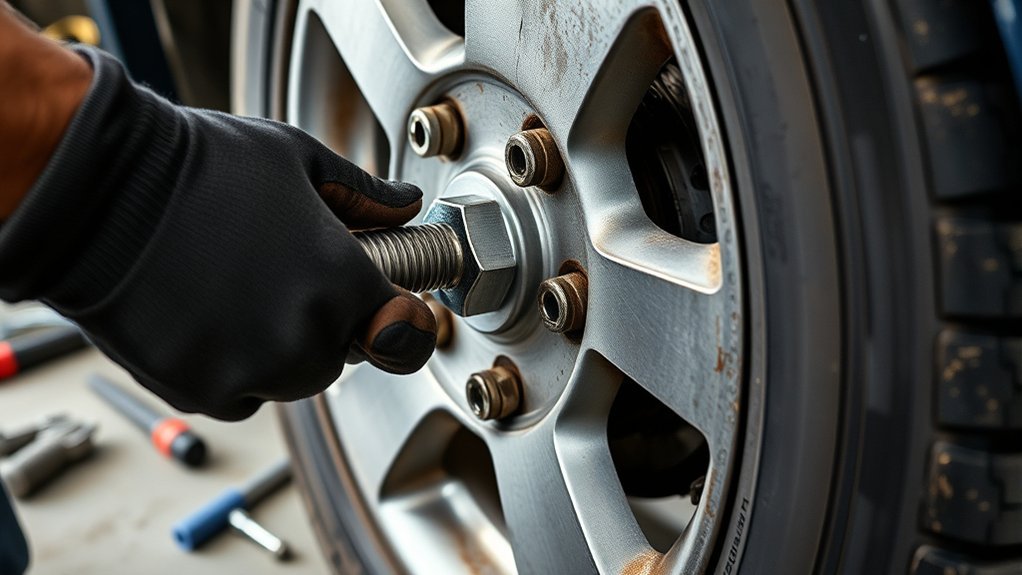
Loosening tire bolts, more accurately called lug nuts or wheel bolts depending on the vehicle, is easiest when the car is still safely on the ground, the correct socket fits snugly, and you use steady leverage instead of sudden force. The goal is to break the fasteners loose without rounding them, knocking the vehicle off the jack, or damaging the wheel studs.
Quick Answer
To loosen tire bolts safely, park on firm level ground, set the parking brake, chock the opposite wheel, and crack each lug nut loose before jacking the car. Use the correct six-point socket with a breaker bar or 4-way lug wrench, turn counterclockwise, and work in a star pattern.
Key Takeaways
- Break lug nuts loose while the tire is still touching the ground; do not fully remove them until the vehicle is lifted.
- Use the correct socket size, preferably a six-point impact-rated socket, to avoid rounding the lug nut.
- For rusted lug nuts, use penetrating oil, time, vibration, and steady leverage before considering stronger methods.
- Never crawl under a vehicle supported only by a jack; use rated jack stands if you must get under the vehicle.
- When reinstalling the wheel, start lug nuts by hand and finish with a torque wrench set to your vehicle’s specified torque.
At a Glance
| Time Required | 5–20 minutes for normal lug nuts; longer for rusted or damaged hardware |
| Difficulty | Easy to moderate; stop if the vehicle is unstable or the lug nut starts rounding |
| Tools Needed | Lug wrench or breaker bar, correct socket, wheel chocks, jack, owner’s manual, penetrating oil, gloves, flashlight, and torque wrench for reinstalling |
| Cost | $0 if your vehicle kit has the tools; about $20–$80 for a breaker bar, socket, penetrating oil, or basic torque wrench |
Start With a Safe Setup
Before you touch the lug nuts, stop on firm, flat ground away from traffic. Turn on the hazard lights, set the parking brake, put the transmission in Park or in gear, and move passengers to a safe place. If you have wheel chocks, place them at the wheel diagonally opposite the tire you are working on.
Warning: Do not change a tire in an active traffic lane, on a steep slope, on soft ground, or anywhere the vehicle can shift. If the location is unsafe, call roadside assistance instead.
Check the owner’s manual for the correct jack point, the spare tire instructions, the wheel-lock key location, and the wheel torque specification. Different vehicles use different jack points and torque values, so the manual matters more than any general chart.
Choose the Right Lug Nut Tools
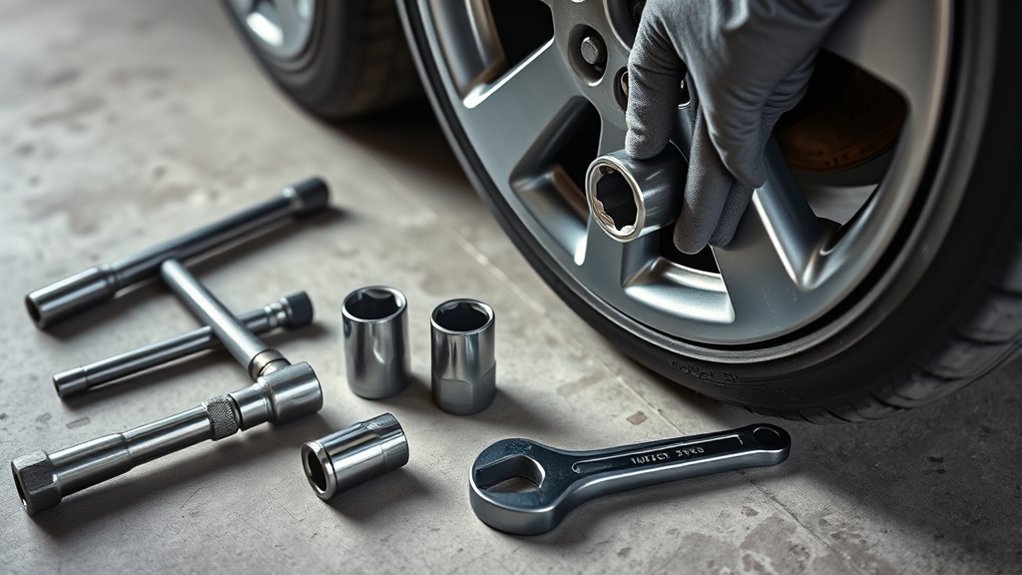
The best tool for loosening stubborn tire bolts is usually a breaker bar with the correct socket. A 4-way lug wrench also works well because it gives you better leverage than many small factory tire irons. Use a socket that fits fully over the lug nut with no wobble.
A six-point socket is safer than a loose 12-point socket on stubborn lug nuts because it grips the flat sides more securely. If you use an impact wrench for removal, use impact-rated sockets. Do not use a torque wrench to break lug nuts loose; save it for final tightening.
Pro Tip: Seat the socket completely before pulling. If the socket is crooked or only halfway on the lug nut, it can round the corners and make the job much harder.
[Products Worth Considering]

This spare tire tool kit is designed for the 2004 to 2018 Ford F-150 to help you loosen and tighten wheel lug nuts and manage the spare tire and provided jack functions from underneath the vehicle. It includes the lug nut wrench and extension pieces plus a convenient storage carrying case for organized transport. The jack itself is not included.

This 1/2-inch drive breaker bar delivers powerful leverage for loosening and tightening stubborn lug nuts and automotive fasteners. The 180-degree flex head helps you reach tight spaces at the angle you need, making tire and brake jobs easier. A spring-loaded ball detent design holds 1/2-inch sockets securely while the chrome-moly head provides durable strength for everyday use.

The 22800 wheel stud installer makes replacing wheel studs quick and secure, saving time and effort during tire service. It uses a ratchet or impact wrench to pull new studs firmly into place, helping when existing studs are too long. Compatible with most automotive wheels and light-duty truck wheel studs, it’s designed for easy, tool-assisted installation.
Loosen Lug Nuts Before Jacking Up the Car
Loosen the lug nuts while the tire is still on the ground. The vehicle’s weight keeps the wheel from spinning, so your force goes into the fastener instead of turning the wheel. Turn the wrench counterclockwise, or left, to loosen.
Do not remove the lug nuts yet. Break each one loose about a quarter turn to one full turn, then stop. Once all of them are cracked loose, you can jack the vehicle at the correct jack point and remove the nuts by hand after the tire is raised.
Use a Star Pattern
Work in a star or crisscross pattern instead of going around the wheel in a circle. On a five-lug wheel, that may look like 1-3-5-2-4. On a four-lug wheel, loosen opposite nuts across from each other. This keeps pressure more even across the wheel and hub.
| Tool or Step | Why It Helps |
| Breaker bar | Adds leverage without jumping on the wrench |
| Correct socket | Reduces the chance of rounding the nut |
| Ground contact | Keeps the wheel from spinning while you pull |
| Star pattern | Keeps force more even across the wheel |
Break Rusted Lug Nuts Free
If the lug nuts are rusted, spray penetrating oil where the nut meets the stud and let it soak for at least 10–15 minutes. Keep oil off the brake rotor, brake pads, tire tread, and wheel studs as much as possible. Wipe away excess oil before driving.
After the oil has had time to work, place the socket squarely on the nut and pull the breaker bar with steady pressure. If it still does not move, tap the breaker bar or wrench handle lightly with a hammer while keeping the socket seated. The vibration can help break the rust bond.
Use patience before force: penetrating oil, a snug socket, steady leverage, and light vibration are safer than jumping on the wrench.
[Products Worth Considering]

This car D-wheel lock nut key provides an anti-theft solution for D-shaped wheel lock bolts, helping keep your wheels secure. It features a flower-shaped internal pattern that resists micro-adjustment theft while allowing removal and mounting of compatible locking nuts. Made for reliable performance under high torque, it’s easy to use with standard socket wrench turning for quick tire maintenance and emergency repairs.

Yieokei Tesla jack pads are molded rubber lifting pucks designed for 2016-2026 Model 3/Y/S/X, including Juniper, to fit securely in the jack hole. They cushion the underframe and help position the jack precisely at the factory jack points to reduce risk of battery, paint, or chassis damage. The set also includes a tire repair tool kit for emergency roadside fixes and comes with a portable storage case to keep everything organized.

The Trivd Frol 1/2" air impact wrench delivers high performance torque up to 1500 ft-lbs with a twin hammer impact mechanism for strong, balanced blows. It features an ergonomic grip, compact lightweight design, and quick-stop control with 3 forward speeds up to 8000 RPM plus a reverse speed. Built for demanding automotive repair and tire shop work, the rear exhaust helps keep debris away from the surface.
Get More Torque Without Damaging Tools
When you need more torque, use a longer breaker bar rather than a weak factory wrench. Pull smoothly with your body balanced. Avoid bouncing, kicking, or jumping on the wrench because sudden force can slip the socket, bend a stud, or make the vehicle shift.
A short length of pipe over a breaker bar can add leverage, but use it carefully. If the socket starts to twist off the nut, stop immediately and reseat it. If the lug nut is already rounded or the stud is turning with the nut, more leverage can make the damage worse.
Note: An impact wrench can help remove stubborn lug nuts, but it is not a replacement for a torque wrench when reinstalling the wheel.
Use Heat, Taps, and Impact Carefully
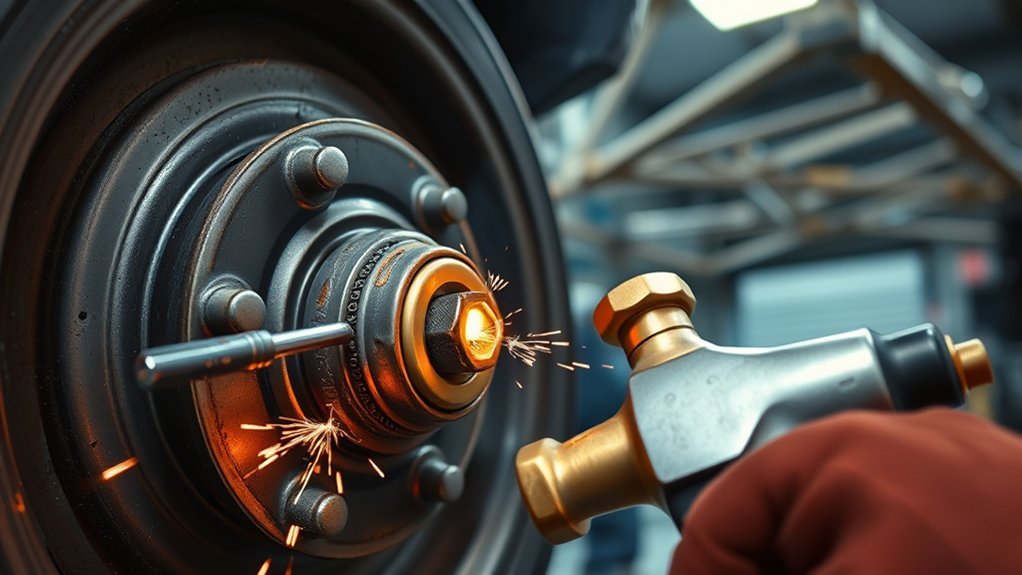
Heat should be a last resort, not the first move. If you are on the roadside, near dry grass, near fuel vapors, or unsure what is behind the wheel, skip the torch and call a professional. Heat can damage wheel finishes, valve stems, tires, brake hoses, sensors, and nearby parts if used carelessly.
If an experienced mechanic uses heat, the flame is kept away from rubber, plastic, brake lines, and the tire sidewall. Do not quench hot lug nuts with water. Let parts cool naturally and replace any damaged nut or stud before driving.
[Products Worth Considering]

The Dr.Roc spare tire tool kit helps you release, lower, or raise your spare tire with reliable extension tools and a lug nut wrench. It is made from rustproof automotive-grade steel and includes an organized carry case for convenient storage. Designed for compatibility with select GM models from the late 1990s through 2019, it uses upgraded extension components to install and remove spare tires with less hassle.

This ecocstm ratchet wrench is designed to make emergency and routine tire changes faster with a 360° rotating head and quick forward/reverse switching. The extended handle provides extra leverage to reduce effort and hand fatigue, while the adapter helps fit many scissor jacks on cars, SUVs, trucks, and vans. Built for reliable performance with durable construction, it’s a practical travel essential for on-the-road preparedness.

The SEESII cordless impact wrench delivers high tightening and loosening power for fast wheel bolt and industrial bolt work. Its brushless motor and variable-speed 3 forward/2 reverse modes help you control precision installs and stubborn nut removal. A dual-battery system with rapid charging and an included storage case make it ready for home, car, and jobsite use.
Deal With Locking Lug Nuts
Locking lug nuts need a matching key. Look in the glove box, trunk tool kit, center console, spare tire well, or owner’s manual pouch. One locking lug is usually installed on each wheel, and its face will look different from the standard lug nuts.
Use the Correct Wheel-Lock Key
Seat the key fully into the locking lug nut before applying force. If the key is shallow, tilted, or worn, it can strip the lock pattern. Apply steady pressure with a breaker bar, not sudden jerks.
If the Wheel-Lock Key Is Missing
If the key is missing, do not hammer random sockets onto the lock unless you accept the risk of wheel damage. A tire shop, dealer, or roadside technician can often remove wheel locks with the right extractor tools. After removal, replace damaged locks or lug nuts before reinstalling the wheel.
| Check | What to Do |
| Key fit | Make sure the wheel-lock key seats fully before pulling |
| Rust | Use penetrating oil and give it time to soak |
| Missing key | Call a tire shop, dealer, or roadside technician |
What to Do When Lug Nuts Won’t Budge
If a lug nut will not move after penetrating oil and steady leverage, stop and inspect it. Look for rounded corners, a cracked socket, a bending stud, or a wheel that shifts as you pull. These are signs that continuing with brute force may cause more damage.
- Reseat the socket. Make sure it is the correct size and fully engaged.
- Try a longer breaker bar. Pull steadily with controlled force.
- Add vibration. Light taps on the wrench handle can help loosen rust.
- Use an impact wrench if available. Use short bursts with an impact-rated socket.
- Stop if the nut rounds. A rounded lug nut usually needs an extractor socket or professional removal.
Warning: Never put any part of your body under a vehicle supported only by a jack. If the job requires reaching under the vehicle, support it with properly rated jack stands on solid ground.
If the Wheel Will Not Come Off After the Lug Nuts Are Removed
Sometimes the lug nuts come off, but the wheel stays stuck to the hub because of rust or dirt. Make sure every lug nut is fully removed, then keep the vehicle stable on the jack at the correct jack point. Do not crawl under the vehicle.
Try rocking the tire from the left and right sides. If it still will not move, place the removed flat tire partly under the vehicle as a backup safety measure, then tap the tire sidewall with a rubber mallet. Avoid striking the wheel face with a metal hammer because it can damage the rim.
Tighten Lug Nuts the Right Way
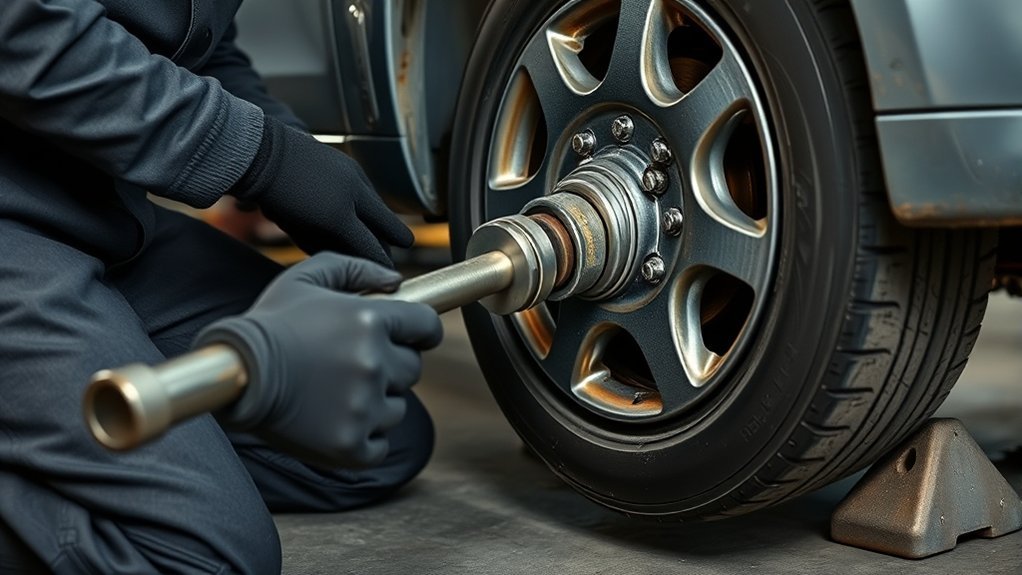
When the wheel goes back on, start every lug nut by hand. If a nut will not spin on by hand for several turns, stop and check for cross-threading or damaged threads. Never force a lug nut with a wrench if it is not threading cleanly.
Snug the lug nuts in a star pattern while the wheel is raised. Lower the vehicle until the tire just touches the ground and cannot spin, then tighten again in the star pattern. Once the vehicle is fully lowered, use a torque wrench set to the specification in your owner’s manual or wheel manufacturer instructions.
Do not use an impact wrench for final torque. Over-tightening can stretch studs, damage threads, distort brake parts, or make the next tire change harder. Under-tightening can let the wheel loosen while driving.
Pro Tip: After any wheel removal, recheck lug nut torque after a short drive if your owner’s manual or wheel manufacturer recommends it, especially after installing aftermarket wheels or a spare.
Check the Spare Tire Before Driving
If you installed a spare, check its pressure as soon as possible. Tire pressure should be checked cold and matched to the pressure listed on the vehicle tire placard or in the owner’s manual. Temporary spare tires may also have speed and distance limits printed on the tire or listed in the manual.
If your vehicle uses a tire repair kit or run-flat tires instead of a spare, follow the vehicle-specific instructions. Do not assume every car has a usable spare, jack, and lug wrench.
When to Call a Professional
Call roadside assistance, a tire shop, or a mechanic if the vehicle is in an unsafe location, the lug nut is rounded, the wheel-lock key is missing, a stud spins or breaks, the socket will not fit securely, or heat would be needed near the tire or brake parts. Getting help is cheaper than damaging the wheel, hub, studs, or brakes.
Frequently Asked Questions
Is there a trick to loosening tire bolts?
Yes. Keep the tire on the ground, use the correct socket, and pull a breaker bar steadily counterclockwise. For rusted lug nuts, apply penetrating oil and give it time to soak before trying again.
Why can’t I loosen the bolts on my tire?
The most common reasons are rust, overtightening, cross-threading, a damaged lug nut, a weak wrench, or the wrong socket size. Do not keep forcing it if the nut starts to round or the stud starts to twist.
Should I loosen lug nuts before jacking up the car?
Yes. Break the lug nuts loose while the tire is still touching the ground. Do not fully remove them until the vehicle is raised and stable at the correct jack point.
What do mechanics use to remove lug nuts?
Mechanics commonly use impact wrenches, breaker bars, six-point sockets, penetrating oil, extractor sockets, and torque wrenches. Impact tools are helpful for removal, but final tightening should be checked with a torque wrench.
Why won’t my tire come off after I remove the lug nuts?
The wheel may be stuck to the hub by rust, dirt, or corrosion. Rock the tire by hand and tap the tire sidewall with a rubber mallet. Do not crawl under a vehicle supported only by a jack.
Can I stand on the lug wrench to loosen a stuck lug nut?
It is safer to avoid standing or jumping on the wrench. Use a longer breaker bar and steady pulling force instead. Jumping can make the socket slip, round the nut, or shift the vehicle.
Conclusion
You can loosen tire bolts safely when you set the vehicle up correctly, use the right socket, and apply steady leverage before jacking the car. Penetrating oil, patience, and a breaker bar solve many stuck-lug problems. If a lug nut rounds, a wheel lock key is missing, or the vehicle is unstable, stop and get professional help. When the wheel goes back on, hand-start the nuts and finish with a torque wrench set to the correct specification.
Sources
- AAA Club Alliance: How to Change a Tire — safe roadside setup, loosening lug nuts before lifting, and star-pattern tightening.
- Michelin: How to Change a Car Tire — loosen lug nuts before jacking, use the owner’s manual for jack placement, and use a torque wrench for correct tightening.
- Toyota Owner’s Manual: If You Have a Flat Tire — jack safety, correct jack use, and warning not to put your body under a vehicle supported only by a jack.
- AAA Auto Repair: Wheel Installation and Inspection Tips — hand-starting lug nuts, preventing cross-threading, and using a calibrated torque wrench for final torque.
- NHTSA Tire Safety Brochure — checking tire pressure cold, using the tire information placard, and tire safety basics.