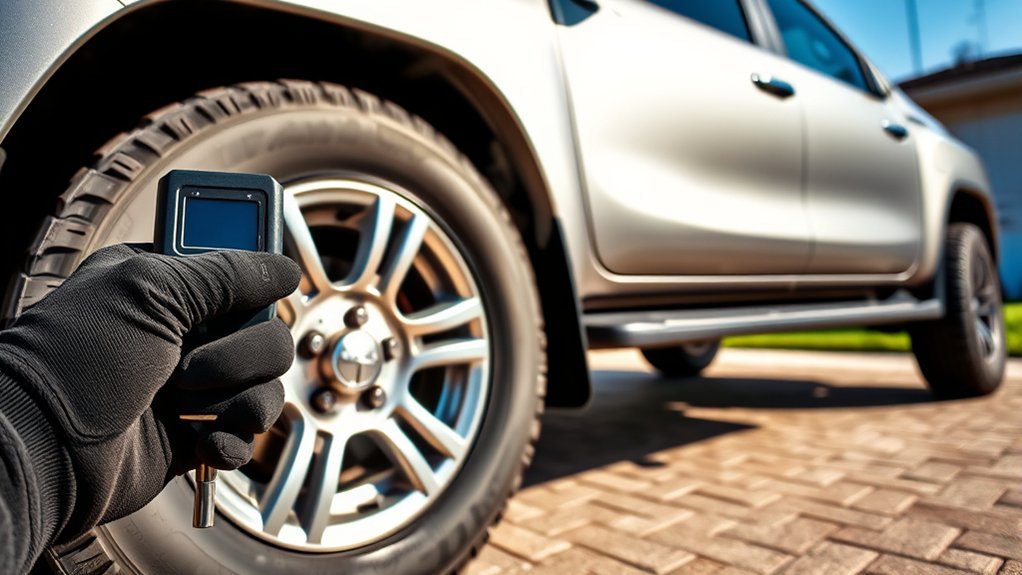
To check the TPMS sensor on a Toyota Hilux, start with the basics: confirm the correct cold tyre pressure, check every tyre with a quality gauge, inspect the valve stems and tyres for leaks or damage, then use the vehicle display, Toyota app, or a TPMS diagnostic tool if your model supports those features. Do not reset the warning light until the tyre pressures and tyre condition are correct.
Quick Answer
Check a Toyota Hilux TPMS sensor by setting all tyres to the cold pressure shown on the door placard or owner’s manual, inspecting the valve assemblies, then reading each sensor with the Toyota app, vehicle display, or a TPMS scan tool. A flashing TPMS light usually means a system fault, not just low pressure.
Key Takeaways
- Always check tyre pressure with a gauge first; TPMS is a warning system, not a replacement for routine pressure checks.
- Use the Toyota app only if your Hilux, region, and connected-services plan support tyre-pressure or vehicle-health data.
- A solid TPMS light usually points to low tyre pressure; a light that flashes for about one minute and then stays on usually points to a TPMS fault.
- After replacing wheels, tyres, or sensors, the sensor IDs may need to be registered or relearned with a scan tool.
At a Glance
| Time Required | 10–20 minutes for basic checks; longer if a sensor scan or relearn is needed |
| Difficulty | Easy for pressure and visual checks; moderate for scan-tool diagnostics |
| Tools Needed | Tyre pressure gauge, air compressor, torch, soapy water spray, Toyota app if supported, TPMS scan tool if diagnosing a sensor fault |
| Cost | Free if checking pressure yourself; sensor diagnosis or replacement cost depends on labour, sensor type, and market |
What Is the TPMS and Why Does It Matter?
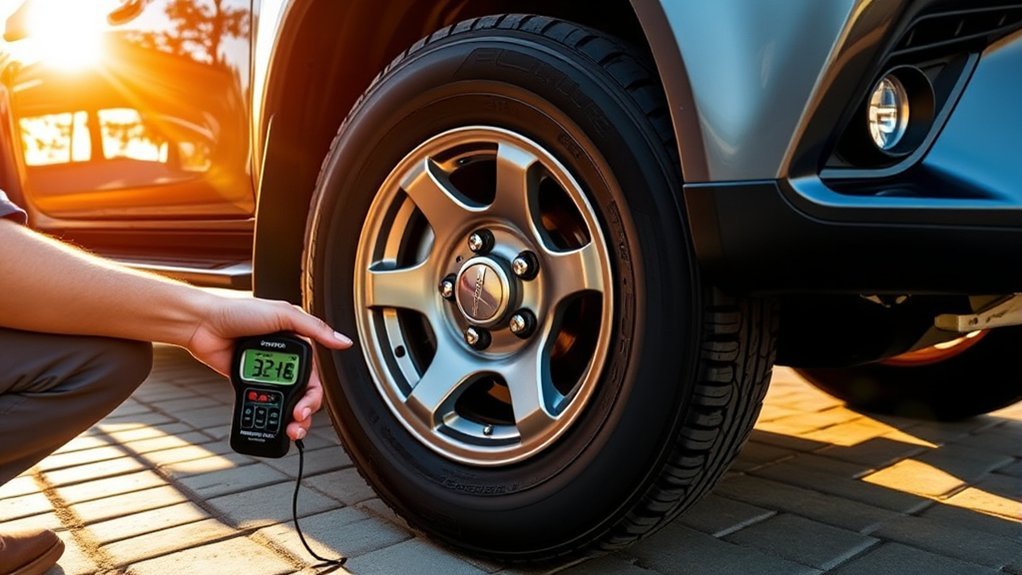
The Tire Pressure Monitoring System, or TPMS, warns you when tyre pressure is low enough to affect safety, tyre wear, handling, and fuel use. Toyota also advises checking tyre pressure manually because TPMS only warns after pressure reaches a set threshold, and tyres can still be wearing unevenly before the warning appears.
Some vehicles use direct TPMS, with a pressure sensor and transmitter fitted at each wheel valve. Other systems use indirect TPMS, which estimates pressure loss through wheel-speed changes from the ABS system. Many Hilux variants with TPMS use wheel-mounted sensors, but the exact setup depends on the model year, trim, and country.
In Europe, TPMS became a legal requirement for newly launched and factory-updated passenger cars sold since November 2014. For commercial-vehicle categories and markets outside Europe, requirements and Hilux equipment can vary, so always confirm your exact Hilux specification in the owner’s manual or with a Toyota dealer.
For U.S.-spec light vehicles, FMVSS No. 138 requires the low-pressure warning to activate when one or more tyres are 25% or more below the manufacturer’s recommended cold inflation pressure, or below the standard’s minimum pressure level.
Before You Check the TPMS Sensor
Do these checks before you touch the reset button. Resetting the TPMS while a tyre is still low or leaking can hide the warning without fixing the problem.
- Park on level ground in a safe, well-lit area.
- Let the tyres cool if possible. Cold tyre pressure means the vehicle has been parked for several hours or has only been driven a very short distance.
- Find the recommended pressure on the driver’s door placard or in the owner’s manual. Do not use the maximum pressure printed on the tyre sidewall as your normal setting.
- Check all road tyres with a quality gauge. If your Hilux has a full-size spare, check that too, even if the spare is not monitored by TPMS.
- Look for nails, cuts, sidewall bulges, cracked valve stems, missing valve caps, or corrosion around metal valve stems.
Warning: If a tyre is visibly flat, badly damaged, losing air quickly, or the vehicle feels unstable, stop driving as soon as it is safe. Fit the spare or call roadside assistance instead of trying to clear the TPMS light.
Does Your Toyota Hilux Have TPMS?
Many late-model Toyota Hilux variants have TPMS, but it is not safe to assume every Hilux in every country, year, and trim has the same system. Current Toyota HiLux specifications in some markets list Tyre Pressure Monitoring System as equipment, but features still vary by grade and market.
To confirm whether your Hilux has TPMS, check for:
- a tyre-pressure warning icon on the instrument cluster during start-up;
- a tyre-pressure display in the multi-information display, where fitted;
- TPMS information in the owner’s manual;
- rubber or metal valve stems that match TPMS-equipped wheels;
- sensor data shown by a TPMS scan tool.
Note: If your Hilux has aftermarket wheels, a second wheel set, or recently replaced tyres, the sensors may be missing, damaged, incompatible, or not registered to the vehicle.
What Should You Do When the TPMS Light Comes On?
When the TPMS light comes on, treat it as a tyre-safety warning first and an electronics problem second. Follow this order:
- Slow down and stop safely. Avoid hard braking, high speeds, and sharp steering until you know the tyres are safe.
- Inspect all tyres. Look for a flat tyre, puncture, bulge, sidewall damage, or an object in the tread.
- Check pressure with a gauge. Set each tyre to the pressure shown on the door placard or owner’s manual.
- Recheck after a short wait. A tyre that loses pressure again may have a puncture, bead leak, valve leak, or cracked valve stem.
- Only reset after pressure is correct. If the light stays on after proper inflation and reset, move to sensor diagnostics.
Solid vs. Flashing TPMS Light
| Light behavior | Likely meaning | What to do |
| Solid TPMS light | One or more tyres may be below the required pressure. | Check tyre condition and set cold pressure correctly. |
| Flashes for about one minute, then stays on | The TPMS may have a malfunction, failed sensor, unregistered sensor, or communication problem. | Check pressure first, then have the system scanned if the light returns. |
| Light comes back after inflation | Slow leak, incorrect reset, damaged valve, or sensor issue. | Spray soapy water around tread and valve area, then scan the sensors if no leak is found. |
Verify Tyre Pressure Manually First
The most reliable first check is still a manual pressure reading. Toyota recommends using a quality tyre pressure gauge, checking when tyres are cold, and adjusting pressure to the recommended level.
- Remove the valve cap from one tyre.
- Press the gauge firmly onto the valve stem until the hissing stops.
- Compare the reading with the recommended cold pressure for that tyre position.
- Add or release air as needed.
- Refit the valve cap to help keep dirt and moisture out of the valve core.
- Repeat on every tyre, including the spare if applicable.
Pro Tip: Check pressures monthly and before towing, heavy loading, off-road driving, or long trips. Hilux tyre pressures can differ by load, tyre size, and axle position, so use the placard or manual for your exact setup.
Verify Tyre Pressure With the Toyota App
If your Hilux supports connected tyre or vehicle-health data, the Toyota app may help you view vehicle alerts, maintenance information, or tyre-related data. Availability depends on the vehicle, region, connected-services enrollment, subscription status, telematics hardware, and network coverage.
Use the app as a convenience check, not as your only diagnostic step. If the app shows a low-pressure alert, confirm the reading with a gauge before driving far or resetting the system.
Downloading the Toyota App
Download the Toyota app from the Apple App Store or Google Play Store. Sign in with your Toyota account, add your vehicle, and complete any connected-services enrollment steps shown in the app. If your Hilux is not compatible with a tyre-pressure display, you may still see maintenance reminders, vehicle alerts, recall notices, or service information instead of live PSI readings.
Accessing the Tyre Maintenance Section
On compatible vehicles, open the Toyota app, select your Hilux, then look for the Service, Vehicle Status, Vehicle Health, or Tyre Maintenance area. The exact menu name can vary by app version and market. If live pressure is shown, compare the app reading with your manual gauge reading, especially after a cold night, a tyre repair, or a wheel change.
Inspecting TPMS Sensors for Damage: Essential Steps
On a direct TPMS-equipped Hilux, the sensor is normally attached to the inside of the valve assembly, so you cannot fully inspect the sensor body without removing the tyre from the wheel. You can still check the visible parts that often reveal a problem.
- Check the valve stem. Look for cracking, looseness, corrosion, bends, or missing valve caps.
- Spray soapy water around the valve. Bubbles can reveal a valve core leak, valve-stem leak, or bead leak.
- Inspect the wheel rim. Corrosion, dents, or bead damage can cause pressure loss that looks like a sensor fault.
- Check for recent tyre work. Sensors can be damaged during tyre removal or installation if not handled correctly.
- Check sensor age. Direct TPMS sensors use sealed batteries. Many last around 5–10 years, but heat, mileage, impact, and driving conditions affect lifespan.
Note: A damaged tyre, slow puncture, or leaking valve can trigger the same warning as a sensor issue. Fix leaks before replacing TPMS sensors.
Checking the TPMS Sensor With a Diagnostic Tool
A TPMS diagnostic tool is the best way to confirm whether a sensor is working. A tyre shop, Toyota service centre, or well-equipped mechanic can usually trigger each wheel sensor and read the data.
A proper TPMS scan should check:
- sensor ID number;
- live tyre pressure reading;
- temperature reading, if supported;
- sensor battery status, if supported;
- radio signal strength;
- which wheel position the vehicle thinks the sensor belongs to;
- diagnostic trouble codes stored in the TPMS control module.
If one wheel does not respond but the others do, the issue is likely that sensor, its battery, the valve assembly, or an incompatible/unregistered replacement sensor. If none of the sensors respond, the problem may be the receiver, TPMS module, wiring, or scan-tool compatibility.
[Products Worth Considering]

Marsflex brand TPMS replacement sensors help restore tire pressure monitoring for compatible Toyota, Lexus, Scion, and Pontiac models. Each sensor is pre-programmed for the vehicle application and includes a long-life battery for up to 8 years of normal use. Designed to replace common OE numbers and requires relearning using a TPMS scan tool after installation.

Replace your worn or missing TPMS sensors with pre-programmed, direct-fit sensors for compatible Ford, Lincoln, and select Mazda models. Each sensor comes ready to activate with a scan tool, helping restore accurate tire pressure monitoring and trouble-free installation. Built with a long-life CR2032 battery and tested before factory release, this set provides dependable performance with a one-year warranty.
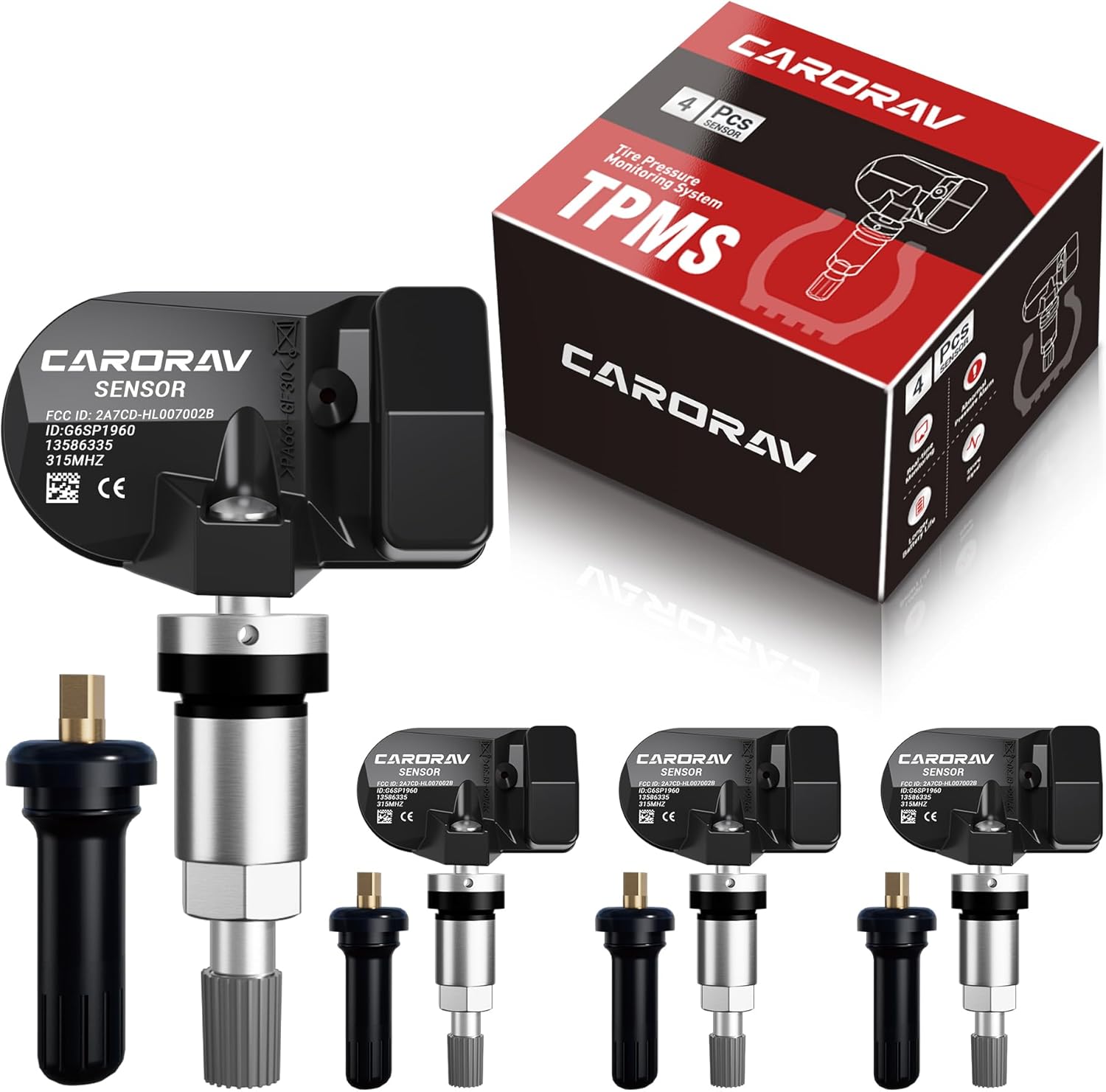
Replace worn or missing TPMS sensors with CARORAV pre-programmed GM-compatible sensors for a smoother installation experience. These 315MHz replacement sensors help monitor tire pressure in real time with long battery life, and they are designed to withstand harsh temperatures. Manual or OBDII relearn may be required to reset the system for proper recognition.
Resetting the TPMS Light on Your Toyota Hilux
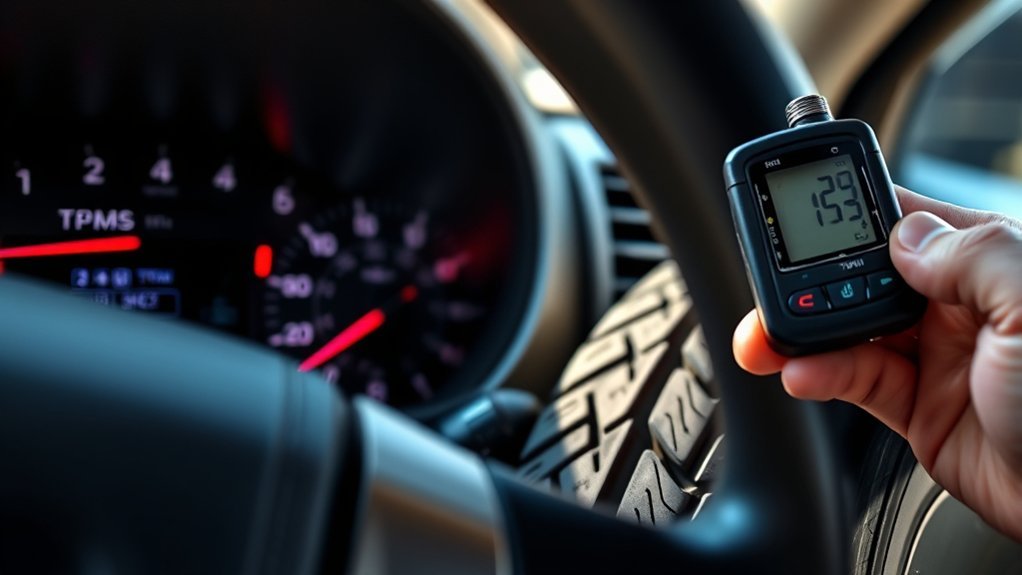
Reset the TPMS only after every tyre is inflated to the correct cold pressure and any visible tyre damage has been addressed. Reset procedures vary by Hilux year, instrument cluster, and market, so the owner’s manual is the final authority.
Common Toyota reset methods include:
- Reset button method: With the vehicle safely parked and pressures set, turn the ignition on, find the TPMS reset button if fitted, and hold it until the warning light flashes as described in the manual.
- Multi-information display method: Some models use a settings menu in the instrument display. Look for tyre pressure, vehicle settings, or TPMS initialization.
- Drive cycle method: Some systems need a short drive after pressure correction or initialization before the warning clears.
- Scan-tool relearn: After sensor replacement, wheel replacement, or a second wheel set, sensor IDs may need to be registered with a compatible tool.
Warning: Do not repeatedly reset the TPMS to make the light disappear. If the light returns, the tyre may be leaking or the TPMS may have a real fault that needs diagnosis.
[Products Worth Considering]

Replace worn or malfunctioning GM TPMS sensors with this 433MHz pre-programmed sensor set designed for compatibility with many Chevrolet, Buick, GMC, and Cadillac models. It includes guidance for proper OBDII relearning/pairing after installation and supports reliable long-term operation with a high-performance CR2032 battery. Quality tested for durability and performance to help restore accurate tire pressure monitoring.

Masoll Gen 2 external TPMS sensors are a DIY replacement set of 4 for select GM vehicles made after 2006, helping you shut off the TPMS warning light quickly. Simply screw the sensors onto the tire valves and sync to your car ECU using the included EL-50448 relearn tool. Dual-frequency 315/433 MHz design provides OEM-level performance with accurate readings and replaceable batteries for about two years.
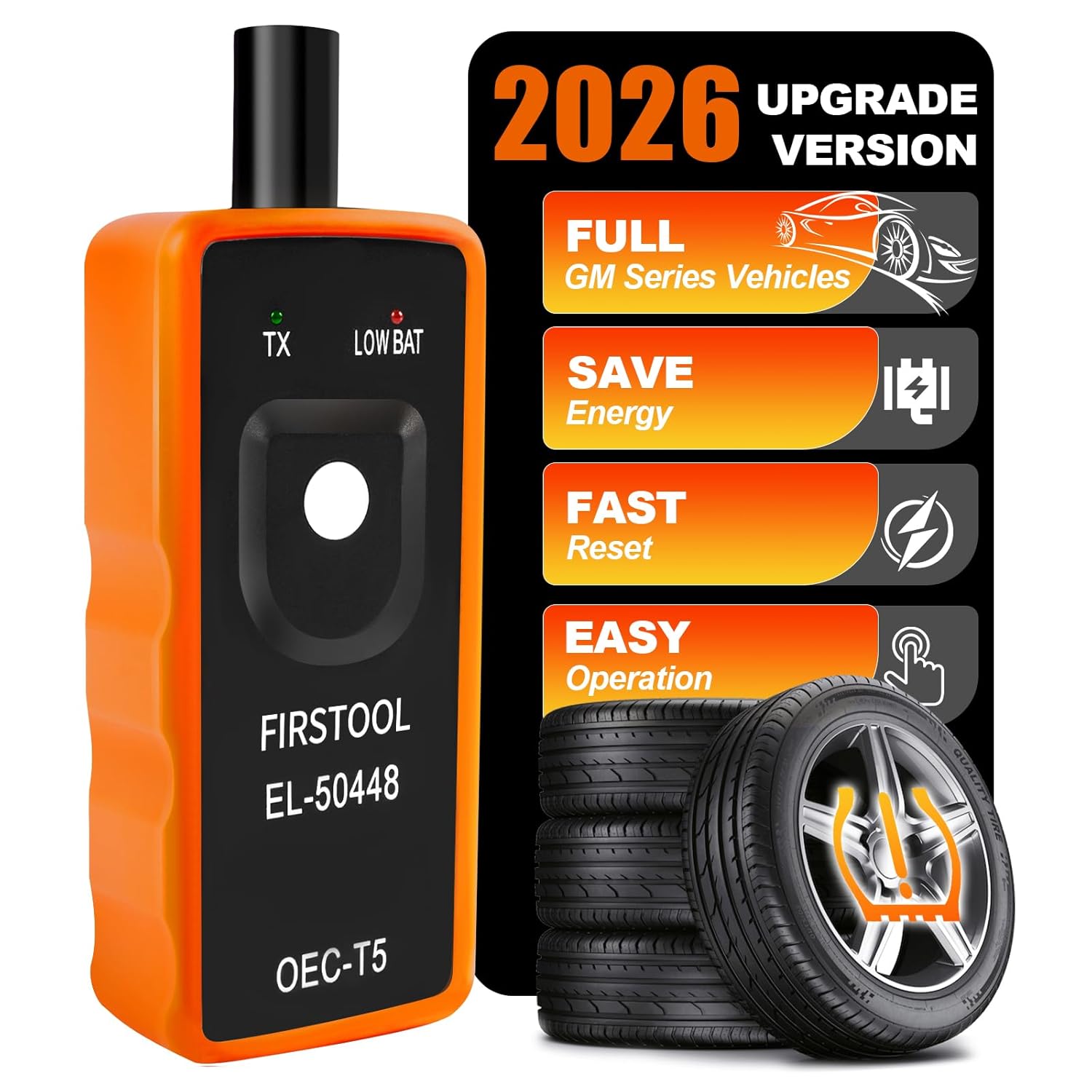
This TPMS relearn tool helps you quickly activate, match, and reset GM tire pressure sensors to keep the vehicle monitoring system working properly. It clears tire pressure alarms and dashboard warning lights after sensor replacement or tire rotation, and supports learning for common 315/433 MHz TPMS sensors. Designed for simple one-button operation, it can help you avoid unnecessary trips to repair shops.
Common TPMS Problems and Fixes
| Problem | Likely cause | Best fix |
| Light comes on during cold mornings | Cold air lowers tyre pressure. | Check and set cold pressure to the placard value. |
| One tyre keeps dropping pressure | Puncture, valve leak, bead leak, cracked wheel, or damaged valve stem. | Find and repair the leak before resetting TPMS. |
| Light flashes, then stays on | Sensor fault, unregistered ID, failed battery, receiver issue, or incompatible sensor. | Scan each sensor and register or replace the faulty part. |
| Warning appears after tyre rotation | Wheel positions may need relearning, depending on system type. | Initialize TPMS or perform relearn as required by the manual. |
| App pressure does not match gauge | Tyres warmed up, delayed app data, gauge variation, or sensor issue. | Use a reliable gauge on cold tyres and recheck later. |
[Products Worth Considering]
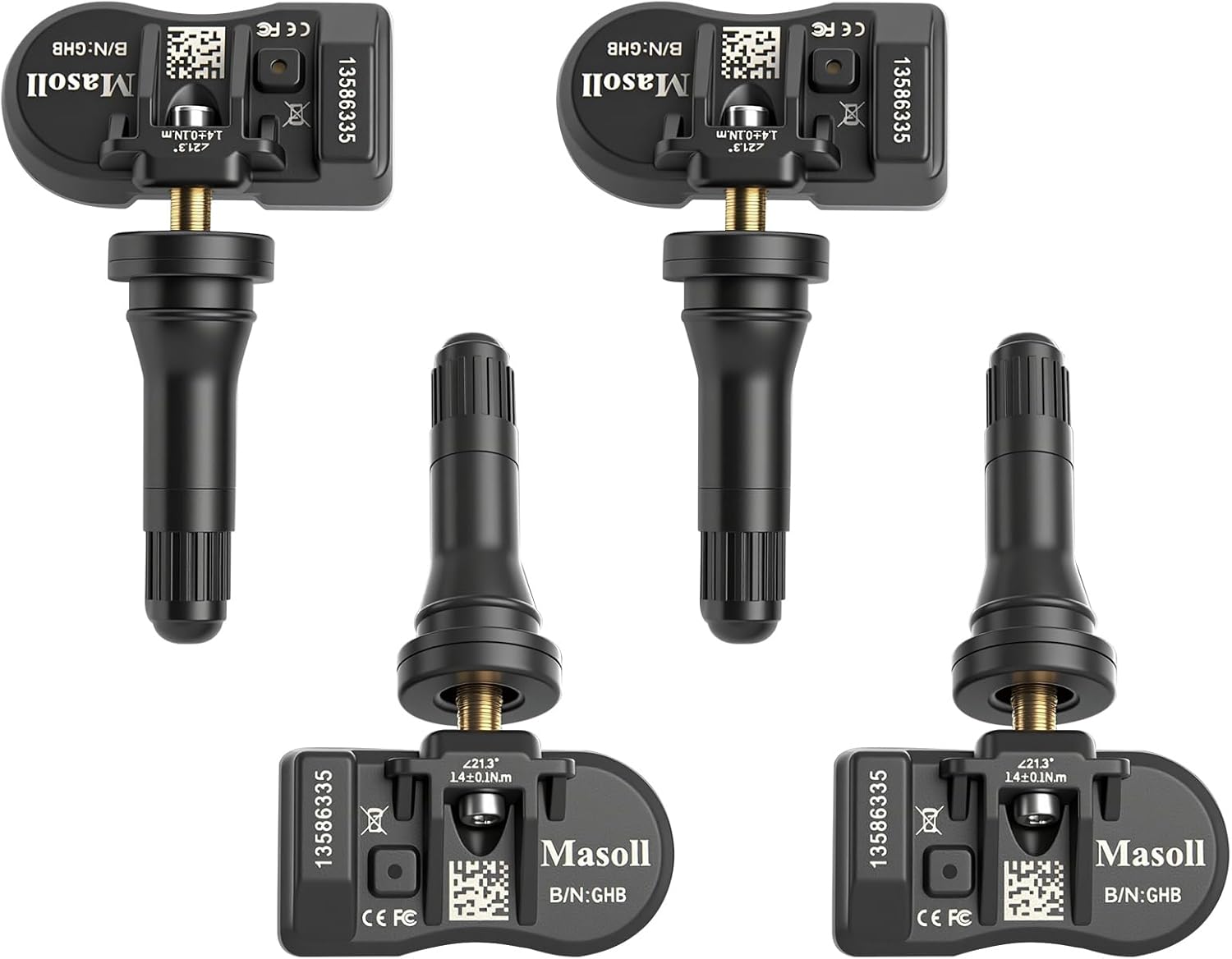
Masoll TPMS sensors are designed for most GM vehicles after 2006, helping you clear tire pressure warnings with OEM-level 315/433MHz compatibility. The 4-pack includes pre-programmed sensors, but re-learning is required after installation using a GM TPMS relearn tool or scan tool. Built with a dual-antenna design and a long-life CR2050 battery, these sensors deliver reliable performance in extreme temperatures with corrosion-resistant valve construction.

This TPMS sensor training and relearn reset tool is customized for Ford, Lincoln, and Mercury vehicles to help activate tire pressure programming after sensor replacement or tire rotation. It can activate individual tire pressure sensors with one-button operation, helping prevent TPMS warning light illumination. It is not a sensor programming tool and cannot program replacement sensors—use it to trigger/activate sensors only.

The VEHLIVE SU-50448 II TPMS relearn tool provides a fast activation reset to restore accurate tire pressure monitoring after sensor replacement or tire rotation. It supports 315 MHz and 433 MHz GM series sensors and helps clear dashboard pressure warnings. With simple two-button operation and horn-confirmed relearning order, you can reprogram sensors conveniently at home.
When to Seek Professional Help for TPMS Issues?
Get professional help from a Toyota service centre, tyre shop, or qualified mechanic if:
- the TPMS light flashes for about one minute and then stays on;
- the light remains on after all tyres are set to the correct pressure;
- one tyre repeatedly loses pressure;
- you recently changed wheels, tyres, or TPMS sensors;
- a sensor does not respond to a TPMS scan tool;
- you see corrosion, cracking, or looseness at a valve stem;
- the app or vehicle display shows a pressure that does not match a gauge reading.
Direct TPMS sensors are mounted inside the wheel and can be damaged if removed incorrectly. If a tyre needs to be dismounted, ask the technician to inspect the sensor, replace service parts where appropriate, and confirm the sensor ID is registered to the vehicle.
Frequently Asked Questions
How do I know if my Toyota TPMS sensor is bad?
A TPMS sensor may be bad if the tyre pressure is correct but the light flashes for about one minute and then stays on, one wheel does not show a reading, or a TPMS scan tool cannot trigger that sensor. A dead sensor battery, damaged valve stem, corrosion, or an unregistered replacement sensor can all cause similar symptoms.
How do you check if a TPMS sensor is working?
First, set the tyre to the correct cold pressure and check for leaks. Then use the vehicle display, Toyota app if supported, or a TPMS scan tool. A working direct sensor should report an ID, pressure, and signal when triggered. If it does not respond, the sensor, battery, or registration may be faulty.
Where is the TPMS reset button on a Toyota Hilux?
On some Toyota models, the TPMS reset button is low on the dashboard near the steering wheel. On other models, reset or initialization is handled through the instrument-cluster settings menu. Because Hilux layouts vary by year and market, check your owner’s manual before resetting the system.
Do Toyota Hilux models have TPMS?
Many late-model Toyota Hilux variants have TPMS, but availability depends on model year, trim, and country. Check your owner’s manual, instrument-cluster warning lights, vehicle specification sheet, or ask a Toyota dealer to confirm whether your exact Hilux has direct TPMS, indirect TPMS, or no TPMS.
Can I drive with the TPMS light on?
Drive only as far as needed to stop safely and check the tyres. If a tyre is flat, damaged, or losing air quickly, do not continue driving on it. If all tyres are properly inflated and the light still stays on or flashes, drive cautiously and arrange a TPMS diagnostic check.
Why does the TPMS light come on when it gets cold?
Tyre pressure drops when air temperature falls. A tyre that was close to the minimum pressure can trigger the TPMS light after a cold night. Check the tyres cold and inflate them to the recommended pressure on the placard or in the owner’s manual.
Do I need to reset TPMS after changing tyres or wheels?
Often, yes. After tyre rotation, wheel replacement, sensor replacement, or fitting a second wheel set, the system may need initialization, a drive cycle, or sensor ID registration. If the light flashes after the work, the sensor IDs may not be registered correctly.
Conclusion
Checking a Toyota Hilux TPMS sensor is not just about pressing a reset button. The safe process is to confirm the correct cold tyre pressure, inspect the tyres and valve stems, use app or display data only where supported, then scan the sensors if the light stays on or flashes. If a sensor is dead, damaged, or unregistered, a proper TPMS diagnostic and relearn will fix the cause instead of simply hiding the warning.
Sources
- Toyota Support — How the Tire Pressure Monitoring System works — supports TPMS warning and reset basics.
- Toyota Support — Proper way to check tyre pressure — supports cold-pressure and gauge-check guidance.
- NHTSA TireWise — supports cold tyre pressure checks, placard pressure, and tyre-safety practices.
- eCFR — 49 CFR § 571.138 TPMS standard — supports the 25% underinflation warning threshold for U.S.-spec light vehicles.
- Toyota Support — Toyota app features — supports Toyota app feature and availability caveats.
- Toyota Australia — HiLux specifications — supports current HiLux equipment references and market/grade variation.