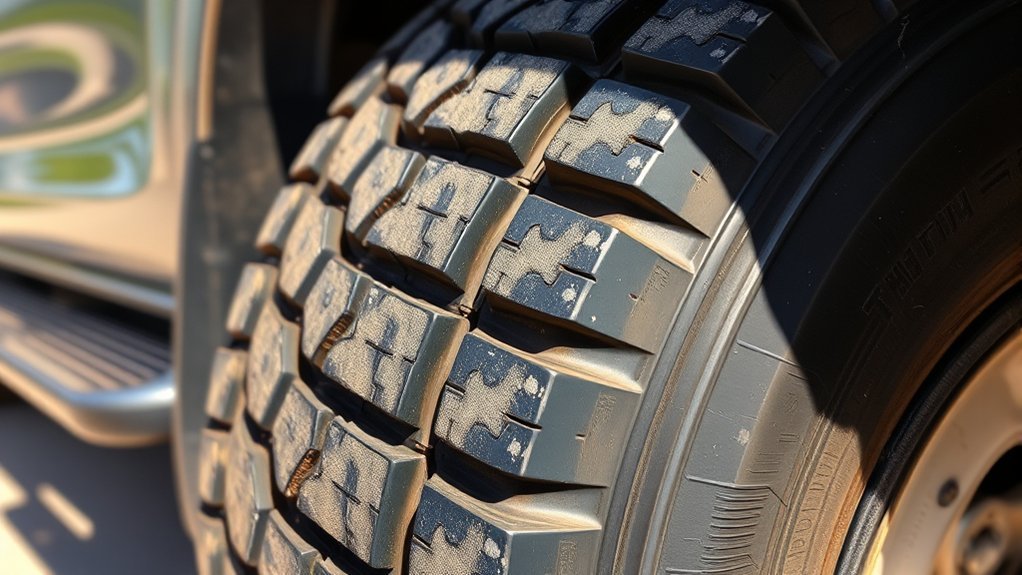
If your Toyota Hilux is wearing tires unevenly, start with the basics: tire pressure, wheel alignment, tire rotation, suspension wear, and load habits. A Hilux often works harder than a regular car, especially when towing, carrying tools, driving off-road, or running over potholes. Those conditions can make small tire problems show up fast as edge wear, center wear, cupping, feathering, or one tire wearing faster than the rest.
Quick Answer
Your Toyota Hilux is likely wearing tires unevenly because of incorrect tire pressure, poor wheel alignment, missed tire rotations, worn suspension or steering parts, unbalanced wheels, heavy loads, or off-road damage. Check the tread pattern first, then confirm cold tire pressure, tread depth, alignment, balance, and suspension condition.
Key Takeaways
- Wear on one inner or outer shoulder often points to alignment or suspension issues.
- Wear on both tire edges usually points to under-inflation or overloading.
- Wear in the center of the tread often means the tire has been run with too much pressure for the load.
- Cupping, scalloping, vibration, or bouncing can point to worn shocks, struts, bushings, ball joints, or wheel balance problems.
- Use the tire placard and owner’s manual for your exact Hilux pressure, rotation pattern, and service schedule.
At a Glance
| Time Required | 10 to 20 minutes for a visual check; longer if you need a shop inspection. |
| Difficulty | Easy for inspection; professional help recommended for alignment, balance, and suspension diagnosis. |
| Tools Needed | Tire pressure gauge, tread depth gauge or penny, flashlight, gloves, and your Hilux tire placard or owner’s manual. |
| Cost | Free for a basic visual check; shop pricing varies for alignment, balancing, tire replacement, or suspension repair. |
Why Is My Toyota Hilux Experiencing Uneven Tire Wear?
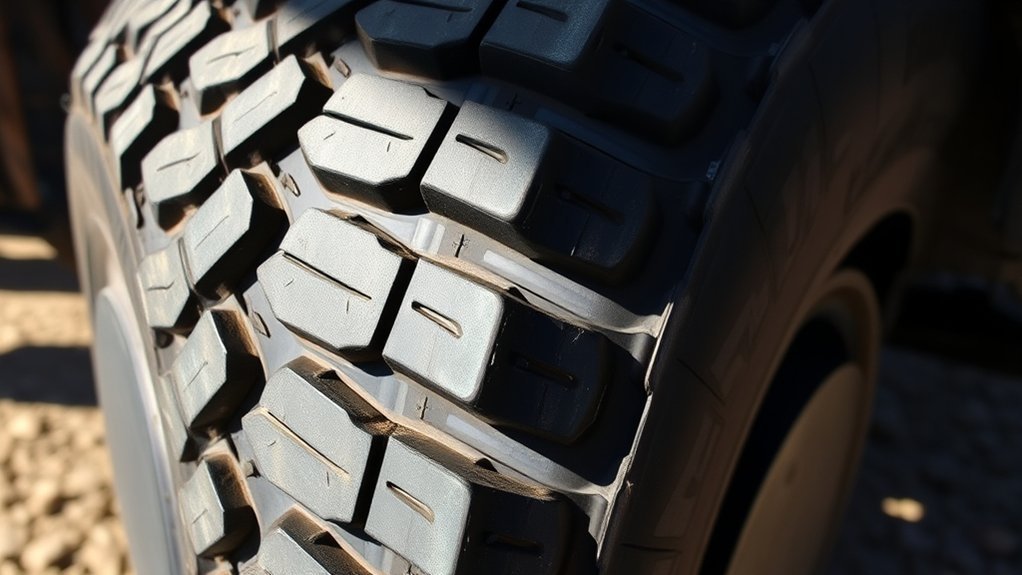
If you’ve noticed uneven tire wear on your Toyota Hilux, the tread pattern gives you the first clue. Misalignment, incorrect tire pressure, worn steering or suspension parts, wheel imbalance, hard braking, towing, heavy cargo, and off-road impacts can all change how the tire meets the road.
Do not judge the problem from one tire only. Park on level ground, turn the front wheels enough to see the tread, and compare all four tires. Look across the inner edge, center ribs, outer edge, and shoulder blocks. Also check whether the wear is smooth, feathered, choppy, cupped, or limited to one tire.
Warning: Do not keep driving on a tire with exposed cords, a sidewall bulge, deep cracks, sudden pressure loss, severe vibration, or tread separation. Install the spare if it is safe to do so and have the Hilux inspected before driving at speed.
Read the Tread Pattern First
The fastest way to narrow the cause is to match the wear pattern to the most likely fault. Use this table before replacing tires, because new tires can wear the same way if the root problem is still there.
| Wear Pattern | Most Likely Cause | What to Check Next |
|---|---|---|
| Inner or outer shoulder wear on one tire | Toe, camber, curb impact, or worn suspension parts | Alignment, tie rods, ball joints, control-arm bushings, wheel damage |
| Both edges worn more than the center | Under-inflation or carrying more load than the pressure supports | Cold pressure, load setting on placard, slow leaks, valve stems |
| Center tread worn faster | Too much pressure for the load or repeated over-inflation | Placard pressure, gauge accuracy, tire size, load condition |
| Cupping or scalloped dips | Wheel imbalance, weak shocks, worn suspension, or loose steering parts | Balance, shocks, bushings, bearings, ball joints |
| Feathered tread blocks | Toe alignment problem | Front and rear toe settings, steering linkage, recent impacts |
| One tire wearing much faster than the others | Local damage, dragging brake, bent wheel, or worn corner component | Brake caliper, wheel bearing, rim runout, suspension movement |
How Misalignment Affects Tire Longevity
When your Toyota Hilux’s wheels are misaligned, the tires do not roll straight in the direction the vehicle is traveling. Even a small toe or camber problem can scrub rubber from one edge of the tread. You may also notice the Hilux pulling to one side, the steering wheel sitting off-center, or the tires feeling noisy after a few thousand miles.
Alignment problems often show up after hitting a pothole, clipping a curb, driving rough tracks, replacing steering parts, lifting the vehicle, or fitting different tires. A pickup that often carries uneven cargo can also stress the tires differently from an unloaded vehicle.
| Alignment Issue | Common Tire Clue | Driving Clue |
|---|---|---|
| Toe out or toe in | Feathered tread or rapid shoulder wear | Wandering, nervous steering, off-center wheel |
| Camber out of spec | Inner or outer edge wear | Pulling or uneven grip in corners |
| Caster imbalance | May not show a clear pattern at first | Vehicle drifts or steering does not return smoothly |
The National Highway Traffic Safety Administration recommends having tire balance and wheel alignment handled by a qualified technician to maximize tire life and vehicle safety. If you install new tires on a Hilux that already has edge wear, get the alignment checked before the new set starts wearing the same way.
The Impact of Tire Pressure on Wear Patterns
Tire pressure changes the size and shape of the tire’s contact patch. Too little pressure lets the sidewalls flex more and can wear both outer edges. Too much pressure can make the center of the tread carry more load than it should. Either condition can shorten tire life and reduce predictable handling.
Tire Pressure Effects
Use the pressure listed on your Hilux tire placard and in the owner’s manual for your exact tire size and load condition. Do not use the maximum pressure printed on the tire sidewall as your normal setting. That number is a tire limit, not the vehicle’s recommended cold inflation pressure.
Check pressure when the tires are cold, ideally before driving or after the vehicle has been parked for at least three hours. NHTSA recommends checking all tires, including the spare, at least once a month. FuelEconomy.gov also notes that under-inflated tires can lower gas mileage by about 0.2% for every 1 psi drop in the average pressure of all tires.
Note: A Tire Pressure Monitoring System can warn you when a tire is significantly low, but it does not replace a monthly pressure check with a reliable gauge.
Over-Inflation Consequences
Over-inflation can reduce ride comfort and concentrate wear toward the center of the tread. On a Hilux, this can happen when you inflate for heavy cargo and forget to reset pressure after unloading, or when you follow the tire sidewall maximum instead of the vehicle placard.
If the center ribs look smoother than the shoulders, confirm the cold pressure with a gauge you trust. Also compare your tire size and load rating with the placard, because non-original tire sizes may need professional guidance.
Under-Inflation Impacts
Under-inflation can make the tire flex more than it should. That extra flex can build heat, wear both shoulders, hurt fuel economy, and make the Hilux feel heavy or vague in steering. If one tire keeps losing pressure, look for a nail, rim leak, valve-stem leak, cracked rubber, or damaged bead area.
Under-inflation matters more when you tow, haul heavy cargo, or drive long distances in hot weather. Before a loaded trip, check the placard and owner’s manual for load-specific pressure guidance.
How Regular Tire Rotation Prevents Uneven Wear
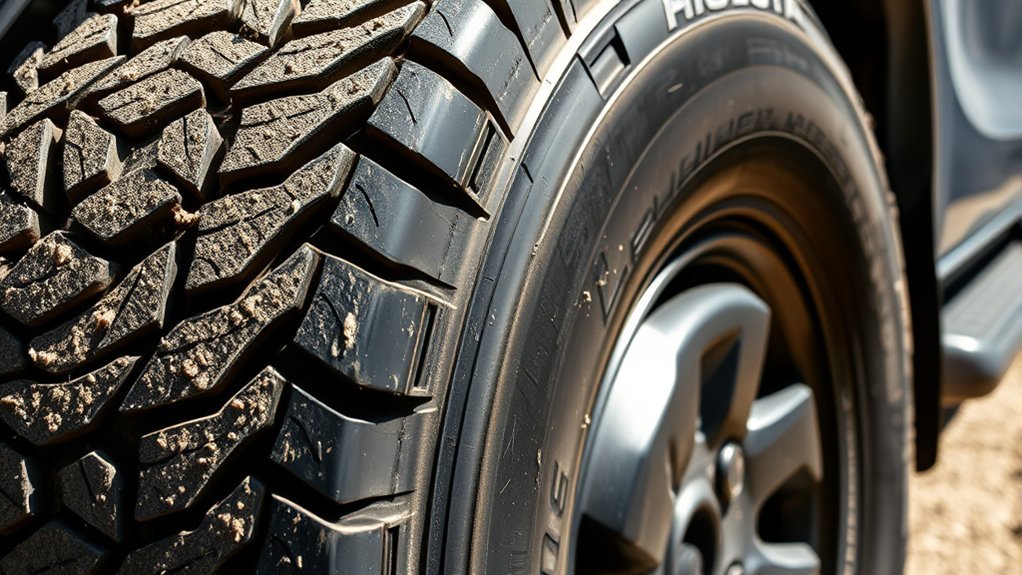
Regular tire rotation helps spread normal wear across all four tires. Front tires handle steering forces, braking forces, and cornering scrub. Rear tires on a Hilux may carry more stress when the tray or bed is loaded. Rotation helps each tire spend time in different positions, which can reduce irregular wear.
Benefits of Tire Rotation
Rotation is not a cure for a bad alignment or worn suspension, but it can help you spot problems early. When the tires come off, you can inspect the inner shoulders, sidewalls, tread blocks, valve stems, and wheel condition more closely.
- Helps reduce irregular wear when the vehicle manufacturer recommends it.
- Helps keep tread depth more even across the tire set.
- Gives you a chance to inspect hidden inner-edge wear.
- Can improve ride consistency when combined with correct pressure and balance.
- Helps protect your tire investment by catching problems before they spread.
Recommended Rotation Intervals
NHTSA advises checking your owner’s manual for the correct rotation frequency and pattern. If the vehicle manufacturer recommends rotation, a common interval is every 5,000 to 8,000 miles, or sooner if uneven wear appears.
Follow the correct pattern for your Hilux. Directional tires must stay on the same side unless they are remounted. Some tire setups use different front and rear sizes, and some spare tires are temporary-use only. In those cases, the normal cross-rotation pattern may not apply.
Impact on Tire Longevity
Rotating tires consistently can help your Hilux maintain more even tread depth, but it only works when pressure, alignment, balance, and suspension parts are also in good condition. If a tire keeps wearing fast in one position after rotation, that corner of the vehicle needs closer inspection.
Pro Tip: Record tread depth at the inner edge, center, and outer edge during each rotation. A simple note in your phone can reveal a pattern before the tire becomes unsafe.
Recognizing Worn Suspension Components
Worn suspension or steering parts can make a Toyota Hilux wear tires unevenly even when pressure is correct. Loose tie rods, worn ball joints, tired shocks, damaged control-arm bushings, bent wheels, and worn wheel bearings can all let the tire move in ways it should not.
| Symptom | Inspection Tip | Recommended Action |
|---|---|---|
| Excessive wheel play | Listen for clunks and feel for looseness during slow turns or bumps. | Book a steering and suspension inspection. |
| Cupped or scalloped tread | Run your hand lightly over the tread and feel for alternating high and low spots. | Check wheel balance, shocks, bushings, and bearings. |
| Pulling, wandering, or unstable handling | Test only on a safe, flat road with proper tire pressure. | Get an alignment and suspension check. |
| Vibration at speed | Note whether it comes through the steering wheel, seat, or whole vehicle. | Check balance, wheel damage, tire separation, and wheel bearings. |
Replacing worn parts before an alignment is important. If a bushing, ball joint, or tie rod has too much movement, the alignment may not hold, and the tires can keep wearing unevenly.
[Products Worth Considering]

The Ziopetru adjustable magnetic wheel alignment tool helps you check and restore camber and caster positioning after removing and reinstalling undercarriage components. With a clear leveling/bubble measurement system and an easy zeroing adjustment knob, it supports precise horizontal angle checking. The strong magnetic base mounts to metal surfaces for convenient use at home on cars, motorcycles, trucks, vans, and SUVs.

Monitor tire tread wear with a smart, color-coded depth gauge that shows clear condition ranges at a glance. The bar is range marked for fast, easy readings, helping you maintain safer traction and performance. Each gauge is portable with a pocket clip, and the set includes 20 units for daily use and sharing.

Measure tire tread depth quickly and accurately with this LUMITECO dial gauge that reads in 1/32" increments up to 14/32". The color-coded green/yellow/red zones make it easy to judge tire wear and know when replacement is needed. A rugged, compact design with a protective pouch helps keep the gauge ready for use on cars, trucks, motorcycles, and more.
Check Tread Depth and Wear Bars
Uneven tire wear is not only about saving money. It also affects wet grip, braking, and control. NHTSA says tires should be replaced when tread depth reaches 2/32 inch. Most tires also have built-in treadwear indicators that become level with the tread when the tire is worn out.
Check tread depth in at least three places across each tire: inner edge, center, and outer edge. If one side is near the legal limit while the rest still looks usable, treat the tire as unsafe and fix the cause before replacing it.
The tread may look acceptable from the outside, while the inner shoulder is already worn out. Always inspect the full tread width, especially on the front tires.
Simple Ways to Prevent Uneven Tire Wear
Preventing uneven tire wear on your Toyota Hilux is easier when you follow a consistent inspection routine. The goal is to catch small pressure, alignment, and suspension problems before they destroy a tire.
- Check tire pressure cold once a month. Use the tire placard and owner’s manual, not the sidewall maximum.
- Inspect tread depth across the full tire width. Measure the inner edge, center, and outer edge.
- Rotate tires on schedule. Follow your Hilux owner’s manual and adjust sooner if uneven wear appears.
- Balance tires when needed. Vibration, cupping, or new tire installation are common reasons to check balance.
- Get alignment checked after impacts. Potholes, curbs, off-road hits, suspension repairs, and new tires are good triggers.
- Inspect suspension and steering parts. Look for clunks, looseness, leaking shocks, worn bushings, or unstable handling.
- Match tire type, size, and load rating. Mixed tires can wear differently and affect handling.
- Adjust for heavy loads correctly. Towing and cargo can change the recommended pressure and wear pattern.
[Products Worth Considering]

The Tymate TM12 RV TPMS delivers real-time tire pressure and temperature monitoring with a stable 433Hz display for safer long-distance driving. It supports simultaneous monitoring across vehicle and trailer zones, includes six alarm modes for pressure, temperature, leakage, battery, and signal loss, and features easy DIY installation with auto calibration. Power is supplied via USB-C charging or solar recharging, with a wide 0–144 PSI range and up to 50 ft signal coverage for RVs and towable trailers.

Keep your tires properly inflated with this analog VONDIOR tire pressure gauge, designed for fast, easy readings without batteries. The swiveling, two-axis hose and large glow dial help you measure at any tire angle with instant visibility. Built with a protective rubber shield, it supports durable, low-maintenance use for cars and trucks.

The TYAMATE TM8 solar-powered wireless TPMS delivers real-time tire pressure and temperature monitoring with six alarm modes for safer driving. A vibrant color LCD display shows readings clearly while windshield mounting keeps it hands-free and easy to read. With a wide 0–87 PSI range, strong 433.92 MHz signal transmission, and quick sensor pairing, it’s ideal for RV, sedan, SUV, MPV, and truck use.
When to See a Mechanic
Book a professional inspection if your Hilux pulls to one side, shakes at highway speed, wears one tire faster than the others, shows cupping, or keeps losing pressure. You should also get help if you see sidewall bulges, exposed cords, cracked rubber, uneven brake dust on one wheel, or a burning smell from a dragging brake.
If you are replacing tires, ask the shop to check alignment, balance, wheel condition, and suspension play before the new tires go on. That small extra step can prevent the same wear pattern from coming back.
[Products Worth Considering]

The SAFELIFE dial tire tread depth gauge measures tread depth in 1/32 inch increments with clear, easy-to-read 2-inch dial face. Color zones using a traffic light system help you quickly judge whether tread is low, marginal, or ample for safer driving. Built with a durable zinc cast body and a metal detect probe for precise, comfortable use across cars, motorcycles, trucks, and buses.
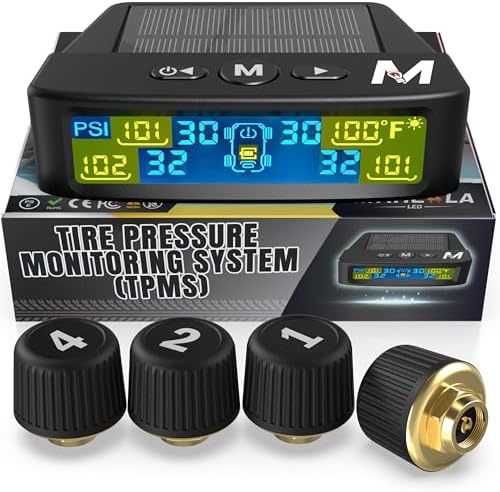
Marcala’s TPMS set of four sensors helps you monitor tire pressure and temperature in real time while driving, with updates every second. The bright color LCD uses auto-dimming for easy viewing, powered by dual solar and USB charging, and offers six alarm modes. Built for trailers, RVs, campers, trucks, and towing setups, the sensors support monitoring 1-4 wheels up to 98 PSI with IP67 waterproof protection.

Accurately measure tire tread depth with a calibrated gauge marked from 0 to 1 inch in 1/32 inch increments. The color-coded bar helps you quickly identify tread condition ranges, supporting safe driving for trucks, motorcycles, automobiles, and passenger vehicles.
Frequently Asked Questions
Do tie rods cause uneven tire wear?
Yes. Worn or loose tie rods can change toe alignment while you drive. That can create feathered tread, rapid shoulder wear, pulling, wandering, or an off-center steering wheel. Have the steering linkage checked before doing an alignment.
How often should I rotate Toyota Hilux tires?
Check your Hilux owner’s manual first. If rotation is recommended, a common interval is every 5,000 to 8,000 miles, or sooner if uneven wear appears. Directional tires, different tire sizes, and spare-tire rules can change the correct pattern.
Can low tire pressure cause uneven wear on a Hilux?
Yes. Low tire pressure can make the shoulders wear faster because the tire flexes more and carries load unevenly. Check pressure when the tires are cold and use the placard or owner’s manual for the correct pressure.
Why are my front Hilux tires wearing faster than the rear tires?
Front tires handle steering, braking, and cornering forces, so they can wear faster. If the wear is even, rotation may help. If one edge is wearing faster, check alignment, steering parts, and suspension condition.
Should I replace tires before fixing alignment?
If the tires are unsafe, replace them or use a safe spare first. But if alignment or suspension wear caused the problem, fix that issue before or during tire replacement. Otherwise, the new tires can develop the same uneven wear.
Conclusion
Your Toyota Hilux depends on even tire contact for stable handling, braking, and traction. Uneven wear usually starts with pressure, alignment, rotation, balance, suspension wear, or load habits. Read the tread pattern first, then check cold tire pressure, tread depth, rotation history, alignment, and steering or suspension play.
If the wear is severe, the tire is damaged, or the Hilux vibrates or pulls, do not ignore it. Fixing the cause before fitting new tires helps your Hilux ride smoother, handle better, and get the full value from the next set.
Sources
- NHTSA TireWise — tire pressure, tread depth, alignment, rotation, TPMS, and tire safety guidance.
- FuelEconomy.gov: Keeping Your Vehicle in Shape — tire pressure and fuel economy guidance.
- The Pneumatic Tire, DOT HS 810 561 — tire load, contact patch, rolling resistance, and tire-performance fundamentals.