
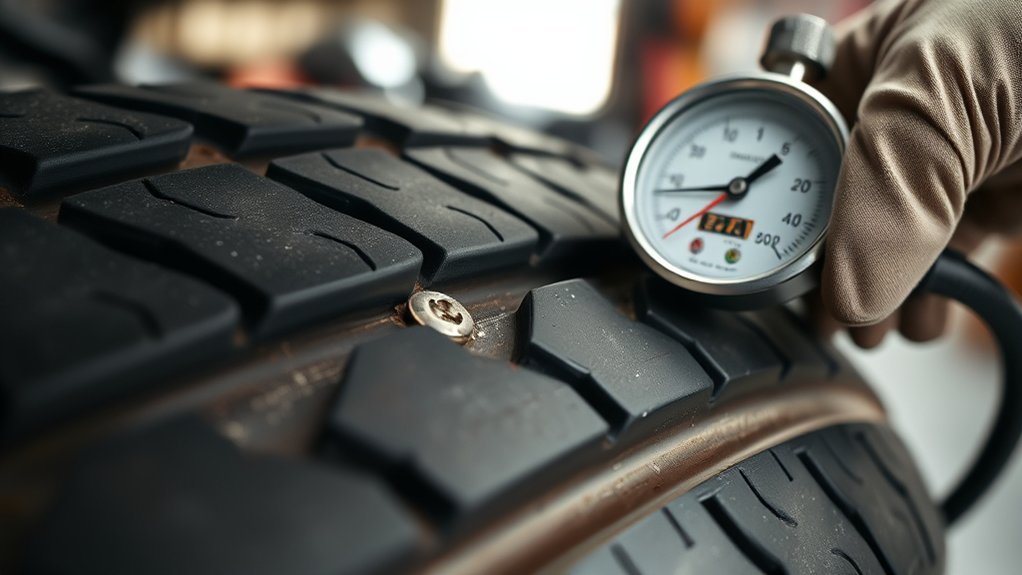
You can usually drive with a nail in your tire only long enough to reach a safe place or a nearby tire shop, and only if the tire still holds air. Treat it as urgent. Check pressure with a gauge, avoid highway speeds, and stop if you see a bulge, sidewall damage, vibration, or fast pressure loss.
Quick Answer
You can drive briefly with a nail in your tire if the puncture is in the tread and the tire is losing air slowly. Do not take a long trip. Check pressure with a gauge, drive slowly to a repair shop, and stop immediately if pressure drops, the tire looks damaged, or handling changes.
Last updated: July 7, 2026. This guide follows current tire safety and puncture-repair guidance from NHTSA and the U.S. Tire Manufacturers Association.
Key Takeaways
- A nail can stay in a tire temporarily only if the tire still holds air and the puncture is in the tread.
- Use a tire pressure gauge, not only the TPMS light, because TPMS may warn late.
- Drive only the shortest safe distance to service, and avoid highways, hard braking, sharp turns, and rough roads.
- A puncture no larger than 1/4 inch may be repairable if it stays inside the tread repair area.
- Sidewall, shoulder, bulge, run-flat damage, or internal damage usually means the tire needs replacement.
At a Glance
| Time Required | 5 to 10 minutes to inspect and check pressure; get service the same day whenever possible. |
| Difficulty | Easy inspection; proper repair requires a trained tire service professional. |
| Tools Needed | Tire pressure gauge, flashlight, soapy water spray bottle, portable inflator, spare tire, or roadside assistance. |
| Cost | Pressure checks are usually free or low cost. Repair or replacement cost depends on tire size, damage, and shop policy. |
Can You Drive With a Nail in Your Tire?
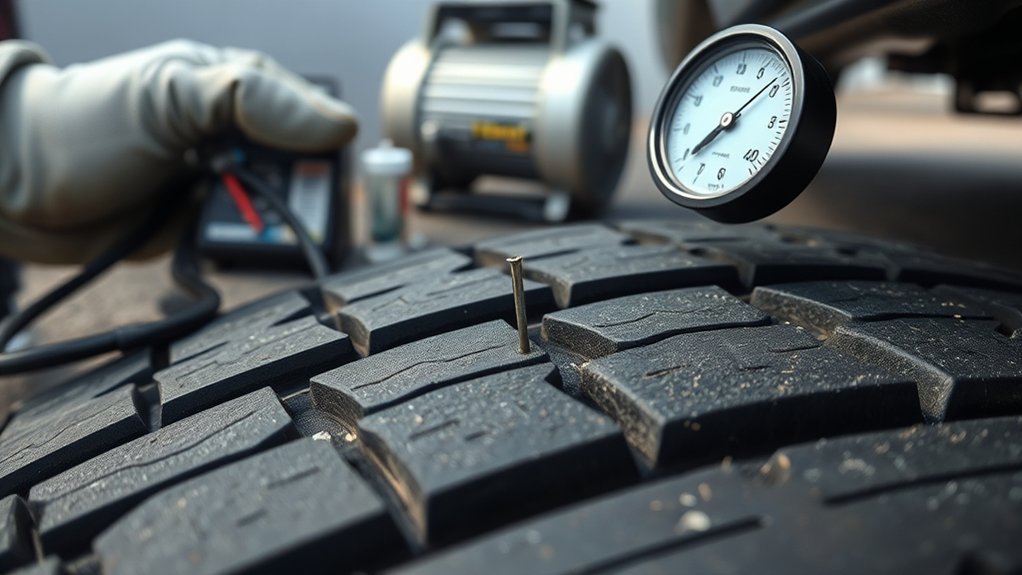
Yes, you can drive with a nail in your tire for a short distance if the tire is not flat, the puncture sits in the tread, and the tire is losing air slowly. That does not mean the tire is safe for normal driving. It means you may have enough time to reach a safe parking area or a nearby tire shop.
Before you move, check the tire pressure with a gauge and compare it with the recommended cold pressure on the driver-side door placard or in your owner’s manual. NHTSA says tire pressure affects safety, durability, and fuel consumption, so low pressure is not a small detail.
Warning: Do not keep driving if the tire is flat, the TPMS light is on and pressure is dropping, the nail is in the sidewall or shoulder, the tire has a bulge, or the vehicle pulls or vibrates. Use the spare tire or call roadside assistance.
Do not pull the nail out on the roadside unless you are ready to change the tire or have it repaired. The nail may be slowing the leak. Removing it can turn a slow leak into a fast leak.
How to Tell If the Tire Is Losing Air
Start with a pressure gauge. Check the affected tire, then check it again after 10 to 15 minutes if you are parked safely. A steady drop means the puncture is leaking. If pressure is already far below the recommended PSI, do not drive on it.
- Check the tire pressure cold if possible. Cold means the vehicle has been parked for at least three hours or driven less than one mile at moderate speed.
- Compare the reading with the vehicle placard. Use the PSI listed by the vehicle manufacturer, not the maximum pressure molded on the tire sidewall.
- Look for bubbles. Spray soapy water around the nail, tread, valve stem, and bead area. Growing bubbles show air escaping.
- Watch the tire shape. A sagging sidewall, bulge, cut, or crack means you should stop and get help.
- Pay attention to handling. Pulling, wandering, steering vibration, or a new thumping sound can mean pressure has dropped or the tire has internal damage.
Your tire pressure monitoring system can help, but it should not be your only check. USTMA notes that many TPMS warnings activate when tires are about 25% underinflated, which may be late enough for damage to begin. Use a gauge when you know a nail is present.
Pro Tip: Keep a small tire pressure gauge in your glove box. A quick reading gives you better information than a visual check, because an underinflated radial tire may not look low.
What Happens If You Keep Driving
If you keep driving with a nail in your tire, the tire can lose air, run hotter, and suffer internal damage. Underinflation is especially risky because the tire flexes more than designed. That extra flex creates heat, and heat can damage the tire structure.
NHTSA reported 511 traffic fatalities in tire-related crashes in 2024, which is why damaged or underinflated tires deserve quick attention.
Air Loss Risks
A nail can create a slow leak that gets worse as the tire rolls. The hole may enlarge, the nail may shift, or the tire may heat up as pressure drops. If the tire gets too low, the sidewall and inner liner can suffer damage that you cannot see from outside.
Adding air may help you reach service if the leak is slow, but air does not repair tire damage. If the pressure falls again, stop driving and use a spare or roadside assistance.
Handling and Stability
Low pressure changes how the tire contacts the road. The vehicle may pull, wander, brake unevenly, or respond slowly in turns. That loss of control margin matters most during quick lane changes, wet roads, or emergency stops.
If you feel vibration or a sudden ride disturbance, slow down gradually. Do not slam the brakes or jerk the steering wheel. Pull off the road when it is safe and inspect the tire.
Tire Damage Worsens
Driving on a punctured tire can turn a repairable tread puncture into a replacement. The nail can widen the injury, and underinflation can damage the belts, sidewall, and inner liner. Once internal damage occurs, the tire may fail later even after you add air.
That is why the safest plan is simple: check pressure, drive only if the tire holds air, and get professional service quickly.
When You Can Patch or Plug the Tire
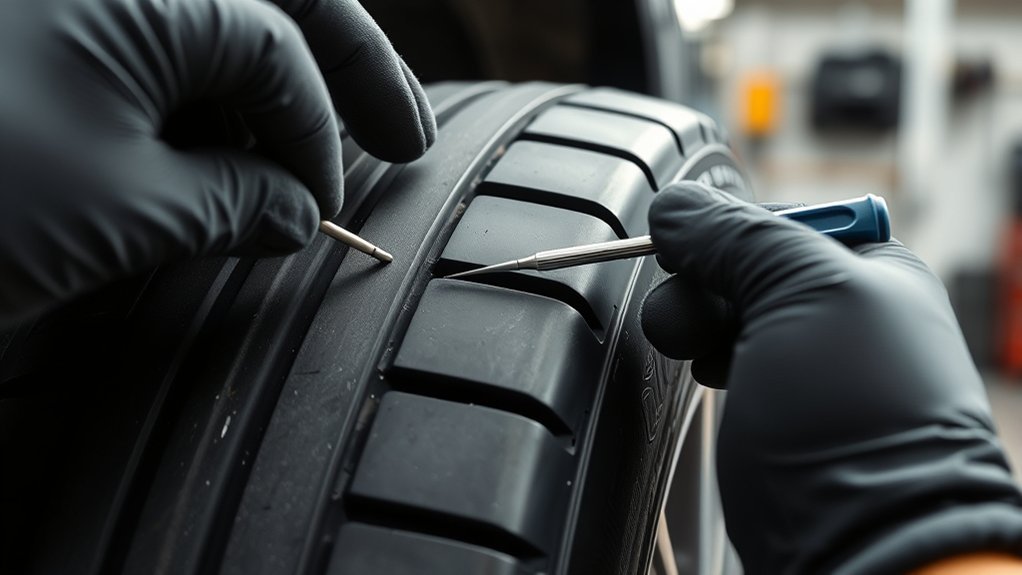
You can usually repair a tire only when the puncture sits in the tread repair area and the injury is no greater than 1/4 inch, or 6 mm, in diameter. USTMA recommends repair only after a trained technician removes the tire from the wheel and inspects it inside and outside.
A proper repair does two jobs. The plug or stem fills the puncture path, and the patch seals the inner liner. A one-piece combination patch-plug can do both when the tire is repairable and the technician follows the correct process.
Note: A plug alone or a patch alone is not a proper permanent repair under USTMA puncture-repair guidance. Outside-in repairs done while the tire stays on the wheel can miss hidden internal damage.
Repairs also cannot overlap with a previous repair. If the puncture sits too close to old damage, if the tire has run-flat damage, or if the manufacturer limits repair for that tire type, replacement may be the safer choice.
[Products Worth Considering]
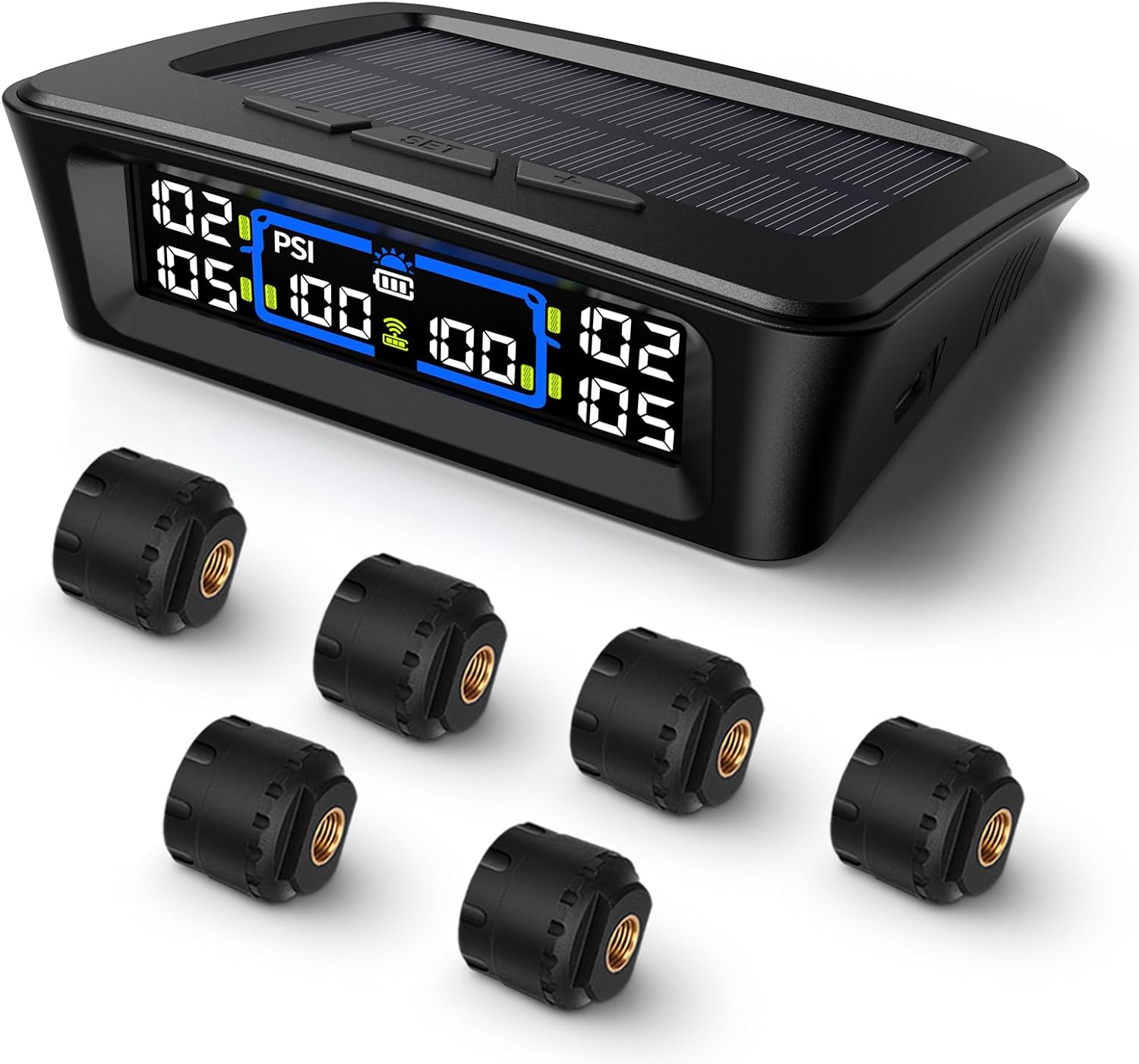
The Tymate TM12 RV TPMS delivers real-time tire pressure and temperature monitoring with a stable 433Hz display for safer long-distance driving. It supports simultaneous monitoring across vehicle and trailer zones, includes six alarm modes for pressure, temperature, leakage, battery, and signal loss, and features easy DIY installation with auto calibration. Power is supplied via USB-C charging or solar recharging, with a wide 0–144 PSI range and up to 50 ft signal coverage for RVs and towable trailers.

Monitor tire tread wear with a smart, color-coded depth gauge that shows clear condition ranges at a glance. The bar is range marked for fast, easy readings, helping you maintain safer traction and performance. Each gauge is portable with a pocket clip, and the set includes 20 units for daily use and sharing.

Mosconly tire repair glue and nail kit delivers an elastic, waterproof bond for quick sidewall puncture repairs. The adhesive cures securely to help prevent peeling, flaking, and tearing, while the included nails support a strong, seamless repair. Designed for easy roadside use, it works on car, motorcycle, bike, and other tire types, with full curing within 24 hours.
When You Need a New Tire
You need a new tire if the puncture is larger than 1/4 inch, reaches the shoulder or sidewall, or angles into the shoulder or belt-edge area. Those zones flex heavily, so a repair cannot reliably restore strength.
You should also replace the tire if you find any of these signs:
- Bulges, blisters, deep cuts, cracks, or exposed cord
- Run-flat damage from driving with very low pressure
- Rapid air loss after inflation
- Damage from a hard pothole or curb impact
- Previous improper repair
- Overlapping punctures or damage a technician cannot safely repair
Run-flat tires need extra care. Some run-flat tires can be driven for a limited distance after pressure loss, but repair rules vary by tire manufacturer. If your vehicle uses run-flat tires, follow the tire and vehicle manual, then ask a trained tire technician before repair.
[Products Worth Considering]

This self-service tire repair nail kit includes 60 pieces (30 small + 30 large) to help seal punctures quickly without needing an auto shop visit. The nails are designed to fit different hole sizes and provide a tight connection with sealing glue to help prevent air and water intrusion. Suitable for cars, motorcycles, trucks, and other vehicles, it’s an easy, efficient way to patch roadside tire damage.

LiQuiTube Premium Heavy Duty Tire Sealant provides permanent flat tire protection to help maintain proper air pressure while sealing punctures and leaks. It seals bead, rim, and porosity weathering leaks and helps prevent flats in heavy ply industrial tires. Designed for versatile use on trailers and off-road equipment, it can be installed in tubeless tires and also inside tubes.

The SAFELIFE dial tire tread depth gauge measures tread depth in 1/32 inch increments with clear, easy-to-read 2-inch dial face. Color zones using a traffic light system help you quickly judge whether tread is low, marginal, or ample for safer driving. Built with a durable zinc cast body and a metal detect probe for precise, comfortable use across cars, motorcycles, trucks, and buses.
How to Drive Safely Until Repair
If the tire still holds air and you must drive, keep the trip short and gentle. Your goal is not to continue your day as normal. Your goal is to reach a safe repair location without creating more damage.
Check Tire Pressure
Check pressure before you move, then again if you have to stop. If the reading drops, do not keep driving. Use a spare tire, a tire mobility kit if your vehicle provides one, or roadside assistance.
| Check | What to Do |
|---|---|
| Gauge reading | Compare with the vehicle placard PSI. |
| TPMS light | Stop and check pressure with a gauge. |
| Tire feel | Watch for vibration, pulling, or thumping. |
| Pressure loss | Use the spare or call roadside assistance. |
Drive Slowly
Drive at a reduced speed and avoid highways when possible. Higher speed creates more heat and gives you less time to react if the tire fails. Leave extra following distance, brake gently, and avoid sharp turns.
Do not load the vehicle heavily or tow with a punctured tire. Extra load makes the tire work harder and raises the chance of damage.
Avoid Rough Roads
Choose smooth, low-speed roads with places to pull over. Potholes, gravel, debris, and broken pavement can shift the nail or damage the sidewall. If the repair shop is far away, roadside help is safer than trying to make the full drive.
Use a Spare or Roadside Help When Pressure Drops
If pressure drops quickly, install the spare tire if you can do it safely and your vehicle has one. Follow the speed and distance limits printed on the spare or listed in the owner’s manual. Many temporary spares are for emergency use only.
If you are on a highway shoulder, in heavy traffic, or on uneven ground, do not risk changing the tire yourself. Move away from traffic and call roadside assistance.
Why Professional Tire Service Is Worth It
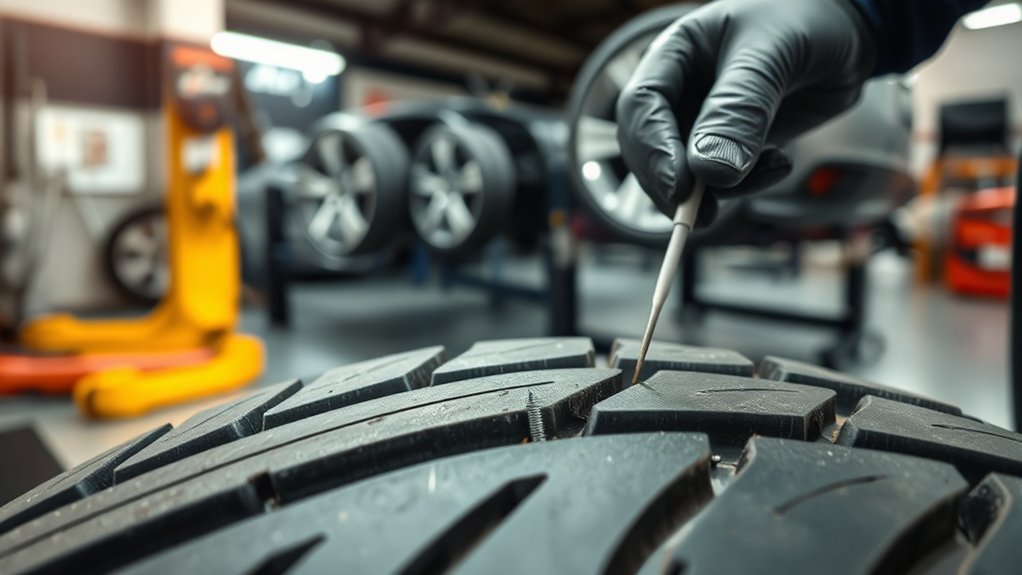
Professional tire service is worth it because the technician can remove the tire from the wheel and inspect the inner liner, belts, tread, and sidewall. A puncture can look small from outside while hiding internal damage inside the tire.
A trained technician can also confirm whether the puncture sits in the repairable tread area, whether the injury is small enough, and whether any previous repair or run-flat damage makes the tire unsafe. That inspection protects you from a repair that looks fine but fails later.
If the tire is repairable, the shop should use a proper patch-plus-plug method, rebalance the wheel if needed, reinstall it correctly, and check for leaks. If the tire is not repairable, replacement is the safer decision.
[Products Worth Considering]
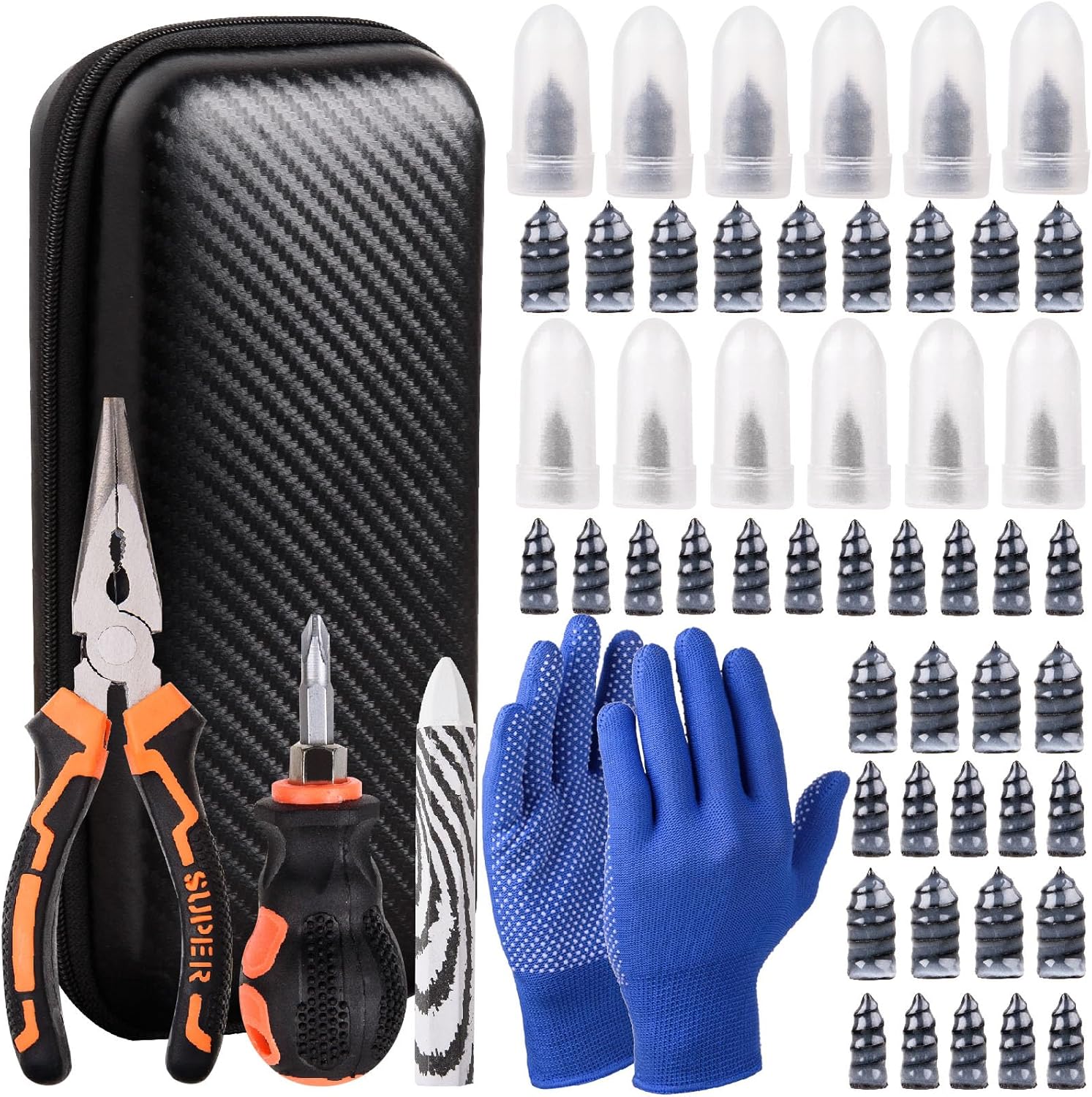
This tire sidewall puncture repair kit fixes flats fast without removing the tire, helping you get back on the road in minutes. It includes self-tapping repair nails, essential tools, gloves, and a portable storage bag for convenient roadside use. Designed for tubeless tires, it helps create a tight, leak-resistant seal for cars, motorcycles, trucks, SUVs, and ATVs.

Accurately measure tire tread depth with a calibrated gauge marked from 0 to 1 inch in 1/32 inch increments. The color-coded bar helps you quickly identify tread condition ranges, supporting safe driving for trucks, motorcycles, automobiles, and passenger vehicles.

Measure tire tread depth quickly and accurately with this LUMITECO dial gauge that reads in 1/32" increments up to 14/32". The color-coded green/yellow/red zones make it easy to judge tire wear and know when replacement is needed. A rugged, compact design with a protective pouch helps keep the gauge ready for use on cars, trucks, motorcycles, and more.
What Not to Do With a Nail in Your Tire
- Do not ignore it just because the tire still looks full.
- Do not remove the nail unless you are ready to change the tire or start repair.
- Do not drive a long trip or run highway speeds on a known puncture.
- Do not rely only on TPMS because a warning may come after pressure is already low.
- Do not use a plug-only repair as a permanent fix for a road tire.
- Do not repair sidewall or shoulder damage because those areas flex too much.
- Do not keep driving after adding air if the pressure drops again.
Frequently Asked Questions
Can you drive 5 hours with a nail in your tire?
No. You should not drive 5 hours with a nail in your tire. Heat, speed, and pressure loss can turn a small puncture into a dangerous failure. Check the pressure and get the tire inspected before any long trip.
Can I leave a nail in my tire if it is not leaking?
You can leave it in place only long enough to reach inspection. Do not ignore it. The nail may not have fully pierced the tire, or it may be sealing the hole for now. A tire shop can remove it safely and check for hidden damage.
Should I pull the nail out myself?
Do not pull the nail out on the roadside unless you are ready to install the spare or have the tire repaired. Removing it can make the leak faster. Mark the spot, check pressure, and let a technician inspect the tire.
What is the 3 tire rule?
People often use “3 tire rule” to mean a tire with several punctures may no longer be a safe repair candidate. Industry guidance focuses on whether repairs overlap, whether damage stays inside the tread repair area, and whether the injury is small enough. A technician should inspect the tire before repair.
How long can a tire go with a nail?
A tire may hold air for minutes, days, or longer, depending on the puncture. You cannot judge safety by time alone. Check pressure, look for damage, and get professional service as soon as possible.
Can a tire sealant fix a nail puncture?
Sealant may help you reach a safe place if your vehicle includes a temporary mobility kit, but it is not the same as a proper tire repair. Tell the tire shop if you used sealant, because the tire and wheel may need cleaning before inspection.
Conclusion
You can sometimes drive briefly with a nail in your tire, but only if the tire holds air and the damage appears limited to the tread. Check pressure with a gauge, avoid long trips, and get professional service quickly. If pressure drops, the nail sits near the sidewall, or the tire shows a bulge, vibration, or fast leak, stop driving and use the spare or roadside assistance.
Sources
- NHTSA TireWise — tire pressure, TPMS, blowout safety, tire maintenance, and 2024 tire-related crash context.
- USTMA Tire Repair Basics — repairable tread-area guidance, 1/4 inch injury limit, and technician inspection standards.
- USTMA Puncture Repair Procedures for Passenger and Light Truck Tires — plug-plus-patch requirement, no sidewall or shoulder repairs, and no outside-in repair guidance.
- USTMA Tire Care Essentials — pressure checks, TPMS limitations, tread depth, and routine tire inspection.
- USTMA Tire Care and Safety Guide — underinflation, heat buildup, internal damage, vibration response, and replacement considerations.

