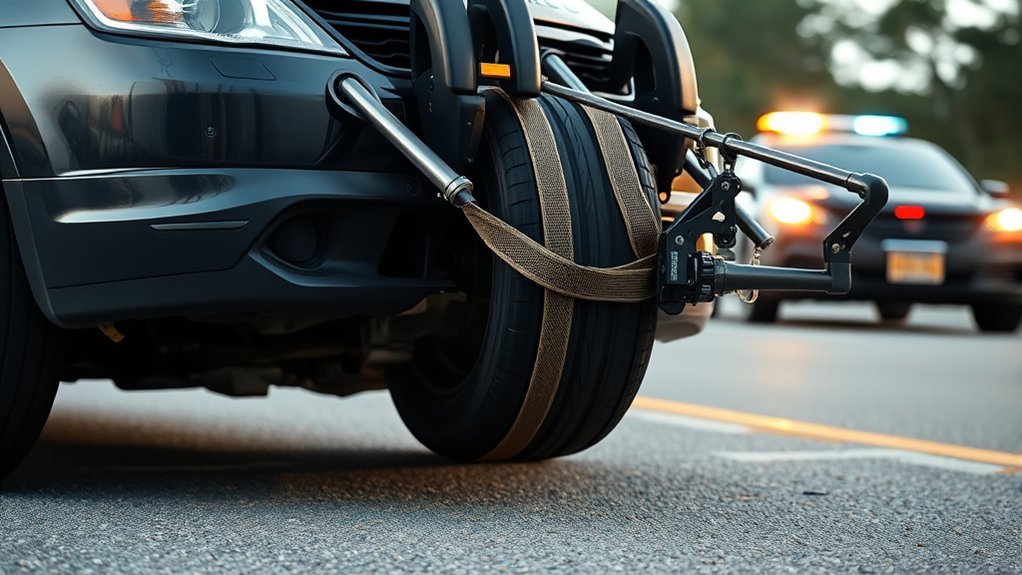
A police tire grappler is a front-mounted law-enforcement pursuit tool that uses a heavy-duty net or strap system to catch a fleeing vehicle’s rear tire. Instead of ramming the vehicle or relying on tire deflation alone, the device tries to bind the wheel and bring the pursuit under control. It can reduce chase time, but it still depends on training, agency policy, road conditions, speed, and a clean deployment.
Quick Answer
A police tire grappler works by launching a heavy-duty nylon net from the patrol vehicle’s front bumper toward a fleeing vehicle’s rear tire. When the net catches, it wraps around the wheel and axle area, restricts rotation, and helps officers bring the vehicle to a controlled stop.
Key Takeaways
- A police tire grappler is a front-mounted pursuit-ending device designed for trained law-enforcement use.
- The system uses a heavy-duty net or strap assembly to catch a suspect vehicle’s rear tire.
- A clean catch can restrict wheel rotation and help officers end a pursuit without a PIT maneuver.
- It does not work in every situation because speed, angle, vehicle type, and road conditions matter.
- Modern pursuit policy still matters because any vehicle chase can endanger officers, suspects, passengers, and bystanders.
Warning: A tire grappler is not a civilian vehicle tool or a DIY immobilization method. It is specialized law-enforcement equipment that should only be used by trained officers under agency policy and legal authority.
What Is the Police Tire Grappler?
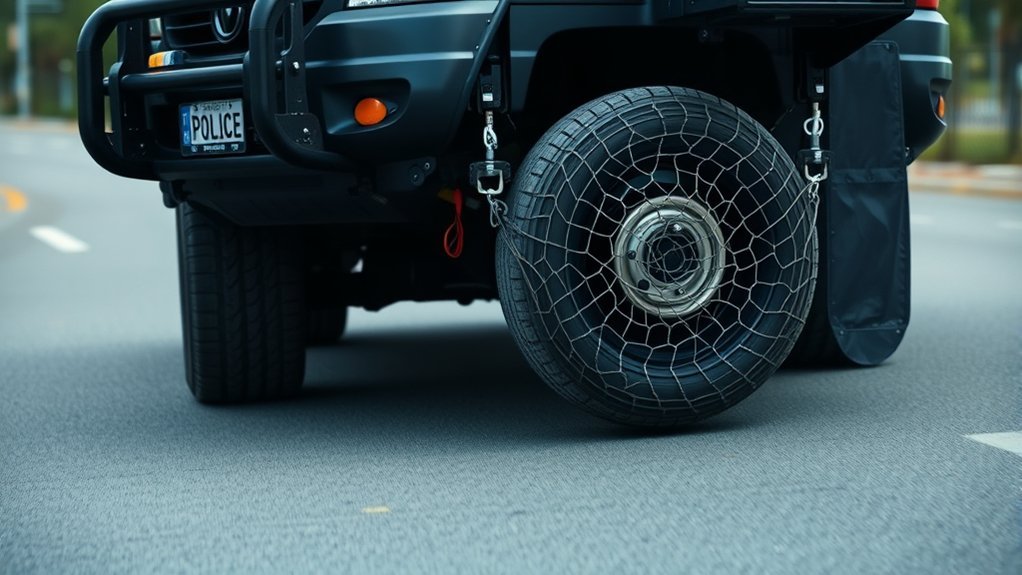
The Police Tire Grappler, often discussed as the Grappler Police Bumper, is a pursuit device mounted to the front of a patrol vehicle. Its purpose is simple: help officers stop a fleeing vehicle by catching one rear tire with a strong net or strap system.
When the device works as intended, the net wraps around the rear wheel and restricts rotation. That changes the pursuit from a high-speed chase into a controlled stop or containment situation. This makes it different from spike strips, which deflate tires, and different from a PIT maneuver, which requires vehicle-to-vehicle contact.
Public reports have described the Grappler as an Arizona-developed pursuit tool used by multiple U.S. agencies. Some reports also cite approximate deployment counts, success rates, and unit costs, but those figures can change over time and should not be treated as fixed current specifications unless confirmed by the manufacturer or the agency buying the equipment.
How the Police Tire Grappler Deploys
Officers deploy the police tire grappler from inside the patrol unit. The device sits at the front of the vehicle and releases a net assembly toward the rear tire of the fleeing vehicle. The goal is to contact the tire cleanly so the net can wrap around the wheel as it rotates.
The officer still needs correct positioning, timing, and training. The device does not magically stop every vehicle from any angle. A poor approach, sharp turn, uneven road, high speed, or unusual vehicle shape can reduce the chance of a clean capture.
In plain terms, the deployment follows this general pattern:
- The patrol vehicle closes in behind the fleeing vehicle under agency pursuit policy.
- The officer lines up the device with a rear tire when conditions allow.
- The front-mounted system releases the net assembly.
- The net contacts the tire and begins wrapping around the wheel.
- The captured wheel loses normal rotation, helping officers slow and contain the vehicle.
Note: This is a high-level explanation for readers. Real deployment procedures, distances, speed limits, authorization rules, and follow-up tactics depend on each law-enforcement agency’s training and policy.
What Happens When the Net Catches the Tire?
When the net catches the tire, it wraps tightly around the wheel and axle area. The rotating tire pulls the net in, which helps cinch the material around the wheel. Once the wheel can no longer rotate normally, the vehicle loses the ability to keep moving in a stable, controlled way.
This is why the Grappler is often described as a vehicle immobilization device. It does not rely on puncturing the tire. It works by physically restricting wheel movement.
Tire Lock Engagement
The tire-lock effect happens when the net or strap assembly tightens around the rear wheel. A clean engagement can stop that wheel from spinning freely, which forces the driver to slow down or stop.
The key benefit is control. Instead of waiting for a deflated tire to fail, officers may be able to shorten the chase quickly. That can reduce exposure time for nearby drivers, pedestrians, and officers. However, the outcome still depends on the vehicle’s speed, weight, drivetrain, road surface, and the driver’s reaction.
Vehicle Immobilization Effect
A successful capture can change the pursuit from active flight to containment. The vehicle may roll a short distance after the tire is caught, but it should no longer accelerate or maneuver normally.
- The net wraps around the rear tire and wheel area.
- The captured wheel loses normal rotation.
- The vehicle slows, drags, or becomes difficult to control.
- Officers shift from pursuit to containment and arrest procedures.
- The stop may reduce the need for higher-risk contact tactics.
Police pursuit tools do not make pursuits risk-free. They only give trained agencies more options for ending a dangerous chase under controlled policy conditions.
Why the Grappler Can Reduce Pursuit Risk
The Grappler can reduce pursuit risk because it targets the vehicle’s ability to keep moving instead of forcing a spinout or waiting for tire deflation. A clean rear-tire capture can help officers end a chase before the fleeing driver reaches heavier traffic, intersections, school zones, or pedestrian areas.
That does not mean every use is safe. A police pursuit is already a high-risk event. The driver may swerve, brake suddenly, strike another vehicle, or continue trying to flee after partial immobilization. Because of that, the Grappler works best as part of a broader pursuit policy that includes supervisor approval, speed limits, risk assessment, communication, and a plan for the stop.
Modern pursuit guidance increasingly stresses proportionality. In 2023, a Police Executive Research Forum report funded by the U.S. Department of Justice Office of Community Oriented Policing Services and the National Highway Traffic Safety Administration recommended that police pursuits be limited to situations involving violent crime and an imminent threat. That context matters because a pursuit-ending tool should not become a reason to chase every fleeing driver.
Police Tire Grappler vs. PIT Maneuvers
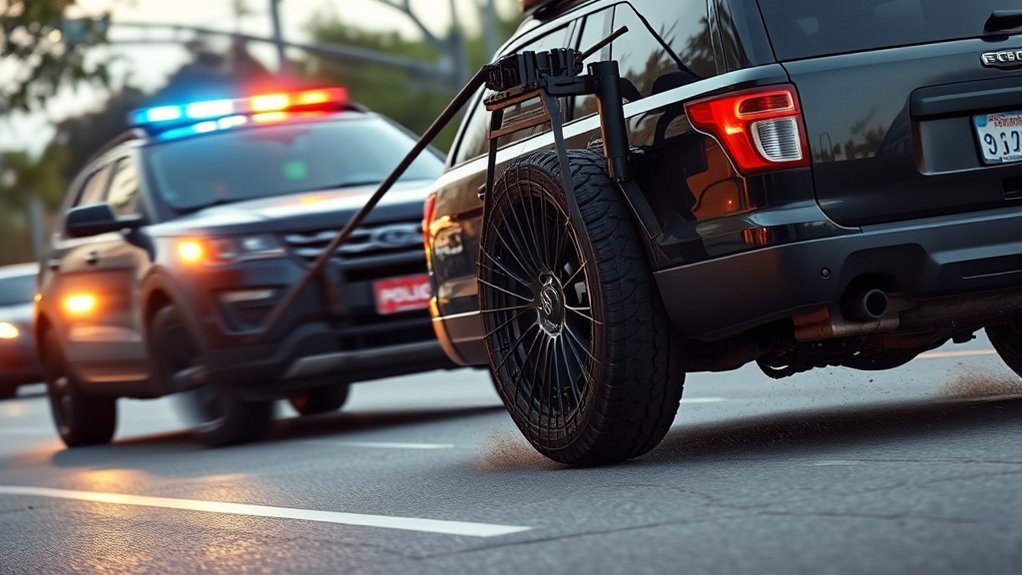
A PIT maneuver uses controlled contact from a police vehicle to rotate the fleeing vehicle and bring it to a stop. The Grappler takes a different approach. It aims for the rear tire and tries to immobilize the wheel with a net rather than pushing the vehicle sideways.
That difference matters because PIT maneuvers can become dangerous at higher speeds or in crowded areas. They can cause a spin, rollover, secondary crash, or collision with bystanders. The Grappler may reduce some of those risks by avoiding side-impact contact, but it still requires close positioning and careful judgment.
- Grappler: Targets the rear tire with a net or strap system.
- PIT maneuver: Uses patrol-vehicle contact to rotate the fleeing vehicle.
- Grappler advantage: May reduce the need for a spinout-style stop.
- PIT advantage: Does not require a specialized bumper-mounted device.
- Shared limitation: Both require training, policy authorization, and the right conditions.
[Products Worth Considering]

This tire inflator with pressure gauge delivers long-lasting performance with a durable rubber-protected gauge and sturdy build. The longer hose and 360 swivel air chuck help you seal the valve securely and keep your hands free while measuring, inflating, or deflating. It’s battery-free for reliable use and provides ±2 PSI accuracy in the mid-range for most typical tires, with universal compatibility for 1/4 NPT compressor outputs.

The JACO FlowPro Tire Inflator measures, inflates, and airs down tires up to 100 PSI with battery-free operation and ±2% accuracy after calibration. It features a glowing pressure dial for night visibility, a heavy-duty steel build with a hybrid hose, and a precision push-to-inflate thumb trigger. The patented Lightning Air Chuck locks on for a secure seal, and the kit includes quick-connect hardware for easy inline use with your air compressor.

The Big Rig Defense Tire Thumper is a truck tire pressure checker that lets you quickly check multiple tires by giving them a firm whack. Listen for a reassuring thump and feel the stick bounce when a tire is fully inflated, helping you get back on the road safely. It features a comfortable, glove-friendly handle and a secure wrist strap for confident use on busy routes.
Police Tire Grappler vs. Spike Strips
Spike strips work by puncturing tires so the fleeing vehicle gradually loses tire pressure. They can be effective, but they require placement ahead of the suspect vehicle. That can expose officers to danger if the driver swerves, drives toward them, or avoids the strip.
The Grappler is mounted on the patrol vehicle, so officers do not need to stand ahead of the fleeing vehicle to deploy it. It also tries to stop wheel rotation instead of relying on tire deflation. That can make the stop feel more immediate when the capture is clean.
[Products Worth Considering]

Replace worn wheelchair rear tires with a universal 24x1 no-flat polyurethane foam option designed to mount tightly on 24-inch rims without the tire falling off. Installation is made easier with included tools and multiple methods, including using a pry bar or softening the tire in hot water to reduce resistance. The package includes two tires plus tie ropes for convenient fitting and handling.

Replace worn tires quickly with this universal 4.80/4.00-8 tire and inner tube set designed for wheelbarrows and outdoor utility carts. The ribbed tread helps reduce turf damage while the natural rubber construction supports longer service life. Compatible with 15.5-inch outer diameter, 4-inch width, and 8-inch rim diameter wheels, it uses a straight TR-13 valve stem for easy installation. For best results, inflate with a manual pump and do not exceed 25 PSI.
A concentrated tire and tube mounting compound designed to help simplify mounting rubber tires and tubes on passenger, semi truck, construction, and OTR applications. Its ultra-thick formula packs beads effectively and includes rust inhibitors to help protect against corrosion during use.
Grappler Safety Advantages
The main advantage of the Grappler is that it gives officers a pursuit-ending option that does not depend on ramming, spinning, or puncturing a tire. It can be especially useful when a fleeing vehicle is already in motion and officers need a controlled way to shorten the chase.
- It stays mounted on the patrol vehicle.
- It targets a rear tire rather than the whole vehicle body.
- It may reduce the need for PIT or ramming tactics.
- It can help officers move from chase mode to containment.
- It supports a more controlled stop when the deployment is clean.
Spike Strip Limitations
Spike strips can slow a fleeing vehicle, but they do not always create an immediate stop. A driver may keep moving on damaged tires, especially for a short distance. Spike strips also require officers to predict the vehicle’s path and place the strip in time.
That makes spike strips useful but not perfect. They remain one tool among many, and agencies often choose between spike strips, air support, GPS tagging, PIT, boxing-in tactics, stop sticks, or a Grappler based on the threat level and road conditions.
Grappler vs. Other Pursuit Tools
| Tool | How It Works | Main Limitation |
| Police tire grappler | Catches a rear tire with a net or strap system to restrict wheel rotation. | Needs close positioning, proper angle, and a clean capture. |
| PIT maneuver | Uses controlled contact to rotate the fleeing vehicle. | Can cause loss of control, rollover, or secondary crashes. |
| Spike strips | Puncture tires so the vehicle slows as air pressure drops. | Requires placement ahead of the vehicle and may not stop it immediately. |
| GPS tagging | Attaches a tracking device so police can back off and follow remotely. | Does not physically stop the vehicle at the moment of deployment. |
What Can Prevent a Clean Capture?
The Grappler does not work perfectly in every pursuit. It needs a clean approach to the rear tire, and the fleeing vehicle has to be positioned where the net can make contact. If the driver swerves, brakes suddenly, changes lanes, or turns sharply, the deployment may miss or fail to wrap correctly.
Common factors that can affect performance include:
- Vehicle speed: Higher speeds leave less time for safe positioning.
- Road geometry: Curves, ramps, narrow lanes, and heavy traffic make deployment harder.
- Vehicle type: Ride height, wheel design, body shape, and drivetrain can affect how the net catches.
- Officer positioning: The patrol vehicle must be close enough and aligned well enough for the device to reach the target tire.
- Driver behavior: A fleeing driver may swerve or brake unpredictably.
- Training and policy: Agencies need clear rules for when the device is allowed and when the risk is too high.
Pro Tip: For readers comparing pursuit tools, focus less on “which device is best” and more on conditions. The safest option changes with traffic, speed, suspected offense, officer training, and the risk to nearby people.
Which Agencies Use the Grappler Most?
Public reporting has shown the Grappler in use by a range of U.S. law-enforcement agencies, including state, county, municipal, and border-related units. Adoption is not universal because agencies must weigh cost, vehicle compatibility, training time, maintenance, liability, and local pursuit policy.
Some departments may prefer aircraft support, stricter no-pursuit policies, GPS tagging, spike strips, or PIT-certified units. Others may choose a tire grappler because it gives trained officers another way to stop a dangerous fleeing vehicle without forcing a spinout.
The best way to understand adoption is by looking at agency policy, not just the equipment. A department may buy the device but only authorize it for certain offenses, road conditions, or supervisor-approved pursuits.
Grappler Costs and Limitations
A Grappler system can be a significant purchase for a law-enforcement fleet. Public reports have described unit costs in the several-thousand-dollar range, but actual pricing may vary by model, installation, patrol vehicle setup, training, replacement parts, and agency contract terms.
Cost is only one limitation. Agencies also need training, maintenance procedures, documentation, after-action review, and clear rules for when officers may use it. A pursuit-ending device can reduce some risks, but it cannot remove the judgment required during a fast-moving event.
The most important limitations are practical:
- It may miss if the patrol vehicle is not positioned correctly.
- It may not capture every tire or vehicle type cleanly.
- It still requires close pursuit before deployment.
- It can create sudden changes in vehicle movement after capture.
- It should never replace a department’s pursuit-risk assessment.
[Products Worth Considering]
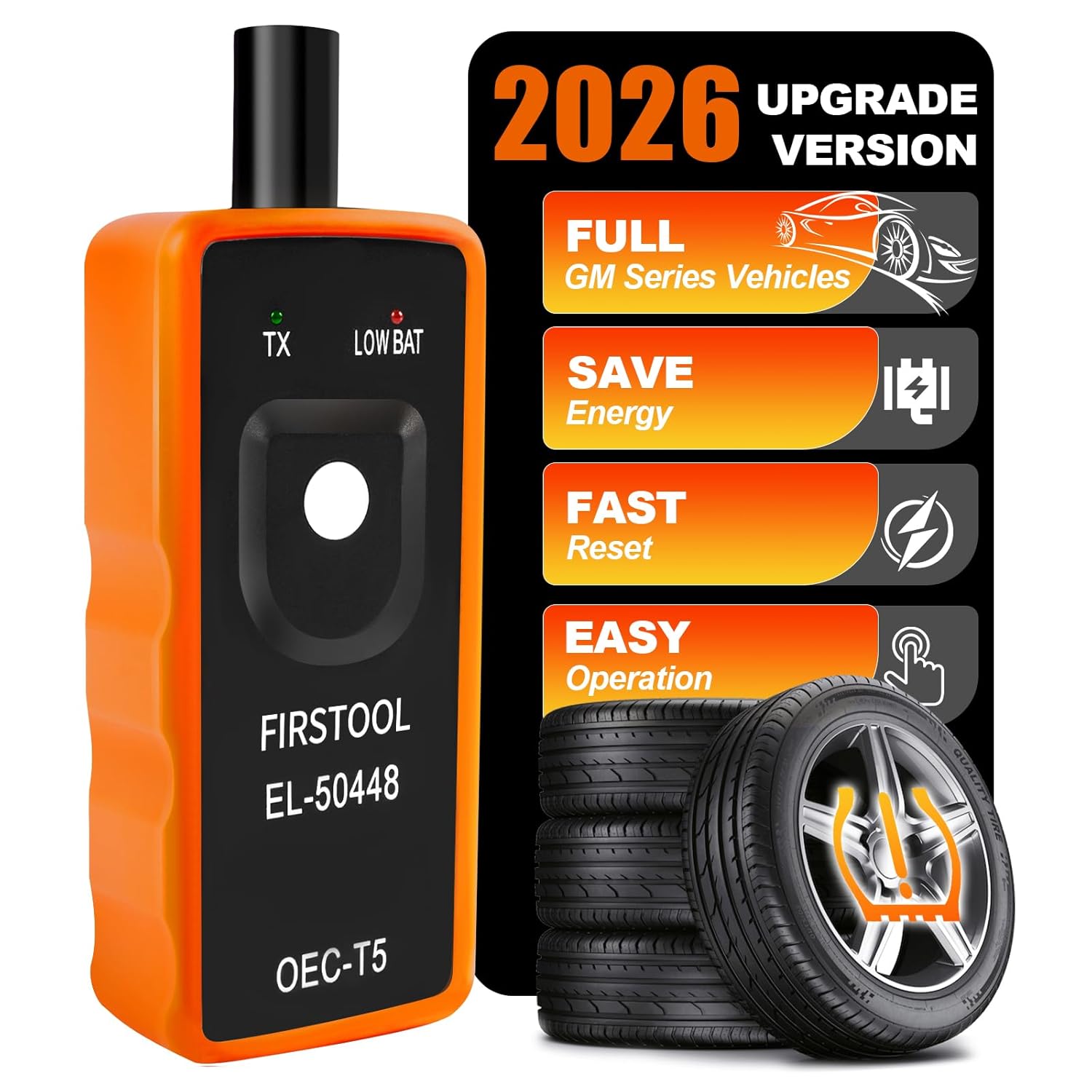
This TPMS relearn tool helps you quickly activate, match, and reset GM tire pressure sensors to keep the vehicle monitoring system working properly. It clears tire pressure alarms and dashboard warning lights after sensor replacement or tire rotation, and supports learning for common 315/433 MHz TPMS sensors. Designed for simple one-button operation, it can help you avoid unnecessary trips to repair shops.
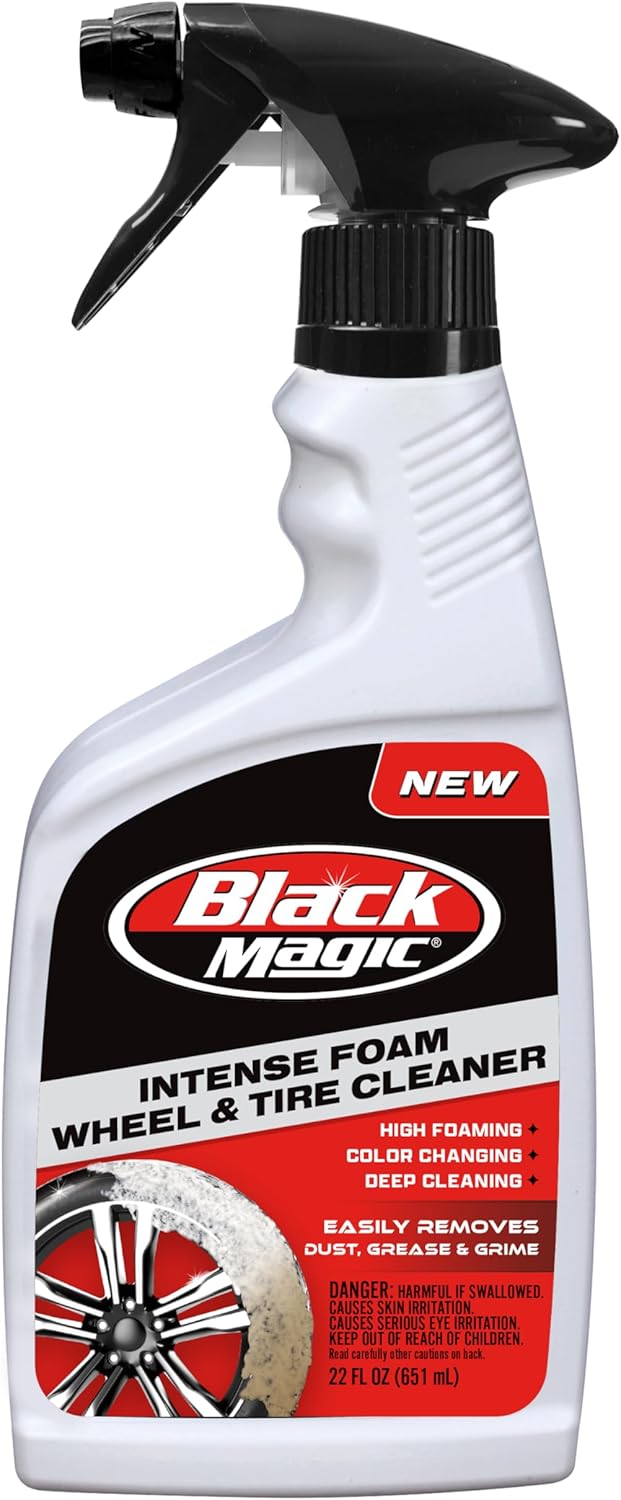
Black Magic Intense Foam Wheel & Tire Cleaner uses a high-foaming action to lift away dirt, grime, and brake dust without scrubbing. The color-changing formula helps show contaminants being dissolved as foam turns from white to brown. Safe for all wheel types and even wheel wells, it leaves a like-new, slick finish with a fresh cherry scent.

This 62-inch extra-long car wash brush kit makes it easy to clean hard-to-reach areas on cars, trucks, SUVs, and RV roofs with lightweight, sturdy poles. It includes soft, non-scratch microfiber and bristles with protective bumpers to help prevent scratches while cleaning effectively. A rubber squeegee helps remove water stains quickly, plus a wheel/tire brush and absorbent towels for complete exterior detailing.
What Happens After the Vehicle Stops?
Once the vehicle slows or stops, officers move from pursuit tactics to containment and arrest procedures. They must consider passengers, traffic, weapons risk, vehicle damage, fire risk, and the possibility that the driver may run on foot.
The device also needs inspection after use. Officers or maintenance staff may need to remove the used net, check the bumper assembly, inspect mounting hardware, and reload or reset the system according to agency procedure.
This follow-up step matters because the Grappler is reusable only when the system remains in good condition. A damaged net, bent mount, or improper reset could affect the next deployment.
Frequently Asked Questions
Are police tire grapplers effective?
Police tire grapplers can be effective when a trained officer gets a clean rear-tire capture under the right conditions. They are not guaranteed to work every time. Speed, traffic, road shape, vehicle type, driver behavior, and agency training all affect the result.
Why don’t more police departments use the Grappler?
More departments may not use it because the system requires purchase funding, vehicle installation, officer training, maintenance, policy updates, and legal review. Some agencies also prefer stricter pursuit limits, GPS tracking, air support, spike strips, or existing PIT-certified units.
What does four fingers mean to police, and is it related to a tire grappler?
A four-finger signal is not a universal tire-grappler signal. Hand signals can vary by agency, training program, and situation. Do not assume one meaning applies everywhere. For this topic, the important point is that Grappler deployment depends on agency procedures, radio communication, and officer training.
Is the police tire grappler reusable?
The bumper-mounted system is designed for repeated use, but the net or strap assembly may need removal, inspection, replacement, or reloading after a deployment. Reuse depends on agency procedure, the condition of the equipment, and any damage from the stop.
Does a tire grappler replace spike strips or PIT maneuvers?
No. It gives agencies another option, but it does not replace every pursuit tactic. Spike strips, PIT maneuvers, GPS tagging, aircraft support, and no-pursuit policies can all be appropriate depending on the threat, location, traffic, and department policy.
Conclusion
A police tire grappler works by catching a fleeing vehicle’s rear tire with a heavy-duty net or strap assembly. When the capture is clean, the net restricts wheel rotation and helps officers turn a dangerous chase into a controlled stop.
Its biggest advantage is that it can reduce the need for ramming, PIT contact, or long pursuit distances. Its biggest limitation is that it still depends on timing, training, vehicle position, road conditions, and policy. The Grappler is best understood as one specialized tool in a larger pursuit-safety strategy, not a guaranteed solution for every fleeing vehicle.
Sources
- NHTSA Fatality Analysis Reporting System — official U.S. fatal crash data context.
- U.S. DOJ COPS Office / PERF pursuit report — pursuit-policy and safety guidance.
- Associated Press report on police pursuit deaths and policy recommendations — context on pursuit risks and national guidance.
- BBC News video on a police grappler deployment — public example of the device in use.