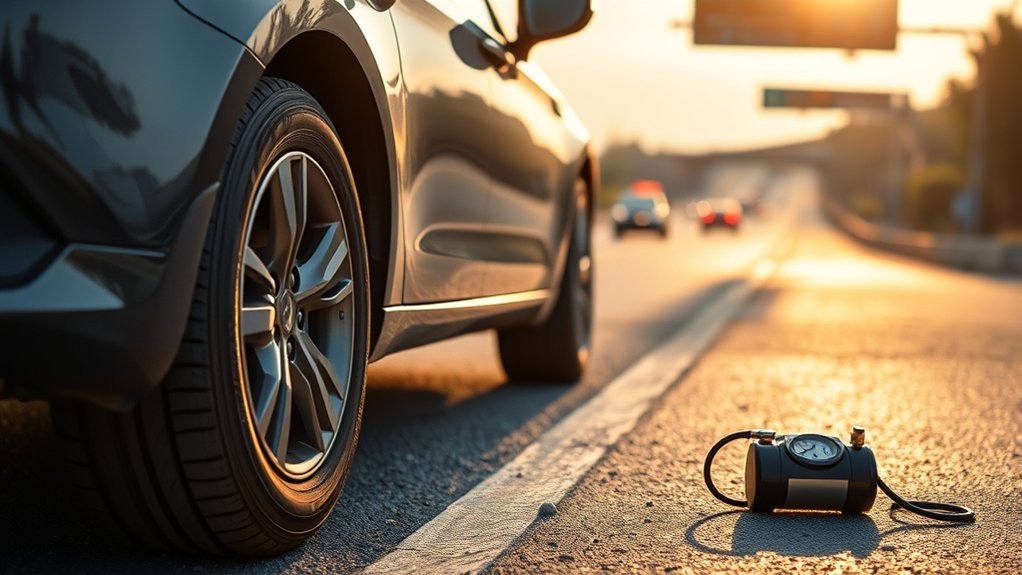
Yes, you can drive on a low tire only briefly, and only when the tire still holds air, looks normal, and the vehicle drives straight. If the tire is visibly flat, the pressure is around 20 PSI or lower, or you feel pulling, vibration, or thumping, stop driving as soon as it is safe. Low tire pressure reduces control, builds heat, and can lead to tire failure.
Quick Answer
You can drive on low tire pressure only far enough to reach a safe nearby place or service station if the tire is not flat and the vehicle handles normally. Slow down, avoid hard braking, and inflate the tire to the door-jamb PSI as soon as possible.
Key Takeaways
- Low tire pressure can reduce traction, braking control, handling, fuel economy, and tire life.
- Use the PSI on your driver-side door placard or owner’s manual, not the maximum pressure on the tire sidewall.
- If the tire is around 20 PSI or lower, visibly flat, damaged, or causing vibration, stop driving and get help.
- A TPMS light means at least one tire is significantly underinflated or the system has a fault, so check with a gauge.
- Check all tires, including the spare, at least monthly when the tires are cold.
At a Glance
| Time Required | 2 to 5 minutes to check pressure, plus a few minutes to inflate. |
| Difficulty | Easy, as long as the tire is not damaged or visibly flat. |
| Tools Needed | Tire pressure gauge, air compressor or public air pump, and valve-stem caps. |
| Cost | Usually free to low cost for air; repair costs depend on leaks, punctures, valve stems, or tire damage. |
Is It Safe to Drive With Low Tire Pressure?

No, driving with low tire pressure is not safe as a normal habit. Underinflated tires flex more than they should, which creates heat, weakens the tire, and can reduce your ability to brake, steer, and corner safely. The National Highway Traffic Safety Administration warns that poor tire maintenance, including not having enough air, can lead to a flat tire, blowout, or tread separation.
If one tire is only slightly below the recommended pressure and the tire looks normal, you may be able to drive slowly to a nearby air pump. If the tire is very low, visibly sagging, or damaged, do not keep driving on it. The safest move is to pull over, inflate it if you can do so safely, install the spare if your vehicle has one, or call roadside assistance.
Warning: Do not drive on a tire with a sidewall bulge, deep cut, exposed cords, loud thumping, strong vibration, or severe pulling. Those symptoms can point to tire damage or rapid air loss.
How Low Is Too Low for Tire Pressure?
A tire is too low when it falls below the pressure listed on your vehicle’s tire placard or owner’s manual. You can usually find that placard on the driver-side door jamb. Do not use the maximum PSI printed on the tire sidewall as your everyday inflation target, because that number is not the vehicle manufacturer’s recommended cold tire pressure.
For many passenger vehicles, a reading near 20 PSI or lower should be treated as a stop-driving situation. That level may be far below the placard pressure and can make the tire overheat or fail. Heavy-duty tires, trucks, vans, and vehicles with different front and rear tire pressures may have different requirements, so the placard still controls.
| Pressure Situation | What You Should Do |
|---|---|
| A few PSI below placard | Inflate soon and recheck when cold. |
| Clearly low but tire still looks normal | Drive only cautiously to a nearby air pump or service location. |
| Around 20 PSI or lower | Stop driving when safe and inflate, change the tire, or call for service. |
| Visibly flat, damaged, vibrating, or pulling | Pull over immediately when safe. Do not continue driving. |
Note: Tire pressure must be checked cold for the most accurate reading. NHTSA defines cold tires as tires that have not been driven on for at least three hours.
How Far Can You Drive on Low Tire Pressure?
You should not think of low tire pressure in terms of a guaranteed safe mileage limit. A tire can fail quickly if it is badly underinflated, overloaded, punctured, or already damaged. If the pressure is only slightly low, drive slowly and directly to a nearby air pump or tire shop. Avoid highways, heavy loads, hard braking, and sharp turns.
If the pressure is very low, around 20 PSI or lower, or the tire looks flat, do not try to “make it home.” Driving on a near-flat tire can damage the sidewall, ruin the tire, bend a wheel, and increase your chance of losing control. Stop in a safe place and use a spare, portable inflator, tow service, or roadside assistance.
Pro Tip: Keep a small digital tire gauge in your glove box. TPMS helps, but a gauge tells you the actual PSI so you can decide whether to inflate, drive cautiously, or stop.
Why Did the Tire Pressure Light Come On?

Your tire pressure light usually means one or more tires are significantly underinflated. Under Federal Motor Vehicle Safety Standard No. 138, a TPMS must warn when tire pressure reaches the required underinflation threshold, which is generally 25% below the vehicle manufacturer’s recommended cold inflation pressure or a listed minimum activation pressure, whichever is higher.
That means the warning light is not a perfect “slightly low” alert. By the time it appears, the tire may already be far enough below spec to need immediate attention. NHTSA also explains that TPMS is not a substitute for regular tire checks, because underinflated tires can be hard to spot visually.
If the TPMS light stays solid, check all four tires and the spare with a gauge. If the light flashes for 60 to 90 seconds and then stays on, the TPMS may have a malfunction and needs inspection. Cold mornings can also make a marginally low tire trigger the warning until the tire warms up, but you should still check the pressure rather than ignore it.
What Should You Do When Tire Pressure Drops?
When tire pressure drops, your first job is to confirm the actual PSI and decide whether the tire is safe to move. Do not rely on looks alone. A tire can be underinflated without looking flat, especially on modern low-profile tires.
- Pull over safely if the warning appears while driving.
- Inspect the tire for nails, cuts, bulges, sidewall damage, or visible sagging.
- Check the pressure with a gauge when it is safe to do so.
- Compare the reading with the PSI on the door placard or owner’s manual.
- Inflate to the recommended cold pressure if the tire is not damaged.
- Recheck the tire later to see whether it is losing air again.
- Visit a tire shop if pressure drops again, the TPMS stays on, or you find damage.
Do not bleed air from a hot tire just because the reading looks higher after driving. Tire pressure rises as tires warm up. If you release air while the tire is hot, it may become underinflated once it cools.
[Products Worth Considering]
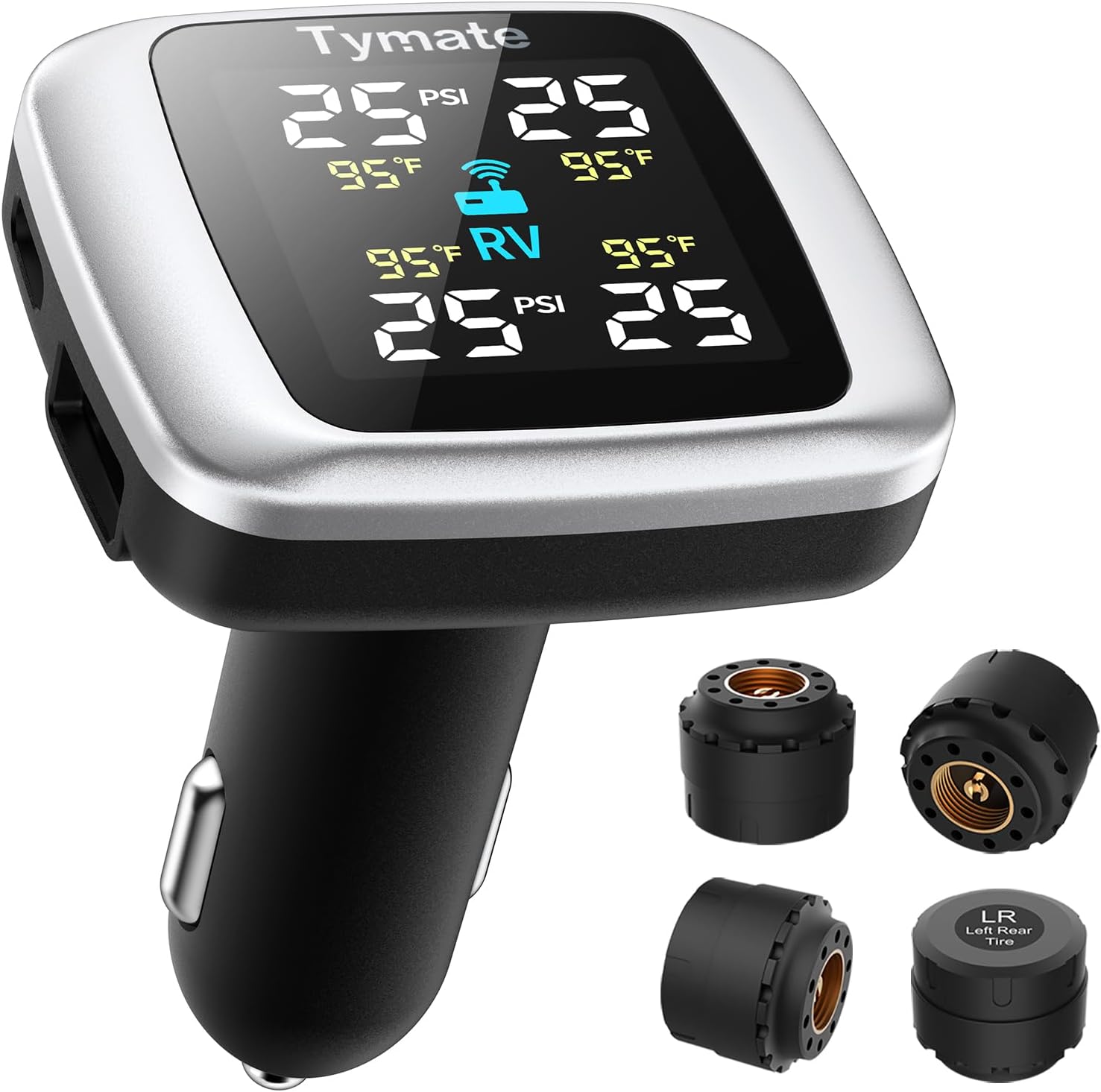
Tymate TM7 is a wireless tire pressure monitoring system that delivers real-time pressure and temperature readings for safer driving. It includes four external sensors, a bright color LCD display with adjustable backlight, and six alarm modes for high/low pressure, fast leakage, high temperature, and sensor signal or battery issues. The system covers a wide 0–144 PSI range and plugs into your vehicle’s cigarette lighter socket for quick DIY setup.

Check tire pressure quickly and accurately with the Accutire MS-4021B digital gauge, featuring a large backlit LCD for easy visibility. The angled head and rubber-coated handle make it comfortable to grip, while unit switching lets you read psi, bar, kPa, or kg/cm2. An automatic shutoff helps preserve battery life, and it measures 5–150 PSI in small increments for confident tire maintenance.

ETENWOLF T300 is a calibrated digital tire pressure gauge for accurate readings from 3 to 200 PSI across light and heavy-duty vehicles. It includes thermal compensation for reliable performance in extreme cold or heat, with an auto shut-off to extend battery life and an LED for easier reading. The sturdy design supports rugged everyday use, making it ideal for pickups, RVs, and industrial applications.
How Do You Check and Inflate Tire Pressure?
You check and inflate tire pressure by using a gauge, comparing the reading with the vehicle placard, adding air in short bursts, and rechecking until the tire reaches the recommended PSI. Check the spare too if your vehicle has one.
[Products Worth Considering]

The JACO FlowPro Tire Inflator measures, inflates, and airs down tires up to 100 PSI with battery-free operation and ±2% accuracy after calibration. It features a glowing pressure dial for night visibility, a heavy-duty steel build with a hybrid hose, and a precision push-to-inflate thumb trigger. The patented Lightning Air Chuck locks on for a secure seal, and the kit includes quick-connect hardware for easy inline use with your air compressor.
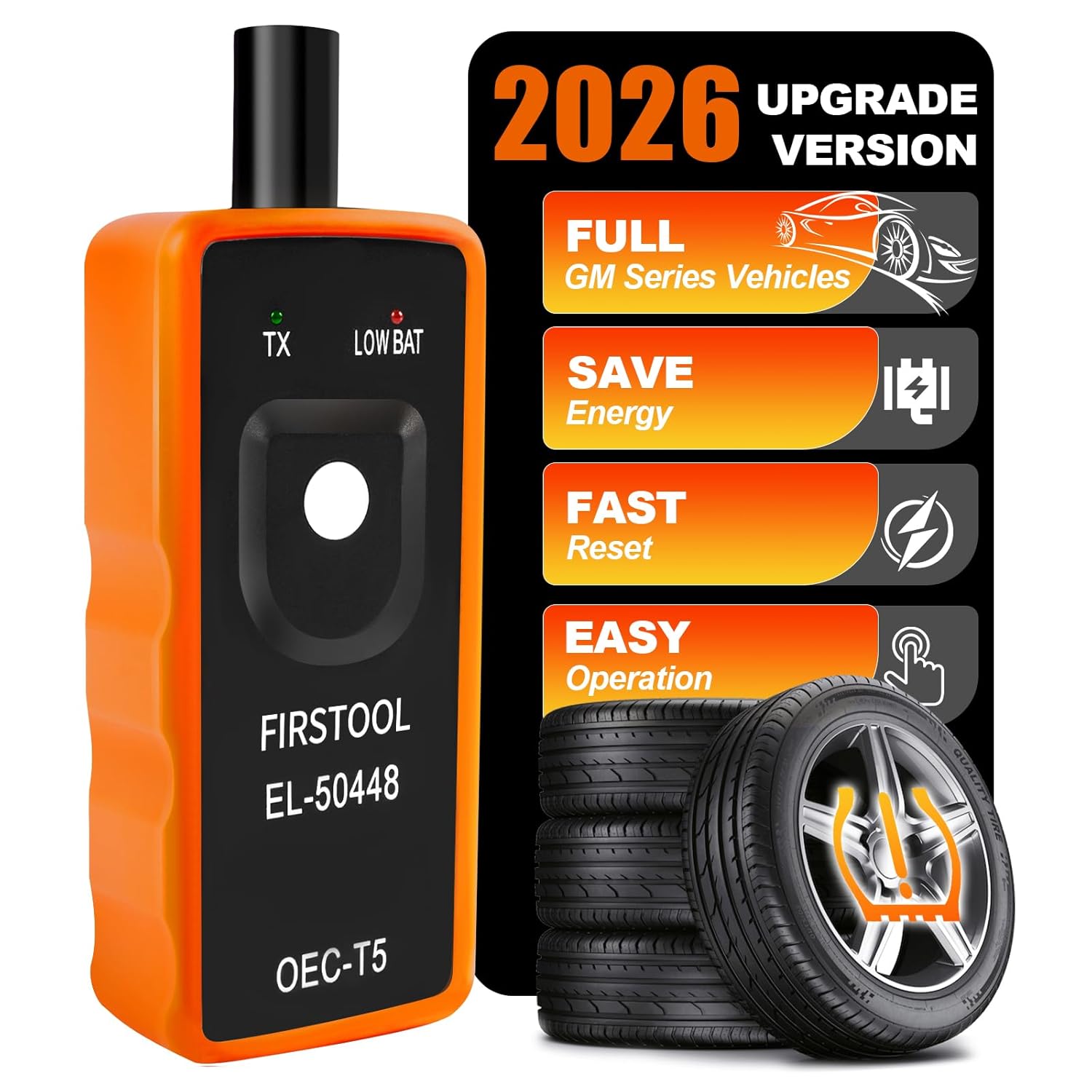
This TPMS relearn tool helps you quickly activate, match, and reset GM tire pressure sensors to keep the vehicle monitoring system working properly. It clears tire pressure alarms and dashboard warning lights after sensor replacement or tire rotation, and supports learning for common 315/433 MHz TPMS sensors. Designed for simple one-button operation, it can help you avoid unnecessary trips to repair shops.

The ETENWOLF T600 digital tire pressure gauge delivers precise, manually calibrated readings to ANSI B40.7 Grade 2A standards with ±0.5% PSI accuracy. Its 360° rotating nozzle and display hold make it easy to check pressures from any angle, while a bleed button helps dial tires to the perfect level. With a 0–250 PSI range and support for PSI, BAR, and KPA, it’s a convenient tool for maintaining tire performance across many vehicles and seasons.
Checking Tire Pressure
Start when the tires are cold. Remove the valve cap, press the gauge firmly onto the valve stem, and read the PSI. If you hear air escaping, reseat the gauge and try again. Write down each tire’s reading, especially if one tire is lower than the others.
- Check all four tires, not just the one that looks low.
- Check the spare if your vehicle has one.
- Use the driver-side door placard or owner’s manual as the target pressure.
- Look for uneven shoulder wear, cracks, nails, screws, bubbles, and sidewall cuts.
- Replace missing valve caps to help keep dirt and moisture out of the valve stem.
Inflating Tires Safely
Use a home compressor, portable inflator, or public air station. Add air in short bursts, then recheck with your gauge. Stop when the tire reaches the recommended PSI. If the tire will not hold air, do not keep driving on it. A leak at the tread, bead, valve stem, or wheel may need professional repair.
Proper inflation can also save money. FuelEconomy.gov says properly inflated tires can improve gas mileage by 0.6% on average and up to 3% in some cases, while also helping tires stay safer and last longer.
How Low Tire Pressure Damages Tires
Low tire pressure damages tires by increasing sidewall flex. That flex creates heat inside the tire, especially at higher speeds or under heavy loads. Heat can weaken internal tire materials, speed up shoulder wear, and raise the risk of tread separation or sudden air loss.
Underinflation does not just make a tire look soft. It makes the tire work harder, run hotter, and wear out faster.
- More flex: The sidewall bends more with each rotation.
- More heat: Extra movement raises internal tire temperature.
- Uneven wear: The shoulders often wear faster than the center tread.
- Lower fuel economy: Rolling resistance increases when tires are underinflated.
- Higher failure risk: Severe underinflation can lead to tire failure or a blowout.
When Should You Stop Driving Immediately?

Stop driving immediately when the tire is visibly flat, the pressure is around 20 PSI or lower, or the vehicle pulls, shakes, thumps, or feels unstable. Stop if you see sidewall damage, a bulge, exposed cords, smoke, rubber smell, or a tire that keeps losing air after inflation.
If a blowout happens while driving, keep both hands on the wheel, avoid slamming the brakes, ease off the accelerator, and steer gradually to a safe place. Once stopped, turn on your hazard lights and keep away from traffic while you arrange help.
Warning: Do not continue driving just because the tire still rotates. A severely underinflated tire can be damaged internally before it fully comes apart.
When Should You Visit a Tire Service Shop?
Visit a tire service shop when the tire keeps losing air, the TPMS light stays on after inflation, the warning light flashes, or you find visible damage. A shop can test for tread punctures, bead leaks, valve-stem leaks, cracked wheels, TPMS sensor faults, and internal tire damage.
[Products Worth Considering]

This tire inflator with pressure gauge delivers long-lasting performance with a durable rubber-protected gauge and sturdy build. The longer hose and 360 swivel air chuck help you seal the valve securely and keep your hands free while measuring, inflating, or deflating. It’s battery-free for reliable use and provides ±2 PSI accuracy in the mid-range for most typical tires, with universal compatibility for 1/4 NPT compressor outputs.
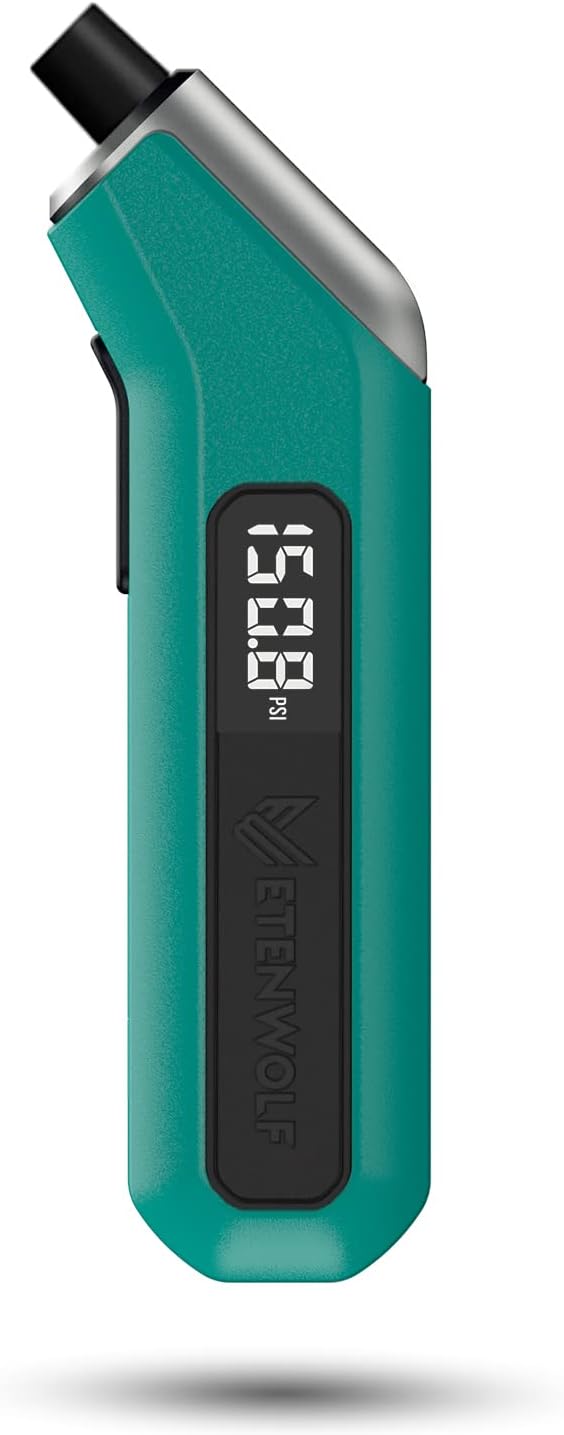
ETENWOLF T300 is a calibrated digital tire pressure gauge designed for reliable readings across low and high pressure ranges. It includes thermal compensation for stable performance in extreme cold or heat, an LED light for visibility, and an auto shut-off to help preserve battery life. Ideal for pickups, RVs, and heavy-duty vehicles, it delivers accurate PSI measurements with sturdy durability.

Get precise tire readings with the ETENWOLF T300 Plus digital gauge, calibrated to ANSI B40.7 Grade 2A for reliable accuracy. It measures across a wide 3–200 PSI range and includes thermal compensation for dependable performance from extreme cold to heat. The bright LED display, LED illumination, and replaceable AAA batteries make it easy to check pressures quickly, even in low light.
Warning Light On
If the tire pressure warning light comes on, check pressure as soon as possible. Inflate the tires to the placard value, then drive a short distance if your owner’s manual says the system needs movement to reset. If the light stays on, the tire may still be low, the system may need a reset, or a TPMS fault may exist.
Tire Pressure Too Low
If your gauge shows a very low reading, do not simply add air and forget it. A tire that drops far below spec may have a puncture, leaking valve, damaged bead, cracked rim, or sidewall damage. Recheck it later the same day and again the next morning when cold.
Seek Professional Inspection
Ask for a professional inspection if you notice recurring pressure loss, vibration, pulling, uneven shoulder wear, a nail or screw in the tread, or any sidewall bulge. Also ask the technician whether the tire is repairable. Punctures in the tread area may be repairable, but sidewall damage usually means replacement.
- Ask for a leak test if one tire keeps dropping.
- Ask the shop to inspect the valve stem and bead seal.
- Ask for TPMS diagnosis if the warning light flashes or stays on after inflation.
- Ask whether the tire has internal damage if it was driven while very low.
- Replace the tire if the sidewall is damaged, bulging, or unsafe to repair.
Frequently Asked Questions
How long can you drive with a low tire?
You should drive only long enough to reach a safe nearby place or tire service location, and only if the tire is not visibly flat or damaged. If the vehicle pulls, vibrates, thumps, or the pressure is around 20 PSI or lower, stop driving and get help.
How low is too low to drive on your tires?
Any pressure below the vehicle placard is too low and should be corrected. A tire around 20 PSI or lower is a serious safety concern for many passenger vehicles. If the tire looks flat, has damage, or affects handling, do not drive on it.
What is dangerously low for a tire?
Dangerously low pressure depends on the vehicle and tire type, but around 20 PSI or lower should be treated as unsafe for many passenger tires. You should also treat any visibly flat, bulging, cut, or unstable tire as unsafe regardless of the exact PSI.
Is 17 PSI too low to drive on?
Yes. 17 PSI is too low for normal driving on most passenger vehicles. Stop in a safe place, inflate the tire only if it is not damaged, and have it inspected for a leak or puncture. Do not continue driving at road speed on 17 PSI.
Can I drive if the TPMS light is on but the tire looks fine?
Do not rely on appearance alone. Stop when safe and check every tire with a gauge. If the tire is only slightly low, inflate it to the placard PSI. If it is very low, damaged, or losing air again, avoid driving and get service.
Conclusion
You can drive on a low tire only in limited, cautious situations. If the tire is just a little below the recommended pressure and still looks normal, drive slowly to a nearby air pump or service shop. If the tire is around 20 PSI or lower, visibly flat, damaged, vibrating, or pulling, stop driving and arrange help.
The safest habit is simple: check tire pressure monthly when cold, use the PSI on your vehicle placard, and treat the TPMS light as a warning that needs a gauge check. A few minutes with a tire gauge can prevent tire damage, poor handling, and a dangerous failure on the road.
Sources
- NHTSA TireWise — supports tire maintenance, cold-pressure checks, TPMS guidance, blowout risk, tread safety, and tire-related crash context.
- 49 CFR § 571.138, Tire Pressure Monitoring Systems — supports TPMS threshold and warning-light requirements.
- FuelEconomy.gov: Keeping Your Vehicle in Shape — supports fuel-economy and proper-inflation claims.