Low tire pressure is not just a comfort issue. It changes how your car steers, brakes, carries weight, and sheds heat. For most passenger vehicles, anything well below the door-jamb tire placard should be corrected right away, and a tire below about 20 PSI should be treated like an emergency unless your owner’s manual gives specific run-flat instructions.
Quick Answer
For most cars, 32 to 35 PSI is common when tires are cold, but your door-jamb placard is the real target. Around 28 PSI is low enough to refill soon. Around 25 PSI is too low for normal driving. Below about 20 PSI, stop and treat the tire as flat or unsafe.
Key Takeaways
- Use the tire pressure listed on the driver-side door placard or in the owner’s manual, not the maximum PSI printed on the tire sidewall.
- If a tire is around 25 to 28 PSI, refill it as soon as practical and avoid highway speeds, heavy loads, and sharp turns until corrected.
- If a tire is below about 20 PSI, visibly flat, bulging, punctured, or touching the rim, stop driving and use a spare, roadside help, or a tire shop.
- Check tire pressure at least monthly when tires are cold, and check more often during big temperature swings.
- A TPMS light means at least one tire is significantly underinflated, but it does not replace a manual gauge check.
At a Glance
| Time Required | 5 to 10 minutes for a normal pressure check and refill |
| Difficulty | Easy, but stop if the tire is flat, damaged, or losing air quickly |
| Tools Needed | Tire pressure gauge, air compressor, valve caps, and your vehicle’s tire placard or owner’s manual |
| Cost | Usually free to a few dollars for air; about $5 to $20 for a basic gauge |
How Low Is Too Low for Tire Pressure?
Tire pressure is too low when it falls meaningfully below the cold PSI listed on your vehicle’s tire placard. The exact number depends on the car, tire size, load rating, and whether the front and rear tires use different pressures. Still, these ranges work as practical guidance for most passenger cars:
| Pressure Reading | What It Usually Means | What You Should Do |
|---|---|---|
| At placard PSI | Correct cold pressure | Drive normally and keep checking monthly. |
| 1 to 3 PSI low | Slightly low | Refill soon, especially before highway driving. |
| Around 28 PSI | Low for many cars | Drive gently only if needed, then refill to the placard PSI. |
| Around 25 PSI | Too low for normal driving | Avoid highway speed, heavy loads, and long trips. Refill immediately. |
| Below about 20 PSI | Critical underinflation or near-flat condition | Stop driving. Use a spare, tow service, roadside help, or a tire professional. |
Warning: Do not keep driving on a tire that is below about 20 PSI, visibly flat, bulging, smoking, losing air quickly, or making the rim sit close to the road. A short drive can damage the tire, bend the wheel, or lead to loss of control.
The safest rule is simple: use the vehicle placard as your target. The National Highway Traffic Safety Administration says proper tire pressure affects safety, durability, and fuel consumption, and the correct cold pressure is found on the tire and loading information label or in the owner’s manual.
What PSI Is Safe for Most Cars?
For many passenger cars, safe cold tire pressure often falls around 32 to 35 PSI. Some vehicles use less, and many SUVs, trucks, EVs, performance cars, and loaded vehicles may need more. The door-jamb placard always wins because the automaker chose that pressure for the vehicle’s weight, tire size, and handling balance.
Do not use the maximum PSI printed on the tire sidewall as your everyday target. That number is usually a maximum load-related pressure for the tire itself, not the recommended cold pressure for your specific vehicle. The U.S. Department of Energy and EPA fuel economy guidance also points drivers to the sticker in the driver-side door jamb, glove box, or owner’s manual instead of the tire sidewall.
If your placard says 35 PSI and your gauge reads 28 PSI, the tire is 7 PSI low. That is not a tiny difference. The tire will flex more, build more heat, and wear faster. If your placard says 30 PSI and the tire reads 28 PSI, it is still low, but the situation is less severe. That is why the placard matters more than a universal number.
Why Does Tire Pressure Drop?
Tire pressure drops because of temperature change, slow air seepage, punctures, valve problems, rim leaks, and normal aging. A tire can also lose pressure after hitting a pothole, curb, or road debris. If one tire keeps dropping faster than the others, do not just refill it over and over. Inspect it for a nail, screw, cracked valve stem, damaged bead, or wheel damage.
Cold weather is a common trigger. As air temperature drops, the air inside the tire contracts, so a tire that was correct in warm weather can become low after a cold night. Heat from driving can also raise pressure temporarily, which is why cold readings are best. A cold tire means the vehicle has been parked for at least three hours or driven less than about one mile at moderate speed.
Note: If only one tire is low while the other three are normal, suspect a leak or damage. If all four tires are low, temperature change or missed maintenance is more likely.
Why Low Tire Pressure Is Dangerous
Low tire pressure is dangerous because the tire cannot hold its designed shape. The sidewall flexes more, heat builds up, the tread can wear unevenly, and the car may feel slow to respond. In severe cases, underinflation can contribute to tire failure, tread separation, or a blowout.
NHTSA reports that poor tire maintenance, including not having enough air in the tires, can lead to a flat tire, blowout, or tread separation. NHTSA also reported 511 fatalities in tire-related crashes in 2024. Proper inflation is one of the simplest ways to reduce that risk.
- You can lose steering control if the tire fails suddenly.
- You can need more distance to stop because grip and tire shape are compromised.
- You can wear out the tire early, especially on the edges of the tread.
- You can waste fuel because low pressure increases rolling resistance.
FuelEconomy.gov says underinflated tires can lower gas mileage by about 0.2% for every 1 PSI drop in the average pressure of all tires.
How Low PSI Affects Handling
When tire pressure drops, the tire flexes more than it should. That extra flex changes the tire’s contact with the road, slows steering response, and raises heat. You may notice the car wandering, pulling, feeling heavy in turns, or reacting late during lane changes.
Steering Response Drops
Low tire pressure makes steering feel vague because the sidewall bends before the tire fully responds. Instead of a clean turn-in, the car may feel soft or delayed. This is especially noticeable during quick corrections, tight turns, or highway lane changes.
If pressure is very low, the tire can also deform enough to damage the sidewall or break the bead seal between the tire and wheel. That is one reason a tire below about 20 PSI should be treated as a stop-and-fix problem, not a normal driving condition.
Longer Braking Distances
Low tire pressure can make braking less predictable. A tire that is too soft may not keep an even tread shape against the road. It also builds heat, which can weaken the tire during sustained driving. The exact change in stopping distance depends on the tire, speed, road surface, load, and weather, so avoid relying on one fixed percentage.
| PSI Condition | Traction | Braking Effect |
|---|---|---|
| At placard PSI | Best designed contact | Normal for the vehicle |
| A few PSI low | Slightly reduced | May feel less crisp |
| Around 25 to 28 PSI | Reduced | Less predictable, especially in rain |
| Below about 20 PSI | Unstable | Unsafe to continue driving |
Reduced Cornering Grip
Underinflated tires can make cornering feel loose or delayed. The tire may roll onto its shoulder, which reduces stability and wears the outer edges faster. In wet weather, this loss of shape and control can make the car harder to place through a turn.
Good hydroplaning resistance still depends on proper pressure. Even a strong wet-weather tire cannot work correctly if it is badly underinflated.
When You Should Stop Driving
You should stop driving immediately if the tire is below about 20 PSI, visibly flat, bulging, punctured, smoking, shredding, or making the car pull hard to one side. You should also stop if the wheel rim looks close to the pavement or you hear flapping, thumping, or grinding from the tire.
If your tire is around 25 to 28 PSI and there is no visible damage, you may be able to drive slowly and carefully to the nearest safe air pump or repair location. Avoid highway speed, heavy cargo, hard braking, and sharp steering. Refill to the placard pressure as soon as possible.
If you have run-flat tires, follow the vehicle and tire manufacturer’s limits for speed and distance after pressure loss. Many run-flat systems allow only limited temporary mobility. They do not make low-pressure driving harmless. If you use a temporary spare, follow the PSI and speed limit printed on the spare and in the owner’s manual.
The right run-flat tires can help in a puncture, but they still require correct pressure checks and careful use after a warning.
How to Check and Refill Tire Pressure
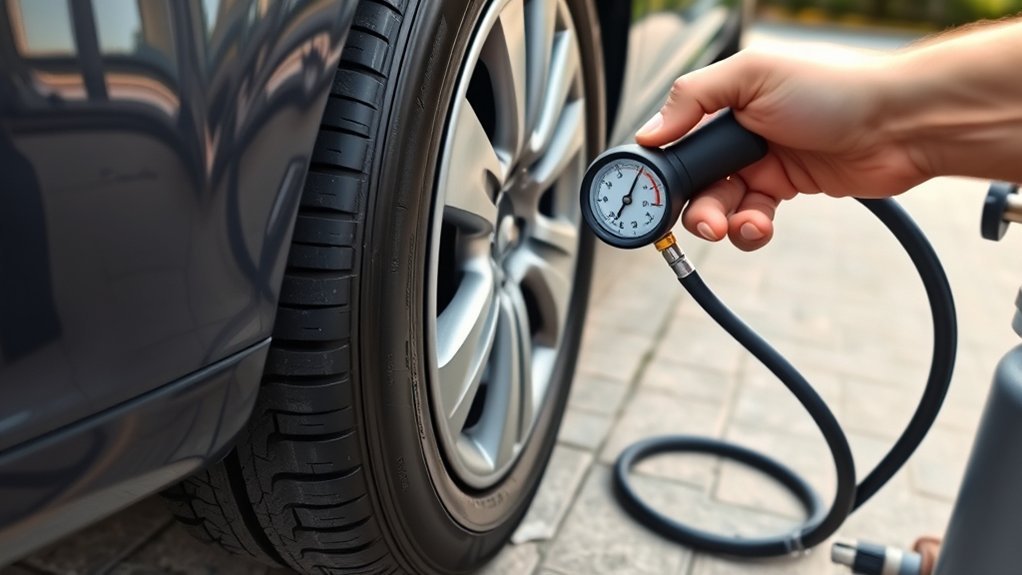
Checking tire pressure is simple, but accuracy matters. Use a manual gauge even if your car has TPMS. NHTSA says newer vehicles have tire pressure monitoring systems, but they only activate a warning when a tire is significantly underinflated, so monthly manual checks are still needed.
[Products Worth Considering]

Keep your tires properly inflated with this analog VONDIOR tire pressure gauge, designed for fast, easy readings without batteries. The swiveling, two-axis hose and large glow dial help you measure at any tire angle with instant visibility. Built with a protective rubber shield, it supports durable, low-maintenance use for cars and trucks.

ETENWOLF’s tire pressure gauge helps you quickly and accurately check tire PSI across cars, trucks, motorcycles, bikes, and more. It’s manually calibrated to ANSI B40.1 Grade A for reliable readings, includes a large glow dial for easy nighttime viewing, and features a 360-degree swivel chuck for use at any valve angle. The gauge also works consistently in extreme hot or cold weather.

This tire inflator with pressure gauge delivers long-lasting performance with a durable rubber-protected gauge and sturdy build. The longer hose and 360 swivel air chuck help you seal the valve securely and keep your hands free while measuring, inflating, or deflating. It’s battery-free for reliable use and provides ±2 PSI accuracy in the mid-range for most typical tires, with universal compatibility for 1/4 NPT compressor outputs.
Check Tire Pressure
- Park on a safe, level surface.
- Wait until the tires are cold, ideally after the car has been parked for at least three hours.
- Find the recommended PSI on the driver-side door placard or in the owner’s manual.
- Remove the valve cap from the tire.
- Press the tire gauge firmly onto the valve stem until the hissing stops.
- Read the PSI and write it down for each tire.
- Check all four tires and the spare if your vehicle has one.
Pro Tip: Keep a small digital or dial gauge in the glove box. Gas-station gauges can be worn or inaccurate, and your TPMS may not show a warning until the tire is already significantly low.
Read TPMS Alerts
A TPMS warning means at least one tire is significantly underinflated or the system has a fault. Under U.S. FMVSS No. 138, a TPMS must illuminate a warning when pressure is at or below the required low-pressure threshold, which is tied to 25% below the vehicle manufacturer’s recommended cold inflation pressure or a listed minimum threshold, whichever is higher.
Do not assume the warning tells you exactly which tire is low unless your vehicle displays individual tire pressures. Check each tire with a gauge. If the light flashes for 60 to 90 seconds and then stays on, that can mean a TPMS malfunction. In that case, check pressure manually and schedule service.
Refill To Safe PSI
- Attach the air hose to the valve stem.
- Add air in short bursts.
- Recheck with your gauge after each burst.
- Stop at the vehicle placard PSI, unless your owner’s manual says front and rear tires need different pressures.
- Replace the valve cap.
- Drive a short distance if needed for TPMS to update, then recheck the warning light.
If you must add air when the tire is hot, inflate it enough to be safe, then recheck and adjust it when cold. Bridgestone’s tire-pressure guidance notes that vehicle manufacturers specify PSI for cold tires and that tire pressure should be checked against the recommended cold PSI.
What If the Tire Loses Pressure Again?
If the same tire drops again after refilling, treat it as a leak until proven otherwise. Look for nails, screws, cuts, cracked rubber, a damaged valve stem, or air bubbles around the bead if a shop tests it in water. A tire shop can repair some tread-area punctures, but sidewall damage, bulges, large cuts, and damage caused by driving flat usually require replacement.
Do not ignore repeat pressure loss just because the tire looks normal. Underinflated tires are often hard to spot by eye, and NHTSA recommends using an accurate gauge for monthly checks.
[Products Worth Considering]

The JACO FlowPro Tire Inflator measures, inflates, and airs down tires up to 100 PSI with battery-free operation and ±2% accuracy after calibration. It features a glowing pressure dial for night visibility, a heavy-duty steel build with a hybrid hose, and a precision push-to-inflate thumb trigger. The patented Lightning Air Chuck locks on for a secure seal, and the kit includes quick-connect hardware for easy inline use with your air compressor.

ETENWOLF’s calibrated tire pressure gauge delivers accurate readings for cars, trucks, motorcycles, bikes, SUVs, RVs, and ATVs across a 0–75 PSI range. The large glow dial improves visibility in low light, while the 360° swivel chuck makes it easy to check valve pressure from any angle. It’s designed to stay accurate even in extreme hot or cold weather.
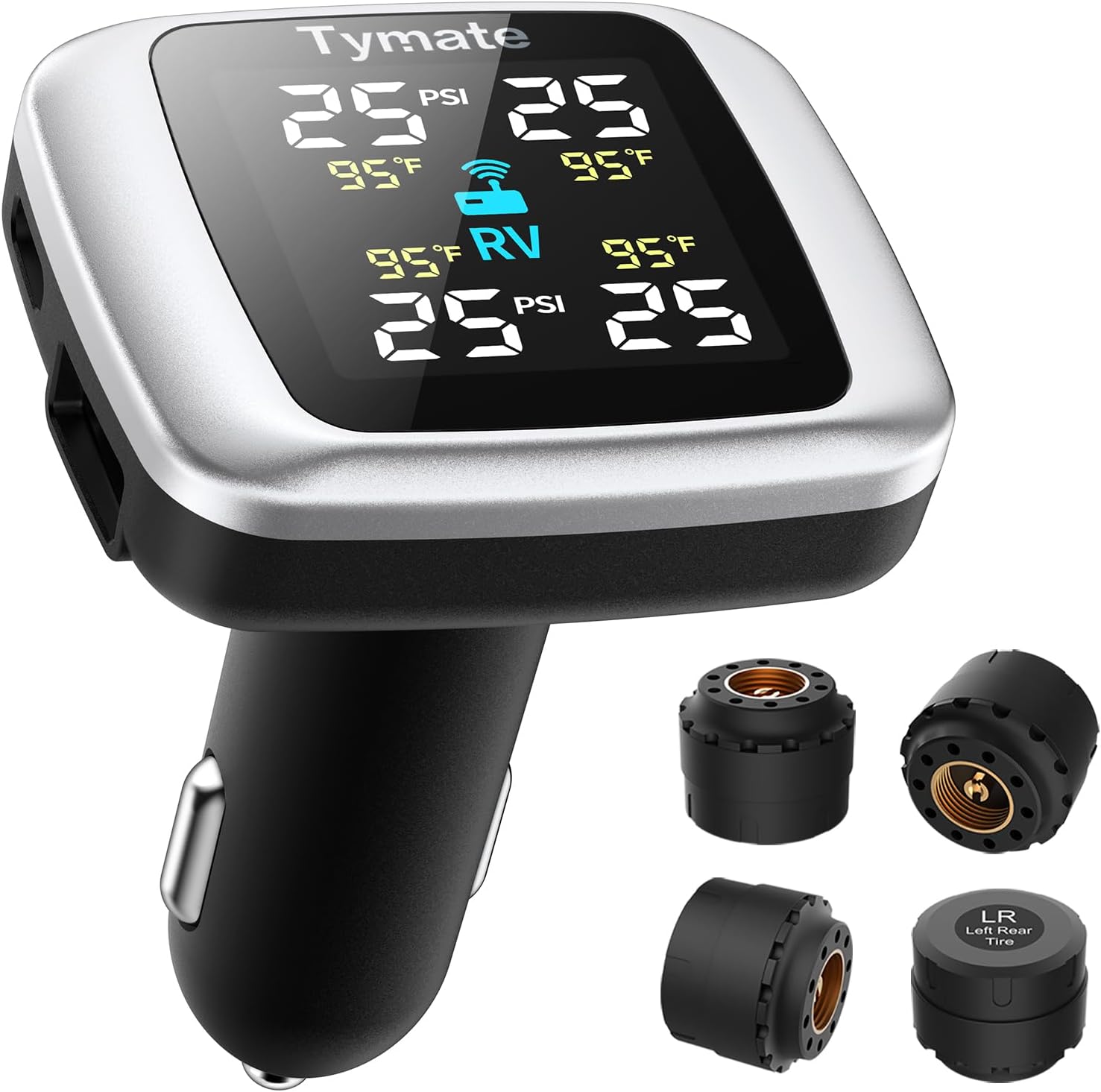
Tymate TM7 is a wireless tire pressure monitoring system that delivers real-time pressure and temperature readings for safer driving. It includes four external sensors, a bright color LCD display with adjustable backlight, and six alarm modes for high/low pressure, fast leakage, high temperature, and sensor signal or battery issues. The system covers a wide 0–144 PSI range and plugs into your vehicle’s cigarette lighter socket for quick DIY setup.
How to Prevent Low Tire Pressure
Preventing low tire pressure starts with a routine. Check tire pressure at least once a month when the tires are cold. Check before long trips, after major temperature changes, and any time the car pulls, rides rough, or triggers a TPMS warning.
- Use the placard PSI: Fill to the vehicle’s recommended cold pressure, not the sidewall maximum.
- Check the spare: A flat spare does not help when you need it.
- Keep valve caps on: Caps help keep dirt and moisture away from the valve core.
- Inspect tread and sidewalls: Look for nails, cuts, bulges, cracks, and uneven wear.
- Rotate when recommended: NHTSA says rotation can reduce irregular wear and that many vehicles should follow the owner’s manual, often around 5,000 to 8,000 miles if recommended.
- Fix alignment problems: Pulling, vibration, and uneven wear can shorten tire life and make pressure issues worse.
Proper tire maintenance also helps your budget. NHTSA says proper inflation can extend the average life of a tire by 4,700 miles, and FuelEconomy.gov says properly inflated tires are safer and last longer. The right tire performance starts with the correct pressure.
[Products Worth Considering]
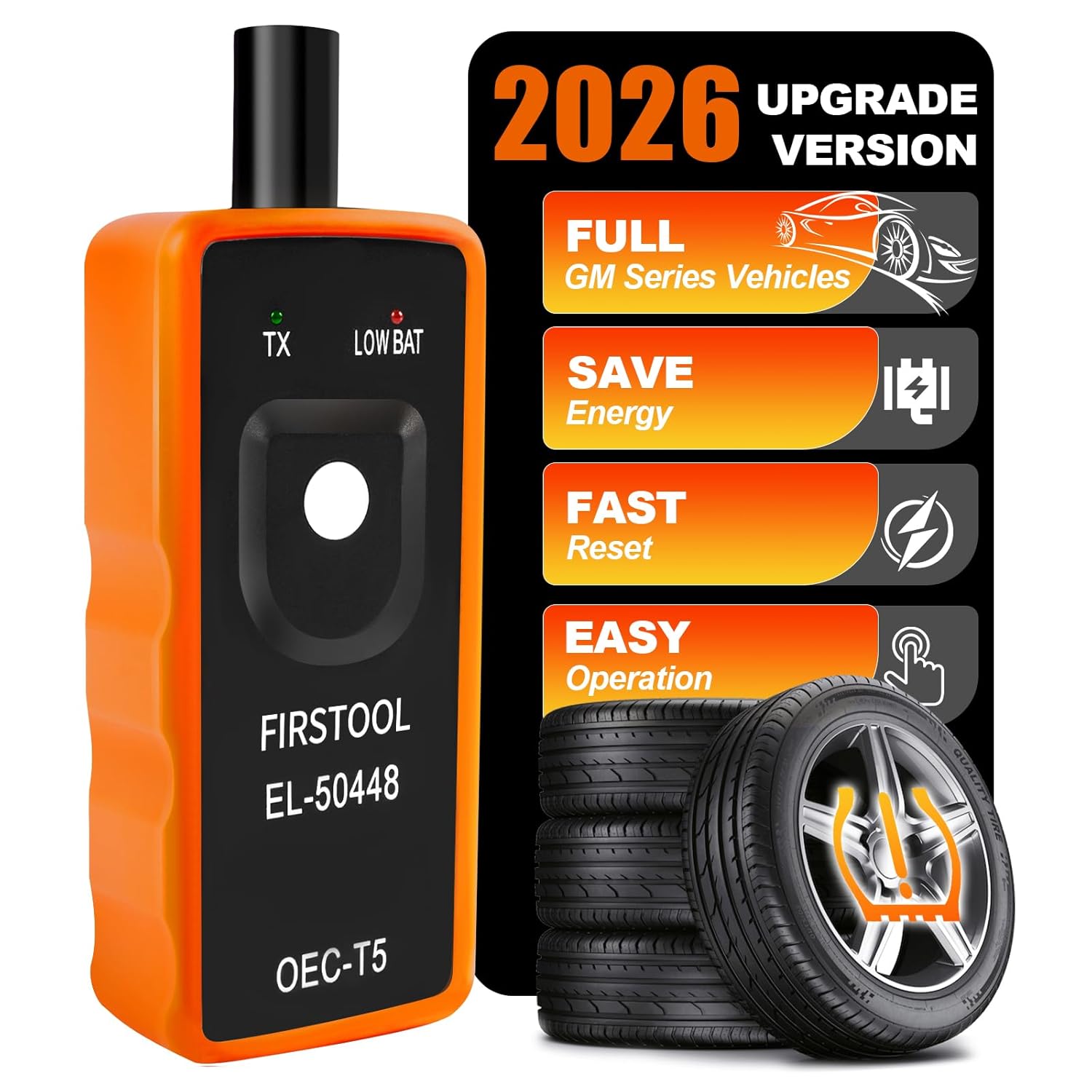
This TPMS relearn tool helps you quickly activate, match, and reset GM tire pressure sensors to keep the vehicle monitoring system working properly. It clears tire pressure alarms and dashboard warning lights after sensor replacement or tire rotation, and supports learning for common 315/433 MHz TPMS sensors. Designed for simple one-button operation, it can help you avoid unnecessary trips to repair shops.

Milton S-921 pencil tire pressure gauge helps you maintain optimal tire pressure for passenger cars with accurate readings in PSI and kPa. It features a built-in deflator valve for convenient pressure adjustments, plus a single chuck head and nylon indicator bar for easy use on the go. Built from durable plated brass and designed for reliable performance, it’s a practical road trip and cold-weather maintenance tool.
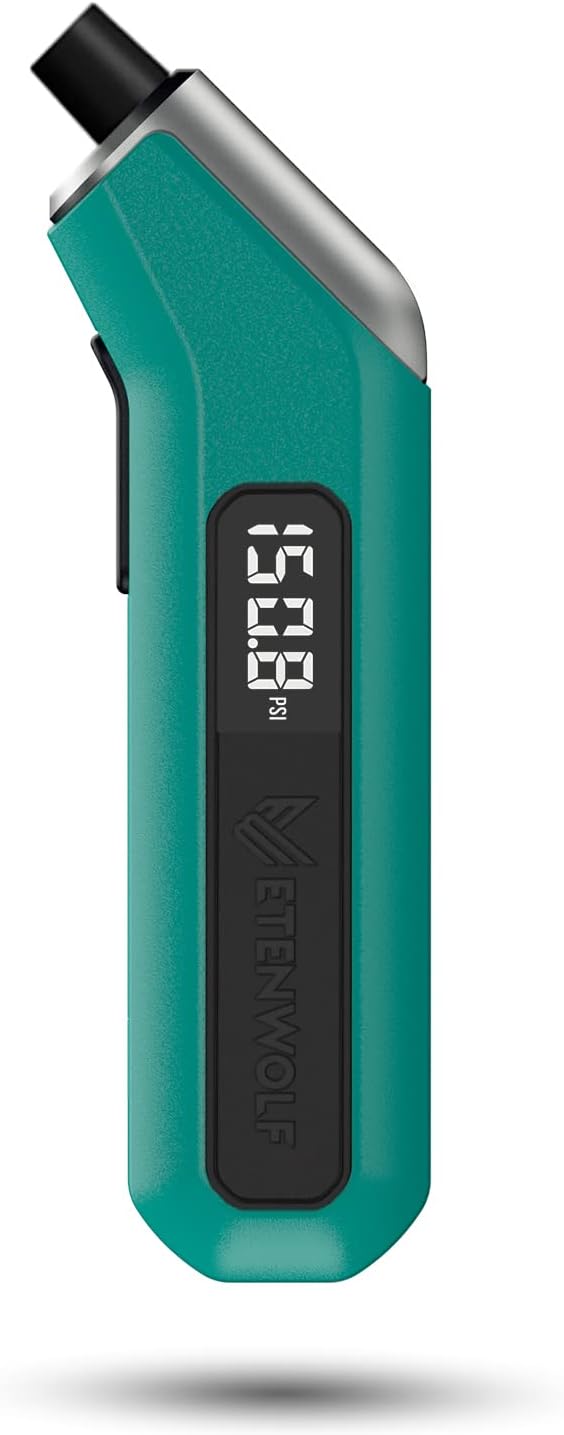
ETENWOLF T300 is a calibrated digital tire pressure gauge designed for reliable readings across low and high pressure ranges. It includes thermal compensation for stable performance in extreme cold or heat, an LED light for visibility, and an auto shut-off to help preserve battery life. Ideal for pickups, RVs, and heavy-duty vehicles, it delivers accurate PSI measurements with sturdy durability.
Frequently Asked Questions
Is 28 tire pressure too low to drive?
For many cars, 28 PSI is low but not always an immediate flat-tire emergency. Check your door-jamb placard. If the recommended pressure is 32 to 35 PSI, refill the tire soon and avoid hard driving until corrected. If pressure keeps dropping, inspect for a leak.
Is 25 PSI too low to drive on?
Yes, 25 PSI is too low for normal driving on most passenger vehicles. If there is no visible damage, drive only as needed to reach a safe air source or repair shop. Keep speed low, avoid heavy loads, and refill to the placard PSI right away.
Is 40 tire pressure too low?
Usually no. For many cars, 40 PSI may be higher than the recommended cold pressure, but some vehicles call for pressures near that range. Check the driver-side door placard. If the placard says 35 PSI, 40 PSI is likely too high. If the placard says 40 PSI, it is correct.
Can I drive 0.3 miles on a flat tire?
No, you should not drive 0.3 miles on a flat tire unless there is no safer choice in an emergency. Even a short distance can ruin the tire, damage the wheel, and make the vehicle harder to control. Stop, use a spare, call roadside help, or have the tire repaired.
Should I inflate tires to the number on the tire sidewall?
No. The sidewall number is usually the tire’s maximum pressure, not your vehicle’s recommended driving pressure. Use the driver-side door placard or owner’s manual. That pressure was chosen for your vehicle’s weight, tire size, load, and handling.
Can I drive with the TPMS light on?
You should not ignore a TPMS light. Pull over when safe, check all tire pressures with a gauge, and refill to the placard PSI. If a tire is below about 20 PSI, visibly flat, or damaged, do not keep driving. If the TPMS light flashes and stays on, the system may need service.
Conclusion
Low tire pressure becomes unsafe when it moves far enough below your vehicle’s placard PSI to affect heat, handling, braking, or tire shape. For many cars, 28 PSI is low enough to correct soon, 25 PSI is too low for normal driving, and below about 20 PSI should be treated as a flat or emergency condition. Check pressures cold, refill to the placard number, and inspect any tire that keeps losing air.
Sources
- NHTSA TireWise — tire pressure safety, monthly cold checks, tire-related crash data, tire rotation, tread, and TPMS guidance.
- 49 CFR 571.138, Tire Pressure Monitoring Systems — federal TPMS warning threshold and requirements.
- FuelEconomy.gov: Keeping Your Vehicle in Shape — fuel economy effect of underinflated tires and where to find proper tire pressure.
- Bridgestone: How to Check Tire Pressure — cold tire pressure, tire gauge use, and refill steps.