If you are considering run-flat tires for your Hyundai Sonata, the real question is not only whether they can keep you moving after a puncture. You also need to know whether they fit your exact Sonata, how they affect ride comfort, what happens after a TPMS warning, and whether the higher replacement cost is worth it for the way you drive.
Quick Answer
Run-flat tires can work on a Hyundai Sonata only if they match the correct tire size, load rating, speed rating, wheel fitment, and TPMS requirements. They may let you drive a limited distance after air loss, often up to 50 miles at reduced speed, but they usually cost more, ride firmer, and require professional inspection after a puncture.
Key Takeaways
- Do not assume your Sonata came with run-flat tires. Check the tire sidewall, owner information, and the tire label on the driver-side center pillar.
- Run-flat mobility is temporary. Most run-flat guidance is based on reduced speed and limited distance, not normal driving after a flat.
- A working TPMS is essential because a run-flat tire may not look flat even when it has lost pressure.
- Run-flat tires usually ride firmer and cost more than comparable standard tires.
- After any pressure-loss event, have the tire removed from the wheel and inspected before assuming it can be repaired.
What Are Hyundai Sonata Run-Flat Tires?
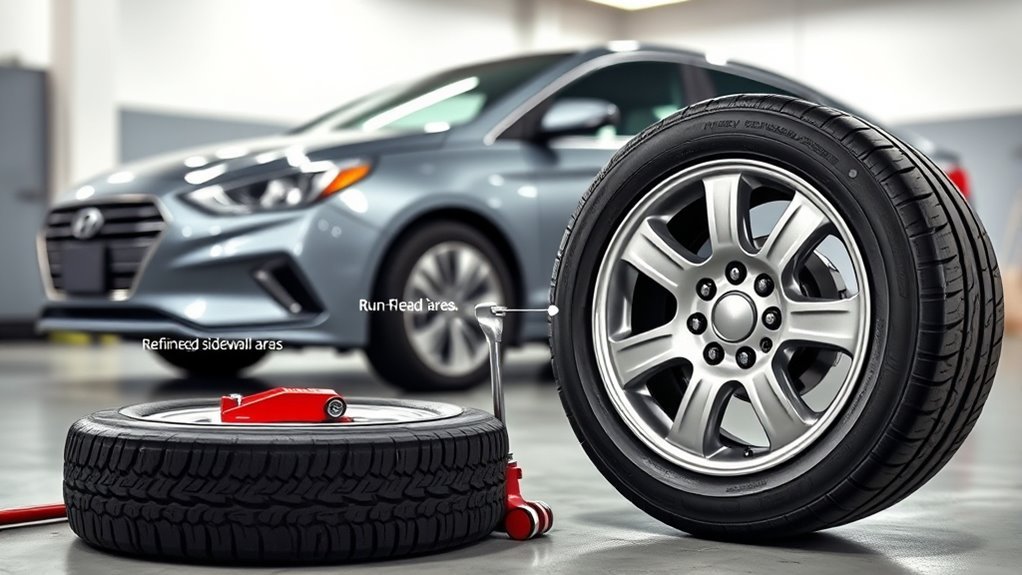
Run-flat tires are tires built to support the vehicle for a short distance after a major pressure loss. Most self-supporting run-flat tires do this with strengthened sidewalls that can carry the car’s weight temporarily when air pressure drops.
For a Hyundai Sonata, run-flat tires should be treated as a fitment decision, not a universal factory feature. Your Sonata may have standard tires, a compact spare, or a Tire Mobility Kit depending on model year, trim, and market. The safest way to confirm the correct setup is to check the tire label on the driver-side center pillar, your owner information, and the markings on the tire sidewall.
Hyundai notes that the tire label on the driver-side center pillar gives the recommended tire pressures for the vehicle. That label matters more than a generic PSI range because tire size and trim can vary. Hyundai’s tire specification and pressure label guidance explains where to find this information.
Pro Tip: Before buying run-flat tires for a Sonata, match all four key specs: tire size, load index, speed rating, and overall tire type. If one of those does not match the vehicle requirement, choose a different tire.
Benefits of Run-Flat Tires for Sonata Drivers
Run-flat tires can be useful if you value convenience and want to avoid changing a tire on the shoulder of a busy road. Their biggest advantage is temporary mobility after a puncture. Pirelli, for example, states that its Run Flat technology lets drivers continue within 50 miles at a maximum speed of 50 mph before changing the tire. Pirelli’s run-flat guidance is a good example of the speed-and-distance limits drivers should expect.
- More control after pressure loss: Reinforced sidewalls can help the tire keep its shape temporarily after air loss.
- No immediate roadside tire change: You may be able to reach a safer parking lot, service center, or home area instead of stopping on a dangerous shoulder.
- Possible cargo-space benefit: Vehicles designed around run-flats may not need a full spare tire, which can free up trunk space.
- Peace of mind on solo trips: Drivers who commute at night or travel through low-service areas may value the extra mobility.
Run-flat tires are not a permanent fix after a puncture. They are a temporary way to reach a safe location while driving slower and staying within the tire maker’s limits.
What’s the Downside of Run-Flat Tires?
The biggest downsides are ride comfort, cost, availability, and repair limits. Because run-flat tires need stronger sidewalls, they often feel firmer over potholes, expansion joints, and rough pavement. On a family sedan like the Hyundai Sonata, that can make the ride feel less smooth than it would with a quality standard touring tire.
Run-flat tires also tend to cost more than standard tires in the same size and category. The exact price depends on the tire size, brand, speed rating, retailer, installation fees, and local availability. Instead of relying on a fixed price range, compare quotes for your exact Sonata tire size.
Availability can also be a problem. Standard all-season tires for the Sonata are usually easy to find, while run-flat options may be limited in certain sizes. If you damage one tire during a trip, the shop closest to you may not have the same run-flat model in stock.
Warning: Do not keep driving normally just because the tire is a run-flat. Reduce speed, avoid hard cornering and braking, and go directly to a safe service location. Continued driving after pressure loss can cause hidden internal damage.
Run-Flat Tires vs. Standard Tires: Key Differences
| Feature | Run-Flat Tires | Standard Tires |
|---|---|---|
| After a puncture | May allow limited driving at reduced speed | Usually requires a spare, sealant kit, tow, or roadside assistance |
| Ride feel | Typically firmer because of reinforced sidewalls | Usually smoother and quieter in touring categories |
| Cost | Usually higher purchase and replacement cost | Usually lower cost and more options |
| Repair | Requires careful inspection; some makers restrict repair | Often repairable if the puncture is in the repairable tread area |
| Best for | Drivers who prioritize emergency mobility | Drivers who prioritize comfort, lower cost, and easier replacement |
[Products Worth Considering]

Milton S-921 pencil tire pressure gauge helps you maintain optimal tire pressure for passenger cars with accurate readings in PSI and kPa. It features a built-in deflator valve for convenient pressure adjustments, plus a single chuck head and nylon indicator bar for easy use on the go. Built from durable plated brass and designed for reliable performance, it’s a practical road trip and cold-weather maintenance tool.

TireJect Off-Road Tire Sealant Kit provides 5-in-1 sealing to help fix tread punctures up to 3/8", sidewall punctures up to 3/8", bead leaks, slow leaks, and minor dry rot on low-speed tires. It permanently seals with liquid rubber, recycled tire particles, and Aramid fibers, making it ideal for flats caused by thorns, nails, and screws. The included dispensing cap attaches to the valve stem for a no-mess installation, along with a metal valve core remover tool and valve stem cap. This kit is for off-road use only.

Steelman white tire marking crayons provide high-contrast, semi-permanent marks for repairing and inspecting tires and equipment. They write on wet or dry, smooth or coarse surfaces including rubber, metal, glass, and wood, making them ideal for puncture location and damage outlining. The lead- and zinc-free crayons resist weather and fading yet wipe away when you no longer need the marks.
Costs of Run-Flat Tires
Run-flat tires usually cost more than comparable standard tires because they use reinforced construction and specialized engineering. However, there is no single accurate price for “Hyundai Sonata run-flat tires.” Your cost depends on the Sonata’s tire size, the tire brand, seasonal type, speed rating, warranty, retailer, road-hazard coverage, and installation fees.
[Products Worth Considering]
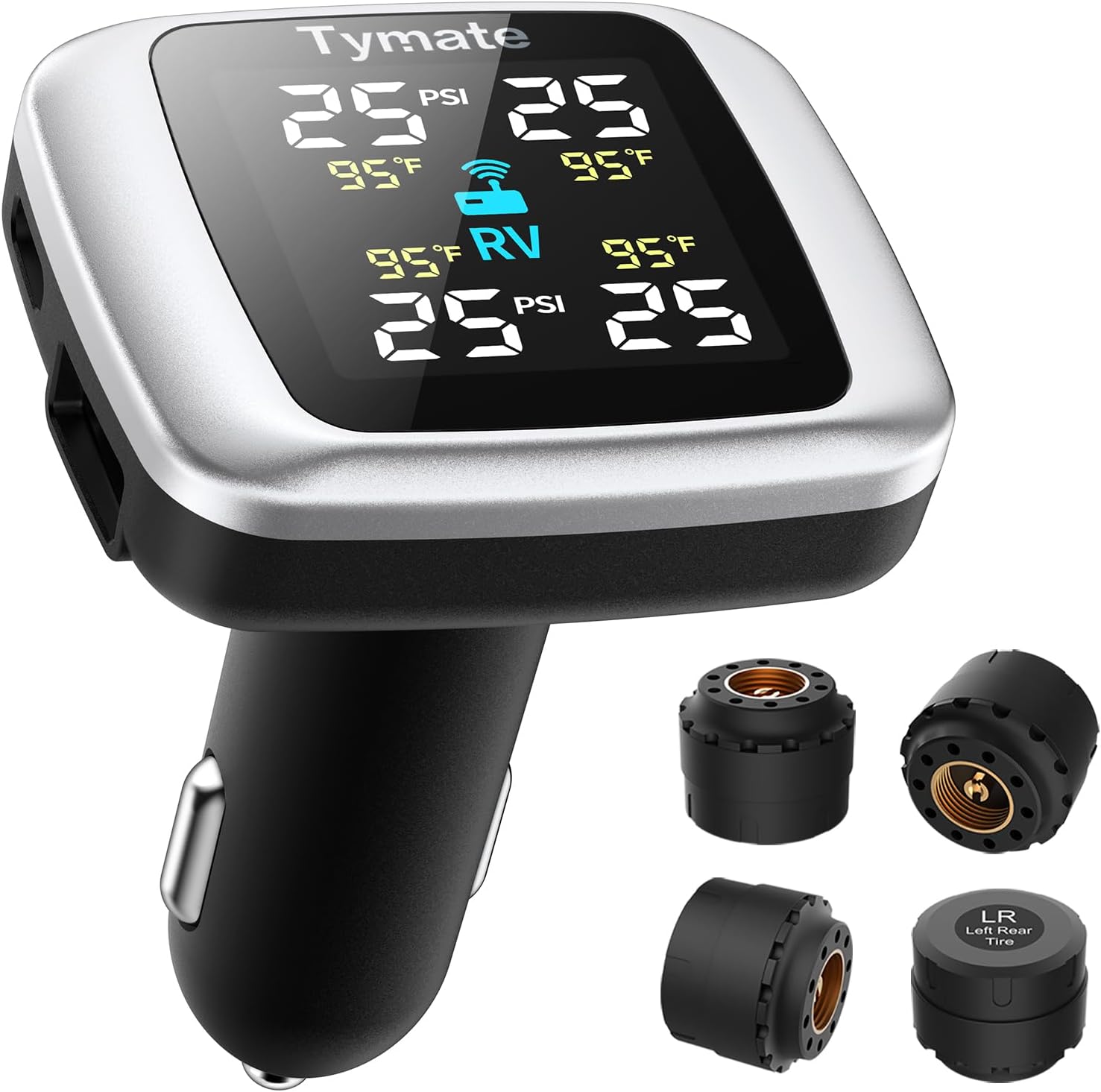
Tymate TM7 is a wireless tire pressure monitoring system that delivers real-time pressure and temperature readings for safer driving. It includes four external sensors, a bright color LCD display with adjustable backlight, and six alarm modes for high/low pressure, fast leakage, high temperature, and sensor signal or battery issues. The system covers a wide 0–144 PSI range and plugs into your vehicle’s cigarette lighter socket for quick DIY setup.

Monitor tire tread wear with a smart, color-coded depth gauge that shows clear condition ranges at a glance. The bar is range marked for fast, easy readings, helping you maintain safer traction and performance. Each gauge is portable with a pocket clip, and the set includes 20 units for daily use and sharing.

The TYAMATE TM8 solar-powered wireless TPMS delivers real-time tire pressure and temperature monitoring with six alarm modes for safer driving. A vibrant color LCD display shows readings clearly while windshield mounting keeps it hands-free and easy to read. With a wide 0–87 PSI range, strong 433.92 MHz signal transmission, and quick sensor pairing, it’s ideal for RV, sedan, SUV, MPV, and truck use.
Pricing Comparison With Standard Tires
When comparing prices, use the exact tire size on your Sonata’s sidewall or door placard. A standard all-season touring tire may be much cheaper than a run-flat grand touring tire, while a premium standard tire can overlap with lower-priced run-flat options.
Also compare the full installed price, not just the tire price. Mounting, balancing, valve stems or TPMS service kits, tire disposal, alignment, and road-hazard plans can change the final total.
Long-Term Investment Considerations
Run-flat tires may save you from a roadside tire change or tow in some situations. That convenience has value, especially if you drive alone, commute at night, or regularly travel where pulling over is risky.
However, the long-term cost can still be higher. If a run-flat tire is damaged after a pressure-loss event and cannot be safely repaired, replacement may be the only safe option. If the matching tire is not available locally, you may also face delays or need to replace more than one tire to keep tread depth and handling balanced.
Potential Hidden Costs
- Replacement after pressure loss: A tire may look fine outside but have internal damage.
- Limited local stock: Some shops may need to special-order your exact run-flat tire.
- Ride-quality tradeoff: You may decide the firmer ride is not worth the mobility benefit.
- TPMS service: TPMS sensors and service kits may add cost during tire replacement.
- No spare backup: If you switch away from run-flats on a vehicle without a spare, you need another flat-tire plan.
Repairing Run-Flat Tires: What You Need to Know
Run-flat tire repair is not a simple yes-or-no question. It depends on the tire maker’s repair policy, puncture location, puncture size, how far the tire was driven with low or zero pressure, and whether internal damage is found.
The U.S. Tire Manufacturers Association tire repair guidance says proper repair requires removing the tire from the wheel for a complete inspection. It also states that puncture repairs are limited to the tread area, the puncture injury cannot be greater than 1/4 inch, and a plug alone is not an acceptable repair.
| Situation | Likely Next Step |
|---|---|
| Small puncture in the main tread area | Professional inspection; repair may be possible if the tire maker allows it |
| Sidewall or shoulder damage | Replace the tire |
| Driven too far or too fast while deflated | Replace if internal damage or manufacturer limits are exceeded |
| Unknown pressure-loss history | Dismount and inspect before deciding |
Note: If a shop says a run-flat tire is not repairable, ask whether the decision is based on the tire manufacturer’s policy, the puncture location, internal damage, or how long it was driven underinflated.
Understanding Tire Pressure Monitoring for Run-Flat Tires
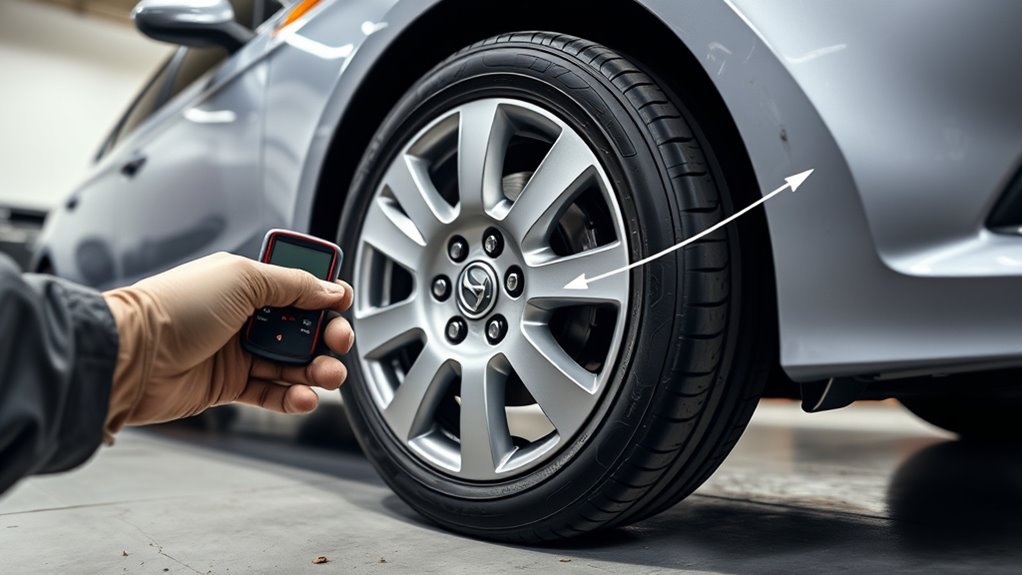
A working Tire Pressure Monitoring System is especially important with run-flat tires. A standard flat tire is often obvious because it sags. A run-flat tire may continue to support the vehicle, so you may not notice pressure loss right away without the TPMS warning.
Federal Motor Vehicle Safety Standard No. 138 defines TPMS performance requirements for passenger vehicles and requires systems that warn drivers of significant under-inflation. You can review the regulation in 49 CFR § 571.138.
Importance of Tire Pressure
Do not use a generic pressure number for every Sonata. Use the pressure listed on your tire label and owner information. Hyundai also warns that warm tires can read 4–6 psi higher than cold tires, and that under-inflation or over-inflation can reduce tire life, affect handling, and contribute to tire failure.
TPMS Functionality Explained
On many Hyundai vehicles, tire pressure may appear in the cluster after a few minutes of driving. Hyundai also notes that displayed tire pressure values may differ from a separate tire pressure gauge. That means the TPMS is a warning system, but a good manual gauge is still useful for routine checks.
Monitoring for Safety Assurance
If the TPMS warning appears, slow down, avoid sudden steering or braking, and stop somewhere safe to inspect the tire. If your Sonata uses a Tire Mobility Kit, follow Hyundai’s instructions carefully. Hyundai’s Tire Mobility Kit procedure says not to drive if tire pressure is below 29 psi after inflation and notes that the kit may not work for damage larger than about 0.16 inch.
How Weather Affects Run-Flat Tire Performance
Weather affects every tire, but run-flat tires can feel even firmer in cold conditions because of their reinforced construction. Cold weather also lowers tire pressure. Hyundai notes that tires typically lose pressure as temperatures drop, so pressure checks matter more during seasonal changes.
| Weather Condition | What It Can Do | What To Do |
|---|---|---|
| Cold weather | Can reduce pressure and make the ride feel harsher | Check pressure when tires are cold |
| Wet roads | Traction depends heavily on tread depth and tire design | Choose a tire with strong wet-braking ratings |
| Hot highway driving | Under-inflation can increase heat buildup | Do not drive long distances on a low-pressure tire |
Can You Switch From Run-Flat to Standard Tires?
In many cases, a driver can switch from run-flat tires to standard tires, but the change must be done thoughtfully. Do not mix run-flat and standard tires as a permanent setup. Use a full matching set that meets the Sonata’s required size, load index, speed rating, and pressure specifications.
The biggest issue is your flat-tire backup plan. If the vehicle does not have a spare tire, switching to standard tires means you should carry an approved spare kit, tire sealant/compressor kit, or have reliable roadside assistance. Also check your warranty, lease terms, and insurance policy if the vehicle originally came with run-flat tires or if the new tires change the original specification.
Where to Find Run-Flat Tires for Your Hyundai Sonata
Start with the tire size on your current tire sidewall and the tire label on the driver-side center pillar. Then compare options from a Hyundai dealer, a tire retailer, or the tire manufacturer’s fitment tool.
- Hyundai dealer or authorized tire center: useful for confirming fitment and TPMS compatibility.
- Major tire retailers: useful for comparing installed prices and availability.
- Tire manufacturer websites: useful for checking whether a run-flat option exists in your exact size.
- Local tire shops: useful for installation, balancing, alignment checks, and post-puncture inspection.
Before ordering, confirm whether the tire is marked as run-flat by the tire maker. Different brands use different markings, such as RFT, ROF, Run Flat, SSR, ZP, or similar brand-specific labels.
[Products Worth Considering]

The Gurduenon scissor car jack tire changing kit is designed for quick flat-tire replacement with a lifting capacity of 2.5 tons and a scissor-lift range sized for many vehicles. The complete emergency set includes a ratchet wrench, lug wrench, gloves, a pencil tire pressure gauge, and a storage bag for convenient trunk or garage use. Universal compatibility makes it suitable for cars, SUVs, and other vehicles roadside assistance needs.

Replace worn or malfunctioning GM TPMS sensors with this 433MHz pre-programmed sensor set designed for compatibility with many Chevrolet, Buick, GMC, and Cadillac models. It includes guidance for proper OBDII relearning/pairing after installation and supports reliable long-term operation with a high-performance CR2032 battery. Quality tested for durability and performance to help restore accurate tire pressure monitoring.

Check tire pressure quickly and accurately with the Accutire MS-4021B digital gauge, featuring a large backlit LCD for easy visibility. The angled head and rubber-coated handle make it comfortable to grip, while unit switching lets you read psi, bar, kPa, or kg/cm2. An automatic shutoff helps preserve battery life, and it measures 5–150 PSI in small increments for confident tire maintenance.
Frequently Asked Questions
Does the Hyundai Sonata come with run-flat tires?
Do not assume it does. Check your tire sidewall for run-flat markings and check your owner information, tire placard, or build sheet. Many Sonata owners use standard tires and may have a Tire Mobility Kit or spare-tire option depending on model year and trim.
Do I have to tell my insurance if I change from run-flat tires?
Check with your insurer if the change moves the vehicle away from its original factory specification or changes tire size, rating, wheel setup, or safety equipment. If you replace tires with the same size, load rating, and speed rating, some insurers may not treat it as a major change, but policy rules vary.
Do run-flat tires wear out faster?
Not always. Tire life depends on alignment, pressure, rotation, driving style, road conditions, and tire compound. However, run-flat tires can be more expensive to replace, and a pressure-loss event may force replacement even when the outside of the tire looks normal.
How many miles do run-flat tires usually last after a puncture?
Many run-flat tires are marketed for limited mobility of about 50 miles at up to 50 mph, but the exact limit depends on the tire maker, vehicle load, speed, temperature, and damage. Always follow the tire manufacturer’s instructions and get the tire inspected immediately.
Can I mix run-flat and standard tires on my Sonata?
Do not mix them as a permanent setup. Run-flat and standard tires can respond differently during braking, cornering, and emergency maneuvers. If you switch tire types, replace all four with matching tires that meet the vehicle’s required specifications.
Conclusion
Run-flat tires can make sense for a Hyundai Sonata driver who values temporary mobility after a puncture and wants to avoid an immediate roadside tire change. They are less appealing if your top priorities are a smoother ride, lower replacement cost, easy availability, and simple puncture repair.
The best choice is the one that matches your Sonata’s required specifications and your real driving needs. Check the door-jamb tire label, confirm the sidewall size and ratings, keep the TPMS working, and have any pressure-loss event inspected by a qualified tire professional. If you switch from run-flats to standard tires, make sure you also have a reliable plan for the next flat.
Sources
- Hyundai Owner’s Manual: Tire Specification and Pressure Label — supports Sonata tire placard and recommended pressure guidance.
- Hyundai Owner’s Manual: Using the Tire Mobility Kit — supports Tire Mobility Kit safety limits and post-inflation guidance.
- Pirelli: Run Flat Tires — supports typical run-flat distance and speed guidance.
- Michelin: Run-Flat Tires, Benefits, and Proper Care — supports run-flat construction, TPMS importance, inspection, and replacement guidance.
- U.S. Tire Manufacturers Association: Tire Repair Basics — supports professional inspection and proper puncture repair limits.
- 49 CFR § 571.138: Tire Pressure Monitoring Systems — supports TPMS warning-system requirements.