Run-flat tires can sound like an easy safety upgrade for a Honda Accord, but they are not standard equipment on most U.S. Accord models. Honda’s current Accord information lists all-season tire sizes by trim, while the gas Accord owner’s manual describes using a compact spare and the Accord Hybrid manual describes using a temporary tire repair kit. If you want run-flat tires on an Accord, treat them as an aftermarket choice that must match the vehicle’s tire size, load rating, speed rating, wheel setup, TPMS behavior, and ride-comfort expectations.
Quick Answer
Most Honda Accord models do not come with run-flat tires from the factory. Run-flats may be available as aftermarket replacements in compatible sizes, but you should confirm fitment with the tire maker, Honda guidance, and a qualified tire shop before installing them.
Key Takeaways
- Run-flat tires are designed to keep the car temporarily drivable after air pressure loss, usually at reduced speed and for limited distance.
- A Honda Accord should not be assumed to have run-flats just because some modern cars do; check the sidewall, owner’s manual, and tire label.
- Common Accord tire sizes include 225/50R17 and 235/40R19, but the exact size depends on trim and model year.
- Run-flats can add convenience after a puncture, but they may ride firmer, cost more, and require professional inspection after pressure loss.
- Certain 2023–2026 Accord Hybrid vehicles have a tire repair kit recall, so owners should check their VIN before relying on the kit.
At a Glance
| Time Required | 10–20 minutes to check tire size, sidewall markings, TPMS status, and owner’s manual guidance before shopping |
| Difficulty | Easy for the initial check; professional installation and inspection are recommended |
| Tools Needed | Owner’s manual, tire placard on the driver’s doorjamb, tire pressure gauge, and current tire sidewall information |
| Cost | Varies by brand, size, speed rating, installation, road-hazard coverage, and local availability |
Do Honda Accord Models Come With Run-Flat Tires?
In most cases, no. Honda’s 2026 Accord tire information lists standard all-season tire sizes across the lineup, including 225/50R17 and 235/40R19 depending on trim, but it does not describe factory run-flat tires. The gas Accord owner’s manual describes replacing a flat tire with a compact spare, while the Accord Hybrid manual describes using a temporary tire repair kit for small tread-area punctures.
That difference matters because “run-flat tires,” “compact spare,” and “temporary tire repair kit” are three separate flat-tire strategies. A run-flat tire supports temporary driving after air pressure loss. A compact spare replaces the flat tire temporarily. A tire repair kit injects sealant and air only when the puncture is small enough and located in the repairable tread area.
Note: If you own a 2023–2026 Accord Hybrid, check your VIN for Honda tire repair kit recall 26V366 before relying on the factory kit. The recall involves certain tire repair kits that may build pressure inside the sealant bottle if used improperly.
What Are Run-Flat Tires and How Do They Work?
Run-flat tires are built to help the vehicle remain controllable for a limited time after a puncture or sudden pressure loss. Most passenger-car run-flats use strengthened sidewalls that help carry the vehicle’s weight when the tire has little or no air pressure. This gives you time to slow down, leave traffic, and reach a safe place or tire service facility.
Many run-flat tires are rated for temporary mobility up to about 50 miles at up to 50 mph after pressure loss, but that is not a universal permission to keep driving normally. The exact limit depends on the tire model, vehicle load, road temperature, damage type, and the tire manufacturer’s instructions.
Why Run-Flat Tires Can Improve Safety and Convenience
The biggest benefit of run-flat tires is not having to change a tire on the shoulder of a busy road. If the tire loses air, a run-flat may let you keep control long enough to exit the highway, reach a parking lot, or drive to a tire shop within the tire’s temporary-use limit.
For Honda Accord drivers, the main advantages are:
- More control after air loss: Reinforced construction can help the tire keep its shape long enough for you to slow down safely.
- Less roadside exposure: You may not need to stop immediately in an unsafe location to install a spare.
- Cleaner cargo setup: On vehicles that do not carry a spare, run-flats can reduce dependence on sealant kits.
- Extra reassurance for solo drivers: Run-flats can be useful for commuters, night driving, and long highway routes.
Run-flat tires are a temporary mobility feature, not a permanent repair. After any pressure-loss event, the tire should be inspected by a qualified professional.
Run-Flat Tire Downsides Accord Owners Should Know
Run-flats are not automatically the best tire choice for every Accord. Their reinforced design can make the ride feel firmer, especially on rough pavement. Some drivers also notice more impact harshness compared with conventional touring tires.
Other trade-offs include:
- Higher replacement cost: Run-flats often cost more than comparable conventional tires, and selection can be narrower in some Accord sizes.
- Repair uncertainty: A run-flat that has been driven with low or no air may have internal damage that is not visible from the outside.
- Limited shop availability: Not every local tire shop stocks or services every run-flat model.
- No mixing: Do not mix run-flat and non-run-flat tires for normal driving. Handling can become inconsistent.
- Winter limits: All-season run-flats are not the same as dedicated winter tires in snow, ice, or sustained freezing conditions.
Self-Supporting vs. Support Ring Tires
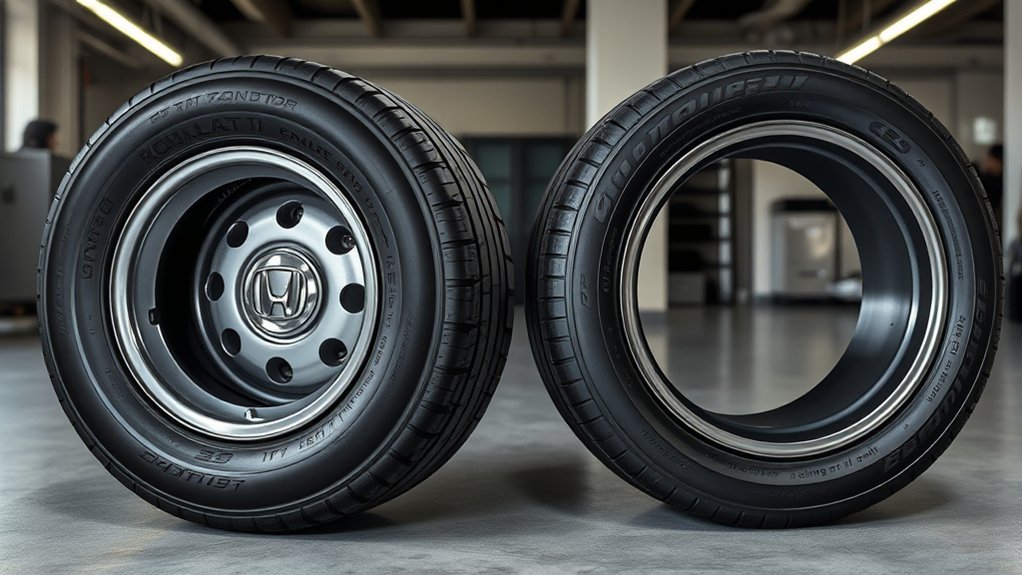
Most passenger-car run-flat tires are self-supporting. They use reinforced sidewalls to carry the vehicle temporarily after air pressure loss. This is the type most drivers mean when they talk about run-flat tires for sedans.
Support ring designs use an internal ring mounted around the wheel to help support the tire when pressure drops. These are less common for normal Accord replacement-tire shopping and are usually tied to specific wheel-and-tire systems.
For a Honda Accord, the practical question is usually not which run-flat architecture sounds better. The real question is whether a reputable tire maker offers a run-flat in your exact Accord size, load index, speed rating, and intended driving category.
What to Expect After a Puncture on Run-Flat Tires
If your Accord has run-flat tires and the TPMS warning comes on, assume the tire may be losing pressure even if it does not look flat. Slow down, avoid hard braking or sharp steering, and move to a safe location. Do not exceed the tire maker’s speed and distance limits.
| Situation | What To Do | Why It Matters |
|---|---|---|
| TPMS warning appears | Slow down and check pressure when safe | A run-flat may not visibly sag when pressure is low |
| You feel vibration or pulling | Stop in a safe place and call for help if needed | The tire, wheel, or suspension may be damaged |
| You drove on low or zero pressure | Have the tire removed from the wheel and inspected internally | Internal sidewall damage may not be visible from outside |
Warning: Never treat a run-flat as safe for unlimited driving after a puncture. Heat buildup and internal damage can make the tire unsafe even if the outside still looks normal.
Honda Accord Run-Flat Tire Compatibility Checklist
Before buying run-flat tires for a Honda Accord, confirm these points:
- Match the tire size: Common current Accord sizes include 225/50R17 and 235/40R19, but always use your own tire placard and sidewall as the final reference.
- Match or exceed load and speed ratings: Do not downgrade from the rating specified for your vehicle.
- Use the same tire type on all four corners: Mixing run-flat and conventional tires can affect handling and stability.
- Confirm wheel compatibility: Some run-flats have mounting or bead-seat requirements that a tire professional should verify.
- Check TPMS operation: A working TPMS is essential because a run-flat may not look flat after pressure loss.
- Plan for roadside backup: If your Accord Hybrid relies on a sealant kit, know its limitations. If your gas Accord has a compact spare, keep it inflated and usable.
- Ask about repair policy: Different tire brands have different rules after a puncture or low-pressure event.
Pro Tip: Take a photo of your Accord’s driver-door tire placard and current tire sidewall before shopping. That gives the tire shop the size, load rating, speed rating, and pressure information needed to confirm fitment.
[Products Worth Considering]
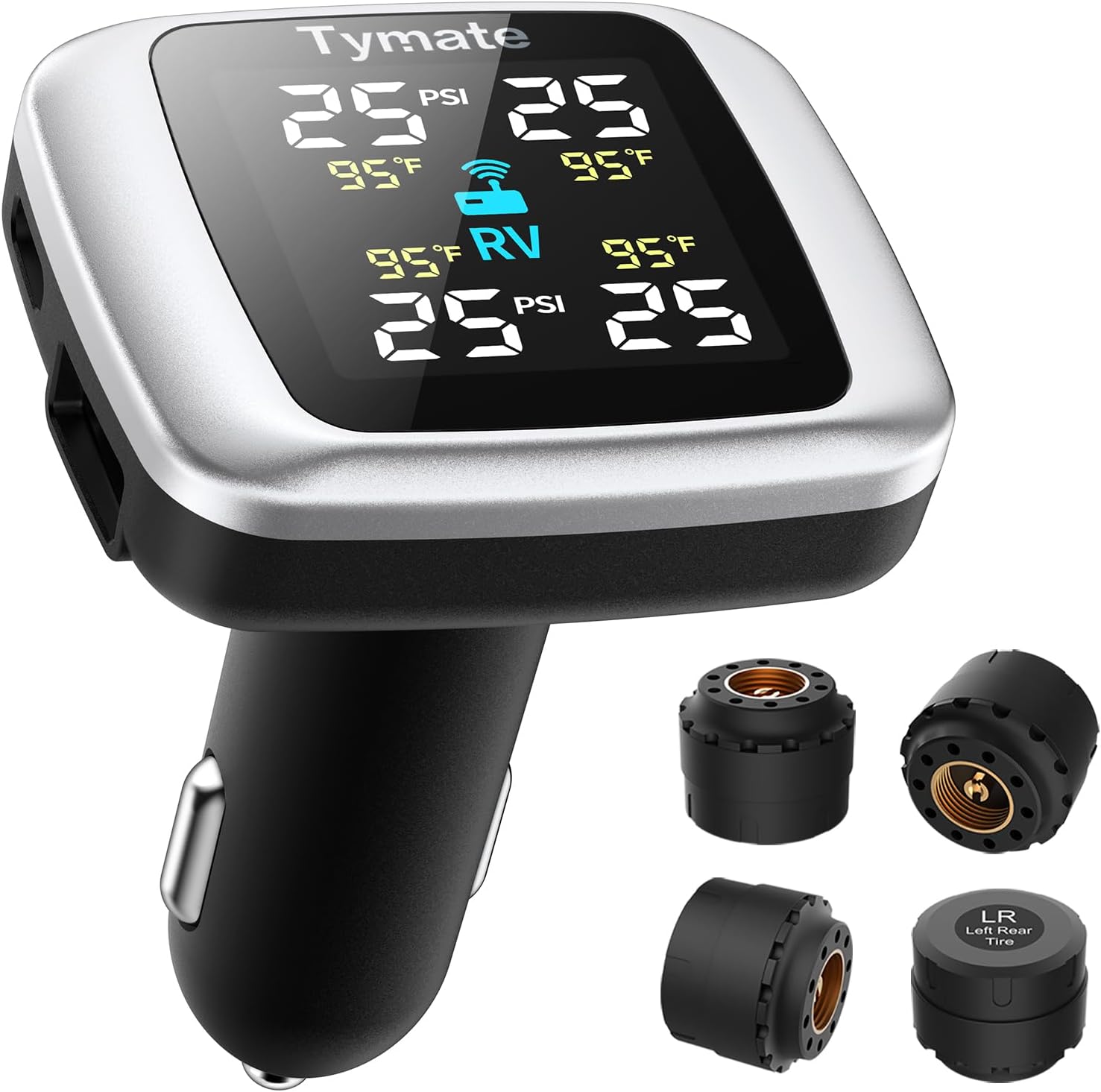
Tymate TM7 is a wireless tire pressure monitoring system that delivers real-time pressure and temperature readings for safer driving. It includes four external sensors, a bright color LCD display with adjustable backlight, and six alarm modes for high/low pressure, fast leakage, high temperature, and sensor signal or battery issues. The system covers a wide 0–144 PSI range and plugs into your vehicle’s cigarette lighter socket for quick DIY setup.

This manual duck head tire changer kit makes tire installation and removal simpler by letting you embed the duck head into the tire with applied pressure. The integrated design and durable steel construction help reduce friction and improve efficiency and safety during use. Suitable for 16–21 inch wheels, it’s convenient for cars, trucks, SUVs, and ATV tires, with 24-hour after-sales support.

This tire repair kit provides fast emergency puncture repair without removing the tire from the rim, helping you get back on the road quickly. Its screw plug system is designed for punctures in both tread and sidewall and includes a complete patch plug tool set with essential accessories. A portable storage bag makes it easy to carry for cars, trucks, SUVs, motorcycles, and heavy-duty applications.
Maintenance Tips for Honda Accord Run-Flat Tires
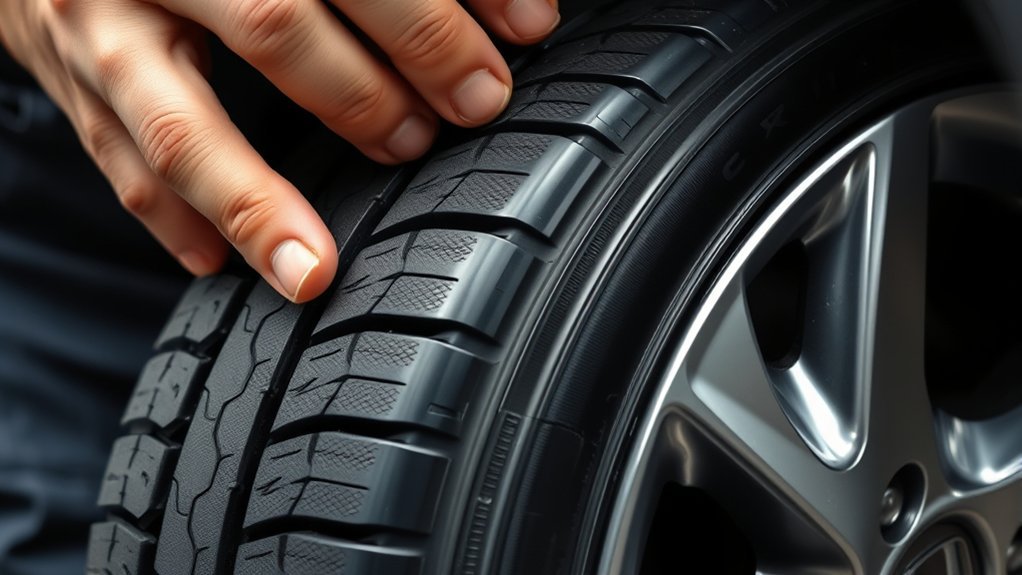
Run-flat tires need the same basic care as conventional tires, plus extra attention after any pressure-loss event. Check tire pressure monthly when the tires are cold, inspect the tread and sidewalls, and rotate the tires on the schedule recommended for your Accord.
Good maintenance habits include:
- Check cold tire pressure at least once a month and before long trips.
- Inspect for nails, cuts, bubbles, cracking, and uneven tread wear.
- Rotate tires at the interval recommended in your maintenance schedule.
- Replace tires when tread depth reaches the legal wear bars or when wet traction becomes poor.
- Recalibrate or initialize the Accord TPMS when the owner’s manual instructs you to do so after tire service.
- Have any run-flat tire professionally inspected after a TPMS warning, puncture, or low-pressure drive.
[Products Worth Considering]

Monitor tire tread wear with a smart, color-coded depth gauge that shows clear condition ranges at a glance. The bar is range marked for fast, easy readings, helping you maintain safer traction and performance. Each gauge is portable with a pocket clip, and the set includes 20 units for daily use and sharing.

This professional wheel and rim brush kit makes it easy to lift brake dust, grime, and dirt from wheels and tires without scratching finishes. The brushes feature soft, metal-free wool heads and a flexible 360-degree rim brush design for reaching hard-to-clean areas. Includes multiple brush types plus accessories for thorough car, motorcycle, and general vehicle detailing.

Malco tire mounting and demounting lubricant is a ready-to-use tire lube formulated to reduce friction during tire installation for passenger cars, light trucks, farm tires, and heavy-duty equipment. It provides rust-inhibiting protection to help reduce corrosion on rims and wheels, and helps support proper tire bead seating during inflation to reduce air leakage. The silicone-free, soap-free formula is whitewall safe to help prevent discoloration on whitewall tires and sensitive sidewall markings.
Should You Choose Run-Flat Tires for a Honda Accord?
Run-flats make the most sense if you value temporary mobility after a puncture more than maximum ride comfort and lowest replacement cost. They can be a smart choice for drivers who often travel at night, commute on highways, or want to avoid changing a tire near traffic.
| Run-Flat Tire Pros | Run-Flat Tire Cons |
|---|---|
| Can help you reach a safer location after pressure loss | Often rides firmer than a conventional touring tire |
| Reduces the need for an immediate roadside tire change | Usually costs more and may be harder to find in some sizes |
| Works well for drivers who prioritize safety margin and convenience | May require replacement after a low-pressure event |
| May reduce dependence on sealant kits or spare-tire changes | Requires a working TPMS and proper professional inspection |
If comfort, low cost, and easy replacement availability matter most, a high-quality conventional all-season tire may be the better fit. If you choose run-flats, install a matched set and keep your roadside plan updated.
[Products Worth Considering]
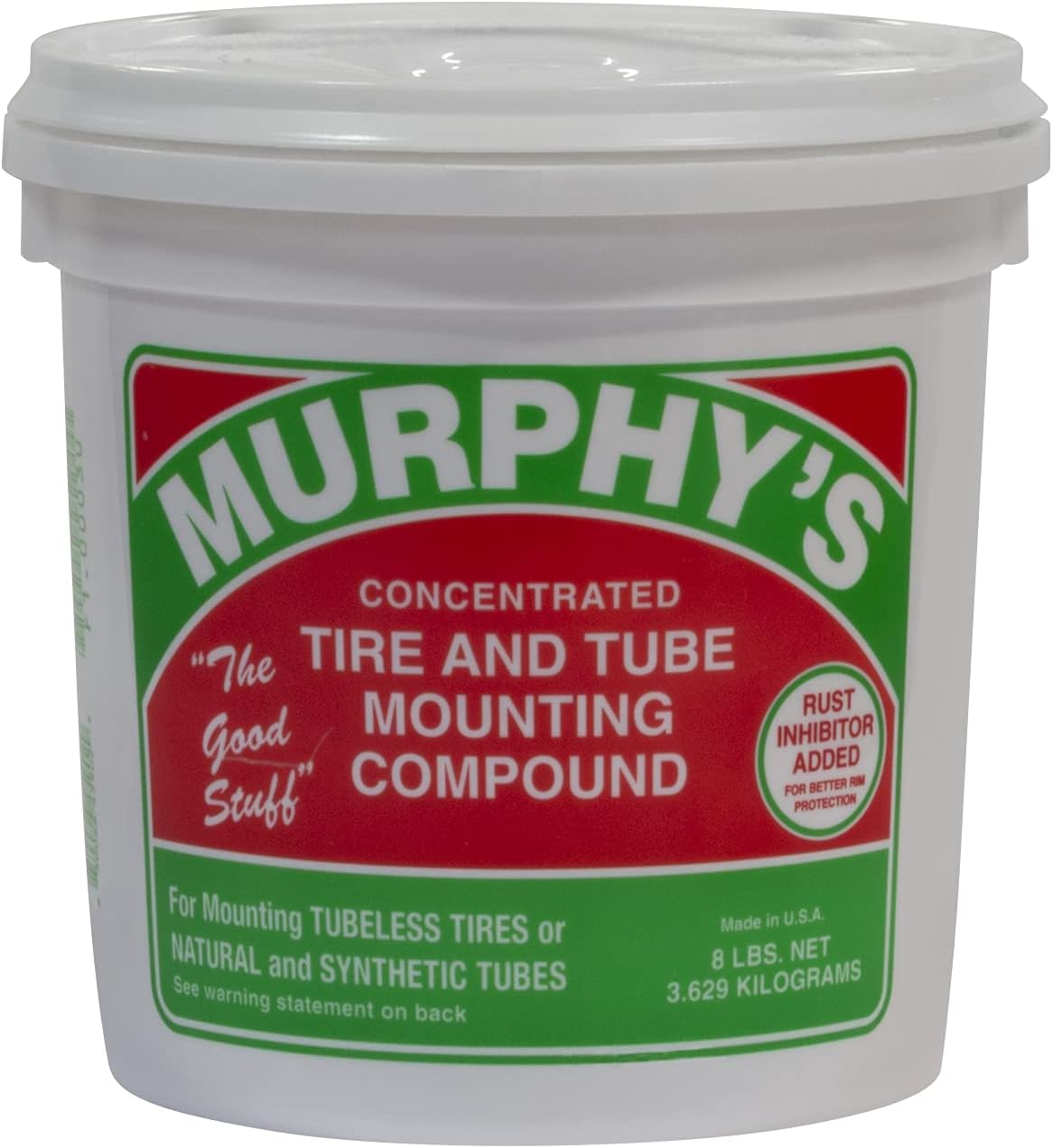
A concentrated tire and tube mounting compound designed to help simplify mounting rubber tires and tubes on passenger, semi truck, construction, and OTR applications. Its ultra-thick formula packs beads effectively and includes rust inhibitors to help protect against corrosion during use.

Replace worn or missing TPMS sensors with a pre-programmed 4-pack designed for compatible GM vehicles. These 315MHz sensors provide real-time tire pressure monitoring and alert you if pressure is too high, too low, or if a rapid air leak occurs. Most installations are ready with minimal relearn effort after mounting, helping improve safety and driving confidence.

This professional wheel and rim cleaning brush set lifts brake dust, grime, and dirt with soft, scratch-free microfiber and synthetic wool fibers. The rim brush bends up to 360 degrees for easy access to hard-to-reach areas around spokes, lips, and faces. Ideal for thorough cleaning of car, truck, motorcycle, bicycle, RV, and more wheel and tire surfaces.
Frequently Asked Questions
Do Honda Accords have run-flat tires?
Most Honda Accord models do not come with run-flat tires from the factory. Current Honda Accord materials list all-season tire sizes by trim, while the gas Accord manual describes a compact spare and the Accord Hybrid manual describes a temporary tire repair kit.
Can I install run-flat tires on my Honda Accord?
Possibly, but only if a run-flat is available in the correct size, load rating, speed rating, and wheel fitment for your Accord. Confirm compatibility with a qualified tire shop before buying, and avoid mixing run-flats with conventional tires.
How far can run-flat tires drive after a puncture?
Many run-flat tires allow temporary driving up to about 50 miles at up to 50 mph, but the exact limit depends on the tire model and conditions. Always follow the tire manufacturer’s instructions after pressure loss.
Can run-flat tires be repaired after a puncture?
Sometimes, but not always. A run-flat driven with low or zero pressure may have hidden internal damage. The tire should be removed from the wheel and inspected by a qualified professional, and the tire maker’s repair policy should be followed.
Do run-flat tires affect ride comfort?
They can. Because run-flats use reinforced construction, they often feel firmer over bumps than comparable conventional tires. Some newer run-flat designs are more comfortable than older ones, but ride quality still depends on the tire model, wheel size, and road surface.
Do run-flat tires affect fuel efficiency?
They may, depending on weight, rolling resistance, tire size, and inflation pressure. Do not assume every run-flat is less efficient. Compare the exact tire model’s specifications and keep the tires inflated to the recommended cold pressure.
Are run-flat tires good in snow and rain?
Run-flat construction does not automatically determine wet or snow traction. Tread design, rubber compound, temperature range, and tire category matter more. For harsh winter driving, a dedicated winter tire is usually better than an all-season run-flat.
Conclusion
Run-flat tires can add useful safety margin and convenience, but they are not a standard Honda Accord feature in most cases. Before installing them, confirm your Accord’s tire size, load rating, speed rating, TPMS function, and wheel compatibility. If you drive an Accord Hybrid with a temporary tire repair kit, check for open recalls and know the kit’s limits. The best tire choice is the one that matches your Accord, your roads, and your tolerance for cost and ride firmness.
Sources
- Honda Info Center — 2026 Accord Wheels and Tires — backs up current Accord tire sizes and trim context.
- Honda Owner’s Manual — 2025 Accord, If a Tire Goes Flat — backs up compact spare guidance for gas Accord models.
- Honda Owner’s Manual — 2025 Accord Hybrid, Temporarily Repairing a Flat Tire — backs up temporary tire repair kit limits.
- Michelin USA — Run-Flat Tires: How They Work, Benefits, and Proper Care — backs up run-flat function, TPMS importance, inspection, and maintenance guidance.
- eCFR — 49 CFR § 571.138 Tire Pressure Monitoring Systems — backs up federal TPMS requirements and purpose.
- NHTSA Recall Acknowledgment — Honda Accord Hybrid Tire Repair Kit Recall 26V366 — backs up the June 2026 recall note.