Honda Accord Spare Tire Types: Full-Size vs Compact
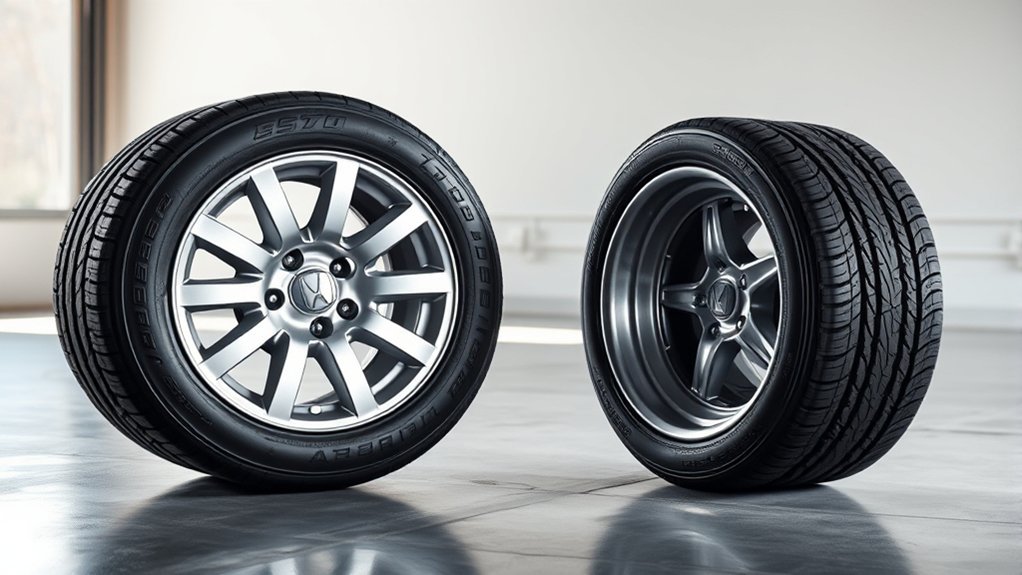
Choosing the right spare tire for your Honda Accord is about more than saving trunk space. A compact spare can get you out of an emergency, but it has strict limits. A full-size spare can feel more stable, but only if the tire and wheel match your Accord’s required specifications. Use this guide to compare both options, check fitment, and keep your spare ready before a flat tire happens.
Quick Answer
For most Honda Accord drivers, a compact spare is the practical choice because it saves trunk space and is designed for short emergency use. Choose a full-size spare if you often drive long distances and have enough storage room, but make sure the tire and wheel match your Accord’s exact specifications.
Key Takeaways
- A compact spare is temporary. For the 2024 Honda Accord, Honda says to keep speed under 50 mph and set the compact spare to 60 psi.
- A full-size spare is better for stability only when the tire and wheel match the Accord’s size, load range, speed rating, cold pressure rating, and wheel specifications.
- Check spare tire pressure at least once a month, including before long trips.
- Do not assume one Accord spare fits every model year or trim. Always verify fitment with your owner’s manual, tire placard, or Honda dealer.
At a Glance
| Time Required | 10–20 minutes to inspect your spare, read the tire placard, and confirm basic fitment details. |
| Difficulty | Easy for inspection; moderate if you are buying a full-size spare wheel and tire. |
| Tools Needed | Tire pressure gauge, owner’s manual, tire placard, flashlight, tread depth gauge or penny, jack, jack handle, and wheel nut wrench. |
| Cost | Compact spares usually cost less and save space. Full-size spares cost more because you need a matching tire, wheel, mounting, balancing, and enough storage room. |
Understanding the Importance of Spare Tires for Your Honda Accord
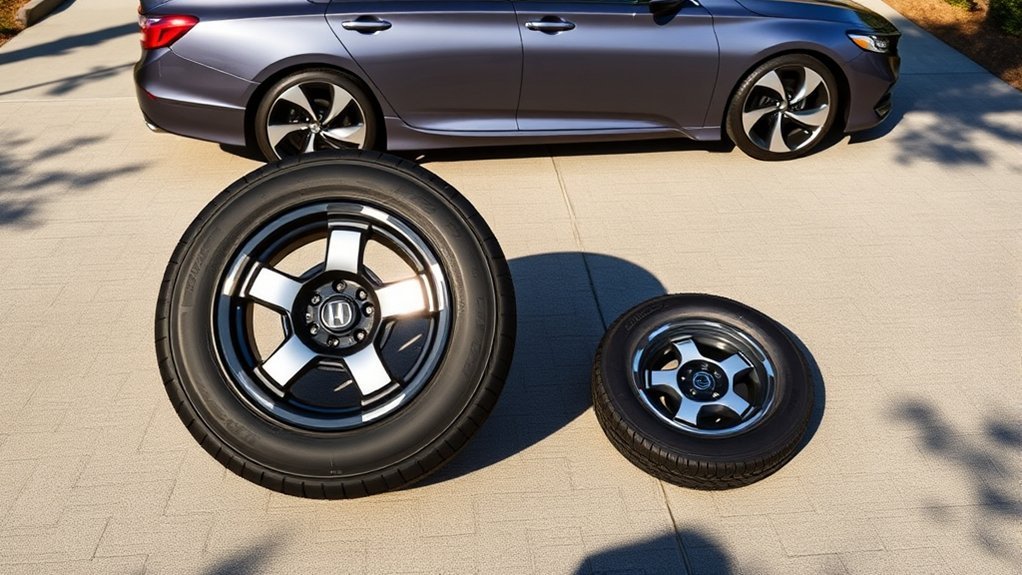
A spare tire gives you a safe way to leave the roadside and reach a repair shop after a flat. Without one, you may have to rely on roadside assistance, a tow truck, or a tire sealant kit that may not work on every puncture.
Honda’s 2024 Accord owner information says that if a tire goes flat, you should stop in a safe place, replace the flat tire with the spare, and go to a dealer as soon as possible to have the regular tire repaired or replaced. Honda also says the compact spare is for that model and should not be swapped with another vehicle’s compact spare or wheel. Honda 2024 Accord owner information
Warning: A compact spare is not a normal tire. For the 2024 Accord, Honda says to keep vehicle speed under 50 mph when driving on the compact spare and to replace it with a regular tire as soon as possible.
[Products Worth Considering]

Camco’s RV wheel chocks with an attached rope help keep your travel trailer securely in place for safer unhitching or parking. This 2-pack is compatible with wheels up to 26-inch diameter and features durable UV-resistant construction for reliable outdoor performance. The rope enables quick, safe removal so you can prepare for your next trip with less hassle.

Universal magnetic jack pad with aluminum grooved design to protect vehicle pinch welds during lifting. Durable nylon pad inserts are upgraded and secured with screws to resist damage and keep in place. Designed to fit most single vehicle pinpoint welds for safer, stable jacking when changing tires, repairs, or performing oil changes.

This roadside assistance kit helps drivers and passengers in urgent situations after an accident or breakdown, providing practical support while waiting for help. It includes a lightweight, compact tire inflator for fast inflation of standard vehicle tires, plus reinforced jumper cable protection for safer handling. Ideal for winter weather, road trips, camping, and travel, with everything stowed neatly in a trunk bag.
Comparing Full-Size and Compact Spare Tires: Key Differences
Honda Accord drivers usually compare two spare tire options: a compact temporary spare and a full-size spare. The better choice depends on how far you drive, how much trunk space you can give up, and whether the tire and wheel match your exact Accord model.
| Feature | Compact Spare | Full-Size Spare |
|---|---|---|
| Best use | Short emergency drive to a repair shop | Longer backup use when properly matched |
| Storage | Smaller and easier to store | Takes more trunk space |
| Handling | Reduced traction, braking, and ride comfort | Closest to normal handling if size and specs match |
| Speed and distance | Honda says under 50 mph for the 2024 Accord compact spare; AAA recommends no more than about 50 miles for temporary spares | No compact-spare speed limit, but the tire must be safe, properly inflated, and compatible |
| Cost | Usually cheaper | Usually more expensive because it needs a matching wheel and tire |
Performance and Handling Differences
A full-size spare can provide better handling than a compact spare, but only when it is the correct match. Honda says replacement tires should use the same size, load range, speed rating, and maximum cold tire pressure rating shown on the tire sidewall, and that wheel specifications should match the original wheels. Using the wrong size or construction can interfere with systems such as ABS and Vehicle Stability Assist. Honda tire and wheel replacement guidance
A compact spare, often called a donut spare, is smaller and lighter. That saves space, but it also changes the way the Accord brakes, corners, and rides. It should be treated as an emergency tool, not a replacement tire.
Cost and Storage Considerations
Compact spares are usually the budget-friendly option because they are smaller and do not require as much trunk space. A full-size spare costs more because you need a compatible wheel, a correct tire, mounting, balancing, and a secure storage plan.
Storage matters in an Accord. A full-size tire may not fit neatly in the compact spare well, and an unsecured wheel can become a hazard in a sudden stop or crash. Honda also warns that loose tools or wheels should be securely stored before driving. Honda flat tire and storage instructions
Performance: Comparing Tire Handling on the Road
When you install a full-size spare that matches your Accord’s tire and wheel specs, the car should feel much closer to normal. Braking, steering, traction, and ride comfort are more predictable than they are on a compact spare.
A compact spare is different. It usually has a narrower tread, a smaller footprint, and a temporary-use design. That can reduce grip, especially in rain, hard braking, or fast lane changes. AAA notes that temporary spares are made to help you reach a repair shop or service station, not for normal daily driving. AAA spare tire safety guidance
A compact spare is a short-term safety tool. Drive slowly, avoid sudden maneuvers, and head directly to a tire repair shop.
Honda Accord Fitment Checks Before Buying a Spare Tire
Do not buy a spare tire by model name alone. Honda Accord tire and wheel specs can vary by model year, trim, and wheel package. Before buying a compact spare kit or full-size spare setup, check these items:
- Owner’s manual: Look for the spare tire section for your exact year and trim.
- Tire placard: Check the tire information placard on the driver’s door jamb for tire size and cold inflation pressure.
- Wheel specifications: Confirm diameter, width, offset, center bore, and bolt pattern with Honda or a tire professional.
- Load and speed ratings: The spare should never have a lower load capability than your Accord requires.
- Storage space: Measure the trunk well before assuming a full-size spare will fit.
- Tools: Make sure the jack, jack handle, wheel nut wrench, and any wheel-lock key are in the vehicle.
Note: If your Accord has a compact spare installed, the low tire pressure or TPMS warning may appear. Honda says this can be normal while the compact spare is in use, and TPMS should be calibrated after the regular specified tire is reinstalled.
Maintenance Tips for Keeping Your Spare Tire in Top Shape
A spare tire is easy to ignore because it may sit in the trunk for years. That is exactly why it needs routine checks. NHTSA recommends checking tire pressure at least once a month, including the spare, and inspecting tires for uneven wear, cracks, foreign objects, or other signs of damage. NHTSA tire safety checklist
- Check pressure monthly. For the 2024 Accord compact spare, Honda lists 60 psi. Always confirm the correct pressure for your exact model.
- Use a cold reading. Check pressure when the car has been parked for at least three hours.
- Inspect the sidewall. Replace the spare if you see cracks, bulges, exposed cords, or impact damage.
- Check tread and wear bars. If the treadwear indicators are level with the tread surface, the tire should be replaced.
- Check tire age. Read the DOT date code on the sidewall so you know when the spare was manufactured.
- Confirm the tools. A good spare will not help if the jack, handle, wrench, or wheel-lock key is missing.
Pro Tip: Set a phone reminder to check your spare tire pressure on the same day you check the four road tires. A compact spare can lose air while it sits unused.
[Products Worth Considering]

This VEVOR tire bead breaker uses a slide-hammer impact and wedge tip to separate tire beads from rims quickly and efficiently without damaging hub surfaces. The long handle and sturdy steel construction help reduce user strain while providing reliable, portable tire changing for cars, trucks, and more. Ideal for home mechanics and repair shops handling multiple vehicle tire sizes.

Camco Trailer Aid Plus tandem tire ramp lifts your trailer for quick, safe tire changes with ample clearance from its 5 1/2-inch lift. It helps you change a flat tire without unloading cargo, making roadside and routine maintenance more efficient. The heavy-duty, waterproof and rustproof polymer design supports up to 15,000 lb and is built for easy portability and storage.
Understanding Tire Costs
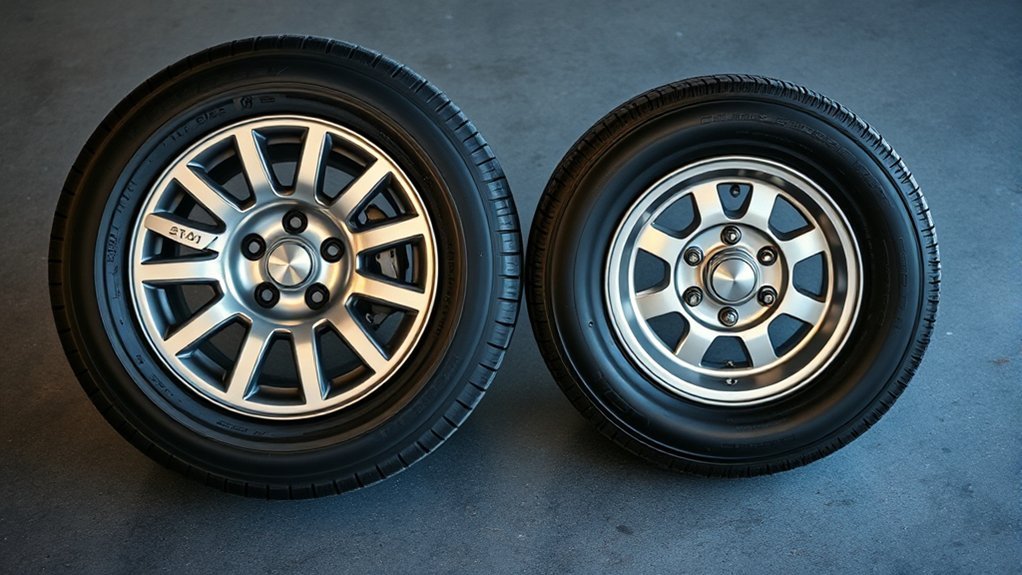
The cheapest spare tire is not always the best long-term choice. A compact spare saves money and trunk space, but it is only for temporary driving. A full-size spare can be more useful on long trips, but it costs more and requires more room.
When comparing costs, include the whole setup:
- spare tire
- compatible wheel
- mounting and balancing
- valve stem or TPMS-related parts when needed
- trunk storage hardware or securing method
- replacement tools if your jack or wrench is missing
Also consider age. Bridgestone recommends checking inflation pressure every month, having tires inspected after five years, and replacing tires—including the spare—when they reach 10 years old, even if they appear new. Bridgestone tire replacement guidance
How to Choose the Best Spare Tire Based on Your Driving Needs
The best spare tire for your Honda Accord depends on how you actually drive. Use your mileage, storage space, and emergency needs to choose between a compact spare and a full-size spare.
Consider Your Driving Habits
If you mostly drive around town, a compact spare may be enough because you are usually close to a tire shop. If you take long highway trips, commute through rural areas, or drive at night often, a full-size spare can provide more flexibility if you have room for it.
| Driving Habit | Recommended Spare Type | Why |
|---|---|---|
| Short city trips | Compact spare | Saves trunk space and can get you to a nearby shop. |
| Daily commute | Compact or full-size | Choose compact for space; choose full-size if your route has limited repair options. |
| Long road trips | Full-size spare | Better backup if the tire and wheel match your Accord’s specs. |
| Frequent rural driving | Full-size spare | Repair shops may be far away, so compact-spare limits become more restrictive. |
| Minimal trunk space needed | Compact spare | The smaller size protects cargo room. |
Evaluate Storage Space
A compact spare is designed to fit in a smaller storage well. A full-size spare may sit higher in the trunk, reduce cargo space, or require a separate securing method. Never leave a full-size spare loose in the trunk.
Assess Emergency Preparedness Needs
If you often drive with family, travel late, or pass through areas with poor cell service, a stronger spare tire plan matters. At a minimum, keep the spare inflated, confirm the tools are present, and know where your jack points are before you need them.
Warning: Never get under your Accord when it is supported only by the jack. Use the jack only on firm, level ground and only at the correct jacking points.
Frequently Asked Questions
Can I use a compact spare tire for long-distance travel?
No. A compact spare is for temporary emergency use. For the 2024 Honda Accord, Honda says to keep speed under 50 mph and replace the compact spare with a regular tire as soon as possible. AAA also recommends no more than about 50 miles on a temporary spare.
How do I know when to replace my spare tire?
Replace the spare if it has cracks, bulges, puncture damage, exposed cords, very low tread, or if it cannot hold air. Also check the DOT date code. Bridgestone recommends replacing tires, including spares, at 10 years old even if they look new.
Are full-size spare tires more expensive than compact ones?
Usually, yes. A full-size spare requires a compatible tire and wheel, and it may need mounting, balancing, and a secure storage setup. A compact spare usually costs less and saves trunk space, but it has stricter driving limits.
Will a compact spare fit all Honda Accord models?
No. Do not assume a compact spare fits every Accord. Honda says the compact spare tire and wheel are specifically for the model they came with. Check your exact year, trim, owner’s manual, and Honda parts information before buying or swapping a spare.
Can I mix spare tire types on my vehicle?
Only use a compact spare as a temporary emergency replacement. For normal driving, Honda recommends tires of the same size, load range, speed rating, and maximum cold tire pressure rating. A mismatched tire can affect handling, braking, ABS, and stability systems.
What pressure should a Honda Accord compact spare tire have?
For the 2024 Honda Accord compact spare, Honda lists 60 psi. Always check the owner’s manual, tire placard, and spare tire sidewall for your exact model year because specifications can vary.
Why does the TPMS light come on after installing a compact spare?
Honda says the low tire pressure or TPMS indicator may come on while driving with the compact spare, and this can be normal. Recalibrate the TPMS after replacing the compact spare with the specified regular tire.
Conclusion
For most Honda Accord owners, a compact spare is the easiest emergency backup because it saves space and fits the purpose of short temporary driving. A full-size spare is the stronger choice for long-distance drivers, but only if it matches the Accord’s tire and wheel requirements and can be stored securely. Whichever option you choose, check the spare monthly, keep it properly inflated, inspect it for age and damage, and know how to install it safely before a flat tire happens.
Sources
- Honda 2024 Accord Owner Information: Changing a Flat Tire — compact spare pressure, speed limit, TPMS note, tools, jack safety, and storage guidance.
- Honda 2024 Accord Owner Information: Tire and Wheel Replacement — tire and wheel specification requirements.
- NHTSA Tire Safety Checklist — monthly tire pressure checks, spare tire pressure checks, and tire inspection guidance.
- Bridgestone Tire Replacement Guidance — tire age, inspection, and 10-year replacement guidance for spares.
- AAA Club Alliance Spare Tire Safety Guidance — temporary spare use, speed, and distance guidance.

Related Articles
Best Honda Accord Spare Tire Kits
You want a spare tire kit that fits your Honda Accord and actually works when you need it. This guide cuts through specs and…
Read More
Best Goodyear Tires for Honda Accord
If you drive a Honda Accord you want tires that balance grip, comfort and longevity so your daily commute and weekend trips feel secure.…
Read More
Best Goodyear Tires for Honda Accord
If you drive a Honda Accord you want tires that balance grip, comfort and longevity so your daily commute and weekend trips feel secure.…
Read More