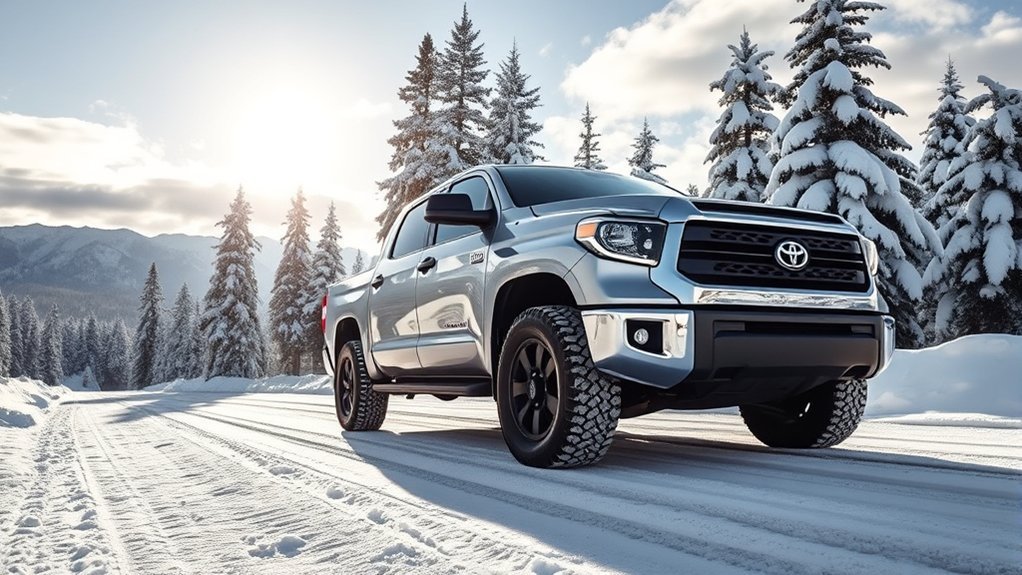
If you drive a Toyota Tundra where winter means freezing rain, packed snow, icy mornings, mountain roads, or temperatures that regularly sit near or below 45°F (7°C), winter tires are one of the best safety upgrades you can make. Your Tundra’s size, weight, and available 4WD can help you get moving, but the tires still decide how well the truck stops, turns, and grips.
Quick Answer
Yes, you should use winter tires on a Toyota Tundra if you regularly drive in snow, ice, slush, or temperatures below about 45°F (7°C). 4WD helps with acceleration, but winter tires improve the tire grip needed for braking, cornering, and control.
Key Takeaways
- A Toyota Tundra benefits from winter tires when temperatures stay near or below 45°F (7°C), especially with snow, ice, slush, hills, or towing.
- 4WD or 4H can help the truck move through snow, but it does not replace tire grip for stopping or steering.
- Look for the Three-Peak Mountain Snowflake symbol, correct tire size, proper load rating, and a fitment approved for your wheel and trim.
- Install four matching winter tires, not just two, and remove them when warm weather returns to prevent faster wear.
At a Glance
| Time Required | 30–90 minutes at a tire shop, or longer if you are mounting tires on a second wheel set at home. |
| Difficulty | Easy if a tire shop installs them; moderate if you swap mounted wheel-and-tire sets yourself. |
| Tools Needed | Tire-pressure gauge, tread-depth gauge, torque wrench if swapping wheels, and your Tundra’s tire placard or owner’s manual. |
| Cost | Usually several hundred to over $1,000 for four tires, depending on size, load rating, brand, mounting, balancing, and whether you buy dedicated winter wheels. |
Why Your Tundra Might Need Winter Tires
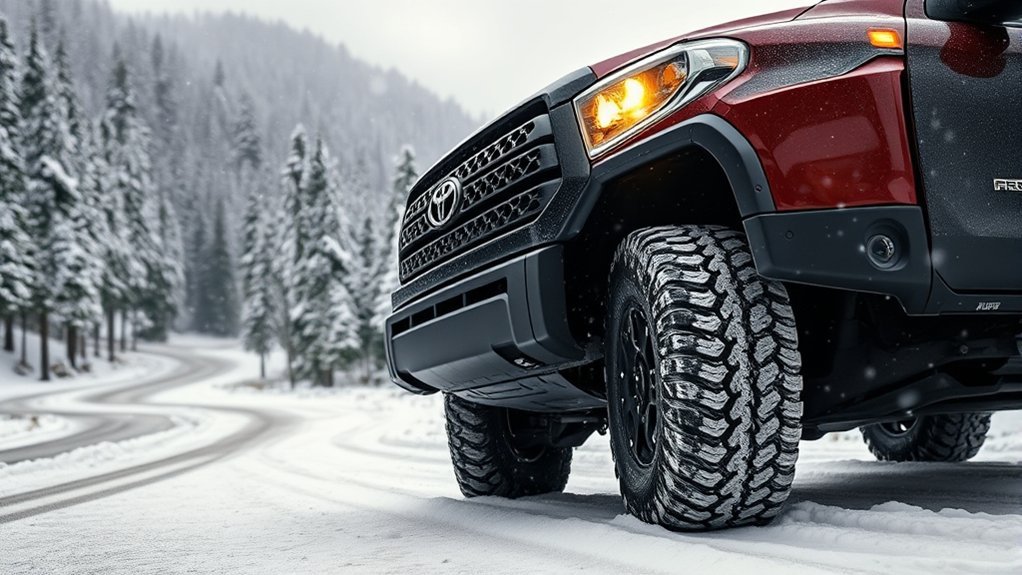
Winter tires are designed for cold pavement, snow, slush, and ice. The National Highway Traffic Safety Administration notes that winter tires are more effective than all-season tires in deep snow, while all-season tires are a compromise for a variety of road conditions.
The reason is simple: winter tires use rubber compounds and tread designs made for cold-weather grip. Many tire retailers and manufacturers use about 45°F (7°C) as the practical seasonal changeover point because all-season compounds can stiffen as temperatures drop, while winter compounds are built to stay more flexible. That does not mean the road must be covered in snow before winter tires help. Cold, wet pavement and black ice can be enough to expose the limits of all-season or all-terrain tires.
Warning: Winter tires improve grip, but they do not make a Toyota Tundra unstoppable. Slow down, leave more following distance, avoid sudden steering or braking, and treat bridges, shaded roads, and untreated intersections as high-risk areas.
Top Reasons to Choose Winter Tires for Your Toyota Tundra
Choosing winter tires for your Toyota Tundra is not just about getting through a snowstorm. It is about having more predictable control when the truck is heavy, the road is slick, and your stopping distance matters most.
| Benefit | What It Means | Why It Matters in a Tundra |
|---|---|---|
| Better snow and ice grip | More biting edges, deeper grooves, and winter-focused tread compounds | Helps the truck stop, turn, and accelerate with less wheelspin on slick surfaces |
| Cold-weather flexibility | Winter rubber stays more pliable in low temperatures | A heavy pickup needs consistent contact with the road, especially during braking |
| Protection for other tires | Your all-season, all-terrain, or summer tires are not doing winter duty | Seasonal rotation can spread wear across two tire sets |
| More confidence with payload or towing | Correctly rated winter tires can help maintain traction under load | Important if you tow, haul firewood, carry gear, or drive in mountains |
In one Tire Rack packed-snow test, the vehicle on winter tires stopped from 30 mph in about 59 feet, while the same vehicle on all-season tires needed about 30 more feet. Real-world results vary, but the lesson is clear: tires can matter more than drivetrain when you need to stop.
Does 4WD Replace Winter Tires on a Tundra?
No. Four-wheel drive helps your Toyota Tundra use engine power at more wheels, which can improve acceleration and help you keep moving in snow. Toyota’s own Tundra manual describes 4H as a mode for tracks that permit tire slip, such as off-road, icy, or snow-covered roads. But 4WD does not magically increase the tire’s grip when you brake or turn.
Think of it this way: 4WD helps you go; winter tires help you go, stop, and steer. If you drive a 2WD Tundra in winter, winter tires become even more important because you have less drive traction to work with. If you drive a 4WD Tundra, winter tires still matter because the truck is heavy and can carry or tow additional weight.
Note: Use your Tundra’s 4WD modes exactly as described in the owner’s manual. Using the wrong mode on dry pavement can cause drivetrain binding or unnecessary wear on some 4WD systems.
[Products Worth Considering]

Upgrade your Toyota’s wheels with durable aluminum alloy valve stem caps that help protect valve cores from corrosion and direct exposure to road grime, clay, water, and snow. Rubber rings improve sealing to help prevent air leakage and maintain stable tire pressure for safer driving. These caps are easy to install or remove without tools and add a unique, stylish look to your car.

These universal tire valve stem caps help protect valve cores from dust, debris, and moisture while helping maintain stable tire pressure. The corrosion-resistant metal construction and sealed design provide reliable protection in road grime, mud, and winter conditions. Twist-on installation makes them quick to fit on cars, SUVs, trucks, and motorcycles.

These aluminum alloy tire valve stem caps with an O-ring seal help protect valve stems from corrosion while adding a clean, stylish look to your vehicle. The universal fit works across cars, trucks, motorcycles, bicycles, and more, making them an easy upgrade for everyday driving and off-road use. Installation is quick, and the included four-pack keeps all your tires dressed and protected.
How Climate Affects Winter Tire Performance
Your local climate is the biggest factor in deciding whether winter tires are worth it. If winter where you live means regular snow, icy mornings, lake-effect storms, steep roads, rural routes, or long cold stretches below 45°F (7°C), dedicated winter tires are the safer choice.
If you live in a mild climate and only see a dusting of snow once or twice a year, a high-quality all-weather tire with the Three-Peak Mountain Snowflake symbol may be enough. All-weather tires are different from standard all-season tires: they are built for broader year-round use and may carry severe-snow certification. They still will not match the best dedicated winter tires on ice or deep snow, but they can be a practical compromise for drivers who do not want to swap tires twice a year.
In warm climates, dedicated winter tires can be the wrong choice for daily driving. Their softer compounds can wear faster on warm, dry pavement and may feel less sharp in warm-weather handling. If daytime temperatures are consistently above the winter range, switch back to your regular tires.
Winter Tires vs. All-Season, All-Weather, and All-Terrain Tires
Many Toyota Tundra owners assume a tough-looking all-terrain tire is automatically good in winter. Sometimes it is decent in loose snow, but tread appearance alone is not enough. Here is the practical difference:
- All-season tires: Built for everyday use in dry and wet conditions, with limited light-snow capability. They are not the best choice for regular ice, packed snow, or deep winter conditions.
- All-weather tires: Designed for year-round use and usually marked with the Three-Peak Mountain Snowflake symbol if they meet severe-snow requirements. They are a good compromise for moderate winters.
- All-terrain tires: Built for mixed pavement, gravel, dirt, and light off-road use. Some are 3PMSF-rated, but others are only M+S-rated and may not perform well on ice.
- Dedicated winter tires: Built specifically for cold, snow, slush, and ice. They are the strongest option for harsh winter driving.
The key symbol to look for is the Three-Peak Mountain Snowflake. The U.S. Tire Manufacturers Association defines this marking for passenger and light-truck tires that meet severe-snow performance criteria. M+S alone is not the same level of winter certification.
[Products Worth Considering]

Keep your tires properly inflated with this analog VONDIOR tire pressure gauge, designed for fast, easy readings without batteries. The swiveling, two-axis hose and large glow dial help you measure at any tire angle with instant visibility. Built with a protective rubber shield, it supports durable, low-maintenance use for cars and trucks.

Measure tire tread depth quickly and accurately with this LUMITECO dial gauge that reads in 1/32" increments up to 14/32". The color-coded green/yellow/red zones make it easy to judge tire wear and know when replacement is needed. A rugged, compact design with a protective pouch helps keep the gauge ready for use on cars, trucks, motorcycles, and more.

Milton S-921 pencil tire pressure gauge helps you maintain optimal tire pressure for passenger cars with accurate readings in PSI and kPa. It features a built-in deflator valve for convenient pressure adjustments, plus a single chuck head and nylon indicator bar for easy use on the go. Built from durable plated brass and designed for reliable performance, it’s a practical road trip and cold-weather maintenance tool.
When to Make the Switch to Winter Tires
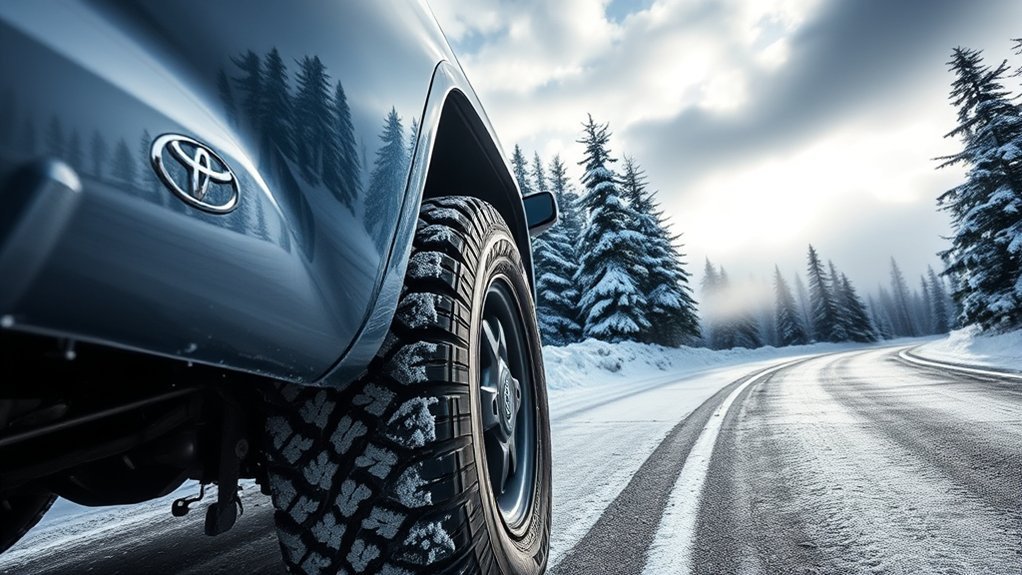
A smart rule is to install winter tires when daily temperatures are consistently around 45°F (7°C) or lower, not after the first major storm. Tire shops get busy when snow is in the forecast, so booking early helps you avoid rushing into whatever size happens to be in stock.
Remove winter tires when temperatures are consistently warm again. Running them deep into spring or summer can accelerate wear and reduce the value of the set. If your area has legal dates for studded tires, follow your local state, provincial, or municipal rules.
Pro Tip: If you plan to keep the Tundra long term, consider buying a second set of winter wheels. It can make seasonal swaps faster, reduce mounting costs over time, and protect your main wheels from salt and pothole damage.
How to Choose the Best Winter Tires for Your Tundra
Start with fitment, not brand. Your Tundra’s winter tires should match the size, load rating, and speed rating Toyota specifies on the driver-door tire placard or in the owner’s manual. Toyota warns against using tire sizes outside its recommendations and against mixing summer, all-season, and snow tires on the vehicle.
For a Toyota Tundra, pay close attention to these details:
- Correct size: Match the OEM size or an approved alternate size recommended by a tire professional.
- Load rating: Choose a tire that can safely handle the truck, passengers, cargo, and towing needs.
- Four matching tires: Install winter tires as a complete set of four for balanced braking, steering, and stability.
- 3PMSF marking: Choose a tire with the Three-Peak Mountain Snowflake symbol for severe-snow capability.
- Studded vs. studless: Studless winter tires are the better everyday choice for most drivers. Studded tires can help on ice but may be noisy, restricted by law, and rougher on roads.
- Driving style: Pick a more rugged LT/SUV winter tire if you tow, haul, drive gravel roads, or use your Tundra for work.
Reputable winter tire lines include Nokian Hakkapeliitta models and Bridgestone Blizzak models. For pickups and SUVs, check specific fitment carefully. Nokian lists the Hakkapeliitta LT3 for pickups and 4×4 use, while Bridgestone has announced the Blizzak IcePeak as a newer winter tire line with 3-Peak Mountain Snowflake and Ice Grip certifications across many light-duty vehicle applications.
[Products Worth Considering]

The SAFELIFE dial tire tread depth gauge measures tread depth in 1/32 inch increments with clear, easy-to-read 2-inch dial face. Color zones using a traffic light system help you quickly judge whether tread is low, marginal, or ample for safer driving. Built with a durable zinc cast body and a metal detect probe for precise, comfortable use across cars, motorcycles, trucks, and buses.

The Trivd Frol 1/2" air impact wrench delivers high performance torque up to 1500 ft-lbs with a twin hammer impact mechanism for strong, balanced blows. It features an ergonomic grip, compact lightweight design, and quick-stop control with 3 forward speeds up to 8000 RPM plus a reverse speed. Built for demanding automotive repair and tire shop work, the rear exhaust helps keep debris away from the surface.

Accurately measure tire tread depth with a calibrated gauge marked from 0 to 1 inch in 1/32 inch increments. The color-coded bar helps you quickly identify tread condition ranges, supporting safe driving for trucks, motorcycles, automobiles, and passenger vehicles.
How to Maintain Winter Tires on a Toyota Tundra
Winter tires work best when they are maintained like safety equipment, not just seasonal accessories. Check them before installation and during the winter.
- Check tread depth: Replace tires that are too worn to move snow and slush effectively. Winter performance drops before the tire looks completely bald.
- Check tire pressure often: Cold weather changes inflation pressure, and underinflation can hurt handling, wear, and fuel economy.
- Rotate them: Follow Toyota’s rotation guidance or your tire shop’s recommendation to keep wear even.
- Inspect for damage: Look for sidewall cracks, cuts, punctures, bulges, and uneven wear.
- Store them correctly: Keep off-season tires clean, dry, cool, and away from direct sunlight, electric motors, and chemicals.
- Do not mix tire types: Avoid mixing winter tires with all-season, summer, or mismatched tire designs on the same vehicle.
Frequently Asked Questions
What are the best winter tires for a Toyota Tundra?
The best winter tires are the ones that match your Tundra’s exact tire size, load rating, and driving conditions. Nokian Hakkapeliitta and Bridgestone Blizzak are strong winter tire lines, but you should confirm the specific model fits your wheel size, payload needs, and local winter conditions before buying.
Is October too early for winter tires?
October is not too early if your area regularly drops near 45°F (7°C), gets early snow, or has icy mornings. If October is still warm where you live, wait until the cold pattern is consistent so you do not wear the tires unnecessarily on warm pavement.
Can I drive my Tundra in 4H in the snow?
Yes, 4H is appropriate for many snowy or icy surfaces when your owner’s manual allows it. It can improve traction while moving, but it does not shorten braking distance by itself. You still need good tires, slower speeds, and extra following distance.
Are all-terrain tires enough for winter driving?
Some all-terrain tires do well in loose snow, especially if they carry the Three-Peak Mountain Snowflake symbol. But many all-terrain tires are not as strong on ice or packed snow as dedicated winter tires. If you drive in harsh winter conditions, choose winter tires.
Do I need four winter tires or just two?
Use four matching winter tires. Installing only two can create uneven grip between the front and rear axles, which can make braking, steering, and stability less predictable on slippery roads.
Conclusion
Whether you need winter tires for your Toyota Tundra depends on your climate, roads, and driving habits. If you face regular snow, ice, slush, freezing rain, mountain routes, or long stretches below about 45°F (7°C), winter tires are a smart safety investment. They help your Tundra do what 4WD alone cannot: grip better when you need to brake, steer, and stay in control.
If your winters are mild, consider a 3PMSF-rated all-weather tire as a compromise. If your winters are harsh, choose four properly sized, properly rated dedicated winter tires and install them before the first big storm.
Sources
- NHTSA TireWise — supports tire safety basics and winter tire effectiveness in deep snow.
- Discount Tire: Winter Tires Below 45°F — supports the 45°F/7°C cold-weather tire guidance and winter tread features.
- Tire Rack: All-Season vs. Winter Tire Test — supports snow braking, acceleration, and cornering comparison data.
- Toyota 2025 Tundra Owner’s Manual: Four-Wheel Drive System — supports 4H use on icy or snow-covered roads.
- U.S. Tire Manufacturers Association: Severe Snow Use Tire Definition — supports the Three-Peak Mountain Snowflake explanation.
- Bridgestone Americas: Blizzak IcePeak Announcement — supports current Blizzak winter tire lineup freshness and certification details.