
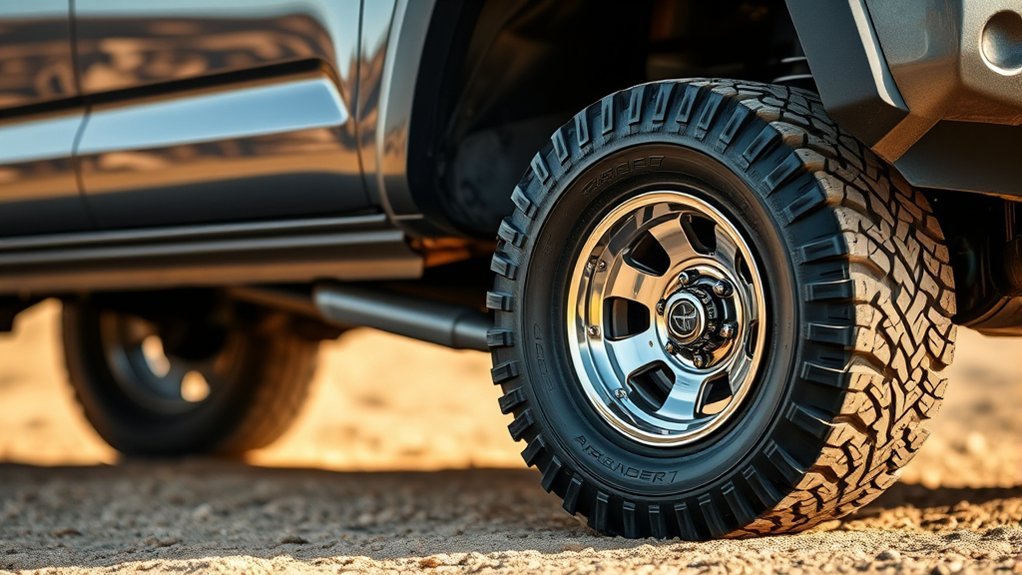
Most 4Runner wheels can physically bolt to many Toyota Tacomas, but the real answer depends on the exact model years. The bolt pattern is usually the easy part; hub bore, lug-nut thread, wheel offset, brake clearance, tire size, and TPMS are the details that decide whether the swap is safe.
Quick Answer
Yes, 4Runner wheels can fit a Toyota Tacoma when the bolt pattern, hub bore, lug-nut thread, offset, tire size, and brake clearance all match. The safest swaps are same-generation or same-platform matches. Older 4Runner wheels often need hub-centric rings on a 2024+ Tacoma, while 2025+ 4Runner wheels usually match newer Tacoma hub and lug specs more closely.
Key Takeaways
- Most 6-lug Tacoma and 4Runner wheels use a 6×139.7 mm bolt pattern, but older 5-lug 2WD Tacoma wheels are not part of this swap.
- 2010–2024 4Runner wheels usually have a 106.1 mm center bore and M12x1.5 lug hardware; 2024+ Tacoma and 2025+ 4Runner models use a smaller 95.1 mm hub bore and M14x1.5 hardware.
- A wheel with a larger center bore can often be centered with hub-centric rings, but a wheel with a smaller center bore will not seat on a larger hub without machining or a different wheel.
- Offset changes how far the wheel sits in or out. A large offset difference can cause rubbing, poor stance, or extra stress on wheel bearings and suspension parts.
- Never grind lug nuts or force mismatched hardware. Use the correct lug nuts, torque spec, and test-fit procedure for your exact truck.
At a Glance
| Time Required | 30–60 minutes for a careful test fit; longer if tires, sensors, or spacers are being changed. |
| Difficulty | Moderate. The bolt pattern is simple, but clearance and hardware checks matter. |
| Tools Needed | Floor jack, jack stands, torque wrench, correct lug nuts, tape measure or caliper, hub-centric rings if needed, and a flashlight for clearance checks. |
| Cost | $0–$40 for a test fit; $15–$40 for hub-centric rings; more if you need tires, TPMS service, spacers, or professional installation. |
Do 4Runner Wheels Fit on a Toyota Tacoma?
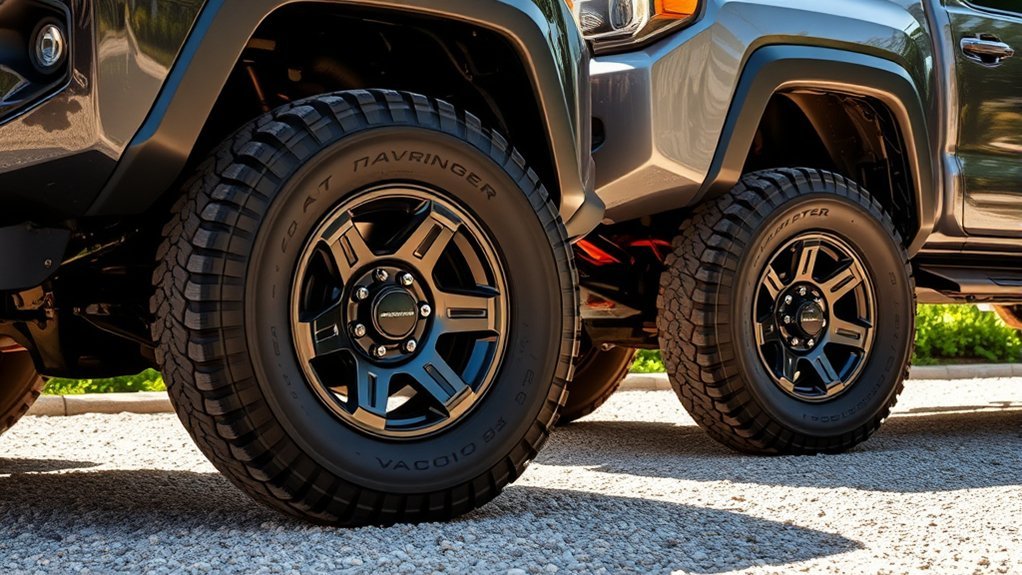
In many cases, yes. A 4Runner wheel can fit a Tacoma when both vehicles use the same 6-lug pattern and the wheel clears the Tacoma hub, studs, brakes, suspension, and fenders. For many Toyota truck owners, the key fitment numbers are 6×139.7 mm bolt pattern, center bore, lug-nut thread pitch, wheel width, and offset.
The biggest mistake is assuming every Tacoma and every 4Runner uses the same wheel hardware. They do not. A 2010–2024 4Runner wheel is not the same fitment situation as a 2025+ 4Runner wheel, and a 2024+ Tacoma is different from many older 6-lug Tacomas.
Warning: Do not drive on a wheel that does not sit flat on the hub, uses the wrong lug-seat style, has too few threads engaged, rubs the brake caliper, or requires forcing the lug nuts to tighten. A wheel that “bolts on” is not automatically safe.
Major Compatibility Differences Between Tacoma and 4Runner Wheels
Before buying or installing 4Runner wheels on a Tacoma, match the wheel to the exact Tacoma generation. Use your door-jamb tire label, owner’s manual, and the markings on the wheel itself as the final reference.
| Wheel Swap | Likely Result | Main Checks |
| 2010–2024 4Runner wheels to 2005–2023 6-lug Tacoma | Often workable, especially with factory-size tires. | Confirm 6×139.7 pattern, 106.1 mm hub bore, M12x1.5 lug hardware, offset, and brake clearance. |
| 2010–2024 4Runner wheels to 2024+ Tacoma | Can work, but the older 4Runner wheel usually has a larger center bore than the newer Tacoma hub. | Use correct M14x1.5 lug nuts for the Tacoma studs, match the wheel’s lug seat, and consider 106.1-to-95.1 mm hub-centric rings. |
| 2025+ 4Runner wheels to 2024+ Tacoma | Usually the cleanest late-model match. | Confirm 95.1 mm center bore, M14x1.5 hardware, offset, tire size, TPMS, and brake clearance. |
| 2025+ 4Runner wheels to 2005–2023 6-lug Tacoma | Usually not a direct fit because the newer wheel’s center bore is smaller than the older Tacoma hub. | Do not force the wheel on. Choose a different wheel or consult a wheel shop about safe machining options. |
| Any 4Runner wheel to older 5-lug 2WD Tacoma | Not a direct swap. | The lug count and bolt pattern do not match. |
Bolt Pattern Variations
Most modern 6-lug Tacoma and 4Runner wheels use a 6×139.7 mm bolt pattern, also written as 6×5.5 inches. That means six lug holes arranged on a 139.7 mm circle. This is why many 4Runner wheels will physically line up with Tacoma studs.
There is one important exception: some older 2WD Tacoma models used 5-lug wheels. A 6-lug 4Runner wheel will not fit those trucks.
Center Bore and Hub Fit
The center bore is the large hole in the middle of the wheel. On a hub-centric setup, that hole needs to match the truck’s hub closely enough to center the wheel while the lug nuts clamp it down. Tire Rack explains that centering rings are used when a wheel’s bore is larger than the vehicle hub so the wheel stays centered during installation.
This is where model years matter most. Many 2010–2024 4Runner wheels use a larger 106.1 mm center bore. Newer 2024+ Tacoma and 2025+ 4Runner fitments use a smaller 95.1 mm hub bore. A larger-bore wheel can often be centered on a smaller hub with a proper ring, but a smaller-bore wheel will not fit over a larger hub.
Lug Nut Thread Pitch and Seat Style
Lug nuts must match both the stud thread and the wheel’s seat shape. Many older Tacoma and 2010–2024 4Runner setups use M12x1.5 hardware, while 2024+ Tacoma and 2025+ 4Runner setups use M14x1.5 hardware. Seat style can also vary. Some Toyota alloy wheels use a washer-style mag seat, while many aftermarket wheels use a conical/acorn seat.
Do not reuse lug nuts just because the thread starts by hand. The wrong seat can keep the lug nut from clamping the wheel correctly, even if the thread pitch is right.
Brake Clearance Considerations
Brake clearance is not guaranteed by bolt pattern alone. The wheel barrel, spoke shape, diameter, and offset all affect whether the wheel clears the caliper. This matters most with smaller-diameter wheels and trims with larger brakes.
For many Tacoma owners, 17-inch and 18-inch 4Runner wheels are the safest factory-wheel starting point. Be extra cautious with 16-inch Toyota truck wheels, because they may bolt up but still rub a front caliper or balancing weight.
Why Offset Matters When Swapping Wheels
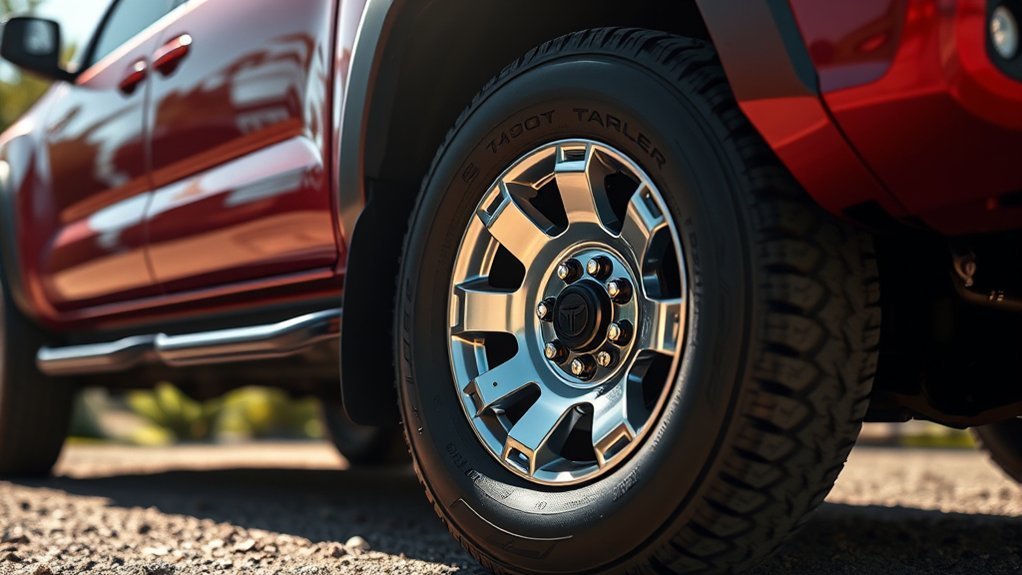
Wheel offset is the distance between the wheel’s centerline and the hub mounting surface. More positive offset pulls the wheel inward. Less positive offset, zero offset, or negative offset pushes the wheel outward.
Older 4Runner wheels often have a lower offset than newer Tacoma wheels. Installing a lower-offset 4Runner wheel on a Tacoma can make the wheels sit farther out, which many owners like for stance. But that change can also increase fender contact, mud-flap rubbing, and stress on wheel bearings if pushed too far.
Pro Tip: Compare the new wheel’s width and offset against your current wheel before buying tires. A wider wheel with lower offset can move the tire much farther outward than the offset number alone suggests.
Do 16-Inch Tacoma Wheels Fit Without Clearance Issues?
This question usually comes up in the reverse swap: Tacoma wheels on a 4Runner. Still, it matters because owners often compare factory Toyota truck wheels across both platforms. Some 16-inch Toyota wheels may fit older Tacoma trims, but they are risky on vehicles with larger front brake calipers.
If you are putting 4Runner wheels on a Tacoma, most factory 4Runner wheels you will consider are 17 inches or larger. That usually gives more brake-room than a 16-inch wheel, but spoke design can still create interference. Always test the front wheels first because front brake and steering clearance are the most critical.
[Products Worth Considering]

The Trivd Frol 1/2" air impact wrench delivers high performance torque up to 1500 ft-lbs with a twin hammer impact mechanism for strong, balanced blows. It features an ergonomic grip, compact lightweight design, and quick-stop control with 3 forward speeds up to 8000 RPM plus a reverse speed. Built for demanding automotive repair and tire shop work, the rear exhaust helps keep debris away from the surface.

These M14x1.5 closed-end chrome lug nuts are a one-piece replacement designed for secure fitment on compatible GM, Ford, and select Chrysler/Dodge models. Featuring a 60-degree conical seat and anti-rust chrome plating, they help resist corrosion and maintain a bright look for everyday driving. Built for long-term durability, they include OEM-style part references and are backed by 12 months of support.

Upgrade your wheels with MIKKUPPA M12x1.5 mag seat lug nuts built for secure, corrosion-resistant performance. These closed-end chrome lug nuts are a direct replacement for select Toyota models, including Camry, Corolla, RAV4, Sienna, Avalon, Highlander, Matrix, Venza, and Prius. Triple-chromium plating and cold-forged, heat-treated steel help deliver strength for daily driving and replacement needs.
Clearance Challenges Explained
- Turn the steering fully left and right while the truck is safely on the ground.
- Check the inside sidewall, upper control arm, sway bar, fender liner, mud flap, and brake caliper.
- Look for stick-on wheel weights that pass close to the caliper.
- Recheck clearance after the first short drive because suspension movement can reveal rubbing you missed in the garage.
Ideal Rim Sizes
For most Tacoma and 4Runner factory-wheel swaps, 17-inch and 18-inch wheels are the practical sweet spot. They usually offer better tire availability, better brake clearance, and less fitment drama than 16-inch wheels. Larger 20-inch wheels can fit some trims, but they leave less tire sidewall for off-road use.
Ensuring Lug Nut Compatibility
Lug nut compatibility is a safety item, not a cosmetic detail. Match all of the following before driving:
- Thread pitch: M12x1.5 or M14x1.5, depending on the Tacoma model year.
- Seat style: washer/mag seat, conical/acorn seat, or ball seat as required by the wheel.
- Shank length: long enough to engage properly, but not so long that it bottoms out before clamping.
- Torque: use the torque value from your Tacoma owner’s manual or Toyota service information.
- Condition: replace swollen, rusty, rounded, cross-threaded, or damaged lug nuts.
Discount Tire’s wheel torque guide recommends tightening lug nuts with a torque wrench and following the proper crisscross pattern. After a wheel swap, recheck torque after a short break-in drive or whenever the wheel installer recommends it.
[Products Worth Considering]

Upgrade your wheels with MIKKUPPA closed-end lug nuts designed for reliable fit and corrosion resistance. The one-piece, cold-forged and heat-treated steel construction helps resist rust and stripping, while the integrated finish delivers a durable black appearance. Built to OEM standards with a conical 60-degree seat, these nuts provide a secure solution for compatible Ford, Honda, Jeep, and Chevrolet models.

This professional wheel and rim cleaning brush set lifts brake dust, grime, and dirt with soft, scratch-free microfiber and synthetic wool fibers. The rim brush bends up to 360 degrees for easy access to hard-to-reach areas around spokes, lips, and faces. Ideal for thorough cleaning of car, truck, motorcycle, bicycle, RV, and more wheel and tire surfaces.

These aluminum alloy tire valve stem caps with an O-ring seal help protect valve stems from corrosion while adding a clean, stylish look to your vehicle. The universal fit works across cars, trucks, motorcycles, bicycles, and more, making them an easy upgrade for everyday driving and off-road use. Installation is quick, and the included four-pack keeps all your tires dressed and protected.
Testing Wheel Fitment
Test-fitting is the step that prevents expensive mistakes. Do it before mounting new tires if possible.
- Confirm the specs first. Check bolt pattern, center bore, wheel width, offset, lug-seat style, and tire size.
- Inspect the hub and mounting pad. Clean rust, dirt, and debris so the wheel can sit flat.
- Test the bare wheel if possible. A wheel without a tire makes caliper and spoke clearance easier to inspect.
- Hand-thread the lug nuts. They should spin on smoothly. Stop if they bind, wobble, or feel wrong.
- Check caliper clearance. Spin the wheel by hand and look behind the spokes and barrel.
- Lower the truck and check steering clearance. Turn lock-to-lock and inspect the tire path.
- Torque to spec. Tighten in stages using the correct crisscross sequence.
- Drive slowly and recheck. Listen for rubbing, vibration, clicking, or steering shake.
Note: TPMS sensors may need to be transferred, replaced, or registered to the Tacoma after a wheel swap. A tire shop or Toyota dealer can confirm sensor compatibility for your model year.
Recommended Modifications for Better Fit
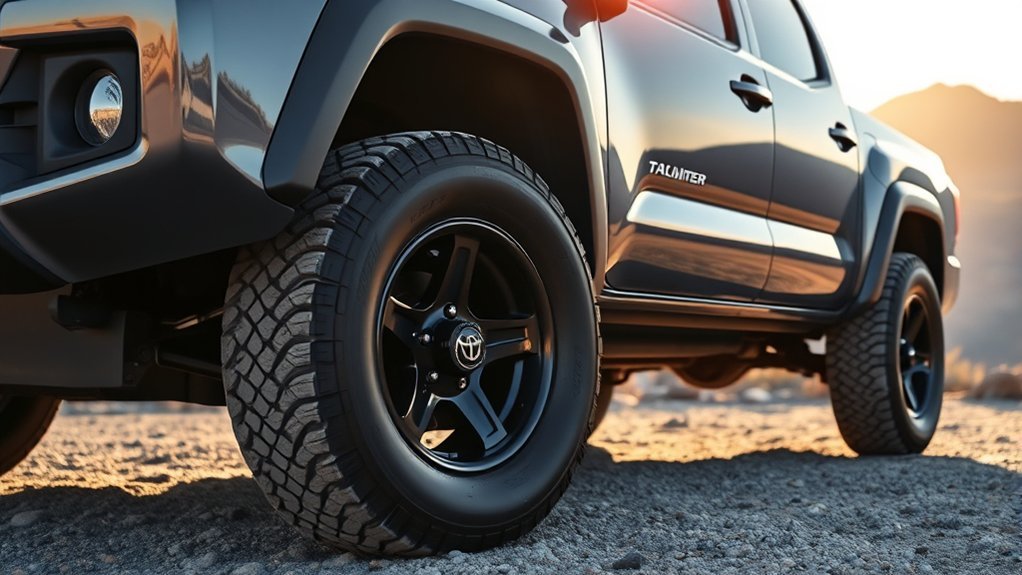
The best “modification” is usually choosing a wheel that already matches the truck. When small corrections are needed, keep them simple and safe.
- Hub-centric rings: Use quality rings when the wheel center bore is larger than the Tacoma hub. For example, older 106.1 mm-bore 4Runner wheels on a 95.1 mm-hub Tacoma may need a 106.1-to-95.1 mm ring.
- Correct lug nuts: Use lug nuts that match the Tacoma studs and the 4Runner wheel’s seat style. Never grind lug nuts to make them fit.
- Professional spacers only when needed: Hub-centric, wheel-centric spacers may help with inner clearance, but cheap spacers or poor installation can create vibration and stud stress.
- Proper tire size: A wheel may fit while the tire does not. Check overall diameter, width, and load rating.
- Alignment check: If the wheel/tire setup changes stance or tire diameter significantly, an alignment check can help prevent uneven wear.
[Products Worth Considering]

This 1/2-inch drive breaker bar delivers powerful leverage for loosening and tightening stubborn lug nuts and automotive fasteners. The 180-degree flex head helps you reach tight spaces at the angle you need, making tire and brake jobs easier. A spring-loaded ball detent design holds 1/2-inch sockets securely while the chrome-moly head provides durable strength for everyday use.

This car D-wheel lock nut key provides an anti-theft solution for D-shaped wheel lock bolts, helping keep your wheels secure. It features a flower-shaped internal pattern that resists micro-adjustment theft while allowing removal and mounting of compatible locking nuts. Made for reliable performance under high torque, it’s easy to use with standard socket wrench turning for quick tire maintenance and emergency repairs.

This metal-free wheel and tire cleaning brush uses dense, fluffy synthetic wool to safely clean rims, spokes, fenders, and engine areas without worrying about damaging surfaces. Its flexible, comfortable design helps you reach detailed areas while maintaining durability, and the extra absorbent fibers work well with wheel spray cleaners for faster cleanup. Reusable and washable performance helps prevent grime and build-up for cleaner vehicles and easier maintenance at home.
Real User Experiences With Wheel Swaps
Owners commonly report successful Toyota factory-wheel swaps when they stay close to OEM sizing and verify the hub bore and lug hardware. The cleanest reports usually involve matching the newer Tacoma with newer 4Runner wheels, or matching older 6-lug Tacoma trucks with older 4Runner wheels.
The problem reports tend to follow the same pattern: wrong lug nuts, missing hub-centric rings, too much offset change, oversized tires, or assumptions based only on the bolt pattern. A careful test fit is more reliable than a forum post because trim, tire brand, suspension height, and alignment all affect clearance.
The safe rule is simple: bolt pattern tells you whether the wheel can line up; hub bore, lug hardware, offset, tire size, and brake clearance tell you whether it should be driven.
Frequently Asked Questions
Can I use 4Runner wheels on a lifted Tacoma?
Yes, a lift can help with tire clearance, but it does not fix the hub bore, lug-nut thread, lug-seat style, or brake clearance. Even on a lifted Tacoma, confirm the wheel specs and test for rubbing at full steering lock and during suspension compression.
Will 4Runner wheels affect my Tacoma’s fuel efficiency?
They can. Heavier wheels, wider tires, more aggressive tread, and larger overall tire diameter can reduce fuel economy and acceleration. If the 4Runner wheel uses a similar tire size and weight as your Tacoma’s original setup, the change may be small.
Are aftermarket 4Runner wheels compatible with a Tacoma?
Aftermarket 4Runner wheels can fit a Tacoma if they match the Tacoma’s bolt pattern, hub bore or ring setup, load rating, offset range, lug-seat style, and brake clearance. Do not rely on the product name alone; check the printed wheel specs.
Do I need to change tire sizes when swapping wheels?
Not always. You can often keep a near-stock tire diameter to avoid speedometer error and rubbing. You may need a different tire size if the 4Runner wheel is wider, has a different diameter, or pushes the tire too close to the fender or suspension.
How much does it cost to swap wheels between these models?
A simple test fit may cost nothing if you already have the tools. A tire shop may charge for mounting, balancing, TPMS transfer, and installation. Hub-centric rings are usually inexpensive, while new tires, TPMS sensors, spacers, or professional fitment work can raise the total quickly.
Do I need hub-centric rings for 4Runner wheels on a Tacoma?
You may need them when the 4Runner wheel’s center bore is larger than the Tacoma hub. A common example is an older 106.1 mm-bore 4Runner wheel on a newer 95.1 mm-hub Tacoma. Rings do not help when the wheel bore is smaller than the hub.
Can I use Tacoma lug nuts with 4Runner wheels?
Only if the thread pitch, length, and seat style match both the Tacoma studs and the 4Runner wheel. Many fitment problems come from using the wrong lug-seat style. When in doubt, buy the correct lug nuts for the wheel and truck combination.
Conclusion
4Runner wheels can fit a Toyota Tacoma, but the swap should be based on measurements, not guesswork. Start with the exact model years, then confirm bolt pattern, center bore, lug-nut thread, lug-seat style, offset, tire size, TPMS, and brake clearance. If everything checks out, 4Runner wheels can be a clean factory-style upgrade for a Tacoma. If any spec is wrong, choose a better-matched wheel instead of forcing the fit.
Sources
- Toyota Tacoma official specifications — current Tacoma model and trim reference.
- Toyota 4Runner official specifications — current 4Runner model and trim reference.
- Toyota Owners Manuals and Warranties — owner’s manual lookup for torque, tire, and maintenance data by model year.
- Tire Rack: What Is a Wheel Centerbore? — center bore and centering-ring explanation.
- Tire Rack: What Is Wheel Offset? — offset definition and fitment impact.
- Discount Tire: Wheel Torque Specs — torque-wrench and tightening-pattern guidance.
