
Toyota Tundra Tire Size Calculator: How to Figure Upsize Limits Safely
Choosing a bigger tire for a Toyota Tundra is not just a matter of finding a size that looks good. The safe choice depends on your original tire size, overall diameter, load index, wheel width, offset, suspension height, and real-world clearance at full steering lock and suspension compression. Use the steps below to compare sizes before you buy, then verify the final choice with the tire placard on your truck and a qualified tire installer.
Quick Answer
For most Toyota Tundra owners, keeping the new tire’s overall diameter within about 3% of the original size is the safest starting point for speedometer accuracy and drivability. Bigger setups may fit with the right lift, offset, trimming, and calibration, but the tire placard, load rating, and physical clearance check matter more than a calculator alone.
Key Takeaways
- Start with the tire size on your driver-door tire placard, not a forum post or another trim’s setup.
- Use the 3% diameter rule as a conservative comparison guide, not as a guarantee that a tire will clear.
- Match or exceed the original load index and use the correct cold inflation pressure for the tire type.
- Wheel offset, wheel width, mud flaps, fender liners, upper control arms, and body mounts can matter as much as tire height.
- After a major tire, wheel, lift, or alignment change, confirm speedometer accuracy, TPMS operation, and Toyota Safety Sense sensor performance.
At a Glance
| Time Required | 10–20 minutes to compare sizes; 30–60 minutes for a shop test-fit and clearance check |
| Difficulty | Easy for calculator math; moderate for physical fitment checks |
| Tools Needed | Tire size calculator, tape measure, tire pressure gauge, flashlight, and your Tundra’s tire placard or owner’s manual |
| Cost | Free to calculate; professional mounting, balancing, alignment, trimming, calibration, or lift work varies by setup |
What You Need to Know About Tire Specs for Your Tundra
Before choosing a larger tire, read the size on your current tire and compare it with the size listed on the driver-door tire placard. The placard is important because Toyota uses different wheel and tire packages by model year, cab, trim, drivetrain, and option package.
A tire size such as 265/70R18 breaks down like this:
- 265 is the section width in millimeters.
- 70 is the aspect ratio, meaning the sidewall height is 70% of the tire width.
- R means radial construction.
- 18 is the wheel diameter in inches.
- The load index and speed rating, shown after the size on the tire sidewall, tell you how much weight the tire can carry and the maximum speed category for that tire.
The National Highway Traffic Safety Administration recommends checking the owner’s manual or the Tire and Loading Information Label on the driver’s side door edge or post to find the correct size for your truck. That should be your baseline before comparing any upsized tire.
Warning: Do not choose a tire only because another Tundra owner says it fits. A different wheel offset, wheel width, suspension setup, cab configuration, or alignment setting can change the result.
[Products Worth Considering]

EVOULTES heavy duty tire inflator with an integrated gauge delivers accurate pressure readings from 10–120 PSI, helping you inflate, deflate, and check tires in one tool. The 16.5-inch extended dual-head air chuck with swivel base reaches hard-to-access dual wheel valves on trucks and RVs. A brass trigger core and side-mounted air release valve make operation smooth, with standard 1/4" NPT threading and quick-connect compatibility for easy setup.

The AstroAI 2 pack air chucks provide a heavy-duty, closed-flow locking design that helps keep air flowing during inflation while securely attaching to the valve stem. Built with 250 PSI rated brass components and compatible with Schrader valves, they feature 1/4" female NPT threads for a wide fit with common inflators. The straight tip and locking clip make filling tires and monitoring pressure more convenient.
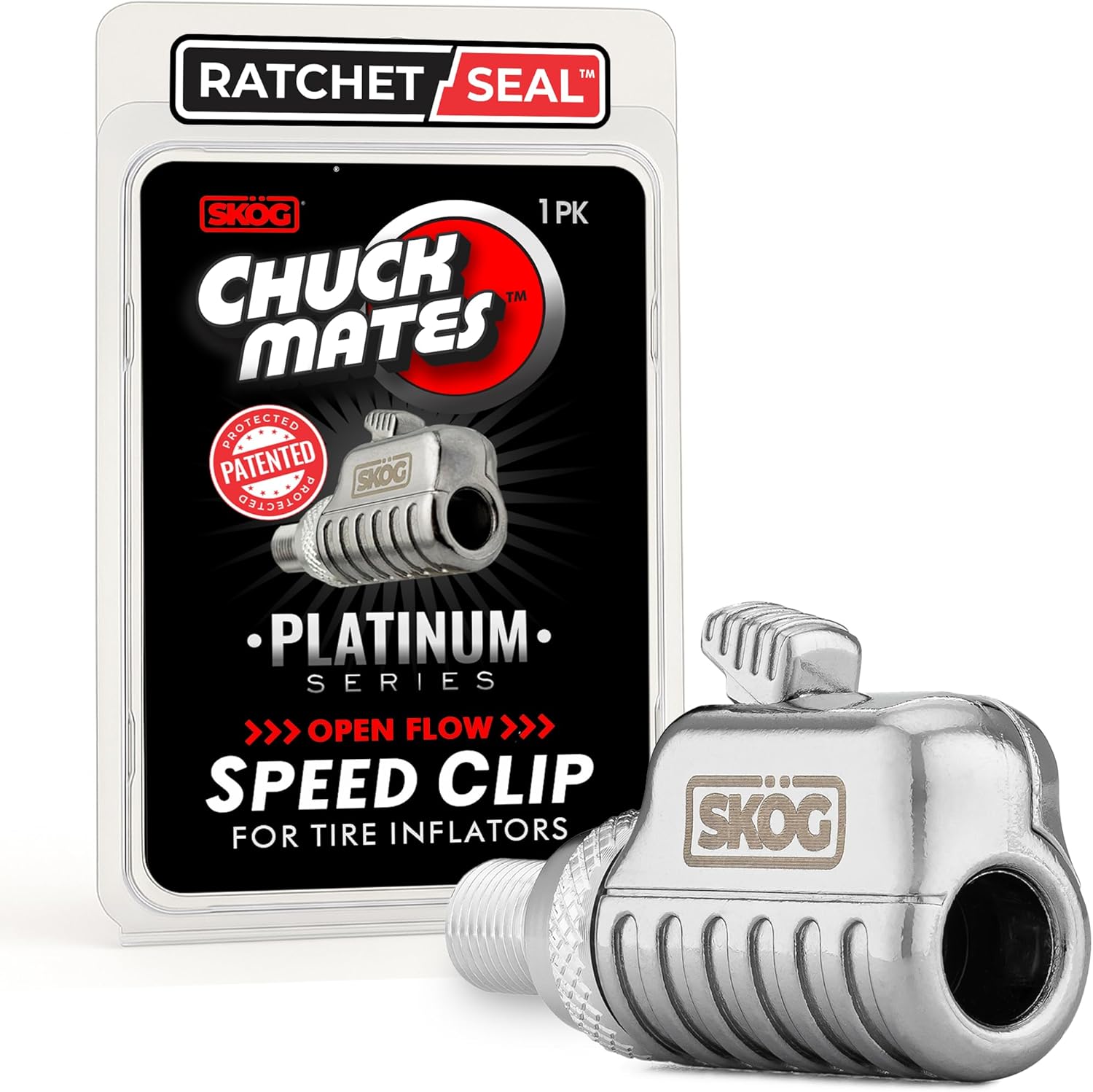
The SKÖG Chuck Mates Platinum uses a patented RatchetSeal push-to-connect system for instant, secure, air-tight attachment to standard tire valve stems. It features an easy push-button release for quick disconnects, plus 360° swivel open-flow airflow to keep operation smooth and kink-free. Universal Schrader compatibility makes it ideal for cars, bikes, motorcycles, RVs, trucks, and more.
Why You Need a Tire Size Calculator
A Toyota Tundra tire size calculator helps you compare your original tire with a proposed tire before you spend money. The main numbers to compare are overall diameter, width, sidewall height, circumference, and revolutions per mile.
Accurate Size Comparison
A calculator makes metric tire sizing easier to understand. It can show whether a new size is taller, wider, or nearly the same height as your original tire. This matters because even a small tire-height change affects speedometer accuracy, gearing feel, braking, and driver-assistance systems.
You can also calculate tire diameter manually:
Overall diameter = rim diameter + (2 × tire width × aspect ratio ÷ 100 ÷ 25.4)
Example for 265/70R18:
- Sidewall height: 265 × 0.70 = 185.5 mm
- Sidewall height in inches: 185.5 ÷ 25.4 = 7.30 inches
- Overall diameter: 18 + (7.30 × 2) = about 32.6 inches
Performance Impact Assessment
Changing tire diameter changes how far your truck travels with each tire rotation. A taller tire can make the speedometer read slower than your actual speed. A shorter tire can make it read faster. Tire-size calculators from reputable tire retailers, such as the Les Schwab tire size calculator guide, are useful for comparing diameter, width, and speedometer impact.
Use this simple speedometer estimate:
Actual speed = indicated speed × new tire diameter ÷ original tire diameter
For example, moving from a 32.6-inch tire to a 35-inch tire is about a 7.4% diameter increase. If the speedometer shows 60 mph, the truck may be traveling roughly 64 mph unless it is recalibrated.
Note: A calculator checks the math. It does not check fender clearance, suspension clearance, brake clearance, load rating, or whether the tire will rub while turning into a driveway.
Safe Upsize Limits: The 3% Rule
The 3% rule is a common tire-sizing guideline that says your replacement tire should stay within about 3% of the original overall diameter. It is useful because it keeps speedometer error, gearing changes, and electronic-system assumptions closer to factory values.
However, the 3% rule is not a Toyota-approved fitment guarantee. The safest tire size is the original size or a size recommended for your truck, and NHTSA advises checking the tire placard, owner’s manual, or a tire dealer if you are unsure. Use the 3% rule as a first filter, then confirm clearance and load rating.
| Original Tire Diameter | Approx. +3% Limit | What It Means |
|---|---|---|
| 32.5 inches | 33.5 inches | A mild upsize is usually easier to manage. |
| 32.6 inches | 33.6 inches | Many common “33-inch” tire choices are close to this range. |
| 32.6 inches to 35 inches | About +7.4% | More likely to need lift, trimming, offset changes, and speedometer correction. |
If you go beyond about 3%, pay extra attention to speedometer calibration, braking feel, transmission shift behavior, spare-tire compatibility, and clearance under load.
How Lift Kits Affect Tire Size Options
A lift kit or leveling kit can create more vertical space, but it does not automatically make every larger tire fit. A 2–3 inch leveling kit may help many Tundra owners fit a taller tire, but tire width, wheel offset, caster, mud flaps, fender liners, body mounts, and upper control arm clearance still decide whether the setup works.
As a general fitment pattern:
- Mild upsizes near 33 inches are usually the easiest to fit, especially when the overall diameter stays close to stock.
- Many 34–35 inch setups may require a leveling kit or lift, careful wheel offset, liner adjustment, mud-flap removal, or trimming.
- 37 inch setups are major modifications for most Tundras and can require a larger lift, trimming, wheel changes, alignment work, and extra drivetrain/brake considerations.
Pro Tip: Test-fit one front tire before mounting the full set. Turn the steering wheel lock-to-lock, check the rear of the front fender liner, inspect the mud flap area, and compress the suspension if possible.
Why Wheel Offset Matters for Tire Fitment
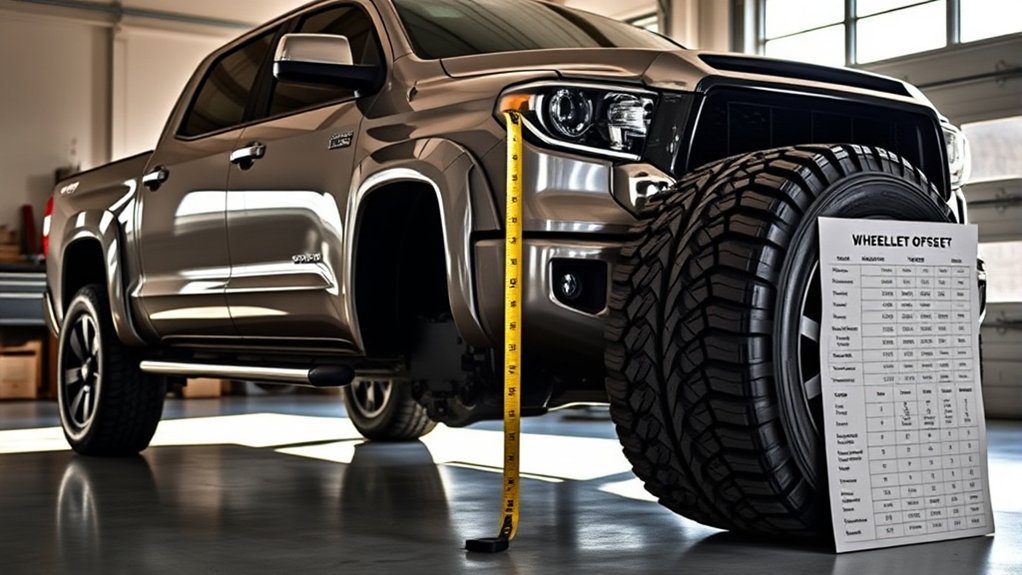
Wheel offset is the distance between the wheel’s mounting surface and the wheel centerline. Positive offset pulls the wheel inward toward the suspension. Negative offset pushes the wheel outward toward the fender. Offset affects stance, rubbing risk, steering feel, and suspension clearance.
Offset is especially important on a Tundra because wider tires can rub in different places depending on where the wheel sits:
- Too much positive offset can move the inner sidewall closer to suspension components or upper control arms.
- Too much negative offset can push the tire outward and increase rubbing at the fender liner, mud flap, and bumper edge.
- Wider wheels can add poke even if offset looks reasonable on paper.
If you change wheel width and offset at the same time, compare both inner clearance and outer poke. Do not look at offset alone.
Calculating Tire Size: A Step-by-Step Guide
Use this process before buying new tires for your Toyota Tundra.
Step 1: Find Your Current Tire Size
Look at the sidewall of your current tire and the driver-door Tire and Loading Information Label. If the two do not match, use the placard as the factory reference and ask a tire professional to verify the current setup.
| Specification | Example | What It Tells You |
|---|---|---|
| Width | 265 mm | The tire’s section width from sidewall to sidewall. |
| Aspect Ratio | 70 | Sidewall height as a percentage of width. |
| Rim Diameter | 18 inches | Wheel diameter the tire is designed to fit. |
| Load Index | 112, 116, etc. | How much weight each tire can support. |
| Speed Rating | T, H, etc. | The tire’s speed category under rated conditions. |
Step 2: Compare Diameter and Width
Enter the original size and proposed size into a tire size calculator. Keep the proposed diameter near the original when possible. Then compare width because a tire can be close in diameter but still rub because it is wider.
Step 3: Check Load Index and Tire Type
The replacement tire should meet or exceed the original tire’s load capacity. This is especially important if you tow, haul, drive off-road, or choose LT tires. LT tires often need different inflation pressure than P-metric tires to carry the same load, so do not assume the original placard pressure is correct for every replacement tire.
Step 4: Estimate Speedometer Error
Use the speed formula or calculator output to estimate how much the speedometer will change. If the change is significant, ask about recalibration options before driving long distances or towing.
Step 5: Test Clearance Before Finalizing
After mounting, check the front tires at full left and full right steering lock. Look for contact at the fender liner, mud flap, body mount area, bumper edge, sway bar, and upper control arm. Then recheck after alignment, because caster changes can move the tire within the wheel well.
Common Tire Sizes for Different Tundra Generations
Toyota Tundra tire sizes vary by year, trim, drivetrain, and option package. The examples below are starting points only. Always verify your truck’s tire placard and wheel package.
| Tundra Generation | Common OE Tire Examples | Wheel/Fitment Notes |
|---|---|---|
| 2007–2021 Tundra | Examples may include 255/70R18, 275/65R18, 275/55R20, and certain TRD-related sizes depending on model year and package. | Many owners target mild 33-inch setups first. Wider and taller tires need careful wheel and clearance checks. |
| 2022–present Tundra | Examples may include 245/75R18, 265/70R18, 265/60R20, 265/50R22, and TRD Pro 285/65R18, depending on trim and package. | Toyota has offered 18-, 20-, and 22-inch wheel packages. Do not assume a 35-inch tire is a factory size. |
TRD and TRD Pro packages can change wheels, tires, shocks, and stance. Toyota’s 2022 Tundra brochure, for example, lists TRD Pro 18-inch forged-aluminum BBS wheels and Falken WILDPEAK all-terrain tires, while other grades use different 18-, 20-, or 22-inch wheel designs. That is why a model-year-specific check matters.
[Products Worth Considering]
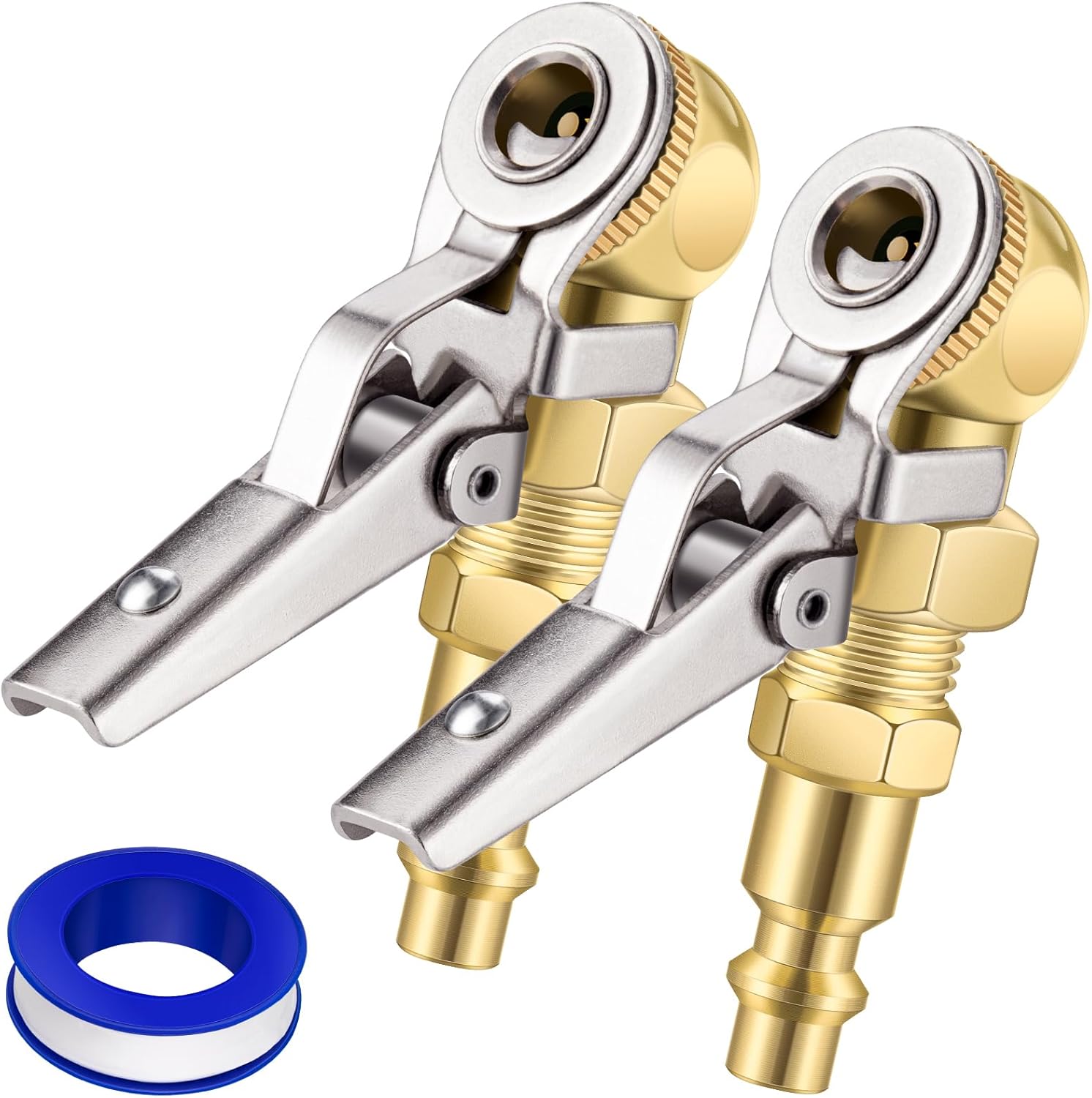
EVOULTES 2-pack closed ball tire chucks lock onto Schrader valves to help you inflate tires hands-free. The set includes both chucks with quick plug compatibility and a 2-way connection approach for easy setup to your air line or compressor. Durable metal construction supports reliable use for cars, trucks, RVs, bikes, and other Schrader-valve tires up to 250 PSI.
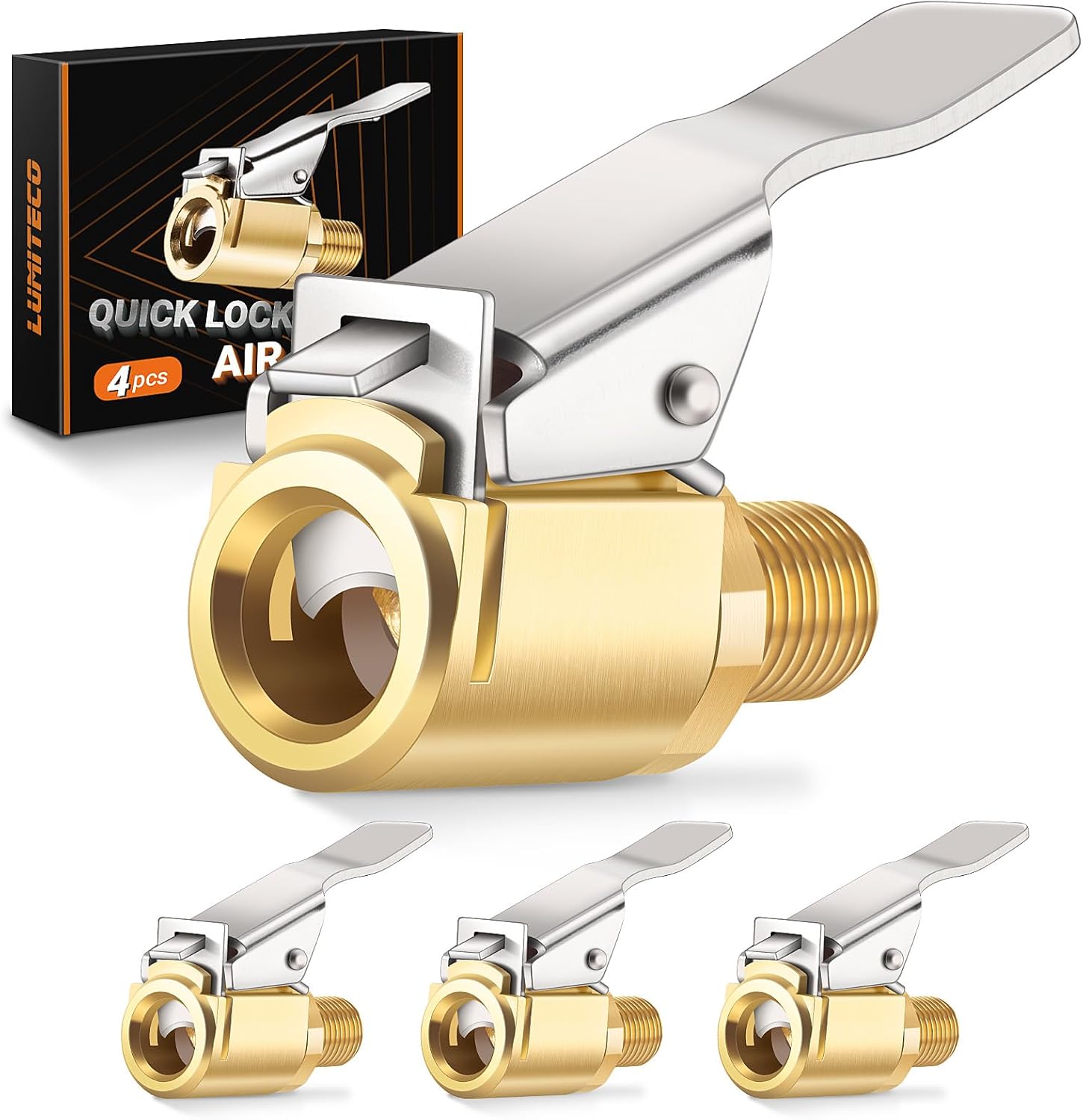
This brass air chuck adapter converts a screw-on inflator connection into a lock-on quick connect for hands-free, no-leak tire inflation. Clip the chuck onto Schrader valve stems and lock it in place to simplify inflating car, bike, and motorcycle tires. Built for durability with a corrosion-resistant brass body and strong quick operation.
How to Address Rubbing Issues When Upsizing Tires
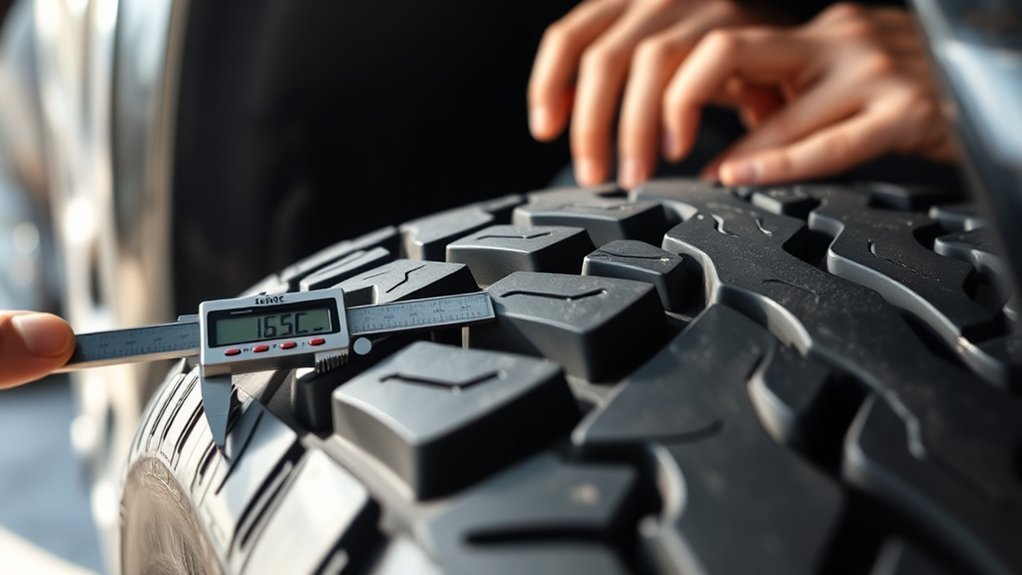
If your upgraded tires rub, identify the contact point before buying more parts. Random trimming or wheel spacers can create new problems if you do not know where the tire is touching.
Common Rubbing Points
- Mud flaps: Often the first contact point with wider or more negative-offset setups.
- Front fender liner: May rub during turning or driveway entry.
- Body mount area: More common with larger tire diameters and wider tires.
- Upper control arm: More likely when inner clearance is tight.
- Bumper edge or valance: Can rub with outward-pushed tires.
Fixes to Consider
- Recheck alignment and caster settings.
- Use a wheel with a more suitable offset and width.
- Adjust or heat-form the fender liner where appropriate.
- Remove or replace mud flaps if they are the only contact point.
- Trim plastic carefully only after confirming the rub location.
- Use a lift or leveling kit when the tire needs more vertical clearance.
Warning: Avoid using wheel spacers as a first fix. Spacers change load paths and fitment, and they may require different studs, torque checks, or legal considerations depending on your area.
Choosing TRD and TRD Pro Wheels After Upgrading
Genuine TRD and TRD Pro wheels can be a strong choice because they are designed for Toyota fitment and truck use, but you still need to match the wheel to your Tundra generation and tire size. Older and newer Tundras do not all share the same bolt pattern, center bore, or wheel specifications.
Before buying wheels, confirm:
- Bolt pattern for your exact generation.
- Center bore and whether hub-centric rings are needed.
- Wheel width and approved tire width range.
- Offset and backspacing for inner and outer clearance.
- Load rating suitable for a full-size truck.
- Brake clearance, especially with aftermarket wheels.
TRD-style wheels can improve appearance and may support a more practical fitment than aggressive aftermarket wheels, but the wheel should be chosen for clearance first and stance second.
Expert Tips for Professional Tire Installation and Calibration
Professional installation matters more when you change tire size, wheel offset, or suspension height. A shop can check clearance, balance the assembly, set alignment, and identify rubbing before it damages the tire or truck.
Proper Tool Usage
Use the right tools and checks during installation:
- Tire size calculator: Compare diameter, width, circumference, and speedometer change before purchase.
- Tire pressure gauge: Set cold pressure according to the tire type, load requirement, and professional guidance.
- Torque wrench: Lug nuts should be tightened to the correct specification for your truck and rechecked after the shop’s recommended mileage.
- Alignment equipment: Alignment should be checked after a lift, leveling kit, suspension change, or major tire-size change.
- Scan/calibration tools: Needed when the vehicle’s systems require recalibration or health checks.
Calibration After Installation
Oversized tires can affect the speedometer, odometer, shift feel, traction control assumptions, and driver-assistance systems. Toyota safety-system guidance warns that changing vehicle height or tilt can prevent sensors from working properly, and calibration information may be tied to wheel alignment and sensor alignment procedures. Review Toyota’s safety system calibration guidance and ask a qualified Toyota service provider or alignment specialist when making major changes.
TPMS, Spare Tire, and Towing Checks
After changing tire size, verify that the tire pressure monitoring system works correctly and that the spare tire strategy still makes sense. If your spare is much smaller than the new tires, it may only be suitable for emergency short-distance use. If you tow or haul, confirm load capacity and inflation pressure before your next trip.
Frequently Asked Questions
How much bigger can I go on Toyota Tundra tire size?
A good starting point is to stay within about 3% of the original overall tire diameter. Many owners go larger, but bigger tires may require a lift, different wheel offset, trimming, alignment changes, and speedometer recalibration. Always verify your door placard, load rating, and physical clearance.
Will 35-inch tires fit a Toyota Tundra?
Sometimes, but it depends on the Tundra generation, trim, lift or leveling kit, tire width, wheel offset, alignment, and how much trimming you accept. A 35-inch tire is usually well beyond a mild diameter change from many stock Tundra tires, so check speedometer error and clearance carefully.
Do bigger tires affect the speedometer?
Yes. Taller tires travel farther per rotation, so the speedometer may read slower than your actual road speed. Use this estimate: actual speed equals indicated speed multiplied by new tire diameter divided by original tire diameter.
Do I need new wheels when upsizing Tundra tires?
Not always. Some mild upsizes work on factory wheels if the tire is approved for the wheel width and has enough clearance. Wider tires or aggressive off-road sizes may need different wheel width or offset to clear suspension and body components.
Can I use LT tires on my Toyota Tundra?
Yes, if the LT tire is the right size, load capacity, and fitment for your truck. LT tires can be heavier and may require different inflation pressure to carry the correct load. Ask the tire manufacturer or installer for a load-and-inflation recommendation.
Conclusion
A Toyota Tundra tire size calculator is the best first step for comparing diameter, width, sidewall height, and speedometer change. The safest upgrade process is simple: start with your door placard, keep diameter changes modest when possible, match the load rating, choose the right wheel offset, test for rubbing, and confirm alignment and calibration after installation. Bigger tires can improve stance and off-road capability, but the right fit is the one that clears safely and keeps your truck’s systems working as intended.
Sources
- NHTSA Tire Safety Ratings and Awareness — supports tire placard, tire sizing, tire pressure, and tire maintenance guidance.
- NHTSA Tire Safety Brochure — supports manufacturer-recommended tire sizing, pressure checks, load index, and tire safety basics.
- Toyota 2025 Tundra Owner’s Manual: Tire Information — supports Toyota tire-information terminology and model-specific manual verification.
- Toyota 2025 Tundra Owner’s Manual: Tire Inflation Pressure — supports checking tire pressure information for the specific model year.
- Toyota Safety System Calibration Guidance — supports warnings about suspension height, alignment, sensors, and calibration.
- Toyota 2022 Tundra Brochure — supports Toyota wheel-package examples, TRD/Off-Road context, and TRD Pro wheel information.

Related Articles
Toyota Tundra Tire and Wheel Package: What to Consider Before Buying
Unlock the secrets to choosing the perfect tire and wheel package for your Toyota Tundra—essential tips await to enhance your ride.
Read More
Do Bigger Tires Void a Toyota Tundra Warranty? Magnuson-Moss Act Explained
Bigger tires might not void your Toyota Tundra warranty, but understanding the Magnuson-Moss Act is crucial—discover how to protect your investment effectively.
Read More
Toyota Tundra Tire Rack Setup: Garage Storage Ideas for Seasonal Sets
Better tire storage for your Toyota Tundra awaits—discover essential tips to maximize space and protect your seasonal sets in the garage!
Read More