Disclosure: As an Amazon Associate, we earn from qualifying purchases. If you click a link on this page and make a purchase, we may receive a small commission at no extra cost to you.
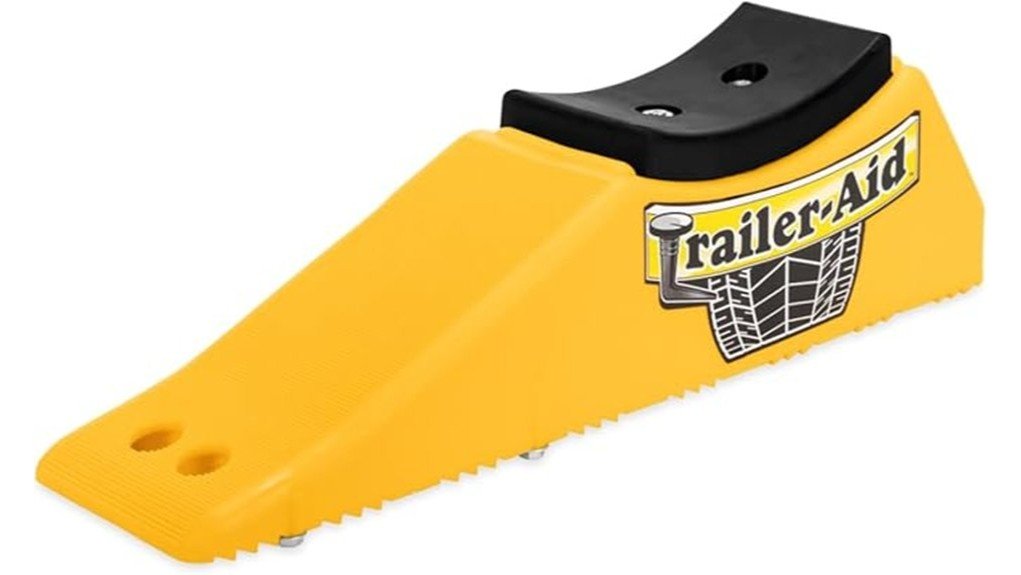
A flat tire on a loaded tandem-axle trailer can turn a routine trip into a difficult roadside job. The Camco Trailer Aid Plus 21002 gives you a drive-on ramp that raises the neighboring wheel, so you may be able to change the flat without positioning a traditional jack under the axle. Its 5 1/2-inch lift, lightweight polymer body, and 15,000-pound rating make it practical for many RVs, campers, and utility trailers. The tradeoff is strict fitment: it is only useful when your axle spacing, suspension design, tire clearance, and work surface match the product’s limits.
Quick Verdict
Rating: 8/10, recommended with caveats
Best For: Owners of compatible tandem-axle RVs, campers, horse trailers, and utility trailers who want a compact tire-change aid.
Bottom Line: Trailer Aid Plus is light, simple, and capable of creating useful wheel clearance without unloading the trailer. It is not universal, and you must confirm axle spacing, suspension type, ground conditions, and actual tire lift before relying on it.
| Specification | Detail |
|---|---|
| Brand | Camco |
| Model | Trailer Aid Plus 21002 |
| Product type | Drive-on tandem trailer tire-changing ramp |
| Lift height | 5 1/2 inches |
| Weight rating | Up to 15,000 lbs |
| Product weight | About 8 lbs |
| Material | Heavy-duty lightweight polymer |
| Weather resistance | Waterproof and rustproof construction |
| Compatibility | Compatible tandem-axle trailers with axle spacing of 36 inches or less |
| Known exclusions | Not intended for narrow axles, listed equalizing leaf-spring setups, or axle spacing over 36 inches |
| Country of origin | USA |
| Manufacturer warranty | 12 months from purchase with receipt, according to Camco |
Key Takeaways
- The 5 1/2-inch drive-on lift can create clearance for a flat tire on many compatible tandem-axle trailers.
- The roughly 8-pound polymer body is easier to carry and store than a heavy floor jack.
- The ramp is rated for up to 15,000 lbs, but that rating does not guarantee fit or sufficient clearance on every trailer.
- Axle spacing must be 36 inches or less, and some narrow-axle or equalizing leaf-spring setups are excluded.
- You still need a spare tire, lug tools, wheel chocks, a torque wrench, and safe working conditions.
Before You Buy: Measure your axle spacing from axle center to axle center and inspect the suspension layout. A 15,000-pound rating does not make this ramp compatible with every tandem trailer, and 5 1/2 inches of lift may not fully clear every flat tire.
What Is the Camco Trailer Aid Plus?
The Camco Trailer Aid Plus 21002 is a molded polymer ramp for tandem-wheeled trailers. You place it in front of or behind the usable tire on the same side as the flat. As the good tire climbs the ramp, the trailer suspension allows the neighboring wheel to rise.
This design can remove the need to search for a suitable jack point during a basic tire change. It can also help with limited wheel, brake, or axle maintenance when the trailer manufacturer permits that method and the raised trailer is supported correctly for the work.
The product’s main selling point is simplicity. It has no moving parts, weighs about 8 pounds, and stores in a trailer compartment, truck bed, or garage without taking the space of a full-size floor jack.
Who Should Buy It?
Best For
- Tandem-axle trailer owners with axle spacing of 36 inches or less.
- Travelers who want a compact roadside tire-change aid that is easy to lift and store.
- Owners who have tested the ramp at home and confirmed that it raises their specific flat tire clear of the ground.
Skip If
- Your trailer has one axle, axle spacing over 36 inches, narrow axles, or an excluded suspension design.
- You need a tool that can safely support under-trailer work by itself.
- Your trailer needs more than 5 1/2 inches of lift to clear a deflated tire.
[Products Worth Considering]

The Dr.Roc spare tire tool kit helps you release, lower, or raise your spare tire with reliable extension tools and a lug nut wrench. It is made from rustproof automotive-grade steel and includes an organized carry case for convenient storage. Designed for compatibility with select GM models from the late 1990s through 2019, it uses upgraded extension components to install and remove spare tires with less hassle.

Camco Trailer Aid Plus tandem tire ramp lifts your trailer for quick, safe tire changes with ample clearance from its 5 1/2-inch lift. It helps you change a flat tire without unloading cargo, making roadside and routine maintenance more efficient. The heavy-duty, waterproof and rustproof polymer design supports up to 15,000 lb and is built for easy portability and storage.

This 1/2-inch drive breaker bar delivers powerful leverage for loosening and tightening stubborn lug nuts and automotive fasteners. The 180-degree flex head helps you reach tight spaces at the angle you need, making tire and brake jobs easier. A spring-loaded ball detent design holds 1/2-inch sockets securely while the chrome-moly head provides durable strength for everyday use.
Fit and Compatibility
Fit is the most important part of this review. The ramp is made for tandem-axle trailers, not ordinary single-axle trailers. Camco’s compatibility language also sets a maximum axle-to-axle spacing of 36 inches and warns against certain narrow-axle and equalizing leaf-spring configurations.
Measure between the centers of the two axles rather than measuring tire-to-tire distance. Then check that the tire can approach the ramp without the trailer body, fender, plumbing, or suspension parts contacting anything as the wheel rises.
Tire diameter and suspension travel also affect the result. A product can be within its weight rating yet still fail to raise the damaged tire completely off the ground. A careful test on firm, level ground before your trip is the best way to confirm real fit.
Pro Tip: Test the ramp with your normal travel load, spare tire, lug wrench, breaker bar, torque wrench, and wheel chocks. A driveway test shows whether you have enough clearance and whether your tools can reach the lug nuts while the tire is raised.
Materials and Build Quality
Trailer Aid Plus uses a heavy-duty polymer body instead of steel. Polymer keeps the tool light enough for one person to carry and prevents rust after exposure to rain, road spray, or a damp storage compartment.
The molded ramp has no hinge, hydraulic seal, screw mechanism, or other moving component to maintain. That simple construction reduces setup steps and removes several common failure points found on mechanical jacks.
The tradeoff is surface sensitivity. A drive-on polymer ramp needs firm, stable ground and proper tire alignment. Soft soil, loose gravel, ice, oil, or an uneven shoulder can reduce traction or let the ramp settle. A board or traction pad should only be used when permitted by the product instructions and when it creates a flat, stable base.
Installation and Ease of Use
No permanent installation is required. You position the ramp next to the good tire on the same side as the flat, drive slowly until the good tire reaches the top, secure the vehicle and trailer, and then confirm that the flat tire has enough clearance.
This drive-on process can be faster than unloading cargo, locating a frame-approved jack point, and raising the trailer by hand. It is especially useful when low clearance makes a conventional jack difficult to place near a fully deflated tire.
However, easy setup does not remove the need for tire-change basics. Loosen the flat tire’s lug nuts slightly before lifting, keep the trailer controlled, use wheel chocks, avoid sudden throttle input, and torque the replacement wheel to the trailer or wheel manufacturer’s specification after lowering.
How It Performs in Real Use
For a Roadside Flat
The compact size is helpful when storage space is limited, and the bright yellow body is easy to locate in a compartment. On firm, level pavement, the drive-on method can reduce the time you spend positioning a conventional jack. Road shoulders are often sloped or soft, though, so you should move to a safer location or call roadside assistance when conditions are poor.
For a Loaded Trailer
Camco markets the ramp as a way to change a tire without unloading horses or cargo. That can save significant work, but cargo must remain secured and the trailer must stay within its weight limits. People and animals should be moved away from the work area, and you should follow the trailer maker’s safety guidance.
For Driveway Maintenance
The added wheel clearance may help with tire rotation, wheel inspection, or basic brake access. Do not crawl under a trailer or place any part of your body in a crush zone while the ramp is the only support. Use manufacturer-approved support equipment for work that requires you to be under or beside suspended components.
For Travel and Storage
At about 8 pounds, Trailer Aid Plus is easy to transfer between a garage and tow vehicle. The waterproof, rustproof body needs little care beyond cleaning, drying, and inspection. Store it where heavy cargo cannot strike or deform it during travel.
How to Use It Correctly
- Confirm compatibility: Check tandem-axle spacing, suspension design, tire clearance, trailer weight, and the product instructions.
- Choose a safe surface: Stop on firm, level ground away from traffic whenever possible. Keep the tow vehicle and trailer controlled according to their manuals.
- Prepare the flat: Set the parking brake, use appropriate wheel chocks, remove the spare, and slightly loosen the flat tire’s lug nuts before raising it.
- Position the ramp: Place Trailer Aid Plus directly in front of or behind the good tire on the same side as the flat.
- Drive slowly: Use a spotter when available. Stop when the good tire is centered and the flat tire has adequate ground clearance.
- Secure and verify: Put the tow vehicle in park, set the brake, confirm the ramp is stable, and keep everyone clear of the trailer.
- Change the tire: Replace the wheel, snug the lug nuts in the correct pattern, drive off the ramp slowly, and torque the lug nuts to specification on the ground.
After use, rinse away mud, salt, and road debris. Let the ramp dry, then inspect it for cracks, distortion, deep gouges, or damaged traction surfaces before storage.
Compatibility and Safety
Trailer Aid Plus is a tire-change aid, not a universal jack stand. Its rated capacity describes the product’s load capability, but safe use still depends on your trailer’s design, total weight, tire size, suspension movement, ramp placement, and the ground beneath it.
Never assume a raised wheel is safe just because it looks clear. Recheck the ramp, tire position, chocks, tow vehicle, and surrounding traffic before removing lug nuts. Stop if the ramp shifts, sinks, cracks, or does not lift the flat completely.
For roadside locations with high-speed traffic, steep slopes, unstable shoulders, severe weather, or limited visibility, professional roadside service is the safer choice. Follow Camco’s instructions and your trailer, axle, wheel, and tire manuals.
Pros and Cons
Pros
- Provides 5 1/2 inches of lift for many tandem-trailer tire changes.
- Rated to support trailers up to 15,000 lbs.
- About 8 pounds, so it is easy to carry and store.
- Waterproof, rustproof polymer needs minimal maintenance.
- Drive-on operation can avoid difficult jack placement near a flat tire.
Cons
- Limited to compatible tandem-axle setups with spacing of 36 inches or less.
- The lift may be insufficient for some tire sizes or suspension designs.
- It still requires chocks, tire tools, safe ground, and careful vehicle control.
Is It Worth the Price?
Trailer Aid Plus offers strong value when it fits your trailer and prevents you from carrying or positioning a heavier jack for routine tire changes. Its simple body, useful lift, and compact storage make the cost easier to justify for frequent RVers, horse-trailer owners, and anyone who regularly tows long distances.
The value drops quickly if you have not measured your axles or confirmed wheel clearance. It is not the best fit when you need broader axle compatibility, more lift, built-in chocking, or equipment approved for under-trailer support.
[Products Worth Considering]

This spare tire tool kit is designed for the 2004 to 2018 Ford F-150 to help you loosen and tighten wheel lug nuts and manage the spare tire and provided jack functions from underneath the vehicle. It includes the lug nut wrench and extension pieces plus a convenient storage carrying case for organized transport. The jack itself is not included.

Yieokei Tesla jack pads are molded rubber lifting pucks designed for 2016-2026 Model 3/Y/S/X, including Juniper, to fit securely in the jack hole. They cushion the underframe and help position the jack precisely at the factory jack points to reduce risk of battery, paint, or chassis damage. The set also includes a tire repair tool kit for emergency roadside fixes and comes with a portable storage case to keep everything organized.

MaxxHaul solid rubber wheel chocks provide dependable vehicle stabilization for cars, trucks, trailers, and RVs across driveways, slopes, garages, and campsites. The molded non-slip traction surface helps prevent tire movement on pavement, gravel, and smooth floors, while the solid rubber resists cracking, crushing, deformation, and weather wear. A built-in handle enables quick, tool-free placement and removal for convenient use in all seasons.
How It Compares to Alternatives
The standard Camco Trailer Aid is the simpler option when you need less lift, while the Trailer Aid Plus gives you extra clearance for trailers that need it. Andersen’s Rapid Jack offers slightly more lift and a higher trailer rating, which may suit heavier multi-axle setups, but fit and surface requirements still apply.
Camco’s newer Curved Trailer Aid includes a chock and traction pad and supports larger stated trailer loads. Trailer Aid Plus remains appealing when you prefer a straightforward one-piece ramp and your trailer already matches its 36-inch axle-spacing limit.
[Products Worth Considering]

This ecocstm ratchet wrench is designed to make emergency and routine tire changes faster with a 360° rotating head and quick forward/reverse switching. The extended handle provides extra leverage to reduce effort and hand fatigue, while the adapter helps fit many scissor jacks on cars, SUVs, trucks, and vans. Built for reliable performance with durable construction, it’s a practical travel essential for on-the-road preparedness.

Camco’s RV wheel chocks with an attached rope help keep your travel trailer securely in place for safer unhitching or parking. This 2-pack is compatible with wheels up to 26-inch diameter and features durable UV-resistant construction for reliable outdoor performance. The rope enables quick, safe removal so you can prepare for your next trip with less hassle.
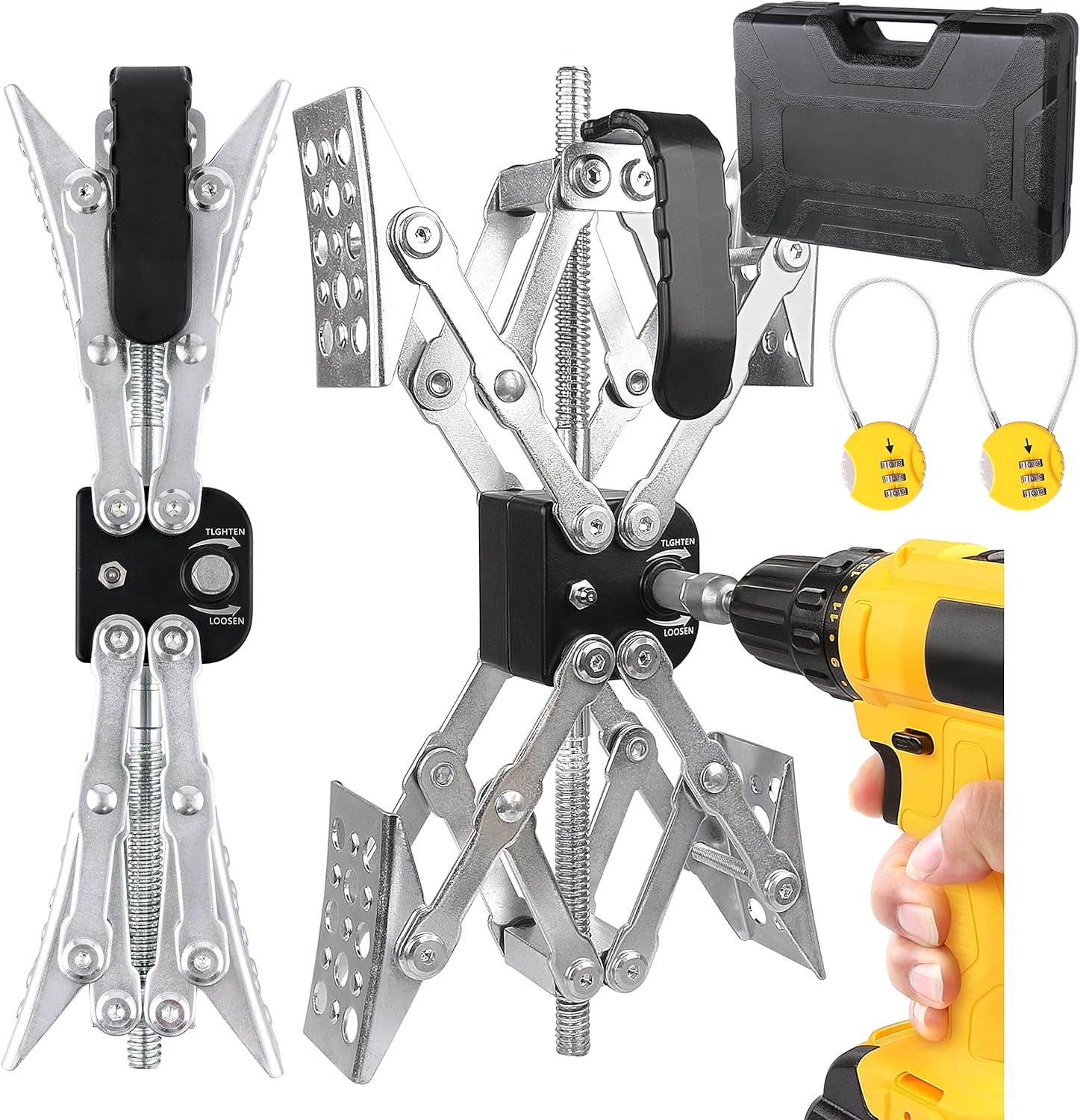
Lock the Maxchock X-style wheel stabilizers between tandem tires to reduce sway and keep your RV travel trailer secure while camping. The adjustable design fits a wide range of wheel gaps, and included hardware lets you install quickly with a power drill. Built from heavy-gauge steel with zinc plating, the chocks include locks and an organizer case for safer, more convenient use.
Frequently Asked Questions
Does Trailer Aid Plus work on every dual-axle RV?
No. It is intended for compatible tandem-axle trailers with axle spacing of 36 inches or less. Suspension design, tire size, fender clearance, trailer weight, and the amount of lift needed can still prevent a proper fit.
Can one person use it to change a trailer tire?
One person may be able to use it after practicing in a controlled area, but a spotter makes tire placement easier. Do not attempt the job alone when traffic, slope, soft ground, weather, or trailer movement creates added risk.
Is 5 1/2 inches enough to clear a flat tire?
It is enough for many compatible trailers, but not all of them. Tire diameter, suspension travel, load, and the amount of sidewall collapse affect clearance, so test the ramp before depending on it during a trip.
Can it replace a traditional trailer jack?
It can replace some jack steps during a compatible tandem-trailer tire change. It does not replace approved jack stands or support equipment for work beneath the trailer, and it will not help when the suspension or axle layout is incompatible.
What other tools should you carry?
Carry a properly inflated spare, wheel chocks, the correct socket, a breaker bar or lug wrench, and a torque wrench. Gloves, reflective warning equipment, a flashlight, and your trailer manuals are also useful.
How do you clean and store the ramp?
Rinse away mud, salt, oil, and gravel, then let the polymer body dry. Inspect it for cracks or distortion and store it where cargo cannot crush it or damage the ramp surface.
What warranty does Camco provide?
Camco lists a 12-month warranty from the purchase date with a receipt for model 21002. Review the current manufacturer terms and register the product when required because warranty procedures can change.
The Bottom Line
The Camco Trailer Aid Plus 21002 is a practical buy for compatible tandem-axle trailer owners who want a light, one-piece ramp for roadside tire changes and limited maintenance. Its 5 1/2-inch lift and 15,000-pound rating are useful strengths, but buyers with wider axle spacing, excluded suspension layouts, or greater clearance needs should choose another lifting method.