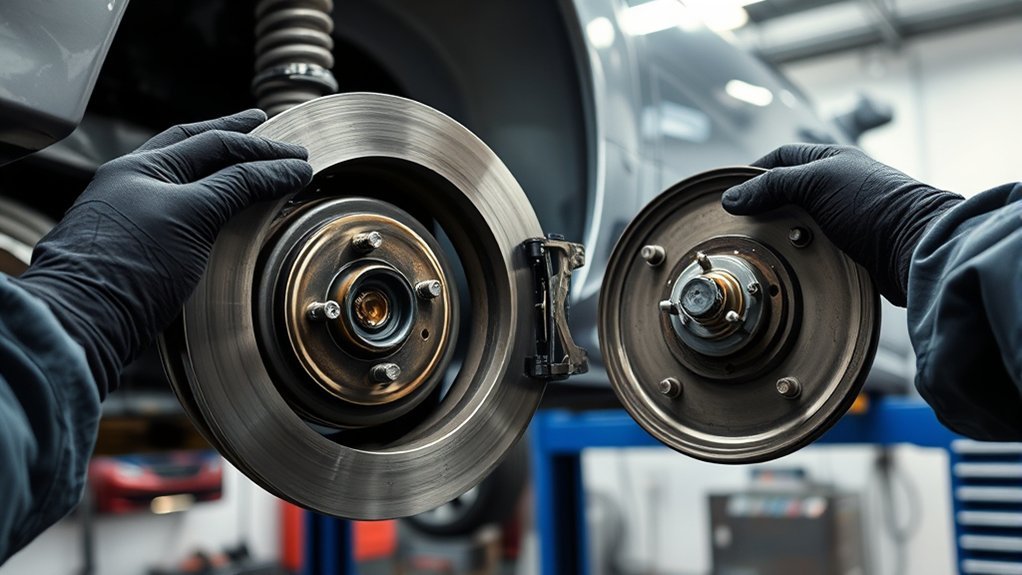
A failing wheel bearing often starts with a low hum, rumble, or growl that changes with vehicle speed. The sound may get louder or quieter during a gentle turn as load shifts from one side of the vehicle to the other. To identify the bad corner, combine that road-test clue with a safe wheel-play check, smoothness check, temperature comparison, and inspection of the hub.
Quick Answer
To tell which wheel bearing is bad, listen for a hum or growl that changes with speed and during gentle turns. Noise that grows louder when turning left often points to the right bearing, and vice versa. Then confirm the suspect corner by checking for hub play, rough rotation, abnormal heat, or bearing noise while the vehicle is safely raised.
Key Takeaways
- A speed-related hum, rumble, or growl is a stronger wheel-bearing clue than ordinary steering-wheel vibration.
- A gentle turning test can help identify the side because the outside wheel carries more load, but the result is not definitive.
- Wheel play can indicate a bearing problem, but ball joints, suspension parts, or loose hardware can also create movement.
- Clicking in sharp turns may come from a wheel bearing, but an outer CV joint is another common possibility.
- Excessive hub heat, grinding, major looseness, smoke, or unstable handling means you should stop driving and arrange an inspection.
At a Glance
| Time Required | About 15–30 minutes for basic road and raised-wheel checks |
| Difficulty | Beginner to intermediate diagnosis; replacement may require professional tools |
| Tools Needed | Wheel chocks, jack, jack stands, gloves, flashlight; optional infrared thermometer, scan tool, or chassis ears |
| Cost | Basic inspection has no parts cost if you already own the tools; repair cost varies by vehicle and bearing design |
Common Bad Wheel Bearing Symptoms
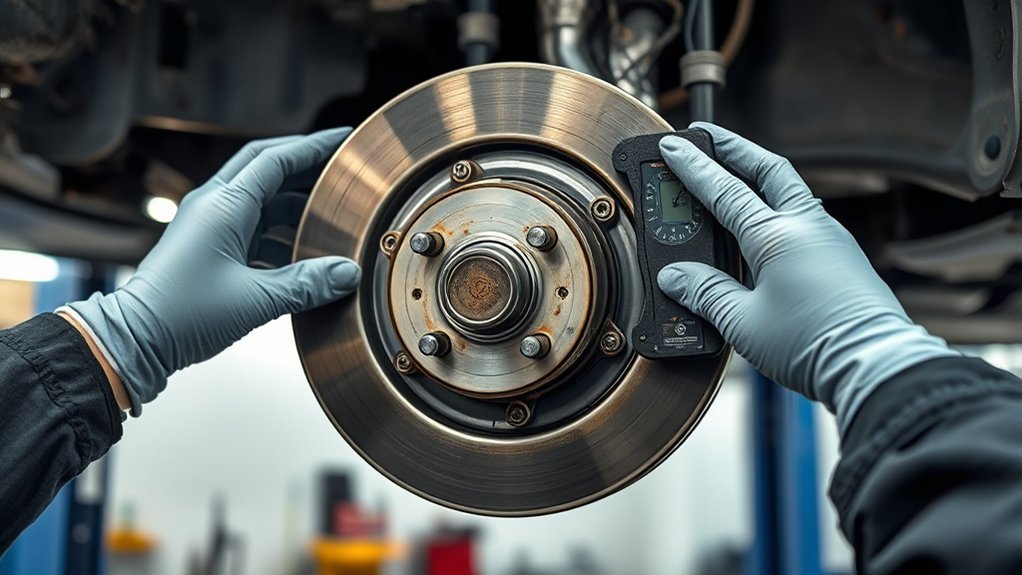
A bad wheel bearing most often produces a humming, rumbling, roaring, or growling sound that follows vehicle speed. Unlike an engine noise, the pitch usually changes as road speed changes rather than engine rpm.
The sound may also change when you make a gentle steering correction or drive through a long curve. That happens because cornering shifts load between the left and right wheel bearings.
Grinding can occur when bearing or wheel-end damage becomes more severe. If you hear grinding together with looseness, rough rotation, or unstable handling, stop treating the problem as a minor noise.
Steering-wheel or body vibration can occur with serious hub damage, but vibration by itself is not a strong wheel-bearing diagnosis. Tire imbalance, an out-of-round tire, worn suspension parts, or wheel damage are often more likely causes of a constant-speed shake.
The same caution applies to uneven tire wear. Extreme bearing looseness can allow enough wheel movement to affect tread wear, but alignment, tire pressure, tire condition, and suspension faults are more common causes.
Clicking, snapping, or popping during a sharp turn also needs careful diagnosis. Excessive bearing endplay is one possibility, but a worn outer CV joint can produce a similar sound.
On vehicles with a wheel-speed sensor integrated into or mounted near the hub, a bearing or hub problem can sometimes contribute to an ABS or traction-control warning. A warning light alone does not prove the bearing has failed.
How to Tell Which Wheel Bearing Failed?
The best way to identify the failed wheel bearing is to combine several clues instead of relying on one symptom. Start with the noise on the road, note how it changes during gentle left and right turns, and then inspect the suspect wheel safely.
Warning: Park on firm, level ground before lifting a vehicle. Chock the wheels that stay on the ground, use the manufacturer-approved lifting points, and support the vehicle with properly rated jack stands. Never crawl under a vehicle supported only by a jack.
Noise and Vibration Clues
Begin on a smooth, quiet road where you can safely maintain a steady speed. A worn bearing often makes a hum, rumble, or growl that becomes faster or louder as vehicle speed increases.
Next, make gentle steering inputs or drive through broad curves without abrupt lane changes. When you turn left, more load normally moves to the right-side wheels. If the bearing noise becomes clearly louder during that left turn, the right bearing is often the first suspect. If it becomes louder during a right turn, the left side is often suspect.
This is a useful clue rather than a guarantee. Bearing noise can travel through the suspension, subframe, and body, making a left-side problem sound as if it comes from the right or rear of the vehicle.
Pro Tip: Concentrate on changes in the noise during gentle loading and unloading rather than trying to identify exactly where the sound seems to come from inside the cabin.
Wheel Play Inspection
After safely raising and supporting the vehicle, grip the tire near the 12 and 6 o’clock positions and gently push and pull. Repeat the check at roughly 3 and 9 o’clock.
Noticeable movement tells you that something in the wheel end needs inspection, but it does not automatically prove the bearing is bad. Ball joints, tie-rod ends, suspension joints, loose fasteners, or other components may create similar movement.
- Check each wheel separately and compare the left and right sides.
- Watch the hub and steering knuckle while an assistant gently rocks the wheel, if this can be done safely.
- Look for movement at suspension joints as well as at the hub.
- Investigate any clearly excessive looseness before driving again.
A badly worn bearing may show obvious hub movement, while an early-stage sealed hub bearing can be noisy even when you cannot feel measurable play by hand.
Spin and Listen to the Wheel
With the vehicle securely supported, rotate the wheel by hand when the vehicle design allows it. Compare both sides for roughness, grinding, scraping, or a coarse feel.
Do not assume that every wheel should spin freely for the same amount of time. Brake-pad contact, parking-brake design, a driven axle, differential drag, or transmission components can affect resistance.
If one hub transmits a noticeably rough growl through the spring or steering knuckle while the opposite side is smooth, that strengthens the bearing diagnosis. Professional technicians may use a mechanic’s stethoscope or electronic chassis ears to isolate the sound.
Compare Wheel-End Temperature
A damaged or incorrectly loaded bearing can generate extra heat. After a short drive with similar braking on both sides, an infrared thermometer can help you compare corresponding wheel-end temperatures.
A substantially hotter corner deserves investigation, but heat is not bearing-specific. A dragging brake caliper, parking-brake problem, or other brake fault can make the same wheel area hot.
Note: Do not touch a brake rotor, caliper, or hub immediately after driving. These parts can become hot enough to cause burns.
Wheel Bearing vs. Tire, CV Joint, Brake, or Suspension Noise
Several faults can sound or feel like a bad wheel bearing. Use the pattern of the symptom to narrow the diagnosis before buying parts.
| Symptom | More Likely Cause | Useful Clue |
| Hum, rumble, or growl that follows road speed and changes during gentle turns | Wheel bearing or tire | Bearing noise often reacts to side loading; tire noise may change more with pavement type |
| Rhythmic vibration strongest at a particular speed | Tire or wheel imbalance | Inspect balance, tread, wheel condition, and runout first |
| Rapid clicking during sharp acceleration while turning | Outer CV joint | Often most obvious in a tight turn under power |
| Scraping that changes when the brake pedal is applied | Brake hardware, pads, rotor, or dust shield | Inspect the brake assembly before blaming the bearing |
| Clunk plus looseness over bumps or during steering | Suspension or steering joint | Inspect ball joints, tie rods, control-arm bushings, and fasteners |
[Products Worth Considering]

Monitor tire tread wear with a smart, color-coded depth gauge that shows clear condition ranges at a glance. The bar is range marked for fast, easy readings, helping you maintain safer traction and performance. Each gauge is portable with a pocket clip, and the set includes 20 units for daily use and sharing.

This universal wheel alignment tool helps you accurately restore tire tilt angles after tire or suspension repairs using an adjustable camber gauge. It features a powerful magnetic base that firmly attaches to brake rotors for stationary, slip-free readings, improving consistency during measurement. Built from durable PC plastic, it resists wear and corrosion and is compact enough for car, truck, RV, and motorcycle alignment tasks.
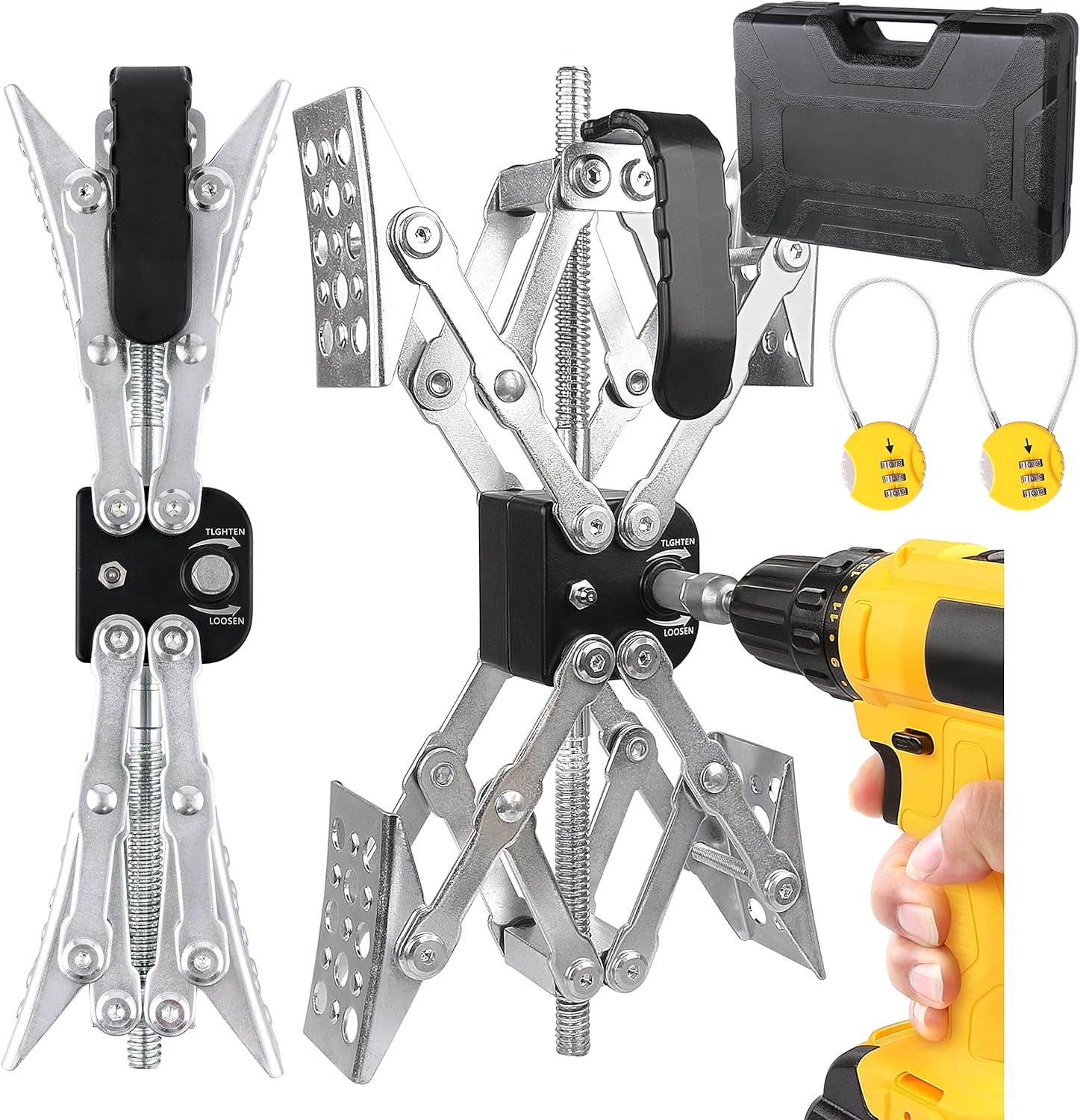
Lock the Maxchock X-style wheel stabilizers between tandem tires to reduce sway and keep your RV travel trailer secure while camping. The adjustable design fits a wide range of wheel gaps, and included hardware lets you install quickly with a power drill. Built from heavy-gauge steel with zinc plating, the chocks include locks and an organizer case for safer, more convenient use.
What Causes Wheel Bearing Failure
Wheel bearings operate under continuous radial and cornering loads while keeping the wheel accurately located. Normal wear eventually occurs, but incorrect installation, impact loads, contamination, damaged seals, and excessive heat can shorten service life.
Bad Installation
Bad installation can damage a new bearing before the vehicle returns to normal service. Wrong axle-nut torque, pressing force through the wrong bearing race, dirt or rust between mating surfaces, damaged retaining hardware, or incorrect fit can create excessive preload, looseness, misalignment, or internal surface damage.
Before fitting a bearing or hub assembly, the mating surfaces should be clean and free of corrosion and debris. Fasteners and axle nuts should be tightened according to the vehicle manufacturer’s procedure and torque specification, not by guesswork.
- Clean the hub, knuckle, and mating surfaces.
- Use the correct bearing or hub for the application.
- Use the proper press or installation tools when required.
- Replace one-time-use retaining hardware when the service procedure calls for it.
- Apply the specified torque with the correct procedure.
- Verify that the wheel rotates normally and that no abnormal play remains.
Correct installation is especially important with modern sealed hub units because the bearing preload and wheel-speed-sensor components may be incorporated into the assembly.
Road Abuse
Hard pothole strikes, curb impacts, collision damage, and other shock loads can damage bearing raceways or deform surrounding wheel-end components. A severe impact can also damage a seal, allowing moisture or road debris to enter.
If you hit a large pothole or curb and a new hum, growl, vibration, or looseness appears afterward, inspect the tire, wheel, alignment, suspension, and bearing rather than assuming one part is responsible.
Water, Dirt, and Seal Damage
Wheel-bearing seals are designed to retain lubricant and keep water and contaminants away from the rolling surfaces. If a seal is damaged or the assembly is installed incorrectly, moisture and debris can contaminate the bearing and accelerate wear.
Corrosion, dirty mounting surfaces, or contamination left behind during installation can also reduce bearing life. Modern sealed hub units normally are not opened and repacked during routine passenger-car service; when an integral sealed bearing fails, the bearing or hub assembly is replaced according to the vehicle design.
Tire Imbalance
Tires that are out of balance commonly produce steering shake or body vibration at certain speeds. That symptom can be mistaken for a bad wheel bearing, so it is important to diagnose the tire and wheel before assuming the hub has failed.
Severe or prolonged abnormal wheel loading is undesirable for the entire wheel-end system, but tire imbalance should not be treated as a leading or automatic cause of bearing failure.
- Check whether vibration appears mainly within a specific speed range.
- Inspect for missing wheel weights, tire damage, cupping, or an out-of-round tire.
- Balance the wheel and tire if needed.
- Recheck the road-speed hum or growl after correcting the tire problem.
If the vibration improves but a speed-related growl remains, confirm bearing noise with the turning and hub-inspection tests.
Is It Safe to Drive on a Bad Bearing?
A confirmed bad wheel bearing should be repaired promptly. The bearing helps locate the wheel and hub while supporting vehicle loads, so severe deterioration can create excessive movement, heat, noise, and unstable wheel-end operation.
Do not continue driving normally if the wheel has obvious looseness, harsh grinding, smoke, extreme heat, unstable steering, or a severe wobble. Arrange professional inspection or transport instead.
An ABS or traction-control warning also deserves diagnosis, particularly if it appears together with bearing noise or hub looseness. However, those warning lights can have many other causes.
A faint bearing hum may begin as a noise complaint, but measurable looseness, grinding, excessive heat, or unstable wheel movement turns it into a safety issue.
Severe wheel-end failures can have serious consequences. For example, safety recalls have documented applications where incorrect bearing adjustment caused excessive heat and a potential wheel-off condition. That does not mean every noisy passenger-car bearing is about to lose a wheel, but it is a good reason not to ignore confirmed bearing damage.
How to Confirm a Bad Wheel Bearing
Use a sequence of checks rather than one symptom. The goal is to make several independent clues point toward the same corner.
- Listen on a smooth road. Note whether a hum, rumble, or growl changes directly with vehicle speed.
- Apply gentle side load. On a safe road, make mild left and right steering inputs and note whether the noise gets louder in one direction.
- Safely raise the suspect wheel. Chock the vehicle and support it with jack stands at approved points.
- Check wheel play. Rock the tire at 12 and 6 o’clock and inspect the hub and suspension for the actual source of movement.
- Rotate the wheel. Compare roughness, grinding, or transmitted bearing noise with the opposite side when the drivetrain and brake design allow a useful comparison.
- Compare temperatures. If appropriate, use an infrared thermometer after a controlled drive, while remembering that brake drag can also create heat.
- Use diagnostic equipment when needed. A technician can use chassis ears, a stethoscope, lift-based testing, runout measurements, or scan-tool wheel-speed data when the result is unclear.
A wheel bearing is much more convincing as the cause when the same corner produces speed-related noise, reacts to side loading, feels rough at the hub, and shows measurable bearing-related movement.
If the evidence conflicts—for example, you have vibration but no bearing noise, no play, and a visibly cupped tire—diagnose the tire or suspension problem first.
[Products Worth Considering]

The 22800 wheel stud installer makes replacing wheel studs quick and secure, saving time and effort during tire service. It uses a ratchet or impact wrench to pull new studs firmly into place, helping when existing studs are too long. Compatible with most automotive wheels and light-duty truck wheel studs, it’s designed for easy, tool-assisted installation.

The Ziopetru adjustable magnetic wheel alignment tool helps you check and restore camber and caster positioning after removing and reinstalling undercarriage components. With a clear leveling/bubble measurement system and an easy zeroing adjustment knob, it supports precise horizontal angle checking. The strong magnetic base mounts to metal surfaces for convenient use at home on cars, motorcycles, trucks, vans, and SUVs.

This professional wheel and rim cleaning brush set lifts brake dust, grime, and dirt with soft, scratch-free microfiber and synthetic wool fibers. The rim brush bends up to 360 degrees for easy access to hard-to-reach areas around spokes, lips, and faces. Ideal for thorough cleaning of car, truck, motorcycle, bicycle, RV, and more wheel and tire surfaces.
Wheel Bearing Repair and Replacement
Once the bearing is confirmed, the repair depends on the vehicle design. Some vehicles use a bolt-on hub assembly containing the bearing and wheel-speed-sensor components. Others use a press-in bearing that requires the hub or steering knuckle to be disassembled and supported with the correct press tools.
Installation accuracy matters as much as the replacement part itself. Dirty mounting surfaces, incorrect pressing force, damaged retaining hardware, misalignment, and improper axle-nut torque can shorten the life of a new bearing.
Replacing the bearing on both sides of the axle is not a universal requirement. If the opposite bearing is quiet, tight, and serviceable, replacement may be limited to the failed corner unless the manufacturer’s procedure, inspection findings, or repair plan calls for both sides.
Repair cost varies widely because access and bearing design differ by vehicle. A bolt-on hub may be relatively straightforward, while a press-in bearing can require substantial disassembly and specialized equipment. Use a vehicle-specific parts and labor estimate rather than a generic price range.
There is also no universal mileage at which every wheel bearing should be replaced. Service life depends on design, vehicle load, road conditions, impacts, contamination, installation quality, and other operating factors. Diagnose bearings by condition and follow any maintenance instructions supplied for your specific vehicle.
[Products Worth Considering]

Secure your trailer or RV tires with a scissor-style wheel chock stabilizer that applies opposing force to help prevent wheel shift. It fits tight wheel gaps from 3.5 inches up to 12 inches and works for travel trailers, campers, fifth wheels, toy haulers, and heavy-duty trucks. The surface uses new electrophoretic technology to help prevent rust for reliable travel use.

Camco’s RV wheel chocks with an attached rope help keep your travel trailer securely in place for safer unhitching or parking. This 2-pack is compatible with wheels up to 26-inch diameter and features durable UV-resistant construction for reliable outdoor performance. The rope enables quick, safe removal so you can prepare for your next trip with less hassle.

This 3-piece wheel brush set makes it easy to clean wheels and tires with soft, scratch-free brushes designed for lifting brake dust and grime. The flexible rim brush bends up to 360 degrees to reach hard-to-access areas for a thorough clean, while the comfortable grip helps control during detailing. A dedicated detailing brush supports gentle cleaning for sensitive surfaces, including interior use.
Sources
- Timken — Symptoms of a Worn Wheel Hub Bearing — diagnostic noise, vibration, tire-wear, CV-joint, and ABS clues.
- Timken — Automotive TechTips Training Resources — hub inspection, bearing replacement, installation, and damage-analysis guidance.
- SKF — Wheel Hub Bearings and Kits — hub design, sealing, contamination control, preload, and wheel-end construction.
- SKF — Don’t Let Summer Wear Lead to Hub Failure — current 2026 guidance on noise, heat, looseness, contamination, and hub wear.
- NHTSA Recall 25V-119 — documented example of incorrect bearing adjustment causing excessive heat and severe wheel-end risk.
Frequently Asked Questions
How Do You Determine Which Wheel Bearing Is Failing?
Listen for a hum or growl that follows road speed, then note how the sound changes during gentle left and right turns. Inspect the suspect wheel for bearing-related play, roughness, abnormal heat, and hub noise. Use several matching clues because tire, brake, CV-joint, and suspension problems can imitate bearing symptoms.
What Can Be Mistaken for a Bad Wheel Bearing?
Cupped or noisy tires, wheel imbalance, an outer CV joint, brake problems, a bent wheel, loose suspension or steering parts, and alignment faults can all resemble a bad bearing. Diagnose the pattern of the noise and inspect the wheel end before replacing parts.
What Is One of the First Signs of Bearing Failure?
A faint humming, rumbling, or growling noise that changes with road speed is one of the most useful early clues. The sound may also change during gentle turns as load shifts between the left and right wheel bearings.
Can I Still Drive With a Bad Wheel Bearing?
A confirmed bad bearing should be repaired promptly. Do not keep driving if you have severe grinding, obvious wheel looseness, smoke, excessive wheel-end heat, unstable steering, or a strong wobble. Those symptoms justify stopping the vehicle and arranging inspection or transport.
If the Noise Gets Louder When Turning Left, Which Bearing Is Bad?
A noise that becomes louder during a gentle left turn often makes the right-side bearing the first suspect because the right wheels carry more cornering load. The opposite applies during a right turn. Do not use this rule by itself, because noise can travel through the vehicle and make the source difficult to locate.
Can a Bad Wheel Bearing Turn On the ABS Light?
Yes, it can on some vehicles. Excessive hub movement, sensor damage, or a problem within an integrated hub and wheel-speed-sensor assembly may affect the ABS signal. However, an ABS warning has many possible causes, so scan the system and inspect the wheel end before replacing the bearing.
Conclusion
A bad wheel bearing is easiest to identify when several clues agree. Start with a speed-related hum or growl, see whether gentle turning changes the sound, then inspect the suspect wheel for bearing-related play, roughness, and abnormal heat. Do not diagnose the bearing from vibration, tire wear, or clicking alone because tires, CV joints, brakes, and suspension parts can create similar symptoms.
If the wheel has obvious looseness, severe grinding, extreme heat, smoke, or unstable movement, stop driving and have the wheel end inspected. Finding the problem early protects the hub and surrounding parts and gives you a much better chance of repairing the actual fault instead of replacing parts by guesswork.