A 16×7 wheel gives you several useful tire-size options, but the wheel size alone cannot tell you which tire is correct for your car. The safest choice is a tire that is approved for a 7-inch rim, stays close to your vehicle’s original rolling diameter, meets its load and speed requirements, and clears the suspension, brakes, and bodywork.
Quick Answer
A 16×7 wheel commonly works with several 195–225 mm passenger-tire widths, but the best size depends on your vehicle’s original tire diameter, load and speed requirements, and clearance. Common starting points include 205/55R16, 215/55R16, and 225/50R16. Always verify the exact tire model’s approved rim-width range before buying.
Key Takeaways
- A tire can fit a 16×7 wheel but still be the wrong size for your vehicle.
- 205/55R16 and 225/50R16 have almost the same calculated overall diameter at about 24.9 inches.
- 215/55R16 and 205/60R16 are taller options and should only be used when their diameter matches the vehicle’s requirements.
- Load index, speed rating, approved rim width, offset, brake clearance, and suspension clearance matter as much as nominal tire width.
- Use the vehicle manufacturer’s recommended cold tire pressure; never change pressure simply to stop rubbing.
At a Glance
| Time Required | About 10–20 minutes for a basic specification and clearance check before purchase |
| Difficulty | Moderate |
| Tools Needed | Vehicle tire placard or owner’s manual, exact tire specification sheet, tape measure, and tire-pressure gauge |
| Cost | Free for the fitment check; mounting, balancing, alignment, or professional test fitting costs extra |
What a 16×7 Wheel Size Means
A 16×7 wheel has a nominal 16-inch bead-seat diameter and is 7 inches wide between the bead seats. The tire’s final number must therefore be 16, as in 205/55R16.
In that example, 205 is the nominal section width in millimeters, 55 is the aspect ratio, and 16 is the wheel diameter. Continental’s tire-size explanation confirms this sizing system.
Note: Nominal tire size does not tell you the exact installed width of every tire. Construction, tread design, and the wheel used for measurement can make two tires with the same printed size measure slightly differently.
Best Tire Sizes for a 16×7 Wheel
For a 16×7 wheel, common passenger-car candidates include 205/55R16, 205/60R16, 215/55R16, and 225/50R16. A 7-inch wheel also falls within commonly published rim-width ranges for many tires in these nominal sizes, but you still need to check the specification sheet for the exact tire you plan to buy.
The important point is that rim compatibility and vehicle compatibility are not the same thing. A tire may mount correctly on a 7-inch wheel but be too tall, too short, too wide, or incorrectly rated for your car.
| Tire Size | Calculated Diameter | General Character | What to Check |
|---|---|---|---|
| 205/55R16 | 24.88 in / 631.9 mm | Balanced width and sidewall | Compare with factory diameter, load index, and speed rating |
| 225/50R16 | 24.86 in / 631.4 mm | Wider tread package with nearly the same calculated diameter as 205/55R16 | Check inner suspension and outer fender clearance |
| 215/55R16 | 25.31 in / 642.9 mm | Slightly taller package | Make sure the extra diameter matches the vehicle’s OE specification |
| 205/60R16 | 25.69 in / 652.4 mm | Tallest of these four options | Check vertical clearance and rolling-diameter suitability carefully |
Do not assume that one of these sizes is automatically close to your OEM diameter. First identify the original tire size on the vehicle’s placard, owner’s manual, or manufacturer fitment information. Then compare the candidate size with that specification.
Continental recommends that replacement tires follow the size, load index, and speed-rating specifications provided by the vehicle or tire manufacturer. Michelin likewise recommends matching the original manufacturer’s specified dimensions and load requirements.
A tire that fits the 7-inch rim is only the first half of the fitment check. It must also fit the vehicle’s diameter, load, speed, and clearance requirements.
[Products Worth Considering]

The 22800 wheel stud installer makes replacing wheel studs quick and secure, saving time and effort during tire service. It uses a ratchet or impact wrench to pull new studs firmly into place, helping when existing studs are too long. Compatible with most automotive wheels and light-duty truck wheel studs, it’s designed for easy, tool-assisted installation.

This professional wheel and rim cleaning brush set lifts brake dust, grime, and dirt with soft, scratch-free microfiber and synthetic wool fibers. The rim brush bends up to 360 degrees for easy access to hard-to-reach areas around spokes, lips, and faces. Ideal for thorough cleaning of car, truck, motorcycle, bicycle, RV, and more wheel and tire surfaces.

This 3-piece wheel brush set makes it easy to clean wheels and tires with soft, scratch-free brushes designed for lifting brake dust and grime. The flexible rim brush bends up to 360 degrees to reach hard-to-access areas for a thorough clean, while the comfortable grip helps control during detailing. A dedicated detailing brush supports gentle cleaning for sensitive surfaces, including interior use.
How to Compare Overall Tire Diameter
Overall diameter affects more than appearance. A meaningful change in rolling circumference can alter the relationship between actual vehicle speed and the speedometer reading and may also affect gearing, ABS, stability-control operation, and available suspension clearance.
For example, 205/55R16 and 225/50R16 are almost identical in calculated diameter. By comparison, 205/60R16 is roughly 0.8 inch taller than 205/55R16. That difference may be perfectly correct for a vehicle designed around the taller tire, but it should not be treated as universally interchangeable.
Pro Tip: Start with the tire size printed on your vehicle’s Tire and Loading Information label. Use that as the baseline instead of comparing every alternative with an arbitrary “standard” 16-inch tire.
If your vehicle is AWD or uses a sensitive full-time four-wheel-drive system, follow the owner’s manual closely. Some drivetrains require the tires to remain closely matched in size and circumference across all four positions.
How Tire Width Affects Ride and Grip
Tire width changes the shape of the tire and contact patch, but width alone does not determine ride quality or grip. Compound, tread design, carcass stiffness, aspect ratio, inflation pressure, wheel width, alignment, temperature, and vehicle weight all affect how the tire behaves.
On a 16×7 wheel, a 205 tire normally has less nominal section width than a 215 or 225. A wider tire may provide performance benefits when the vehicle, tire construction, and wheel support are designed for it, but simply installing the widest tire that mounts on the wheel does not guarantee better handling.
| Width | Ride | Grip |
|---|---|---|
| Narrow | Depends strongly on aspect ratio and construction | Not automatically lower |
| Mid | Often a balanced choice when matched to the vehicle | Predictable with correct tire design |
| Wide | May add sidewall bulge on the same rim | May improve some dry-performance characteristics when properly matched |
| Excessive | Can reduce sidewall support | Can make response less consistent |
| Matched | Controlled | Predictable |
You will usually get the most consistent result when the tire manufacturer approves the tire for the wheel width and the size also matches the vehicle’s requirements.
Best Tire Sizes for Daily Driving
For everyday use, prioritize predictable steering, ride quality, wet traction, correct load capacity, and even wear rather than choosing a tire only because it looks wide on the wheel.
Depending on the vehicle’s original specification, 205/55R16, 205/60R16, and 215/55R16 can all be practical 16×7 choices. A 205-width tire often gives the 7-inch rim good sidewall support in many passenger-tire designs. A 215 adds some nominal width while remaining a common match for 7-inch wheels.
A 225/50R16 can also be useful when the vehicle has enough inner and outer clearance. Its calculated diameter is almost identical to 205/55R16, but its extra nominal width means you need to inspect suspension and fender space more carefully.
Before ordering, verify the tire’s service description. The load index tells you how much load the tire is designed to carry under its rated conditions, and the speed symbol indicates its tested speed capability. Michelin’s load and speed-rating guidance recommends matching the vehicle manufacturer’s requirements when replacing tires.
For commuting, the tire model itself matters as much as its dimensions. Compare wet braking, road noise, tread life, temperature capability, and the type of driving you actually do instead of assuming one width automatically rides or grips better.
[Products Worth Considering]
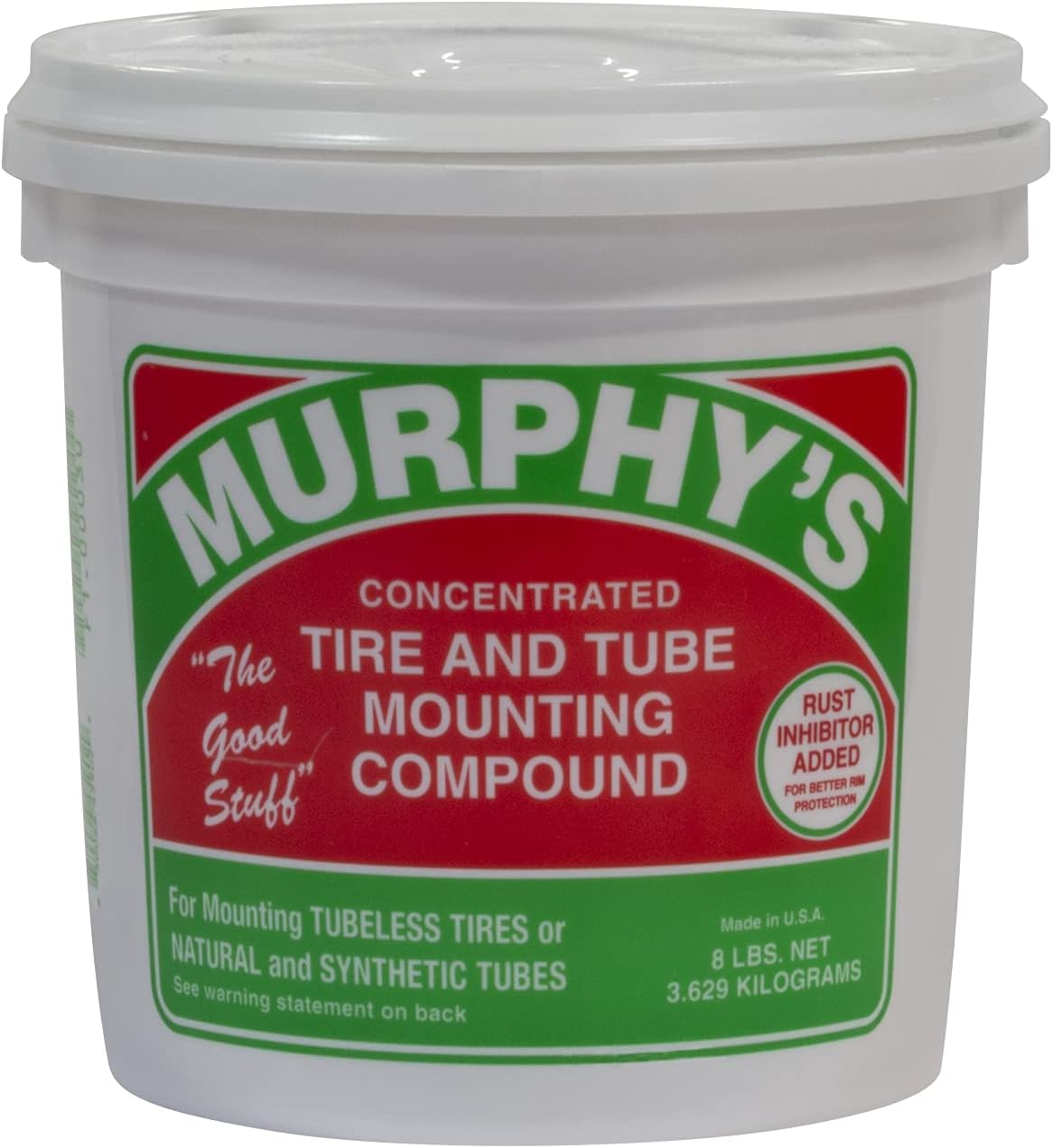
A concentrated tire and tube mounting compound designed to help simplify mounting rubber tires and tubes on passenger, semi truck, construction, and OTR applications. Its ultra-thick formula packs beads effectively and includes rust inhibitors to help protect against corrosion during use.

This metal-free wheel and tire cleaning brush uses dense, fluffy synthetic wool to safely clean rims, spokes, fenders, and engine areas without worrying about damaging surfaces. Its flexible, comfortable design helps you reach detailed areas while maintaining durability, and the extra absorbent fibers work well with wheel spray cleaners for faster cleanup. Reusable and washable performance helps prevent grime and build-up for cleaner vehicles and easier maintenance at home.

The Ziopetru adjustable magnetic wheel alignment tool helps you check and restore camber and caster positioning after removing and reinstalling undercarriage components. With a clear leveling/bubble measurement system and an easy zeroing adjustment knob, it supports precise horizontal angle checking. The strong magnetic base mounts to metal surfaces for convenient use at home on cars, motorcycles, trucks, vans, and SUVs.
Stretched and Aggressive Fitments
If you are considering a stretched or aggressive look on a 16×7 wheel, sizes such as 195/45R16, 205/45R16, and 215/40R16 appear in common wheel-width compatibility ranges that include a 7-inch wheel. That does not mean they are correct replacements for every vehicle.
These sizes are significantly shorter than the taller daily-driving options discussed above:
- 195/45R16: about 22.91 inches calculated overall diameter
- 205/45R16: about 23.26 inches calculated overall diameter
- 215/40R16: about 22.77 inches calculated overall diameter
The shorter sidewall can change steering feel and reduces the amount of tire between the wheel and potholes or road impacts. The much smaller rolling diameter can also be unsuitable for a vehicle originally designed around a taller tire.
Warning: Do not choose a very short tire only to create stretch or expose more wheel lip. Confirm the exact tire manufacturer’s rim-width approval, the vehicle’s required diameter and load rating, and full suspension clearance. A tire that can be mounted on the wheel can still be wrong for the car.
You may notice a firmer and more immediate feel from a shorter sidewall, but tire construction still plays a major role. Keep in mind that the goal of this type of setup is usually appearance and response rather than maximum ride comfort.
[Products Worth Considering]
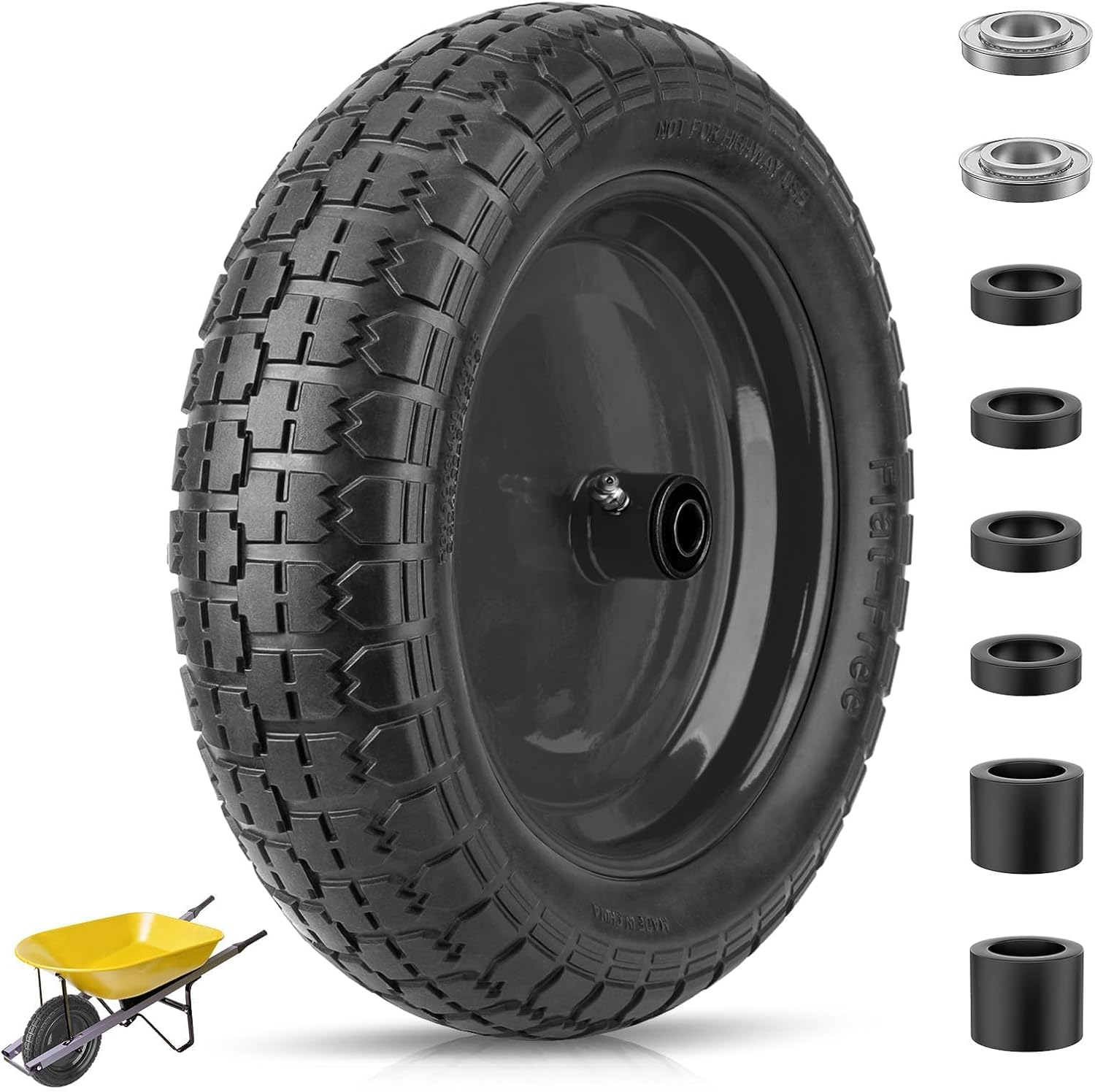
This flat-free TICONN wheelbarrow tire features durable polyurethane foam construction that never needs inflation, helping prevent punctures and reducing maintenance on rough outdoor terrain. With a 300 lb max load capacity and stable steel rim design, it supports safer transport for yard work and hauling tasks. An adapter kit with ball bearings and nylon spacers is included for easier fit and customization across common wheelbarrow and cart axle setups.

This universal wheel alignment tool helps you accurately restore tire tilt angles after tire or suspension repairs using an adjustable camber gauge. It features a powerful magnetic base that firmly attaches to brake rotors for stationary, slip-free readings, improving consistency during measurement. Built from durable PC plastic, it resists wear and corrosion and is compact enough for car, truck, RV, and motorcycle alignment tasks.
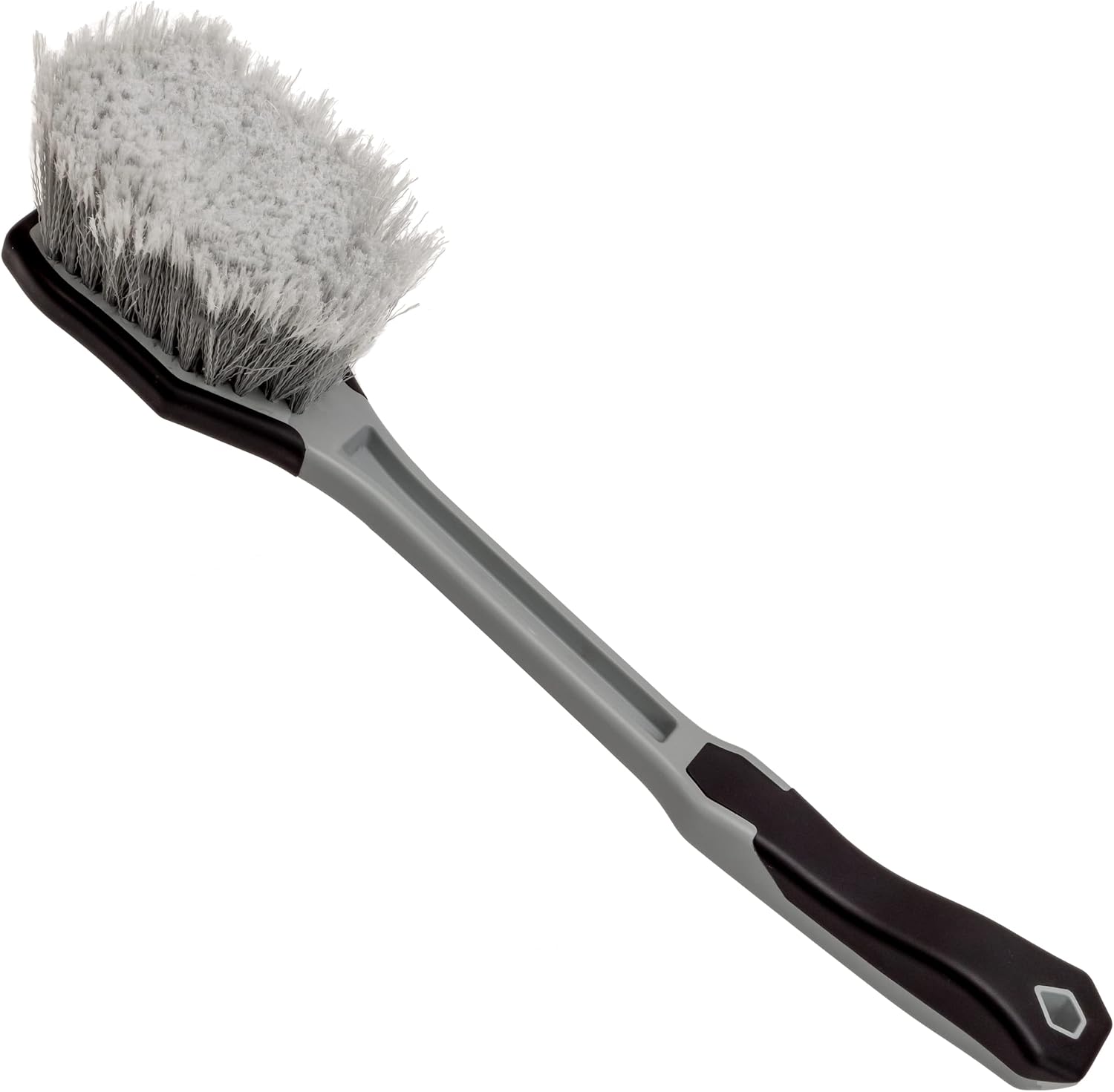
Clean grills, fenders, fender flares, bumpers, and wheel wells with a long-handled brush built for detailed car washing. The soft, triple-flagged bristles and dense scrub coverage help lift dirt gently while making coverage fast and easy. Use it with your favorite car wash soap for tires and exterior surfaces, and it also works for bike, motorcycle, boat, or RV cleaning.
How to Check Fitment and Avoid Rubbing
Once you have a candidate tire size, check the vehicle in a consistent order instead of relying on width alone.
- Confirm the factory tire specification. Check the driver-door Tire and Loading Information label, owner’s manual, or vehicle manufacturer information.
- Check the exact tire model’s approved rim-width range. Do not assume every tire with the same nominal size has identical specifications.
- Compare overall diameter. Make sure the new rolling size is appropriate for the vehicle.
- Check load index and speed rating. The replacement tire should satisfy the vehicle manufacturer’s requirements.
- Confirm wheel offset and backspacing. Offset determines where the wheel and tire sit relative to the strut, suspension, and fender.
- Inspect static clearance. Turn the steering from lock to lock and inspect the inner liner, strut, control arms, sway-bar area, brake components, and fender lip.
- Check suspension compression. Clearance must remain adequate when the car carries passengers or cargo and when the suspension compresses over bumps and driveways.
- Recheck after alignment or suspension changes. Camber, toe, ride height, and replacement suspension parts can change available clearance.
A wheel and tire that clears while the vehicle is lifted may rub once the suspension carries the vehicle’s full weight. Full steering lock can also reveal interference that is not visible with the wheels pointed straight.
Use the vehicle manufacturer’s recommended cold inflation pressure. Do not underinflate or overinflate the tire in an attempt to change its shape enough to stop rubbing.
If contact occurs, first verify that the wheel offset and tire size are appropriate. A correctly sized narrower tire or a wheel with the proper offset is generally a better solution than trying to force an unsuitable combination with extreme camber, incorrect pressure, or body modifications.
Frequently Asked Questions
What Tire Pressure Works Best on a 16×7 Wheel?
Wheel width does not determine the correct tire pressure. Start with the cold pressure listed by the vehicle manufacturer on the Tire and Loading Information label or in the owner’s manual. NHTSA specifically advises using the vehicle manufacturer’s pressure rather than the maximum pressure printed on the tire sidewall.
Does 205/55R16 Fit a 16×7 Wheel?
A 205/55R16 is commonly compatible with a 7-inch wheel in many tire lines, making it a popular starting point. You must still check the exact tire model’s approved rim-width specification and confirm that its diameter, load index, speed rating, and clearance suit your vehicle.
Is a 225 Tire Too Wide for a 7-Inch Wheel?
Not necessarily. Sizes such as 225/50R16 and 225/45R16 are commonly listed with approved rim-width ranges that can include 7 inches. However, the wider tire also needs enough suspension and fender clearance, and the exact tire manufacturer’s specification always takes priority.
Do Winter Tires Fit Well on a 16×7 Wheel?
Yes, winter tires can work well on a 16×7 wheel when the selected tire is approved for a 7-inch rim and meets the vehicle’s size, load, speed, and clearance requirements. Choose a dedicated winter model based on the weather you actually encounter rather than changing width solely because the wheel is 7 inches wide.
How Do I Choose a 16×7 Wheel for Track Use?
Choose a wheel with the correct bolt pattern, center bore, offset, load capability, brake clearance, and construction for your vehicle. Then choose a tire model and size approved for the wheel and appropriate for track temperatures and loads. Check the tire and vehicle manufacturer’s track-use guidance before driving at speed.
Can I Use a 16×7 Wheel With Wheel Spacers?
You can use spacers only when the vehicle, wheel, spacer, and fastening system are compatible. A spacer changes effective wheel offset and therefore changes inner and outer clearance. Use properly engineered hardware, maintain adequate fastener engagement, follow the specified torque procedure, and have the installation checked if you are unsure.
What Bolt Pattern Fits a 16×7 Wheel?
There is no universal bolt pattern for a 16×7 wheel. The “16×7” designation only describes diameter and width. You still need the bolt pattern, center bore, offset, lug-seat design, and load rating required by your specific vehicle.
Conclusion
A 16×7 wheel can work with several tire sizes, including the original article’s 205/50R16, 215/45R16, and 225/45R16 options as well as common choices such as 205/55R16, 215/55R16, and 225/50R16. The important difference is that these sizes do not all have the same overall diameter.
For a balanced daily setup, start with the vehicle’s factory tire specification and choose a tire approved for the 7-inch wheel that closely matches the required dimensions and service ratings. If you want a wider or lower-profile setup, verify the actual tire specifications and available clearance instead of assuming that wider automatically means sharper handling.
Check offset, brake clearance, suspension travel, steering-lock clearance, load index, speed rating, and manufacturer-recommended tire pressure before buying. A proper fit should work safely through the vehicle’s full range of steering, load, and suspension movement—not just look correct while parked.
Sources
- NHTSA TireWise — vehicle tire-pressure, placard, load, and tire-safety guidance
- Continental Tire Size Guide — replacement tire size, load index, and speed-rating guidance
- Michelin Load Rating and Speed Rating Guide — replacement-tire load and service-rating guidance
- Michelin Changing Tire Size Guide — manufacturer guidance on changing replacement tire dimensions
- Yokohama Tire Pressure Guide — proper cold inflation and vehicle-manufacturer pressure guidance