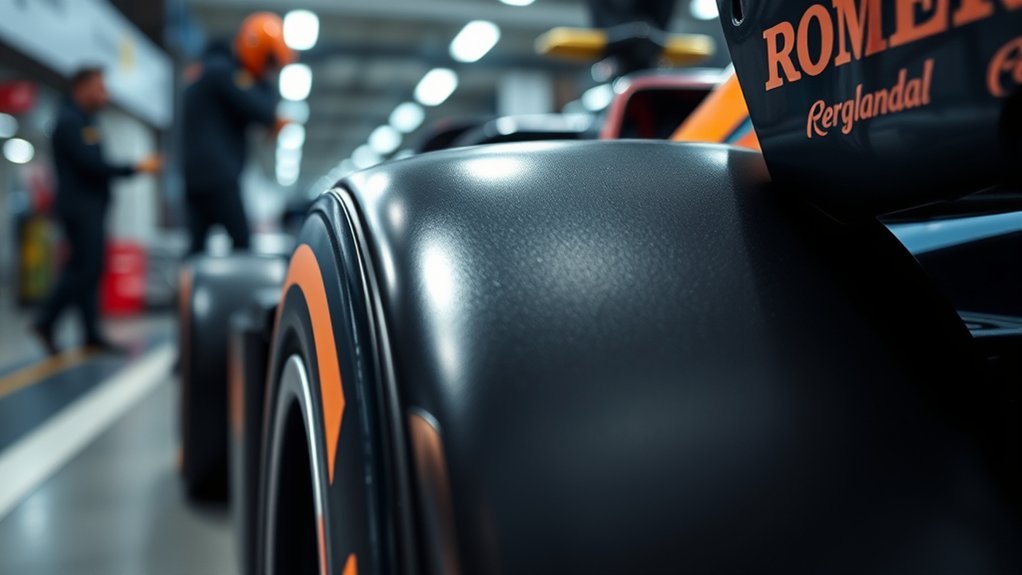
F1 tires can look unusually smooth and shiny when a fresh set goes onto the car, but the gloss is not mainly caused by heat, tire oil, or track rubber. The distinctive factory sheen comes primarily from Pirelli’s manufacturing process. Since 2019, chrome-treated moulds have been used to produce a cleaner tread surface and reduce imperfections when sticky racing compounds are removed from the mould.
Quick Answer
F1 tires look shiny when new mainly because Pirelli uses chrome-treated moulds during manufacturing. The smoother mould surface helps sticky racing compounds release cleanly and reduces tread imperfections. The gloss is not tire dressing and does not provide extra grip. Once the contact surface runs on the track, the fresh shine quickly wears away.
Key Takeaways
- The characteristic shine on a fresh F1 tire mainly comes from the chrome-treated mould used during production.
- Pirelli introduced the process to help sticky racing compounds release from the mould with fewer surface imperfections.
- The glossy factory finish does not mean the tire has more or less grip.
- Track contact normally removes the shine from the loaded part of the tread, while lightly used areas can remain glossy.
- Heat, rubber pickup, wear, and debris change the surface after running, but they should not be confused with the original factory sheen.
Why F1 Tires Look Glossy
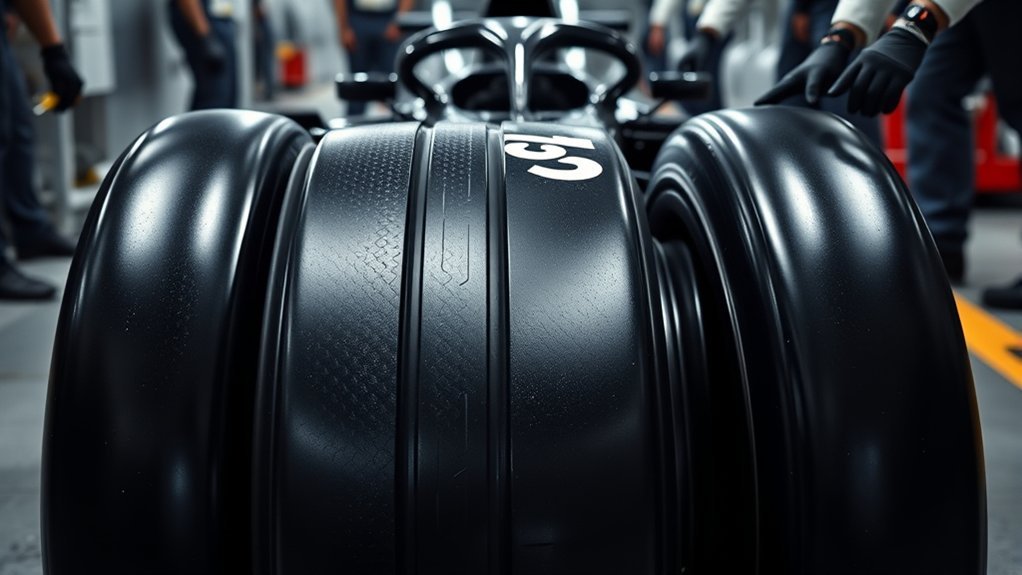
The best explanation comes directly from Pirelli. When the noticeably shinier tire finish appeared in Formula 1 in 2019, Pirelli Racing Manager Mario Isola explained that the company had moved to moulds with a chrome treatment.
The change was functional rather than cosmetic. Formula 1’s softer racing compounds can be very sticky during vulcanization. With the older moulding process, that adhesion could make a tire harder to remove cleanly and could leave small imperfections on the tread surface. The chrome-treated mould provides a cleaner release and a smoother finished surface.
That smooth surface reflects light more evenly, especially under bright garage, pit-lane, or television lighting. The result is the glossy black appearance you notice on a fresh tire.
Pro Tip: Look across the tread after a short run. The part that has contacted the asphalt normally loses its fresh gloss, while an outer edge that received little contact may still look shiny. That makes the difference between manufacturing finish and track wear easier to see.
How Tire Compounds Affect the Surface
F1 tire compounds still matter to the appearance of the surface, but not in the way the original “oil blooming creates the shine” explanation suggests. Racing compounds are engineered for grip, deformation, heat management, consistency, and controlled wear. Their softness and tackiness are also part of the reason Pirelli adopted a mould treatment that allows the finished tire to release more cleanly.
[Products Worth Considering]

Adam’s Pro Tire Hex Grip applicators are molded foam sponges designed for precise, even tire dressing application. The ergonomic grip helps you spread product without overapplying, reducing sling that can splash onto paint and helping keep your hands clean during wheel and trim detailing. They’re durable, washable, and reusable for repeated detailing sessions.

Black Magic Tire Wet delivers a wet, black, glossy finish with just one quick spray. Its weather and rinse-resistant formula helps maintain shine for weeks, not days, and dries quickly to reduce sling. A self-healing formula fills small scuffs to defend the look, leaving no white, powdery residue.

Formula 1 Tire Wax restores dull tires to a rich black look while helping protect against UV damage. Its thick, long-lasting water-resistant gel delivers a high-gloss shine that resists rain and washing. A foam applicator is included for easy, controlled application, and it can also refresh vinyl, rubber, and plastic trim.
Compound Ingredients
A Formula 1 tire is made from a carefully engineered combination of rubber and other reinforcing and performance materials. Pirelli does not publish the complete recipe for each racing compound, and the exact formulation varies with tire generation and compound.
What matters for the shiny appearance is that the finished tread can be extremely smooth when it leaves the production mould. Softer compounds can also be particularly adhesive during manufacturing, which is why the mould-release quality matters.
Compound choice affects how quickly a tire warms, deforms, grips, and wears once it reaches the track, but you should not read the level of visible gloss as a direct measurement of any one ingredient.
Surface Blooming
Rubber products can sometimes develop a surface film when certain waxes or other low-molecular-weight ingredients migrate through the material. This general phenomenon is often called blooming.
However, that should not be presented as the established reason modern Formula 1 tires have their recognizable fresh glossy finish. For F1, Pirelli’s documented explanation points to the chrome-treated production mould.
A visible film on another type of rubber product may have several causes, but a new F1 tire’s smooth factory sheen should first be understood as a manufacturing-surface effect.
Note: “Shiny” does not automatically mean oily, wet, contaminated, or overheated. Several very different surface conditions can reflect light, so appearance alone is not enough to judge a racing tire’s condition.
What Heat Does to the Tire Surface
Heat has a major effect on how an F1 tire performs, but it is not the main source of the fresh factory shine. As a tire warms on track, its rubber becomes more responsive to the loads generated during braking, acceleration, and cornering.
- Temperature changes how readily the compound deforms.
- Track contact scrubs away the original glossy surface finish.
- Sliding can increase surface wear and temperature.
- Rubber pickup and debris can make the tread look rough or uneven.
The important distinction is that temperature affects tire performance, while the pronounced gloss seen on a fresh tire is primarily related to manufacturing.
Why Heat Changes the Tire Surface
Once the car is running, tire temperature becomes critical because an F1 compound is designed to work within an appropriate temperature range. A tire that is too cold may not generate the desired grip and can slide more easily. Excessive temperature can accelerate degradation and damage the surface.
Repeated braking, acceleration, cornering, carcass flex, and contact with the asphalt all put energy into the tire. That changes the tread’s texture over a stint.
This is why a used racing tire can look dramatically different from a fresh one. The used surface may become duller, rougher, torn, grainy, or covered with picked-up rubber. Those changes tell you far more about what happened on track than the original glossy manufacturing finish does.
There is no single visible level of shine that tells a team whether a tire is at the correct temperature. Teams rely on tire data, vehicle telemetry, lap times, track conditions, and driver feedback rather than treating gloss as a thermometer.
How Track Rubber and Debris Affect Tires
After the fresh tread contacts the circuit, the surface begins interacting with asphalt, deposited rubber, dust, and loose pieces of tire known informally as marbles. These materials can change both the appearance and behavior of the tread.
This track-created surface should not be confused with the shine seen on a brand-new tire. One comes from manufacturing; the other develops through use.
Track Rubber Pickup
Soft racing tires can pick up rubber from the circuit, particularly when a car drives across areas containing loose rubber. The material can stick to the hot tread and create an irregular layer on top of the tire.
Pickup varies with tire temperature, track condition, compound, load, and where the driver places the car. A tire that has collected significant rubber can look lumpy or rough when the car returns to the pits.
- Fresh tread starts with a smooth moulded surface.
- Normal track contact removes the original gloss from the working area.
- Loose rubber can then stick to the hot tread.
- The resulting surface may look much rougher than the unused shoulder.
Debris and Grip Loss
Loose marbles, dirt, and other contamination can reduce consistency because the tire is no longer contacting a clean section of asphalt in the same way. That is one reason F1 drivers generally prefer the established racing line when grip conditions are stable.
Driving onto heavily contaminated parts of the circuit can produce wheelspin, understeer, oversteer, or a temporary loss of confidence until the tires clean up again.
Rubber pickup can also create vibration or change the feel of the car. Teams therefore look at the whole tire surface after a run rather than simply judging whether it appears shiny.
How Tire Wear Changes the Finish
Tire wear normally makes the working tread look less like the perfectly smooth surface you see on a fresh set. As the tire runs, microscopic and visible changes develop from friction, sliding, load, heat, and rubber transfer.
- Track contact removes the smooth factory sheen.
- Normal abrasion changes the surface texture.
- Sliding can tear or overheat the tread.
- Rubber pickup can leave rough deposits on the surface.
- Areas that receive little contact may retain some original gloss.
This last point explains an appearance that can look strange in pit-lane photographs: part of the tire may be dull and clearly used while another strip still looks shiny. Pirelli has specifically noted that lightly used outer areas can retain the glossy surface because they have not been scrubbed by the track.
That visual difference is mostly evidence of where the surface contacted the asphalt. It is not proof that the shiny portion contains more oil or has more grip.
Does a Shiny F1 Tire Mean More Grip?
No. A shiny F1 tire does not automatically have more grip, and the fresh manufacturing sheen does not automatically have less grip either.
When Pirelli introduced the more visibly glossy finish, Mario Isola said it would not change grip as the car left the pit lane. The surface appearance was a consequence of the improved moulding process rather than a new performance coating.
Actual grip depends on factors such as compound selection, tire temperature, pressure, load, track surface, weather, degradation, and contamination.
Note: A glossy factory surface is different from contamination. Oil, fluid, dirt, or other foreign material on a racing tire could affect grip, but that is not what causes the normal shiny appearance of a fresh Pirelli F1 tire.
What Changed for F1 Tires in 2026?
Formula 1 introduced a new tire specification alongside the major 2026 car regulations. According to Pirelli’s official 2026 tire announcement, the wheel rim remains 18 inches, but the tires are smaller than the 2025 versions.
The front tread is 25 mm narrower and the rear tread is 30 mm narrower. Overall diameter is also reduced by 15 mm at the front and 10 mm at the rear.
The 2026 dry range contains five compounds from C1, the hardest, through C5, the softest. Pirelli selects three of those slick compounds for each Grand Prix. They are identified for the weekend as white Hard, yellow Medium, and red Soft. Green identifies the Intermediate and blue identifies the Full Wet.
For 2026, Formula 1 uses five Pirelli slick compounds from C1 to C5, while the familiar 18-inch rim size remains in place.
You can see the current compound system and allocations in Formula 1’s official tire guide.
[Products Worth Considering]

P&S Dressed Tire Finish is a premium, water-based tire dressing that delivers a deep, rich high-gloss look without the greasy residue. Its polymer blend is designed to mimic the durability and shine of traditional solvent-based dressings while staying non-hazardous and eco-friendly. Apply with a brush or spray bottle for even coverage and a professional, factory-fresh finish.

The Continental Grand Prix 5000 is an allround road bike tire engineered for faster rolling, improved ride comfort, and enhanced puncture protection. It features a Vectran Breaker cut-protection layer, Lazer Grip micro-profile tread for confident cornering control, and Active Comfort Technology to damp vibration for smoother rides. BlackChili compound optimizes grip and speed for everyday performance and long-lasting confidence.

Restore faded, dull tires to a rich black satin finish in minutes with a spray-on, wipe-off formula. Graphene and acrylic polymers create a durable, sling-free coating that resists water and dirt while helping prevent UV-related fading and cracking. Build your preferred look by applying additional layers for sleek satin to showroom gloss.
How Teams Keep Tires in the Right Window
Although the factory shine is mostly cosmetic from a performance standpoint, temperature management is anything but cosmetic. Teams work to keep each tire in a useful operating range throughout qualifying and race stints.
That process begins before the car reaches full speed and continues through setup choices and driver management.
- Tire warmers help prepare tires before they go onto the track.
- Teams follow Pirelli’s prescribed pressure requirements.
- Suspension geometry influences how load is distributed across the tire.
- Drivers manage warm-up, sliding, braking, and pace to control tire energy.
- Engineers compare telemetry, lap time, conditions, and driver feedback throughout a stint.
A tire that is too cold can slide before it produces the desired grip. A tire that becomes too hot can degrade more quickly. The goal is therefore controlled and repeatable performance rather than simply creating as much heat as possible.
This is also why visual gloss is a poor performance indicator. A freshly fitted tire can be extremely shiny and work normally, while a dull-looking used tire might still be performing well or might already be heavily degraded.
[Products Worth Considering]
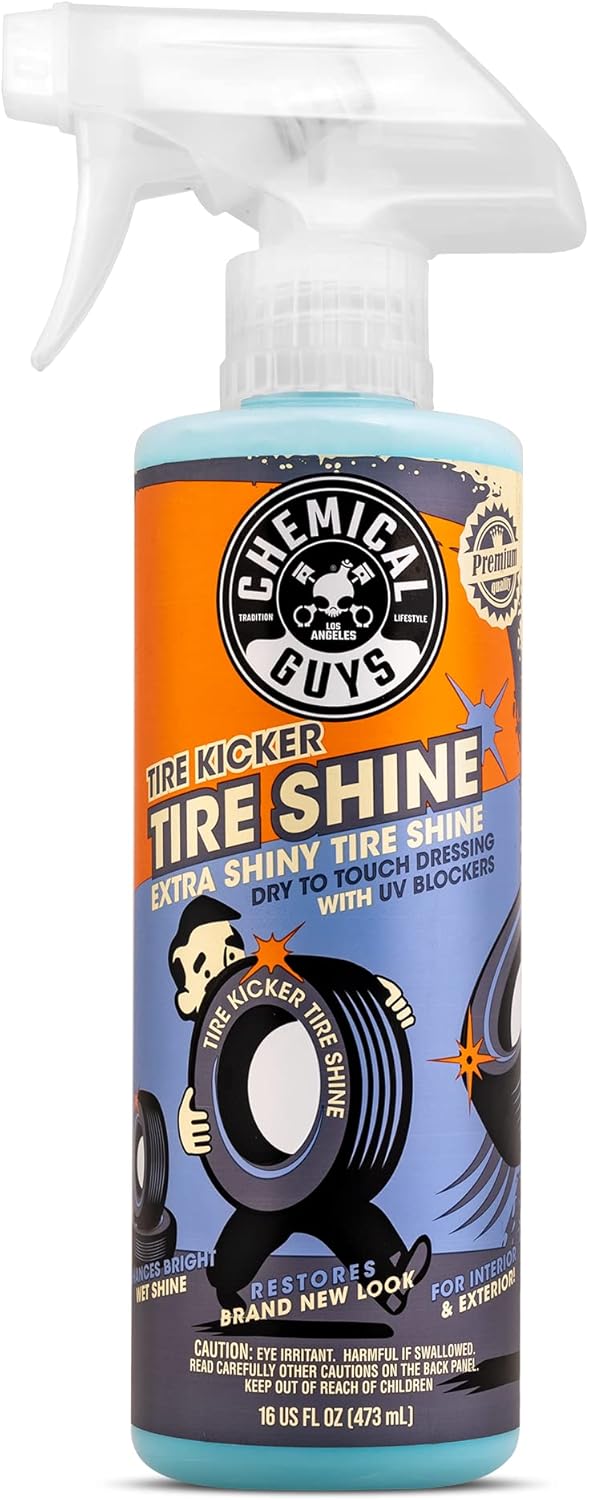
Chemical Guys Tire Kicker Sprayable Extra Glossy Tire Shine restores a deep, wet look on tires, rubber, vinyl, and plastic trim. It delivers a rich showroom shine that enhances color and luster while helping protect against fading, cracking, and discoloration. The spray application dries to the touch with a streak-free finish and no greasy sling, for fast results on cars, trucks, motorcycles, RVs, and boats.
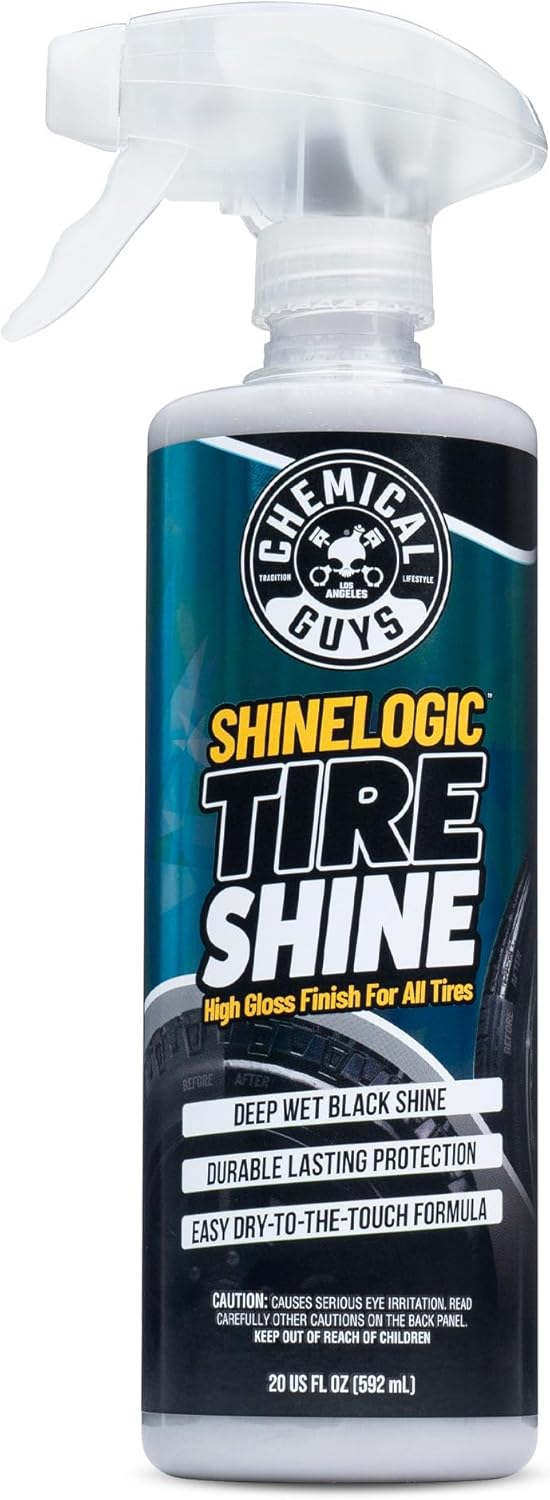
Chemical Guys ShineLogic Tire Shine delivers a deep wet black, high-shine finish for rubber tires with a sleek look. It’s designed for durable, one-step application with minimal drips, streaks, or runs, and it helps produce effortless, long-lasting shine. Choose aerosol or trigger spray for easy use on cars, trucks, motorcycles, RVs, and more.

Rubber Care delivers a beautiful dark black satin/matte finish on tires and other rubber or plastic surfaces, drying to the touch without oily shine. Its ceramic aircraft-grade formula helps repel dirt and brake dust residue, keeping surfaces cleaner longer. Triple nano ceramic polymer technology provides best-in-industry UV protection, restoring and protecting rubber while also working on weather stripping and de-ice boot care.
Frequently Asked Questions
How Often Are F1 Tires Replaced During a Race?
It depends on strategy, degradation, weather, safety cars, and the circuit. In a dry Grand Prix, drivers normally must use at least two different slick compounds, so a tire change is required to satisfy that rule. Teams may make additional stops when performance or race circumstances make them worthwhile.
Do Wet-Weather Tires Look Shiny Too?
A new intermediate or full-wet tire can also have a smooth, reflective moulded surface. However, its grooves break up the surface visually, so the effect may look different from the broad, uninterrupted tread face of a dry slick.
Why Are F1 Tires Black Instead of Colored?
Modern tire compounds contain carbon black and other carefully selected materials. Pirelli explains that carbon black is used in rubber compounds to help optimize properties such as stability, strength, and durability. The compound itself therefore remains black, while colored sidewall markings identify the tire type.
Can Tire Shine Affect Qualifying Performance?
The normal factory shine on a fresh F1 tire does not by itself hurt qualifying performance. Pirelli said the glossy surface created by its moulding process does not change grip when the tire first runs. Temperature, pressure, compound choice, track conditions, and contamination are much more important.
How Are F1 Tires Transported to Each Circuit?
Pirelli manages the supply of Formula 1 tires to Grand Prix events as the championship’s exclusive tire supplier. F1’s international logistics use different freight methods depending on the region and event, so it is more accurate to say that routing varies than to claim every tire follows one universal air-, sea-, or truck-transport sequence.
Why Does a Used F1 Tire Lose Its Shine?
The asphalt scrubs the smooth factory finish from the part of the tread that actually carries load. That is why a used contact area usually looks duller or rougher. Sections that receive little track contact can retain their original glossy appearance for longer.
Is the Shine on an F1 Tire Wax or Tire Dressing?
No. The characteristic shine seen on a fresh race tire is not ordinary consumer tire dressing. Pirelli’s documented explanation is the smooth surface produced by its chrome-treated manufacturing moulds.
Conclusion
So, why do F1 tires look so shiny? The main reason is the way Pirelli manufactures them. Chrome-treated moulds create a smooth tread surface while helping sticky racing compounds release cleanly without unwanted imperfections. That smooth factory surface reflects light and gives a new tire its distinctive gloss.
Once the car runs, asphalt begins scrubbing the finish away. Heat, wear, rubber pickup, debris, and sliding then change the tire’s appearance further. None of this means you can judge grip simply by looking for shine. A glossy fresh tire can work normally, and a dull used tire may be anywhere from healthy to heavily degraded depending on its temperature, condition, and history.
Sources
- Autosport — Pirelli explains the shiny F1 tire finish — direct comments from Pirelli Racing Manager Mario Isola on chrome-treated moulds, surface imperfections, and grip.
- Formula 1 — Beginner’s Guide to F1 Tires — current 2026 compounds, allocations, colors, dimensions, and dry-race compound requirements.
- Pirelli — 2026 F1 Tire Range — official 2026 tire dimensions, compounds, and markings.
- Pirelli Motorsport — Formula 1 — current official information about Pirelli’s Formula 1 tire range.
- Pirelli — Tire Materials and Carbon Black — explains the role of carbon black in rubber compounds, including stability, strength, and durability.