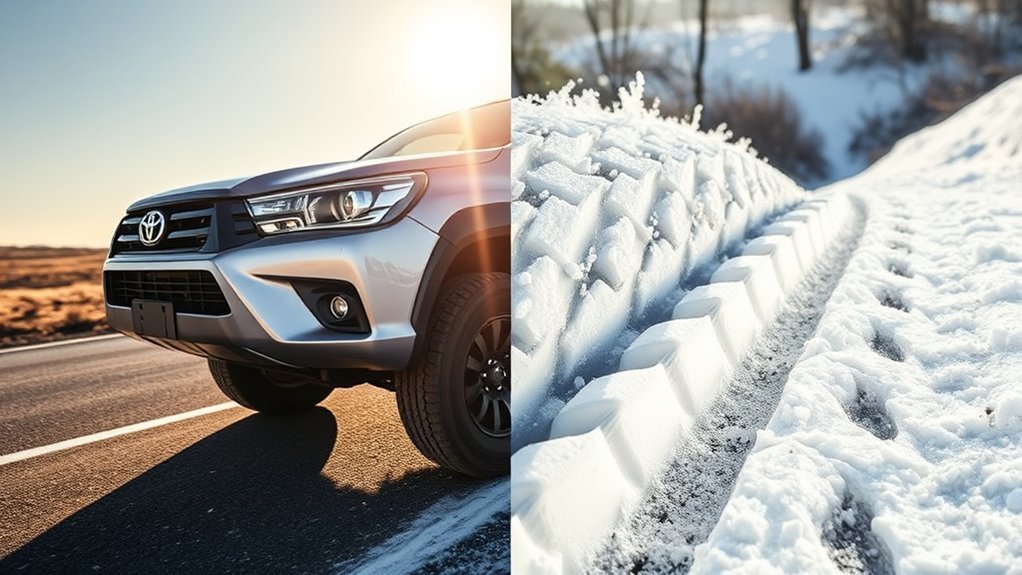
Choosing between all-weather tires and all-season tires for your Toyota Hilux comes down to climate, workload, and how you use the truck. All-weather tires are usually the better year-round choice if you see cold rain, slush, or light-to-moderate snow. All-season tires make more sense in mild climates where quiet road manners, fuel economy, and long tread life matter more than winter traction.
Quick Answer
For most Hilux drivers in mixed weather, all-weather tires are the safer one-set solution because many carry the Three-Peak Mountain Snowflake rating for snow traction. Choose all-season tires only if your winters are mild. For ice, deep snow, heavy towing, or rough off-road use, consider dedicated winter or 3PMSF-rated all-terrain/LT tires.
Key Takeaways
- All-weather tires are best for Hilux owners who want one set of tires for rain, cold roads, slush, and light-to-moderate snow.
- All-season tires are better for warm or mild climates where snow is rare and tread life, comfort, and low noise are priorities.
- Look for the Three-Peak Mountain Snowflake (3PMSF) symbol if you need verified snow-traction capability.
- Before buying, match the Hilux tire placard for size, load index, speed rating, and construction, especially if you tow or carry payload.
- All-weather tires are not a full replacement for dedicated winter tires in frequent ice, mountain roads, or deep snow.
Key Differences Between All-Weather and All-Season Tires
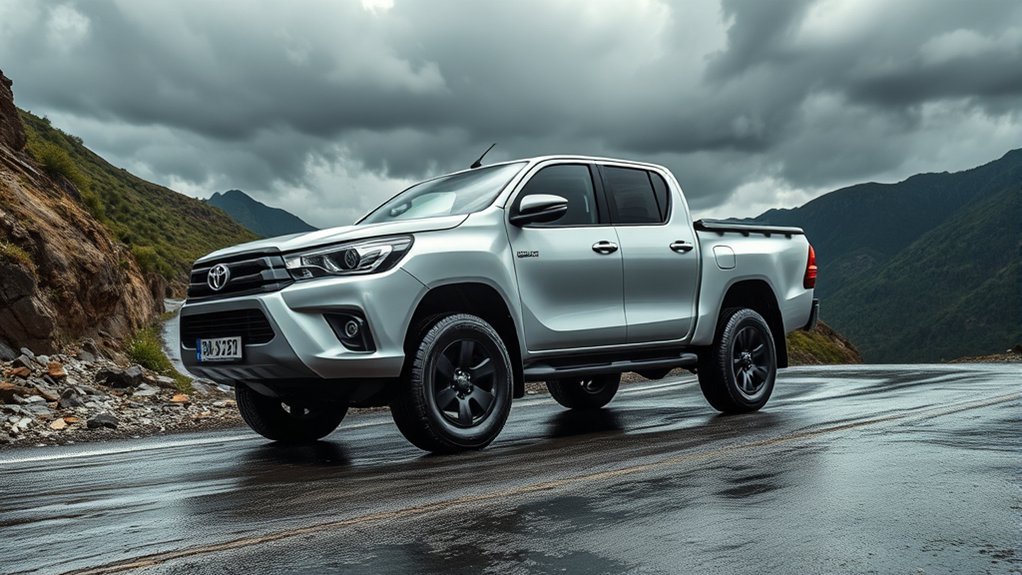
The biggest difference is winter capability. Many all-weather tires carry the Three-Peak Mountain Snowflake symbol, which means the tire meets specific snow-traction performance requirements. Standard all-season tires may have M+S markings, but that does not make them equal to a 3PMSF-rated tire in cold, snowy conditions.
For a Hilux, the choice should not be based on season labels alone. You also need to check the correct tire size, load index, speed rating, and whether your truck needs an LT, XL, C-rated, or other reinforced construction. A tire that performs well on a crossover may not be the right match for a Hilux used for towing, work loads, or off-road tracks.
| Category | All-Weather Tires | All-Season Tires |
| Best climate | Mixed weather, cold rain, slush, and occasional snow | Mild climates with little or no snow |
| Winter rating | Often 3PMSF-rated for snow traction | Usually not 3PMSF-rated; limited snow ability |
| Ride and tread life | Good balance, but softer compounds may wear faster in hot, heavy-use conditions | Often quieter and longer-wearing in warm, dry, highway driving |
| Best Hilux use | Daily driving in changing weather, light snow, wet roads, and occasional winter trips | Urban, highway, and warm-climate driving where snow performance is not a priority |
What the 3PMSF Symbol Actually Means
The Three-Peak Mountain Snowflake symbol is important, but it is often misunderstood. It means the tire has met a defined snow-traction performance requirement. It does not mean the tire is the best choice for glare ice, deep snow, high-speed winter driving, or every off-road surface.
Note: M+S, M/S, or “mud and snow” markings are not the same as 3PMSF. If winter traction matters, check the tire sidewall and product page for the Three-Peak Mountain Snowflake symbol.
If your Hilux regularly sees packed snow, icy rural roads, mountain passes, or temperatures below 7°C / 45°F, a 3PMSF tire is a smarter starting point than a standard all-season tire. If you drive in severe winter areas for months at a time, dedicated winter tires are still the stronger choice.
Top Benefits of All-Weather Tires for Hilux
Better Cold-Weather Traction
All-weather tires use tread patterns and rubber compounds designed to stay more usable across a wider temperature range than many standard all-season tires. On a Hilux, that helps in cold rain, slush, and light-to-moderate snow, especially when the tire also has 3PMSF certification.
Year-Round Convenience
The main appeal is convenience. A good all-weather tire can stay on the truck through spring, summer, fall, and mild winter conditions, reducing the need for seasonal tire swaps. That is useful if your winters are unpredictable but not extreme.
Stronger Wet-Road Confidence
Many all-weather tires use directional or high-sipe tread patterns to move water and slush away from the contact patch. That can improve wet-road confidence compared with worn or basic all-season tires, but no tire can fully prevent hydroplaning if speed, standing water, or tread wear becomes unsafe.
Practical for Daily Hilux Driving
If your Hilux is mostly a daily driver, family vehicle, or light-duty work truck, all-weather tires can provide a strong balance of comfort, rain traction, and occasional snow capability. They are especially useful for drivers who do not want to store a second set of winter tires.
Pro Tip: If you tow, carry tools, run a canopy, or drive rough roads, do not choose by tread pattern alone. Match the Hilux load requirement first, then compare snow, wet, and treadwear performance.
How Well Do All-Season Tires Hold Up in Different Weather?
All-season tires are built for balanced performance in mild weather. They usually feel smooth and quiet on highways, handle dry roads well, and can provide decent wet traction when the tread is healthy. For Hilux owners in warm regions or places with almost no snow, that can be enough.
The weakness appears when temperatures drop and roads become snowy or icy. According to NHTSA tire guidance, all-season tires can handle a variety of road conditions and have some mud and snow capability, but winter tires are more effective in deep snow. In real use, that means a standard all-season tire may be acceptable for a rare dusting of snow but is not ideal for repeated winter driving.
All-season tires can still be a good Hilux choice if you drive mostly on dry or wet pavement, live in a mild climate, and value tread life, comfort, and lower road noise. They are a weaker choice if your area sees freezing rain, slush, packed snow, or steep winter roads.
Hilux Fitment Checks Before You Buy
Before comparing brands, check the tire information label on your Hilux and the owner’s manual. The correct tire must match the truck’s size, load index, speed rating, and intended use. This matters more on a pickup than on a small passenger car because the Hilux may carry cargo, tow trailers, run off-road, or use light-truck-rated tires.
Warning: Do not install a tire just because the diameter fits. A tire with the wrong load index, speed rating, construction, or pressure requirement can affect braking, handling, towing stability, and tire life.
- Confirm the size: Common Hilux sizes vary by year, trim, market, and wheel package, so use your door placard or owner’s manual.
- Match the load index: This is critical for payload, towing, work gear, and accessories such as canopies or steel bumpers.
- Check construction: Some Hilux setups may call for reinforced, C-rated, LT, or XL tires rather than standard passenger construction.
- Use four matching tires: Mixing tread patterns, sizes, speed ratings, or load indexes can reduce stability.
- Watch tread depth: Snow traction drops as tread wears. Replace tires before they become marginal for winter use.
[Products Worth Considering]

These aluminum alloy tire valve stem caps with an O-ring seal help protect valve stems from corrosion while adding a clean, stylish look to your vehicle. The universal fit works across cars, trucks, motorcycles, bicycles, and more, making them an easy upgrade for everyday driving and off-road use. Installation is quick, and the included four-pack keeps all your tires dressed and protected.
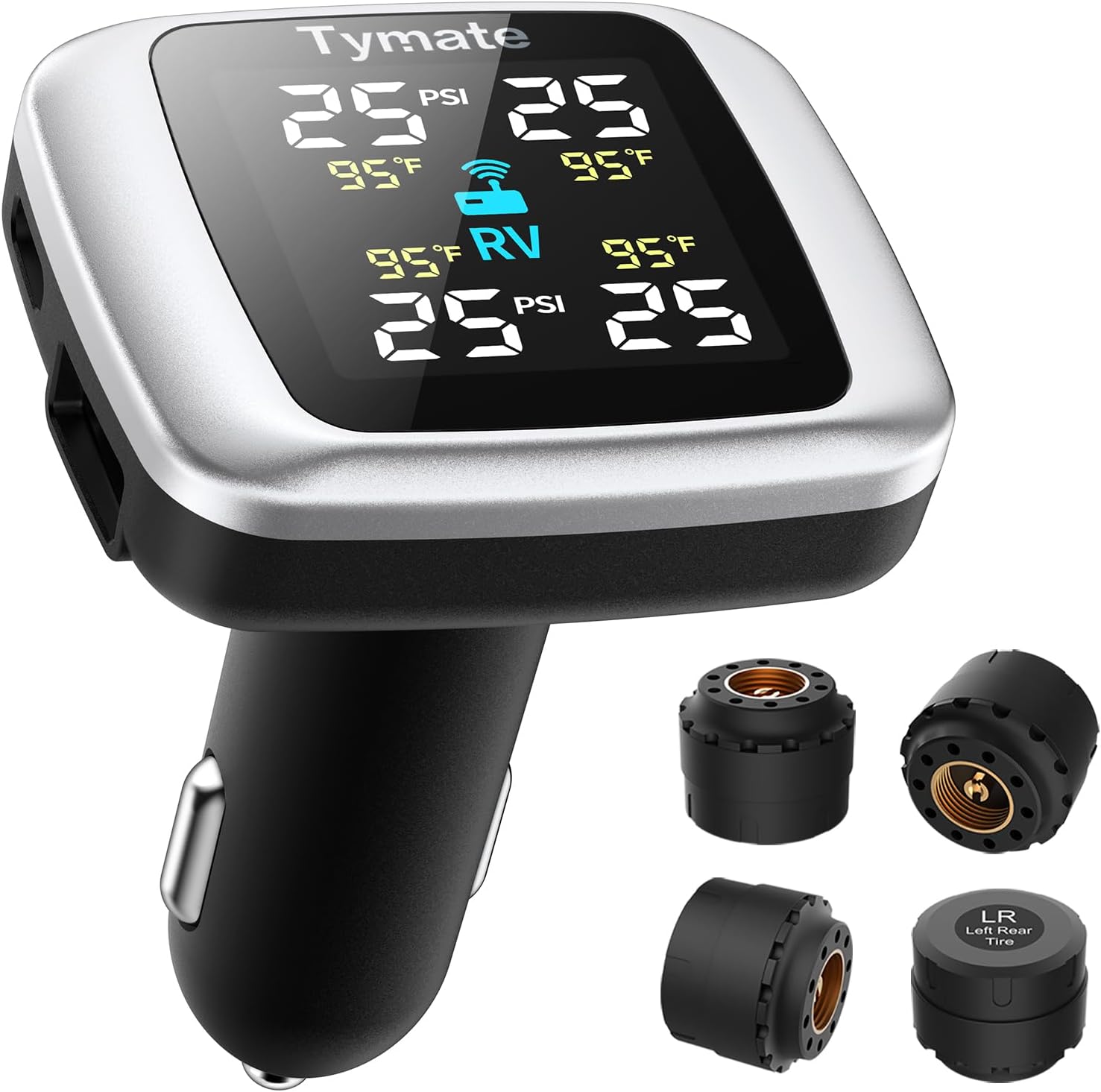
Tymate TM7 is a wireless tire pressure monitoring system that delivers real-time pressure and temperature readings for safer driving. It includes four external sensors, a bright color LCD display with adjustable backlight, and six alarm modes for high/low pressure, fast leakage, high temperature, and sensor signal or battery issues. The system covers a wide 0–144 PSI range and plugs into your vehicle’s cigarette lighter socket for quick DIY setup.

Keep your tires properly inflated with this analog VONDIOR tire pressure gauge, designed for fast, easy readings without batteries. The swiveling, two-axis hose and large glow dial help you measure at any tire angle with instant visibility. Built with a protective rubber shield, it supports durable, low-maintenance use for cars and trucks.
Comparing All-Weather and All-Season Tires for the Hilux
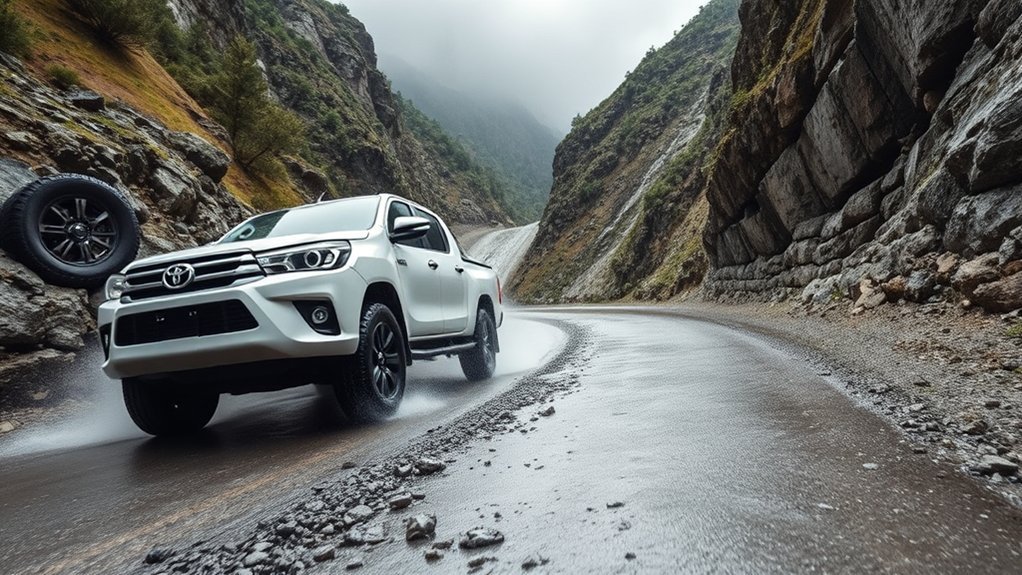
For the Hilux, the better tire depends on how the truck is used. A city-driven Hilux in a warm climate can do well on quality all-season highway tires. A Hilux in a mixed climate, where the same week can bring rain, freezing mornings, and snow, is usually better served by all-weather tires. A Hilux used for trails, farms, construction sites, or mountain roads may need a 3PMSF-rated all-terrain or light-truck tire instead of a touring-style all-weather tire.
For a Hilux, the right tire is not just the one with the best weather label. It is the tire that matches your climate, load rating, road surface, and real driving use.
[Products Worth Considering]

TIRESHIELD PRO RV tire covers in a set of four deliver year-round protection against UV rays, cracking, fading, water, and snow. The StormLock-System helps keep the covers securely fastened through high wind, while heavy-duty, double-stitched construction supports long-lasting performance. Designed for universal fit, they’re intended for RV, camper, truck, car, and trailer tires within the 26–28.75 inch diameter range, with easy wipe-clean care and storage in the included bag.

Measure tire tread depth quickly and accurately with this LUMITECO dial gauge that reads in 1/32" increments up to 14/32". The color-coded green/yellow/red zones make it easy to judge tire wear and know when replacement is needed. A rugged, compact design with a protective pouch helps keep the gauge ready for use on cars, trucks, motorcycles, and more.

The SAFELIFE dial tire tread depth gauge measures tread depth in 1/32 inch increments with clear, easy-to-read 2-inch dial face. Color zones using a traffic light system help you quickly judge whether tread is low, marginal, or ample for safer driving. Built with a durable zinc cast body and a metal detect probe for precise, comfortable use across cars, motorcycles, trucks, and buses.
Best All-Weather and All-Season Tires for Your Hilux
There is no single best tire for every Hilux. Use the examples below as starting points, then confirm the exact size, load index, speed rating, and intended use before buying.
[Products Worth Considering]

The Kurgo Seasonal Tire Tote helps protect your car interior, clothes, and garage from tire grime, brake dust, and residue during seasonal tire changes. Its universal design fits most passenger tires between 22" and 31" in diameter, making storage and transport simpler with less mess. Built for rugged, repeated use, it’s machine washable for easy care and comes with a lifetime warranty.

Monitor tire tread wear with a smart, color-coded depth gauge that shows clear condition ranges at a glance. The bar is range marked for fast, easy readings, helping you maintain safer traction and performance. Each gauge is portable with a pocket clip, and the set includes 20 units for daily use and sharing.

Milton S-921 pencil tire pressure gauge helps you maintain optimal tire pressure for passenger cars with accurate readings in PSI and kPa. It features a built-in deflator valve for convenient pressure adjustments, plus a single chuck head and nylon indicator bar for easy use on the go. Built from durable plated brass and designed for reliable performance, it’s a practical road trip and cold-weather maintenance tool.
Touring All-Weather Tires
Touring all-weather tires are best for Hilux drivers who spend most of their time on paved roads and want year-round traction without a second winter set. Examples include Pirelli Scorpion WeatherActive, which Pirelli lists for SUVs, CUVs, and pickup trucks, and Goodyear Assurance WeatherReady 2, which carries a 60,000-mile limited tread life warranty. These are strongest for road comfort, wet grip, and occasional winter weather.
Light-Truck and SUV All-Weather Tires
If your Hilux carries weight or sees mixed-duty use, look closely at SUV/light-truck all-weather options. Hercules Terra Trac Cross-V AW is one example designed for CUV, SUV, and light-truck drivers, with up to a 65,000-mile warranty for SUV/P-metric sizes and 60,000 miles for LT metric sizes. Always check whether the available size and construction match your specific Hilux.
Premium Road-Focused All-Weather Tires
Michelin CrossClimate2 is a well-known 3PMSF-rated tire with a 60,000-mile warranty, but it is marketed as a car, SUV, CUV, and van on-road tire. It can be a strong road-focused choice only if the exact size, load index, and vehicle use are suitable for your Hilux. It is not automatically the best option for towing, rough tracks, or heavy work use.
Standard All-Season Tires
Choose standard all-season tires if your Hilux lives in a warm or mild climate, spends most of its time on highways, and rarely sees snow. They can be quieter and longer-wearing than more winter-capable tires, but they are not the best choice for regular freezing temperatures, slush, or snow-covered roads.
All-Terrain and Winter-Specific Options
If your Hilux is used off-road, on gravel, on farms, at job sites, or in snowy mountain areas, a touring-style all-weather tire may not be rugged enough. In that case, compare 3PMSF-rated all-terrain tires or dedicated winter tires with the correct load rating. These may trade some road comfort and noise control for stronger durability and traction in harsher conditions.
Choosing the Right Tire: All-Weather or All-Season?
Choose all-weather tires if your Hilux sees cold rain, slush, light snow, or changing shoulder-season weather. They are the better one-set solution for drivers who want more winter confidence without committing to seasonal tire swaps.
Choose all-season tires if your winters are mild, roads stay mostly dry or wet, and you prioritize long tread life, fuel economy, quietness, and highway comfort. They are practical for warm regions but limited in winter traction.
Choose dedicated winter tires if your Hilux regularly drives on ice, deep snow, steep winter roads, or remote areas where traction and stopping distance matter most. Choose 3PMSF all-terrain or LT tires if your Hilux combines winter use with towing, payload, gravel, mud, or off-road work.
Maintenance Tips for Longer Tire Life
- Check pressure monthly: Use the Hilux tire placard and adjust pressures when tires are cold.
- Rotate regularly: Follow the tire maker’s and Toyota’s recommended interval to reduce uneven wear.
- Inspect tread depth: Winter and wet traction drop as tread wears, even if the tire is still legal.
- Keep alignment in check: A loaded or off-road-driven Hilux can wear tires quickly if alignment is off.
- Do not overload: Overloading increases heat, wear, and failure risk.
Frequently Asked Questions
Are all-weather tires better than all-season tires for a Hilux?
All-weather tires are better if your Hilux sees cold rain, slush, or snow because many carry the 3PMSF symbol for snow traction. All-season tires are better in mild climates where snow is rare and you want quietness, comfort, and long tread life.
Do all-weather tires replace winter tires?
They can replace winter tires in mild-to-moderate winter climates, but not everywhere. If you regularly drive on ice, deep snow, steep mountain roads, or remote winter routes, dedicated winter tires are still the safer choice.
What should I check before buying Hilux tires?
Check the tire placard and owner’s manual for the correct size, load index, speed rating, and pressure. If your Hilux tows, carries payload, or drives off-road, also check whether you need reinforced, XL, C-rated, or LT construction.
Is the Michelin CrossClimate2 good for a Toyota Hilux?
It can be a strong road-focused all-weather option only if the exact size and load rating match your Hilux. Because the CrossClimate2 is marketed as an on-road car, SUV, CUV, and van tire, it may not be ideal for heavy towing, rough work use, or off-road driving.
What is the difference between performance tires and all-weather tires?
Performance tires focus on dry-road grip, steering response, and handling, often in warmer conditions. All-weather tires focus on year-round usability, wet traction, and snow capability when 3PMSF-rated. For a Hilux, performance tires are usually less practical than touring, all-terrain, all-weather, or light-truck tires.
Conclusion
For a Toyota Hilux, all-weather tires are usually the better choice if you want one set of tires for rain, cold mornings, slush, and occasional snow. All-season tires are still a smart option in warm or mild climates where winter traction is not a major concern. The final decision should always start with fitment: match the correct size, load index, speed rating, pressure, and construction for your Hilux. If you tow, haul, drive off-road, or face serious winter roads, look beyond the all-weather vs all-season label and choose a properly rated LT, all-terrain, or dedicated winter tire.
Sources
- Transport Canada: Using winter tires — backs up 3PMSF meaning, cold-temperature tire behavior, and winter tire guidance.
- NHTSA TireWise tire safety guidance — backs up all-season limitations, winter tire comparison, and checking the tire placard/owner’s manual.
- Michelin CrossClimate2 product page — backs up 3PMSF certification and 60,000-mile warranty details for that model.
- Pirelli Scorpion WeatherActive product page — backs up pickup/SUV positioning, 3PMSF rating, size examples, and 60,000-mile warranty.
- Goodyear Assurance WeatherReady 2 product page — backs up the current model name and 60,000-mile warranty.
- Hercules Terra Trac Cross-V AW product page — backs up CUV/SUV/LT positioning and the SUV/P-metric versus LT mileage warranty split.