
Toyota Tacoma Tire Blowout Causes and Prevention
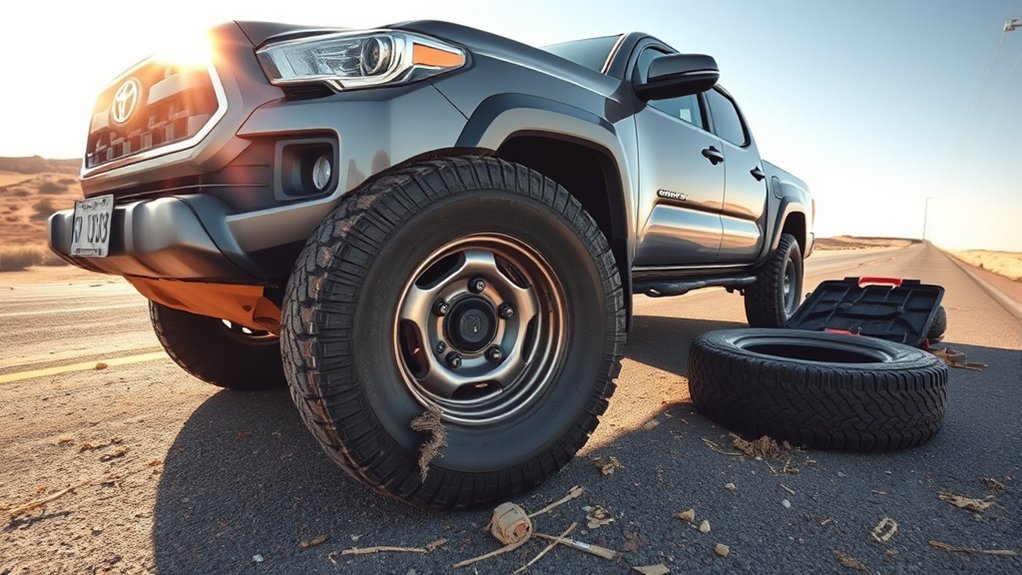
Tire blowouts in your Toyota Tacoma are usually tied to preventable tire stress: low air pressure, too much load, tire damage, old rubber, uneven wear, or a hard hit from a pothole or trail obstacle. The safest approach is simple: use the cold PSI printed on your Tacoma’s driver-side Tire and Loading Information label, inspect the tires often, respect payload and towing limits, and replace damaged tires before they fail.
Quick Answer
Toyota Tacoma tire blowouts are most often caused by underinflation, overloading, road damage, worn tread, aging tires, or wrong-size tires. Check cold tire pressure monthly, follow the door-jamb PSI label, inspect sidewalls and tread, rotate tires on schedule, and never drive on a tire with bulges, exposed cords, or repeated pressure loss.
Key Takeaways
- Do not treat 32–34 PSI as universal. Use the cold PSI on your Tacoma’s driver-side Tire and Loading Information label or owner’s manual.
- Check all tires, including the spare, at least monthly and before long trips, towing, hauling, or trail driving.
- Replace tires with bulges, exposed cords, deep cracks, sidewall damage, repeated air loss, or tread worn to 2/32 inch.
- During a blowout, hold the wheel firmly, avoid slamming the brakes, stabilize the truck, ease off the accelerator, and pull over only when safe.
At a Glance
| Time Required | 5–10 minutes for a pressure check; 15–20 minutes for a full visual inspection |
| Difficulty | Easy for routine checks; professional help needed for bulges, alignment, balancing, or tire replacement |
| Tools Needed | Accurate tire pressure gauge, tread-depth gauge or penny, flashlight, portable inflator or air-station access |
| Cost | About $10–$40 for basic tools; tire repair, alignment, or replacement varies by tire and shop |
Common Causes and Prevention of Tire Blowouts in Toyota Tacomas
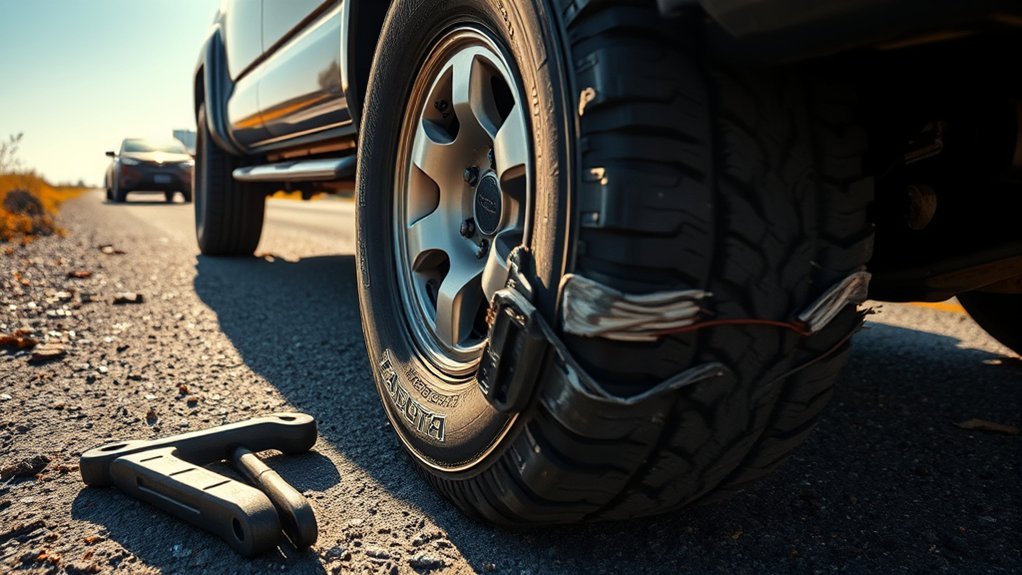
Most Toyota Tacoma blowouts are not truly random. They usually start with a tire that is running too hot, carrying too much weight, damaged, too old, or worn unevenly. The most important prevention step is to keep the tires at the correct cold inflation pressure listed by the vehicle manufacturer, not the maximum PSI stamped on the tire sidewall.
- Underinflation: A low tire flexes more as it rolls, which builds heat and weakens the tire structure. Check pressure when the tires are cold, meaning the truck has been parked for at least three hours.
- Overloading: Too much cargo, trailer tongue weight, passengers, armor, rooftop gear, or bed load can exceed the tire and vehicle capacity. Check the driver-side load label and never exceed the truck’s published limits.
- Road and trail damage: Potholes, curbs, rocks, debris, and sharp trail edges can cut tread, bruise the inner structure, or damage the sidewall.
- Old or weather-cracked tires: Rubber ages even when tread looks usable. Check the DOT date code and replace tires that show cracking, recurring pressure loss, or age-related deterioration.
- Uneven wear: Misalignment, worn suspension parts, poor balancing, or skipped rotations can create weak spots and heat buildup.
- Wrong tire for the job: A tire with the wrong size, load index, speed rating, or construction may not match how you use your Tacoma.
NHTSA reports that 511 people died in tire-related crashes in 2024, which makes routine tire pressure, tread, and damage checks more than a maintenance habit—they are a safety step.
Warning: Do not drive on a tire with a sidewall bulge, exposed cords, a deep cut, or repeated pressure loss. Install the spare only if it is safe to do so, or call roadside assistance.
[Products Worth Considering]

EVOULTES heavy duty tire inflator with an integrated gauge delivers accurate pressure readings from 10–120 PSI, helping you inflate, deflate, and check tires in one tool. The 16.5-inch extended dual-head air chuck with swivel base reaches hard-to-access dual wheel valves on trucks and RVs. A brass trigger core and side-mounted air release valve make operation smooth, with standard 1/4" NPT threading and quick-connect compatibility for easy setup.

This portable cordless tire inflator delivers up to 160 PSI with fast 17 L/min airflow to help you quickly top up tires and get back on the road. It features dual power mode, running on a 21V rechargeable battery or a 12V DC adapter for convenient roadside use. An automatic shut-off with digital pressure gauge helps prevent overinflation, and a built-in LED light improves visibility in low-light conditions.

This cordless portable tire inflator delivers fast, safe inflation with an automatic shutoff when the target pressure is reached, helping prevent overinflation. The built-in LED lighting and real-time digital display make it easier to check pressure and handle roadside tire changes at night. It includes multiple nozzles for use on cars, motorcycles, bicycles, and inflatables like balls and swimming rings.
How to Check Tacoma Tire Pressure Correctly
Your Tacoma’s correct PSI is on the driver-side Tire and Loading Information label and in the Toyota owner’s manual. Some Tacoma setups may be near the low-to-mid 30 PSI range, but tire pressure is not one-size-fits-all because it changes by model year, tire size, trim, and equipment.
- Park and let the tires cool. For the most accurate reading, check pressure before driving or after the truck has sat for at least three hours.
- Find the correct cold PSI. Look on the driver-side door edge or B-pillar label. Use that number, not the tire sidewall maximum.
- Check all four tires and the spare. A spare can age or lose pressure even if it has never been used.
- Add or release air in small steps. Recheck with the same gauge until each tire matches the label specification.
- Inspect while you are there. Look for nails, cuts, cracking, bulges, uneven tread wear, and damaged valve stems.
- Recheck after temperature swings. Cold weather can lower pressure, and hot driving can raise pressure temporarily.
Note: A TPMS light means at least one tire may be significantly underinflated, but TPMS is not a replacement for monthly gauge checks. Inspect the tire and confirm pressure as soon as possible.
How to Recognize Signs of a Potential Blowout
Recognizing signs of a potential blowout is vital for every Toyota Tacoma owner. A tire can fail without much warning, but these red flags mean you should slow down, avoid highway speeds when possible, and inspect or replace the tire before continuing.
- Bulges or bubbles: A bulge usually means internal tire damage. Replace the tire; do not patch a bulging sidewall.
- Exposed cords or steel belts: This is severe tire damage and an immediate safety risk.
- Cuts, cracks, or missing chunks: Sidewall damage is especially dangerous because it cannot usually be repaired safely.
- Repeated pressure loss: A slow leak can turn into a blowout if the tire is driven underinflated.
- Vibration, thumping, or flapping sounds: These may point to tread separation, a shifted belt, or tire damage.
- Pulling to one side: This can be caused by low pressure, alignment issues, or tire damage.
- Uneven tread wear: Feathering, cupping, edge wear, or patchy wear suggests alignment, balance, suspension, or pressure problems.
- Low tread depth: Tires should be replaced by 2/32 inch of tread. For wet roads, towing, or off-road use, start planning replacement earlier, especially around 4/32 inch.
Pro Tip: Check tread and sidewalls when you check PSI. The extra two minutes can reveal nails, cracks, bulges, or uneven wear before they become a highway emergency.
How to Respond During and After a Blowout
A tire blowout can happen suddenly, especially at highway speed. Your first goal is to keep the Tacoma balanced and controllable. Do not panic, jerk the wheel, or slam the brakes.
Use this sequence if a blowout happens while driving:
| Action | What to Do |
|---|---|
| Grip the steering wheel | Hold the wheel firmly with both hands and keep the truck pointed where you want it to go. |
| Do not slam the brakes | Hard braking can shift weight suddenly and make the Tacoma harder to control. |
| Stabilize first | Keep speed steady only if it is safe for a brief moment, then gradually ease off the accelerator. |
| Slow gradually | Let the truck slow in a controlled way. Use gentle braking only after the vehicle is stable. |
| Move off the road | Turn on hazard lights and pull onto a wide shoulder, parking lot, or safe flat area when possible. |
| Assess and act | Change the tire only if you are safely away from traffic and on stable ground. Otherwise, call roadside assistance. |
After stopping, check traffic first, not the tire. If the shoulder is narrow, the truck is on a slope, or the damaged tire is on the traffic side, stay in a safe location and call for help. A damaged Tacoma tire can be replaced; roadside injuries are much harder to undo.
Key Maintenance Tips for Preventing Tire Blowouts
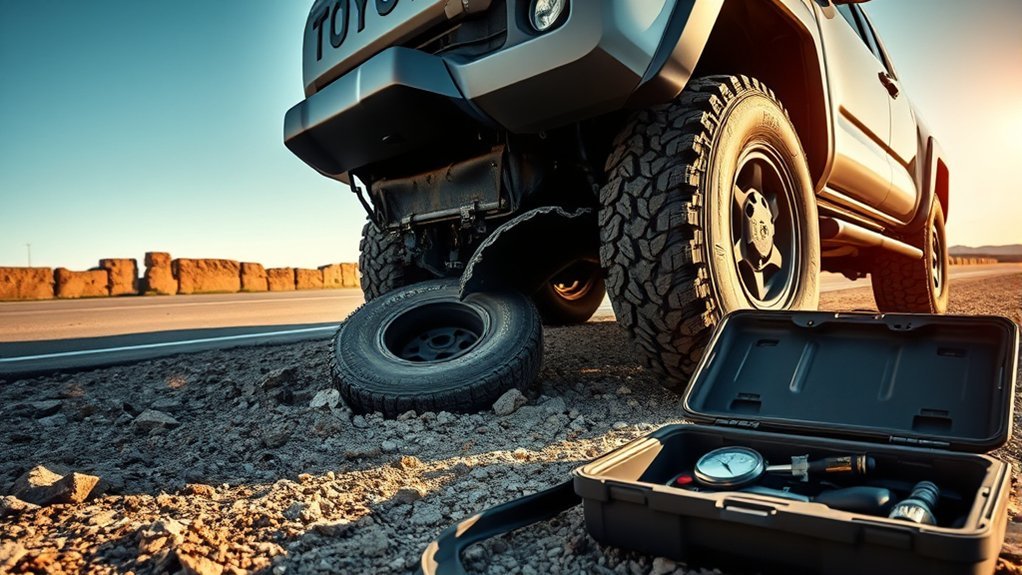
Being prepared for a tire blowout is only part of the equation. Proactive maintenance greatly reduces the risk of tire failure and helps your Tacoma handle, brake, and tow more predictably.
- Check tire pressure monthly: Use an accurate gauge and check cold pressure. Include the spare.
- Inspect tires monthly: Look for cuts, cracks, bulges, nails, uneven wear, and exposed cords.
- Rotate on schedule: Follow your Tacoma owner’s manual. If the manufacturer recommends rotation, a common interval is every 5,000 to 8,000 miles or sooner when uneven wear appears.
- Keep wheels aligned: Get an alignment if the truck pulls, the steering wheel is off-center, or tread is wearing unevenly.
- Balance when needed: Vibration at speed can point to imbalance, tire damage, or wheel issues.
- Replace aging tires: Check the DOT date code. Tires that are six to 10 years old may need replacement even if tread remains, depending on tire maker guidance and condition.
- Watch the spare: A spare tire can be low, cracked, or too old even if it has never touched the road.
Special Tacoma Risks: Towing, Hauling, Off-Roading, and Heat
Tacomas are often used harder than ordinary commuter vehicles. That is exactly why tire setup and inspection matter. Towing, hauling, off-road driving, and summer heat can all increase tire temperature and stress.
[Products Worth Considering]

The JACO FlowPro Tire Inflator measures, inflates, and airs down tires up to 100 PSI with battery-free operation and ±2% accuracy after calibration. It features a glowing pressure dial for night visibility, a heavy-duty steel build with a hybrid hose, and a precision push-to-inflate thumb trigger. The patented Lightning Air Chuck locks on for a secure seal, and the kit includes quick-connect hardware for easy inline use with your air compressor.

This AUTOWN flat tire repair kit is designed for quick, reliable puncture repairs using a plug kit and spiral probe tool to simplify installation. Built for durability and safe handling, it offers strong adhesion and flexibility to help maintain tire air tightness. With a portable storage case and a multi-vehicle approach, it’s suitable for cars, motorcycles, ATVs, tractors, lawn mowers, RVs, jeeps, and trucks.
Towing and Payload
Toyota lists the 2026 Tacoma with a towing capacity of up to 6,500 lb when properly equipped, but your actual limit depends on the truck configuration, passengers, cargo, accessories, and trailer setup. Never tow beyond the published capacity, and remember that trailer tongue weight counts against payload. Before towing, confirm your tire pressure, tire load rating, trailer weight, hitch setup, and load distribution.
Off-Road Airing Down
Airing down can improve comfort and traction off-road, but it also reduces the tire’s load capacity and builds heat if you drive too fast. Reinflate to the Tacoma’s road PSI before highway driving. Driving at highway speed on aired-down tires can overheat the tire and increase blowout risk.
Summer Heat and Long Highway Trips
Heat, speed, heavy loads, and low pressure are a bad combination. Before a road trip, check cold PSI, inspect tread and sidewalls, verify the spare, and reduce cargo weight if you are near the vehicle’s capacity.
Note: The number molded into a tire sidewall is the maximum tire inflation pressure, not the recommended Tacoma driving pressure. Use the vehicle label for normal cold PSI.
Choosing the Right Tires to Prevent Blowouts in Your Tacoma
Choosing the right tires for your Toyota Tacoma is essential to reducing blowout risk and keeping the truck stable on pavement, dirt, gravel, and trails. The best tire is not always the most aggressive-looking tire; it is the tire that matches your Tacoma’s size, load, speed rating, terrain, and real driving habits.
- Match the correct size: Use the original tire size or a Toyota-approved alternative. Oversized tires can affect clearance, gearing, speedometer accuracy, and load behavior.
- Check load index: The tire must be rated to carry your Tacoma, passengers, cargo, accessories, and trailer tongue weight.
- Choose the right construction: P-metric tires often ride smoother for daily driving, while LT tires may offer stronger construction for heavy hauling or rough trails but can ride firmer and require correct inflation guidance.
- Use the right tread type: Highway-terrain tires are good for commuting and wet roads, all-terrain tires balance pavement and trails, and mud-terrain tires help in deep mud but can be louder and wear faster on pavement.
- Look at sidewall strength: Reinforced sidewalls can help off-road, but they do not make a tire immune to cuts, impacts, or underinflation.
- Avoid mismatched tires: Mixing sizes, load ratings, tread depths, or tire types can affect handling and traction, especially in 4WD use.
When to Replace a Tire Instead of Repairing It
Some tire problems are not safe to patch. Replace the tire, or have a qualified tire professional inspect it, if you see any of these issues:
- A bulge, bubble, or sidewall deformation
- Exposed cords, belts, or fabric
- Deep sidewall cuts or cracking
- Tread worn to 2/32 inch
- Repeated air loss after inflation
- Severe uneven wear, cupping, or tread separation
- A puncture in the shoulder or sidewall area
- Old tires with cracking, hard rubber, or an expired manufacturer age recommendation
If a tire failed once because of underinflation, overloading, or impact damage, inspect the other tires too. They may have been exposed to the same stress.
Frequently Asked Questions
Can tire blowouts happen randomly?
They can feel random, but most blowouts are linked to causes such as underinflation, overloading, road damage, old tires, heat, or worn tread. A sharp object or pothole can also cause sudden failure even on a well-maintained tire.
What PSI should Toyota Tacoma tires be?
Use the cold tire pressure printed on your Tacoma’s driver-side Tire and Loading Information label or in the owner’s manual. Do not rely on a universal PSI range or the maximum PSI molded into the tire sidewall.
How often should I check Tacoma tire pressure?
Check tire pressure at least once a month, before long trips, before towing or hauling, after major temperature changes, and after trail driving. Always check when the tires are cold for the most accurate reading.
Is 4/32 inch of tread safe?
NHTSA says tires should be replaced when tread reaches 2/32 inch. However, 4/32 inch is a smart early-warning point for wet roads, towing, or off-road driving because traction and water evacuation are already reduced.
Can I drive on a tire with a bulge?
No. A bulge usually means the tire’s internal structure is damaged. Do not continue normal driving on it. Install a safe spare if conditions allow, or call roadside assistance.
Does TPMS prevent tire blowouts?
TPMS helps by warning when a tire is significantly underinflated, but it does not replace monthly pressure checks or visual inspections. A tire can still be damaged, overloaded, old, or worn even if the TPMS light is off.
Conclusion
A Toyota Tacoma tire blowout is most often preventable with a few consistent habits: check cold PSI from the door label, inspect tread and sidewalls, rotate and align the tires, respect payload and towing limits, and replace damaged or aging tires before they fail. If a blowout happens anyway, stay calm, hold the wheel, avoid hard braking, slow gradually, and pull over only when it is safe.
Sources
- Toyota Owners — 2026 Tacoma Tire Inflation Pressure — Tacoma owner-manual tire inflation reference.
- NHTSA TireWise — Tire pressure, tread depth, rotation, TPMS, aging, and blowout-response guidance.
- NHTSA Tire Safety Brochure — Tire pressure, load limits, road hazards, and tire-failure prevention.
- Toyota Vehicles for Towing — Tacoma towing capacity and Toyota towing-limit cautions.

Related Articles
How Tire Weight Affects Toyota Tacoma Performance
How does tire weight influence your Toyota Tacoma's performance and efficiency? Discover the surprising effects that could change your driving experience.
Read More
Tire Noise Levels by Tire Type on a Toyota Tacoma
A comprehensive look at how tire types affect noise levels in your Toyota Tacoma reveals surprising insights that could enhance your driving experience.
Read More
How To Choose Tires for a Dual Use Toyota Tacoma
Unlock the secrets to selecting the perfect tires for your dual-use Toyota Tacoma, ensuring optimal performance and comfort on every adventure. Discover more inside!
Read More