
Toyota Camry Tire Losing Air Slowly: Causes and How to Find the Leak

If your Toyota Camry tire’s losing air slowly, you’re likely dealing with a tread puncture, cracked valve stem, bead leak, or rim corrosion. Check pressure when the tire’s cold, since temperature swings can mimic a leak. Spray soapy water on the tread, valve, and bead; bubbles mark the escape point. Small tread punctures can often be plugged or patched, but sidewall damage or stem failure usually means replacement. The next steps get more specific.
Why Your Camry Tire Keeps Losing Air?
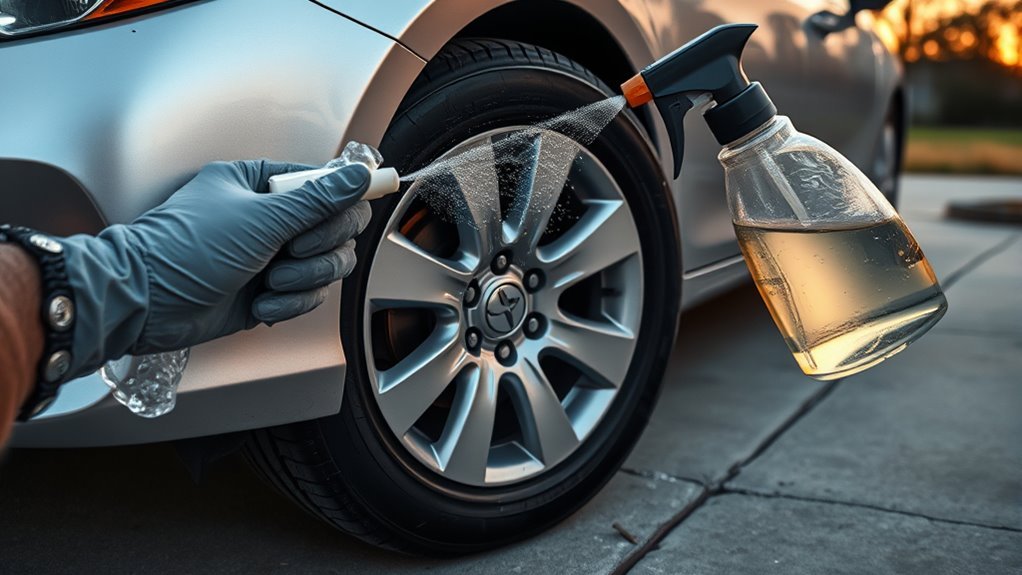
If your Camry tire keeps losing air, the cause is usually a slow leak somewhere in the inflation system. You’re likely dealing with a puncture from a nail or glass, which leaves a small hole that bleeds air over time. You should also inspect the valve stem; cracks, corrosion, or a failing core can release pressure fast enough to matter. Another common fault is a poor seal between the tire bead and rim, often from rust or dirt trapped at the interface. That defect can be hard to spot, but it still undermines tire maintenance. Check pressure monthly, because routine readings reveal gradual loss before the tire reaches a critical state. Use careful leak prevention: clean the bead area, examine the stem, and mark any tire that drops repeatedly. When you diagnose the source early, you protect your mobility and keep control over your vehicle’s condition.
Temperature Changes That Affect Tire Pressure
Temperature swings can change your Camry’s tire pressure by about 1 psi for every 10°F shift, so a cold snap can make the tires read low even when they aren’t leaking. A warm-up can raise pressure by a similar amount, which can mask an underlying inflation problem if you don’t measure it correctly. You should check tire pressure regularly during daily temperature changes to keep inflation within spec and reduce wear and safety risk.
Temperature Swings
Even modest weather shifts can change your Camry’s tire pressure enough to matter: pressure typically drops about 2% for every 10°F decrease and rises by the same amount for every 10°F increase. In a light car like yours, that often equals about 1 psi per 10°F, so daily swings can mimic a slow leak. For precise tire maintenance, check pressures when the tires are cold, at least 2 hours after driving, and note seasonal effects that push readings off target. If a tire falls to 28 psi or lower, treat it as unsafe and correct it immediately. Track each wheel separately, because unequal exposure to sun, shade, or overnight chill can expose a real fault. Monitoring keeps you independent from guesswork and protects your Camry.
Pressure Changes
Pressure changes from temperature swings are normal, and your Camry’s tires will usually lose about 2% of their air pressure for every 10°F drop and gain about 2% for every 10°F rise. In practice, you may see roughly 1 psi shifts in a light passenger car, and more in larger vehicles. That means seasonal cold can mimic a leak, while heat can hide underinflation. For accurate tire maintenance, check pressure when the tires are cold, ideally after the car has sat for at least two hours. Use pressure monitoring after sharp weather changes, because daily swings can alter readings fast. A 10 psi loss can cut traction hard and raise crash risk, so don’t ignore a low warning. Measure, compare to spec, and restore freedom on the road.
How to Find a Camry Tire Leak Fast
Start with a fast visual and pressure check on your Camry’s tires when they’re cold, because a tire that’s several PSI lower than the others—such as one reading 10.5 PSI—usually points to an active leak. Use air pressure monitoring as part of your tire maintenance tips, and confirm the low tire isn’t just a gauge error. Next, spray a soapy water solution over the tread, sidewall, and bead area; escaping air will create distinct bubbles at the leak site. If you can safely do it, submerge the inflated tire in water and watch for a bubble stream. You can also listen closely for a faint hiss near the suspected area, which often pinpoints the failure faster than visual inspection alone. These tests give you a direct, mechanical answer, so you can stop guessing and move straight to repair.
Check the Valve Stem for Leaks
Check the valve stem next, because cracks, dry rot, or corrosion around the stem can let air escape from your Camry’s tire. During valve inspection, look closely at the rubber base, metal threads, and cap for damage, contamination, or looseness. If the stem looks suspect, spray it with soapy water; bubbles confirm leak detection and identify the escape point fast. For a deeper test, raise tire pressure slightly, then immerse the stem in water. Any stream of bubbles means the stem is leaking. Don’t ignore this component: a slow loss here can become a dangerous pressure drop on the road. Replacing a bad valve stem is usually cheap, and DIY kits make the repair accessible. You don’t need to accept hidden air loss as normal—regular checks keep you in control, protect tire life, and reduce the risk of sudden failure while driving.
Look for Bead Leaks Around the Rim
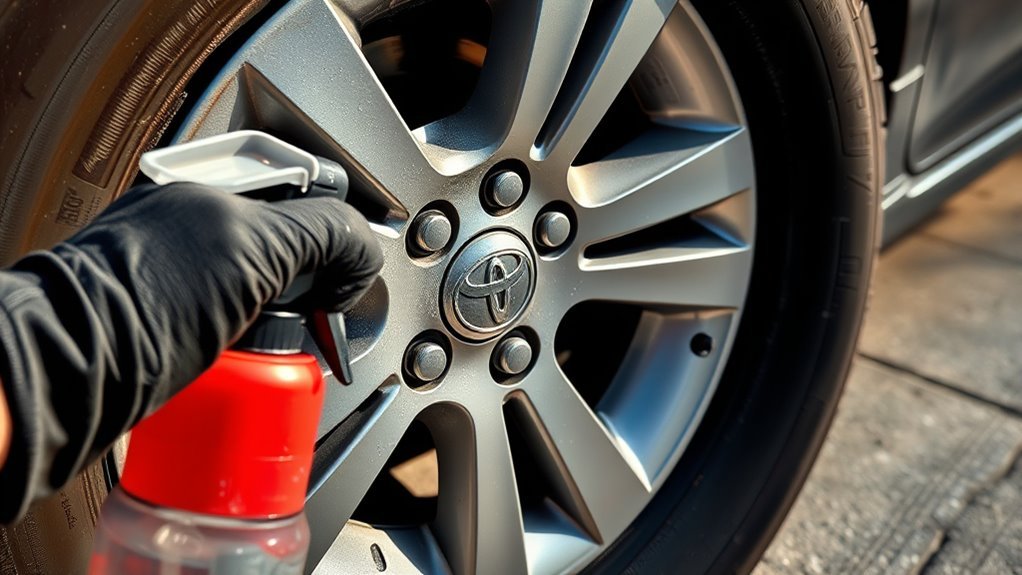
Around the rim, a bead leak can let your Camry’s tire lose air when the tire doesn’t seal tightly against the wheel. You can diagnose it fast with soapy water: brush it along the bead and watch for bubbles. That test often exposes leaks without dismounting the tire, letting you act with precision.
| Symptom | Test | Result |
|---|---|---|
| Slow air loss | Soapy water on bead | Bubbles mark escape points |
| Recurrent low pressure | Inspect after inflation | Leak shows at rim edge |
| Poor seal after service | Rim cleaning techniques | Removes debris blocking the bead |
If bubbles appear, clean the rim thoroughly and consider bead sealant application before remounting. Keep the bead area free of grime during tire rotations, because regular maintenance helps preserve the seal and extend tire life. Don’t ignore a subtle leak; you deserve a tire that holds pressure confidently, so your Camry stays ready, efficient, and free from avoidable drag.
Check the Rim for Corrosion and Damage
If your Camry still loses air after the bead looks clean, inspect the rim for corrosion, dents, bends, and hairline cracks, especially along the bead seat. During this rim inspection, focus on corrosion effects on aluminum alloys: oxidation can pit the sealing surface and open microscopic paths for air. Wipe the rim free of dirt and debris, then examine the bead area under bright light.
Inspect the rim for corrosion, dents, bends, and hairline cracks, especially along the bead seat.
- Corrosion: Look for white, powdery buildup or flaking metal.
- Deformation: Check for dents or bends that distort the tire’s sealing edge.
- Cracking: Scan for hairline cracks in alloy wheels that let air escape slowly.
If you find damage, the rim can’t support a reliable seal until it’s professionally cleaned or refinished. A precise inspection gives you control over the leak path and keeps you from chasing false tire problems.
Can This Camry Tire Leak Be Repaired?
Can this Camry tire leak be repaired? Yes, if you confirm the puncture is in the tread and not the sidewall. A staple hole or similar small puncture often responds to repair techniques such as a plug kit or a shop patch, but you need an immediate diagnosis first. Your pressure readings, 20.5 PSI and 10.5 PSI, show a leak that’s too large to ignore, so check both tire and rim now. Use a soapy water test to locate escaping air, then inspect for cracks, bulges, or other damage that would make repair unsafe. If the tire looks structurally sound, a professional can judge whether tire maintenance and repair are viable. If corrosion or poor sealing at the rim is involved, the technician may need to correct that before any repair holds. Don’t let a damaged tire limit your mobility; make the call based on evidence, not guesswork.
When to Use a Plug, Patch, or New Stem
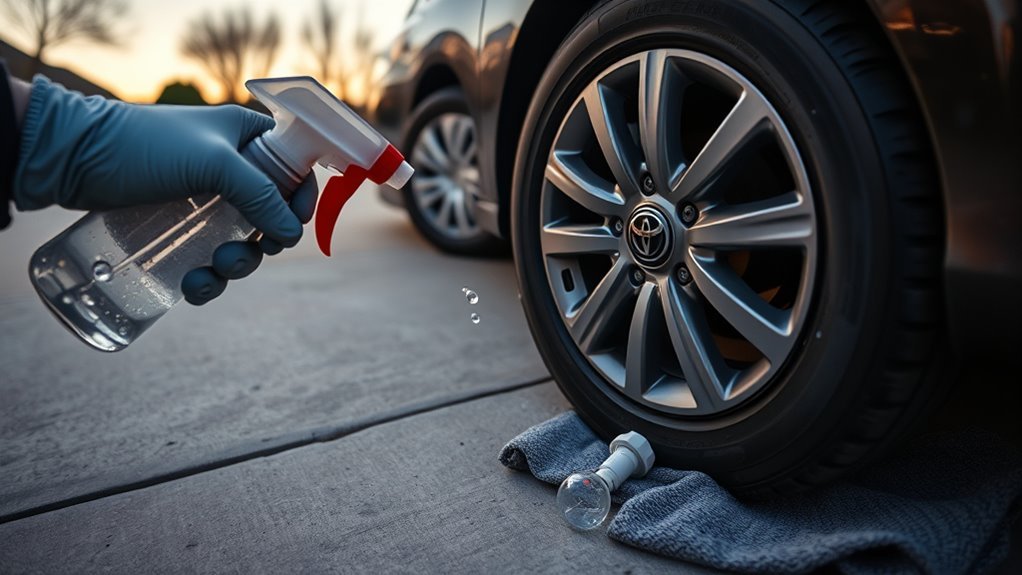
Use a plug for a small tread puncture when the leak is clearly in the tire’s tread and the hole is minor, but treat it as a short-term fix rather than the final answer. In tire repair, plugging methods can stabilize the tire, yet a patch is the better permanent option because it seals the inner liner and restores integrity. If the valve stem is cracked or corroded, replace it; that’s often the cheapest path to ending a slow leak.
Use a plug for a minor tread puncture, but choose a patch for the most durable fix.
- Plug: use only for small tread punctures under 1/4 inch.
- Patch: choose when you want a durable, diagnostic repair.
- New stem: install when the leak traces to the valve hardware.
If the damage is larger than 1/4 inch, or you find sidewall injury, replace the tire. If the leak persists after your repair, get a professional inspection and reclaim confidence on the road.
How to Keep Camry Tires Inflated
Once you’ve fixed the source of a leak, keeping your Camry’s tires inflated comes down to routine checks and accurate measurements. Check pressure at least monthly, and always when the tires are cold. Use a calibrated gauge; even a new one can read +/- 3 psi, which can distort your diagnosis. Follow the door-jamb placard or owner’s manual, not guesswork; many light passenger cars need about 35 psi for safe operation. Watch temperature swings too: a 10°F drop can cut pressure by roughly 2%, so cold snaps demand rechecks. Inspect valve stems and rims for cracks, wear, or corrosion, because those defects create slow leaks. These tire maintenance tips keep you ahead of failure. Apply inflation techniques deliberately: add air in small increments, remeasure, and stop at spec. You’re not trapped by flat tires—you can control pressure, preserve handling, and keep your Camry ready to roll.
Frequently Asked Questions
Can a Tire Lose Air Without Having a Leak?
Yes, your tire can lose air without a visible leak because tire pressure drops through permeation, temperature swings, or valve wear. You should check air retention, rims, and bead seals to diagnose the loss.
Can a Slow Leak Be Fixed on a Tire?
Yes, you can fix a slow leak, like mending a small tear in a sail. You’ll need slow leak repairs, proper tire maintenance, and a precise diagnosis—plug, patch, seal, or replace the damaged component.
Conclusion
If your Camry tire keeps losing air, you’ve got a leak to diagnose, not a problem to ignore. Check the valve stem, bead seal, and rim for damage or corrosion, then confirm the source with soapy water or a pressure test. A slow leak may need a plug, patch, or new stem, but a damaged wheel may call for replacement. Catch it early, keep your tires inflated, and keep your Camry safe.

Related Articles
Toyota Camry Flat Tire: Common Causes and How to Prevent Them
Understanding Toyota Camry flat tire causes and prevention can save you hassle, but the surprising culprits might be hiding right under your wheels.
Read More
How to Protect Toyota Camry Tires From UV Damage and Cracking
How can you safeguard your Toyota Camry tires from harmful UV damage and cracking? Discover essential tips to extend their lifespan and enhance safety.
Read More
Toyota Camry Tire Noise While Driving: What Each Sound Means
Grab the meaning behind your Toyota Camry’s tire noise while driving—each sound hints at a different problem, and the clues may surprise you.
Read More