
If your Toyota Camry makes tire noise while driving, the sound is a clue, not a diagnosis by itself. A hum, thump, squeal, grind, click, or rear clunk can come from the tire, wheel, brakes, wheel bearing, CV axle, or suspension. The safest approach is to match the sound to when it happens, inspect the tire first, and get service quickly if the noise points to a safety issue.
Quick Answer
Toyota Camry tire noise usually points to tire wear, low pressure, wheel imbalance, alignment, brakes, wheel bearings, CV joints, or loose suspension parts. The key clue is when the sound happens: speed-related hum, braking squeal or grind, turning click, or bump-related thud. Stop driving if you see a bulge, exposed cord, severe vibration, or grinding brakes.
Key Takeaways
- A humming or droning noise that rises with speed often points to tire wear or a wheel bearing, not just the tire itself.
- A thump, flap, bulge, exposed cord, or sudden vibration can mean tire damage and should be inspected before you keep driving.
- Squealing or grinding while braking should be treated as a brake-system warning, especially if the noise is new or getting louder.
- Clicking during turns often points toward a CV joint or axle issue, especially on front-wheel-drive Camry models.
- Rear thuds over bumps often come from shocks, struts, sway bar links, bushings, or other suspension parts.
Warning: Do not keep driving on a tire with a sidewall bulge, exposed cord, a flat, a strong burning smell, severe vibration, or a wheel that feels loose. If the Camry grinds when braking or pulls hard to one side, slow down safely, pull over, and arrange professional inspection or towing.
What Camry Tire Noise Usually Means

If your Toyota Camry is making tire noise, start with the tire and wheel assembly, then move outward to the brakes, wheel bearing, axle, and suspension. Tire pressure, tread wear, sidewall damage, and wheel balance are the easiest checks. Brake wear, wheel-bearing roughness, CV-joint play, and loose suspension links usually need a technician.
Use the table below to narrow the source before you schedule service.
| Sound | When It Happens | Likely Area | Urgency |
|---|---|---|---|
| Hum, drone, growl | Gets louder with speed | Tire wear, wheel bearing, wheel balance | Inspect soon |
| Thump or flap | Rhythmic, often one corner | Damaged tire, bent wheel, loose liner, suspension part | Inspect before extended driving |
| Squeal | Braking, turning, or low-speed rolling | Brake pads, dust shield, alignment, tire scrub | Inspect soon |
| Grinding | Usually while braking | Pads, rotors, calipers, wheel hardware | Urgent |
| Click or clunk | Turning or accelerating | CV joint, axle, bearing, suspension link | Inspect soon |
| Rear thud | Over bumps or potholes | Shock, strut, sway bar link, bushing, loose mount | Inspect soon |
At a Glance
| Time Required | 10–20 minutes for a basic parked tire check; longer if a shop performs a road test and lift inspection. |
| Difficulty | Easy for pressure, tread, and visible damage checks; professional-level for bearings, brakes, CV axles, and suspension play. |
| Tools Needed | Tire-pressure gauge, flashlight, tread-depth gauge or penny, gloves, and the tire pressure listed on the driver-side door placard. |
| Cost | Basic checks are usually free; tire repair, balancing, alignment, brake work, bearings, and suspension repairs vary by part and labor rate. |
Check These Basics First
Before assuming the worst, park on a level surface and inspect the tire that seems noisy. Work only where it is safe, keep your hands away from hot brakes, and do not crawl under a vehicle supported only by a jack.
- Check cold tire pressure. Use the pressure on the Camry’s driver-side door placard, not the maximum pressure printed on the tire sidewall. The National Highway Traffic Safety Administration recommends regular pressure checks because TPMS warnings appear only after significant underinflation.
- Inspect the tread. Look for one-edge wear, cupping, flat spots, feathering, embedded nails, exposed cord, or tread separation. Tires worn to 2/32 inch tread depth should be replaced.
- Look at the sidewall. A bubble, bulge, crack, cut, or scrape can make a rhythmic thump or flap and may indicate internal tire damage.
- Check for recent service clues. If the noise started after a tire rotation, brake job, or new tire installation, ask the shop to verify wheel balance, wheel installation, lug torque, brake hardware, and dust-shield clearance.
- Note the pattern. Write down whether the noise changes with speed, braking, turning, bumps, or road surface. That pattern is often the fastest path to the cause.
Note: A tire pressure monitoring system is a warning system, not a substitute for maintenance. Federal TPMS rules require warnings for significant underinflation, but you should still check pressure manually and inspect the tires.
Humming and Droning From Wheel Bearings
A humming, growling, or droning sound that rises with vehicle speed can come from a worn wheel bearing, but it can also come from uneven tire wear. The best clue is how the sound changes. Tire noise often changes with road surface and may improve after rotating or replacing worn tires. Bearing noise tends to stay more consistent and may change pitch or volume when the vehicle’s weight shifts during a turn.
- Listen for a hum that gets louder as speed increases.
- Notice whether the sound changes when turning left or right.
- Check for cupped or feathered tread before blaming the bearing.
- Have a technician check hub play, bearing roughness, heat, and related brake or suspension parts.
A speed-related hum is not automatically “bad tires.” On a Camry, the same sound can come from uneven tread, a wheel bearing, wheel balance, alignment, or a brake part contacting the rotor.
[Products Worth Considering]

The Tymate TM12 RV TPMS delivers real-time tire pressure and temperature monitoring with a stable 433Hz display for safer long-distance driving. It supports simultaneous monitoring across vehicle and trailer zones, includes six alarm modes for pressure, temperature, leakage, battery, and signal loss, and features easy DIY installation with auto calibration. Power is supplied via USB-C charging or solar recharging, with a wide 0–144 PSI range and up to 50 ft signal coverage for RVs and towable trailers.

Monitor tire tread wear with a smart, color-coded depth gauge that shows clear condition ranges at a glance. The bar is range marked for fast, easy readings, helping you maintain safer traction and performance. Each gauge is portable with a pocket clip, and the set includes 20 units for daily use and sharing.

Upgrade your wheels with MIKKUPPA M12x1.5 mag seat lug nuts built for secure, corrosion-resistant performance. These closed-end chrome lug nuts are a direct replacement for select Toyota models, including Camry, Corolla, RAV4, Sienna, Avalon, Highlander, Matrix, Venza, and Prius. Triple-chromium plating and cold-forged, heat-treated steel help deliver strength for daily driving and replacement needs.
Thumping and Flapping From Tires or Suspension
Thumping or flapping is more urgent than a mild road hum because it can mean something is physically damaged or loose. A separated tire belt, sidewall bubble, bent wheel, missing wheel weight, loose wheel-well liner, or failing suspension part can all create a repeated slap or thud.
[Products Worth Considering]

This universal wheel alignment tool helps you accurately restore tire tilt angles after tire or suspension repairs using an adjustable camber gauge. It features a powerful magnetic base that firmly attaches to brake rotors for stationary, slip-free readings, improving consistency during measurement. Built from durable PC plastic, it resists wear and corrosion and is compact enough for car, truck, RV, and motorcycle alignment tasks.

Measure tire tread depth quickly and accurately with this LUMITECO dial gauge that reads in 1/32" increments up to 14/32". The color-coded green/yellow/red zones make it easy to judge tire wear and know when replacement is needed. A rugged, compact design with a protective pouch helps keep the gauge ready for use on cars, trucks, motorcycles, and more.

This professional wheel and rim cleaning brush set lifts brake dust, grime, and dirt with soft, scratch-free microfiber and synthetic wool fibers. The rim brush bends up to 360 degrees for easy access to hard-to-reach areas around spokes, lips, and faces. Ideal for thorough cleaning of car, truck, motorcycle, bicycle, RV, and more wheel and tire surfaces.
Loose Suspension Parts
A rear thud from the passenger side or driver side of a Toyota Camry often points to suspension hardware instead of the tire itself. Common areas include shock absorbers, struts, sway bar end links, bushings, control-arm components, and mounts. If the noise happens over small bumps or potholes, the suspension should be inspected with the vehicle lifted safely.
- Check for a clunk over low-speed bumps.
- Look for leaking shocks or struts.
- Ask the technician to inspect bushings, mounts, sway bar links, and control-arm play.
- Compare left and right sides if the noise is clearly isolated to one rear corner.
Tire Or Wheel Issues
If the sound is rhythmic and matches wheel speed, inspect the tire and wheel assembly carefully. Underinflation can make the sidewall flex more than normal. A bent rim can create vibration. A tire with a belt separation, bulge, flat spot, or embedded object can thump even if the tread still looks acceptable at a quick glance.
If you see a sidewall bulge, exposed cords, a deep cut, or tread separation, do not treat it as a normal noise. Replace or professionally inspect the tire before driving farther.
Strut And Link Damage
A rear thud or flap that appears over bumps can come from worn struts, loose sway bar links, damaged bushings, or cracked mounts. Even at lower mileage, potholes, curb impacts, heavy loads, road salt, and worn rubber parts can cause noise. A professional inspection is the right move if the Camry feels loose, bouncy, unstable, or different from side to side.
Pro Tip: If the thump appeared right after a tire rotation or brake job, return to the shop and describe exactly when the sound started. Fresh service can reveal a missing wheel weight, mis-seated brake hardware, dust-shield contact, or an installation issue that should be corrected quickly.
Squealing From Tires, Alignment, or Brakes
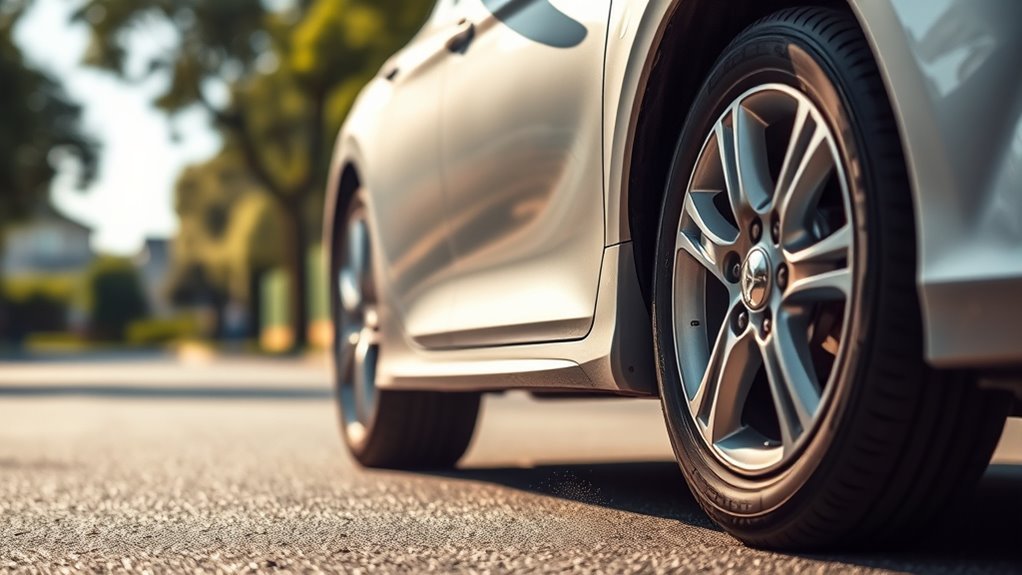
Squealing can come from the brakes, tires, or alignment. The timing matters. A squeal while pressing the brake pedal points toward brake pads, pad wear indicators, dust, debris, or rotor surface issues. A squeal while turning can point to tire scrub from alignment problems, low pressure, worn tread, or aggressive steering on a slick surface.
Brake Pad Wear
Brake-pad wear indicators are designed to make noise before the pads are fully worn out. Dirt, salt, rust, or small debris can also cause squeal, so the noise is not always an emergency. Still, you should not ignore it. Continued driving with worn pads can damage rotors, calipers, and other brake parts.
- Squeal only while braking: inspect pads, rotors, calipers, and brake hardware.
- Squeal while rolling without braking: check dust shield clearance, debris, wheel bearing, and tire rub.
- Squeal after a brake job: ask the shop to verify hardware, pad fitment, lubrication points, and rotor condition.
Alignment and Tire Wear
Alignment problems can make a Camry’s tire squeal because the tire is being scrubbed across the road instead of rolling cleanly. Excess toe or camber can wear one edge faster, reduce tire life, and make the car pull, wander, or feel unstable. If the Camry recently hit a pothole or curb, schedule an alignment check and inspect the tires for uneven wear.
The NHTSA’s TireWise guidance also emphasizes balance, alignment, rotation, pressure, and tread checks as part of safe tire maintenance.
Grinding Sounds From Brake Wear
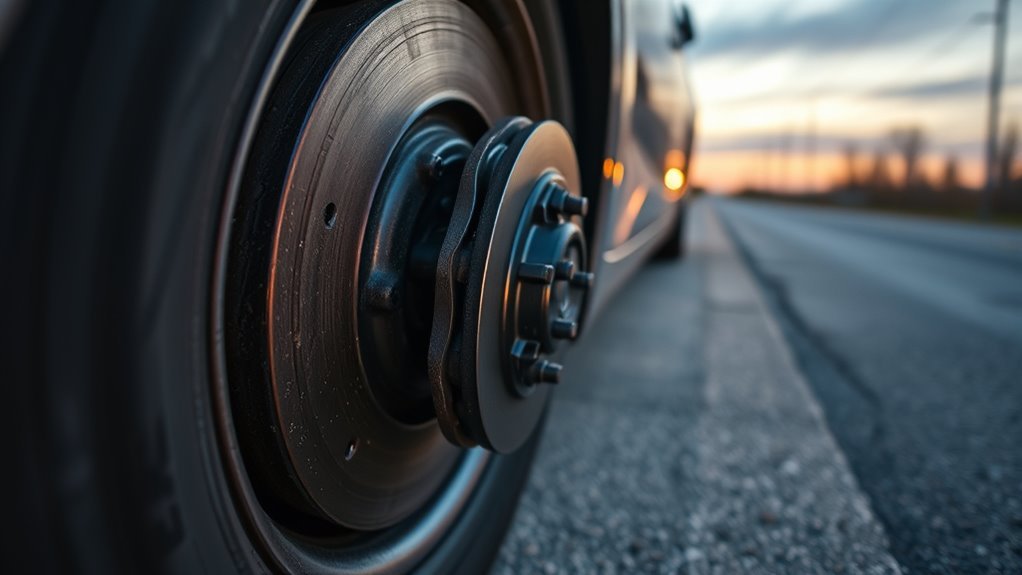
Grinding while braking is a warning sign. It often means the brake pads are worn enough for metal-to-metal contact, but it can also involve damaged rotors, calipers, trapped debris, or loose brake hardware. Either way, braking noise should be diagnosed promptly because stopping performance matters more than noise comfort.
- Inspect pad thickness and rotor surfaces immediately.
- Do not keep driving if the brake pedal feels soft, the car pulls hard, or the grinding is loud.
- Ask the shop to inspect calipers, slide pins, clips, backing plates, and rotor condition.
- After brake service, bed-in and hardware checks may be needed if the noise returns.
[Products Worth Considering]

This 1/2-inch drive breaker bar delivers powerful leverage for loosening and tightening stubborn lug nuts and automotive fasteners. The 180-degree flex head helps you reach tight spaces at the angle you need, making tire and brake jobs easier. A spring-loaded ball detent design holds 1/2-inch sockets securely while the chrome-moly head provides durable strength for everyday use.

The SAFELIFE dial tire tread depth gauge measures tread depth in 1/32 inch increments with clear, easy-to-read 2-inch dial face. Color zones using a traffic light system help you quickly judge whether tread is low, marginal, or ample for safer driving. Built with a durable zinc cast body and a metal detect probe for precise, comfortable use across cars, motorcycles, trucks, and buses.

Accurately measure tire tread depth with a calibrated gauge marked from 0 to 1 inch in 1/32 inch increments. The color-coded bar helps you quickly identify tread condition ranges, supporting safe driving for trucks, motorcycles, automobiles, and passenger vehicles.
Clicking or Clunking in Turns
If your Camry clicks, pops, or clunks while turning, the CV joints and front axles are primary suspects, especially if the sound is louder during tight turns or while accelerating through a turn. A torn CV boot can let grease escape and dirt enter, which can lead to joint wear. Wheel bearings, sway bar links, ball joints, and other suspension parts can also clunk under turning load.
| Symptom | Likely Area | What To Check |
|---|---|---|
| Sharp clicking on full lock | CV joint or axle | CV boots, grease leaks, axle play |
| Clunk while turning over a bump | Sway bar link, strut, mount, ball joint | Suspension play and torn bushings |
| Growl that changes while cornering | Wheel bearing | Hub play, roughness, heat, tire wear pattern |
| Clicking after recent wheel service | Wheel, brake, or dust shield issue | Lug torque, brake clips, shield clearance |
Rear Camry Tire Noise and Loose Suspension Parts
A loud thud from the rear of a Toyota Camry, especially over small bumps or potholes, often points to suspension rather than the tire itself. The rear tire should still be inspected first for pressure, damage, tread separation, and a bent rim. If the tire checks out, the next targets are shocks, struts, sway bar links, bushings, mounts, and rear alignment-related components.
- Noise over bumps: inspect shocks, struts, mounts, sway bar links, and bushings.
- Noise tied to wheel speed: inspect tire condition, wheel balance, bent rim, and bearing.
- Noise after a pothole: check the tire, wheel, alignment, and suspension before highway driving.
- Noise after brake or tire work: recheck wheel installation, brake hardware, backing plate clearance, and balance.
When Camry Tire Noise Needs Service
Camry tire noise needs service when it is new, persistent, tied to one corner, getting louder, or paired with vibration, pulling, braking changes, a TPMS warning, uneven tire wear, or visible tire damage. Mild road noise from old tires can wait for a planned tire inspection, but grinding brakes, a bulging tire, or a severe thump should not wait.
Use this simple urgency guide:
- Stop and inspect now: flat tire, bulge, exposed cord, tread separation, severe vibration, burning smell, loose wheel feeling, or loud grinding brakes.
- Schedule service soon: speed-related hum, uneven tread wear, repeated rear thud, clicking in turns, squeal while braking, or a TPMS warning.
- Monitor but do not ignore: mild road roar from older tires, faint squeak after rain, or occasional pebble/debris noise that disappears quickly.
NHTSA reported 511 traffic fatalities in tire-related crashes in 2024, so tire condition, pressure, tread, and noise deserve more than a quick guess.
How To Prevent Camry Tire Noise
You cannot prevent every pothole impact or worn part, but routine tire and brake care reduces many common noises.
- Check tire pressure monthly and before long trips.
- Use the driver-side door placard for the correct cold tire pressure.
- Inspect tread depth, bulges, cracks, cuts, and uneven wear monthly.
- Rotate tires at the interval recommended in your Toyota owner or maintenance guide.
- Balance tires when new tires are installed or when vibration appears.
- Get an alignment check after a curb hit, pothole impact, uneven tire wear, or steering pull.
- Have brake pads, rotors, calipers, and brake hardware inspected during regular maintenance.
- Do not ignore small suspension clunks; loose parts can wear other components faster.
For model-specific service intervals, use the Toyota maintenance guide for your Camry’s year and trim. Toyota’s 2025 Camry Warranty & Maintenance Guide is a useful example of how Toyota lays out scheduled inspections and owner responsibilities.
Frequently Asked Questions
What sounds like tire noise but is not?
Brake squeal, wheel-bearing hum, CV-joint clicking, suspension thuds, dust-shield rubbing, loose wheel-well liners, and road debris can all sound like tire noise. Separate them by when the sound happens: braking, turning, accelerating, hitting bumps, or driving at steady speed.
Can I drive my Camry with a humming tire noise?
A mild hum may come from tread wear or road surface, but a hum that gets louder with speed, changes while turning, or comes with vibration should be inspected soon. If the tire has a bulge, exposed cord, or rapid pressure loss, do not keep driving.
Why does my Camry make a thumping noise from one tire?
A one-corner thump can come from a damaged tire, separated belt, flat spot, bent wheel, missing balance weight, loose brake part, worn shock or strut, sway bar link, or bushing. Inspect the tire first, then have the wheel, brakes, and suspension checked.
Why is my Camry clicking when I turn?
Clicking during tight turns often points to a worn CV joint or axle, especially if the sound is louder while accelerating through the turn. A technician should also inspect the wheel bearing, brake hardware, ball joints, and sway bar links.
Can low tire pressure make a Toyota Camry noisy?
Yes. Low tire pressure can change how the tire contacts the road, increase sidewall flex, create heat, and contribute to irregular wear or vibration. Check pressure when the tires are cold and use the pressure listed on the driver-side door placard.
Conclusion
If your Camry is humming, thumping, squealing, grinding, clicking, or clunking, do not assume the tire is the only culprit. Tire pressure, tread wear, alignment, wheel balance, brakes, wheel bearings, CV joints, and suspension parts can all create noise near the tire. Match the sound to speed, braking, turning, and bumps; inspect visible tire damage first; and get professional service if the noise is persistent, one-sided, or safety-related.
Sources
- NHTSA TireWise — tire pressure, tread depth, tire damage, balance, alignment, rotation, TPMS guidance, and tire-related crash context.
- 49 CFR 571.138, Tire Pressure Monitoring Systems — federal TPMS performance requirements and significant-underinflation warning behavior.
- Toyota 2025 Camry Warranty & Maintenance Guide — Toyota maintenance responsibilities and scheduled inspection context.
- AAA Club Alliance: Vehicle Noises You Should Never Ignore — brake squeal, grinding, clicking in turns, and suspension-noise safety context.