
How to Remove Lug Nuts From a Tire: Tools, Torque & Tips
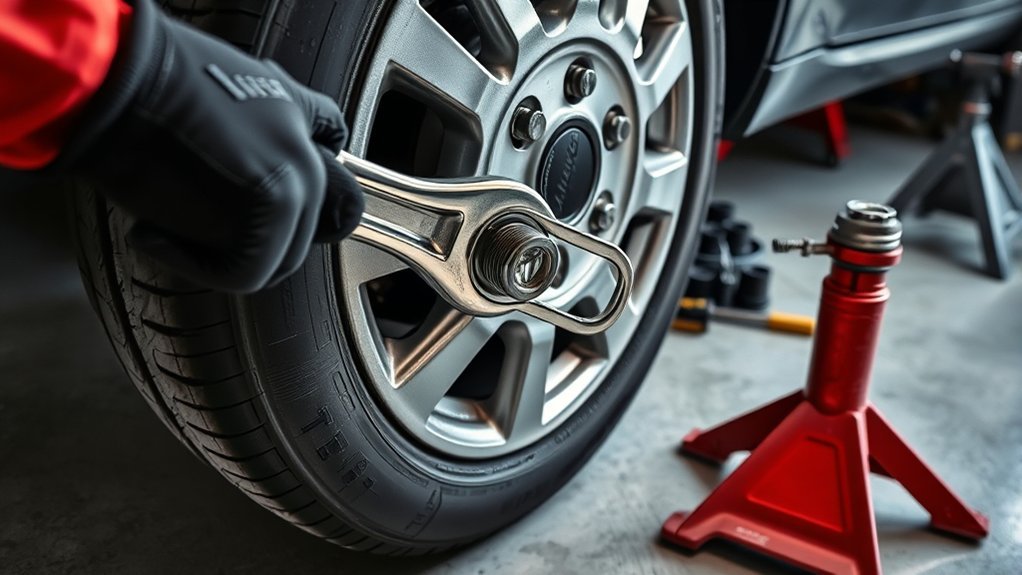
Use a breaker bar, tire iron, or impact wrench with impact-rated sockets to remove lug nuts. Loosen them in a star pattern while the tire is on the ground, then raise the vehicle if needed. If nuts are stuck, apply penetrating oil, steady pressure, and light taps. Avoid jerking the tool. Reinstall with a torque wrench to the owner’s spec, usually 70 to 100 lb-ft, and recheck after driving to make sure everything’s secure.
Key Takeaways
- Use a breaker bar, tire iron, or impact wrench with impact-rated sockets for maximum leverage and safe removal.
- Loosen lug nuts in a star pattern to distribute load evenly and avoid wheel or rotor damage.
- Apply penetrating oil and steady pressure to stuck lug nuts; avoid jerking the tool for better control.
- Secure the vehicle, wear safety gear, and use proper torque to prevent accidents and fastener damage.
- Reinstall lug nuts with a torque wrench to the manufacturer’s specification, then recheck torque after 50–100 miles.
Gather Your Lug Nut Tools
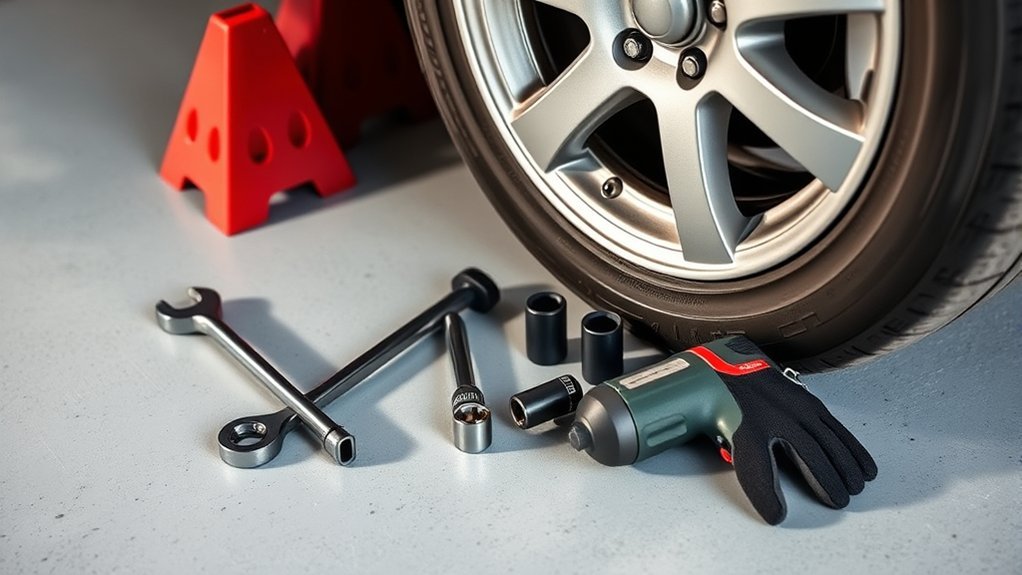
Before you start, gather the right tools: a breaker bar for maximum leverage on tight or rusted lug nuts, an impact wrench for fast removal, and impact-rated sockets to match it. You’ll get the cleanest workflow when you keep these tools within reach and sized correctly for your wheel hardware. The breaker bar gives you controlled force without relying on speed, so it’s the best manual option when rust or over-tightening resists movement. If you want faster turnaround, use an impact wrench with sockets rated for impact use; standard sockets can crack under repeated torque. A tire iron can work if you don’t have powered tools, but expect more effort. For especially stubborn fasteners, a cheater bar adds leverage to your breaker bar and helps you apply more torque without sacrificing control. With the right setup, you free the wheel from unnecessary resistance. Additionally, ensuring your tire choice matches your driving style can prevent future issues with lug nut tightening.
Loosen Lug Nuts Safely
With the vehicle still on the ground, fit your breaker bar or impact wrench to the lug nuts and loosen them in a star pattern so the load stays even across the wheel. You keep the tire planted, so the wheel won’t spin and your leverage stays controlled. If corrosion resists, spray penetrating oil on each fastener and wait 10 to 15 minutes before you try again. Then work the lug nuts free with firm, steady pressure; don’t jerk the tool. Wear safety glasses and gloves to shield your hands and eyes from grit, flakes, and sudden slips. Move methodically around the wheel, breaking each nut loose a little at a time rather than removing one completely before the others. This balanced approach helps protect the brake rotor and hub from distortion. When you loosen lug nuts safely, you claim control over the job without forcing stress into the hardware. Additionally, having a reliable spare tire kit can provide you with the necessary tools for roadside repairs if needed.
Use an Impact Wrench When Needed
If the lug nuts still won’t budge after you’ve loosened them by hand, an impact wrench can apply short, high-torque bursts that break rust and static friction fast. You get rapid, controlled force instead of constant strain, so the wheel comes free with less effort and more freedom. Choose an impact wrench rated for your vehicle; for most passenger cars, 250-600 ft-lbs is usually enough. Match the tool to the job so you don’t waste time or underpower the removal. Always use impact-rated sockets, because standard sockets can crack under repeated hammering. The impact wrench’s hammering action does the heavy lifting, but you still need precision. Once the lug nuts are off and you reinstall them, finish tightening with a torque wrench to meet manufacturer specs. That final step locks in safety and keeps your wheel secure on the road. Additionally, ensuring proper tire maintenance can prolong the life of your tires and improve overall performance.
Handle Stuck Lug Nuts
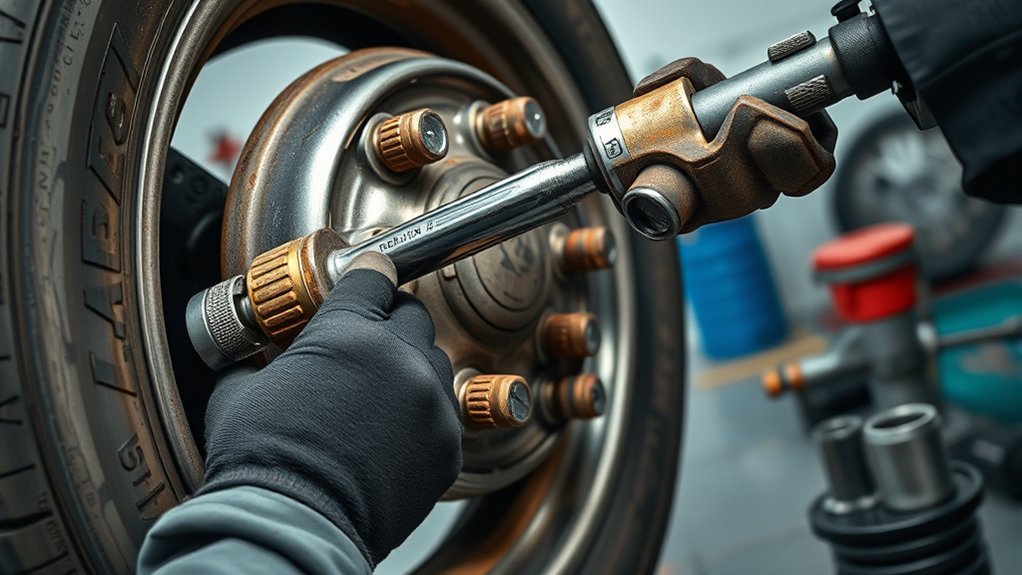
When a lug nut won’t budge, spray penetrating oil on the threads and let it soak for 10–15 minutes to break down rust and corrosion. Use a breaker bar for extra leverage, or apply short impact wrench bursts if you’ve got one. If it’s still seized, tap the nut lightly with a hammer to shock the threads and help free the bond. Ensuring proper tire pressure can help prevent stuck lug nuts by reducing rust buildup around the threads.
Breaker Bar Leverage
A breaker bar gives you the leverage needed to loosen stubborn lug nuts that a standard wrench can’t move. Use the breaker bar on the nut, then pull counterclockwise with steady, even force. Don’t jerk the handle; sudden loads can strip the lug nut or stress the tool. If the fastener won’t budge, slip a pipe over the breaker bar for extra leverage and torque, but keep control. Before you apply force, make sure the vehicle’s lifted securely and stable on proper supports. Rust and corrosion can raise resistance, so expect more effort on aged wheels. With the right breaker bar technique, you reclaim control without damaging the hardware or risking your safety.
Penetrating Oil Soak
Penetrating oil can free stuck lug nuts by breaking down rust and corrosion at the threads and base. Apply penetrating oil generously around each nut’s base, where rust locks the fastener to the wheel. Use a formula made for automotive work; it clings better to metal and lubricates more effectively. Let it soak 15-30 minutes so the oil can work into the threads. If the nut still resists, repeat the application and tap the nut lightly with a hammer to help the penetrating oil travel deeper. Keep the vehicle securely lifted and supported before you work. After soaking, use a breaker bar or impact wrench to apply controlled torque and avoid stripping the lug nut, so you can reclaim the wheel without damaging hardware.
Impact Wrench Bursts
If soaking hasn’t freed the lug nut, an impact wrench can deliver short bursts of torque that break static friction and jar rusted threads loose fast. You’ll feel the hammering action strike the fastener, and that shock often frees seized wheel nuts with less strain than a breaker bar. Choose a 1/2 inch drive impact wrench for heavy-duty trucks, or a 3/8 inch drive for smaller cars. Always use impact-rated sockets; standard sockets can crack under repeated blows. Remember that removal torque can exceed the original tightening torque, so control the bursts and don’t overdo it. Work in short trigger pulls, check progress, and keep your stance stable. With the right impact wrench, you can reclaim stuck lug nuts quickly and safely.
Use Impact Sockets and Leverage
Use impact sockets and the right leverage to break loose stubborn lug nuts safely and efficiently. You should always choose impact sockets, not standard sockets, because they’re built from thicker material and can absorb the shock from an impact wrench without cracking or rounding the fastener. A 1/2 inch drive impact wrench gives you the torque needed for heavy-duty removal, especially on larger vehicles where rust and over-tightening fight back. If the nut still won’t move, add leverage with a longer breaker bar or a pipe extension. That extra length multiplies force, so you can free the lug without straining your body. Use controlled bursts from the wrench and let the tool do the work. This method keeps you in command, reduces effort, and helps you reclaim the wheel faster. For added grip, consider using tires with improved wet traction, as this will enhance your overall driving stability and safety.
Tighten Lug Nuts With a Torque Wrench
Check your owner’s manual for the correct lug nut torque and use a calibrated torque wrench to reach the manufacturer’s spec, usually 75 to 100 lb-ft on most passenger vehicles. Tighten the nuts in a star pattern so you distribute clamping force evenly and avoid wheel distortion. After driving 50 to 100 miles, recheck the lug nuts and re-torque them if needed. Ensuring correct lug nut selection is essential for optimal performance and safety.
Correct Torque Specs
Correct torque matters because lug nuts that are too loose can work free, while over-tightening can warp the wheel or stretch the studs. You should check your owner’s manual for the correct torque specs, since manufacturers set different values by make and model. Use a calibrated torque wrench to dial in the exact setting; most passenger vehicles land between 70 and 100 lb-ft. Tighten each lug until the wrench clicks, then stop. Don’t guess, and don’t rely on impact tools for final tightening. Recheck your wrench’s calibration regularly so it stays accurate and dependable. After driving 50 to 100 miles, re-torque the lug nuts to account for settling. That simple discipline keeps your wheel secure and your vehicle free to roll safely.
Star Pattern Tightening
- Hand-tighten each lug nut until snug.
- Set your torque wrench to the vehicle’s specified lb-ft value.
- Tighten each nut in the star sequence, moving across the wheel.
- Stop when the wrench clicks; don’t force it past spec.
Most passenger vehicles call for 80 to 100 lb-ft, but you should check your owner’s manual for the exact number. Accurate torque prevents thread damage and over-tightening, so you keep control and safety where it belongs: in your hands.
Recheck After Driving
After you’ve driven 50 to 100 miles on the newly installed tire, re-torque each lug nut with a torque wrench to the manufacturer’s specified lb-ft value, usually 80 to 100 lb-ft on passenger vehicles. This recheck keeps the wheel clamped securely and helps prevent detachment on the road. Use a star pattern again so you distribute torque evenly and avoid warping the hub or wheel. If a lug turns too easily or resists oddly, inspect the threads before proceeding. Recheck torque after any tire change or maintenance, not just this one. Consistent tightening preserves proper tension, protects threads, and supports safe, independent driving. When you verify lug nut torque yourself, you keep control where it belongs: in your hands, not chance.
Set the Correct Lug Nut Torque
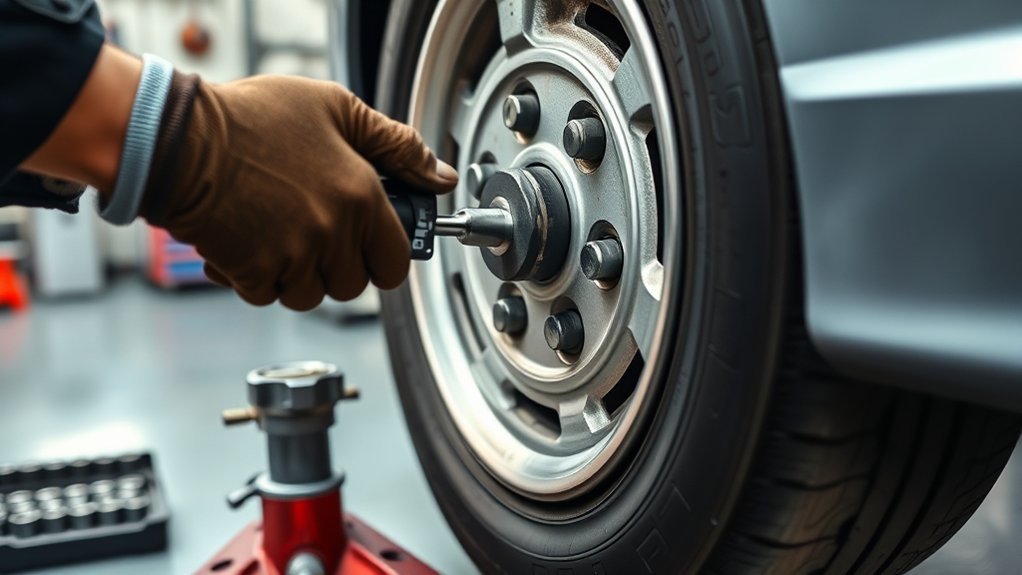
Set the lug nuts to the vehicle manufacturer’s specified torque, which you’ll find in the owner’s manual, because the correct value varies by model and wheel setup. To set the correct lug nut torque, you’ll use a torque wrench and tighten in a star pattern for even clamping force.
- Check the owner’s manual first; passenger vehicles often call for 80 to 100 lb-ft.
- Tighten each lug nut in stages, moving across the wheel instead of around it.
- Stop at the exact spec; under-tightening can let the wheel loosen, and over-tightening can warp the hub or damage threads.
- After 50 to 100 miles, re-torque the lug nuts so they stay secure.
If your vehicle is larger, expect a higher torque spec. Precise torque isn’t restrictive—it’s freedom from roadside failure, vibration, and premature wear. Additionally, maintaining consistent wear on your tires through proper torque can enhance their lifespan and performance.
Frequently Asked Questions
Can I Remove Lug Nuts With a Torque Wrench?
No, you shouldn’t remove lug nuts with a Torque Wrench. You can damage its calibration or overload the mechanism, and it’s built for tightening to a precise spec, not breaking fasteners free. Use a breaker bar or impact wrench instead; they deliver the leverage you need safely. If a lug’s stuck, apply penetrating oil and steady force, then reserve your Torque Wrench for final tightening only.
How Much Torque Do I Need to Take off a Lug Nut?
You usually need about 80–100 lb-ft to break off a passenger-car lug nut, though rust can push you higher. You might think more torque always wins, but Lug Nut Safety means using the right force, not brute strength. Check your owner’s manual for exact specs, and use a 1/2-inch drive impact if needed. For larger vehicles, you may need 150+ lb-ft. Finish with a torque wrench when you reinstall.
What Power Tool Do You Use to Take off Lug Nuts?
You use an Impact Wrench to take off lug nuts. It delivers short, high-torque bursts that break loose stubborn fasteners fast, so you don’t waste effort or strain your wrists. Pick a 1/2-inch drive for most vehicles, or a 3/8-inch drive for smaller cars. Use impact-rated sockets only, and work in controlled bursts so you stay precise, protect the wheel studs, and keep your motion free.
How to Get Lug Nut Out of Lug Nut Removal Tool?
To free it, clamp the tool securely, then spray penetrating oil around the stuck nut and wait a few minutes. Tap the tool with a rubber mallet to break corrosion, then turn it backward with a socket wrench. If it still won’t move, apply controlled heat to expand the metal. That’s Lug Nut Extraction: precise, calm, and effective, so you can reclaim your time and keep moving forward.
Conclusion
So, yes, your lug nuts do have feelings—at least when you attack them with the wrong socket or a heroic amount of force. Save the drama. Use the right tools, loosen them safely, and stop pretending “good and tight” is a torque spec. You’ll spare your wheels, your knuckles, and your dignity. Then tighten everything to the correct torque, because guessing is for fortune cookies, not tire maintenance.

Related Articles

How to Release Air From a Car Tire: Fast & Easy Deflation
Fast, safe tire deflation methods help you control pressure precisely, but which tool works best depends on your exact situation.
Read More
How to Put Studs in a Tire: Step-by-Step Studding Guide
Tackle tire studding the right way with this step-by-step guide, and discover the crucial sizing and placement tips before you start.
Read More
How to Plant Potatoes in a Tire: Step-by-Step Garden Hack
Fresh, space-saving potato-growing in tires is easier than you think, but the secret step that boosts your harvest comes later.
Read More