
What Does 92V Mean on a Tire? Load, Speed & Rating Guide
A tire marked 92V means you’re looking at a load index of 92 and a V speed rating. Load index 92 lets the tire carry up to 1,389 pounds when it’s inflated correctly. The V rating means it’s designed for sustained speeds up to 149 mph under ideal conditions. You should match both ratings to your vehicle’s requirements, and the sidewall holds more details that can help you choose the right tire.
Key Takeaways
- 92V is a tire service description: 92 is the load index, and V is the speed rating.
- Load index 92 means the tire can support 1,389 pounds (630 kg) when properly inflated.
- Speed rating V means the tire is rated for sustained speeds up to 149 mph under ideal conditions.
- Tire load and speed ratings must meet or exceed your vehicle manufacturer’s requirements for safe fitment.
- Proper inflation, correct size, and matching ratings across a set help maintain handling, load capacity, and safety.
What Does 92V Mean on a Tire?
A tire marked 92V tells you two key things: 92 is the load index, meaning the tire can carry up to 1,389 pounds when properly inflated, and V is the speed rating, meaning it can safely sustain speeds up to 149 mph under ideal conditions. In tire specifications, 92V gives you a fast way to read both capacity and speed limits. The load index falls in a moderate range, so you should compare it against your vehicle manufacturer’s requirements before you buy. The maximum load and speed rating work together to protect safety and preserve handling performance. If you choose a tire below the required rating, you risk losing control margins and reducing reliability. When you match or exceed the listed ratings, you support the vehicle’s intended dynamics and keep your setup compliant, efficient, and ready for liberated driving. Additionally, understanding the UTQG ratings can help you assess tire durability and performance more effectively.
Tire Load Index 92 Explained
A load index of 92 tells you the tire can carry up to 1,389 pounds (630 kg) when it’s properly inflated, so you can treat it as a precise load-capacity rating. You should verify that this capacity meets or exceeds your vehicle’s required load rating, since fitment depends on the manufacturer’s specifications. For compact cars and sedans, you’ll often find load index 92, but you should still confirm it against a load index chart before installation. Additionally, understanding your vehicle’s tire performance ratings can help ensure optimal safety and efficiency while driving.
Load Capacity Rating
The load capacity rating tells you how much weight a tire can safely carry, and a load index of 92 means it can support up to 1,389 pounds (630 kg) when properly inflated. On a 92V tire, the load index works with the tire speed rating to define safe performance under load. Check the tire’s sidewall for the maximum load, then compare it with your vehicle manufacturer’s specification. Higher load index numbers mean greater load carrying capacity, but 92 already suits many passenger vehicles for everyday use.
- 92 sits within the 70–126 load index range
- Proper inflation preserves rated capacity
- Match or exceed OE guidance
- Don’t exceed the maximum load per tire
Vehicle Fitment Needs
When you’re checking vehicle fitment needs, tire load index 92 means each tire can carry up to 1,389 pounds (630 kg) when properly inflated, which is enough for many standard passenger vehicles and some light trucks. You should verify that the 92 load index meets or exceeds your vehicle manufacturer’s requirement, because the maximum load capacity must match the axle load your setup demands. Check the tire sidewall for the full service description, including tire size and speed rating V, which permits 149 mph. Each load index step changes capacity, so don’t substitute a lower value. Proper inflation helps the tire deliver its rated support and stable performance. If you want safe, independent mobility, select tires that align with your vehicle’s intended use and payload.
What the V Speed Rating Means
- It defines a tire’s maximum speed capability.
- It’s part of a global tire size code system.
- It supports stable handling at higher speeds.
- It helps you choose tires that fit your use.
- Understanding the UTQG rating can also aid in selecting the right tire for your driving needs.
How 92V Affects Tire Safety
A 92V tire combines load and speed capability in one specification that directly affects safety on the road. The 92 load index means you’re limited to a maximum load of 1,389 pounds per tire when properly inflated, so staying within that limit protects tire safety and reduces heat buildup. The V speed rating indicates the tire can operate at up to 149 mph under recommended conditions, helping preserve stability and control. If you exceed the load index or run low pressure, you raise stress on the casing, which can damage vehicle dynamics and trigger failure. Proper inflation lets the tire carry its rated load and maintain its speed rating more reliably. You should also avoid mixing tires with different load indices or speed ratings, because that can disrupt handling balance. For the best protection, match your tires to the manufacturer’s recommendations and inspect them regularly. Additionally, choosing tires with high treadwear ratings can enhance longevity and performance under various driving conditions.
Can You Replace 92V With a Higher Rating?
Yes, you can usually replace a 92V tire with one that has a higher load index or speed rating, provided the new tire meets or exceeds your vehicle manufacturer’s specifications. The 92V code means a load index of 92, or about 1,389 pounds, and a V speed rating up to 149 mph. Choosing a higher rating can preserve performance, but you should match all four tires for consistent handling and safety.
- Check vehicle manufacturers’ tire specifications first.
- Verify the new load index supports your axle demands.
- Confirm the speed rating suits your driving conditions.
- Keep tire sizes, pressure, and construction compatible.
When you upgrade, you’re choosing more margin, not more freedom from physics. A higher rating can improve durability and confidence, but mismatched tires may alter steering response, braking balance, and ride quality. Consult the owner’s manual or placard before buying.
Can You Use a Lower Load or Speed Rating?
Using a lower load or speed rating than the vehicle manufacturer specifies can compromise safety and performance. If you choose a lower load rating, the tire’s load index may not support your vehicle’s weight, raising heat buildup, sidewall stress, and tire failure risk. You shouldn’t accept a lower load rating on replacement tires unless the spec explicitly allows it.
A lower speed rating can also reduce stability and handling at sustained speeds. In most cases, you should avoid lower speed-rated tires unless they’re winter tires designed for that service. Mixing tires with different load or speed ratings can create unpredictable responses, especially during braking and cornering.
Check your vehicle’s owner’s manual before buying replacement tires, and make sure the load index is equal to or higher than original equipment specs. If you’re unsure, ask a tire professional. You deserve tires that support safe, confident driving without limiting your freedom or control on the road. Additionally, ensure that the selected tires align with the treadwear warranty to guarantee performance and durability.
Where to Find 92V on the Sidewall
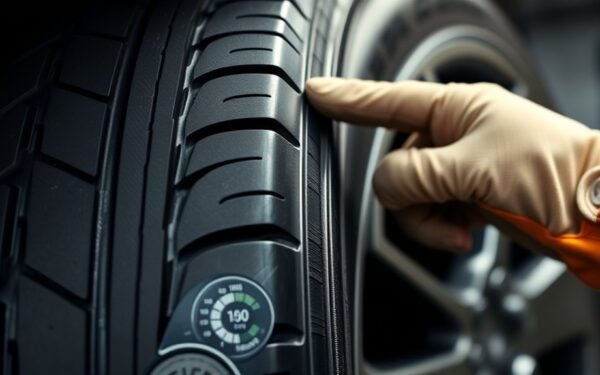
You’ll usually find the “92V” marking on the tire’s sidewall, placed after the tire size and before the manufacturing details. Read the tire’s service description to identify the load index and speed rating without guesswork. The 92V code tells you the tire’s maximum load capacity and its certified speed capability, so you can verify it against your vehicle manufacturer’s specifications.
- Check the full sidewall code, not just the tire size.
- Confirm 92 means the load index and 1,389 pounds max load capacity.
- Confirm V as the speed rating for up to 149 mph.
- Match the marking to your vehicle’s required tire size and service description.
When you inspect each tire, you gain clear control over fitment and safety. If the sidewall shows 92V, you know the tire was built to carry the specified load and handle the rated speed under proper inflation. Additionally, understanding the tire selection criteria can help you choose the best fit for your driving needs.
How 92V Compares to Other Tire Ratings
A 92V tire sits in the middle of the load-and-speed range, with a load index of 92 supporting up to 1,389 pounds per tire—more than 91 at 1,356 pounds, but less than 93 at 1,433 pounds. You can read that load index as the tire’s maximum load capacity when properly inflated, so 92V gives you solid everyday support without excess bulk. The V speed rating tells you the tire can manage up to 149 mph under ideal conditions, which matters when you want sharper performance and stable handling at speed. Compared with lower speed ratings like H, V gives you more headroom. In tire ratings, that makes 92V a balanced tire’s service description: enough capacity for common vehicles, and a higher speed rating than many alternatives. You can also substitute a 92 tire with a higher speed rating when fitment matches, gaining flexibility without giving up safety or control. Additionally, choosing a tire with enhanced traction in wet conditions can further improve your vehicle’s performance and safety.
Other Tire Markings to Know
Beyond the load index and speed rating, tire sidewalls can include other markings that help you match the tire to your vehicle and driving needs. You’ll also see tire sizes, construction codes, and service descriptions that work with the tire’s load index number and speed rating system. These tire markings tell you whether the tire fits your wheel, clears your suspension, and supports your required load capacity. If you need a higher load, compare the full marking set, not just one number. The speed rating also defines the tire’s maximum sustained speed under proper inflation and load. Never mix incompatible tire sizes or ratings unless the vehicle maker allows it. Precise matching gives you control, safety, and freedom on the road.
- Check sidewall size codes before mounting.
- Verify load capacity for cargo or passengers.
- Match speed rating to your driving style.
- Avoid mixing ratings across axle pairs. Additionally, understanding load capacity ratings is crucial for ensuring your tires can handle the demands of off-road adventures.
Frequently Asked Questions
What’s the Difference Between 92H and 92V Tires?
92H and 92V tires differ mainly in speed rating, not load capacity: both carry 1,389 pounds, so your load capacity comparison stays the same. You’ll get tire performance differences in speed rating implications, handling characteristics, heat resistance levels, and driving conditions impact. 92V handles higher speeds, often with better grip, while 92H may ride smoother and sometimes improve tire longevity factors and fuel efficiency considerations.
What Tire Rating Is Better, H or V?
V is usually better if you want sharper tire performance and higher speed ratings, like a hawk over open road. You’ll get stronger handling, better temperature resistance, and more support under demanding driving conditions. H can still suit you if you value comfort, tread durability, lower noise levels, and better fuel efficiency. Check your vehicle’s load capacity requirements first, because matching the manufacturer’s rating keeps your ride safe, precise, and free.
Which Is Better, 95H or 95V?
95V’s better if you need higher tire performance and faster speed ratings; 95H works fine when your driving conditions stay moderate. Both share the same load capacity, so you won’t gain extra weight support with V. You’ll get better handling, temperature resistance, and rubber compounds tuned for speed with V, but you should still inspect wear indicators and follow tire maintenance. Choose the rating your vehicle specifies, not hype.
What Does V Mean on Tires?
V means the tire’s speed rating, so you know how fast it can safely run under ideal conditions. You use it to judge tire performance, load capacity, and tire safety for your driving conditions. Higher speed ratings often support better grip, but they won’t automatically improve tire durability, tread patterns, or fuel efficiency. Match the rating to your vehicle’s needs, and you’ll keep control and confidence on the road.
Conclusion
In short, 92V tells you two critical things: your tire’s load index is 92, or 1,389 pounds per tire, and its V speed rating supports sustained speeds up to 149 mph. That combination matters because matching the correct load and speed ratings helps maintain handling, heat resistance, and safety. In one study, underinflated or overloaded tires were far more likely to fail, showing why you shouldn’t treat this code as just a label.

Related Articles
What Does 105V Mean on a Tire? Load, Speed & Rating Guide
Keen to know what 105V on a tire really means and why it matters for safety, performance, and fit?
Read More
What Causes Tire Separation? Warning Signs & What to Do
False confidence on the road can hide tire separation risks—discover the warning signs and what to do before a blowout catches you off guard.
Read More
What Punctures a Tire? Common Causes & How to Avoid Them
Keeping your tires safe from nails, debris, and hidden hazards isn’t always easy—discover what punctures a tire and how to avoid the next surprise.
Read More