
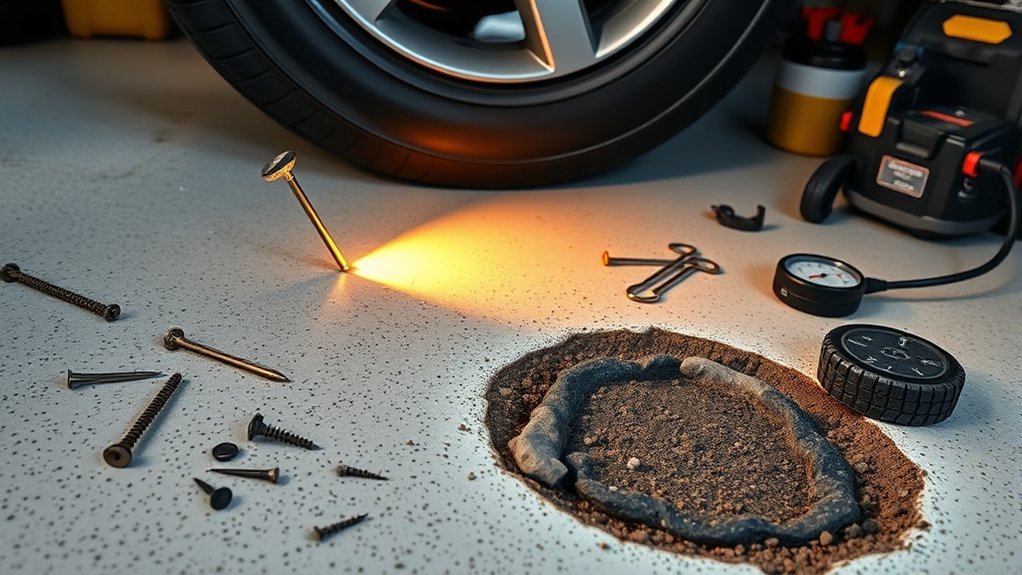
You can puncture a tire with nails, screws, glass, metal fragments, jagged plastic, sharp stones, pothole impacts, curb strikes, or low pressure that lets the casing flex and overheat. Some punctures cause a slow leak, while others create a sudden flat. The safest move is to inspect the tire, check pressure, and decide quickly whether the tire needs repair or replacement.
Quick Answer
Nails, screws, glass, metal scraps, jagged plastic, and sharp road debris can puncture a tire. Potholes, curb hits, damaged valve stems, bead leaks, low pressure, and worn tread can also cause air loss. Small punctures in the central tread may be repairable, but sidewall or shoulder damage usually means replacement.
Key Takeaways
- Nails, screws, glass, metal fragments, sharp stones, and jagged plastic can pierce tire tread or cut the sidewall.
- Potholes and curb impacts can damage the tire structure, rim, bead seal, or sidewall even when no object stays embedded.
- Low tire pressure increases heat, flexing, uneven wear, and the risk of tire failure.
- A small central tread puncture may be repairable after professional inspection, but sidewall, shoulder, bulge, exposed-cord, or severe-wear damage usually requires replacement.
- Check tire pressure monthly when the tires are cold, inspect tread often, and avoid visible debris whenever it is safe to do so.
At a Glance
| Time Required | 5 to 10 minutes for a visual check; longer if a tire shop must remove and inspect the tire |
| Difficulty | Easy for inspection; professional help recommended for repair decisions |
| Tools Needed | Tire-pressure gauge, flashlight, tread-depth gauge or penny, and soapy water for leak checking |
| Cost | Free for basic inspection; repair or replacement cost depends on tire size, damage, and local shop rates |
What Causes a Tire Puncture?
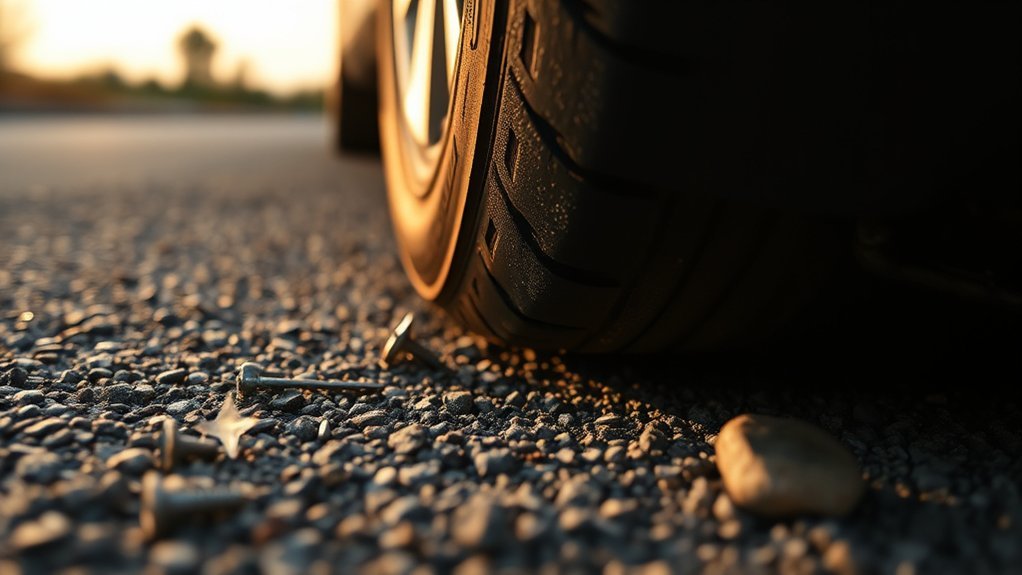
A tire puncture usually happens when a sharp object pierces the tread and creates a path for air to escape. Nails, screws, glass shards, metal fragments, sharp stones, and broken plastic are common causes. The leak may be slow if the object stays lodged in the tread, or fast if the object tears a larger opening.
You can also lose air without a visible nail in the tire. A cracked valve stem, damaged rim, bead leak, curb impact, pothole strike, or worn tread can all cause pressure loss. NHTSA tire-safety guidance notes that proper tire pressure affects safety, durability, and fuel consumption, so pressure checks matter even when the tire looks normal.
Inspect tires after driving through construction zones, littered roads, gravel shoulders, or areas with broken glass. Look for embedded debris, cuts, bulges, exposed cords, and any tire that looks lower than the others. Keeping tires properly inflated and choosing tires with appropriate treadwear, traction, and temperature ratings can support tire life, but no tire rating makes a tire puncture-proof. If you compare ratings, remember that the NHTSA Uniform Tire Quality Grading guide covers treadwear, traction, and temperature resistance, not immunity from punctures. Additionally, using tires with a high UTQG rating can help you compare wear expectations when choosing a durable tire for your vehicle.
Warning: Do not keep driving on a tire that is flat, severely underinflated, bulging, showing exposed cords, or leaking air quickly. Pull over safely, use the spare or roadside help, and have the tire inspected before driving at normal speed again.
Common Tire Puncture Causes
You’ll often see tire punctures start with sharp road debris that cuts through the tread. You also need to watch for potholes, curb strikes, and other road hazards, because impact damage can weaken the sidewall, bend a rim, or break the bead seal where the tire meets the wheel.
Regularly inspect your tires for valve stem wear, improper inflation, sidewall cuts, uneven tread, and embedded objects. Keeping a reliable spare tire kit on hand can also help you handle roadside emergencies faster.
Sharp Road Debris
Sharp road debris causes many flats. Nails and screws are especially common because they can stand upright long enough for tire weight to drive them into the tread. Glass shards, metal scraps, sharp stones, and jagged plastic can also cut rubber and start a slow leak.
After driving through debris, perform a visual inspection. Look for objects stuck in the grooves, fresh cuts, or a tire that appears lower than the others. If you find a nail or screw in the tread and the tire is still holding air, avoid pulling it out on the roadside unless you are prepared for the tire to deflate. Drive slowly to a safe repair location or use roadside assistance.
Tire Damage Sources
Not every puncture starts with obvious debris. Several tire damage sources can cut, slice, or weaken the rubber before you notice a problem:
- Sharp objects like nails, screws, glass shards, and metal fragments can pierce tread rubber quickly.
- Metal debris, such as muffler pieces, brackets, or broken vehicle parts, can slice the tread or sidewall.
- Jagged plastic, broken tools, sharp rocks, and construction waste can cut into tread blocks.
- Potholes and curb strikes can damage the tire body, bend the wheel, or break the tire bead seal.
- Low pressure can let the sidewall flex too much, creating heat and internal damage.
Watch curbs closely, because sidewall damage is usually not safely repairable. Regular visual inspections help you spot cuts, embedded objects, and early wear before they become roadside problems.
Why Nails and Glass Cause Flat Tires
Nails and screws can puncture your tire tread in construction zones, parking lots, alleys, and roadside debris. If the object stays lodged in the tread, it may act like a temporary plug while still allowing a slow leak. If it tears the rubber or falls out, the tire can lose air quickly.
Glass shards can cut through tread rubber, especially when the pieces are thick, angled, or pressed into the tire under vehicle weight. Because these hazards can damage your tire without obvious symptoms, you should inspect the tread after driving through glass, nails, or loose hardware. Regular tire maintenance, including checking tread depth and monitoring for foreign objects, can help you avoid unexpected flats.
Nail Puncture Risks
When you drive through construction zones, older neighborhoods, or areas with loose fasteners, nails and screws can puncture the tire tread and create slow leaks or sudden flats. A nail may stay embedded, letting air escape gradually, or it can open a larger path for air loss.
- Look for embedded metal or fresh cuts in the tread.
- Check tire pressure if the vehicle pulls, feels heavy, or triggers a TPMS warning.
- Get a professional inspection if you notice damage, repeated pressure loss, or a puncture near the shoulder.
Undetected punctures can reduce pressure, weaken the tire, and raise the risk of tire failure. A quick check after debris exposure helps you catch the problem before the tire overheats or the damage spreads.
Glass Shard Hazards
Glass shards from bottles, mirrors, and crash debris can slice through tire tread and create either an immediate flat or a slow leak that worsens over time. In city corridors, parking lots, and construction areas, glass shards are risky because their sharp edges cut rubber instead of simply pressing against it.
Inspect your tires visually after any contact with broken glass. Look for embedded fragments, cuts, bubbles, or uneven pressure. Early detection helps you stop tire problems before they spread. If you find damage, visit a tire repair shop promptly so a technician can decide whether a safe repair is possible or replacement is needed.
How Plastic and Metal Debris Damage Tires
Plastic and metal debris can puncture tires quickly because their sharp edges can cut into tread or sidewall rubber. You may run across jagged bottle caps, broken plastic trim, utility blades, screws, brackets, muffler pieces, or other road scraps. These hazards collect near work zones, shoulders, parking lots, and older roads.
- Scan the road ahead and avoid visible debris when it is safe to steer around it.
- If you drive over an object, stop in a safe place and inspect the tire.
- Check for pressure loss over the next day, because some debris creates a slow leak.
- Make regular inspections part of your routine to catch embedded fragments early. All-season tires, such as the Fullway HP108, can support daily driving needs when properly matched to your vehicle, but tire choice does not replace pressure checks and inspections.
When you stay alert and act quickly, you reduce the chance of a roadside stop. A quick visual check after rough routes can save you from a costly repair and help preserve safe handling.
Other Tire Damage That Causes Air Loss
Other tire damage can let air escape even when the tread looks intact, so you need to inspect more than just the tread surface. Check the valve stem for cracks, corrosion, or loose seals, because a damaged valve stem can leak slowly. Watch for tire bead leaks where the tire seats on the rim; a technician can confirm this with soapy water and reseal it properly.
Impacts with curbs or potholes can cause separation between the tire and rim, creating a hidden path for air loss. If you use aluminum rims, corrosion or small wheel cracks can also cause slow pressure loss. Maintain recommended pressure, avoid overloading the vehicle, and inspect tires after hard impacts. NHTSA recommends checking all tires, including the spare, at least once a month when the tires are cold. Additionally, be mindful of treadwear ratings as one part of comparing tire durability and maintenance needs.
Pro Tip: Check pressure before driving or at least three hours after parking. Tires heat up during use, and warm pressure readings can hide a low cold-pressure problem.
Signs Your Tire Has a Puncture
When a tire starts losing air, you may feel it before you see it. Steering may feel sluggish, the vehicle may drag at low speeds, or it may pull steadily to one side as the damaged tire changes the car’s balance.
NHTSA reported 511 traffic fatalities in tire-related crashes in 2024, which is why pressure checks, tread checks, and fast puncture response matter.
- A TPMS warning means at least one tire may be significantly underinflated and needs prompt inspection.
- A tire that gets noisy in corners may be losing pressure or changing contact with the road.
- A parked tire that looks bulged, collapsed, or lower than the others needs inspection.
- A repeated pressure drop in the same tire may point to a nail, valve leak, bead leak, or rim issue.
- Visible cuts, bubbles, exposed cords, or sidewall cracking are warning signs that replacement may be needed.
These symptoms can point to a puncture, leak, or structural damage, not just normal wear. Don’t ignore the cue: driving farther can worsen damage and make repair harder. If you spot any of these changes, stop safely, inspect the tire, and arrange repair before the tire compromises control. Also, maintaining proper tire pressure is crucial to reduce tire stress and support safe performance.
What Your TPMS Warning Means
A Tire Pressure Monitoring System, or TPMS, warns you when tire pressure is too low or when the system has a fault. Under the federal TPMS standard, the system is designed to warn drivers of significant underinflation and related safety problems. The standard also describes a threshold tied to pressure that is 25% below the vehicle manufacturer’s recommended cold inflation pressure, or the applicable minimum in the standard, whichever is higher.
If the TPMS light turns on, inspect the tires and check pressure as soon as possible. If the light flashes for about a minute and then stays on, the system may have a malfunction and should be checked. TPMS helps, but it is not a substitute for regular tire maintenance. You should still check pressure monthly with a gauge and follow the pressure on the driver-door label or owner’s manual, not the maximum pressure molded on the tire sidewall.
What to Do After Driving Over Sharp Debris
If you drive over nails, glass, metal, or sharp plastic, stay calm and avoid sudden steering or braking. Pull over only when you can do so safely. Then follow these steps:
- Look at all four tires for embedded objects, cuts, bulges, or a tire that sits lower than the others.
- Check pressure with a gauge if you have one.
- Listen for hissing near the tread, valve stem, and rim.
- Use soapy water on the tread, valve, and bead area if you are checking a slow leak at home; bubbles can reveal escaping air.
- Do not remove a deeply embedded nail or screw unless you are ready to install a spare or have the tire repaired immediately.
- Drive only as far as needed to reach a safe repair location if the tire is holding pressure and has no visible sidewall damage.
If the tire is flat, badly underinflated, or damaged on the sidewall, use a spare, call roadside assistance, or have the vehicle towed. Driving on a flat can damage the tire and wheel beyond repair.
[Products Worth Considering]

Measure tire tread depth quickly and accurately with this LUMITECO dial gauge that reads in 1/32" increments up to 14/32". The color-coded green/yellow/red zones make it easy to judge tire wear and know when replacement is needed. A rugged, compact design with a protective pouch helps keep the gauge ready for use on cars, trucks, motorcycles, and more.
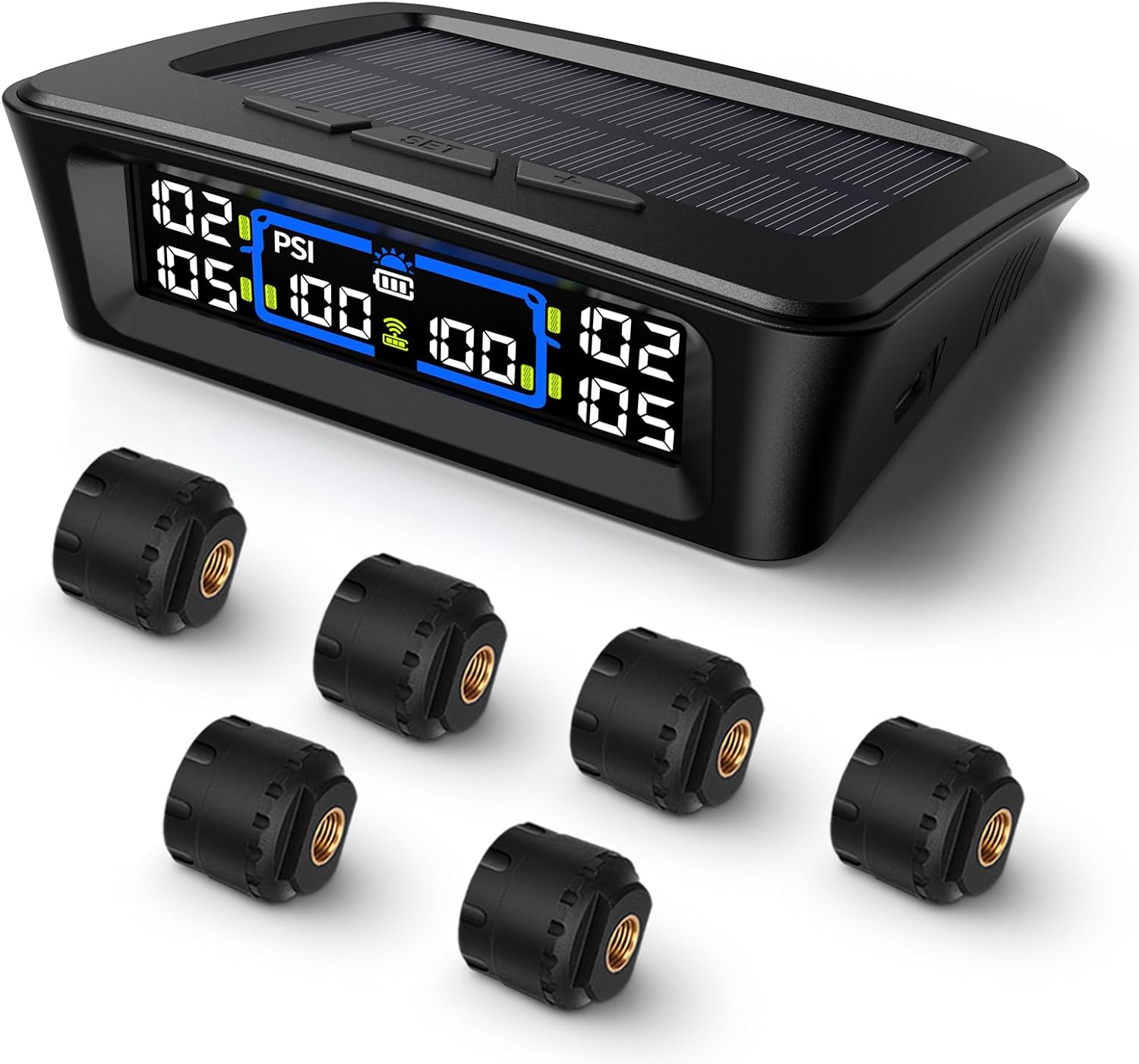
The Tymate TM12 RV TPMS delivers real-time tire pressure and temperature monitoring with a stable 433Hz display for safer long-distance driving. It supports simultaneous monitoring across vehicle and trailer zones, includes six alarm modes for pressure, temperature, leakage, battery, and signal loss, and features easy DIY installation with auto calibration. Power is supplied via USB-C charging or solar recharging, with a wide 0–144 PSI range and up to 50 ft signal coverage for RVs and towable trailers.

The SAFELIFE dial tire tread depth gauge measures tread depth in 1/32 inch increments with clear, easy-to-read 2-inch dial face. Color zones using a traffic light system help you quickly judge whether tread is low, marginal, or ample for safer driving. Built with a durable zinc cast body and a metal detect probe for precise, comfortable use across cars, motorcycles, trucks, and buses.
How to Avoid Tire Punctures on the Road
Once you’ve spotted the warning signs of a puncture, the next step is preventing one in the first place. Inspect your tires often for nails, glass, screws, and sharp plastic, especially after construction zones or older neighborhoods. These hazards are a common cause of tread cuts and slow leaks.
Keep tire air at the manufacturer’s recommended pressure. Under-inflation raises flex, heat, and wear, while overinflation can reduce ride comfort and contribute to uneven wear. On the road, avoid metal objects, broken vehicle parts, potholes, and visible shards that can slice rubber or damage the wheel. If you see debris, steer clear when it is safe instead of guessing your clearance.
Check valve stems and wheel condition during routine maintenance so you can catch air loss that is not obvious from the outside. NHTSA also advises checking tread at least once a month when you check pressure and replacing tires once tread is worn to 2/32 inch. Additionally, maintaining the right tire air pressure supports tire life and reduces the risk of pressure-related damage.
Note: Tire rotation can help reduce irregular wear, but it will not fix a puncture, sidewall damage, or a tire that is already unsafe. Follow your owner’s manual for rotation patterns and intervals.
[Products Worth Considering]

Monitor tire tread wear with a smart, color-coded depth gauge that shows clear condition ranges at a glance. The bar is range marked for fast, easy readings, helping you maintain safer traction and performance. Each gauge is portable with a pocket clip, and the set includes 20 units for daily use and sharing.

TireJect Off-Road Tire Sealant Kit provides 5-in-1 sealing to help fix tread punctures up to 3/8", sidewall punctures up to 3/8", bead leaks, slow leaks, and minor dry rot on low-speed tires. It permanently seals with liquid rubber, recycled tire particles, and Aramid fibers, making it ideal for flats caused by thorns, nails, and screws. The included dispensing cap attaches to the valve stem for a no-mess installation, along with a metal valve core remover tool and valve stem cap. This kit is for off-road use only.

Accurately measure tire tread depth with a calibrated gauge marked from 0 to 1 inch in 1/32 inch increments. The color-coded bar helps you quickly identify tread condition ranges, supporting safe driving for trucks, motorcycles, automobiles, and passenger vehicles.
When to Repair or Replace a Punctured Tire
A punctured tire may be repairable if the damage is small, located in the central tread area, and the tire has no internal damage, severe wear, sidewall injury, shoulder injury, bulge, or exposed cords. A qualified tire technician should remove the tire from the wheel and inspect the inside before making the repair decision.
Sidewall punctures usually call for replacement because the sidewall flexes constantly and carries important structural loads. Punctures near the shoulder, large cuts, multiple close punctures, run-flat damage, and damage from driving while flat can also make repair unsafe.
- Repair only a small puncture in the repairable tread area after professional inspection.
- Replace tires with sidewall damage, shoulder damage, severe tread wear, structural damage, bulges, exposed cords, or damage from being driven flat.
- Schedule regular inspections so you catch punctures early. Regular tire rotation can help extend tire life when the tires are otherwise safe and properly inflated.
Do not rely on a plug-only roadside repair as a final safety decision. A proper shop inspection matters because sealing, internal damage, and wheel balance all affect whether the tire is safe to keep using.
[Products Worth Considering]
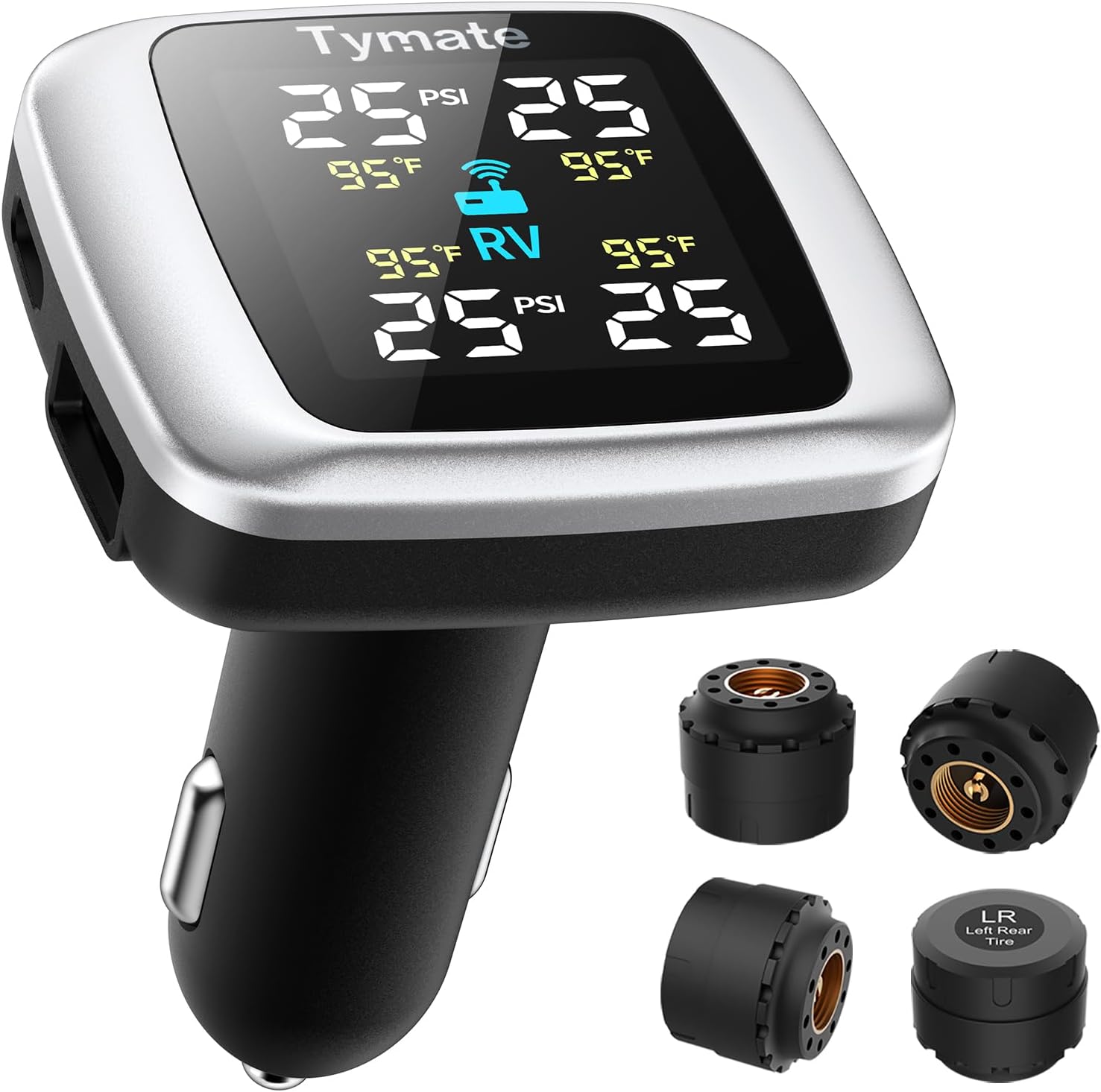
Tymate TM7 is a wireless tire pressure monitoring system that delivers real-time pressure and temperature readings for safer driving. It includes four external sensors, a bright color LCD display with adjustable backlight, and six alarm modes for high/low pressure, fast leakage, high temperature, and sensor signal or battery issues. The system covers a wide 0–144 PSI range and plugs into your vehicle’s cigarette lighter socket for quick DIY setup.

Rhino USA’s 86-piece tire repair kit provides everything you need for quick, emergency flat repairs, including a reamer and plug insertion tool plus 60 reusable tire plugs. The heavy-duty, metal-handled design helps you fix punctures from nails and screws on tubeless tires for cars, trucks, motorcycles, ATVs, UTVs, and more. A high-visibility compact case stores easily for on-the-go use, with illustrated instructions to help you complete repairs with confidence.

This 100-piece set of snap-in tubeless tire valve stems is designed for standard 0.453 in (11.5 mm) rim holes and helps maintain reliable, steady tire pressure. Made with ozone-resistant rubber and brass cores, the valves are built for durability and long-term use. Easy to install by hand, they support safe driving and are suitable for cars, light trucks, trailers, and more.
Frequently Asked Questions
What can puncture a tire easily?
Sharp objects like nails, screws, glass, metal scrap, sharp stones, and jagged plastic can puncture a tire easily. Road debris after storms, construction zones, and littered parking lots raise the risk. Keep your tire maintenance routine simple: inspect tread, check cold pressure monthly, and act quickly when one tire keeps losing air.
What items can puncture a tire?
Nails, screws, bolts, glass fragments, metal shards, utility blades, construction tools, sharp rocks, and broken plastic can puncture a tire. You may also get air loss from a damaged valve stem, cracked rim, bead leak, pothole impact, or curb strike. Inspect your tires regularly and drive with care where the pavement looks dirty or damaged.
What causes a tire to puncture?
A tire punctures when enough force pushes a sharp object through the tread or cuts the sidewall. Common causes include nails, glass, metal debris, potholes, curb hits, low pressure, worn tread, and road debris. You can reduce risk by checking pressure, inspecting tread and sidewalls, replacing aging or damaged tires, and avoiding broken pavement when possible.
What does it take to puncture a tire?
It takes a sharp object, a hard impact, or weakened rubber for a tire to puncture. A small nail can cause a slow leak if it reaches the air chamber. A pothole or curb can damage the sidewall, bead, or rim. Bad tire pressure, worn tread, aggressive driving, and skipped checks make damage more likely.
Can a sidewall puncture be repaired?
A sidewall puncture is usually not safely repairable. The sidewall flexes as the tire rolls, so a repair in that area may not hold and may leave the tire structurally weak. Replace the tire if a technician finds a sidewall puncture, sidewall cut, bulge, exposed cord, or impact break.
Should I pull a nail out of my tire?
Do not pull out a nail on the roadside unless you are ready for the tire to lose air. If the tire still holds pressure, drive slowly to a safe repair location or call roadside assistance. A tire shop can remove the object, inspect the inside of the tire, and decide whether repair is safe.
Conclusion
When you spot a tire puncture early, you avoid a roadside surprise and reduce the chance of a bigger repair bill. The same debris that causes a slow leak, such as nails, glass, plastic, screws, or metal scraps, often leaves clear warning signs if you know what to check.
Inspect your tires regularly, keep pressure at the vehicle manufacturer’s cold-pressure setting, avoid visible road hazards, and replace damaged rubber when needed. The habits that prevent punctures also support safer handling, longer tire life, and better fuel efficiency.
Sources
- NHTSA TireWise: Tire Safety Ratings and Awareness — supports tire pressure, tread depth, rotation, TPMS, blowout safety, and tire-related crash context.
- 49 CFR § 571.138: Tire Pressure Monitoring Systems — supports TPMS purpose, warning threshold, and owner-manual warning language.
- NHTSA Consumer Guide to Uniform Tire Quality Grading — supports treadwear, traction, and temperature rating context.
- NHTSA Recalls Search — supports checking tire and vehicle recalls when a safety defect may be involved.
