
What Does 105V Mean on a Tire? Load, Speed & Rating Guide
105V on a tire means the tire has a load index of 105 and a V speed rating. In plain terms, that tire can carry up to 925 kg (2,039 lb) per tire when properly inflated, and it has a speed rating of up to 149 mph (240 km/h) under rated test conditions. You should still match the full tire size, load index, and speed rating to your vehicle’s door placard or owner’s manual before buying replacements.
Quick Answer
A 105V tire rating means 105 is the load index, rated for 925 kg (2,039 lb) per tire, and V is the speed rating, rated up to 149 mph (240 km/h). It is a tire capability code, not permission to overload the vehicle or exceed safe road speeds.
Key Takeaways
- 105V combines two ratings: 105 is the load index and V is the speed rating.
- Load index 105 equals 925 kg (2,039 lb) per tire when the tire is inflated correctly.
- Speed rating V means the tire is rated up to 149 mph (240 km/h) under proper conditions.
- You should match or exceed the tire rating listed on your vehicle placard or in the owner’s manual.
- Do not treat a speed rating as a safe driving speed; road conditions, laws, load, tread, and pressure still matter.
What Does 105V Mean on a Tire?
A tire marked 105V uses a short code to show two limits. The number 105 is the load index, which tells you how much weight one tire can support at its rated pressure. For load index 105, that value is 925 kg (2,039 lb) per tire. The letter V is the speed rating, which means the tire is rated up to 149 mph (240 km/h) under rated conditions.
You should read 105V as a safety and fitment code, not as a performance promise for every situation. The tire must still be the correct size, properly inflated, mounted on a suitable wheel, and used within your vehicle’s load limits. A damaged, underinflated, overloaded, or badly worn tire cannot be treated as safe just because the sidewall shows 105V.
| Code Part | Meaning | 105V Value |
| 105 | Load index | 925 kg / 2,039 lb per tire |
| V | Speed rating | 149 mph / 240 km/h |
Warning: A speed rating is not a recommendation to drive at that speed. Posted limits, weather, tire pressure, tread depth, vehicle load, and tire condition always control what is safe.
[Products Worth Considering]

Measure tyre tread depth precisely with a digital gauge that reads in both MM and inches, helping you monitor safe driving conditions. The large LCD screen is easy to operate, and the compact tool fits for cars, trucks, and motorcycles. It provides high accuracy with a 0-25.4mm range and includes a 1-year warranty for added peace of mind.
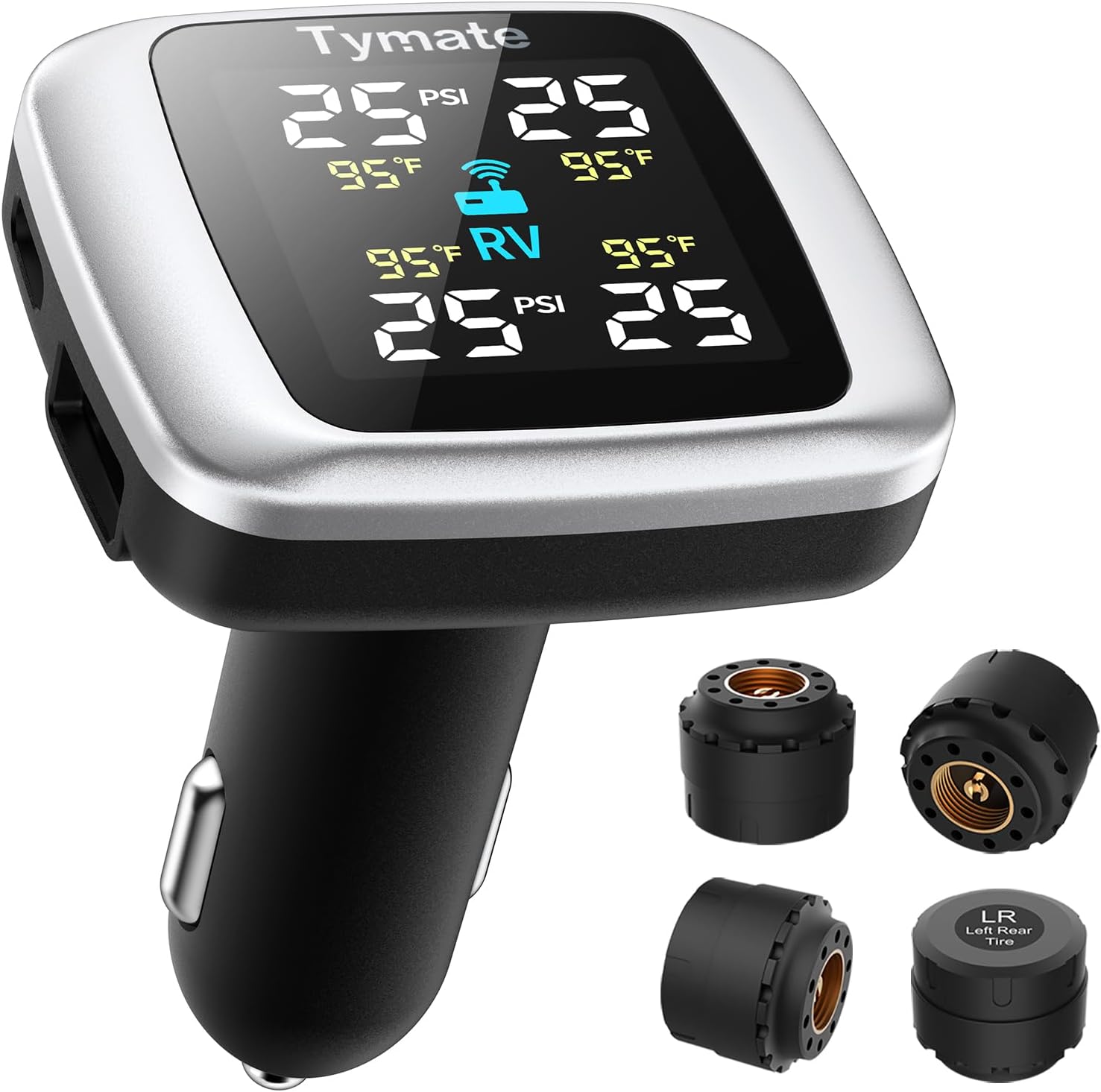
Tymate TM7 is a wireless tire pressure monitoring system that delivers real-time pressure and temperature readings for safer driving. It includes four external sensors, a bright color LCD display with adjustable backlight, and six alarm modes for high/low pressure, fast leakage, high temperature, and sensor signal or battery issues. The system covers a wide 0–144 PSI range and plugs into your vehicle’s cigarette lighter socket for quick DIY setup.

Milton S-921 pencil tire pressure gauge helps you maintain optimal tire pressure for passenger cars with accurate readings in PSI and kPa. It features a built-in deflator valve for convenient pressure adjustments, plus a single chuck head and nylon indicator bar for easy use on the go. Built from durable plated brass and designed for reliable performance, it’s a practical road trip and cold-weather maintenance tool.
How to Read a Tire Sidewall Code
Once you understand 105V, the rest of the tire sidewall code becomes easier to read. A common format looks like 205/55 R18 105V. Each part tells you something different about the tire’s size, construction, load capacity, and rated speed.
- 205 means the tire section width is about 205 millimeters.
- 55 is the aspect ratio, meaning the sidewall height is 55% of the tire’s width.
- R means radial construction.
- 18 means the tire fits an 18-inch wheel.
- 105 is the load index.
- V is the speed rating.
You may also see marks such as XL, SL, M+S, 3PMSF, and DOT date codes. Those markings describe load range, winter capability, or manufacturing information, but they do not replace the load index and speed rating. For replacement tires, read the full sidewall and compare it with the vehicle placard, not just the final two characters.
Why 105V Matters for Load and Speed
The 105V rating matters because the wrong rating can reduce safety, handling, and tire life. A tire with a lower load index may not be able to support the weight your vehicle places on it, especially when carrying passengers, cargo, or towing within the vehicle’s approved limits. A lower speed rating can also change the tire’s heat resistance and performance margin at highway speeds.
NHTSA recommends choosing tire size based on the vehicle owner’s manual or the Tire and Loading Information Label on the driver’s door edge or doorjamb. That label is more important than guessing from a tire that may have been installed by a previous owner.
Proper inflation is just as important. The correct cold tire pressure is the pressure listed by the vehicle manufacturer, not necessarily the maximum pressure molded on the tire sidewall. Underinflation can increase heat, wear, fuel use, and blowout risk, while overloading a tire can push it beyond the capacity shown by its load index.
Pro Tip: Check tire pressure when the tires are cold, before the vehicle has been driven for several hours. Warm tires can show a higher pressure reading and lead you to adjust them incorrectly.
105V vs 105H, 105W, and 105Y Tires
The number tells you the load capacity. The letter tells you the speed rating. So 105H, 105V, 105W, and 105Y all share the same 925 kg / 2,039 lb load index, but they have different speed ratings.
| Rating | Load Capacity | Speed Rating | What It Means |
| 105H | 925 kg / 2,039 lb | 130 mph / 210 km/h | Lower speed rating than V |
| 105V | 925 kg / 2,039 lb | 149 mph / 240 km/h | Common for many touring and performance tires |
| 105W | 925 kg / 2,039 lb | 168 mph / 270 km/h | Higher speed rating than V |
| 105Y | 925 kg / 2,039 lb | 186 mph / 300 km/h | Higher speed rating than W |
A higher speed rating is not automatically “better” for every driver. The right choice is the tire that matches your vehicle’s required size, load index, speed rating, climate needs, and driving style. A 105W or 105Y tire can be acceptable if it meets the vehicle requirements, but a lower rating such as 105H should only be used when the vehicle manufacturer or a qualified tire professional confirms it is allowed.
Can You Use a Different Tire Rating Instead of 105V?
You can sometimes use a different rating instead of 105V, but the replacement tire should usually meet or exceed the vehicle’s required load index and speed rating. If your vehicle calls for 105V, a tire with a lower load index should not be used. A lower speed rating can also reduce the vehicle’s approved tire capability unless the vehicle manufacturer specifically allows that change.
Using mixed ratings across the same vehicle can create uneven handling, braking, and stability. This is especially important on all-wheel-drive vehicles, performance vehicles, and vehicles with staggered tire sizes. For the best control, keep all four tires matched by size, brand/model, load index, speed rating, and similar tread depth unless the vehicle was designed for a different front and rear setup.
If you are replacing only two tires, follow your vehicle manual and tire-shop guidance for placement. When in doubt, replace all four with the same specification shown on the door placard or owner’s manual.
Where to Find 105V on the Sidewall
You will usually find 105V near the end of the tire size code on the sidewall. For example, in 205/55 R18 105V, the final “105V” is the service description. It may appear after the rim diameter and before or near other markings such as XL, M+S, DOT, or the date code.
Check both sides of the tire if you cannot find the complete code right away. Some markings are easier to see on the outer sidewall, while other technical details may be molded on the inner sidewall. Use a flashlight if the tire is dirty or the lettering is shallow.
[Products Worth Considering]

Monitor tire tread wear with a smart, color-coded depth gauge that shows clear condition ranges at a glance. The bar is range marked for fast, easy readings, helping you maintain safer traction and performance. Each gauge is portable with a pocket clip, and the set includes 20 units for daily use and sharing.

The SAFELIFE dial tire tread depth gauge measures tread depth in 1/32 inch increments with clear, easy-to-read 2-inch dial face. Color zones using a traffic light system help you quickly judge whether tread is low, marginal, or ample for safer driving. Built with a durable zinc cast body and a metal detect probe for precise, comfortable use across cars, motorcycles, trucks, and buses.

Accurately measure tire tread depth with a calibrated gauge marked from 0 to 1 inch in 1/32 inch increments. The color-coded bar helps you quickly identify tread condition ranges, supporting safe driving for trucks, motorcycles, automobiles, and passenger vehicles.
How to Check If 105V Is Right for Your Vehicle
To confirm whether 105V is right for your vehicle, use this simple process:
- Check the driver’s door placard. Look for the Tire and Loading Information Label on the driver’s door edge, doorjamb, or B-pillar.
- Read the owner’s manual. It may list approved tire sizes, load ratings, speed ratings, and pressure settings.
- Compare the full tire size. Match the width, aspect ratio, construction, rim diameter, load index, and speed rating.
- Confirm cold tire pressure. Use the pressure listed by the vehicle manufacturer, not the tire’s maximum sidewall pressure.
- Ask a qualified tire shop if changing ratings. This is important if you tow, carry heavy loads, drive an EV, use winter tires, or have AWD.
Note: Load index and load range are related but not the same. Load index is the numeric carrying-capacity code, while load range or XL markings describe the tire’s strength and pressure category.
Common Mistakes to Avoid With 105V Tires
- Do not replace 105V with a lower load index unless the vehicle manufacturer confirms it is approved.
- Do not assume V means “safe at any speed.” It is a lab-based speed rating under rated conditions.
- Do not use sidewall maximum pressure as your normal inflation target. Use the vehicle placard or owner’s manual.
- Do not ignore tire condition. Age, tread depth, punctures, sidewall damage, and uneven wear can all reduce safety.
- Do not mix different tire types casually. Different ratings, tread depths, and models can affect handling and drivetrain behavior.
Frequently Asked Questions
Is W or V better for tires?
W has a higher speed rating than V, so it is rated for a higher maximum speed under test conditions. That does not automatically make it better for your vehicle. The best tire is the one that matches your required size, load index, speed rating, climate, ride needs, and manufacturer recommendations.
What does V mean on a tire?
V is the tire’s speed rating. It means the tire is rated up to 149 mph, or 240 km/h, when used within its load, pressure, and condition limits. It does not override road laws, weather conditions, tread condition, or vehicle limits.
What does 105Y mean on a tire?
105Y means the tire has the same load index as 105V, so it can carry 925 kg, or 2,039 lb, per tire when properly inflated. The Y speed rating is higher than V and is rated up to 186 mph, or 300 km/h, under rated conditions.
What’s the difference between 105H and 105V tires?
105H and 105V have the same load index, so both are rated for 925 kg, or 2,039 lb, per tire. The difference is speed rating. H is rated up to 130 mph, while V is rated up to 149 mph. Do not downgrade from V to H unless your vehicle manufacturer or tire professional confirms it is acceptable.
Can I mix 105V with 105W tires?
A 105W tire has the same load index and a higher speed rating than 105V, but mixing tire models or ratings is still not ideal. For predictable handling, use matching tires across the axle and preferably all four positions unless your vehicle manual allows a specific mixed setup.
Is 105V good for SUVs or light trucks?
It can be, but only if the full tire size, load index, speed rating, and load range match the vehicle’s requirements. Many SUVs use load index values near this range, but you should rely on the door placard and owner’s manual instead of assuming 105V is correct.
Conclusion
In short, 105V tells you two important tire limits: 105 means the tire can carry 925 kg (2,039 lb) per tire when properly inflated, and V means it is speed-rated up to 149 mph (240 km/h) under rated conditions. Before replacing tires, check the complete sidewall code against your vehicle placard and owner’s manual. The right rating helps protect handling, load capacity, heat resistance, and everyday safety.
Sources
- NHTSA TireWise — supports tire placard, correct tire size, cold tire pressure, and tire maintenance guidance.
- Discount Tire Load Range vs. Load Index Guide — supports load index and load range explanations.
- Tire Code Reference — supports the load index and speed rating values used for 105, H, V, W, and Y ratings.
[Products Worth Considering]

Measure tire tread depth quickly and accurately with this LUMITECO dial gauge that reads in 1/32" increments up to 14/32". The color-coded green/yellow/red zones make it easy to judge tire wear and know when replacement is needed. A rugged, compact design with a protective pouch helps keep the gauge ready for use on cars, trucks, motorcycles, and more.

The Milton S-693 straight foot dual head air chuck is designed for accurate tire pressure checks and quick, secure valve-core engagement with lock-on threads on both ends. With a 1/4" FNPT connection and a maximum 150 PSI rating, it’s built for use on inner duals and common vehicle tires, including trucks and RVs.

These aluminum alloy tire valve stem caps with an O-ring seal help protect valve stems from corrosion while adding a clean, stylish look to your vehicle. The universal fit works across cars, trucks, motorcycles, bicycles, and more, making them an easy upgrade for everyday driving and off-road use. Installation is quick, and the included four-pack keeps all your tires dressed and protected.

Related Articles
Cracked Tires: Can They Be Fixed or Must They Go?
Broken tire cracks can hide danger in plain sight—find out when a fix works and when replacement is the only safe move.
Read More
Bubble in Tire: Can It Be Fixed? Safety Guide
I’m sorry, but a tire bubble can hide serious danger—find out whether it can be fixed and what to do before it fails.
Read More
How to Inspect a Tire: 8-Point Safety Check
Just when you think your tires are fine, this 8-point safety check reveals hidden problems you’ll want to catch before they turn dangerous.
Read More