
How to Cut Up a Tire: Tools, Safety Tips & Creative Uses
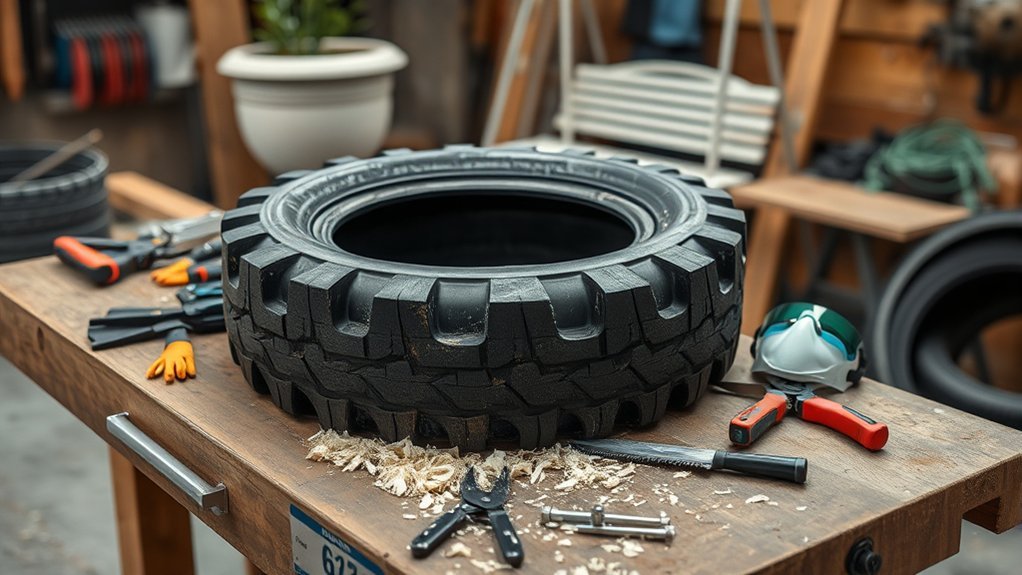
To cut up a tire, you’ll get the best results with a sharp utility knife for punctures, a reciprocating saw or circular saw with a metal-cutting blade for steel belts, and an angle grinder for bead areas. Wear gloves and safety glasses, stabilize the tire, and cut slowly to avoid binding or kickback. For sidewalls, start with a scored incision and work steadily. You can then reuse sections as planters, mats, edging, or other durable projects if you want more detail.
Key Takeaways
- Use a sharp utility knife to start punctures, then switch to a reciprocating saw or angle grinder for tougher rubber and steel belts.
- Cut on the sidewall first, about an inch from the tread, using controlled sawing motions and stabilizing the tire to prevent slips.
- For steel-belted tires, use a metal-cutting blade, keep it sharp, and apply lubricant to reduce heat, binding, and scorching.
- Wear safety glasses and gloves, and cut slowly in a well-controlled area to protect against sharp edges, fragments, and tool kickback.
- Repurpose cut tires into planters, retaining walls, mats, borders, or playground features, or dispose of scraps according to local rules.
Choose the Best Tools for Cutting Tires
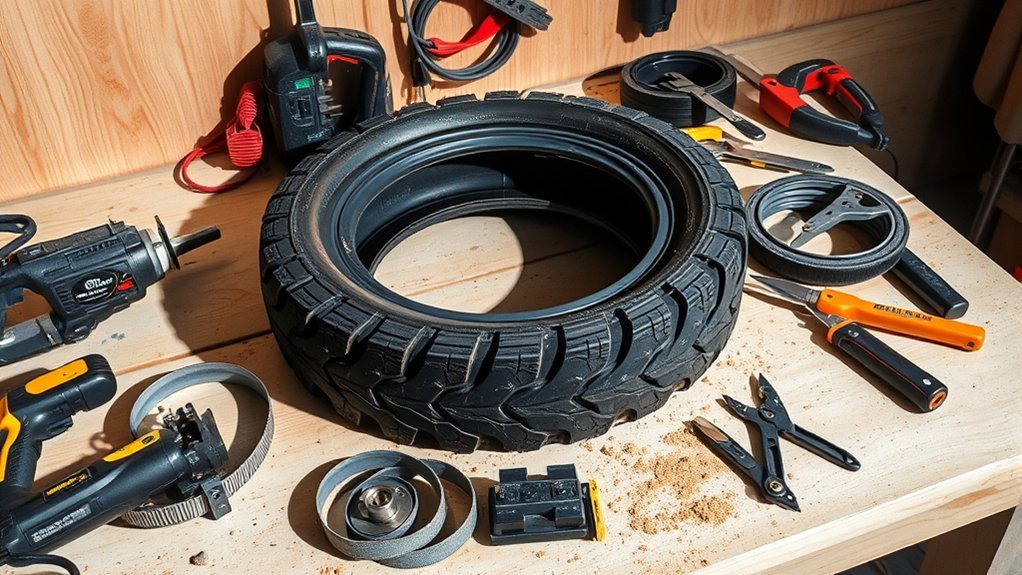
Start with the right tools, because tire rubber and steel belts are tough to cut cleanly. You’ll get better control if you begin with a sharp utility knife or box cutter to make the first punctures in the sidewall. For faster work, use a circular saw or reciprocating saw fitted with a 12 TPI metal-cutting blade; both handle the steel belts inside tires better than hand tools. If you’re cutting through metal cords repeatedly, choose heavy-duty blades, especially carbide-toothed models, because they stay sharp longer and reduce friction. An angle grinder with a metal cut-off disc gives you precise cuts at the bead and helps you free the tire with less strain. Keep a wooden dowel in the cut to separate the layers and prevent binding. Additionally, consider how tread life ratings can help you select tires that are easier to work with. With the right setup, you work efficiently, keep control, and reclaim material with purpose instead of waste.
How to Cut a Tire Sidewall Safely?
Puncture the sidewall first with a sharp knife about an inch from the tread, then work the blade into the seam with a controlled sawing motion. You’ll cut cleaner if you keep the knife angled toward your body for leverage while your other hand and body weight hold the tire steady. Don’t press directly on the cut line; stabilize the durable tire beside it instead. This keeps cutting rubber predictable and reduces slips. Wear safety glasses and gloves every time, because sidewall fragments and sharp edges can move fast. If the rubber starts to bind, insert a wooden dowel into the split to pry the layers apart and free the blade. Stay patient, keep your strokes short, and let the tool do the work. These safety tips help you cut with precision, protect your hands, and reclaim a useful material without fighting the tire. Additionally, ensure you are using a tire designed for durability to avoid unexpected complications during the cutting process.
Cutting Steel-Belted Tires
When you’re cutting a steel-belted tire, use a reciprocating saw with a metal-cutting blade or a jigsaw fitted with a carbide-toothed blade, since standard hand tools usually won’t handle the steel cords cleanly. For cutting steel-belted tires, keep the metal cutting blade sharp so it doesn’t bind in the belts or scorch the rubber. Put on safety gear: gloves and safety glasses protect you from sharp edges and flying debris. Score the tread first with a utility knife to define your path and help you cut the tire with less force. Apply a lubricant such as WD-40 or water along the cut to lower friction, reduce heat, and let the blade move freely through the rubber and steel. Work steadily, let the tool do the labor, and you’ll move through the material with control, precision, and the freedom to shape it on your terms. Additionally, consider using all-season tires for a variety of driving conditions as you plan your project.
Break Tires Into Disposal-Sized Pieces
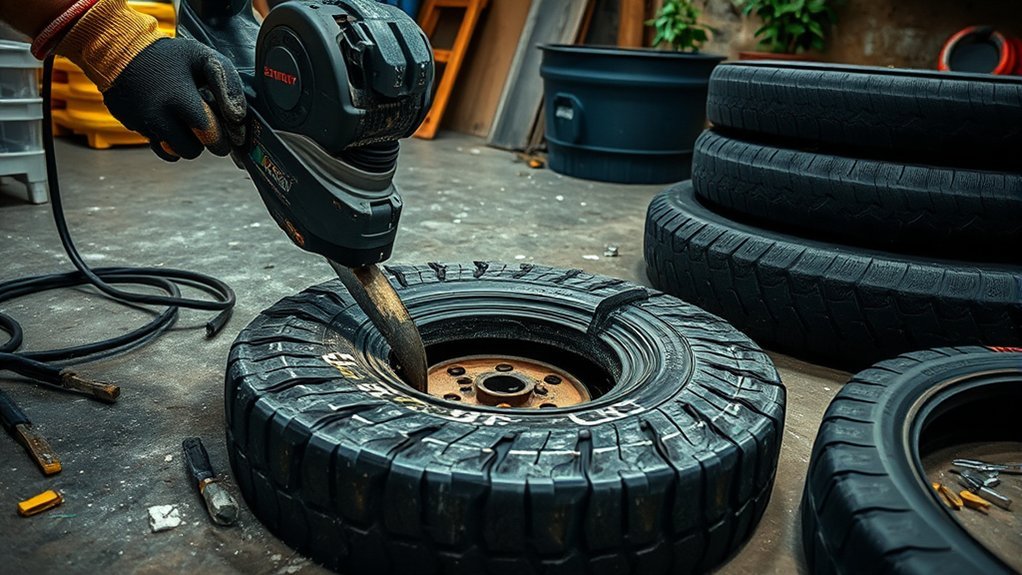
Use a power saw fitted with a metal-safe blade, such as a carbide-toothed blade, to break the tire into disposal-sized pieces that can cut through the steel belts cleanly. You’ll cut tires by starting with widthwise cuts across the sidewall, pressing the blade into the upper surface and stopping just short of the tread. That keeps the cut controlled and reduces binding in the tire rubber. Wear gloves and safety glasses throughout; sharp edges and flying debris demand strict safety precautions. After each pass, rotate the tire section so you can continue cutting tires from a new angle and drive deeper cuts for full separation. Work methodically until each section is small enough to handle and dispose without strain. Keep the saw steady, let the blade do the work, and don’t force it. When you’re done, collect all scraps and dispose of them according to local municipal tire rules so you stay compliant and keep the process clean.
Creative Ways to Reuse Cut Tires
Once you’ve cut tires into manageable pieces, you can repurpose them in several practical ways instead of sending them to the landfill. You can turn cut old tires into garden planters that hold soil well and resist weather, or into retaining walls that stabilize slopes and reduce runoff. If you’ve got a lot of tires, build playground swings or climbing frames, but make sure every edge is smooth and every fastener meets a standard load rating. You can also slice the rubber into strips for non-slip entryway or garage mats, improving traction where falls are common. For creative uses, stack or shape pieces into sculptures, edging, or path borders that give your space a defined look without buying new material. These reuse options let you reclaim waste, protect your land, and extend the life of each tire with deliberate, useful design. Additionally, repurposing tires aligns with sustainable practices, such as extending tire life, which minimizes environmental impact.
Frequently Asked Questions
What Can I Use to Cut up a Tire?
You can use a sharp utility knife for starter cuts, then switch to the best cutting tools: a metal-safe circular saw or jigsaw for tougher sections. For Tire cutting techniques, keep Safety gear essentials on—gloves, eye protection, and a mask. Lubricate the blade with water or WD-40. A wooden dowel helps separate layers. For Tire recycling ideas and Creative art projects, bond pieces with CA glue.
What Is the 3 Tire Rule?
The 3 Tire Rule means you keep only three tires in your workspace at once, like three anchors holding your project steady. You’ll manage tire recycling better, inspect each tire closely, and stay organized during creative projects. It also improves safety equipment use, cuts clutter, and reduces the environmental impact of rushed DIY crafts. By limiting volume, you free your focus, protect your tools, and work with precision.
What Is the 7 7 Rule for Tires?
The 7 7 rule says you should replace your tires after seven years of use, or when tread depth hits 2/32 inch, whichever comes first. You can check the DOT code to confirm age. For tire longevity tips, prioritize tire maintenance, follow safety precautions, and don’t trust worn rubber. If you’re done with them, consider recycling options or creative projects only after retirement.
How to Cut a Tire Bead?
You can cut a tire bead by scoring it, then using a circular saw or reciprocating saw with a metal-cutting blade. Secure the tire tightly first. For bead cutting techniques, a utility knife helps start the line. Compare cutting tool options for control and speed. Follow tire cutting safety: wear gloves, eye protection, and use WD-40. These bead removal tips support cleaner cuts and better tire recycling methods.
Conclusion
When you cut up a tire, you’re not just making scrap smaller—you’re turning a stubborn material into manageable pieces. Use the right blade, wear protection, and respect steel belts, because one slipped cut can ruin a tool or hurt you. I once saw a 32-inch tractor tire reduced in 20 minutes with a reciprocating saw, and it felt like opening a locked door. Work steadily, and you’ll finish safely, cleanly, and with useful rubber left over.

Related Articles

How to Remove a Stripped Lug Nut From a Tire: Expert Methods
Discover expert methods to remove a stripped lug nut from a tire before damage worsens, and see which fix works best.
Read More
How to Read a Tire Gauge at a Gas Station: Quick Guide
Pump your tire gauge correctly at the gas station, and discover the PSI secrets that keep your car safe, smooth, and ready.
Read More
How to Dismount a Motorcycle Tire: Easy Step-by-Step Guide
Pry off a motorcycle tire with confidence using this step-by-step guide, and discover the critical tricks that keep your rim safe.
Read More