
How Tall Is a 305 55R20 Tire? Exact Height, Width & Dimensions
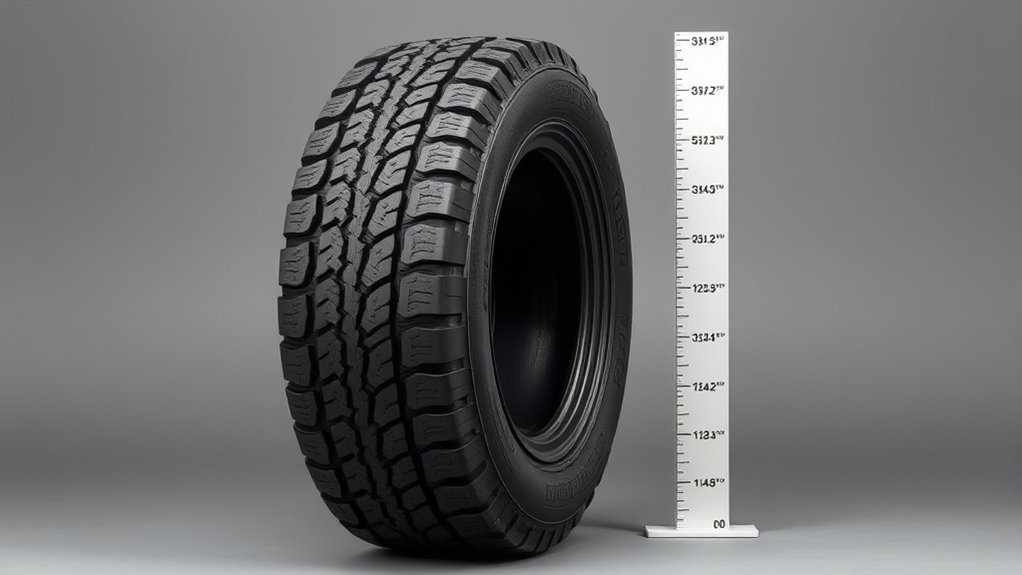
A 305/55R20 tire is 33.20 inches tall overall, with a 12.01-inch section width and a 6.60-inch sidewall height. You get that by taking 305 mm of width, multiplying by a 55% aspect ratio, and converting the result to inches, then adding two sidewalls to the 20-inch wheel diameter. It fits rim widths from 8.5 to 11.0 inches. If you keep going, you’ll see how those dimensions affect fitment and performance.
Key Takeaways
- A 305/55R20 tire is about 33.20 inches tall overall.
- Its section width is 305 mm, which equals about 12.01 inches wide.
- The sidewall height is 6.60 inches on each side, since it is 55% of the tire width.
- The tire’s circumference is about 104.28 inches, which affects speedometer readings and gearing.
- It fits best on 8.5 to 11.0-inch-wide rims and needs enough wheel-well clearance to avoid rubbing.
What Is the Height of a 305/55R20 Tire?
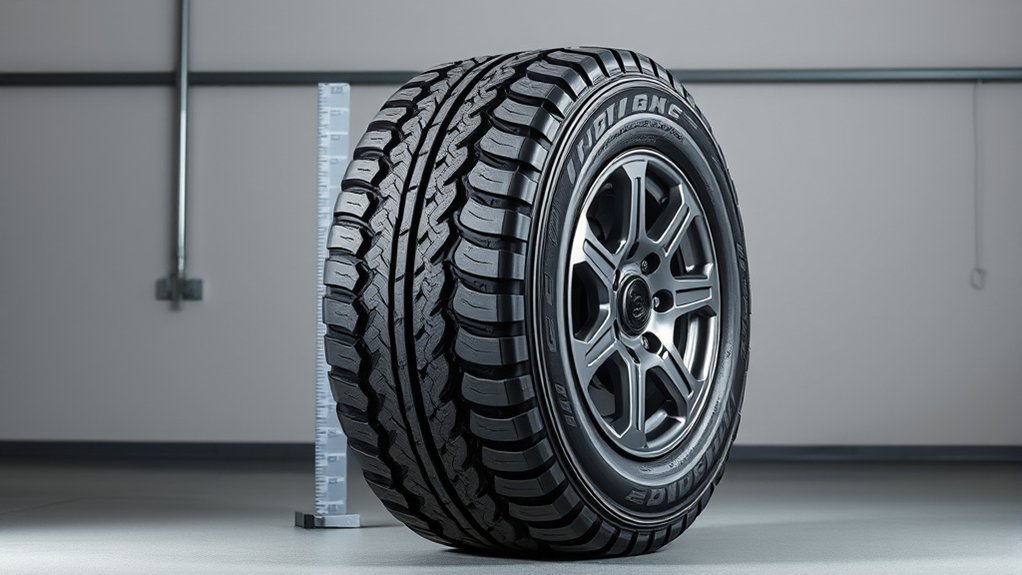
A 305/55R20 tire stands about 33.20 inches tall overall, so you can treat that as its true outer diameter. You get this height by combining the 20-inch wheel diameter with the tire’s 6.60-inch sidewall on each side, which gives you a clear, measurable size. That dimension tells you how much ground clearance and gearing effect you’re really working with. In practical terms, you’re choosing a tire that fits trucks and SUVs built for larger rolling stock, and you’re asserting control over fitment rather than accepting vague estimates. The 33.20-inch height also helps you anticipate how the tire may influence speedometer readings and handling response, since its 104.28-inch circumference changes rotation behavior. When you want accurate specs, this tire size gives you the data you need to plan with precision and move with intention. Additionally, selecting the right tire can significantly enhance year-round traction for your vehicle’s performance.
305/55R20 Tire Width and Sidewall Size
A 305/55R20 tire measures about 12.01 inches wide, so you’re dealing with a substantial tread footprint. Its sidewall height is roughly 6.60 inches, based on the 55% aspect ratio applied to the 305 mm section width. That width and sidewall profile can affect fitment and clearance, so you’ll want to compare it against your wheel width and available space. Additionally, considering the importance of choosing the right tire can help ensure optimal performance and safety for your vehicle.
Tire Width In Inches
The 305/55R20 tire measures about 12.01 inches wide, based on its 305 mm section width, so you’re looking at a tread profile that spans just over 12 inches from sidewall to sidewall. You can use a Tire Size Finder or Size Calculator to confirm fitment against your vehicle’s specs, then verify that your wheel width falls within the 8.5 to 11.0-inch range. That width gives you a broad contact patch, which can influence steering response, traction, and road feel. When you compare this tire to other sizes, focus on section width first, because it defines how much lateral space the tire occupies. If you want precise compatibility, measure your wheel well and clearance points before you commit.
Sidewall Height Breakdown
With a 55% aspect ratio, you can estimate the sidewall height by taking 55% of the 305 mm section width, which gives you about 167 mm, or 6.60 inches. That means each Tire sidewall contributes a defined vertical segment to the overall dimensions, and you can treat it as a direct output of the width-to-profile ratio. In practical terms, this measurement tells you how much rubber separates the rim from the road. Because the tire’s width is 12.01 inches, the sidewall is proportionally substantial, supporting load and ride compliance. You can use this figure to assess the tire’s geometry with confidence, without guessing. Precise dimensions help you make informed, autonomous choices about your setup.
Fitment And Clearance
At 33.20 inches tall and 12.01 inches wide, a 305/55R20 tire gives you a noticeably larger footprint, so you’ll need to check both ride-height clearance and lateral space in the wheel well before fitting it. You’re adding 6.60 inches of sidewall, which can help absorb impacts, but it also changes how close the tire sits to fenders, liners, and suspension components. For proper fitment, match the tire to a 8.5 to 11.0 inch rim width; outside that range, you risk poor bead seating and unstable handling. Compared with a 295/55R20, this size is 10 mm wider and 6 mm taller, so even small changes can trigger rubbing under steering or compression. Measure carefully, then choose the setup that frees your movement.
How 305/55R20 Tire Dimensions Are Calculated
You can break the 305/55R20 code into section width, aspect ratio, and rim diameter to calculate the tire’s physical dimensions. You convert 305 mm to inches to get the 12.01-inch section width, then apply the 55% aspect ratio to estimate a 6.60-inch sidewall height. From there, you add twice the sidewall height to the 20-inch wheel to get an overall diameter of about 33.20 inches, and you can use that diameter to find the circumference. Additionally, understanding tire size specifications is crucial for ensuring compatibility with your vehicle.
Size Code Breakdown
The 305/55R20 code breaks down into three key measurements: 305 means the tire’s section width is 305 mm, or about 12.01 inches; 55 is the aspect ratio, so the sidewall height equals 55% of that width, which comes to about 6.60 inches; and 20 specifies a 20-inch rim diameter. In 305/55R20, the aspect ratio tells you how tall the sidewall is relative to width, so you can judge stance, clearance, and load geometry with precision.
- 305 = section width
- 55 = sidewall proportion
- R = radial construction
- 20 = wheel diameter
When you read the code, you reclaim control over fitment decisions. This structure also sets the tire’s overall profile, which is about 33.20 inches tall.
Metric To Inches
Metric conversions make the 305/55R20 dimensions easy to verify in inches: divide 305 mm by 25.4 to get a section width of about 12.01 inches, then multiply that width by 0.55 to find a sidewall height of roughly 6.60 inches. You can audit each Tire measurement yourself, and that transparency supports informed choice.
| Dimension | Inches |
|---|---|
| Section width | 12.01 |
| Sidewall height | 6.60 |
| Aspect ratio basis | 0.55 |
| Rim width range | 8.5–11.0 |
| Tire code | 305/55R20 |
These converted Dimensions let you compare fitment objectively without guesswork. By working from metric inputs, you keep control of the numbers and free yourself from vague estimates.
Height And Diameter
To calculate a 305/55R20 tire’s height, start with its 12.01-inch section width, multiply by the 0.55 aspect ratio to get a 6.60-inch sidewall, then double that value and add the 20-inch wheel diameter for an overall diameter of about 33.20 inches. You’re seeing a tire that translates metric data into clear fitment numbers. Its height comes from sidewall geometry, while the diameter defines clearance, gearing, and stance.
- 12.01-inch section width
- 6.60-inch sidewall height
- 33.20-inch overall diameter
- 104.28-inch circumference
You’ll also want rim width between 8.5 and 11.0 inches for proper support. This exact calculation lets you judge freedom of fit, not guesswork, when you compare tires, wheel wells, and performance needs.
305/55R20 Vs 295/55R20 Size Difference
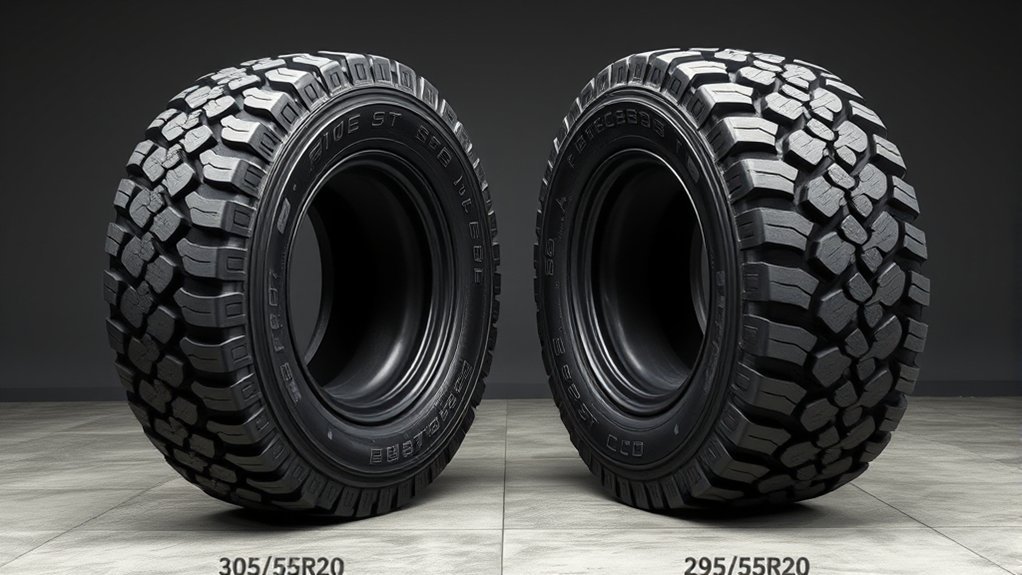
Compared with a 295/55R20, a 305/55R20 is slightly larger in every key dimension: it’s about 10 mm wider and 10 mm taller, with a section width of roughly 12.01 inches versus 11.61 inches and an overall diameter of about 33.20 inches versus 32.80 inches. That means the 305/55R20 gives you a wider footprint and about 6.60 inches of sidewall height, while the 295/55R20 measures near 6.50 inches. In practice, the difference is only 0.39 inches in overall diameter, but you should still account for it because it can shift speedometer readings and subtly alter handling. If you’re trying to reduce rubbing, moving to the 295/55R20 can be a practical step, provided your wheel setup matches its narrower 8.0-inch rim requirement. Additionally, it’s important to consider tire treadwear warranties as they can influence your long-term maintenance costs. For you, the choice comes down to fitment, calibration, and how much clearance you need to keep rolling freely.
305/55R20 Vs 275/55R20 Size Difference
A 305/55R20 is noticeably larger than a 275/55R20 in every major dimension: it’s about 1.18 inches wider, with a section width of roughly 12.01 inches versus 10.83 inches, and it stands about 1.16 inches taller overall, measuring 33.20 inches in diameter compared with 32.04 inches. You also gain about 0.62 inch of sidewall, so the 305/55R20 tire carries more volume and a broader footprint.
- Width: 12.01 in vs 10.83 in
- Sidewall: 6.60 in vs 5.98 in
- Diameter: 33.20 in vs 32.04 in
- Rim range: 8.5–11.0 in vs 7.5–9.0 in
If you’re comparing the 305/55R20 tire and 275/55R20, the 305 asks for more wheel support and more space in every measurement. A downsized 275/55R20 can change gearing and load behavior, so you shouldn’t treat it as a neutral swap. Additionally, understanding the tire specifications can help ensure compatibility with your vehicle’s requirements.
Will 305/55R20 Tires Fit Without Rubbing?
Whether a 305/55R20 tire fits without rubbing depends mainly on your vehicle’s clearance, because its 33.20-inch overall diameter and 12.01-inch section width are both substantial. You’ll want to measure wheel well space, suspension travel, and rim width before you commit, since the 305/55R20 tire can create fitment issues where stock tires clear easily. Compared with a 295/55R20, it’s about 10 mm wider, so even small tolerance gaps matter. If your rims fall outside the 8.5- to 11.0-inch range, you may push the sidewall outward or inward enough to contact suspension parts. Lifted trucks and vehicles with trimmed or modified wheel wells usually handle this size better, while stock-height setups often need extra clearance or a narrower option. Check steering lock, compression, and offset carefully; that’s how you protect freedom from rubbing and preserve clean, controlled ride dynamics. Additionally, selecting all-season tires can enhance traction and comfort across varying conditions, making them a practical choice for many drivers.
Best Trucks And SUVs For 305/55R20 Tires
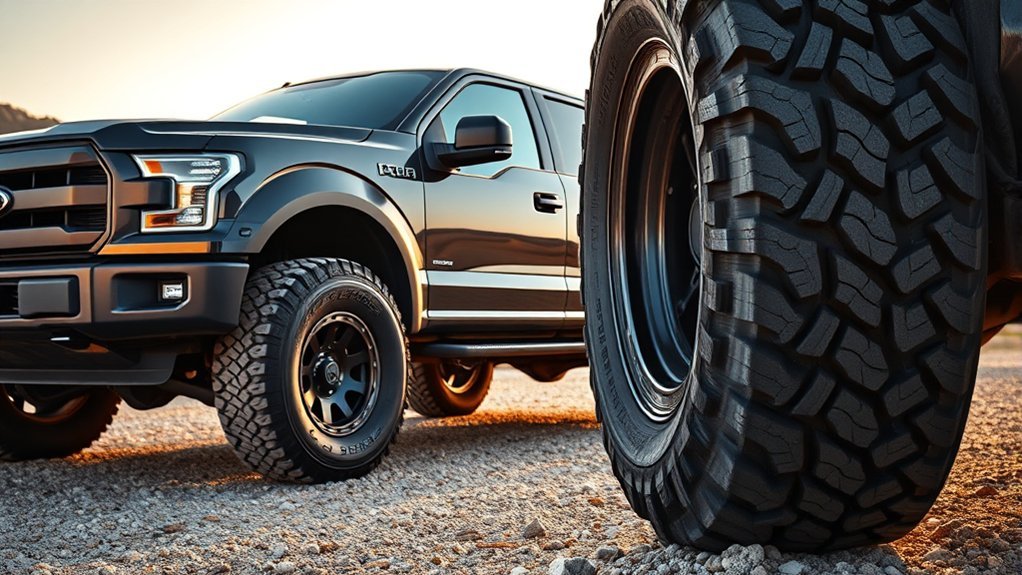
For trucks and SUVs with the clearance and suspension capacity to support it, a 305/55R20 tire is a strong fit because its 33.20-inch diameter and 12.01-inch section width deliver added ground contact, stability, and off-road traction. You’ll get the best results on compatible vehicles with stout frames and generous wheel wells, including the Ford F-150, Chevrolet Silverado 1500, and Toyota Tundra. These platforms can better tolerate the tire’s load demands for towing, hauling, and trail use.
- Wider footprint for controlled grip
- 8.5-11.0 inch rim width range
- Better stability under heavy loads
- Increased capability on rough terrain
- Dependable grip in wet and muddy conditions enhances overall performance.
If you’re choosing 305/55R20 tires, verify suspension travel, fender clearance, and wheel offset before you commit. On well-matched trucks and SUVs, this size supports confident, liberated movement without sacrificing structural balance or mechanical efficiency.
Best 305/55R20 Tire Options
Two standout choices in the 305/55R20 size are the Venom Power Terra Hunter X/T and the Mickey Thompson Baja Boss A/T, both built to handle the tire’s 33.20-inch diameter and 12.01-inch width with strong on-road and off-road performance. When you choose a 305/55R20 tire, you’re working with a 6.60-inch sidewall and a recommended 8.5 to 11.0-inch rim width, so fitment matters. The best 305/55R20 tire options give you a broad contact patch for grip, stable handling, and a confident stance on trucks and SUVs. You’ll want a tire that balances durability, traction, and ride quality without compromising control. Both models deliver that balance, with the Terra Hunter X/T favoring versatile use and the Baja Boss A/T emphasizing rugged capability. Additionally, the Terra Hunter X/T’s self-cleaning features enhance its performance in various terrains, ensuring you can tackle any challenge with confidence. If you want more capability and less compromise, these options help you move with precision, utility, and freedom.
How Tire Type Affects 305/55R20 Performance
When you compare all-terrain and mud-terrain 305/55R20 tires, you’ll see distinct tradeoffs in noise, grip, and wear. All-terrain designs usually run quieter and wear more evenly on pavement, while mud-terrain patterns maximize traction on loose surfaces but can reduce on-road stability. Your choice should match how much you value highway refinement versus off-road grip. Additionally, tire construction specifications influence durability and performance across various terrains.
All-Terrain Versus Mud-Terrain
All-terrain and mud-terrain 305/55R20 tires serve different driving demands, so your choice should match how you use the vehicle. all-terrain tires, like the Mickey Thompson Baja Boss A/T, keep you balanced on pavement and light trails, while mud-terrain tires, like the Atlas Tire Paraller M/T, push harder in hostile terrain.
- all-terrain tires favor comfort and handling
- mud-terrain tires use aggressive lugs for mud and loose soil
- all-terrain tread usually improves efficiency
- mud-terrain tread trades daily versatility for off-road traction
If you want liberated movement with fewer compromises, all-terrain tires suit mixed use better. If you need maximum bite in deep mud or ruts, mud-terrain tires deliver. In daily driving, the all-terrain option usually gives you a more adaptable, technical fit.
Noise, Grip, And Wear
A 305/55R20 tire’s 33.20-inch overall diameter, 12.01-inch section width, and 6.60-inch sidewall shape how it sounds, grips, and wears in real use. You’ll notice that tread pattern drives noise and grip balance.
| Type | Effect |
|---|---|
| Deep tread | More noise, stronger bite |
| Smoother tread | Less noise, less off-road grip |
| Wider patch | Better grip, faster wear |
| Tall sidewall | More comfort, flex |
| Proper inflation | Slower wear, stable handling |
You get more traction from the broad contact patch, especially on loose ground, but aggressive lugs usually raise road noise. The 55% aspect ratio cushions impacts, yet extra flex can increase heat if you underinflate it. Inspect tread depth often, rotate on schedule, and keep pressure correct. That’s how you preserve grip, control noise, and extend service life.
305/55R20 Tire Pressure Tips
For a 305/55R20 tire, keeping pressure in the 30 to 35 PSI range usually helps you maintain proper load support, ride quality, and handling balance. Your Tire Pressure should match your vehicle’s Factory Ratios, not guesswork, because this size’s 33.20-inch diameter and 12.01-inch section width change how the tire contacts the road.
- Check pressure cold, before driving.
- Increase PSI slightly for heavy cargo.
- Verify your door placard first.
- Recheck before long trips.
If you run too low, you’ll flex the sidewall more, reduce fuel economy, and accelerate wear. If you overinflate, you’ll cut grip and make the ride harsher. You can stay in control by checking all four tires with a reliable gauge and adjusting for temperature swings. That simple habit gives you safer, cleaner performance and keeps your truck or SUV freer to move with purpose. Additionally, maintaining proper tire pressure enhances wet traction performance, ensuring a safer driving experience in rainy conditions.
Frequently Asked Questions
Is a 305 55 20 the Same as a 33 12.50 20?
No, you’re not looking at the same tire, but they’re close in tire sizing. Your 305/55R20 measures about 33.2 inches tall and 12.0 inches wide, while a 33×12.50R20 is about 33 inches tall and 12.5 inches wide. In this dimension comparison, you get nearly equal height, but the 33×12.50R20 gives you a slightly wider footprint. You should verify clearance, load, and handling before swapping.
What Is a 305 Tire Equal To?
A 305 tire usually equals about 12.0 inches wide, so you’ll see it treated as a 12-inch tire in tire conversions. If you mean a 305/55R20, you’re looking at roughly 33.2 inches tall and 12.0 inches wide. That size boosts off road performance with more footprint and ground clearance. You can compare it to a 33×12.50R20, but exact fit depends on wheel width, suspension, and clearance.
Is 305 55R20 a 35?
No, you’re not running a true 35-inch tire. A 305/55R20 measures about 33.2 inches in overall diameter, so your size comparison shows it’s roughly 1.8 inches shorter than a 35. The tire specifications also show 305 mm width and a 55% aspect ratio, which shape handling and speedometer behavior. You can still choose it for a bold stance, but it isn’t a genuine 35.
Is a 33 Inch Tire the Same as a 305?
No, you can’t treat a 33-inch tire and a 305 as identical. A 305 is a metric conversion of section width, not a pure diameter label, so tire sizing stays specific. As the saying goes, don’t judge a book by its cover: a 305/55R20 measures about 33.2 inches tall, but width, sidewall, and load can still differ. You should compare exact specs, not just the nominal size.
Conclusion
So, when you choose a 305/55R20 tire, you’re getting a tire that stands about 32.2 inches tall, with a 12.0-inch width and a 6.6-inch sidewall. You can compare it with confidence because you now know how those dimensions shape fitment, clearance, and ride quality. In effect, it’s the measuring tape of your truck’s stance—every inch matters. Keep pressure, load, and wheel fit in check, and you’ll get predictable performance.

Related Articles
Is Kenda a Good Tire Brand? Bike & Car Tire Review
For bike and car drivers, Kenda offers surprising value and durability—but is it really the right tire brand for you?
Read More
What Is a Grand Touring Tire? Complete Guide & Best Options
Mysteriously smooth and built for comfort, grand touring tires promise quiet confidence and year-round grip—discover which options truly stand out.
Read More
Who Is the Largest Tire Manufacturer in the World? Top Brands
The world’s biggest tire maker may surprise you—discover which brand leads, who’s close behind, and what’s reshaping the race.
Read More