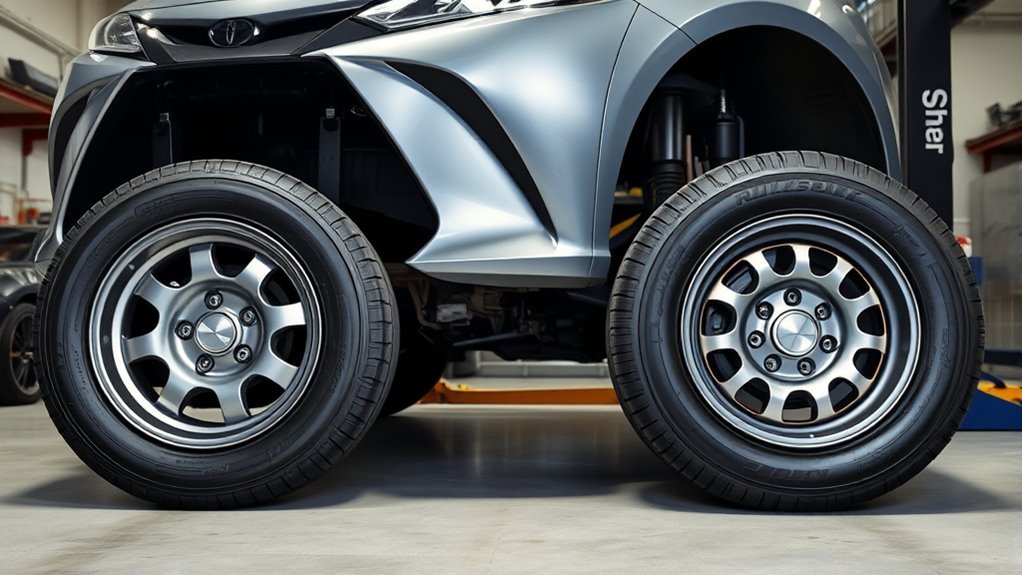
Choosing between run-flat tires and regular tires for your Toyota Camry comes down to one main question: do you value temporary mobility after a puncture more than ride comfort, lower replacement cost, and wider tire choice? Run-flats can help you reach a safer place after air loss, but regular tires are still the better everyday fit for many Camry owners.
Quick Answer
For most Toyota Camry drivers, regular tires are the better value because they usually ride smoother, cost less, and are easier to replace. Run-flat tires are worth considering if you often drive alone, travel on busy highways, lack a usable spare, or want limited mobility after a puncture.
Key Takeaways
- Run-flat tires can provide temporary post-puncture mobility, commonly up to 50 miles at up to 50 mph on certain models, but you must follow the tire maker’s exact limits.
- Regular tires usually give a Camry a quieter, softer ride and more replacement choices.
- A working TPMS is essential with run-flats because a deflated run-flat may not look flat from the driver’s seat.
- Run-flat tire repair is not automatic; the tire must be removed, inspected, and judged safe by a qualified technician.
- Before switching tire types, check your Camry’s tire placard, load rating, speed rating, spare-tire plan, and warranty or insurance requirements.
Run-Flat Tires vs. Regular Tires on a Camry
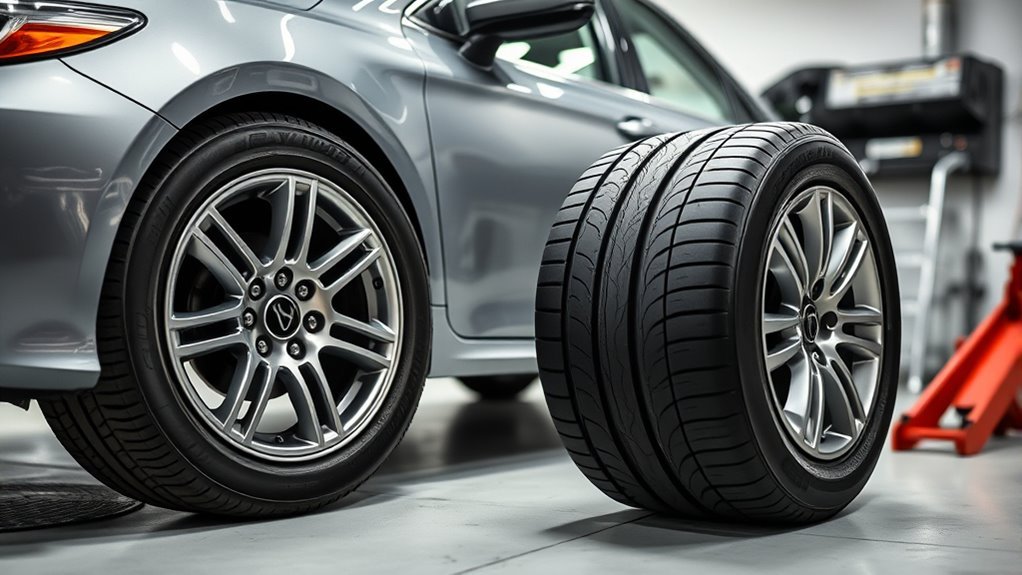
When you compare run-flat tires with regular tires on a Toyota Camry, the biggest tradeoff is still convenience versus comfort. A run-flat tire is designed to support the vehicle for a limited distance after pressure loss, which can help you leave a dangerous shoulder and reach a tire shop or safe stopping point. For example, Bridgestone says its DriveGuard Plus run-flat capability is up to 50 miles at up to 50 mph, with repairability depending on the damage, pressure loss, and driving conditions.
Regular tires do not offer that same built-in mobility after a puncture, but they usually make more sense for daily Camry driving. They tend to be easier to find, easier to compare by price, and more comfortable on rough pavement. If your Camry came with regular tires and a spare or inflator kit, staying with regular tires is usually the simplest ownership path.
| Factor | Run-Flat Tires | Regular Tires |
|---|---|---|
| After a puncture | Can usually be driven a limited distance at reduced speed | Usually requires a spare, inflator kit, tow, or roadside help |
| Ride comfort | Often firmer because of reinforced construction | Usually smoother and quieter |
| Cost and availability | Often more expensive and less widely stocked | Usually cheaper with more model choices |
| Best for | Drivers who prioritize mobility after a flat | Drivers who prioritize comfort, value, and simplicity |
Warning: A run-flat tire is not a normal tire after pressure loss. Slow down, avoid hard braking and sharp steering, and drive only far enough to reach a safe place or tire service.
[Products Worth Considering]

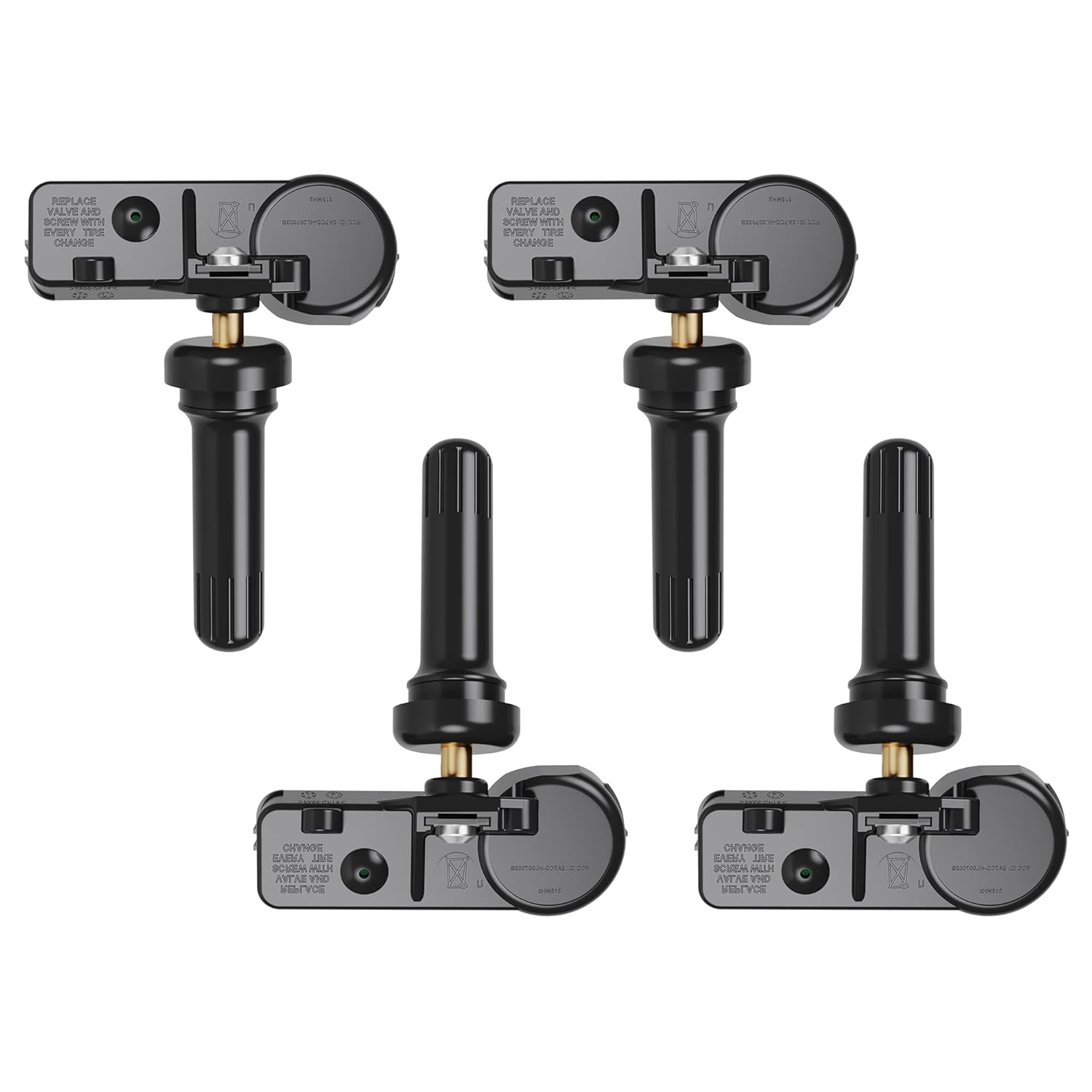
Marsflex brand TPMS replacement sensors help restore tire pressure monitoring for compatible Toyota, Lexus, Scion, and Pontiac models. Each sensor is pre-programmed for the vehicle application and includes a long-life battery for up to 8 years of normal use. Designed to replace common OE numbers and requires relearning using a TPMS scan tool after installation.

The Dr.Roc spare tire tool kit helps you release, lower, or raise your spare tire with reliable extension tools and a lug nut wrench. It is made from rustproof automotive-grade steel and includes an organized carry case for convenient storage. Designed for compatibility with select GM models from the late 1990s through 2019, it uses upgraded extension components to install and remove spare tires with less hassle.

This spare tire tool kit is designed for the 2004 to 2018 Ford F-150 to help you loosen and tighten wheel lug nuts and manage the spare tire and provided jack functions from underneath the vehicle. It includes the lug nut wrench and extension pieces plus a convenient storage carrying case for organized transport. The jack itself is not included.
How Run-Flat Tires Work on a Camry
Most passenger-car run-flats use a self-supporting sidewall. Michelin explains that strengthened sidewalls help the tire carry the vehicle’s weight after air loss for a limited time, giving the driver enough mobility to reach a tire specialist or secure location. That design is the reason run-flats can keep their shape better than conventional tires after a puncture.
Run-Flat Sidewall Design
The reinforced sidewall is also why run-flat tires can feel different on a Camry. A regular tire sidewall flexes more, which helps absorb bumps and rough asphalt. A run-flat sidewall is stiffer by design, so the car may feel firmer over potholes, bridge joints, and broken pavement.
That stiffness is not automatically bad. Some drivers like the more planted feel, and the extra support can help maintain control after sudden pressure loss. But if you bought a Camry for its quiet, relaxed ride, regular touring tires usually match that personality better.
TPMS and Driving Limits
A working Tire Pressure Monitoring System matters with any tire, but it is especially important with run-flats. Federal TPMS rules require systems to warn drivers about significant under-inflation, and Toyota says its Tire Pressure Monitor System displays a low-pressure icon and warning message when it senses seriously low tire pressure.
That warning is your cue to respond right away. Do not assume you can finish your trip just because the tire is a run-flat. Check the specific tire’s sidewall and manufacturer guidance, reduce speed, avoid aggressive maneuvers, and go directly to a safe inspection point.
Camry Ride Quality and Handling Differences
The Toyota Camry is tuned as a comfortable midsize sedan, so tire choice has a noticeable effect on how the car feels. Regular tires usually soften impacts better because their sidewalls can flex more. Run-flats can transmit more road texture because the sidewall is built to support the vehicle when pressure is low.
- Choose regular tires if you want the smoothest ride, lower road noise, and the widest tire selection.
- Choose run-flat tires if the ability to keep moving after a puncture matters more than maximum comfort.
- Check reviews by exact tire model, not just tire type, because some modern run-flats ride better than older designs.
- Keep alignment and tire pressure correct, because poor maintenance can make either tire type noisy or short-lived.
Run-Flat Tire Costs and Lifespan
Run-flat tires usually cost more than comparable regular tires, but there is no single honest price that applies to every Camry. Your actual cost depends on tire size, brand, trim level, load index, speed rating, retailer, installation fees, and road-hazard coverage.
Instead of relying on a fixed price range, use your Camry’s driver-side door placard to confirm the exact tire size and required ratings, then compare run-flat and regular options in that same size. Also ask whether your local shop stocks the tire or would need to order it, because availability can affect both price and downtime.
Tread life also depends more on the exact tire model and maintenance than on one simple run-flat-versus-regular rule. Rotation schedule, inflation pressure, wheel alignment, road surface, and driving style all affect how long the tire lasts. If long-term value is your top priority, compare treadwear warranties and owner reviews for the specific models you are considering.
Pro Tip: Price a full set installed, not just one tire. Include mounting, balancing, TPMS service kits, alignment if needed, disposal fees, and any spare-tire or inflator-kit purchase if you switch to regular tires.
[Products Worth Considering]

The TYAMATE TM8 solar-powered wireless TPMS delivers real-time tire pressure and temperature monitoring with six alarm modes for safer driving. A vibrant color LCD display shows readings clearly while windshield mounting keeps it hands-free and easy to read. With a wide 0–87 PSI range, strong 433.92 MHz signal transmission, and quick sensor pairing, it’s ideal for RV, sedan, SUV, MPV, and truck use.

This ecocstm ratchet wrench is designed to make emergency and routine tire changes faster with a 360° rotating head and quick forward/reverse switching. The extended handle provides extra leverage to reduce effort and hand fatigue, while the adapter helps fit many scissor jacks on cars, SUVs, trucks, and vans. Built for reliable performance with durable construction, it’s a practical travel essential for on-the-road preparedness.
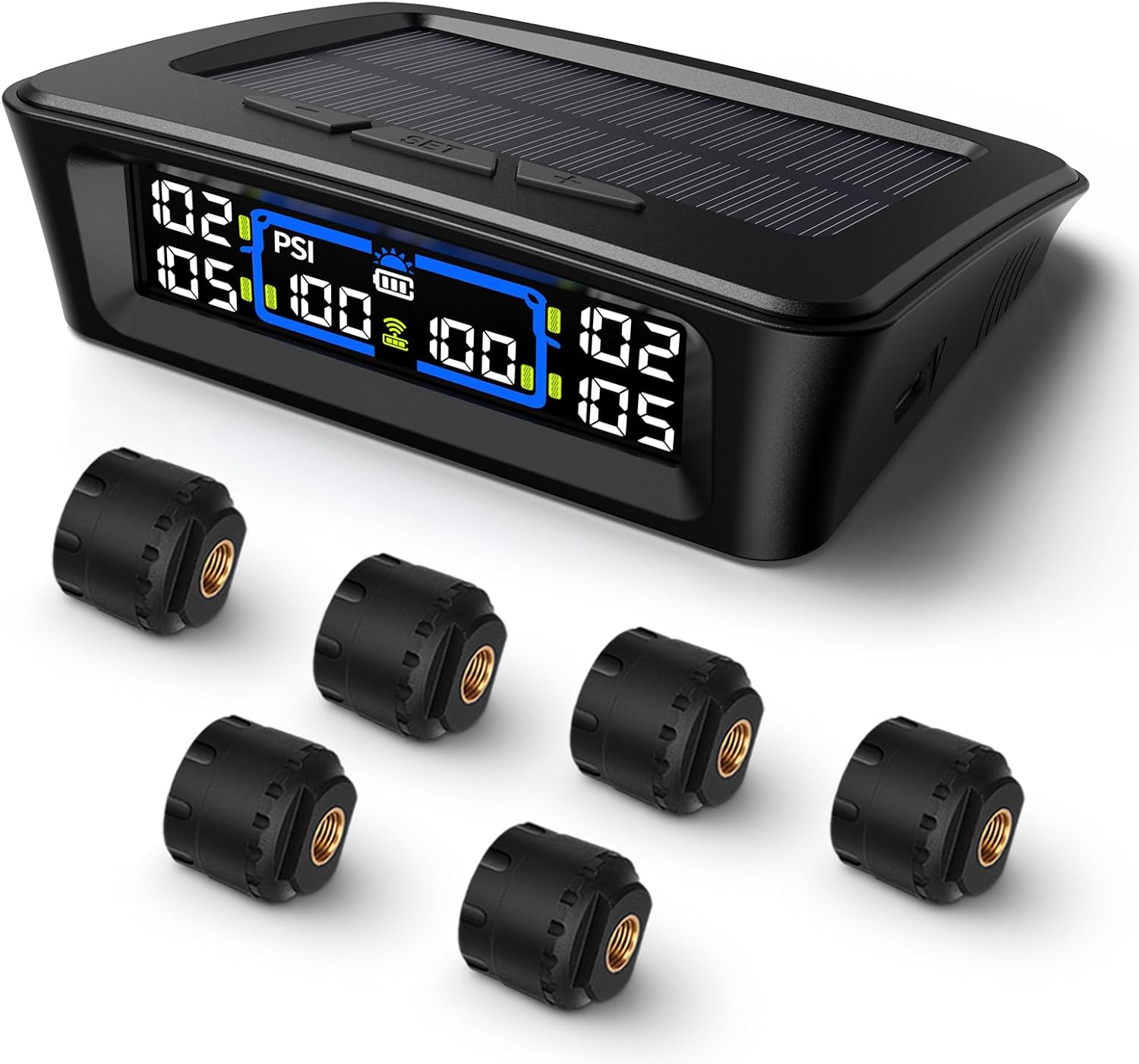
The Tymate TM12 RV TPMS delivers real-time tire pressure and temperature monitoring with a stable 433Hz display for safer long-distance driving. It supports simultaneous monitoring across vehicle and trailer zones, includes six alarm modes for pressure, temperature, leakage, battery, and signal loss, and features easy DIY installation with auto calibration. Power is supplied via USB-C charging or solar recharging, with a wide 0–144 PSI range and up to 50 ft signal coverage for RVs and towable trailers.
Can You Repair Run-Flat Tires?
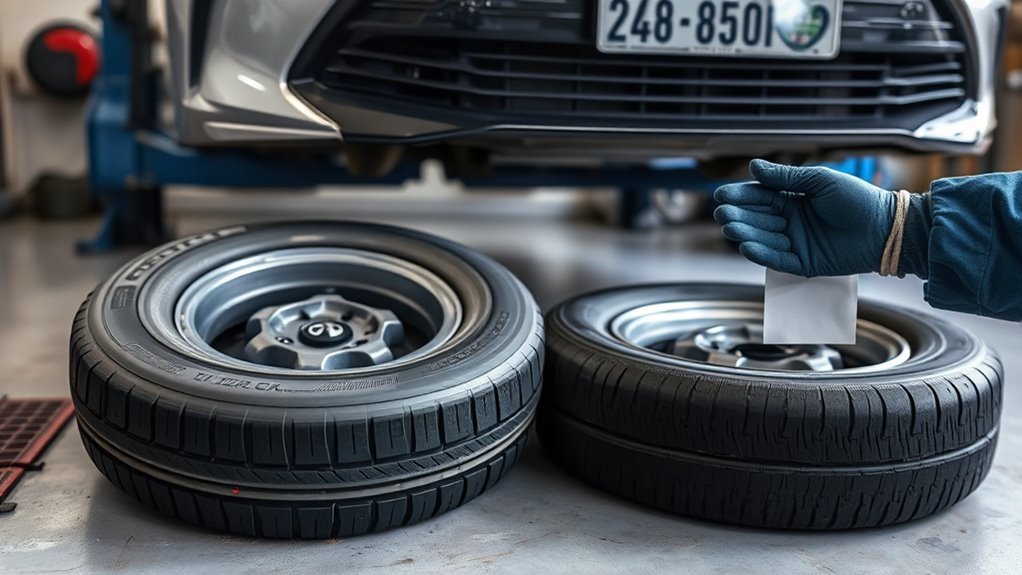
Sometimes, but never assume a run-flat tire is repairable just because the puncture looks small. The U.S. Tire Manufacturers Association recommends considering tire repair only when the damage is limited to the tread area and the puncture injury is no larger than 1/4 inch, or 6 mm. The tire must be removed from the wheel so the inner liner and hidden damage can be inspected.
Run-flat tires add another layer of caution. Tire Rack notes that driving a run-flat with low or zero pressure can permanently damage its internal structure, and that damage may not be visible from the outside. Many shops will replace a run-flat if it was driven severely underinflated, even if the puncture itself seems repairable.
- The tire must be removed from the wheel for inspection.
- Sidewall, shoulder, large, angled, or overlapping punctures should not be repaired.
- A plug-only repair is not considered a proper permanent repair.
- The technician should follow the tire manufacturer’s run-flat repair policy.
- If the tire was driven too far or too fast after pressure loss, replacement is usually the safer choice.
What to Do After a Camry TPMS Warning
If your Camry’s TPMS warning appears, treat it as a safety warning, not a suggestion. The right response depends on whether you have regular tires, run-flat tires, a spare, or an inflator kit.
- Ease off the throttle and avoid sudden braking or sharp steering.
- Move to a safe location away from traffic before inspecting the tire.
- Check tire pressure with a gauge if it is safe to do so.
- Look for visible damage, such as a nail, sidewall cut, bulge, or torn tread.
- Follow your tire type’s plan: use the spare or inflator kit for regular tires, or drive slowly and directly to service if the run-flat is within its stated limit.
- Have the tire inspected before resuming normal driving.
Note: If your Camry does not have a spare tire, do not wait until a flat to find out. Check the trunk area now and confirm whether you have a spare, jack, lug wrench, inflator kit, sealant, or roadside-assistance plan.
When Run-Flat Tires Are Worth It
Run-flat tires make the most sense when the convenience and safety margin after a puncture outweigh the extra cost and firmer ride. They are especially appealing if you drive in areas where stopping on the shoulder is dangerous, travel alone often, or have a Camry setup without a practical spare-tire solution.
| Driving Situation | Run-Flat Value | Main Tradeoff |
|---|---|---|
| Busy highway commuting | High | Firmer ride and higher replacement cost |
| Driving alone at night | High | Limited repair options after pressure loss |
| No spare or weak roadside plan | Medium to high | You still need service soon after a puncture |
| Comfort-focused daily driving | Low to medium | Regular tires usually feel better |
Who Should Stick With Regular Tires?
If you are focused on value, comfort, and long-term simplicity, regular tires are usually the better fit for your Toyota Camry. They are widely available in Camry sizes, give you more choices across touring, all-season, performance, and winter categories, and are easier to replace quickly during travel.
- Choose regular tires if you want the smoothest and quietest ride.
- Choose regular tires if you want more budget-friendly replacement options.
- Choose regular tires if you already carry a spare or have a dependable roadside plan.
- Choose regular tires if you drive mostly in town, where help is usually nearby.
- Choose regular tires if your local shops do not stock run-flats in your Camry’s size.
How to Choose the Best Tires for Your Camry
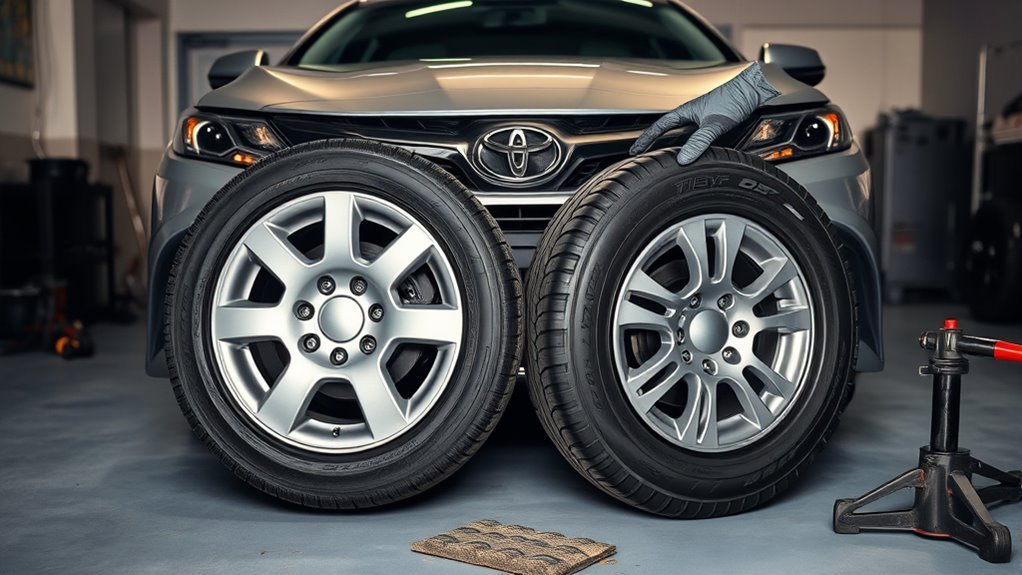
Start with the tire information placard on the driver-side door jamb. That label gives the original tire size and recommended cold inflation pressure for your Camry. Match the tire size, load index, and speed rating unless a qualified tire professional confirms a safe alternative.
Then decide how you want to handle a flat tire. If you choose run-flats, confirm that the tire is available in your exact size and that your TPMS is working correctly. If you choose regular tires, confirm whether you have a spare, compact spare, inflator kit, sealant kit, or roadside-assistance coverage.
Also avoid mixing run-flat and regular tires unless a qualified professional approves the setup. At a minimum, tires on the same axle should match in size, construction, and performance category so the Camry handles predictably during braking, cornering, and wet-weather driving.
The best tire for your Camry is not simply the one labeled “run-flat” or “regular.” It is the tire that fits your exact size, supports your driving conditions, and gives you a realistic plan for punctures.
[Products Worth Considering]
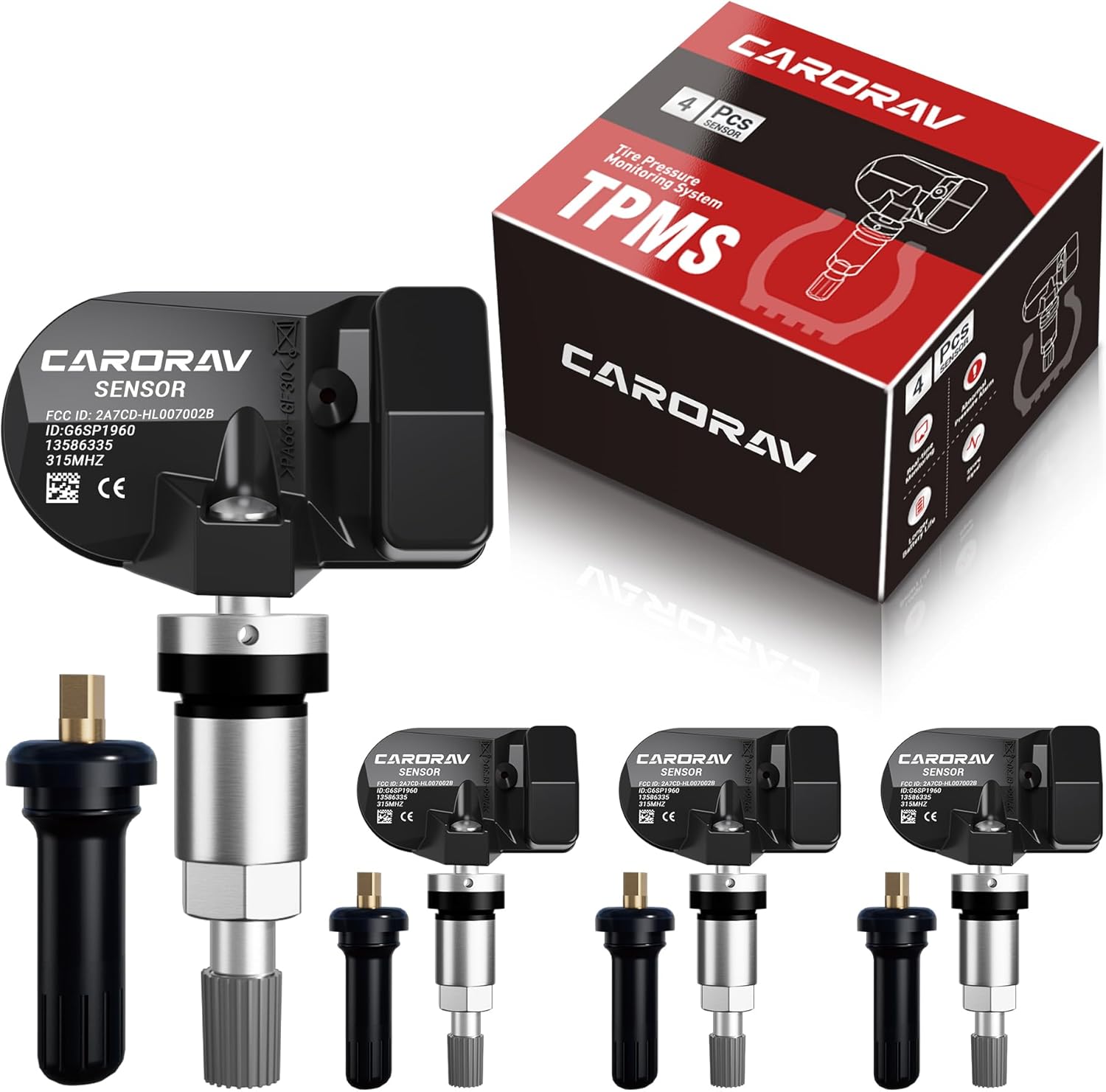
Replace worn or missing TPMS sensors with CARORAV pre-programmed GM-compatible sensors for a smoother installation experience. These 315MHz replacement sensors help monitor tire pressure in real time with long battery life, and they are designed to withstand harsh temperatures. Manual or OBDII relearn may be required to reset the system for proper recognition.

This AUTOWN flat tire repair kit is designed for quick, reliable puncture repairs using a plug kit and spiral probe tool to simplify installation. Built for durability and safe handling, it offers strong adhesion and flexibility to help maintain tire air tightness. With a portable storage case and a multi-vehicle approach, it’s suitable for cars, motorcycles, ATVs, tractors, lawn mowers, RVs, jeeps, and trucks.

The Trivd Frol 1/2" air impact wrench delivers high performance torque up to 1500 ft-lbs with a twin hammer impact mechanism for strong, balanced blows. It features an ergonomic grip, compact lightweight design, and quick-stop control with 3 forward speeds up to 8000 RPM plus a reverse speed. Built for demanding automotive repair and tire shop work, the rear exhaust helps keep debris away from the surface.
Frequently Asked Questions
Do I have to tell my insurance if I change from run-flat tyres?
Check your policy or ask your insurer before switching. In some places or policies, changing from run-flat tyres to regular tyres may count as a vehicle modification, especially if the car originally came with run-flats and no spare. If you are in the U.S., this is usually policy-specific rather than a universal rule.
Can I put run-flat tires on a Camry that came with regular tires?
Often yes, if the run-flat is available in the correct size, load index, and speed rating, and your TPMS is working. Still, ask a tire professional first because run-flats can change ride feel, replacement cost, and emergency planning.
How far can I drive on a punctured run-flat tire?
Many run-flat models are rated for limited mobility, commonly up to 50 miles at up to 50 mph, but the correct limit is the one published by your specific tire manufacturer. Drive slower when conditions allow and go directly to service.
Can a run-flat tire be patched?
Sometimes, but only after the tire is removed and inspected. A small tread-area puncture may be repairable if the tire was not driven too far, too fast, or at very low pressure. Sidewall damage, shoulder damage, large punctures, and hidden internal damage usually mean replacement.
Are run-flat tires safer than regular tires?
They can be safer in one specific situation: when a puncture happens and you need to keep moving long enough to get away from traffic. Regular tires can still be very safe when properly inflated, maintained, and paired with a spare, inflator kit, or roadside plan.
Conclusion
For most Toyota Camry owners, regular tires remain the best everyday choice because they are comfortable, widely available, and usually more affordable. Run-flat tires make sense when temporary mobility after a puncture is worth the firmer ride and higher replacement cost. Before you buy, confirm your Camry’s exact tire size, make sure the TPMS works, compare installed prices, and decide how you want to handle a flat tire on a dark road, busy highway, or long trip.
Sources
- Bridgestone DriveGuard Plus — run-flat distance, speed limit, and repairability notes.
- Michelin USA: Run-Flat Tires — how run-flat tires work, TPMS importance, benefits, downsides, and service guidance.
- U.S. Tire Manufacturers Association: Tire Repair Basics — tread-area repair limits, 1/4-inch puncture limit, and proper repair procedure.
- Toyota Support: Tire Pressure Monitor System — Toyota TPMS warning behavior.
- eCFR 49 CFR 571.138 — federal TPMS performance requirements.
- eCFR 49 CFR 570.9 — tire condition, tread depth, and same-axle tire matching inspection standards.