
How to Calculate Tire Diameter: Formula & Easy Guide

You can calculate tire diameter by adding the wheel diameter to twice the sidewall height. Find sidewall height by multiplying tire width by the aspect ratio, then converting millimeters to inches by dividing by 25.4. Use this formula: Tire Diameter = (2 × Sidewall Height) + Wheel Diameter. For example, a 225/45R17 tire is about 25 inches tall. Check the change before you buy, since diameter affects fit, handling, and speedometer accuracy. More details come next.
Key Takeaways
- Tire diameter equals two sidewalls plus wheel diameter.
- Sidewall height equals tire width times aspect ratio, then convert mm to inches by dividing by 25.4.
- Formula: Tire Diameter = (2 × Sidewall Height) + Wheel Diameter.
- Example: 225/45R17 tire diameter is about 24.98 inches.
- Changing tire diameter affects speedometer accuracy, handling, and should stay within about 3% of OEM size.
What Tire Diameter Is

Tire diameter is the tire’s total height from the ground to the top, including both sidewalls and the wheel rim. When you measure tire diameter, you’re capturing the tire’s full outside size, not just the rubber that touches the road. This value matters because it affects fitment, clearance, and how your vehicle behaves. You can think of it as the sum of the two sidewalls plus the wheel diameter. Sidewall height comes from the tire’s section width multiplied by its aspect ratio, written as a decimal. For example, a 225/45R17 tire has a 225 mm section width and a 45% aspect ratio, so each sidewall height is 101.3 mm. Add both sidewalls to the 17-inch wheel diameter, and you get an overall diameter of about 24.98 inches. You deserve exact numbers, because precision gives you control. Understanding tire fitment requirements is crucial to ensure safety and optimal performance.
How to Use the Tire Diameter Formula
To calculate tire diameter, plug the sidewall height into the formula: Tire Diameter (inches) = (2 × Sidewall Height) + Wheel Diameter**. You’ll first get sidewall height from section width and aspect ratio: multiply section width in millimeters by the aspect ratio as a decimal, then divide by 25.4 to convert to inches. That gives you one side of the tire; double it to account for both sides, then add the wheel diameter. This method gives you control, so you don’t have to rely on guesswork or a tire size calculator for every check. For a 225/45R17 tire, the section width is 225 mm and the aspect ratio is 45%, so sidewall height is about 3.99 inches. Add the 17-inch wheel diameter: (2 × 3.99) + 17 = 24.98 inches. Use this exact process whenever you need a precise tire diameter. Additionally, understanding the importance of all-season tires** can enhance safety and performance throughout the year.
How to Read Tire Size Codes
You can read a tire code like 225/45R17 by breaking it into standard parts: width, aspect ratio, construction, and wheel diameter. The first number gives you the section width in millimeters, and the second tells you the sidewall height as a percentage of that width. The final number shows the rim diameter in inches, which helps you match the tire to the correct wheel and calculate overall tire size. Understanding these components is crucial for selecting the right all-season tire that enhances your vehicle’s performance.
Tire Code Basics
Decoding the sidewall starts with the tire size code, which tells you the tire’s intended use, width, sidewall profile, and wheel diameter. You can read it fast with a tire size comparison calculator, but knowing the code frees you from guesswork.
| Code part | Meaning |
|---|---|
| Letter | Tire type |
| First number | Section width |
| Second number | Height must be percent |
| Final number | Diameter of the wheel |
For 225/45R17, 225 is the section width in millimeters, 45 is the sidewall profile, R means radial construction, and 17 is the wheel size in inches. Use these numbers to verify fitment, protect handling, and keep safety intact. Once you decode the pattern, you control your tire choices with precision.
Width Aspect Ratio
The second number in a tire code tells you the aspect ratio, which is the sidewall height as a percentage of the section width. In a code like 225/45R17, 225 is the section width in millimeters, and 45 means the sidewall height equals 45% of that width. You can calculate sidewall height by multiplying the section width by the aspect ratio as a decimal: 225 × 0.45 = 101.25 mm. That measurement matters because it directly shapes tire diameter. A lower aspect ratio gives you a shorter sidewall, while a higher one raises it. Read this number carefully, and you’ll choose tires that fit your vehicle, support handling, and keep performance aligned with your goals.
Wheel Diameter Meaning
Wheel diameter is the last number in a tire size code and shows the inner rim size of the wheel in inches, such as the “17” in 225/45R17. You read it after the “R,” which means radial construction. When you match wheel diameter to your tire size, you get the fit your vehicle needs for safe, stable, and efficient operation. If you choose a mismatched size, you can damage the tire, affect handling, and reduce comfort. Wheel diameter also shapes overall tire diameter because it changes circumference. That matters for speedometer accuracy, since a larger or smaller tire can make the reading wrong. Check the code carefully, confirm the rim size, and choose tires that fit your wheels exactly.
Convert Tire Width, Ratio, and Rim Size
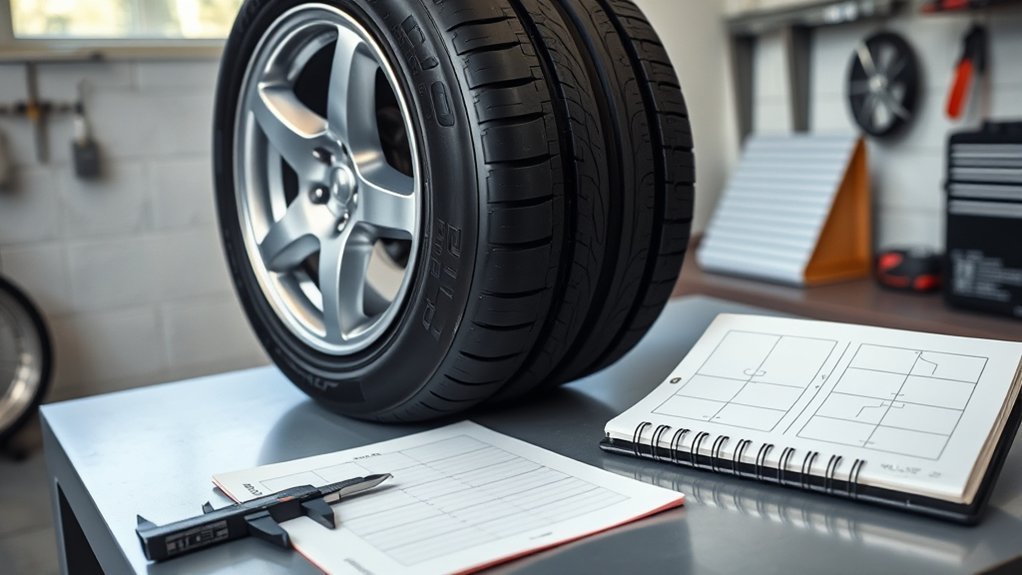
To convert tire width, aspect ratio, and rim size into overall diameter, first calculate the sidewall height by multiplying the tire width in millimeters by the aspect ratio as a decimal; for example, a 225/45R17 tire has a sidewall height of 225 × 0.45 = 101.25 mm. You can then estimate tire diameter by doubling that section height and adding the wheel diameter, but keep units aligned. Since wheel diameter uses inches, convert the mm sidewall measurement to inches by dividing by 25.4 before combining values. This gives you a precise, practical check on fitment, ground clearance, and gearing. For 225/45R17, the formula yields 634.4 mm, or about 24.98 inches. Use this method to compare options confidently and choose the tire width and wheel diameter that support your setup without guesswork. Real tires can vary slightly from nominal specs, so verify manufacturer data before you finalize the setup. Additionally, consider tire performance ratings when selecting tires to ensure they meet your driving needs.
How to Calculate Sidewall Height
To calculate sidewall height, multiply the tire’s section width by its aspect ratio expressed as a decimal. For example, a 225 mm tire with a 45 aspect ratio gives you 225 × 0.45 = 101.25 mm of sidewall height. If you need inches, divide 101.25 by 25.4 to get about 3.98 inches, and remember this value counts twice in overall tire diameter. Additionally, understanding low rolling resistance tires can help improve your vehicle’s fuel efficiency.
Sidewall Height Formula
You can calculate sidewall height by multiplying the tire’s section width by its aspect ratio, written as a decimal. For a 225/45 tire, use 225 mm × 0.45 to get the sidewall height. If you need inches, divide millimeters by 25.4; 101.3 mm becomes 3.99 inches. This value matters because sidewall height adds to tire diameter at the top and bottom of the tire, shaping total tire diameter. A taller sidewall can absorb more road harshness and improve ride comfort, while a shorter sidewall can sharpen handling and response. Remember that wheel width can shift actual section width, so your measured sidewall height may vary. You keep control by checking fitment, not assumptions, every time.
Example Sidewall Calculation
For a 225/45R17 tire, the sidewall height is 225 mm × 0.45 = 101.25 mm. You get this by multiplying the section width by the aspect ratio, so you can calculate the sidewall height with confidence. Convert that value to inches by dividing by 25.4: 101.25 ÷ 25.4 = 3.99 inches. In tire diameter math, you add this sidewall height twice to the wheel diameter, because each side contributes equally. A higher aspect ratio gives you a taller sidewall, which can soften the ride and change handling. Always verify manufacturer specs, since mounting width and profile can shift the actual measurement. Use the formula, check the numbers, and keep control of your build.
Check Tire Diameter Change Before You Buy
Before you buy a new tire size, check how much the diameter changes from your factory setup, because even a small increase can affect speedometer and odometer accuracy. To calculate tire diameter, use Overall Diameter = (2 × Sidewall Height) + Wheel Diameter. First, find section width, the first number in the tire code, then multiply it by the aspect ratio to get sidewall height. That gives you the tire diameter you need to compare. Keep the new size within 3% of OEM specs so your vehicle stays stable and predictable. If you choose a larger tire, the total diameter grows, and your speedometer reading can drop below the actual road speed. That can also skew odometer data. Measure carefully, compare the numbers, and choose a size that supports control without surrendering precision. Additionally, be mindful of the tread life warranty offered by different tire brands, as this can affect long-term costs.
How Tire Diameter Affects Your Speedometer
Tire diameter has a direct effect on speedometer accuracy because factory calibrations are based on the stock tire’s dimensions. When you change tire size, you change how far the wheel travels per rotation. A larger tire diameter makes your speedometer read lower than your actual speed, while a smaller tire makes it read higher. Even a 1-inch difference can throw readings off by about 3% to 5%, which affects speed and distance calculations. Your odometer shifts too: larger tires cover more ground per turn, so it records fewer miles than you’ve really driven; smaller tires do the opposite. If you want reliable speedometer accuracy after a tire change, plan for recalibration. That keeps your gauges aligned with real-world motion and helps you drive with confidence, not guesswork. Additionally, selecting the right tire size is crucial for proper fitment and maintaining optimal performance, especially for vehicles like the RAV4.
Frequently Asked Questions
What Is the Diameter of 235 35 r20?
The diameter of a 235/35R20 tire is about 26.24 inches. You can derive it from the tire specifications: 235 mm section width, 35% aspect ratio, and a 20-inch wheel. That size conversion gives a sidewall of roughly 3.24 inches per side. You’ll get a smaller performance impact than larger setups, and tread patterns won’t change diameter. Keep overall fit within 3% for accuracy, stability, and freedom on the road.
What Does 700X25 Mean on a Tire?
700×25 means your tire’s nominal diameter is 700 mm and its width is 25 mm, like a precision blade for the road. In Tire sizing, the first number marks diameter, the second width. That affects Performance impact, including speed, grip, and comfort. Check Pressure recommendations for your rim and load. Material differences in casing and rubber can change feel, wear, and rolling resistance. You’ll ride freer and more efficiently.
What Is the 3% Rule for Tires?
The 3% rule means you keep your new tire’s overall diameter within 3% of the original so you preserve tire safety and vehicle calibration. You’ll avoid speedometer errors, handling changes, and system conflicts. Check tread wear, pressure maintenance, and seasonal changes before you swap sizes. If your original tire is 28 inches, stay between 27.16 and 28.84 inches. Replace tires in pairs or all four to keep your ride balanced.
What Is the Diameter of a 285x70x17 Tire?
A 285x70x17 tire’s diameter is about 32.7 inches. You can verify it by using the width measurement of 285 mm, multiplying by the 70% aspect ratio for sidewall height, then converting that height to inches and doubling it. In tire sizing, this gives you a practical, precise fit check. Tread patterns don’t change diameter, but they can affect performance. Measure confidently, and don’t let specs box you in.
Conclusion
Now you can calculate your tire diameter with confidence. By checking the size code, converting width, aspect ratio, and rim size, and finding sidewall height, you’ll choose tires that fit your vehicle’s needs. Before you buy, compare the new diameter to your current one to avoid clearance issues and speedometer surprises. Use the formula carefully, measure accurately, and make smart, safe selections every time. Precise planning leads to better performance.

Related Articles

DIY Tire Swing: How to Build One Safely at Home
Making a DIY tire swing safely at home means choosing the right tire, hardware, and tree limb—before you hang it, learn the crucial steps.
Read More
How to Use a Manual Tire Changer: Complete Step-by-Step Guide
With these simple steps, discover how to use a manual tire changer safely—and avoid the costly mistakes that keep people guessing.
Read More
How to Unscrew Tire Bolts: Tools & Methods for Stubborn Bolts
Break stubborn tire bolts with the right tools and techniques, then discover the safest tricks to free them without damage.
Read More